Why I built HODOII
I have tried many ways to look after my health, from wellness apps to logging in Apple Health. None of them lasted. The records kept piling up, but nothing used them to speak to me about today. I never had a companion.
Most health apps collect a lot of data and show it back as detailed numbers. But the more I analyzed myself in numbers, the further I drifted from simply listening to my own body.
Fitness apps have a similar problem. You have to search a screen full of workouts and lessons for the one that suits you. Before apps, you would learn from one teacher you trusted, or build a routine at an intensity that felt right and slowly find what worked. For someone just starting to exercise, an overwhelming number of lessons is simply too much.
Using an app for your wellbeing has itself become a burden. So I wanted to build a simple companion you can open casually, only when you need it. That became HODOII, from the Japanese "hodo-ii": just right, not too little and not too much, without strain.
What it does
HODOII is a wellbeing companion that suggests how to spend today based on how you feel, and talks things through with you. It differs from other health and fitness apps in three main ways.
1. A home screen without numbers to review
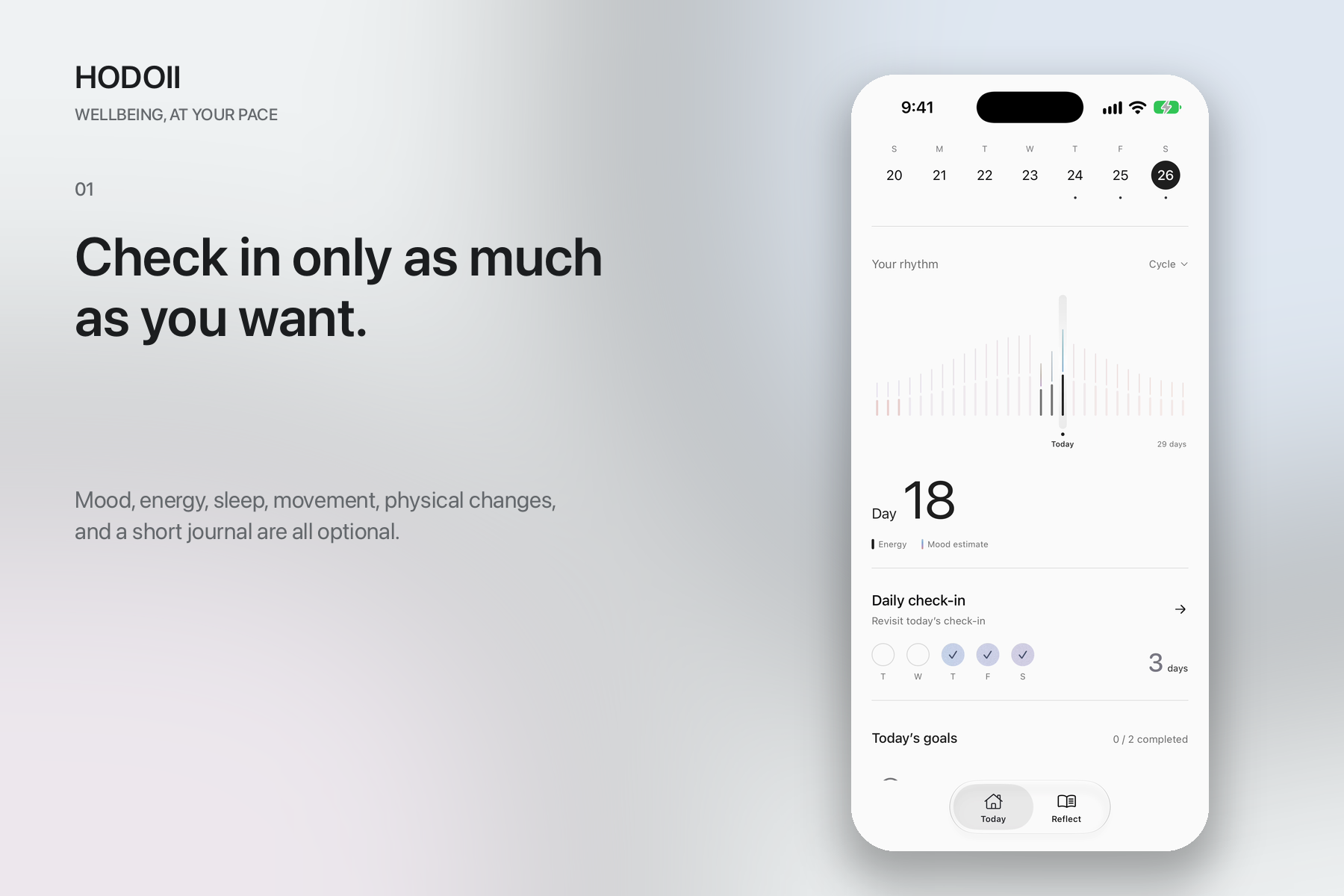
You record only how you feel physically and emotionally each day, and your period if you choose to. At the top of the home screen is a single chart that layers your cycle over your check-ins. There is no screen for reviewing detailed numbers. It is a place to take in your state at a glance and listen to your body.
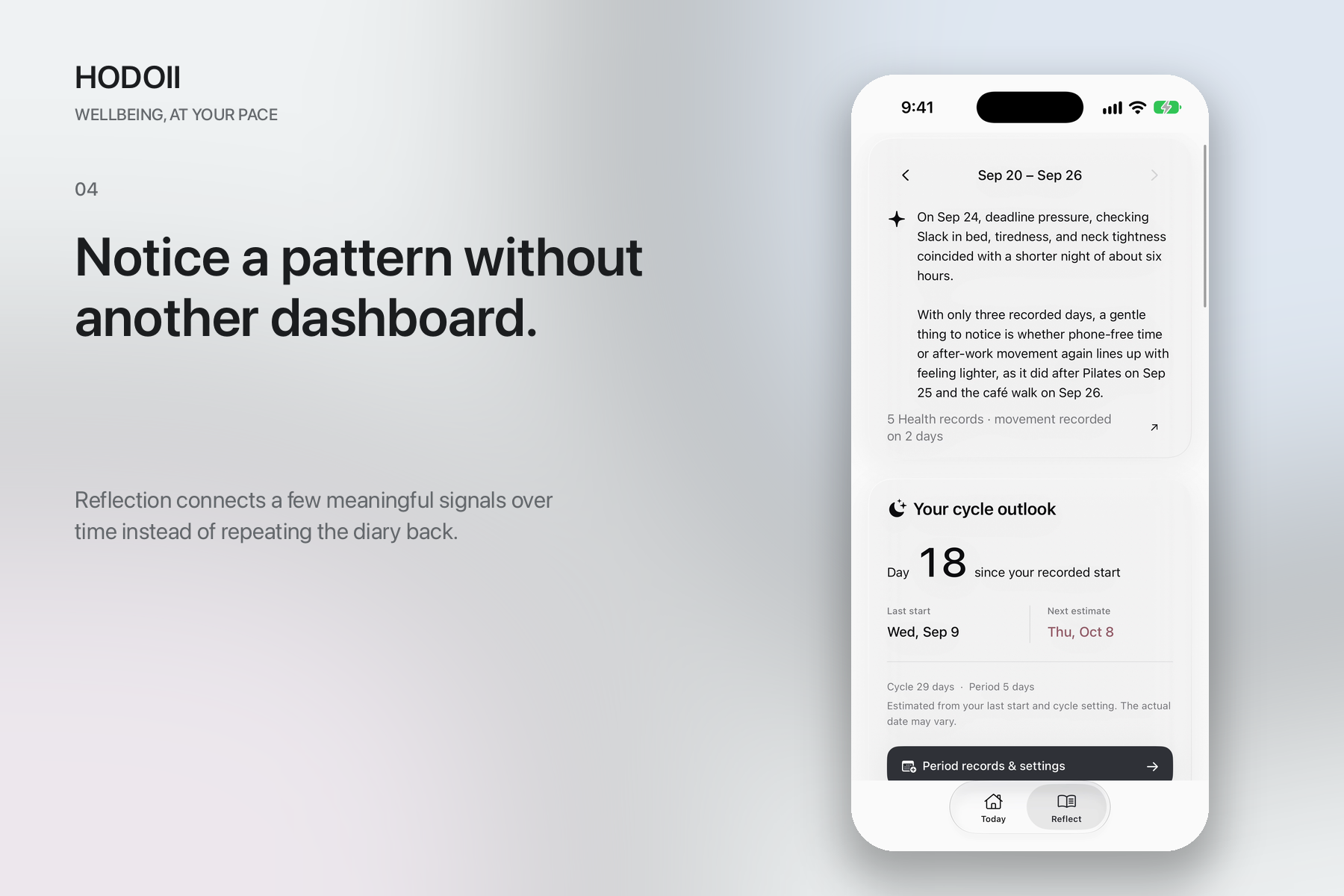
Turn on period tracking and set your cycle, and you can see your check-ins alongside it. Allow AI to use it too, and your daily suggestions follow your cycle as well, so women get an experience that fits their own rhythm more closely. My wife gave me active feedback throughout the design of this part.
2. AI chooses what to do today
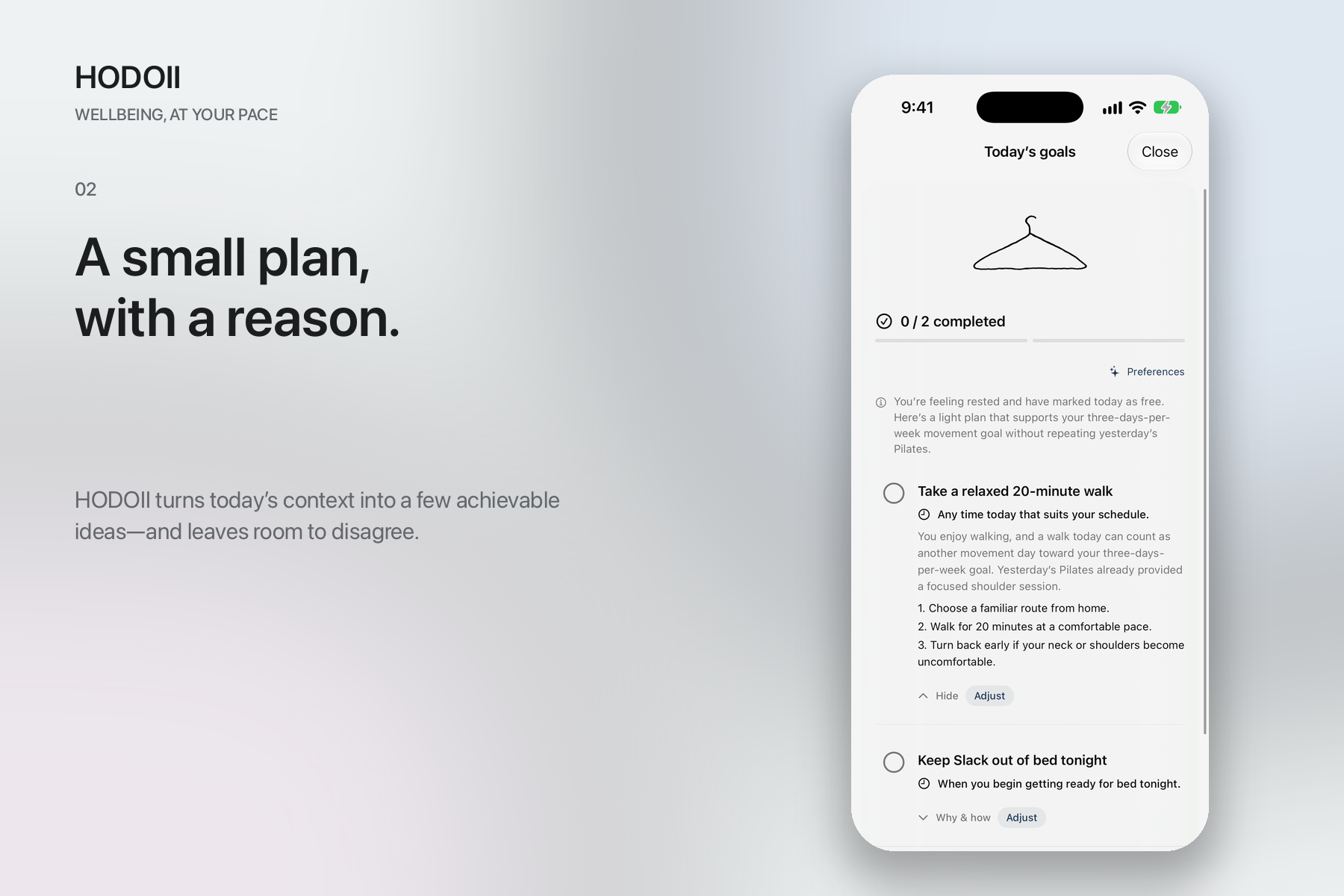
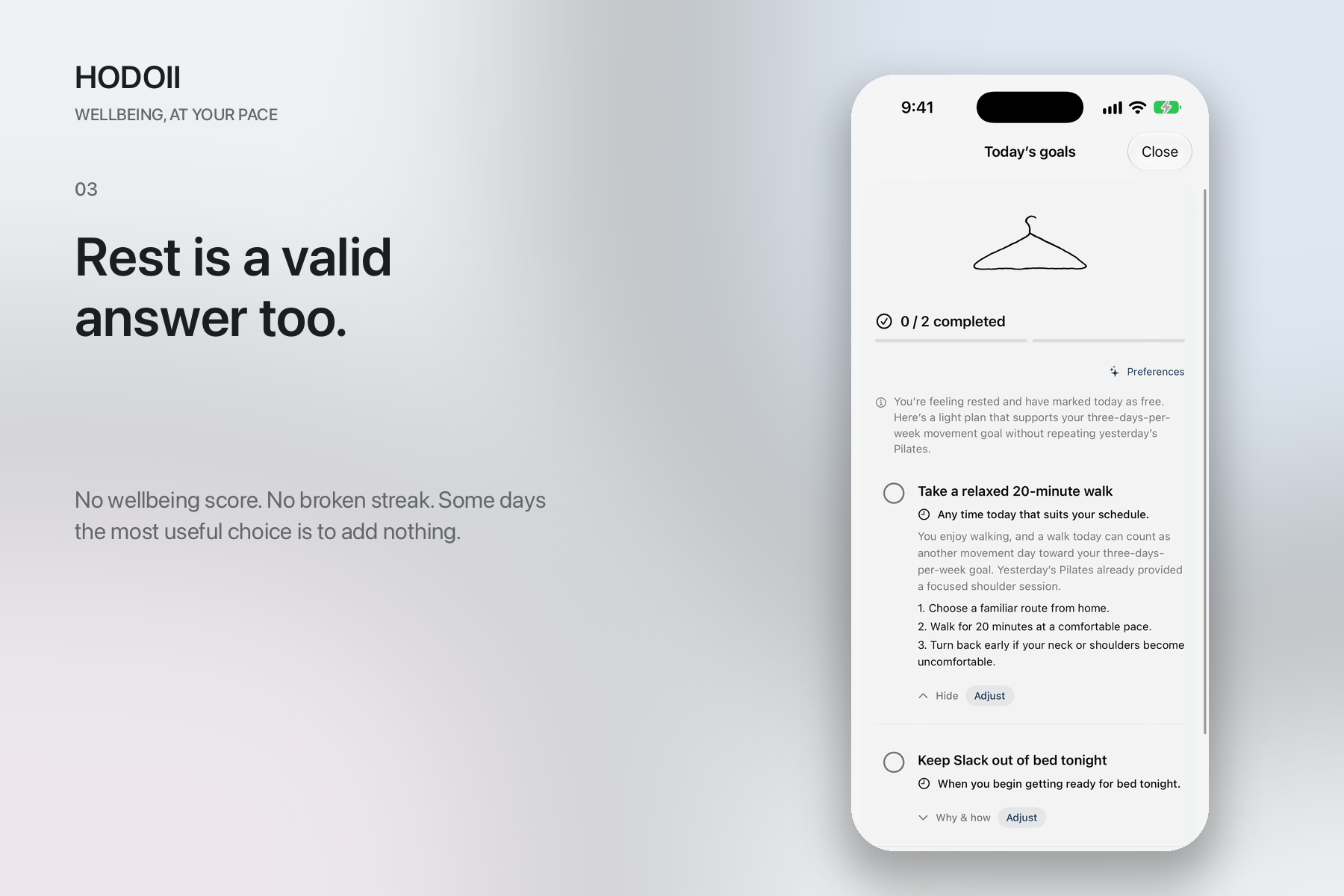
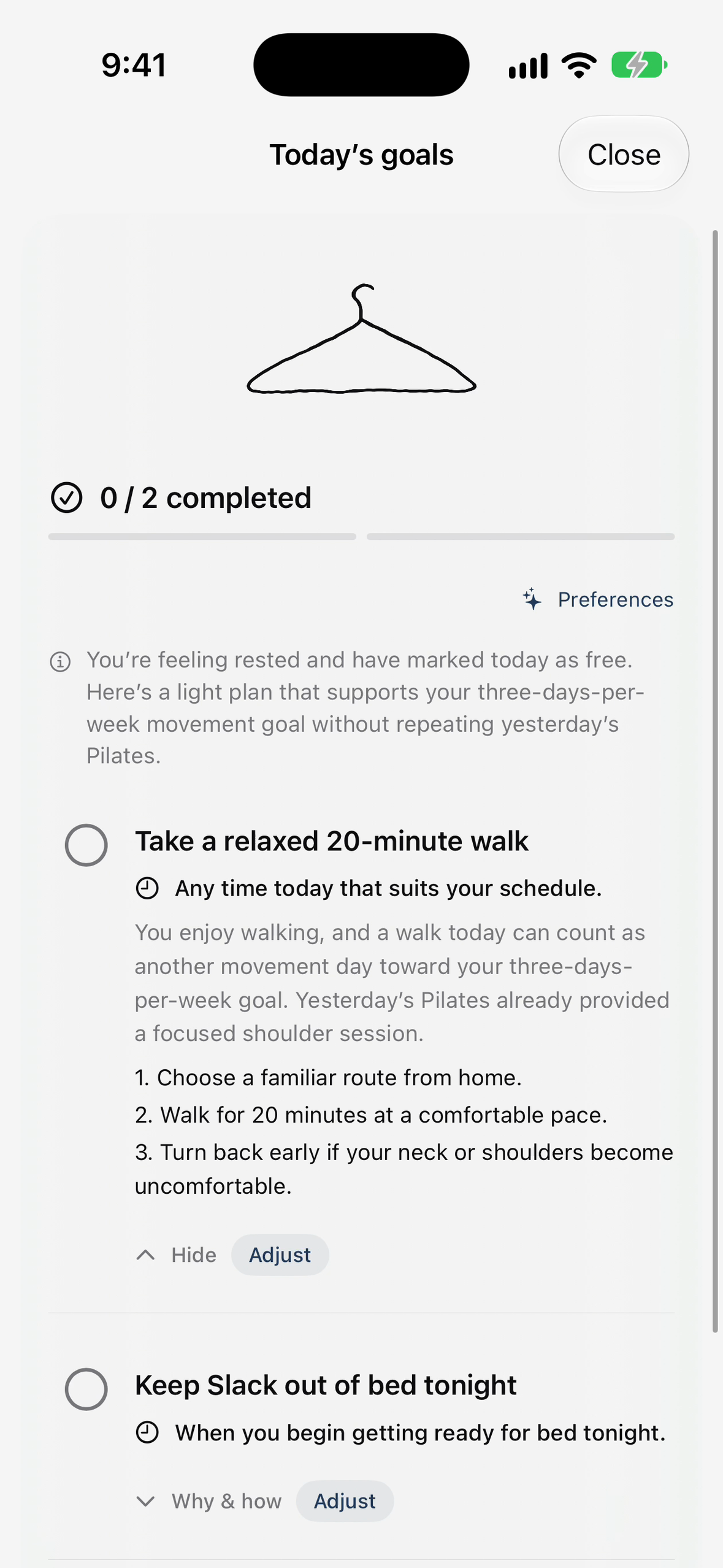
Based on how you feel today and what you have recorded before, HODOII's AI suggests what to do. Some days it is a short exercise. Other days it is a mindful tip, like writing your thoughts down on paper.
For exercise, I asked Natsuko Kanzawa, a yoga instructor I trust, to film videos for the app: mindfulness, yoga-based mindfulness, seated exercises, and floor exercises, all playable inside the app. No need to choose from a sea of lessons.
3. Someone to talk to who already knows you
In chat, you can ask questions grounded in your own health and goals: "I'm thinking of adding creatine. What do you think?" or "I want to push my workouts a little harder. What do you think?" It answers for your situation without you having to explain everything again.
This rests on the onboarding and on the memory that grows afterward. The onboarding is a little long, because it carefully asks about your health and your exercise goals. What you share is stored on your device and used for daily suggestions and conversations. The memory does not just pile up: it merges with new information, stays fresh, and keeps updating.
Privacy, and what HODOII does not do
Memory and records are stored on your iPhone. The server holds only what it needs to prepare daily suggestions and notifications, temporarily, and deletes it within days. Apple Health is optional, and you choose separately which categories HODOII can read and which ones AI can use. Sharing period and symptom data with AI is off by default. HODOII is for everyday wellbeing: it does not diagnose illness or make detailed period predictions.
The hardest part
What took the most time was a way to hold personal information without piling it up or breaking it into fragments. I designed my own system for this app. Old information is merged with new and kept up to date as living data that reflects who the person is now.
The other challenge was how much to subtract. HODOII is built by taking things away, but that must not feel lacking, or become an excuse dressed up as philosophy. Everything you need is there, without an overwhelming amount of information, and I aimed to lay it out beautifully.
What I am proud of
A general-purpose AI like ChatGPT might handle similar questions. But HODOII focuses on physical and mental wellbeing and responds with an understanding of your context, and that memory is stored on your iPhone. I am proud to have brought these two things together in one app.
What's next
Next, I want people with different routines and health to use it over time, to see whether its suggestions actually fit into a real day. I also want to expand the exercise content and connect it to personalization, so the suggestions can become more varied.
Award entry
HODOII is entered in the Shipaton 2026 Influencer Award — Yoga & Fitness: Simone Sharice category.

Log in or sign up for Devpost to join the conversation.