-
-
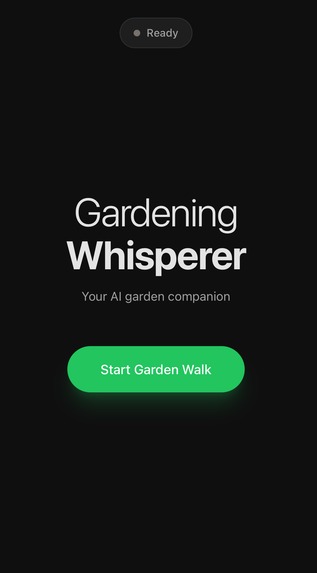
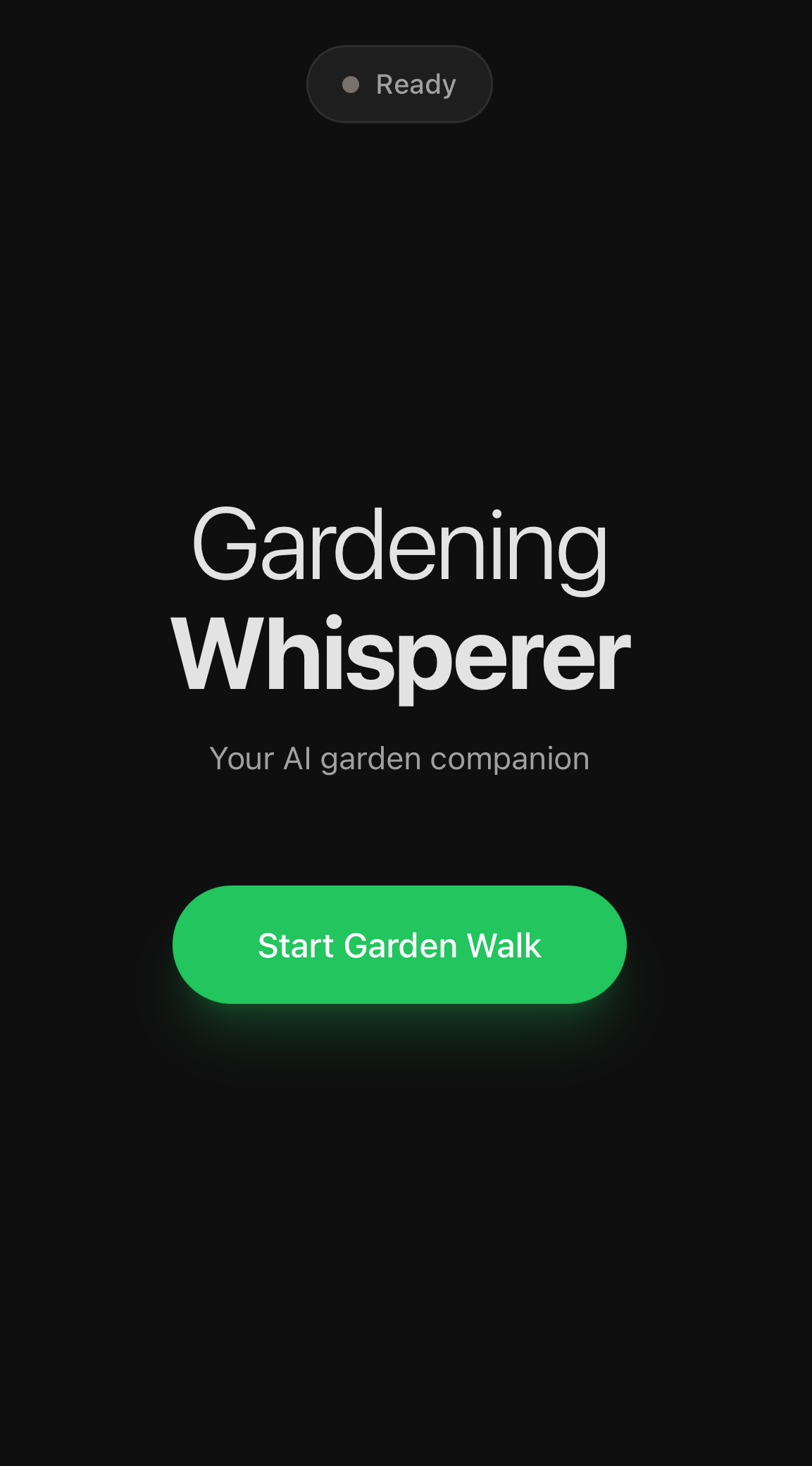
Begin your walk
-
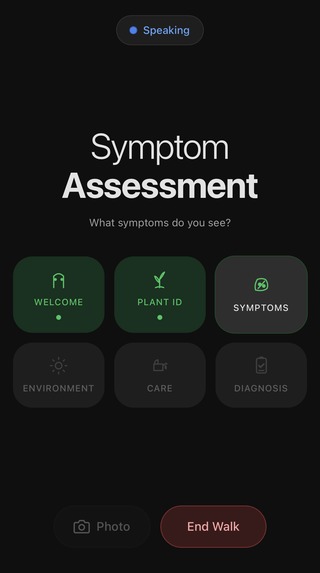
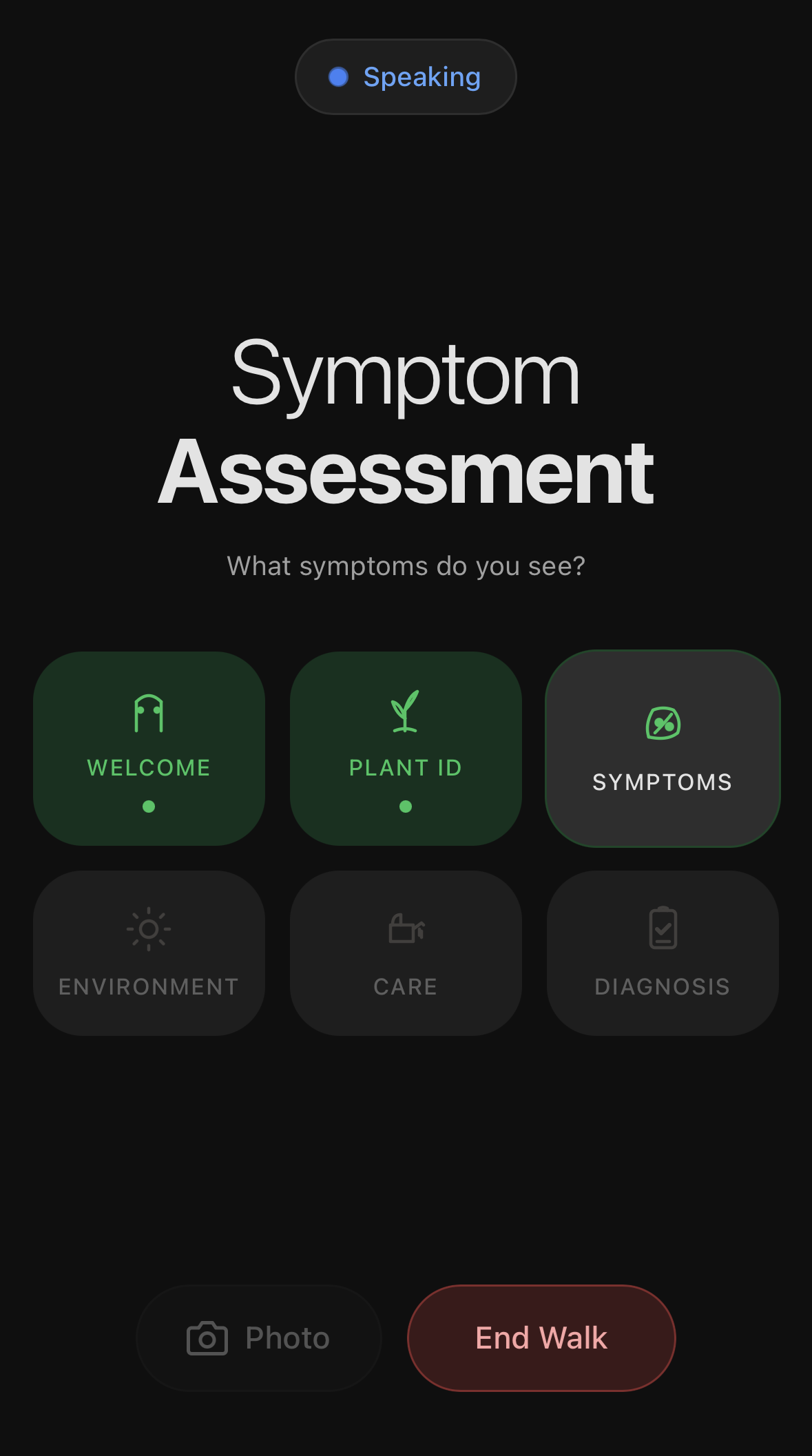
Garden walk with Gemini Voice AI interactions
-
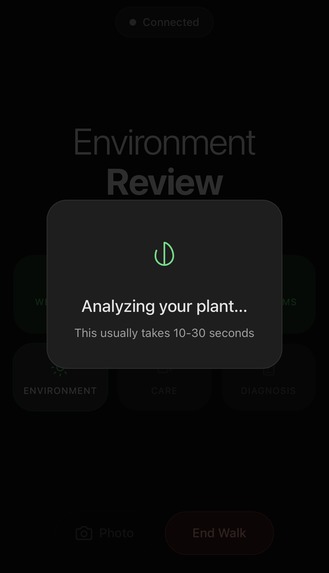
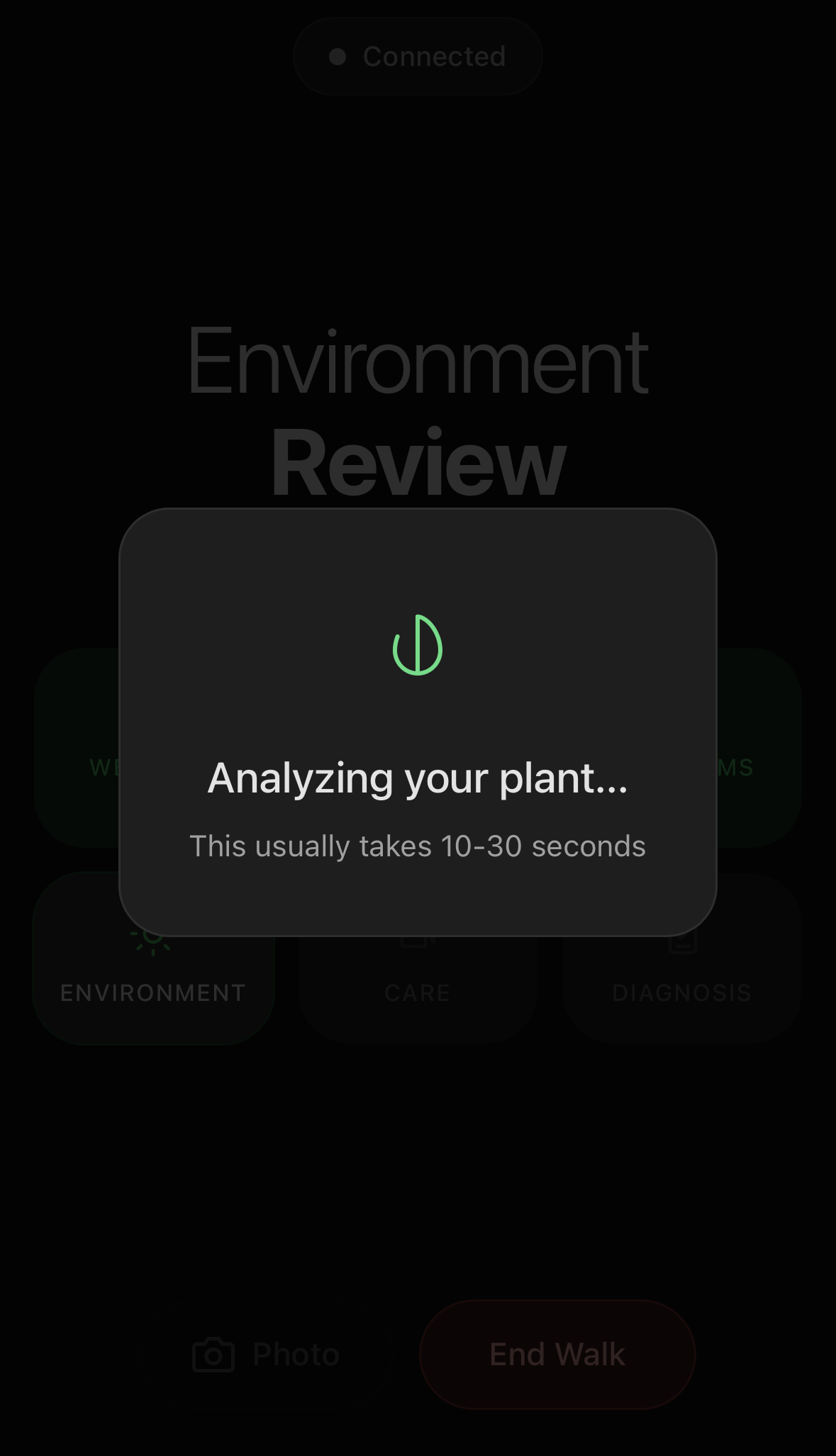
Plant photo analysis with Gemini 3 pro
-
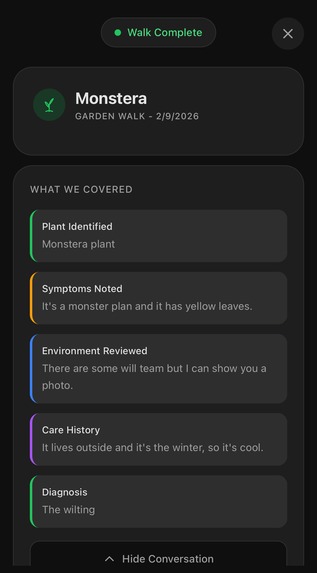
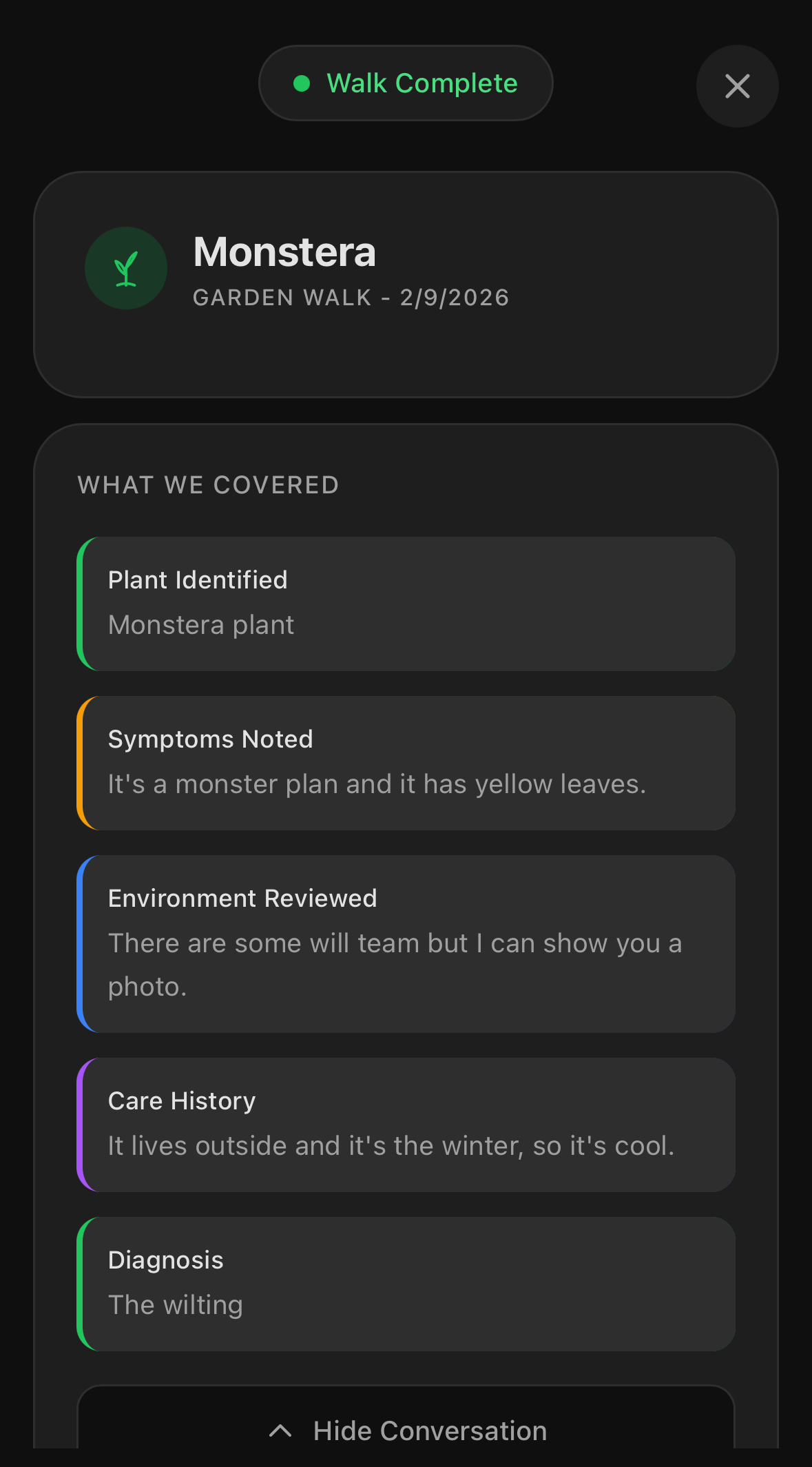
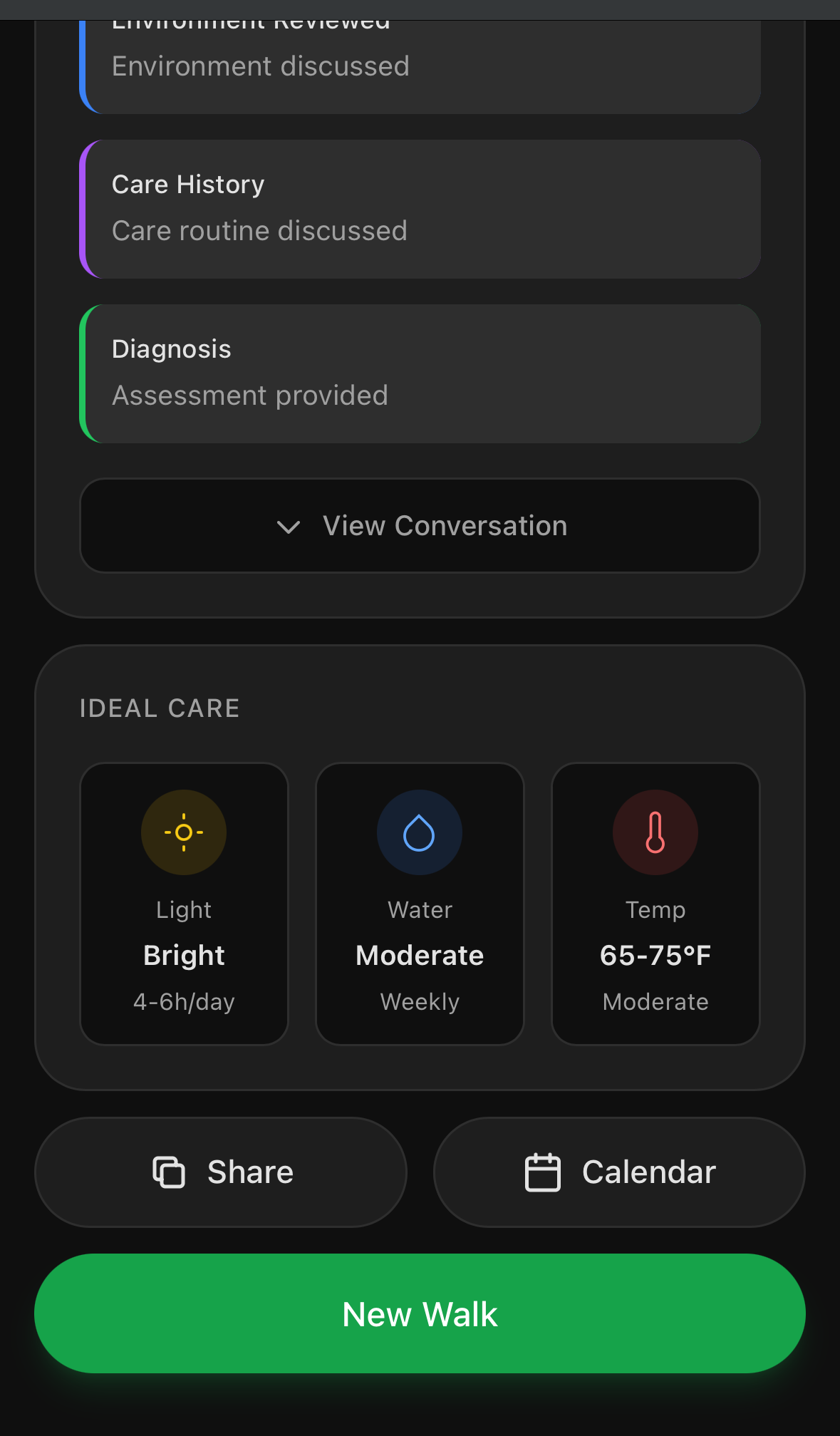
Garden Walk summary page
-
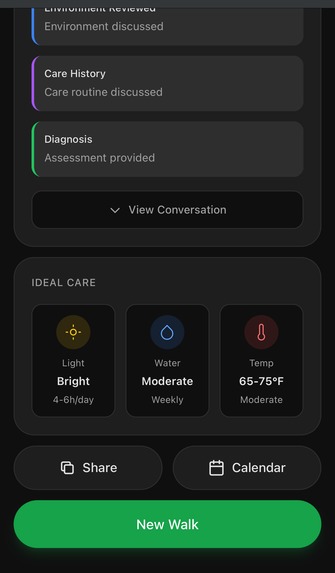
Google calendar API for reminder and ability to copy summary
🌱 Garden Whisperer — Project Story
A few months ago, I was standing in my garden—hands muddy, kids calling from inside—staring at a plant I didn’t know how to help. Feeling defeated, I looked at my husband and told him that I was feeling a little lost. His response was simple:
“Then create something to help you.”
I have never built anything before, and this is the first time I am creating an app and participating in a hackathon. As a mother of two young children with absolutely zero technical background (I’m a registered nurse), I would have previously been too afraid to attempt creating anything due to a lack of time and experience. The available vibe-coding tools today have given me more confidence to create and build projects on my own.
🌿 The Idea
I’m a home gardener, and sometimes I just wish I could ask someone about what I’m seeing while I’m seeing it in the garden—not hours later after researching (and that’s if I even remember). Almost like having an expert friend at your side to tell you what’s happening with your plant babies.
So, I decided to create Garden Whisperer using Gemini 3 Pro, since it’s so good with visual analysis. I wanted this experience to be centered around conversation and easy to use while hands are full or dirty—whether I’m gardening or picking up toys around the house.
📱 Design & Experience
I built Garden Whisperer as a progressive web app, so there’s nothing to install—just open it and start walking. My aim was to achieve flexibility and mobility in its use.
A voice-first philosophy guided all design decisions, and every interaction is optimized for spoken conversation. The Gemini voice AI leads users through a structured “garden walk” that covers:
- Plant identification
- Symptoms
- Environment
- Care history
- Diagnosis
All completely hands-free.
🧠 Challenges & Breakthroughs
As someone completely new to development, I encountered many challenges related to using and testing unfamiliar technologies. Everything took time to discover, learn, and implement—from server setups to WebSocket connections and audio permissions. User gesture timing was critical, and audio APIs can be especially unforgiving.
However, I did have some breakthroughs that truly shaped the app. For the conversation to feel natural, I implemented two-layer response patterns, allowing Gemini to return:
- Structured JSON for app logic (like coverage tracking), and
- Natural language for spoken responses
The iteration cycle quickly became second nature:
- Build
- Test
- Discover a bug
- Debug
- Fix, commit, repeat
🌼 Reflections
I learned that fallbacks are just as important as implemented features. Sometimes things fail, but a thoughtful fallback can still salvage the entire experience.
Planning the user journey has to be logical, but at the end of the day, the focus is the human behind the app. The garden walk is meant to feel thoughtful and relaxed—helping users care for their plants while feeling supported in their gardening decisions.
I feel good when I use it, and I think others will too. This feels like just the starting point for many future projects, and I feel more confident than ever.
Happy Gardening! 🌸
Built With
- api
- bash
- canvas-api
- chrome
- chrome-dev-tools
- claude
- css
- gemini
- gemini-ai
- getusermedia
- gis
- github
- google-calendar
- google-cloud-console
- google-gen-ai
- google-web-speech-api
- javascript
- jest
- json
- mediadevices-api
- next.js
- node.js
- oauth
- railway
- react
- tailwind
- typescript
- websocket
- webspeech
- wss


Log in or sign up for Devpost to join the conversation.