About HMO.WebMCP
Inspiration
HMO.WebMCP began with a simple question:
What if a website could do more than publish information? What if an AI agent could understand what the website knows and interact with its capabilities directly?
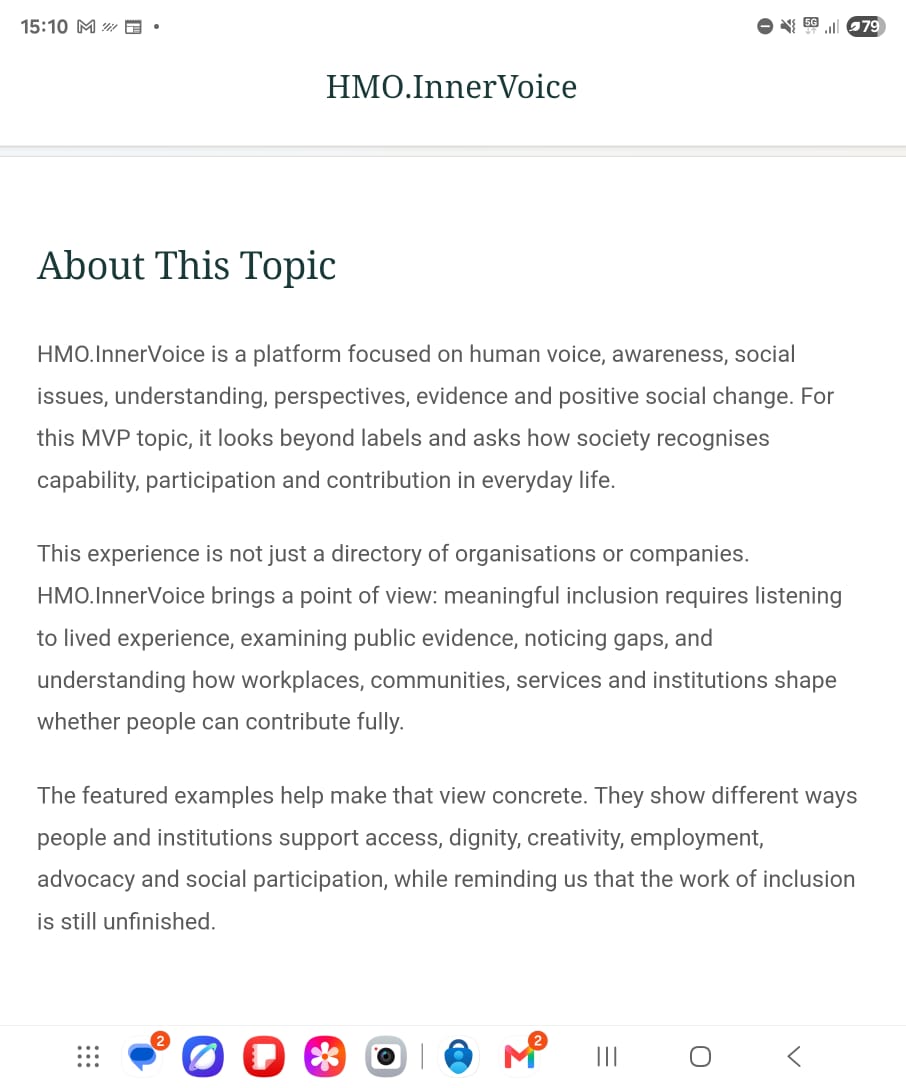
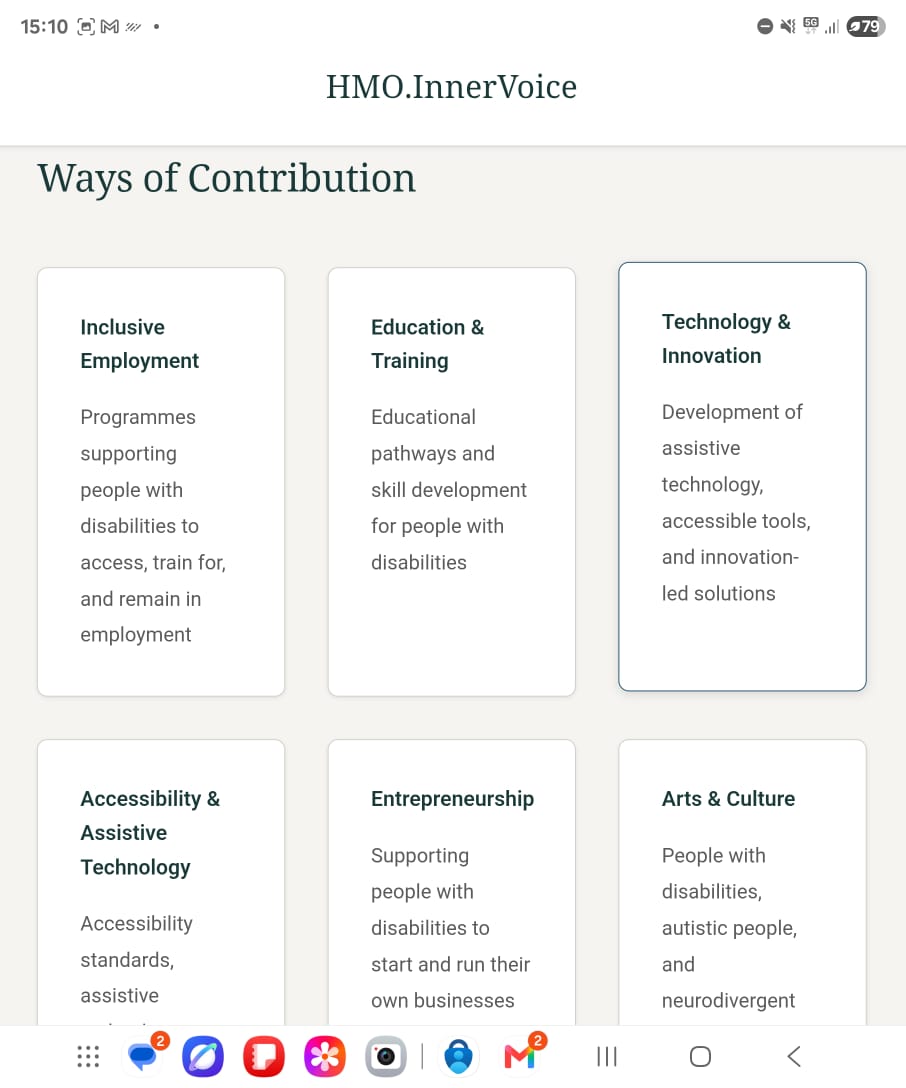
The idea grew out of HMO.InnerVoice, an awareness and advocacy platform exploring issues relating to people, wellbeing, inclusion, communities, the environment and society.
When exploring an issue, simply presenting information is often not enough. The more useful questions are often:
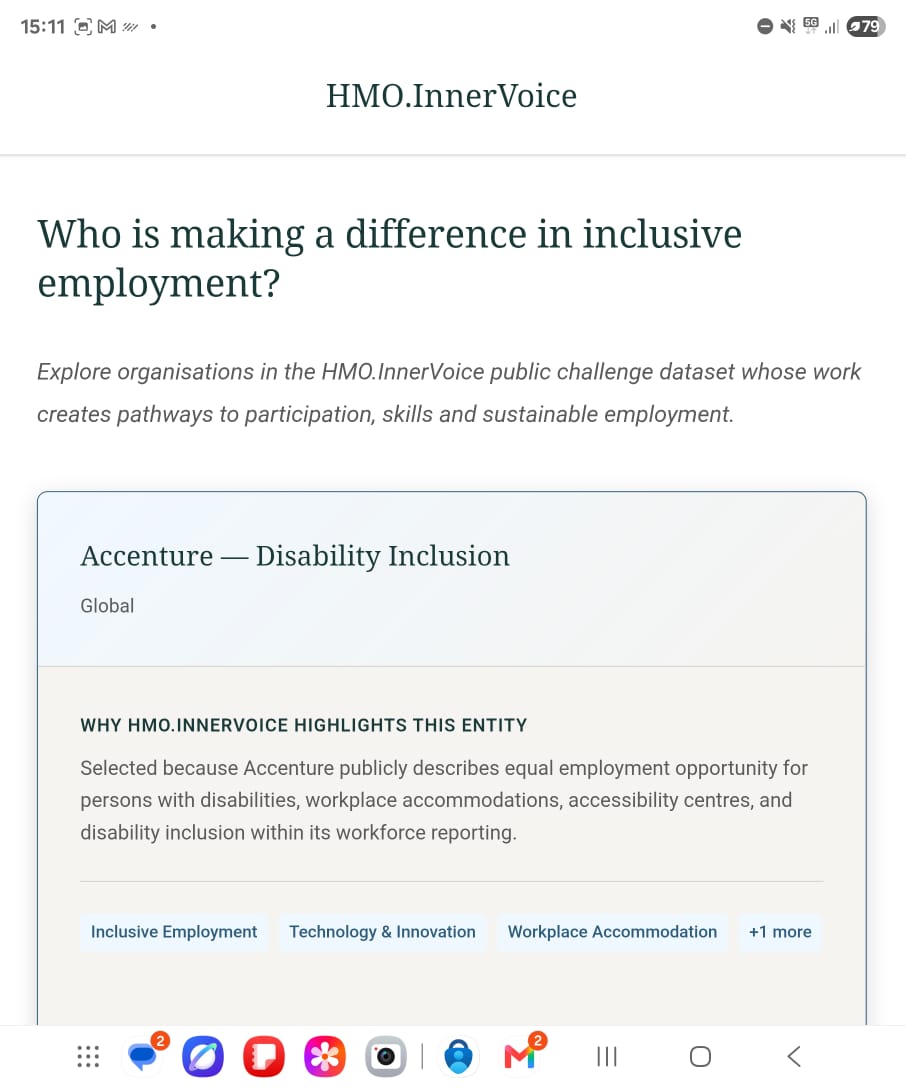
- Who is making a difference?
- What are they contributing?
- What approaches are working?
- Why are particular organisations worth highlighting?
- What can be learned from them?
- What are the different perspectives?
- Where are the gaps?
- What evidence supports these insights?
Traditionally, answering these questions requires searching across multiple websites, interpreting different sources and piecing the information together.
One possible solution would be to build another AI chatbot.
WebMCP presented a more interesting possibility:
What if another agent was not needed at all?
Instead, the website itself could expose useful, structured capabilities through WebMCP, allowing a compatible AI agent already being used by the visitor to discover and invoke them.
That became the central idea behind HMO.WebMCP.
What HMO.WebMCP Does
HMO.WebMCP turns curated website content into an interactive, agent-accessible knowledge experience.
Rather than limiting an AI agent to reading visible page content, the website exposes purpose-built capabilities through WebMCP.
A visitor can explore a topic and naturally ask an AI agent questions such as:
Who is making a difference? Why was this organisation highlighted? What approaches are working? What can be learned from these organisations? What different perspectives exist? Where are the gaps? What evidence supports this?
The AI agent can discover the relevant WebMCP capability, invoke it and use the structured information returned by the website to answer the user's question.
The important distinction is that the website remains the source of its curated knowledge and perspective, while the AI agent provides the conversational interface.
There is no need for visitors to discover, register for or learn another chatbot.
From Information to Context
A central design principle behind HMO.WebMCP is that providing information is not the same as providing understanding.
For example, one topic may explore people with diverse abilities, including persons with disabilities and neurodivergent people, their contributions to society, and organisations advancing inclusion.
The website should not merely tell an AI agent:
This organisation does X.
It should be capable of providing richer context: what the organisation contributes; why it is highlighted; the approach it represents; what can be learned from it; relevant perspectives; supporting evidence; and gaps or questions that remain.
The same interaction model can be applied to many different topics.
HMO.WebMCP is therefore not designed around a single subject. It demonstrates a reusable approach for making curated knowledge across different topics accessible to AI agents.
How It Was Built
HMO.WebMCP is implemented as a web application with browser-native WebMCP capabilities.
Each tool represents a meaningful capability rather than simply exposing raw website data.
Why WebMCP Instead of Another Chatbot?
This became one of the most important insights from the project.
A website that builds its own chatbot creates another destination and another conversational interface.
WebMCP reverses that relationship.
Instead of requiring the user to come to the website's AI:
the website makes its capabilities available to the user's AI.
Conceptually:
User ↓ AI Agent ↓ WebMCP ↓ Website capabilities ↓ Curated knowledge
This changes how a website can be understood. A website no longer has to function only as a collection of pages to navigate. It can also become a provider of capabilities that an AI agent discovers when those capabilities are relevant to what the user is trying to understand or accomplish.
What Was Learned
- WebMCP and traditional MCP solve related but different problems
One of the first technical challenges was distinguishing browser-native WebMCP from a traditional MCP server implementation.
A conventional MCP architecture may involve:
AI Client ↓ MCP Protocol ↓ MCP Server ↓ Tools
WebMCP introduces a different interaction.
Understanding this distinction simplified the architecture considerably.
Instead of creating another MCP server, WebMCP capabilities could be registered directly by the website.
- Tool design matters more than the number of tools
It is easy to expose many functions.
The harder question is:
What capabilities would actually be useful to an AI agent?
This shifted the design process from thinking about database operations and endpoints toward thinking about user intent.
The user is more likely to ask:
“Why is this organisation important?”
or:
“What can be learned from its approach?”
Effective WebMCP tool design therefore begins with the questions people naturally ask.
- Structured knowledge becomes increasingly important in an agentic web
Information written exclusively for visual presentation is not always ideal for AI interaction.
Building HMO.WebMCP required careful consideration of how information could be structured so an agent could distinguish between:
- facts;
- contributions;
- selection rationale;
- approaches;
- perspectives;
- evidence; and
- conclusions.
That structure makes the website's knowledge considerably more useful to an AI agent.
- The website remains important
WebMCP does not make the website obsolete.
It gives the website another interface.
The human experience provides context, discovery and visual exploration. WebMCP allows an AI agent to interact with capabilities behind that experience.
The two complement one another.
Challenges Faced
Understanding the WebMCP architecture
One of the earliest challenges was approaching WebMCP through the mental model of traditional MCP.
That initially led toward server-side MCP concepts that were unnecessary for a browser-native WebMCP implementation.
Once the two architectures were separated, the implementation became much clearer: existing MCP infrastructure could remain independent while WebMCP was implemented as a website capability layer.
Balancing succinct answers with meaningful context
AI agents need enough information to provide useful answers, but returning everything the website knows would defeat the purpose.
The project therefore required careful decisions about what information should be returned, how it should be structured, and how evidence and context should accompany conclusions.
Building for both humans and agents
The website still needs to make sense to someone browsing normally.
At the same time, its capabilities need to be understandable and useful to an AI agent.
Designing for these two audiences simultaneously became one of the most interesting aspects of the project.
What HMO.WebMCP Demonstrates
HMO.WebMCP ultimately demonstrates a simple idea:
A website should not only be readable by an AI agent. It should be able to tell the agent what it can do.
By exposing curated knowledge through WebMCP, websites can move from merely containing information toward participating directly in helping people understand it.
No new chatbot. Just a more accessible, contextual and agent-ready web.
Built With
- codex

Log in or sign up for Devpost to join the conversation.