-
-
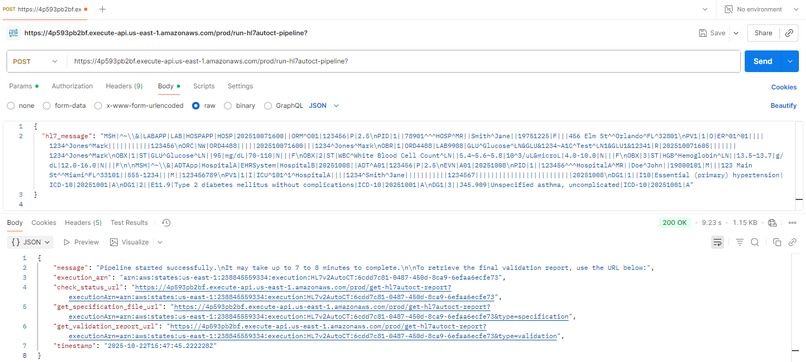
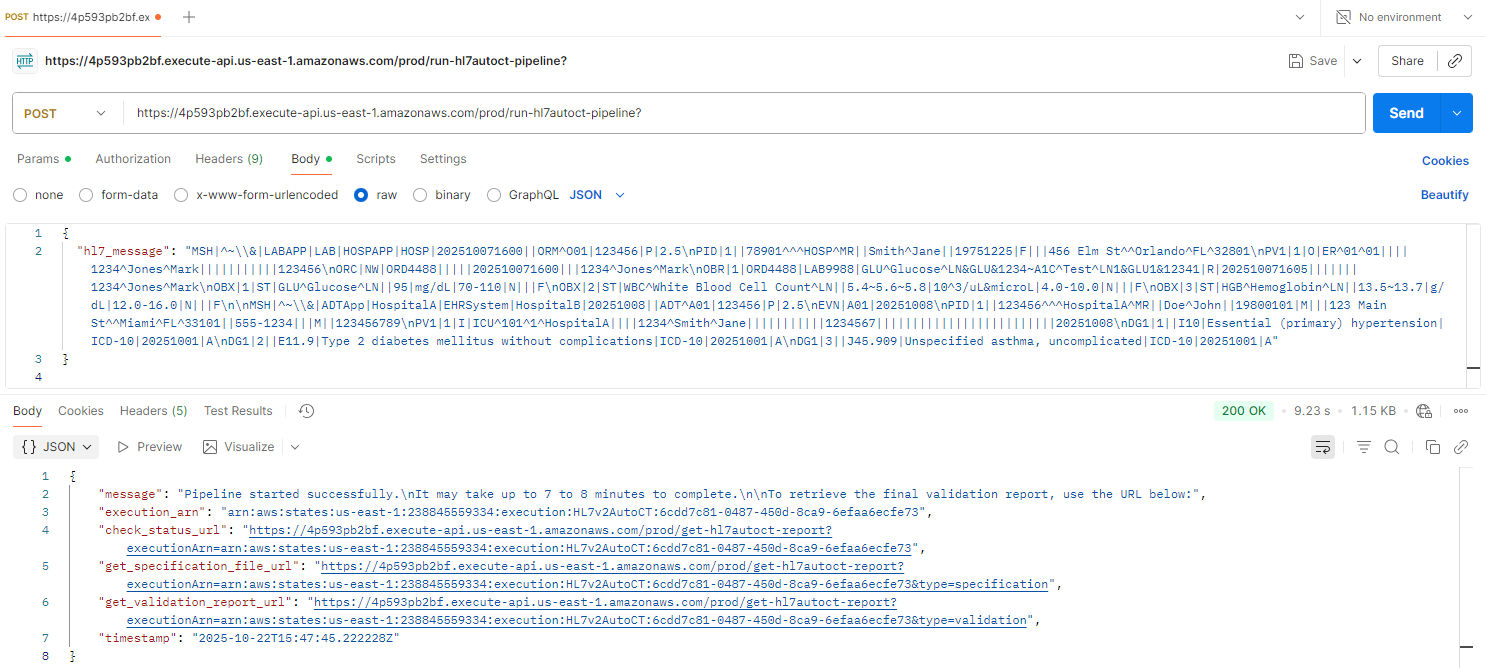
Sample Postman API Execution
-
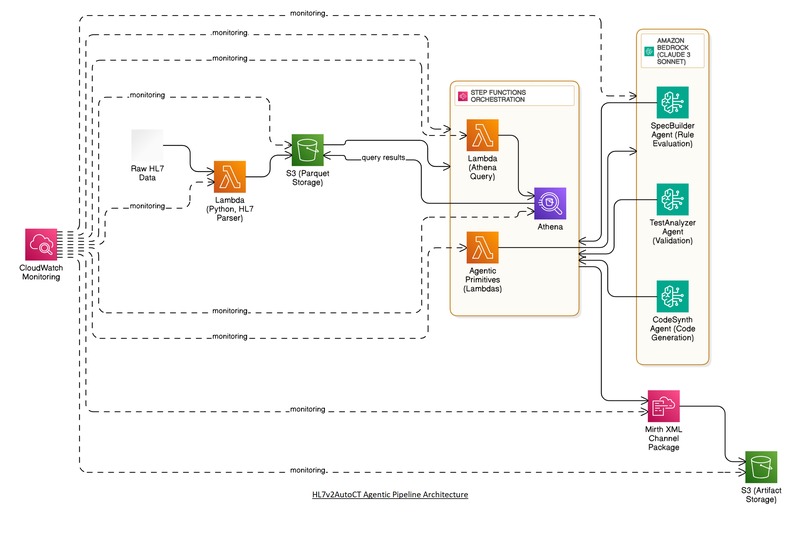
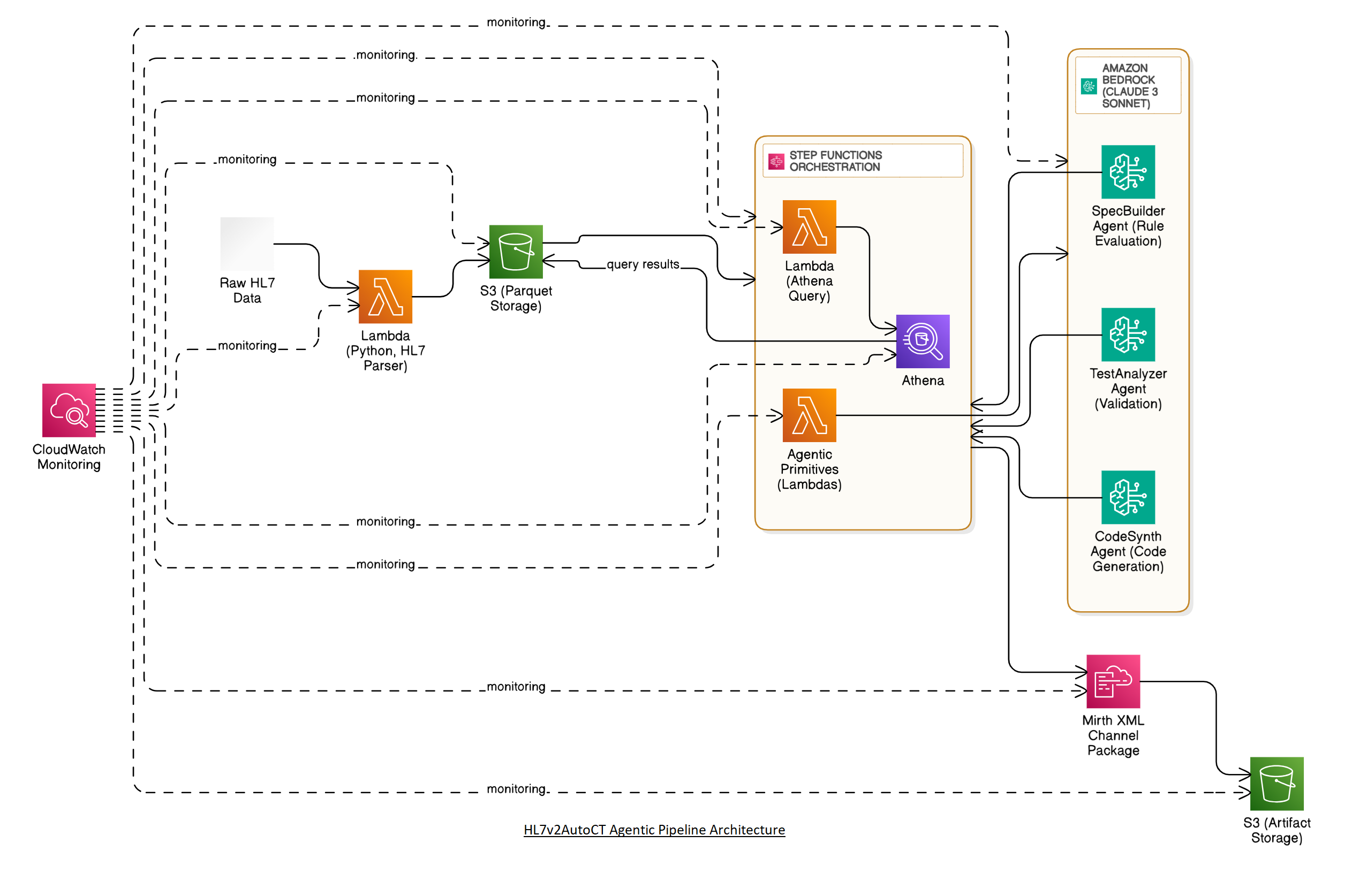
HL7v2AutoCT Agentic Pipeline Architecture
-
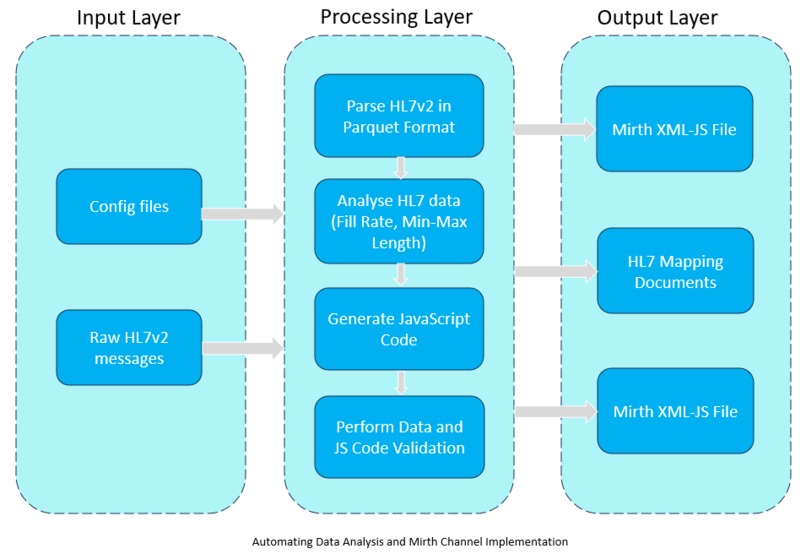
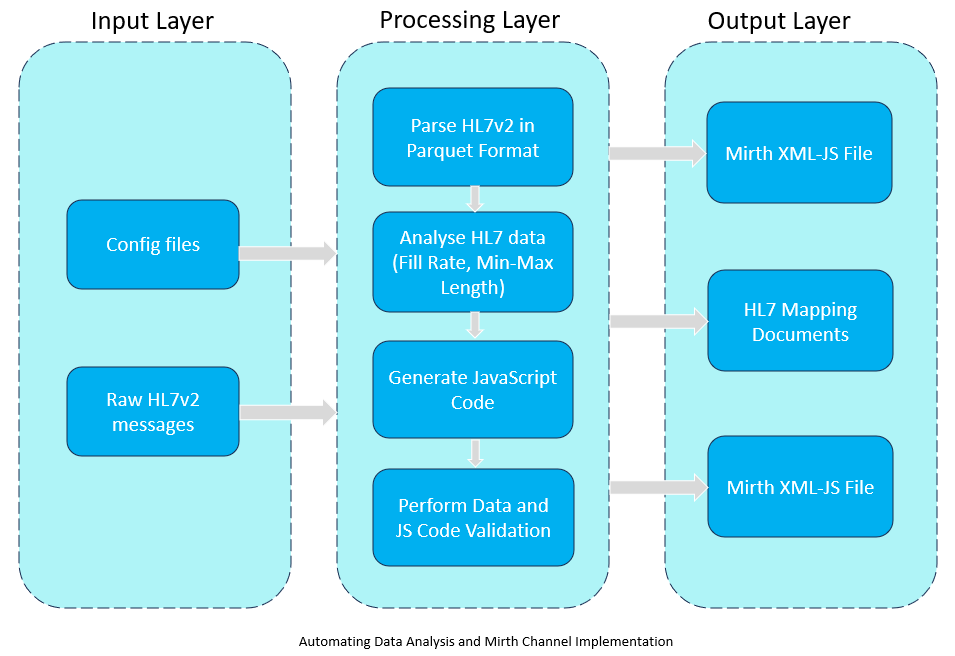
HL7v2AutoCT Basic Architecture
Inspiration
The project was inspired by the critical need to eliminate the slow, manual, and error-prone process of analyzing massive volumes of HL7v2 data, creating detailed technical specifications, and manually writing Mirth JavaScript channel logic. The goal was to use Generative AI to automate this clinical integration bottleneck and accelerate interface deployment.
What it does
HL7AutoCT is an autonomous AI Agentic Pipeline on AWS that converts raw HL7v2 message files into a fully tested, ready-to-deploy Mirth Connect XML configuration. It performs end-to-end automation: Data Analysis: Parses HL7v2 data (via Lambda/Athena) to extract statistical patterns. Specification Generation: The SpecBuilder Agent (Claude via Bedrock) analyzes patterns and defined rulesets to autonomously generate a structured technical specification. Code Synthesis: The CodeSynth Agent (Claude via Bedrock) reads the spec and synthesizes functional Mirth JavaScript transformation code. Validation: The TestAnalyzer Agent validates the generated JavaScript logic against expected outputs.
How we built it
The solution uses a hybrid, modular architecture orchestrated by AWS Step Functions. Reasoning and Synthesis is delegated to Claude (via Amazon Bedrock), implemented within AgentCore Primitives (SpecBuilder, CodeSynth) hosted on Lambda. High-Volume Tasks (parsing, querying, file handling) are performed by traditional, cost-effective AWS services like Lambda, S3, and Amazon Athena. Autonomy is achieved using the Step Functions Map State, which processes segments for rule evaluation.
Challenges we ran into
The main challenge was managing data volume: we overcame this by pre-processing the HL7 messages with Athena and only feeding aggregated statistics (not raw messages) to the LLM for reasoning. We also refined prompts extensively to ensure the CodeSynth Agent produced accurate, Mirth-specific JavaScript syntax.
Accomplishments that we're proud of
We successfully created a fully autonomous, end-to-end agentic pipeline that is highly efficient, using LLM capacity only for complex reasoning and synthesis, significantly reducing the manual effort traditionally required in healthcare integration projects.
What we learned
We validated that the most effective AI solution is a hybrid agent—one that intelligently combines the specialized power of Generative AI with the speed and efficiency of traditional serverless compute (Lambda/Athena).
What's next for HL7AutoCT
Future steps include extending the solution to other HL7 message types, integrating Interface Analysis (IA) document generation across various HL7 message types, and developing a comprehensive QA framework that includes autonomous unit test case generation and execution. Creating frontend browser to send request and receive response.
Built With
- amazon
- amazon-athena
- amazon-bedrock
- amazon-cloudwatch
- amazon-web-services
- aws-lambda
- aws-step-functions
- claude-3-sonnet
- excel
- layers
- mirth-connect-javascript-(e4x-syntax)
- mirth-xml
- openpyxl
- python

Log in or sign up for Devpost to join the conversation.