-
-
-
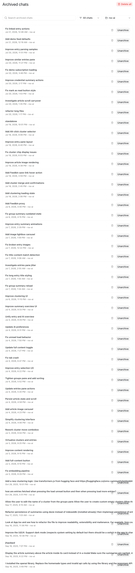
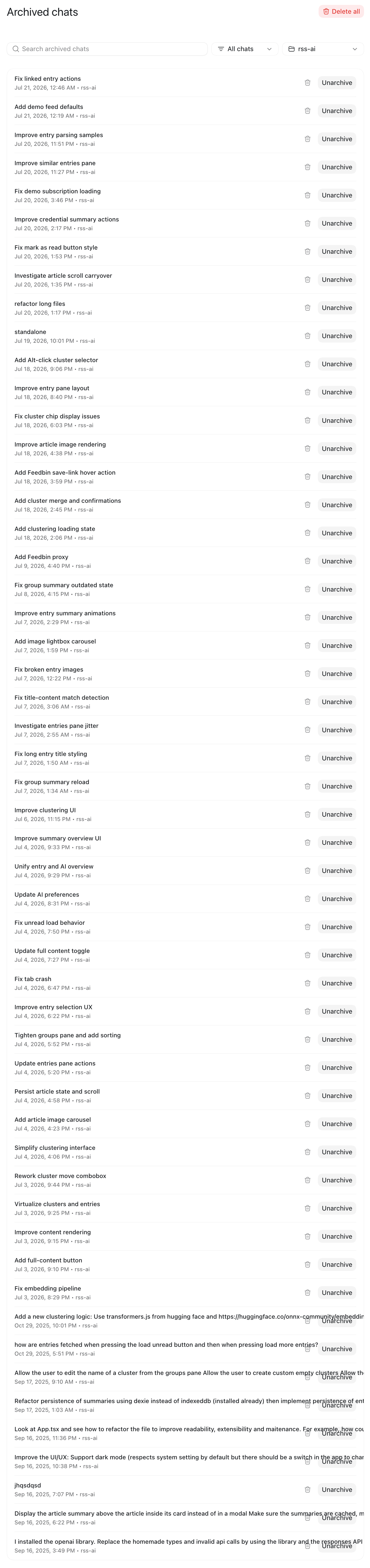
All the Codex threads :x
Hives — Your feeds, clustered
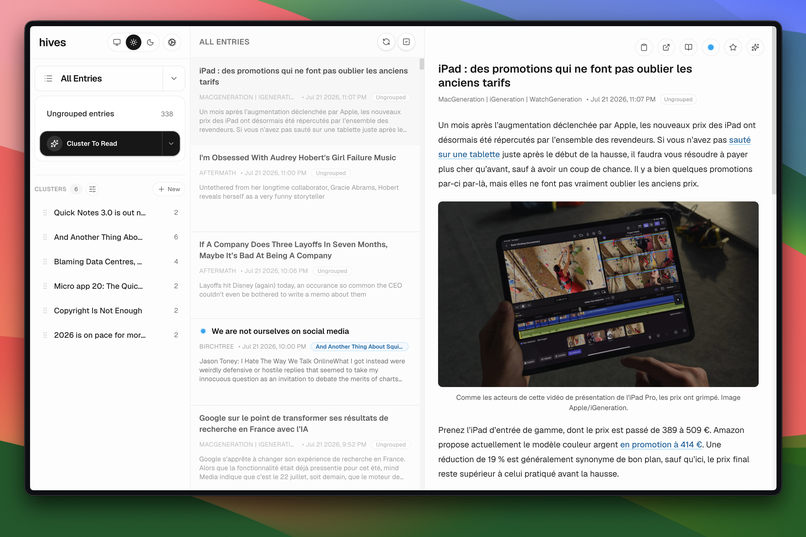
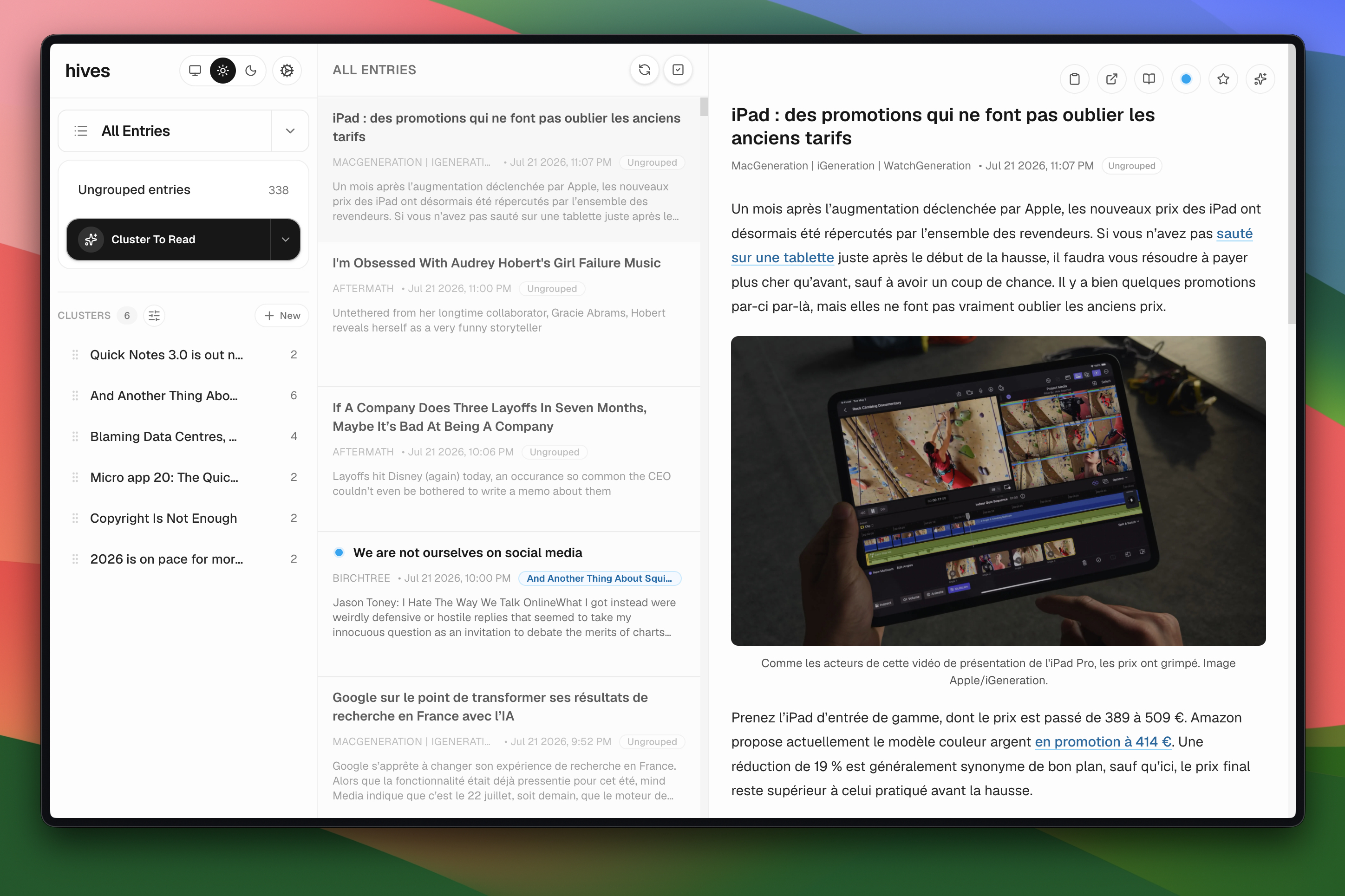
Turn a noisy feed inbox into a focused reading queue. Hives brings your subscriptions together, groups related stories on-device, and helps you read or summarize them without losing the simplicity of RSS.
Use it as a standalone browser-based reader or connect your existing Feedbin account.
Features
Two ways to read
- Standalone Hives — manage subscriptions and reading state entirely from the app
- Feedbin — use your existing subscriptions while syncing To Read and starred state
- Switch sources without merging their libraries
- Optional refresh on launch, plus a deliberate manual refresh flow
Feed management
- Discover RSS, Atom, and JSON feeds from a website or feed URL
- Import and export subscriptions with OPML
- Rename local feeds without losing the publisher-provided title
- Configure per-feed reader-mode and To Read preferences
- Start quickly with a small set of demo subscriptions
A focused reading queue
- Move between To Read, Starred, and All Entries
- Create, rename, reorder, merge, and remove topic clusters
- Move individual entries or a selection into an existing or new cluster
- Keep important entries while automatically pruning older read history
On-device semantic organization
- Cluster related To Read entries by meaning, not just matching words
- Tune the similarity threshold and clustering behavior
- See similar entries while reading and add them to your queue in one action
- Embeddings run in the browser with
Xenova/all-MiniLM-L6-v2and are cached locally
Reading and summaries
- Read feed content in a responsive three-pane interface
- Fetch cleaner full-text article content with reader mode
- Save useful links found inside an article back to your reading queue
- Generate summaries for one entry or a complete cluster
- Bring your own model through an OpenAI-compatible API and customize both summary prompts
Built for the browser
- Browser-local persistence with IndexedDB
- Light, dark, and system themes
- Responsive layouts for desktop, tablet, and mobile
- Virtualized entry and cluster lists for large libraries
Built with Codex
Hives has always been a Codex project. I started it with GPT-5 in September 2025 to solve my slightly obsessive news habit: instead of treating unread as an inbox I had failed to clear, I marked almost everything read and deliberately built a smaller To Read list. The writers I follow often cover the same story from different angles, which led to the idea behind Hives: what if those perspectives were clustered together?
The first prototype connected to my Feedbin account, and sent the whole articles to GPT-5 for clustering, but it was slow and expensive. I wanted to implement on-device clustering but GPT-5 wasn't good enough to code it, and the models that could run on the edge weren't that good anyway. Months later, GPT-5.5 implemented on-device semantic search for another project and changed what I thought was practical in the browser. I brought the same model back to Hives: local, adjustable clustering, and asked Codex to finish it. It built the embedding pipeline, caching, similarity search, cluster suggestions, and automatic clustering and mostly nailed the experience on the first pass.
GPT-5.6 was the bigger turning point. I wanted to share Hives, which meant removing the Feedbin dependency and turning a private prototype into a complete standalone reader. In a little over an hour, Codex added feed discovery and management, OPML, RSS/Atom/JSON parsing, article extraction, browser persistence, and a constrained CORS proxy. I expected that phase to take me several days.
My role was to keep making the product calls: the inverted To Read workflow, local-first clustering, separate standalone and Feedbin libraries, explicit refresh behavior, dense information design, progressive disclosure, and the micro-interactions that make a reader pleasant to use every day. Codex turned those decisions into working software, absorbed detailed feedback, and carried changes across the codebase without losing the intent behind them.
This release is the result of over 35 Codex threads. Since GPT-5.6 launched, Codex has written roughly 80% of the current app. Sol became my everyday building partner; Ultra handled the hardest cross-cutting work and stayed with it through unit tests, browser tests, type checks, builds, and performance verification. Remote control let me keep that loop moving even away from my desk.
I had an idea, and the attention to detail; Codex brought it to life and dramatically shortened every phase between an idea, a careful implementation, and a result I felt confident sharing. That is how Hives grew from a tool made only for me into the polished, fully web-based reader you see here.
Built With
- base-ui
- codex
- dexie
- react
- tailwind
- transformers.js
- typescript

Log in or sign up for Devpost to join the conversation.