-
-
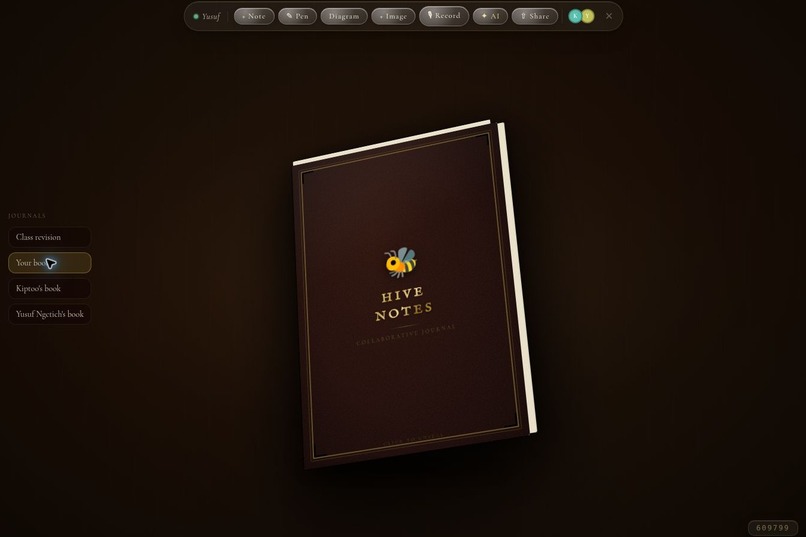
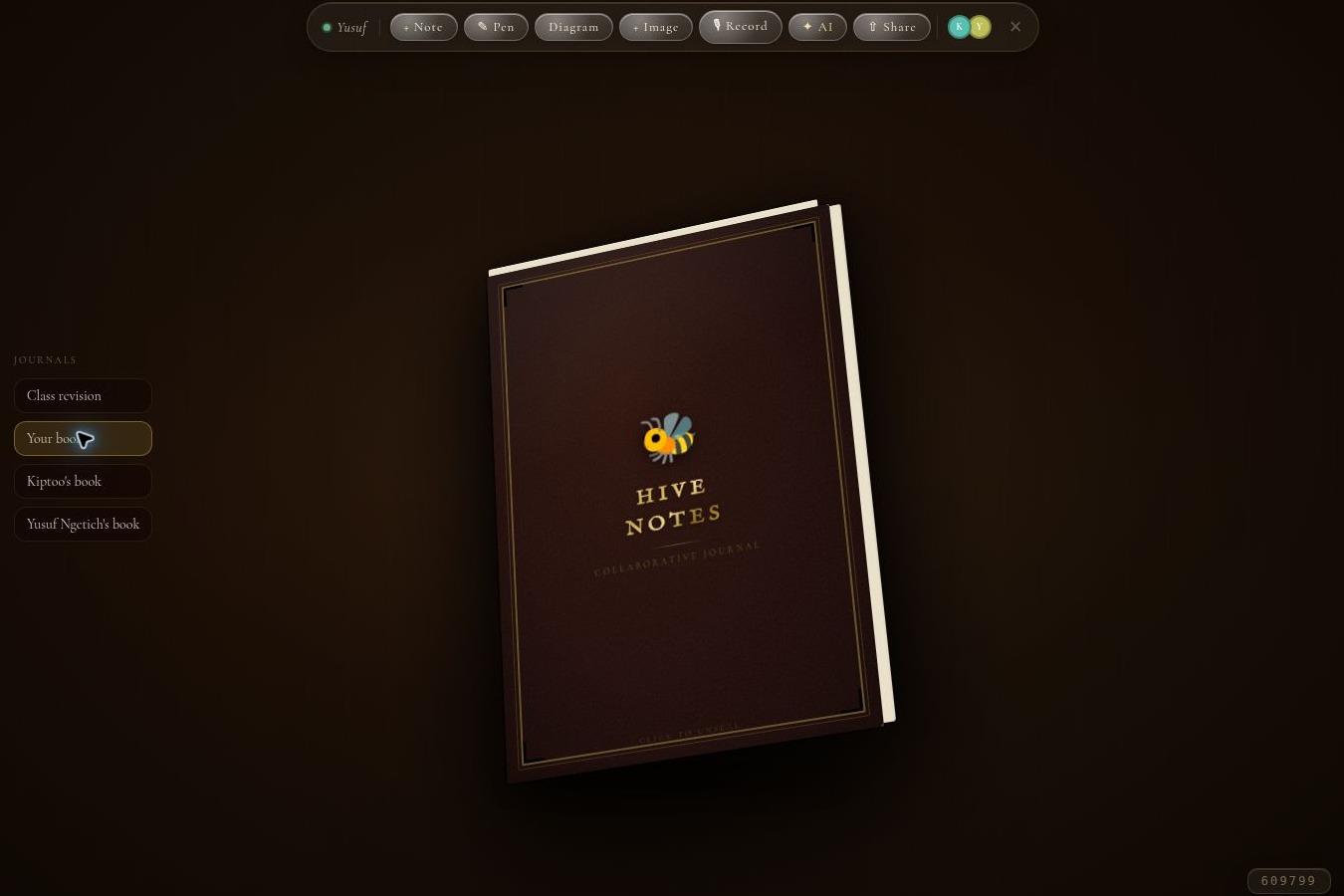
Your own book. This class’s hive.
-
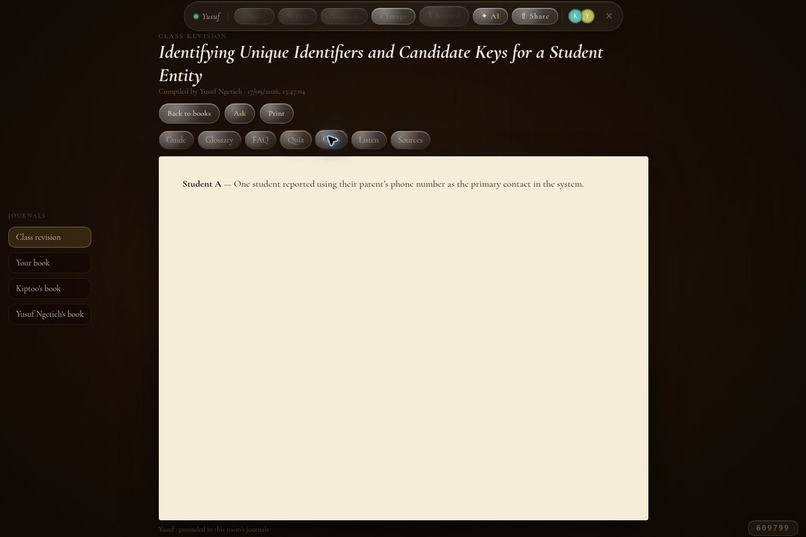
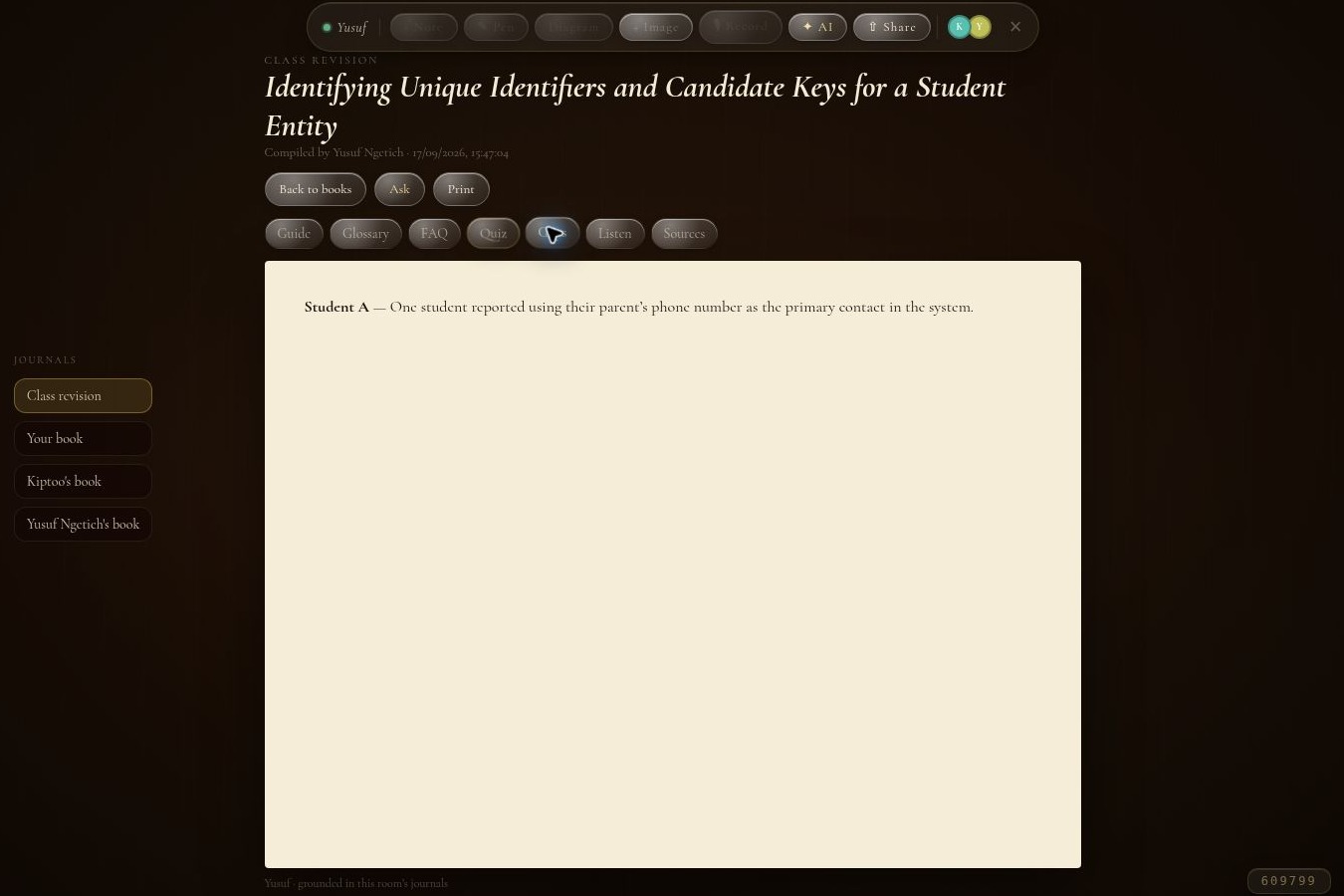
HiveNotes identifies missing details and areas the class should revisit.
-
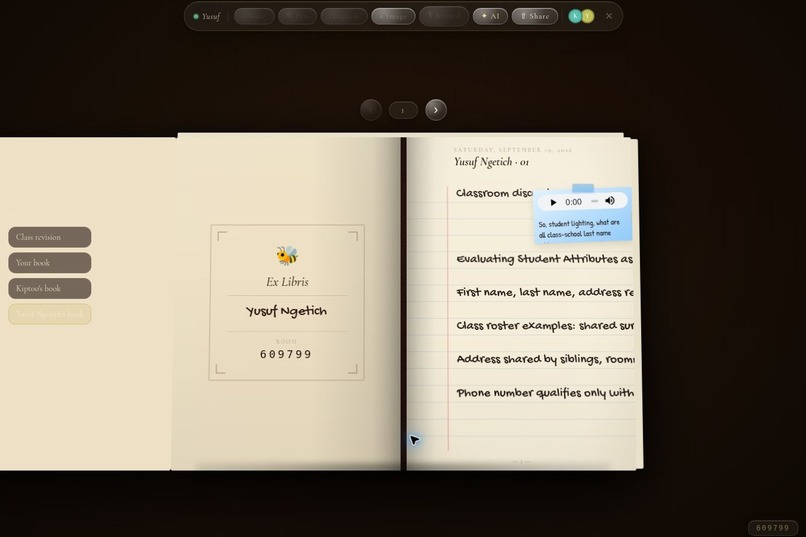
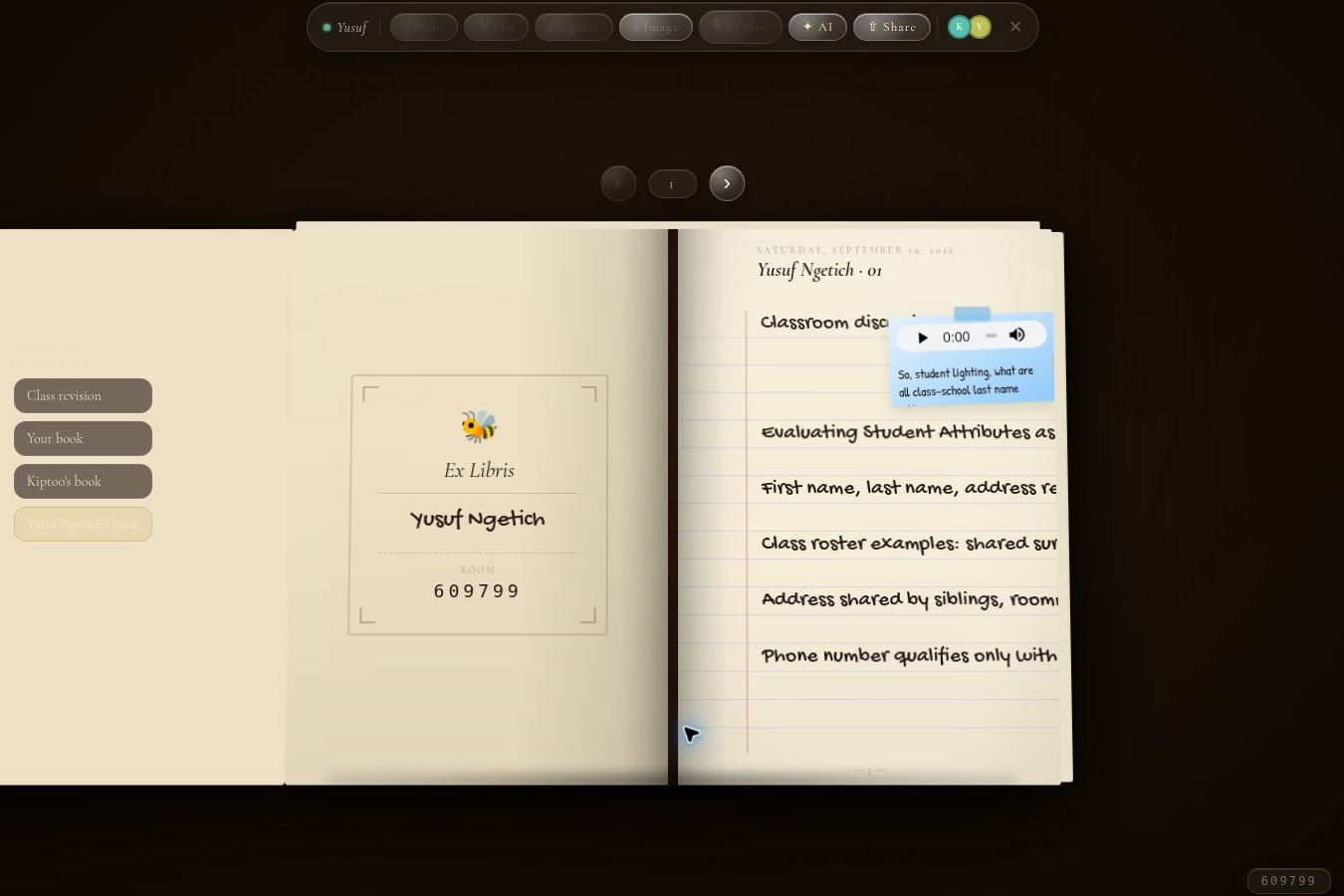
Each student owns a separate journal for notes, handwriting and lecture recordings.
-
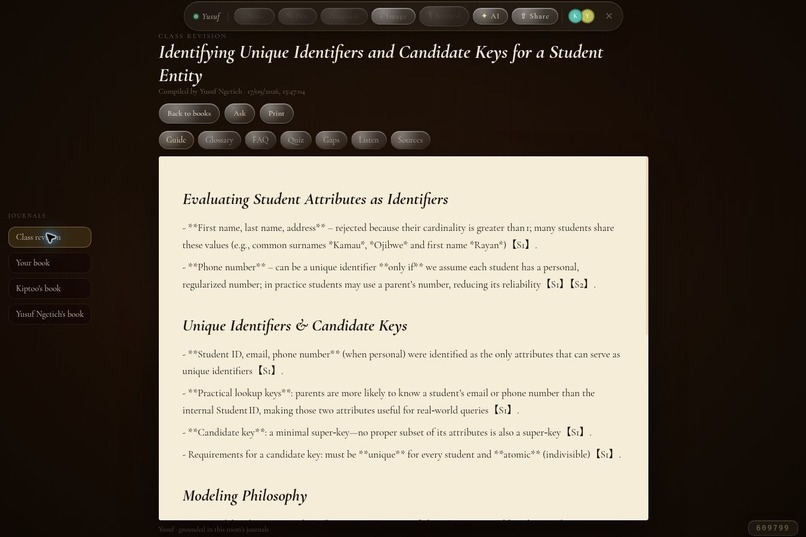
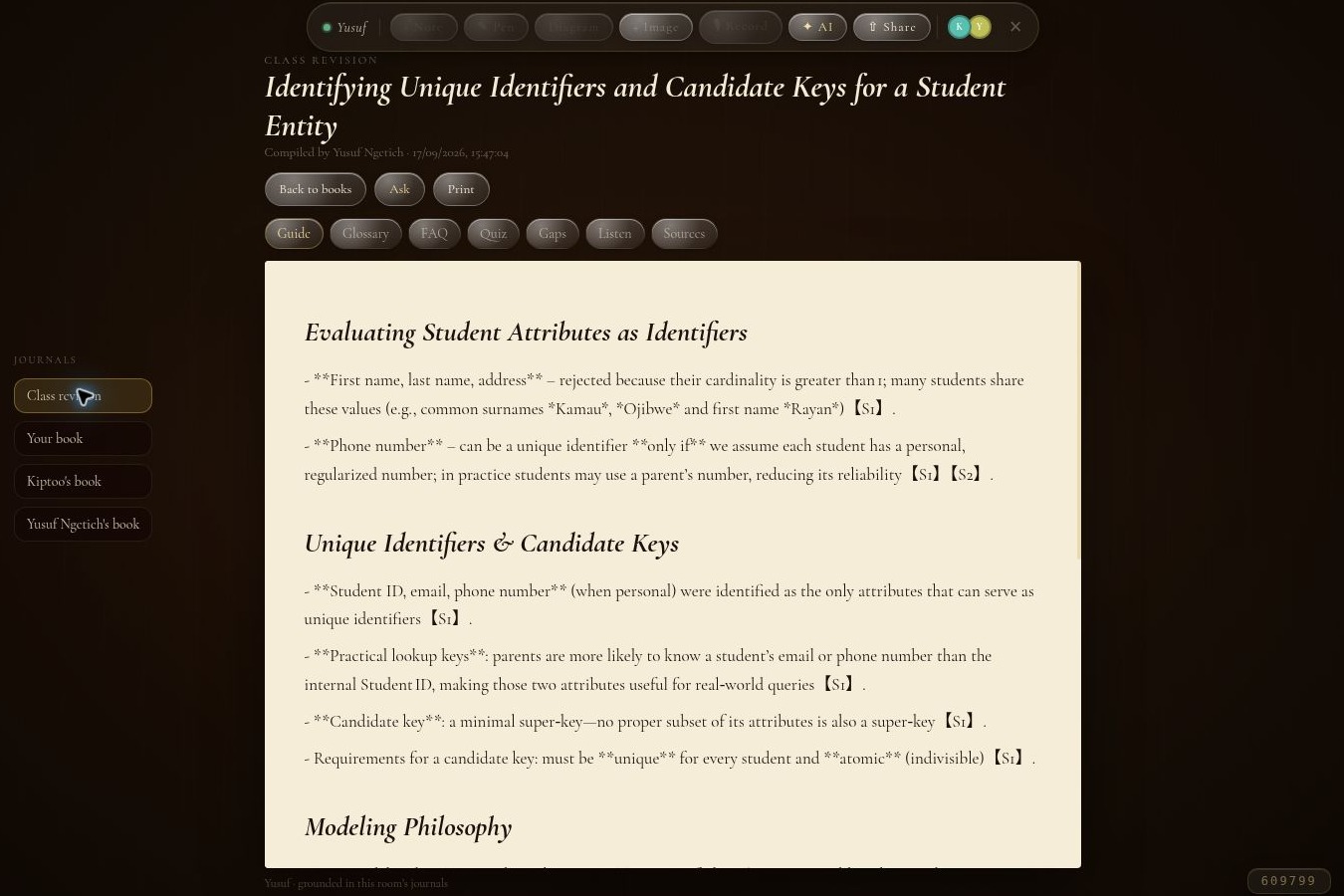
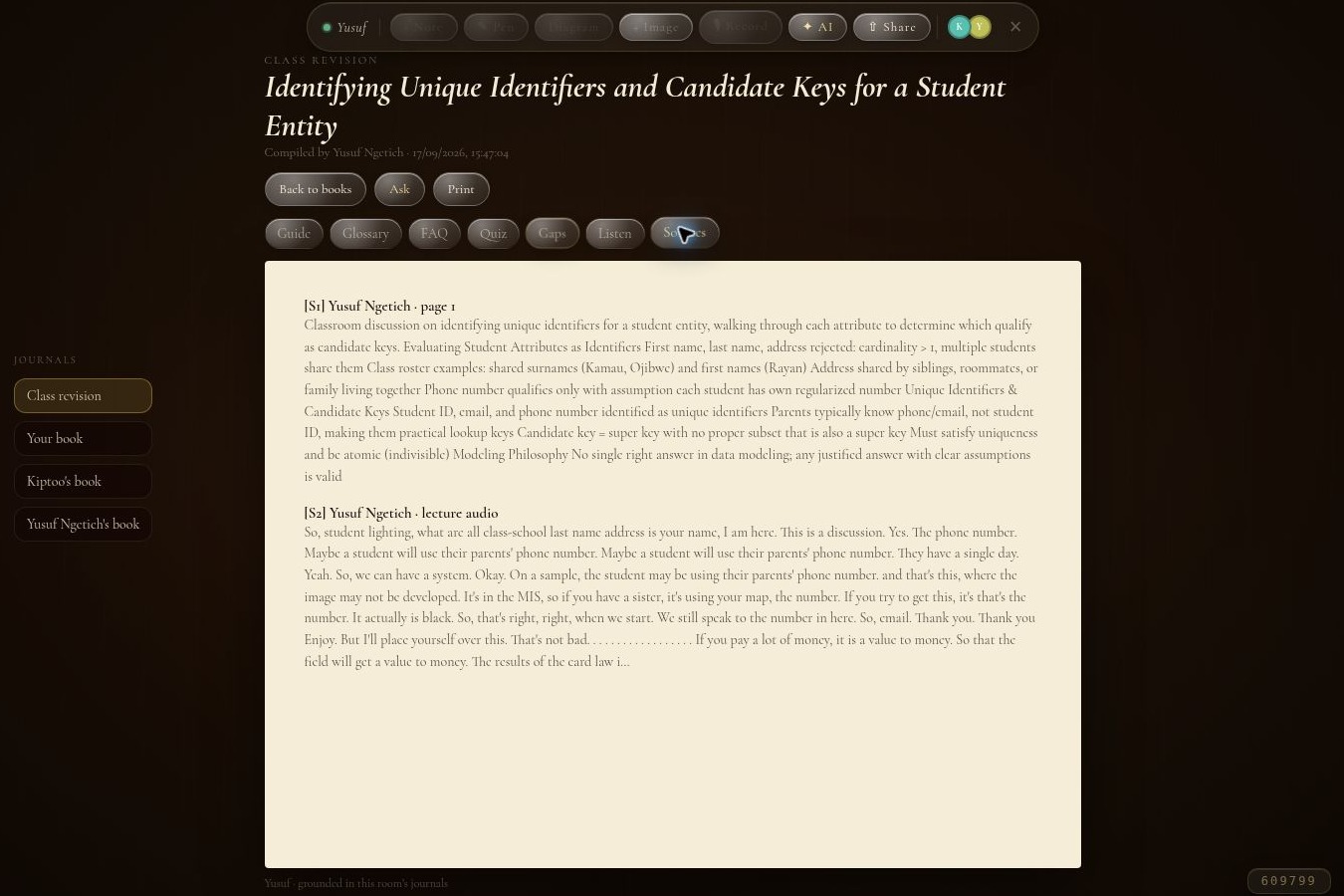
HiveNotes compiles classroom contributions into one structured, cited revision guide.
-
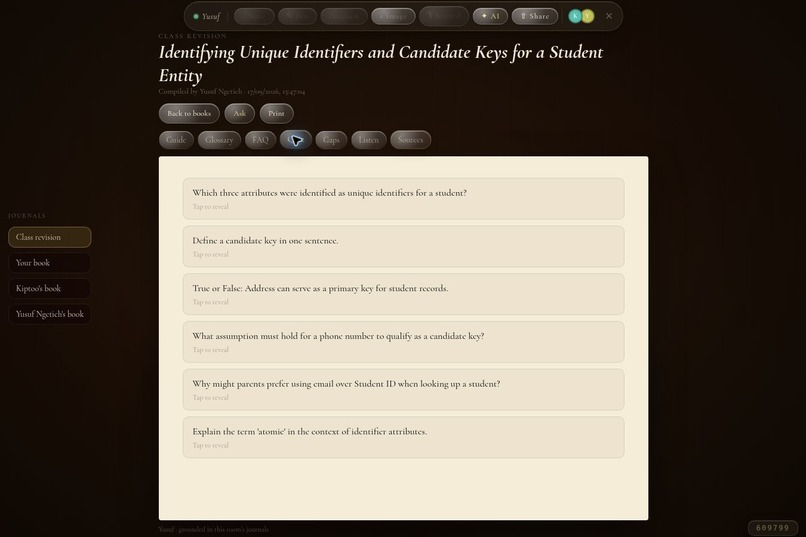
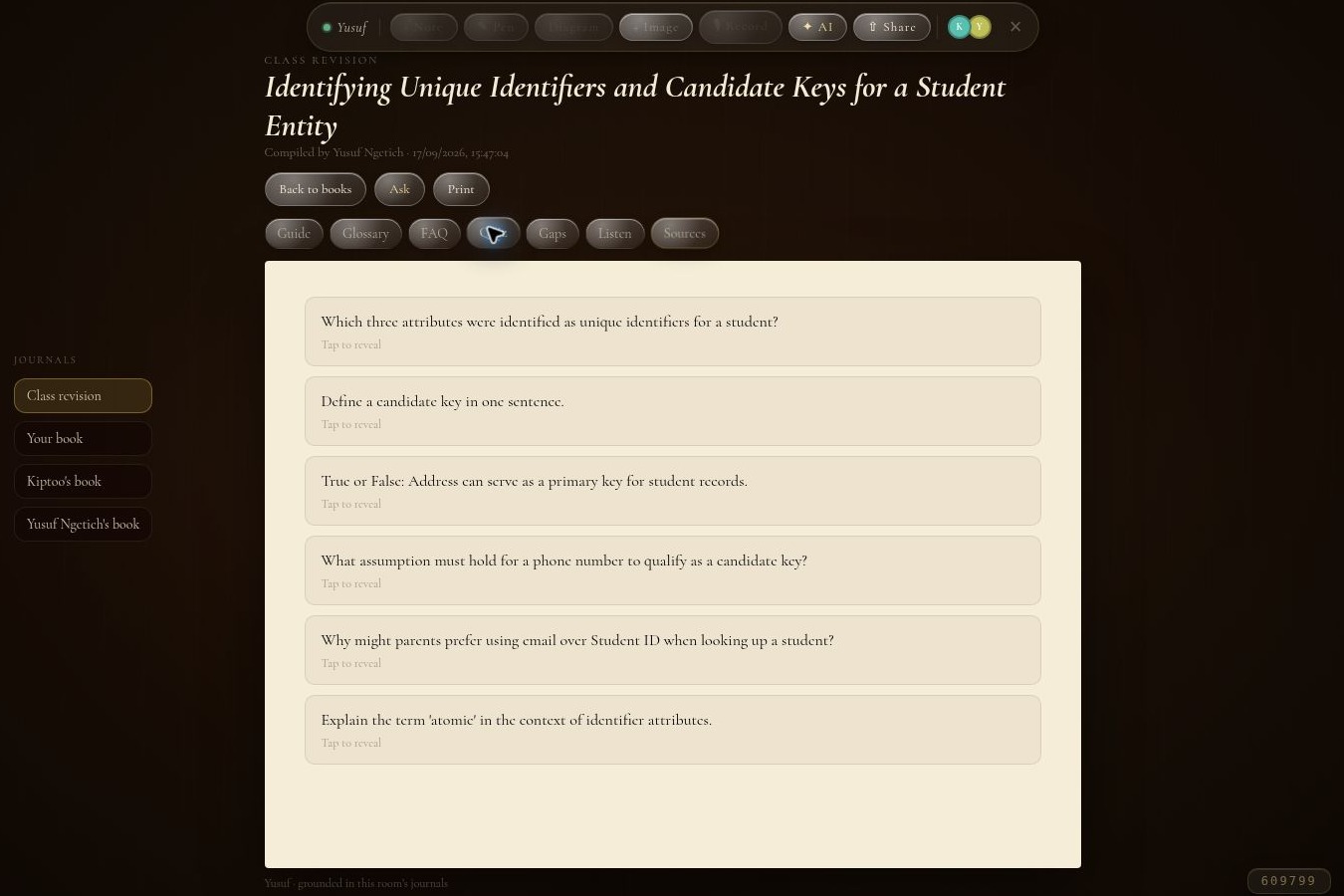
Students can test their understanding using questions generated from the class’s material.
-
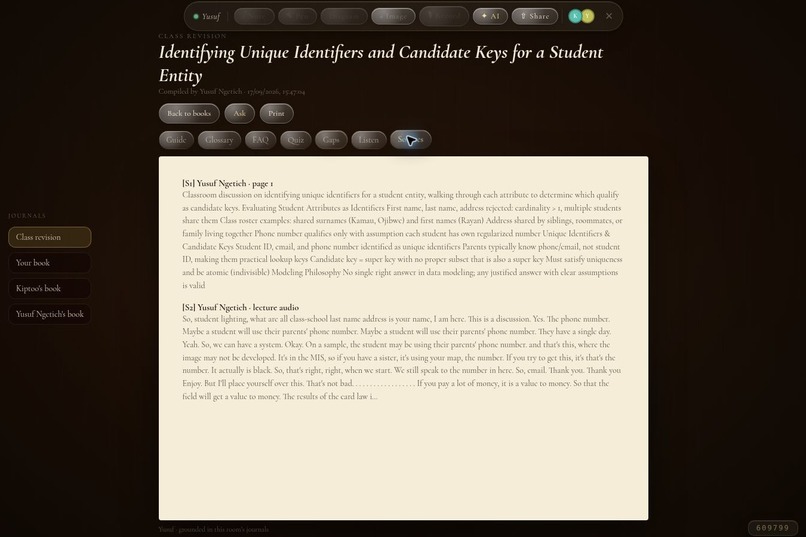
Generated revision content remains grounded in the room’s original journals and recordings.
-
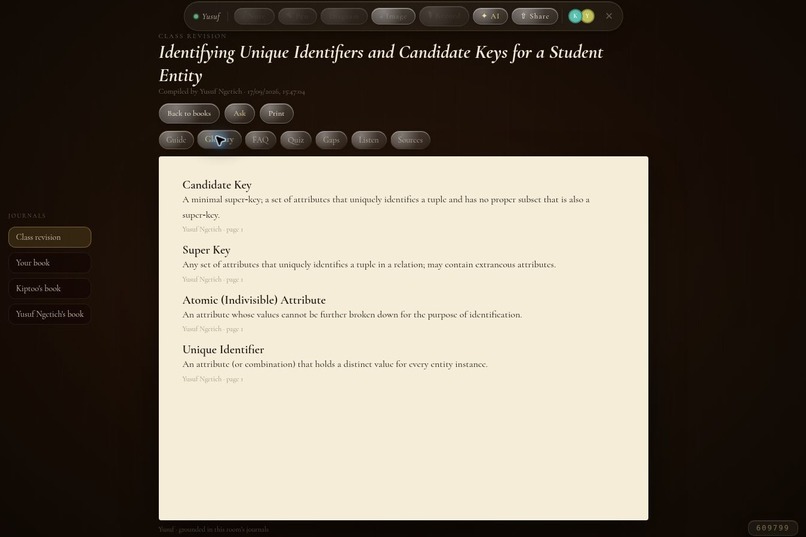
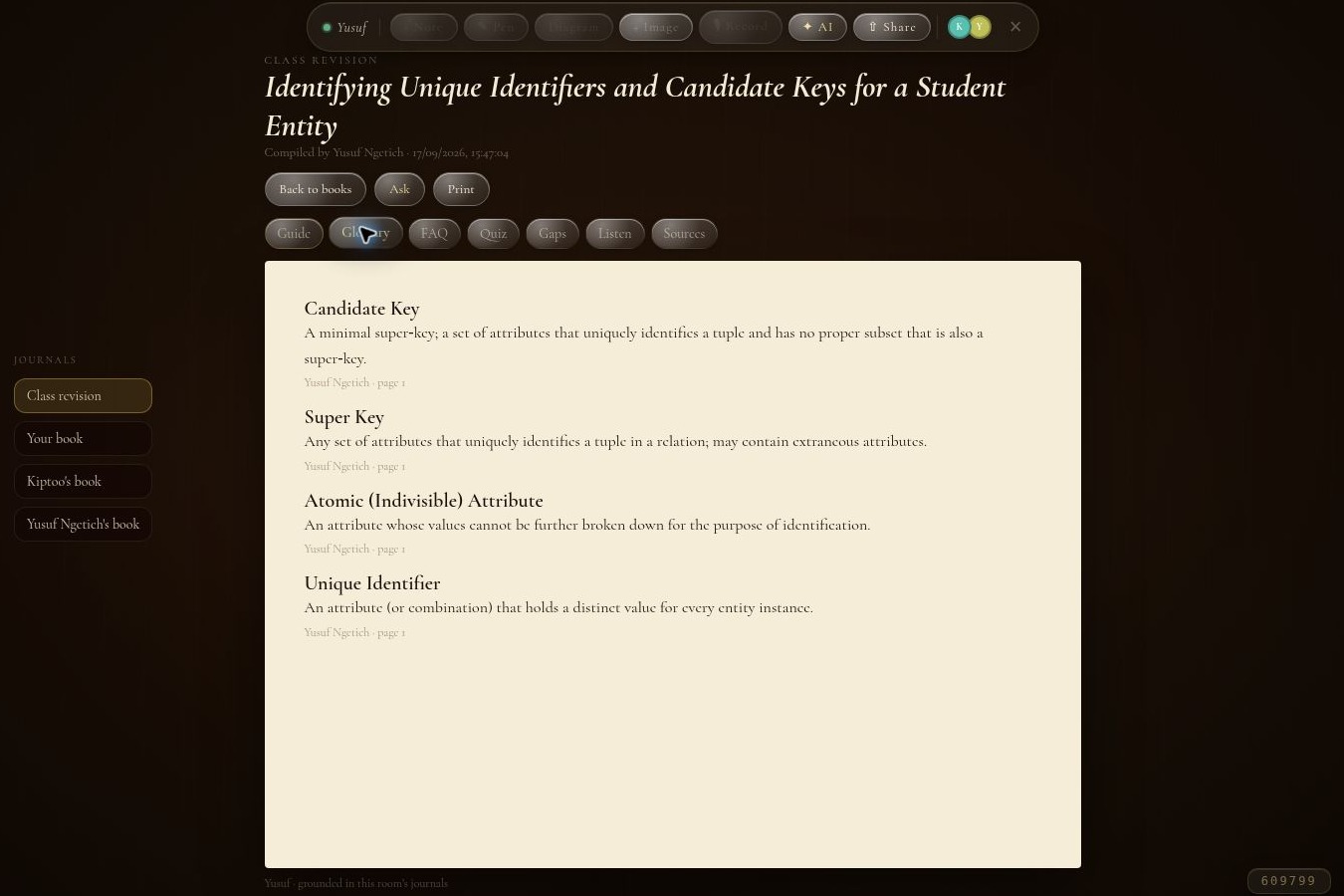
Important terminology is automatically organised into a study glossary.
Inspiration
No single student captures everything said during a lecture.
One student writes down the definition. Another catches the lecturer’s example. Someone else records an important explanation or remembers what might appear in the exam. After class, that knowledge remains scattered across separate notebooks.
We asked:
What if every student could keep a personal notebook, while the class learned from everything its members captured?
That idea became HiveNotes: your own book, connected to the class hive.
What HiveNotes does
HiveNotes is a collaborative classroom notebook where every student receives a separate, password-protected journal.
Students can:
- Type notes on ruled digital pages
- Write naturally using a pen or stylus
- Convert handwriting into journal text
- Create diagrams with Excalidraw
- Upload photographs and classroom materials
- Record lectures and generate transcripts
- Read their classmates’ books without editing them
- Ask AI questions grounded in the class’s material
The teacher can compile the class’s contributions into a shared revision studio containing:
- A structured study guide
- Source citations
- A glossary
- Frequently asked questions
- Practice quizzes
- Knowledge-gap analysis
- An audio revision briefing
- Source-grounded AI assistance
Instead of expecting one student to capture an entire lecture perfectly, HiveNotes lets the whole class build a more complete understanding together.
You do not have to catch everything. You only have to catch something.
How we built it
HiveNotes is a full-stack TypeScript application.
The frontend uses Next.js 16, React 19 and Tailwind CSS. The backend is powered by Node.js and Express 5, with classroom information stored in PostgreSQL 16 and managed through Prisma 7.
Each classroom receives a unique room code. The person who creates the room becomes the teacher and owner of the hive. Students join using the room code and create password-protected personal journals.
A student can edit their own pages, while classmates’ books remain readable but locked. WebSockets support live classroom activity, while operational-transformation logic helps manage collaborative updates safely.
Multimodal learning
HiveNotes combines:
- Canvas-based handwriting
- Handwriting recognition
- Excalidraw diagrams
- Image understanding
- Browser-based audio recording
- Lecture transcription
- AI-generated revision tools
- Text-to-speech revision briefings
Artificial intelligence
The AI system is powered through Groq.
HiveNotes uses:
- Whisper Large V3 Turbo for lecture transcription
- GPT-OSS 120B for revision generation and questions
- Qwen for image, handwriting and diagram understanding
- Orpheus for audio revision briefings
The system constructs its revision context from the room’s actual pages, notes, diagrams, images and recordings. Generated revision content includes references such as [S1], connecting explanations to the original classroom sources.
Deployment
The application is deployed on Render as separate web and API services with a managed PostgreSQL database.
We also created a Capacitor mobile shell for demonstrating HiveNotes on an iPad with Apple Pencil.
RevenueCat integration
HiveNotes uses RevenueCat Web Billing to power Hive Pro.
Students can join a classroom and use the core learning tools for free. We deliberately do not paywall:
- Writing and note-taking
- Handwriting conversion
- Diagrams
- Photographs
- Lecture recording
- Voice notes
- Classroom participation
Every teacher receives the first class compilation for free.
Hive Pro costs $4.99 per class per month and unlocks additional class compilations.
RevenueCat manages the hive_pro entitlement, offerings, purchases and subscription status. The HiveNotes backend independently verifies the entitlement and synchronizes subscription changes through a RevenueCat webhook.
We chose this model because the teacher controls the shared revision experience, while students should never be prevented from contributing because they cannot pay.
Challenges we faced
Protecting individual ownership
A single shared document would have been easier to build, but it would not feel like a personal notebook.
We created separate student journals with ownership controls and password protection. Students can learn from their classmates’ books, but only the owner can edit a journal.
Making handwriting useful to AI
Ink strokes are meaningful to a student, but they cannot be passed directly to a language model.
We developed a process for rendering notebook ink, recognizing the handwriting and converting it into text that can contribute to the class revision.
Grounding generated content
A general AI summary can introduce information that was never taught.
HiveNotes constructs its revision context from the room’s actual pages, notes, diagrams, images and lecture transcripts. The generated revision then cites those classroom sources.
Processing real classroom recordings
Real lectures contain background noise, interruptions, different accents and incomplete sentences.
We had to transform imperfect transcripts into useful revision material without pretending that every transcribed sentence was completely reliable.
Maintaining mobile notebooks
Mobile browsers can suspend processes and interrupt saving.
We improved mobile persistence so students are less likely to lose their work when using phones and tablets.
Designing fair monetization
We wanted RevenueCat to support a sustainable product without restricting students’ ability to learn.
This led us to place the paid entitlement around repeated teacher-controlled compilations rather than basic student participation.
What we learned
We learned that collaborative learning does not require removing individual ownership. Students can contribute more confidently when they still have a space that feels like their own.
We also learned that educational AI works best when it is grounded in the learners’ real context.
HiveNotes is not intended to replace listening, studying or note-taking. It helps students recover what they missed, compare perspectives and transform fragmented classroom information into something the whole class can revise from.
RevenueCat encouraged us to treat monetization as part of the product architecture instead of adding it at the end. Its entitlement system gave us a clear distinction between free student participation and premium teacher tools.
Accomplishments we are proud of
We built the complete classroom learning loop:
- A teacher creates a classroom hive.
- Every student receives a separate personal book.
- Students contribute handwriting, typed notes, diagrams, images or recordings.
- Classmates can read one another’s books without overwriting them.
- The teacher compiles the room’s collective knowledge.
- HiveNotes creates a cited guide, glossary, FAQ, quiz, gap analysis and audio briefing.
- RevenueCat manages continued access through Hive Pro.
We are especially proud that HiveNotes does not feel like a generic AI chatbot with a note-taking feature added to it.
It feels like opening a real notebook first—and discovering the intelligence of the class when it is time to revise.
What’s next
Our next steps include:
- Native iPad and mobile releases
- Improved offline writing and synchronization
- Better speaker separation for lecture recordings
- Teacher dashboards and classroom management
- Downloadable revision packs
- More personalized quizzes and study plans
- Institutional plans for schools and universities
- Additional accessibility features for different learning needs
Our long-term vision is for every classroom to have a living knowledge base created by the students who were actually there.
Try HiveNotes
Take your notes. Build the hive.
Built With
- billing
- capacitor
- css
- excalidraw
- express.js
- gpt-oss
- groq
- jwt
- mediarecorder
- next.js
- node.js
- operational
- postgresql
- prisma
- react
- render
- revenuecat
- tailwind
- transformation
- typescript
- web
- websockets
- whisper


Log in or sign up for Devpost to join the conversation.