-
-
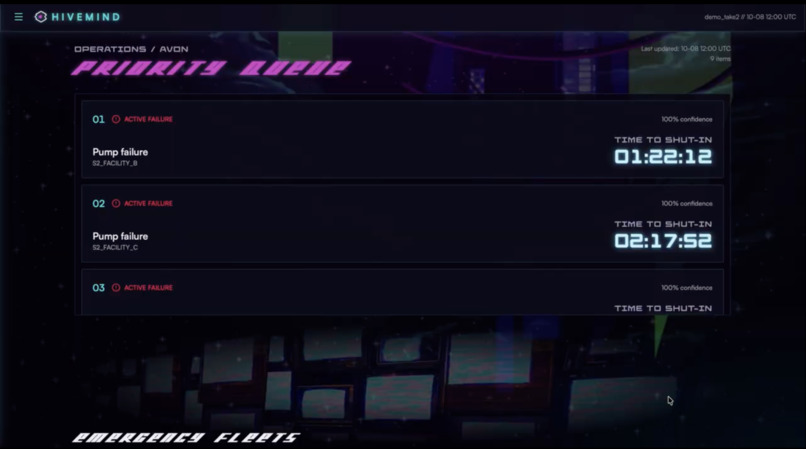
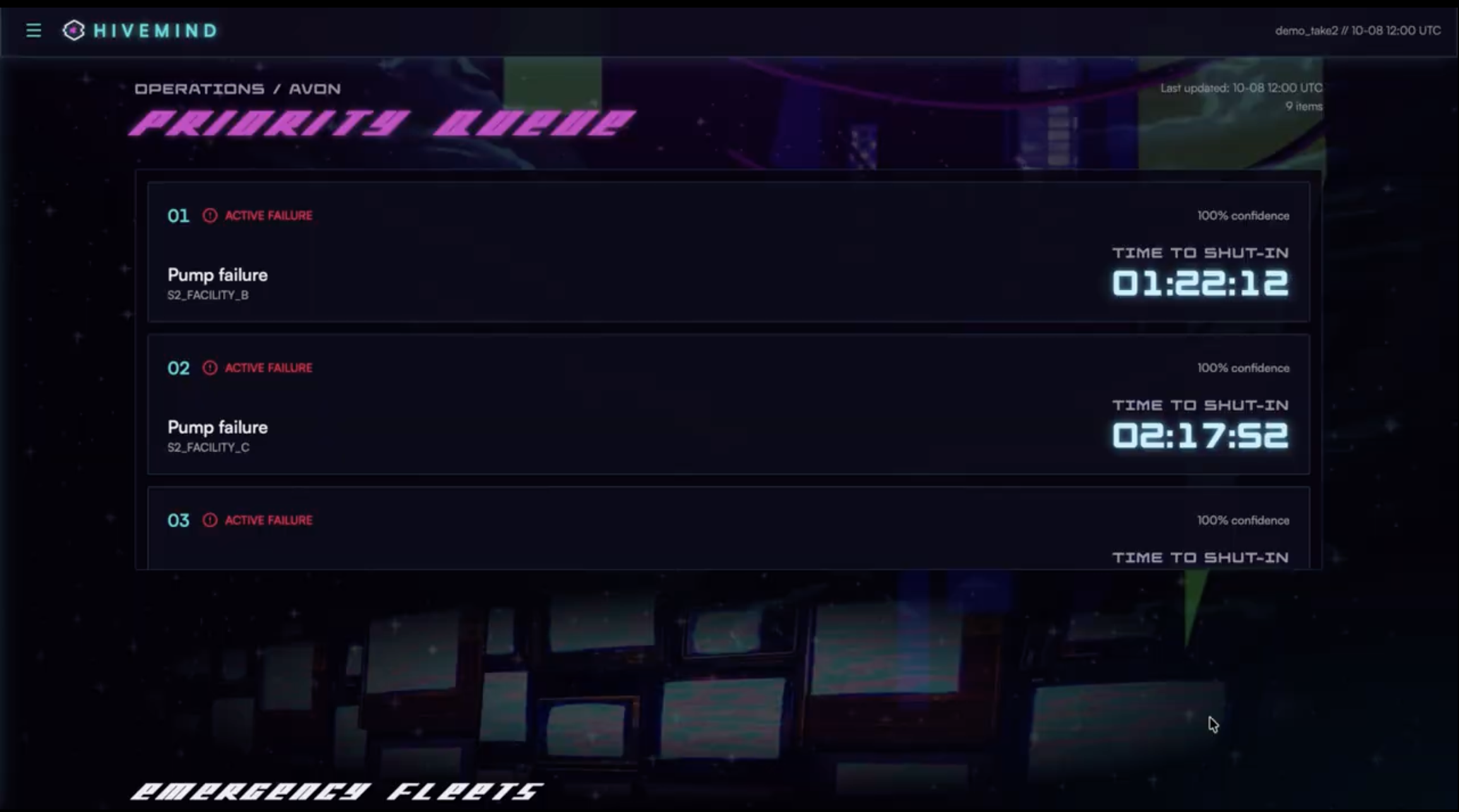
Priority Queue
-
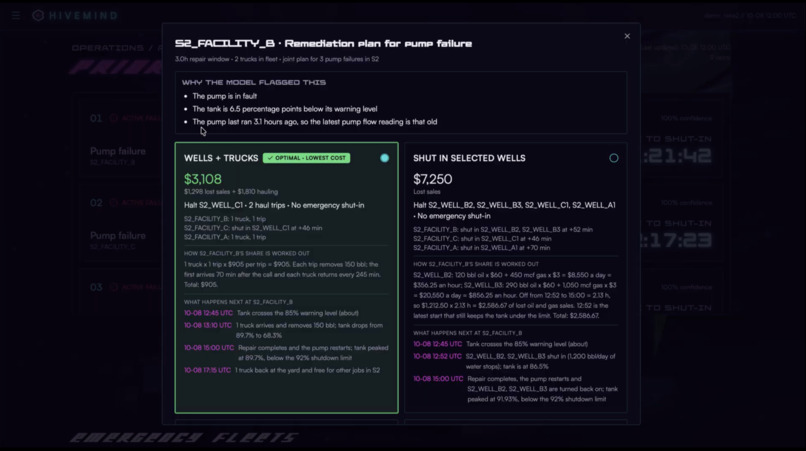
Decision Matrix with AI/ML recommendations
-
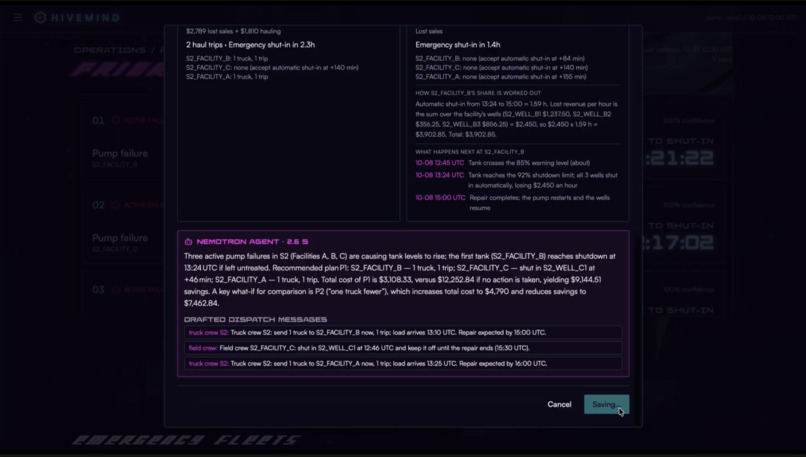
Nemotron Agent
-
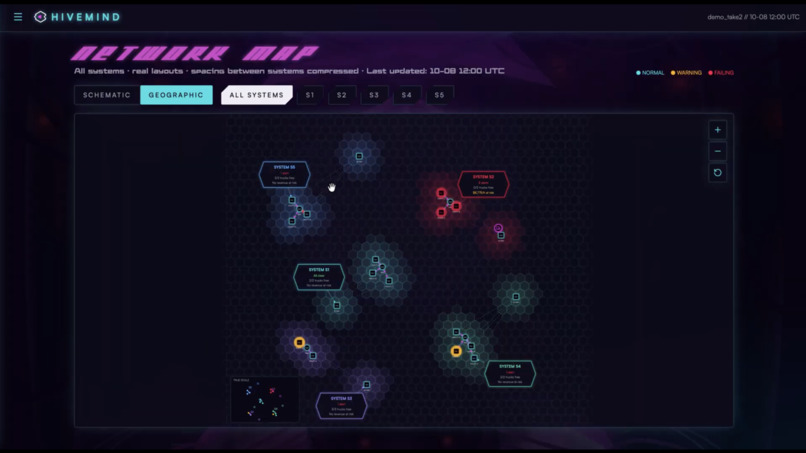
Geographical Hivemind Map
-
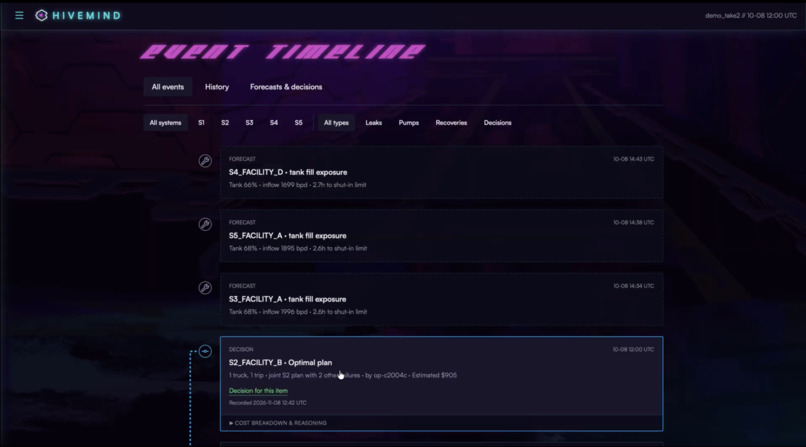
Timeline
-
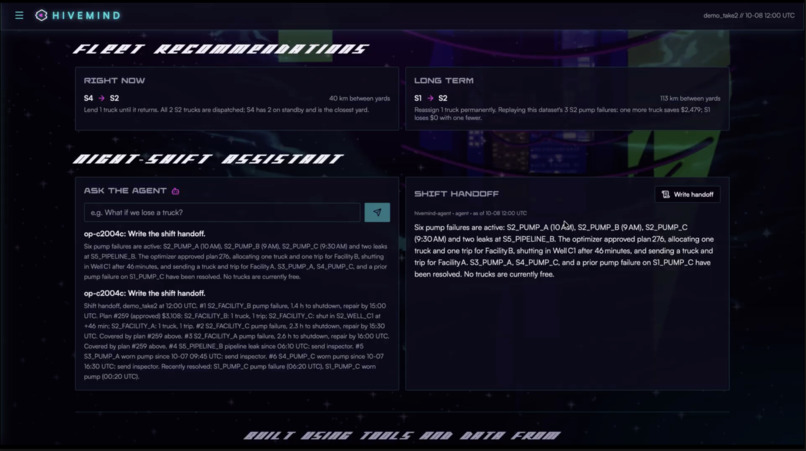
Nemotron Nightshift AI Assistant / Shift Handoff
Inspiration
Every oil well produces salt water along with the oil, and that water has to go somewhere. In EOG's Beat the Shutdown challenge, each well site sends its water to a tank, and a pump moves it down a pipeline to a disposal site. When a pump fails at 3 AM, the tank starts filling. If it hits its limit, the wells shut in and production stops until the repair is done. The night-shift operator has to see it happening, work out how long they have, and choose between sending trucks, shutting in some wells early, or letting it trip. They also share a small truck fleet with every other site in the system. That's a lot to work out by hand at night, often while several things go wrong at once. We wanted one screen that does the detection and the math and tells the operator what to do next in plain English. A whole network of sensors and tools working as one mind for the night shift: Hivemind.
What it does
Hivemind is a live operations console for networks of tanks, pumps and pipelines, built on EOG's salt water disposal data.
- Finds problems in the raw sensor data: pump failures, pipeline leaks and worn pumps. An ML model reads the telemetry and flags issues as they develop.
- Counts down to shutdown: for every failed pump, it projects when the tank will reach its limit, with a confidence range.
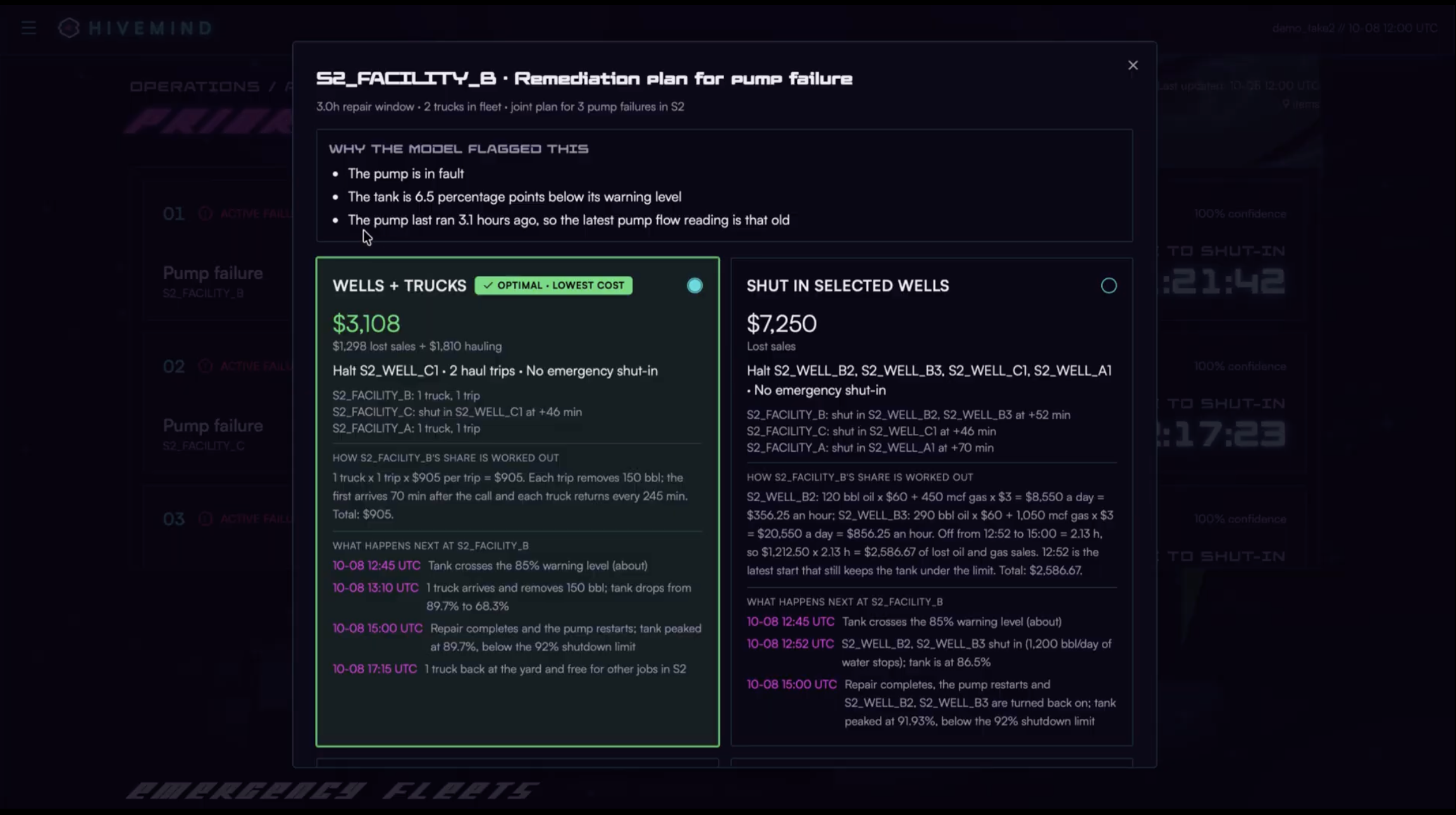
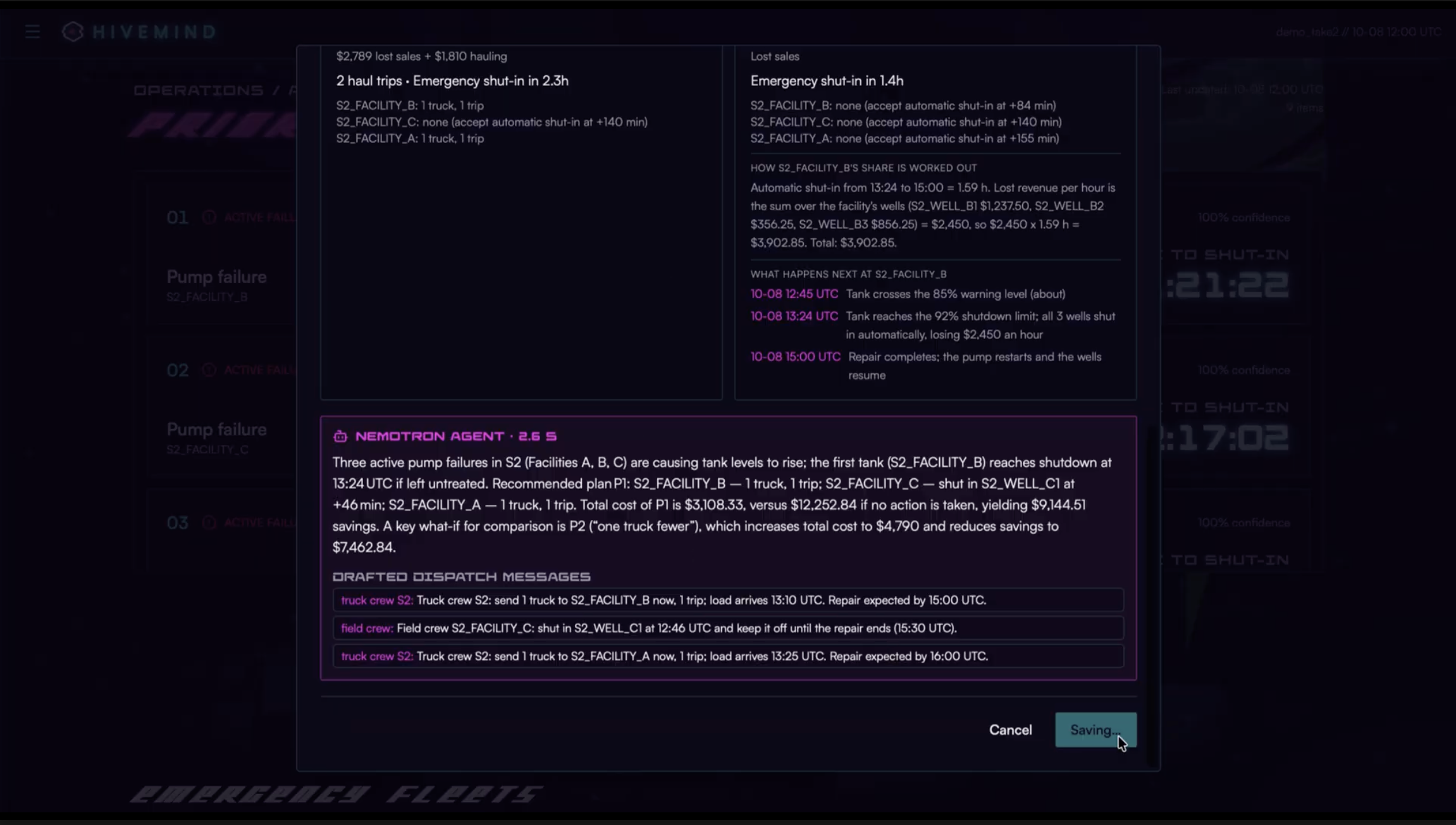
- Plans the cheapest response: it compares trucks, early well shut-ins, a mix of both, or letting the tank trip. It plans a whole system at once, because sites share trucks. When three pumps fail within an hour and there are only two trucks, it still finds the cheapest plan.
- Explains itself: for every alert you can see why the model flagged it and what happens next under each option.
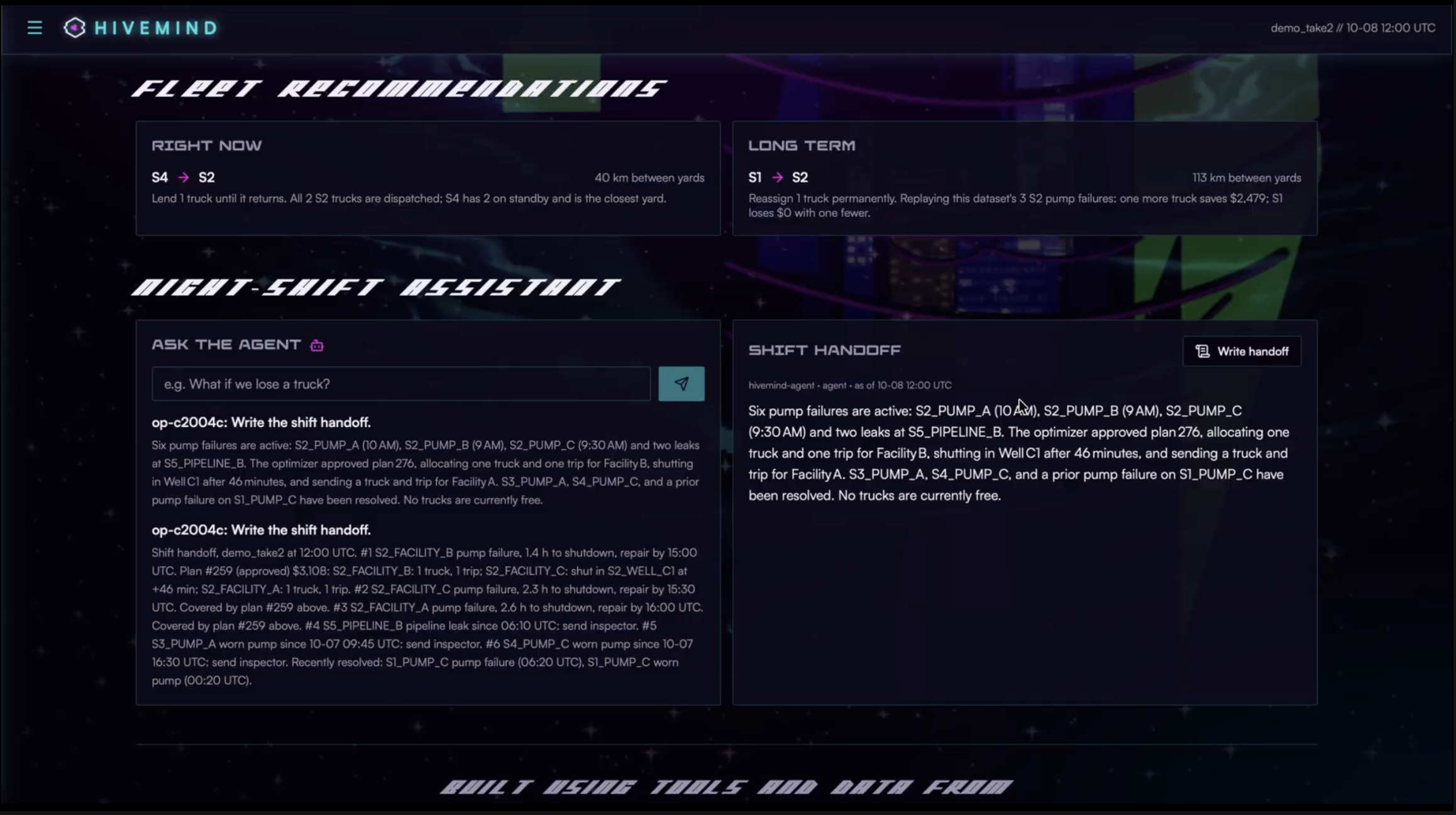
- Has a night-shift AI assistant: an NVIDIA Nemotron agent automatically reviews each new failure, runs what-if scenarios like "what if we lose a truck?" or "what if the repair takes 2 hours longer?", and drafts the messages for the truck and field crews. It also answers operator questions and writes the shift handoff.
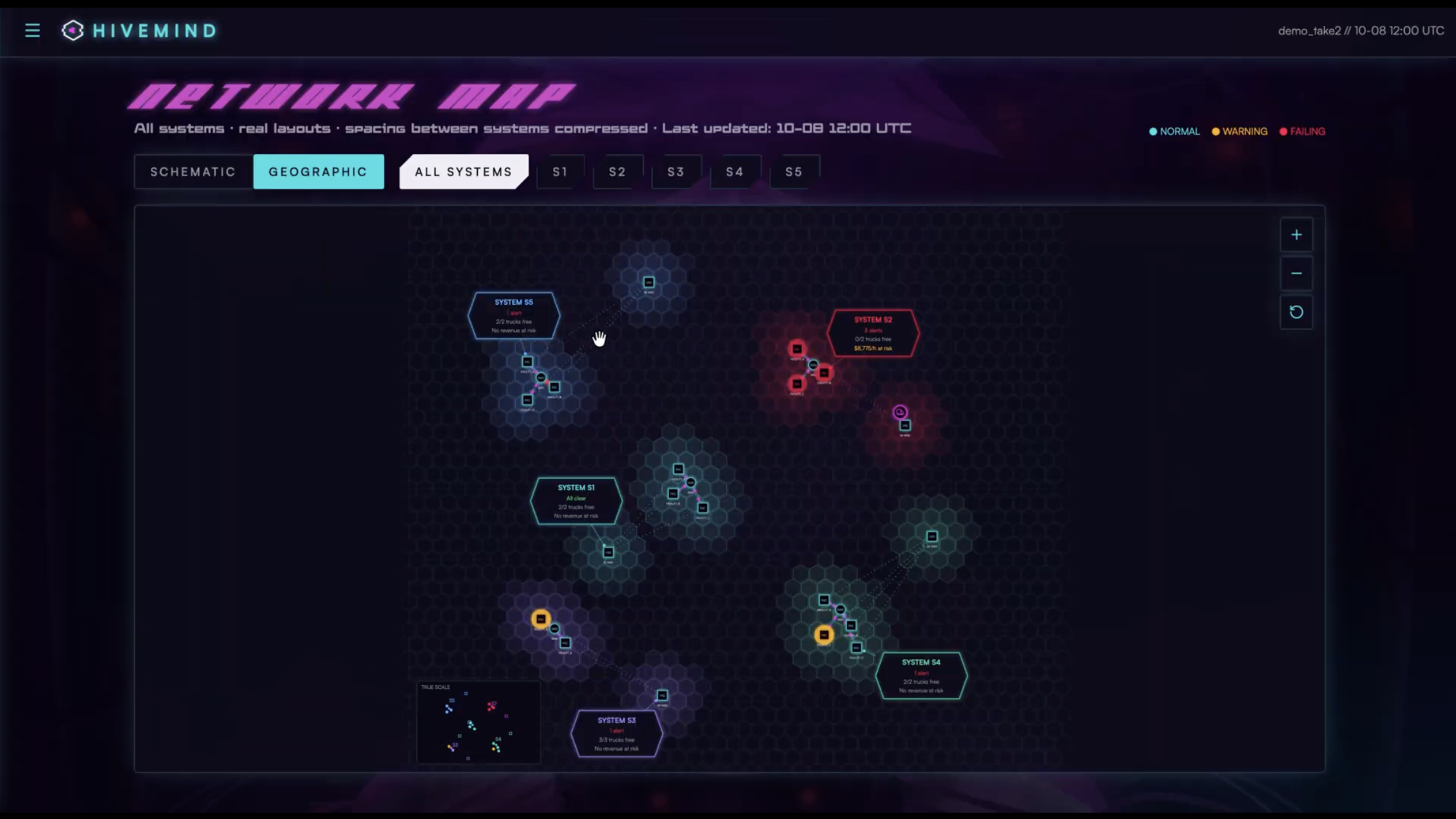
- Shows the whole field: a geographic map with honeycomb territories and trucks moving along their routes.
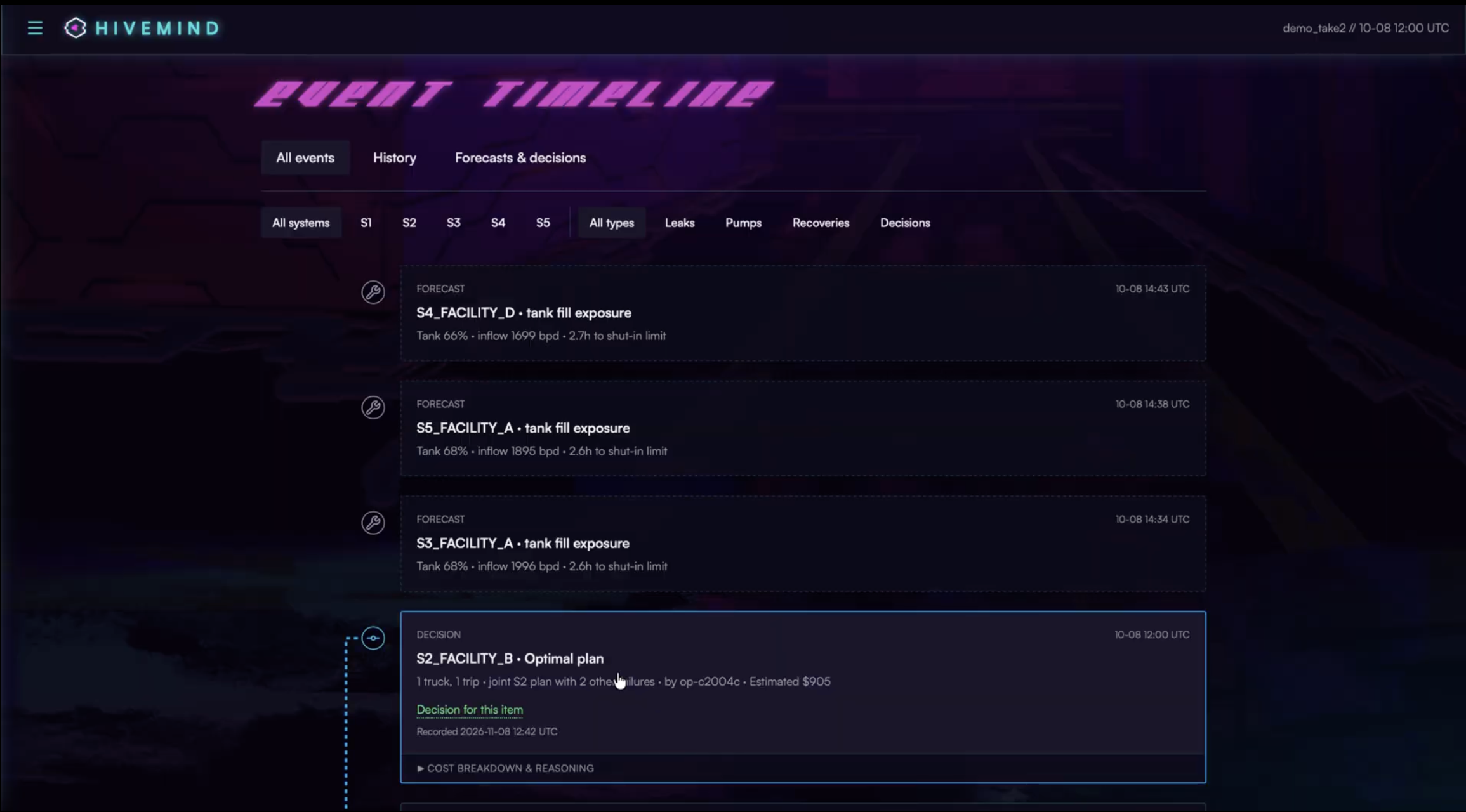
- Keeps a timeline: each incident is linked to the decision made about it, with the cost breakdown for every decision.
How we built it
- SpacetimeDB is the backbone. All state lives in one TypeScript module: datasets, clock, telemetry, events, plans, decisions, handoffs and agent traces. Detection, countdowns and plans are recomputed inside the database every time the clock moves, and the frontend just subscribes to tables.
- ML (Python + FastAPI): a LightGBM model trained on simulated sensor data with labeled events. It gives explanations and predicted fix sequences.
- Nemotron agent: served on Brev, it calls the planner and simulator as tools and writes the text. Every number it writes is checked against the tool results before anyone sees it. If a number doesn't match, the agent rewrites the text, and if it still fails, a template built only from tool output is used instead.
- Frontend: TanStack Start, React and Tailwind, styled to match HackUTD Zero Day, with a dashboard, map and timeline all reading live from the database.
Accomplishments that we're proud of
- 170 of 170 checks passing against the answer keys.
- Every event detected (87 of 87) with zero false alarms.
- Every countdown within ±0.1 hours.
- Alerts in the same order as the reference in every snapshot.
- Every snapshot plan matches the reference cost exactly, including the hardest case: three S2 pump failures in an hour with two trucks, solved for $3,108, the reference cost.
- The ML model held up on unseen networks: 97 of 97 events with zero false alarms on simulated weeks it never trained on.
What's next for Hivemind
- Partial plans: trucks that only delay a trip instead of preventing it, which are cheaper in some situations.
- More failure types and earlier warnings: train on a wider range of simulated networks so slow problems like worn pumps are caught sooner.


