-
-

Introduction
-
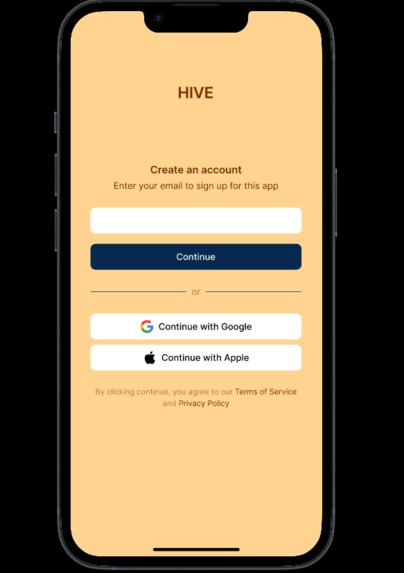
Registration
-
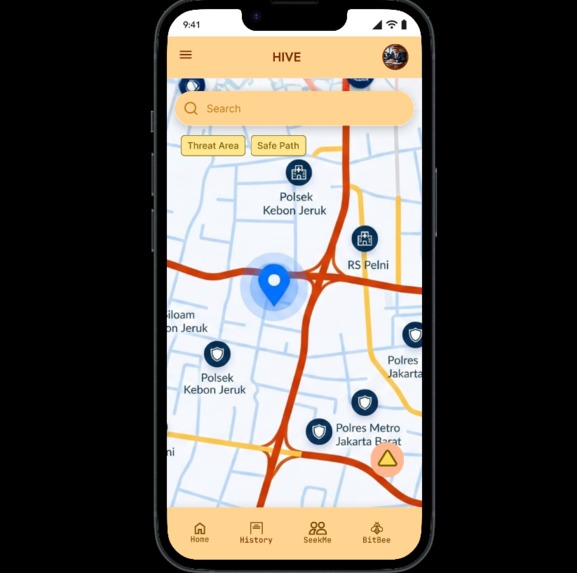
Home
-
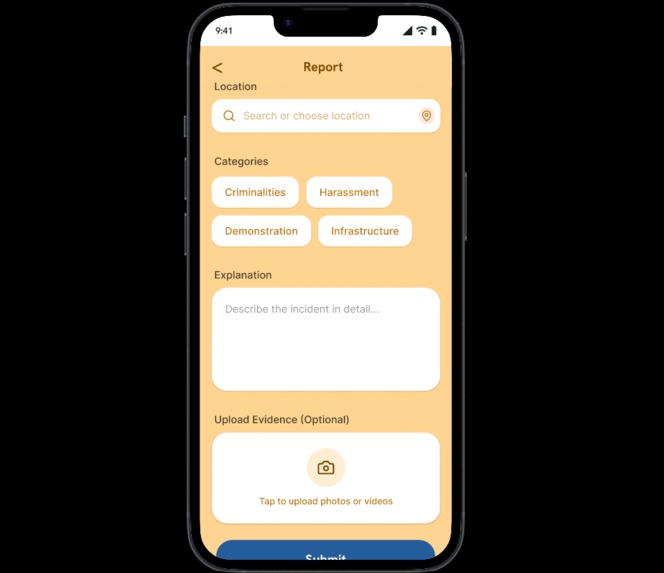
Report
-
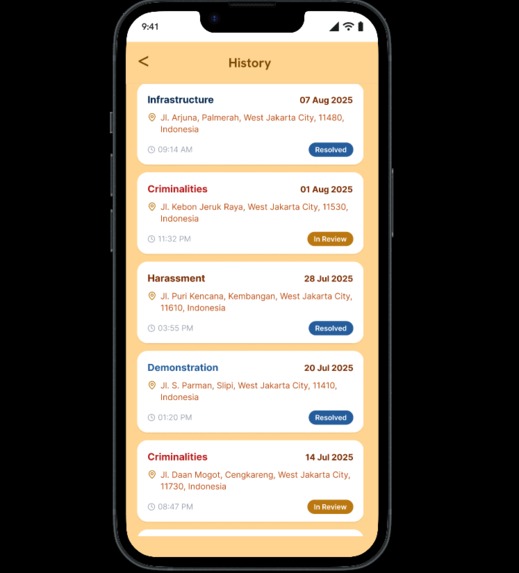
History
-
BitBee
-
SeekMe
-
Safety Pin

Inspiration
The primary catalyst for HIVE was the critical need for a streamlined, real-time spatial platform to address coordination bottlenecks during high-stakes environmental changes, public infrastructure reporting, and local community mapping. We wanted to build a decentralized "neighborhood watch" infrastructure that combined robust, low-latency mobile mapping client interfaces with automated intelligence capabilities. Driven by the vision of enabling hyper-local community reporting alongside precise geo-spatial intelligence, we set out to create an integrated ecosystem where data transparency, immediate feedback loops, and automated spatial updates live seamlessly under a single cross-platform layout.
What it does
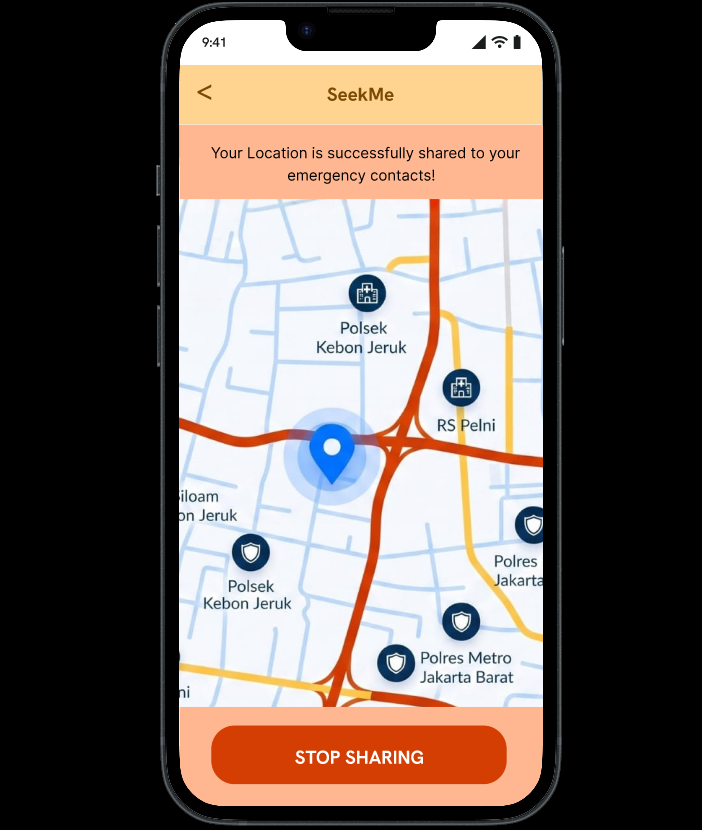
HIVE acts as an interactive digital neighborhood board and real-time mapping platform. At its core, the application provides the following features:
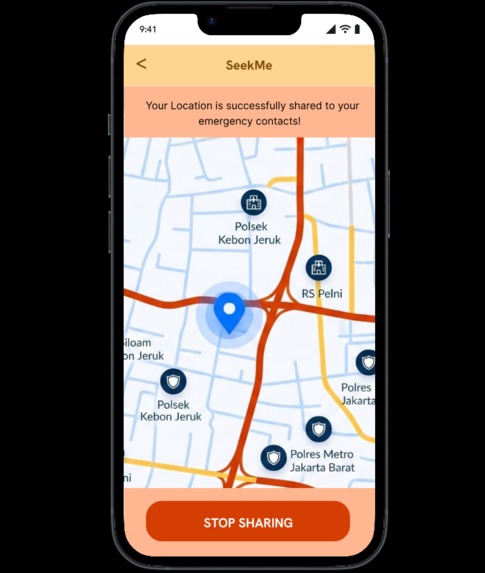
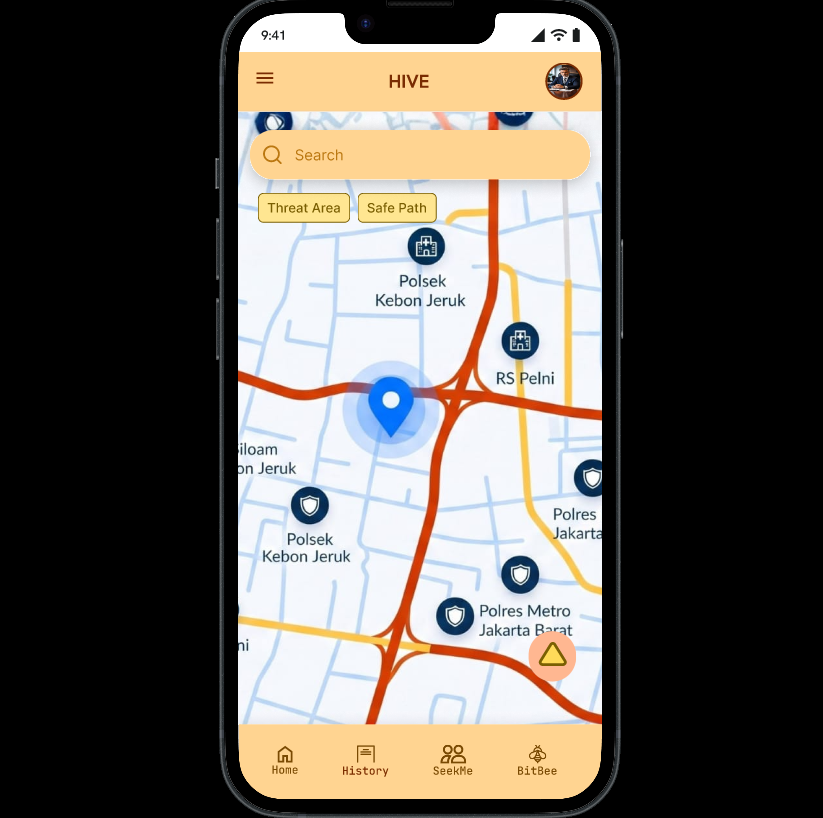
- Interactive Mapping Infrastructure: Employs persistent client-side tracking configurations to drop physical dynamic anchors representing localized data coordinates or field incidents.
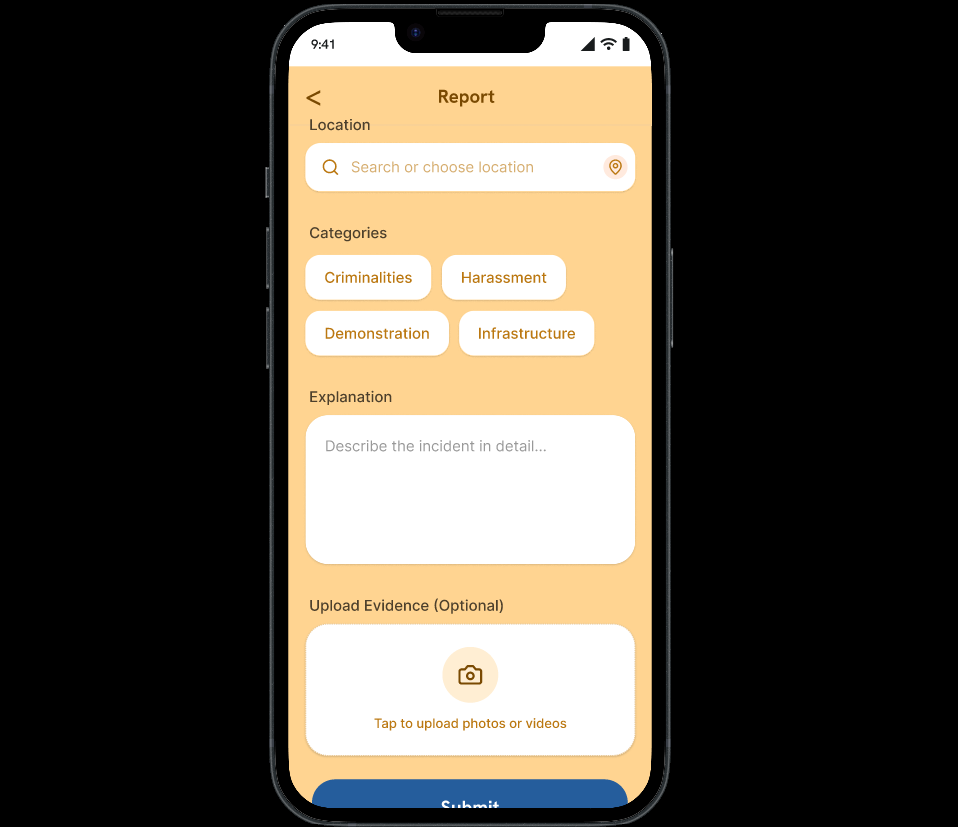
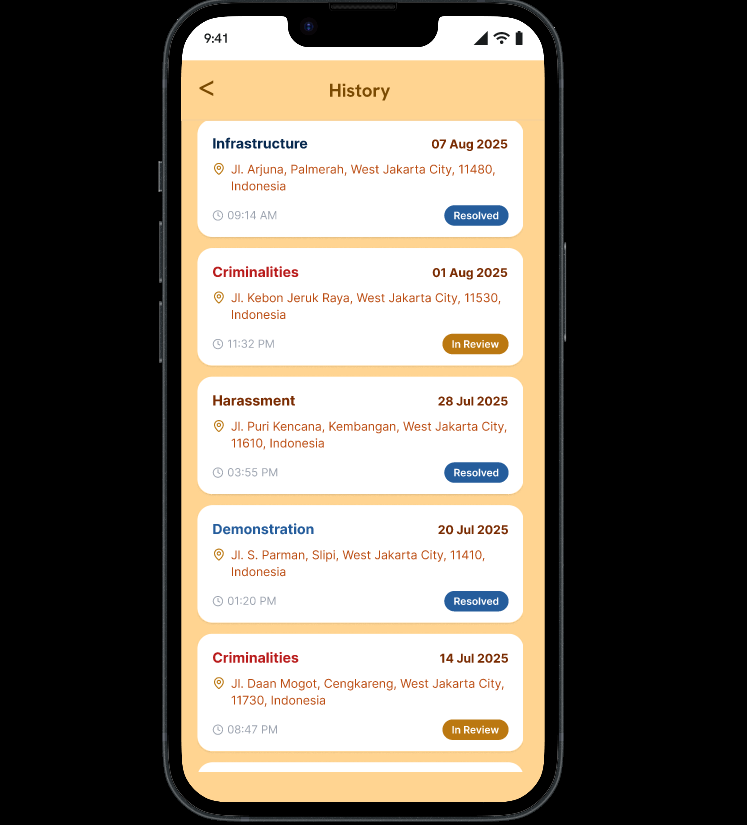
- Incident Submittal & Reporting: A modular form-based dashboard allowing users to record complex categories, status trackers, and specific infrastructure flags.
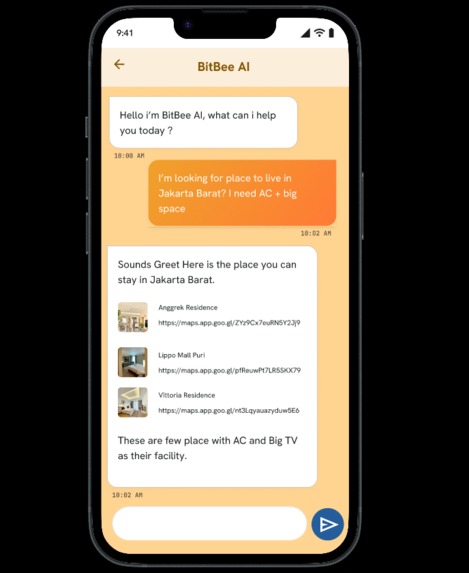
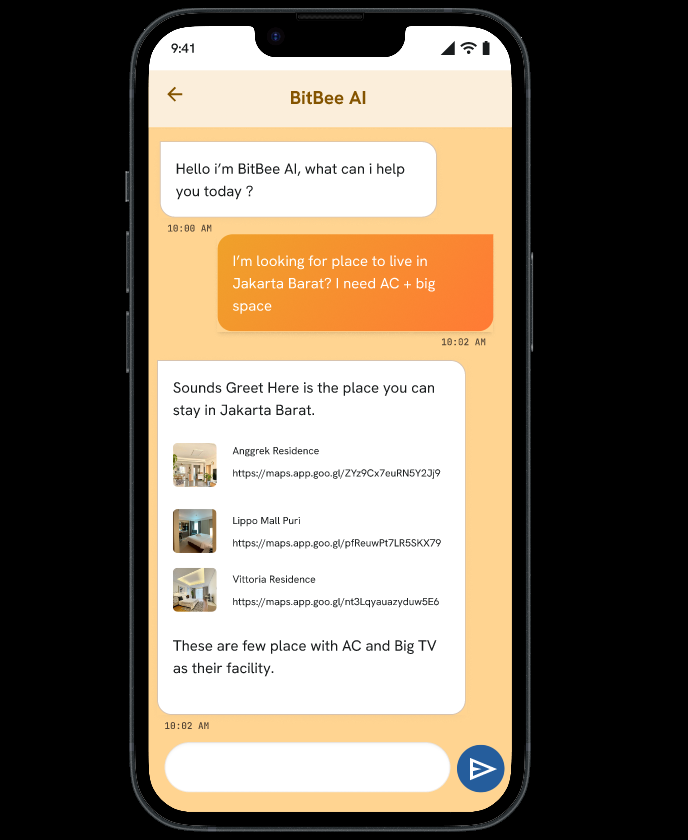
- AI Page Integration: An internal processing pipeline where users can trigger language-model pipelines and automated analysis directly from incoming field reports.
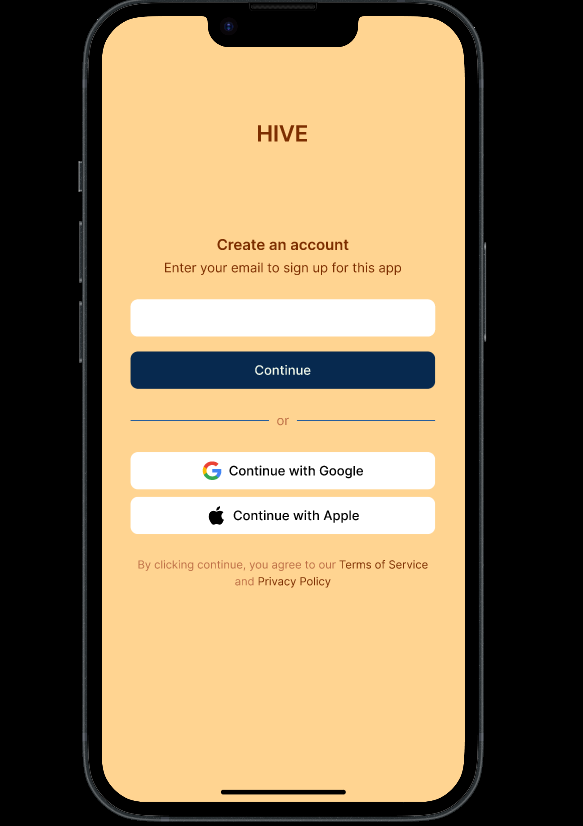
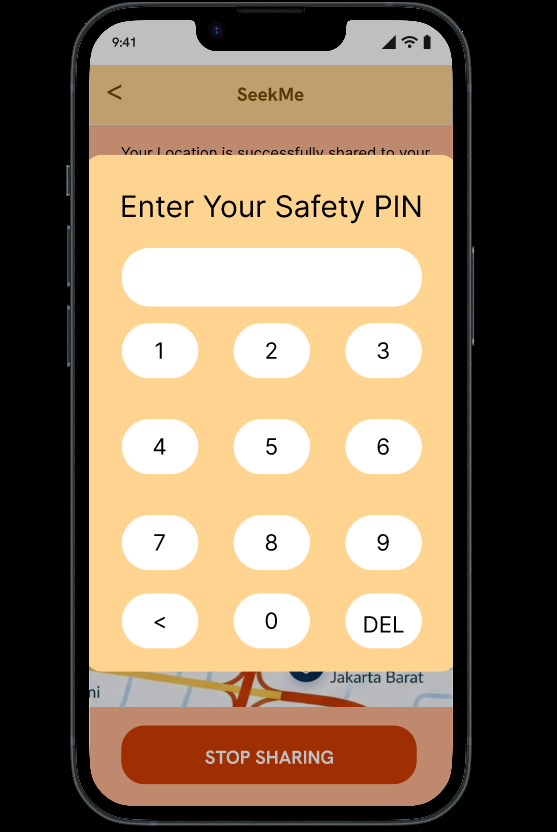
- Secure Cross-Platform Gatekeeping: Integrated federated authentication supporting secure email verification alongside third-party OAuth channels for frictionless community access.
How we built it
HIVE was engineered from the ground up as a cross-platform mobile ecosystem utilizing a reactive state-driven architecture.
- Core Engine: Written entirely in Dart using the Flutter framework to maintain single-codebase parity across mobile devices.
- Platform Integrations: Optimized with custom native platform code—Kotlin for fine-tuning the Android main lifecycle layer, and Swift to configure explicit iOS application delegates and scene management rules.
- State Management: Handled natively via a decoupled value notifier pipeline combined with isolated spatial state configurations to handle low-latency rendering updates.
- Graphics & Asset Pipeline: Utilized structured vectors, high-fidelity iconography, and compressed vector-based Lottie layout runtimes for rendering smooth background loading sequences without impacting the system footprint.
Challenges we ran into
One of the core hurdles we faced was managing fluid data consistency when multi-layered local coordinate transformations intersected with the reactive state architecture. During active rendering frames, tracking coordinates would occasionally cause synchronization drops between the underlying spatial tracking layer and the immediate widget trees.
Balancing this mathematical optimization directly within a single thread required offloading mathematical clusters into isolated execution workers to keep the interface ticking over at a stable 60 frames per second.
Accomplishments that we're proud of
We are incredibly proud to have achieved absolute architectural separation across our layers. The entire presentation tier is cleanly decoupled from the localized application logic, allowing developers to manipulate UI components without breaking the state lifecycle.
- Successfully implemented real-time, low-latency background state modifications that immediately cascade updates to custom components like the search indices and mapping sheets.
- Integrated cross-platform federated authentication matrices seamlessly, maintaining a consistent user verification footprint across multiple operational systems.
- Created an incredibly polished, responsive user layout that uses vector animation layers safely without bloating the final compiled package size.
What we learned
Building HIVE provided deep, practical insights into managing cross-platform configuration constraints and handling modular state models. We learned how to properly bind native platform delegates across Kotlin and Swift pipelines when custom mobile lifecycles require granular access control beyond the default framework behaviors.
Additionally, optimizing resource constraints for continuous spatial streaming metrics completely reshaped our approach to memory configurations. We learned how to avoid standard allocation bottlenecks by designing custom exponential mapping buffers that grow organically based on data density matrices rather than conforming to arbitrary fixed bounds.
What's next for HIVE
The future blueprint for HIVE centers on scaling computational performance and widening the automated analysis scope. Key milestones ahead include:
- Dynamic Spatial Clustering: Upgrading our structural engine to process heavy geospatial node graphs directly on the edge using advanced spatial spatial-partitioning trees.
- Predictive Processing Engine: Broadening the automated intelligence sub-layer to predict incoming localized trends based on historical reporting timelines.
- Decentralized Data Synchronization: Providing peer-to-peer visual mapping backups allowing localized community hubs to continue logging and sync reports securely when cell coverage or central servers become unavailable.


Log in or sign up for Devpost to join the conversation.