Inspiration
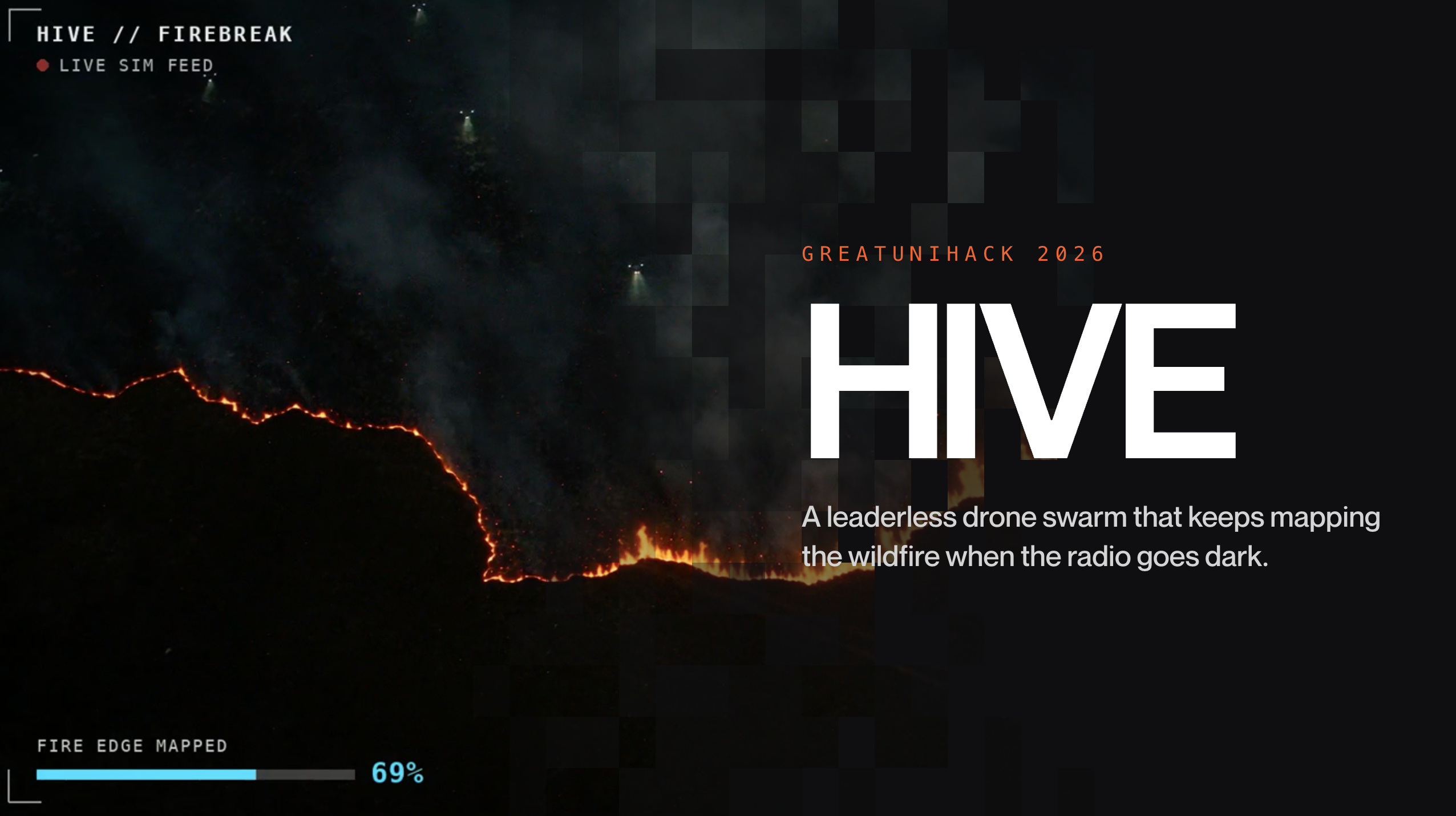
When a wildfire takes out a radio mast, the drones mapping it lose their link to base. Today’s fleets do the “safe” thing and hold position, which is exactly when you need them most. Neptune North asked for actors that keep working toward a shared goal when communication fails, and we wanted to build one you could break with your own hands: draw a jammer, shoot down a drone, cut the bandwidth, and watch (and hear) the swarm carry on.
What it does
Hive is a coordination layer for fleets that lose contact. Every drone runs its own brain and only knows what its own sensors see and what its radio hears. There’s no leader, no central map and no one handing out orders.
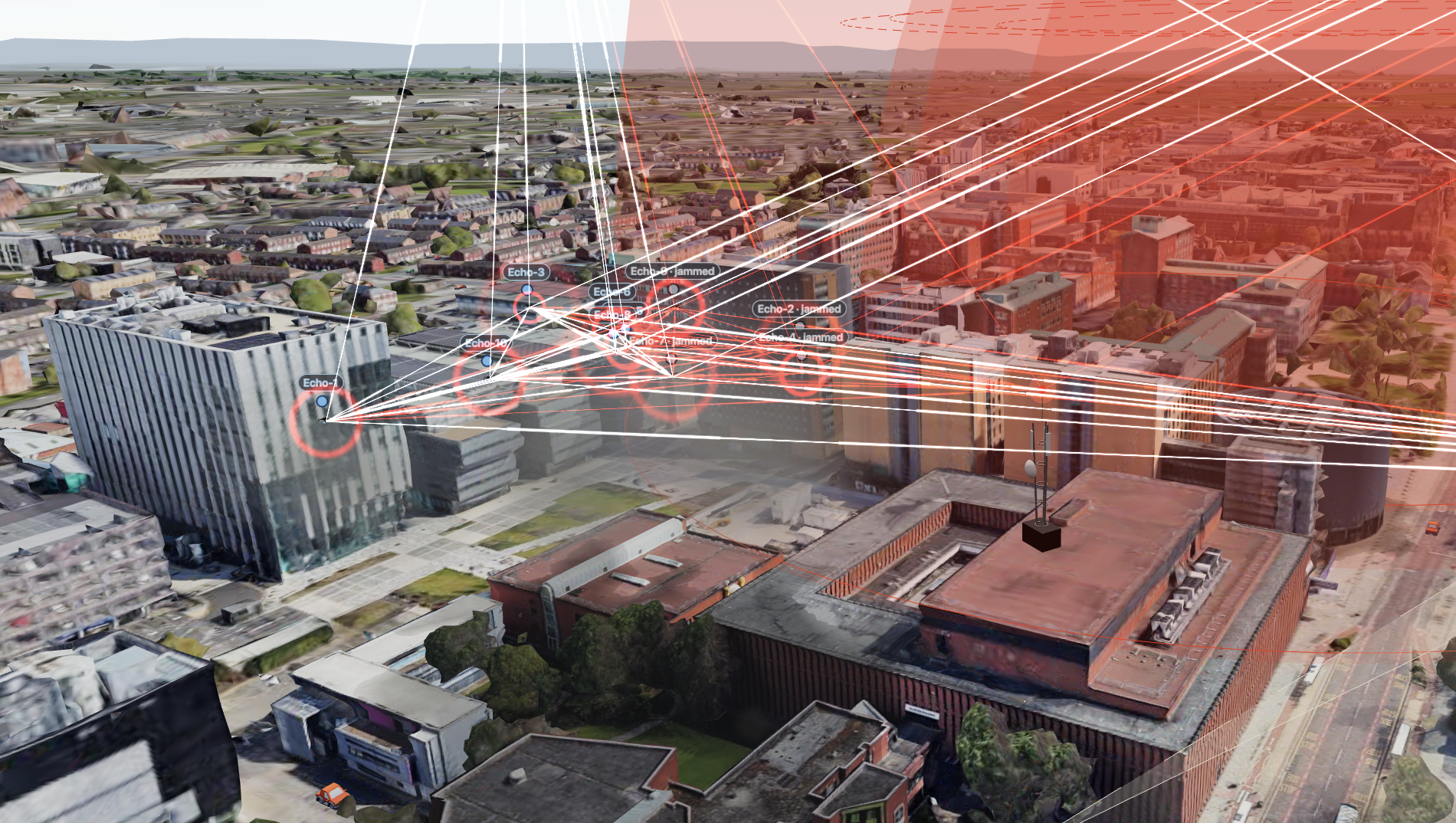
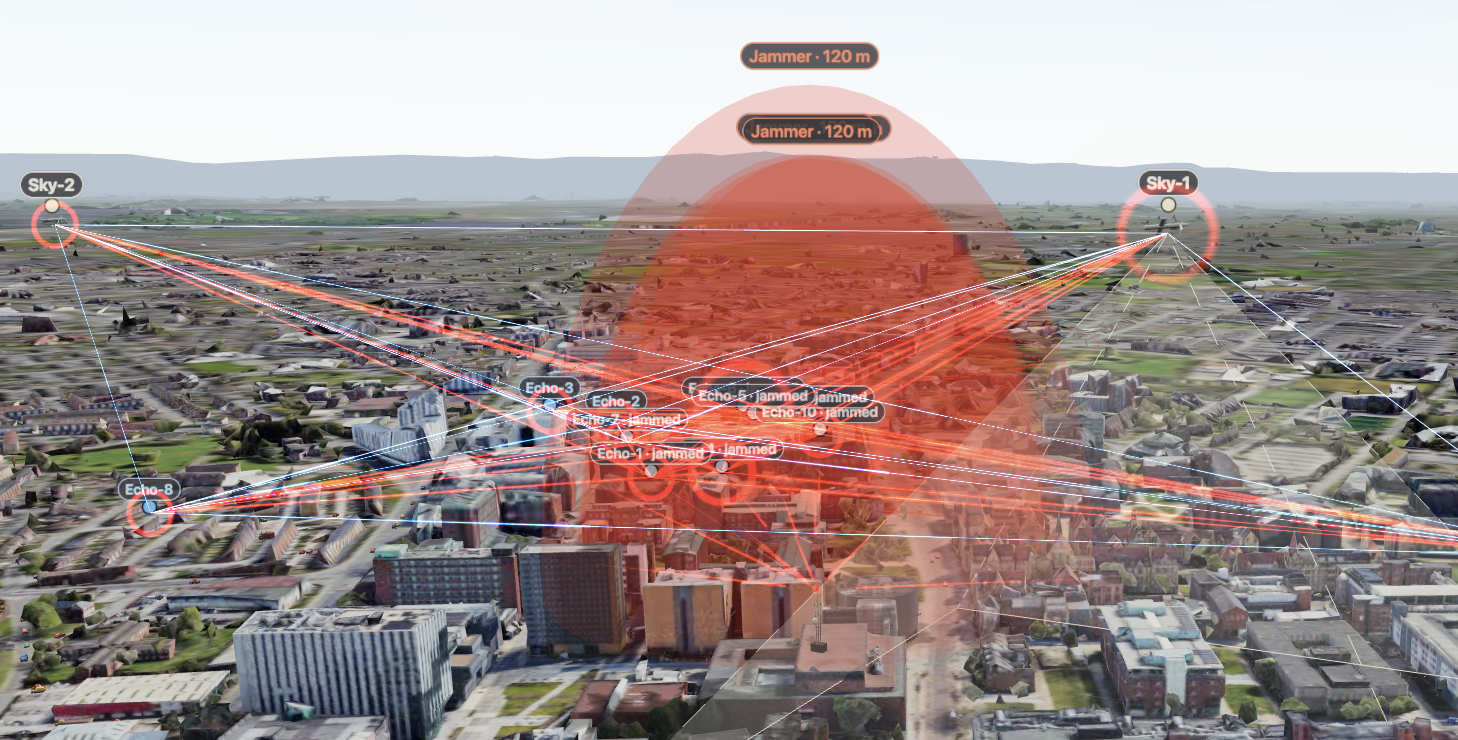
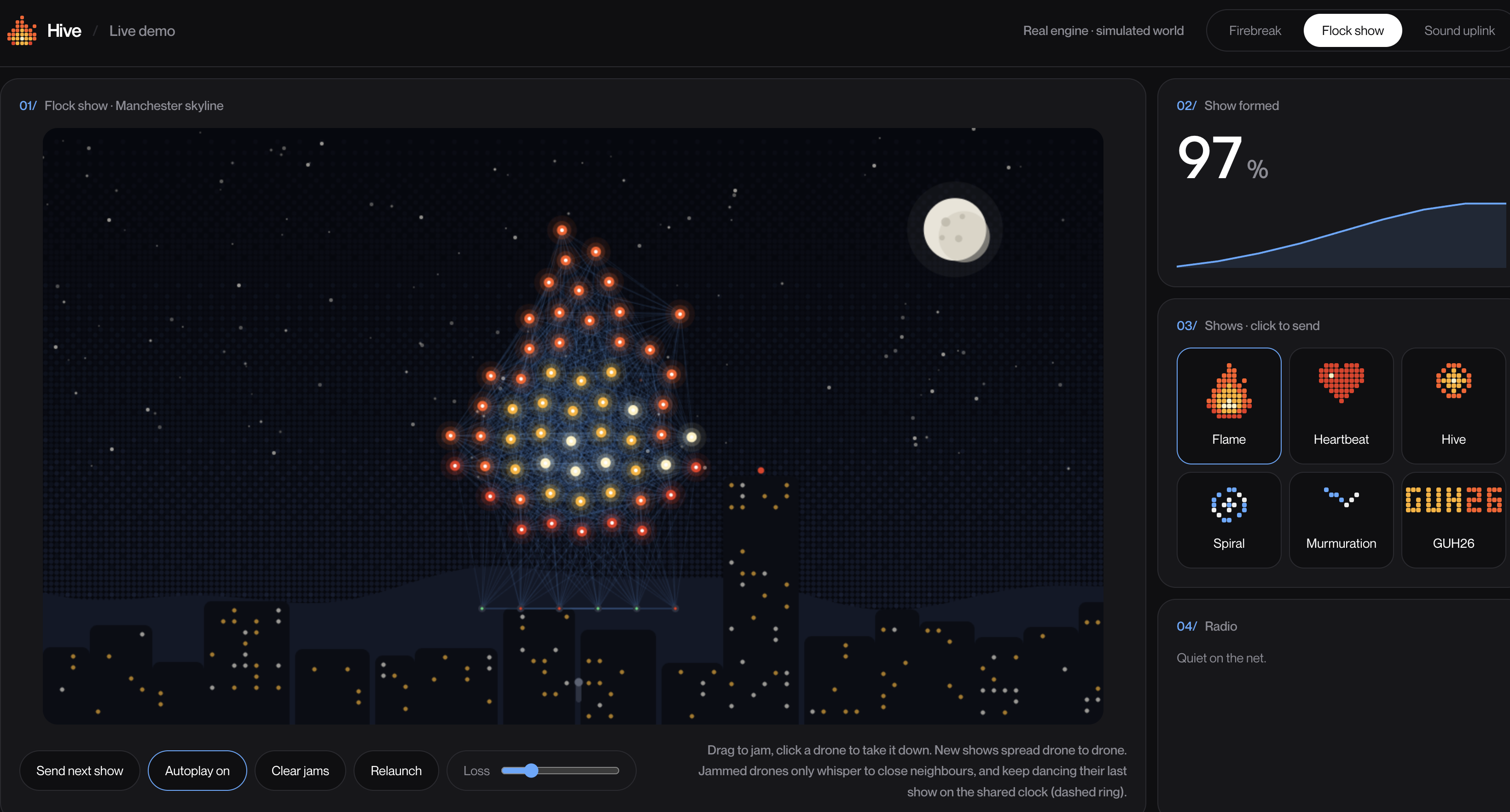
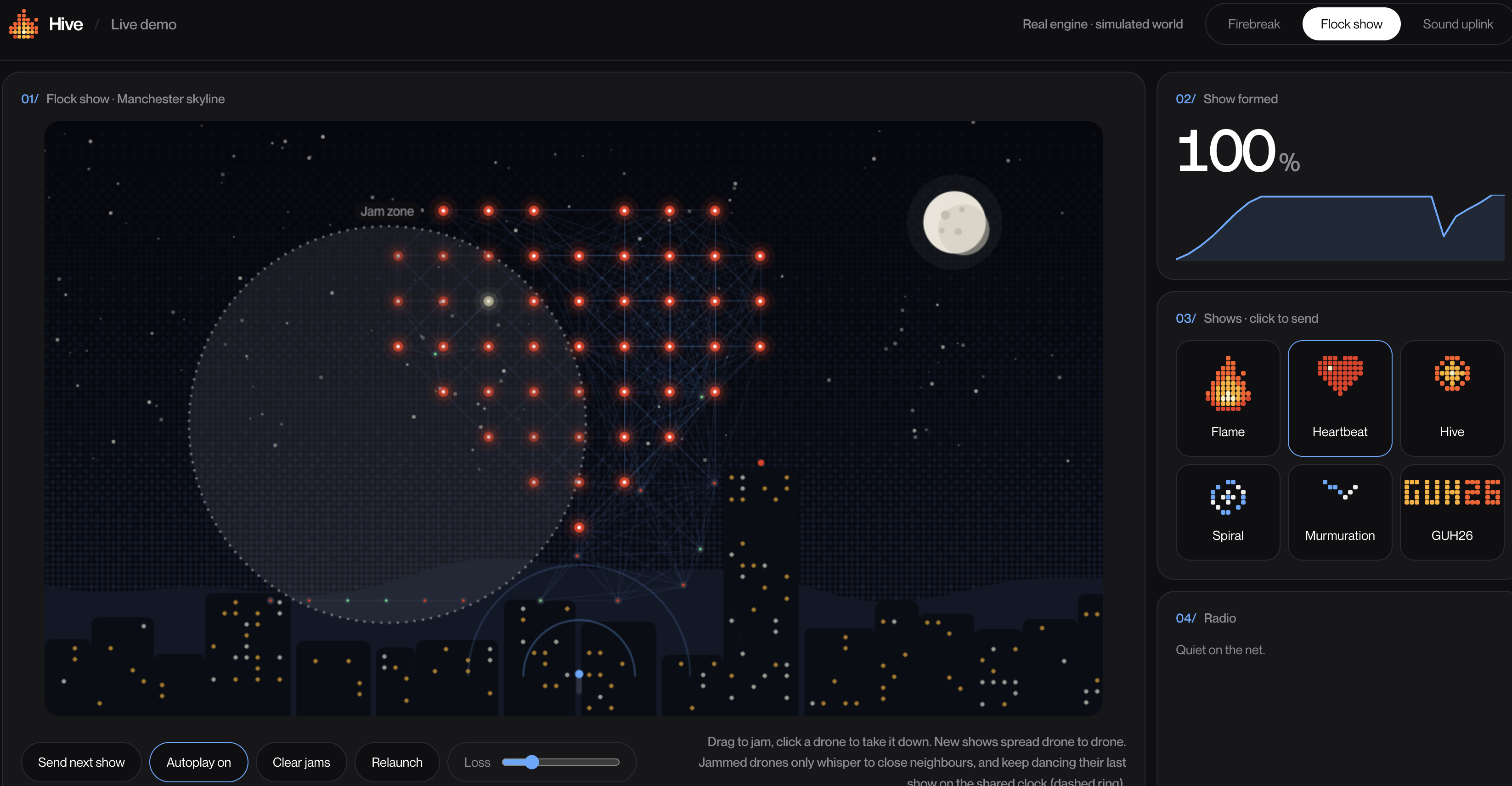
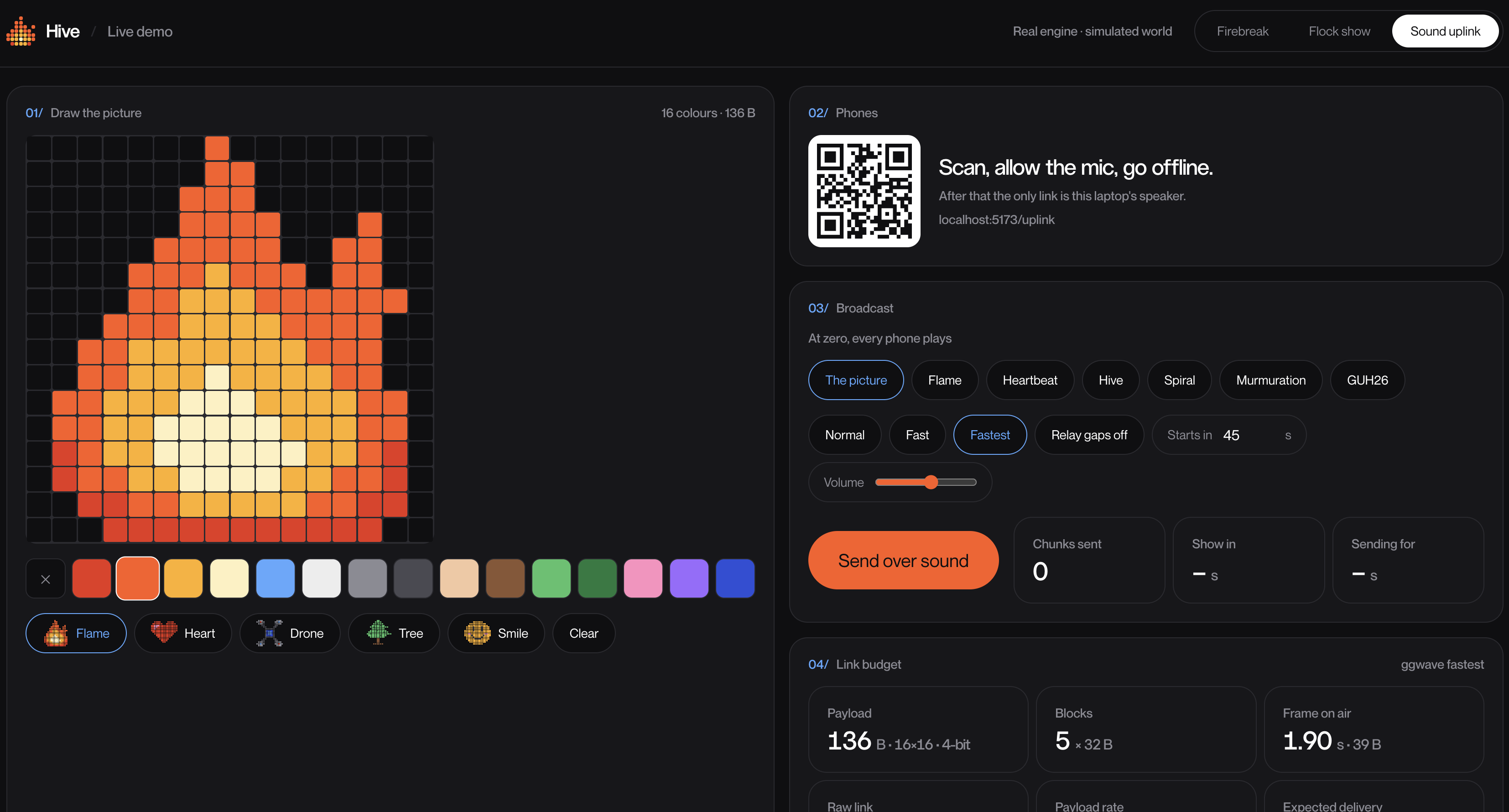
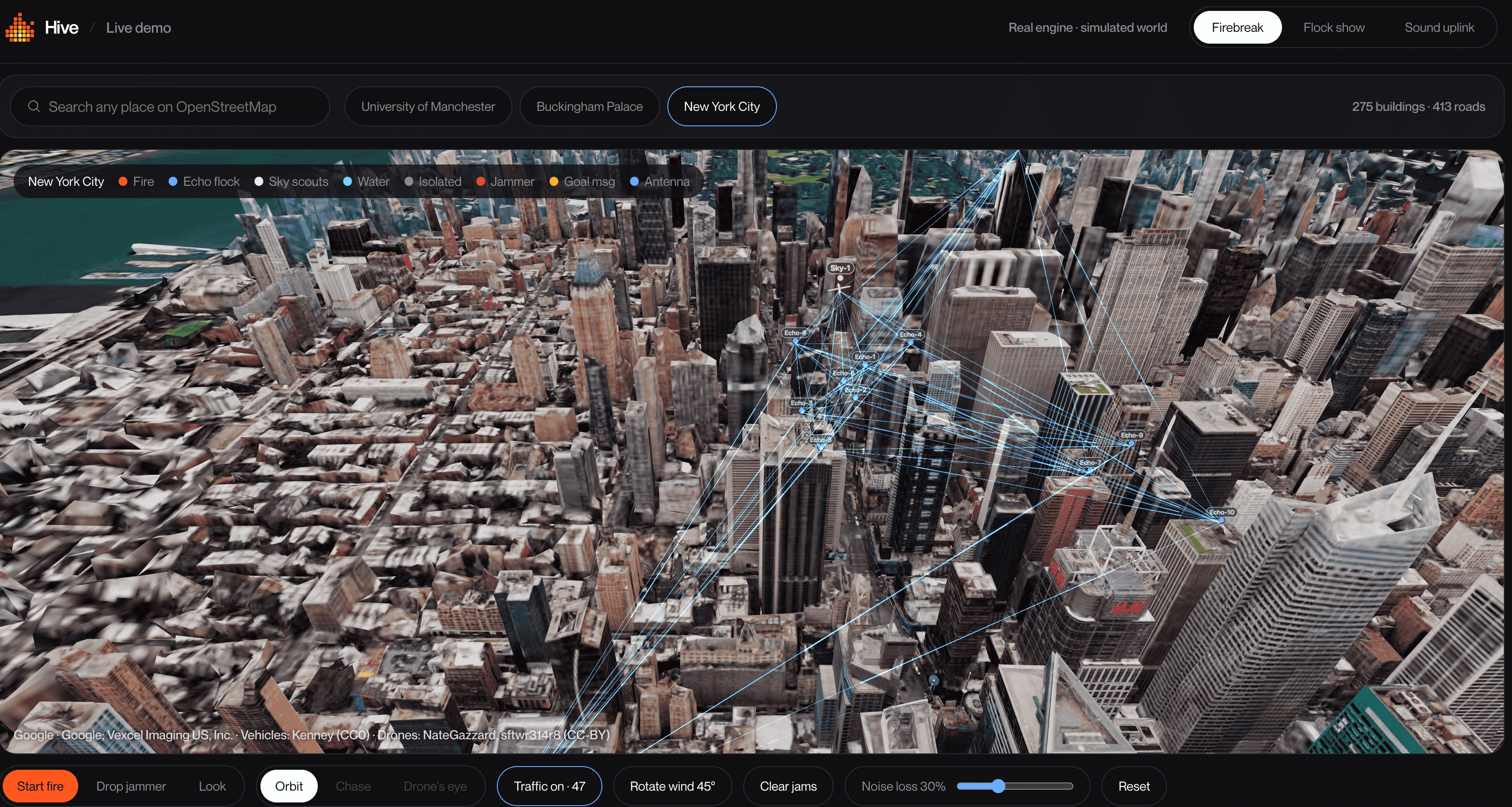
Firebreak (3D): a mixed fleet defends a real place, streamed from Google Photorealistic 3D Tiles and OpenStreetMap. Fixed-wing Sky scouts sweep at 150 m, spot fires, split them into clusters and dispatch crews sized to each fire’s perimeter. Echo quadcopters map the fire edge. Water heavy-lifters spray from upwind and fly back to the nearest water to refill. Real traffic flows on the OSM road network and fire engines route to the blaze. Judges can start fires, drop jammers, change the wind and shoot drones down, then ride along in any drone’s camera. You are a drone: scan the QR code and your phone becomes a drone, with its own brain in a Web Worker, a callsign, and a buzz when it’s jammed. Phone light show: the phones claim pixels of a picture without a leader. When people put their phones away, the rest re-form the picture at lower resolution. Mission Uplink: phones in airplane mode receive a whole mission over sound. The laptop speaker broadcasts fountain-coded chunks with ggwave, each phone rebuilds the mission from whatever chunks it happens to catch, and phones relay chunks to each other. Voice: every drone has its own ElevenLabs radio voice, and a jammed drone is heard through static. Hold a button and say “protect the village”: ElevenLabs transcribes it, Claude turns it into a target, one drone receives the order, and you hear “copy” ripple from drone to drone until it hits the jam zone. A spoken sitrep summarises the whole operation.
How we built it
One brain, everywhere. The agent brain is pure TypeScript, with no network or DOM code: sensor view in, action out. The same code runs in Web Workers on a laptop (one per drone), on judges’ phones, inside the world server, in a headless simulator, and in the browser for the offline 3D view.
Coordination with no leader:
- Gossiped maps: each drone keeps its own map and sends only what changed. Maps merge cell by cell and the newest observation wins, so merges give the same result in any order.
- Task claiming: a drone broadcasts a claim with a score. The lower score wins and a tie goes to the lower id, so every drone settles conflicts the same way without voting. Heartbeats free the tasks of drones that go silent.
- Multi-hop relay, limited by a hop count and deduplicated by message id.
- Isolated mode: a cut-off drone keeps working from its own map and merges back automatically when it reconnects.
- Learned wind: each drone estimates the wind from fire spread it watched itself, and neighbours average their estimates, so the swarm agrees on the wind with no central model.
The world server (Bun, WebSockets, 10 ticks a second) simulates only physics and radio: range, jamming, packet loss and wind-driven fire. Drones never see shared state, only their own sensor view and whatever messages survive the radio.
Radio etiquette: A swarm that speaks every event is unbearable, so each drone follows rules a real radio operator would: listen before talking, take a fair share of airtime scaled to the swarm size, don’t repeat news someone just said, and drop stale lines. The player plays one voice at a time, evens out loudness with a compressor and limiter, and keeps static soft and filtered.
AI: Claude turns free speech into a structured goal and writes the sitrep. Everything has a fallback: keyword parsing, template sitreps, browser speech, and an offline mode where the whole swarm runs in the tab if the venue wifi dies.
Frontend: Next.js on Vite (vinext), Tailwind, three.js with 3D Tiles for the photoreal world, and canvas for the 2D views.
Challenges we ran into
Challenges we ran into The swarm was too chatty. Our first radio played about 110 lines a minute. Listening only to neighbours can’t keep a whole room quiet, so we added fair-share airtime, deduplicated repeated news and smoothed mode changes. It’s now about 30 meaningful lines a minute, about one every two seconds. A fair baseline. Our first centralised controller was a strawman, so we made it generous on purpose (perfect information, unlimited range). Now the comparison means something. Honest negative results. Steering drones with the learned wind made coverage worse in the benchmark. We kept the wind estimate (it lands within about 40° of the true wind) but stopped using it to steer. The Earth is round. Google’s coarsest 3D tiles are flat slices through a curved planet, sitting kilometres below the real ground. On a slow load our camera framed itself underground until we caught it. Demos that run forever. Fires burned out after three minutes, and an early fix lit up the whole map. Phones couldn’t reach “localhost”, so the QR code now finds the laptop’s network address on its own. Four people, one contract. We fixed the shared types in the first hour and owned one folder each, which let us merge large features all afternoon.
Accomplishments that we're proud of
A blackout benchmark where we map 68% of the fire edge and a perfect-information central controller maps 0%. Judges’ phones become real agents with their own brains, not just screens that mirror ours. A mission delivered to phones in airplane mode by sound alone, with phones relaying chunks to each other. You can hear the outage: drones go to static when jammed, and orders audibly spread through the swarm and stop at the jam. 59 automated tests covering map merging, claim conflicts, relaying, isolation, radio etiquette, the server, the light show and the uplink codec.
What we learned
Coordination without a leader is mostly about agreeing on tie-breaks: if every drone resolves a conflict with the same deterministic rule, they don’t need to talk about it. We also learned that a simulation is only persuasive with a fair baseline next to it, and that the user experience of an autonomous system includes how it sounds.
What's next for Hive
What’s next Put the brain on companion computers over a real mesh radio (LoRa or Wi-Fi mesh). Heterogeneous teams with ground units and dedicated relay drones. Learn the claiming weights in our simulator, with centralised training and decentralised execution. Feed real fire-spread models and satellite hotspots into the scouts. What’s next Put the brain on companion computers over a real mesh radio (LoRa or Wi-Fi mesh). Heterogeneous teams with ground units and dedicated relay drones. Learn the claiming weights in our simulator, with centralised training and decentralised execution. Feed real fire-spread models and satellite hotspots into the scouts.
Built With
- anthropic
- api
- audio
- bun
- claude
- elevenlabs
- gemini
- lock
- maps
- next.js
- sound
- tailwind
- three.js
- typescript
- wake
- web
