Inspiration
The inspiration for SHARE (Sexual Health Analytic Risk Educator) stemmed from the pressing need to improve the effectiveness of HIV screening and reduce its spread within the population. As a lifelong disease with no cure, HIV can only be controlled through individuals taking preventative measures. A complication is that less than 15 percent of this infected population are aware they have HIV. Screening allows an individual to become aware of their infection status and eliminate or reduce risky behaviors to lower risk of transmitting the virus. While there are established guidelines for HIV screening, HIV risk is strongly influenced by individual behaviors, which is difficult to capture with general guidelines. Additionally, there is a concern of equity, where minorities may have not have sufficient resources or access to go to clinics frequently for screening or advice. Our goal was to develop an accessible and data-driven approach to recommend screening frequencies using personalized risk profiles. The goal is to educate individuals and provide them with recommendations for them to take steps in mitigating HIV transmission.
What it does
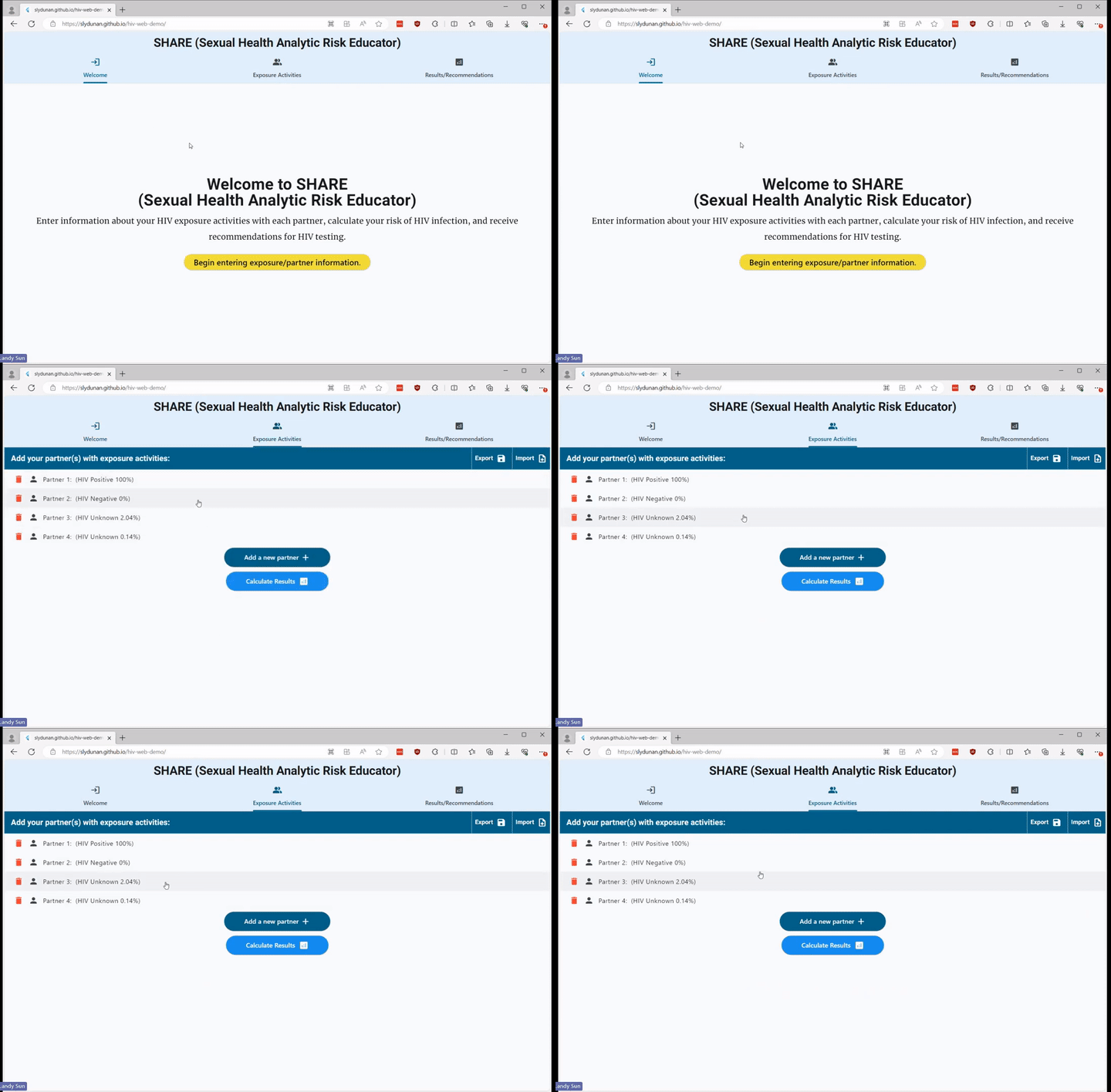
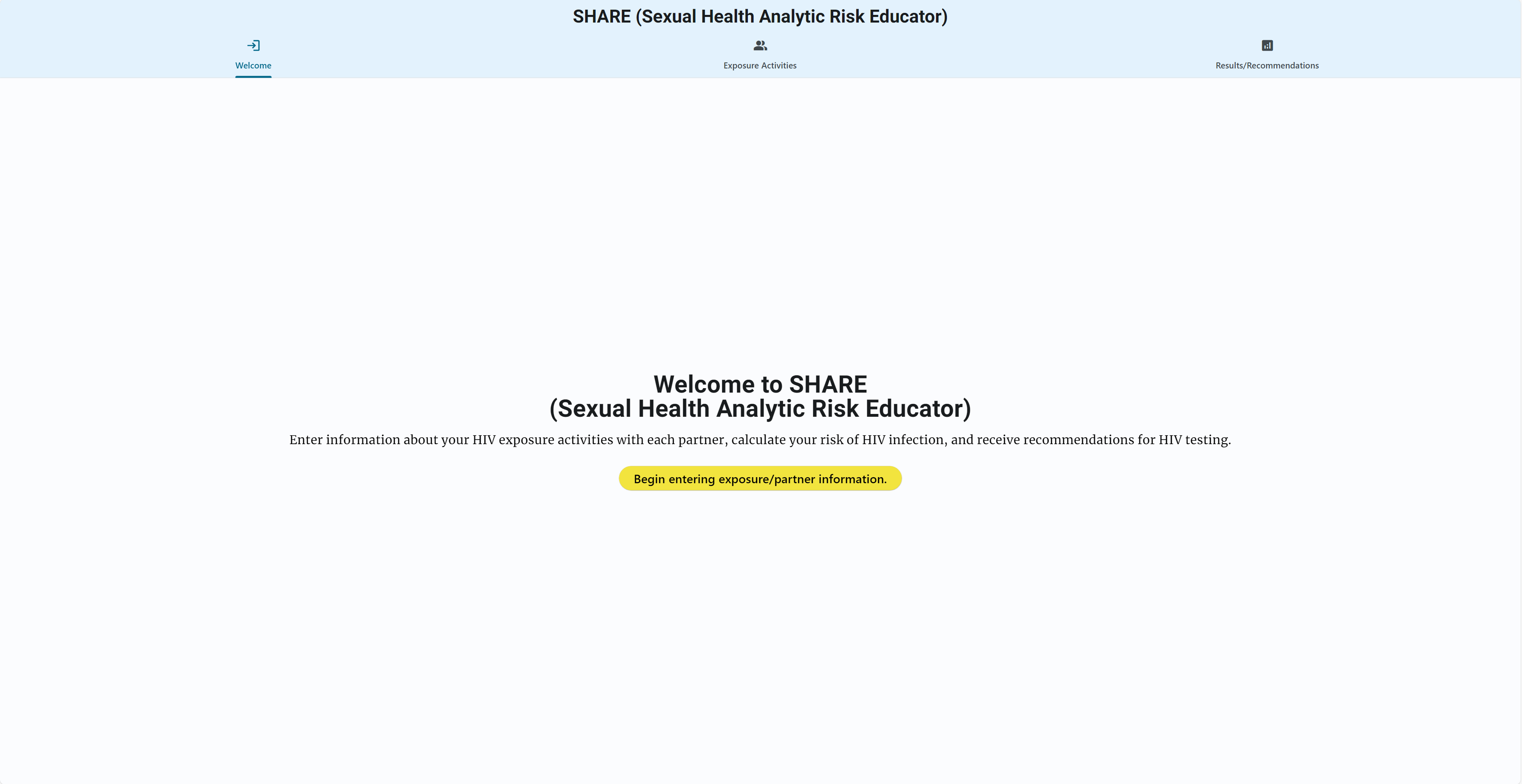
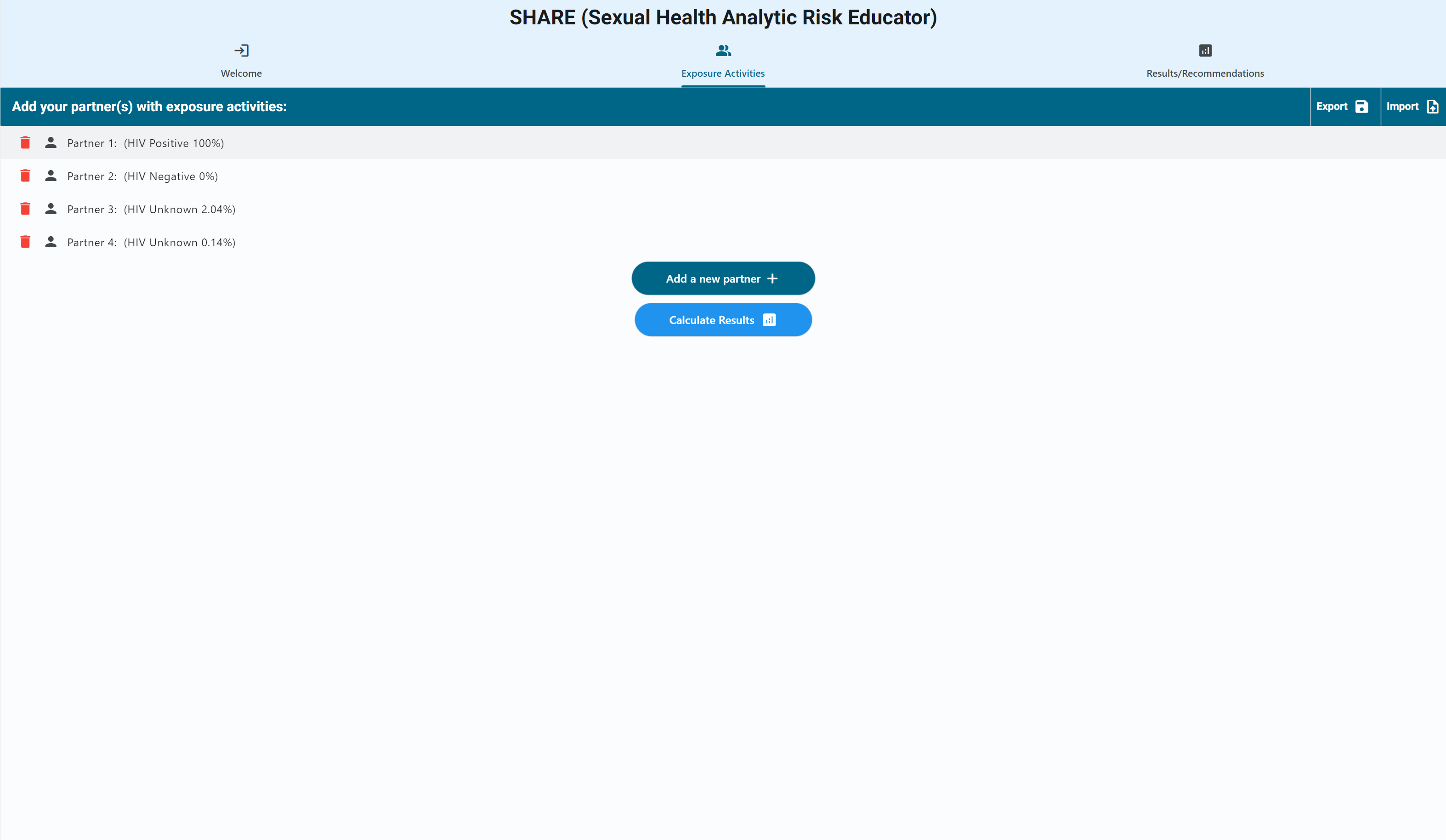
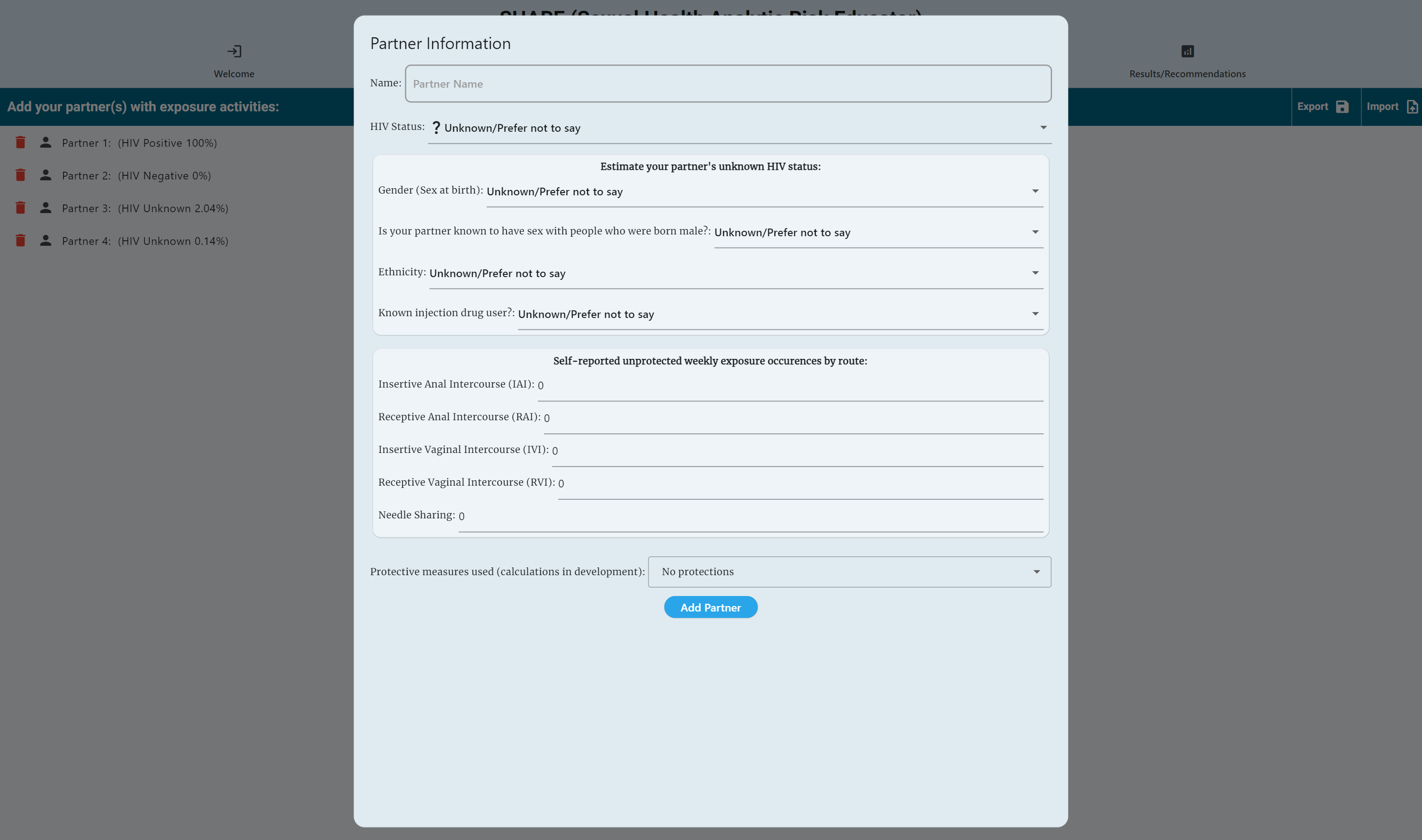
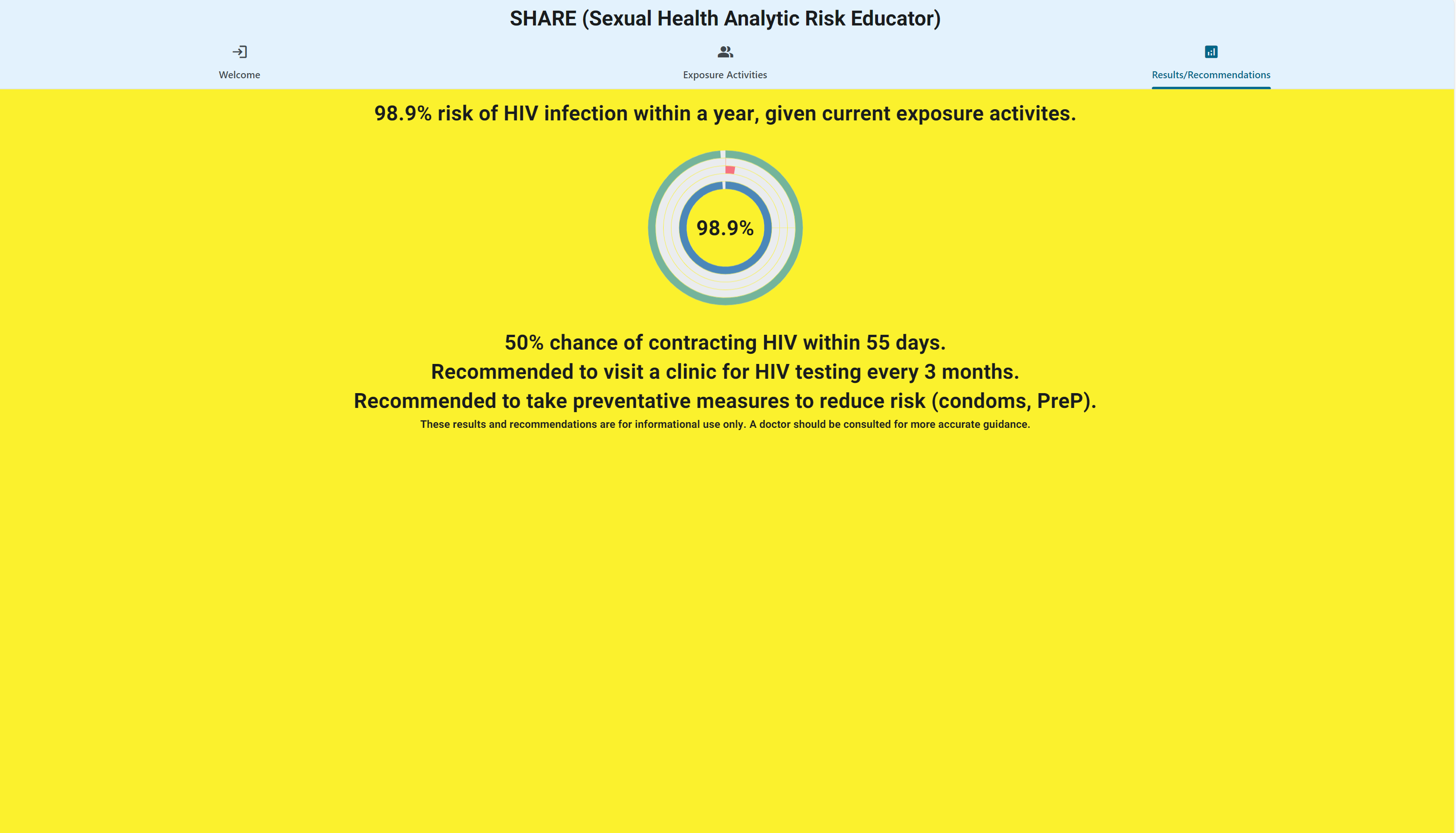
Our tool allows a novel way for individuals to create a personalized HIV risk profile. Users simply list their partner(s) and provide estimates for unprotected exposure activities conducted with them. The tool accounts for uncertainty in HIV status of the partners by providing options to estimate HIV status using prevalence data from the CDC (combined with other population estimates). The tool multiplies HIV status with published infection probablility estimates of different exposure routes. By treating occurences as independent probabilites, the tool calculates a probability of HIV infection across all partners for a given time period (i.e. year). It takes these results and provides customizable result and recommendation options for the user. In our demo, we show some examples of outputs that can help educate the user on their current and future HIV risk. Risk thresholds can be modified with subject matter expert (SME) input to balance the burden placed on the population by short HIV testing intervals. As we develop the app further, we plan to additional functionality such as toggles that can demonstrate effectiveness of preventative measures such as condoms and PrEP. Our model demonstrates that as an individual's engagement in barrier-free sexual or needle-sharing activities increases, so does the need for more frequent HIV screening. This tool can be used by individuals to self-asses their risks, policymakers to enhance public health recommendations, and healthcare professionals to offer personalized, evidence-based care according to an individual's unique risk profile. For example, a user can export their exposure input file and send it to their healthcare professional for them to provide recommendations.
How we built it
To build this project, we began by conducting a comprehensive literature review to identify relevant studies estimating the per-act probability of acquiring HIV from an infected source. To estimate unknown HIV statuses for partners, we utilized CDC's HIV prevalence data and combined that with demographic data from other literature. Using this critical data, we constructed a model that estimates the number of weeks before an individual reaches a user-adjustable risk threshold, such as a 95% or 99% chance of staying HIV-free. This risk threshold then determines the recommended frequency of HIV screening based on the type and frequency of risk behaviors an individual engages in. To make the model more accessible to wider range of users, we converted the Excel tool into a Flutter application. The advantage of a Flutter application is that it simplifies the adaptation to multiple platforms. This allowed us to create a web app that can also be built as a Windows executable. With some layout adjustments it can be optmized to run in an Android or iOS mobile app.
Challenges we ran into
The project presented several challenges. Gathering accurate data from various sources was a complex and time-consuming task. Additionally, developing a model that accurately reflected the relationship between risk behaviors and recommended screening frequencies required considerable effort and refinement. This is still an ongoing process, and developing useful and accurate outputs is a challenge that requires SME and user input. The technical side of converting the Excel tool into a Flutter app provided many challenges. We came into the hackathon with no previous experience with Flutter and didn't have much time to learn and develop our prototype within the hackathon time-frame. Given more time or funding, we hope to improve the functionality and design of SHARE.
Accomplishments that we're proud of
We're proud that we were able to create a user friendly, multi-platform Flutter application within the time and resources that we had. We believe that SHARE has a lot of potential for future improvements and integration into our public health system. The framework of the model can also be adapted to other diseases given data availablilty.
What we learned
In the course of this project, we learned the significance of evidence-based decision-making in public health. We delved into the vast pool of research and studies to gather data on the per-act risk of HIV transmission and its relationship with various risk behaviors. This process highlighted the importance of data accuracy, interpretation, and model building in creating a robust tool for healthcare and public health decision-makers.
What's next for SHARE (Sexual Health Analytic Risk Educator)
In the near future, we aspire to assess the potential for extending our services to include a broader range of sexually transmitted infections, such as chlamydia, gonorrhea, and syphilis. Our commitment to empowering individuals with data-driven insights goes beyond HIV. We believe that providing comprehensive information about a wider spectrum of sexually transmitted infections can further equip people to make informed decisions in their daily lives.
Expanding our services to include these additional infections is a natural progression for SHARE. By leveraging the same evidence-based approach and data analysis techniques that underpin our current HIV risk assessment model, we aim to provide a holistic view of sexual health. Our ultimate goal is to create a one-stop resource that not only guides individuals in managing their HIV risks but also addresses a broader array of sexual health concerns.
Through this expansion, we envision SHARE becoming an even more invaluable tool for individuals, healthcare professionals, and policymakers in promoting safe and informed sexual health practices. As we continue development, we hope to bring in users to help finetune our UI and SMEs to develop additional result outputs. Part of this will involve adapting the layout of the tool to be cross-compatible with mobile platforms. Our goal is widespread adoption of the SHARE. We are excited to embark on this journey and continuing to make a positive impact on public health and individuals' lives.


Log in or sign up for Devpost to join the conversation.