-
-
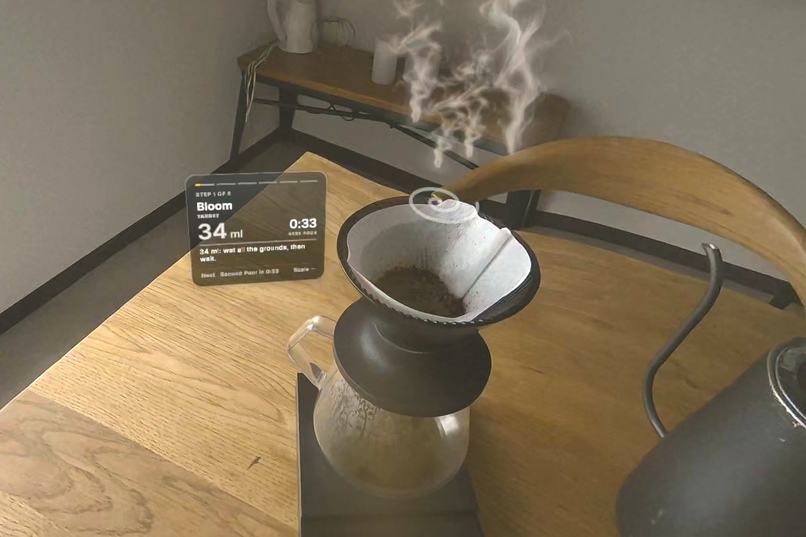
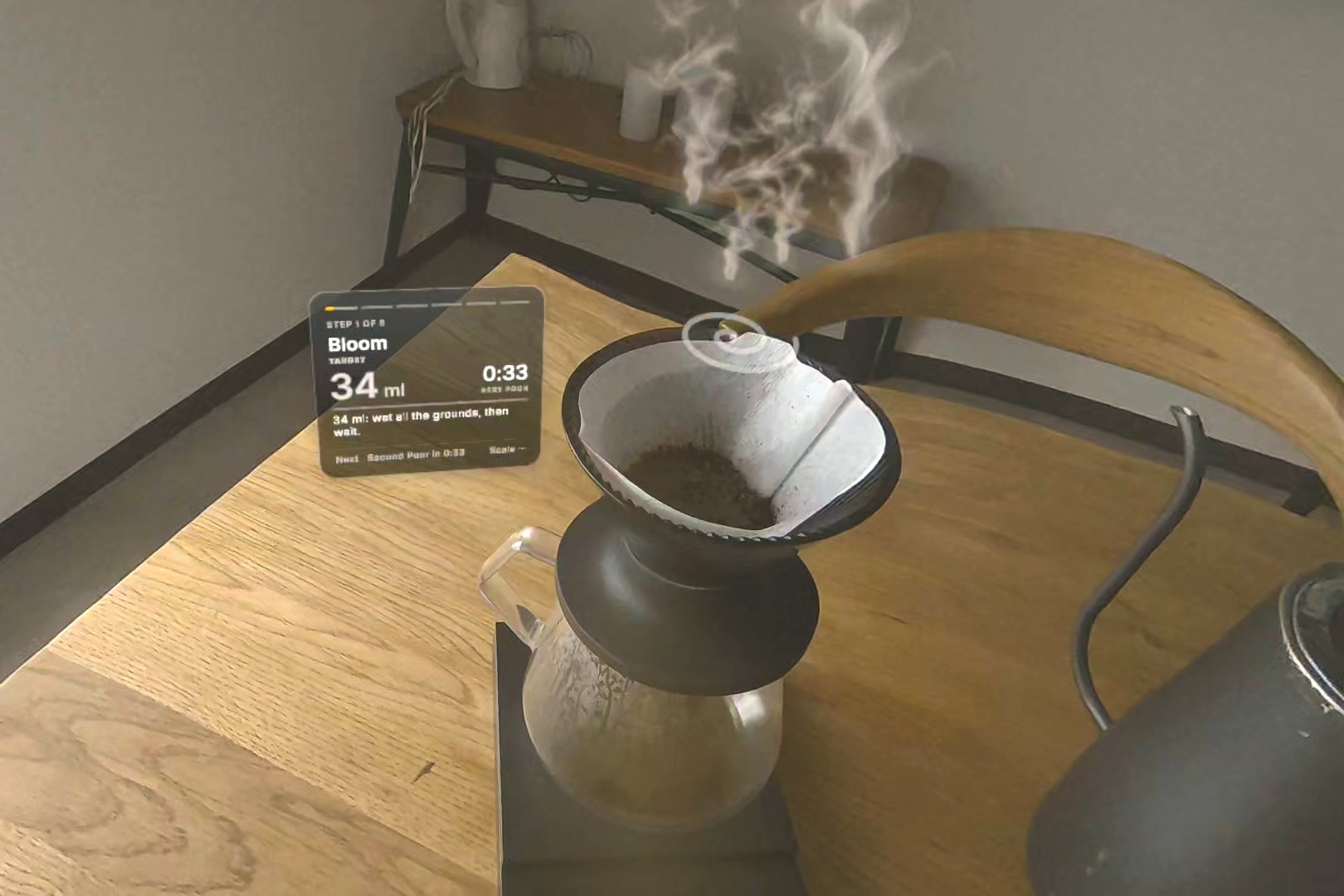
Real hot water on real grounds: the bloom, with the board counting the wait. Captured on Meta Quest 3.
-
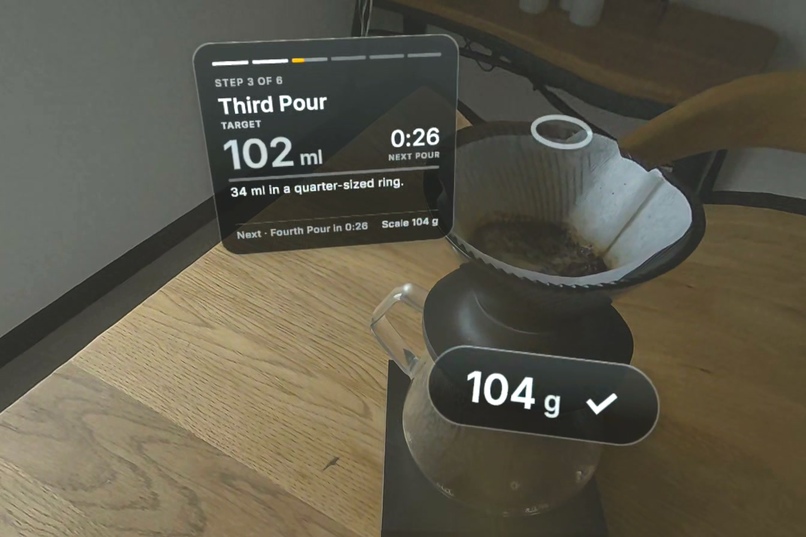
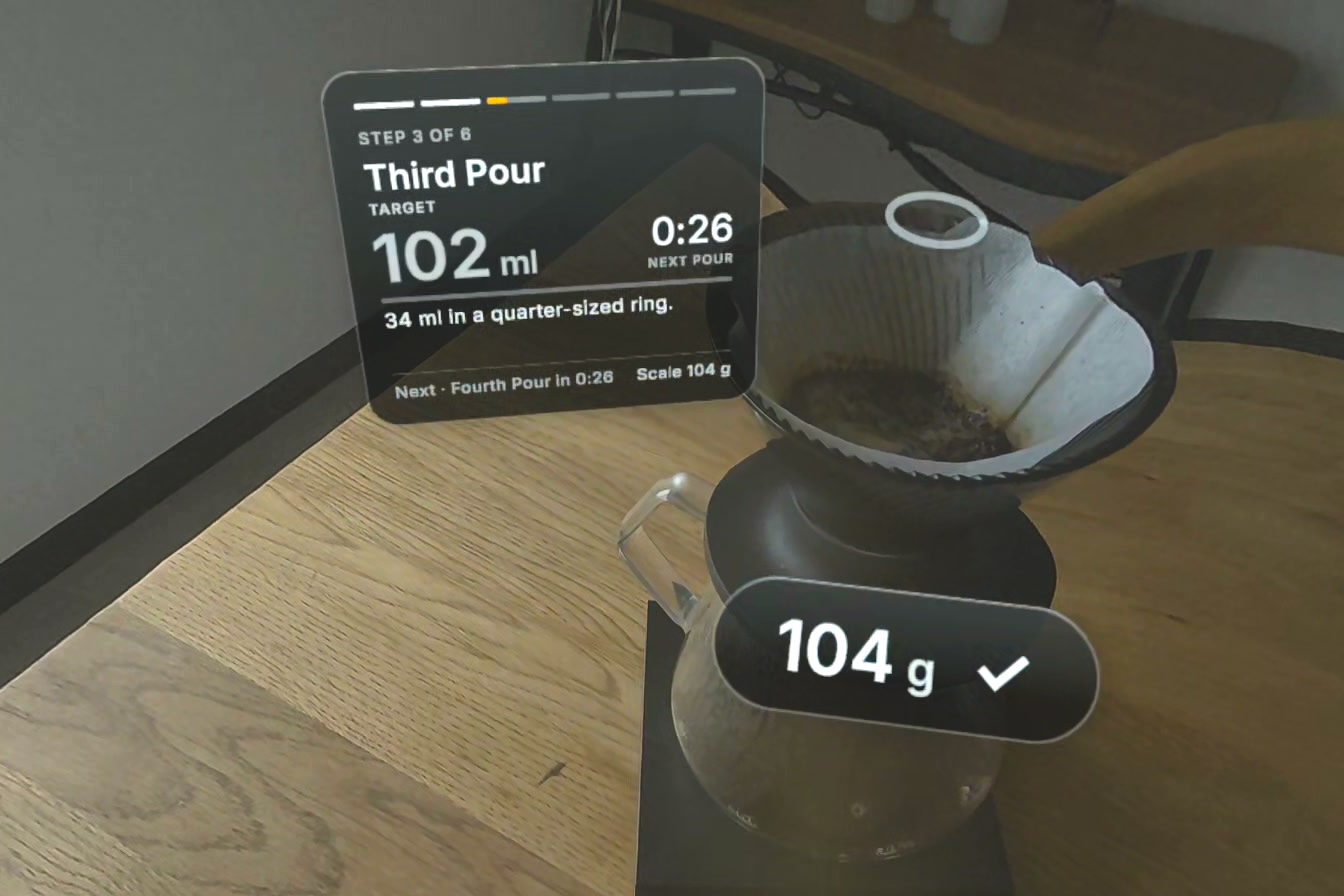
The headset camera reads your own kitchen scale: 104 g poured, close to the 102 target (Read Scale, beta). Captured on Quest 3.
-
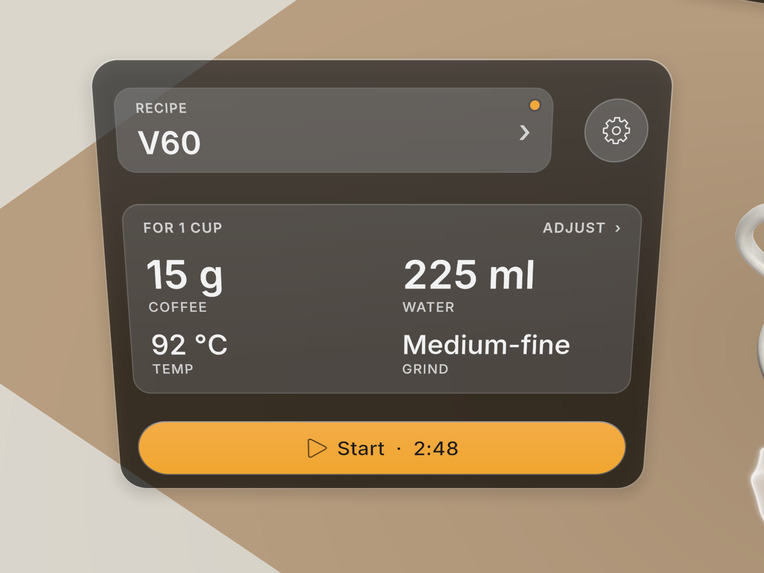
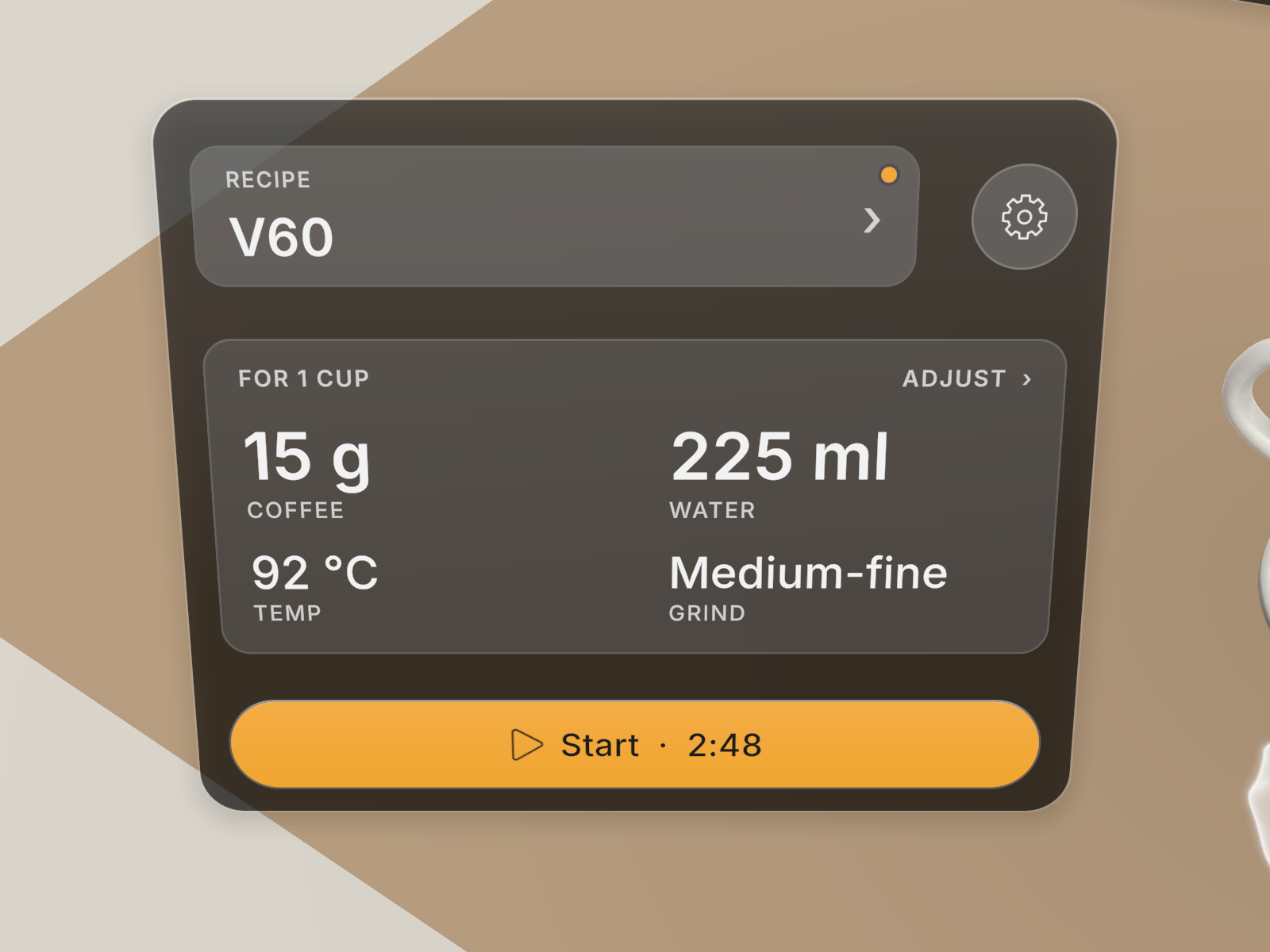
The setup card: recipe, coffee, water, temperature and grind, then Start. App panel, rendered in the Unity editor.
-
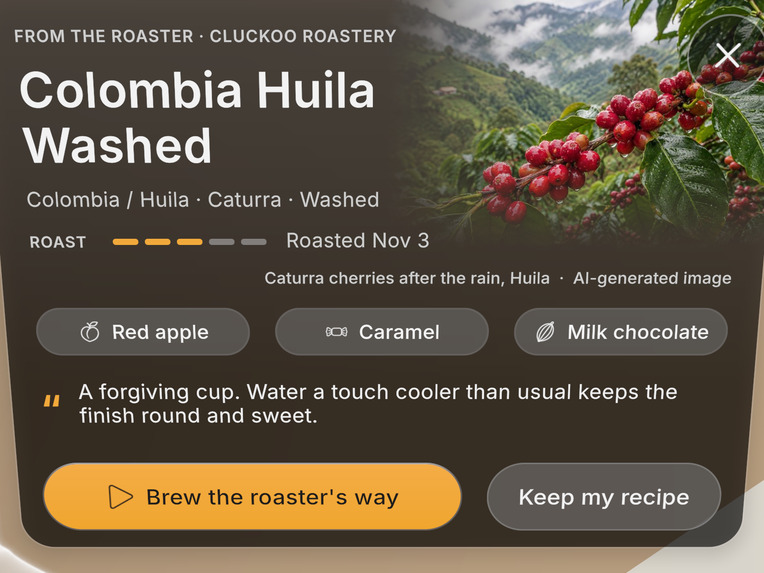
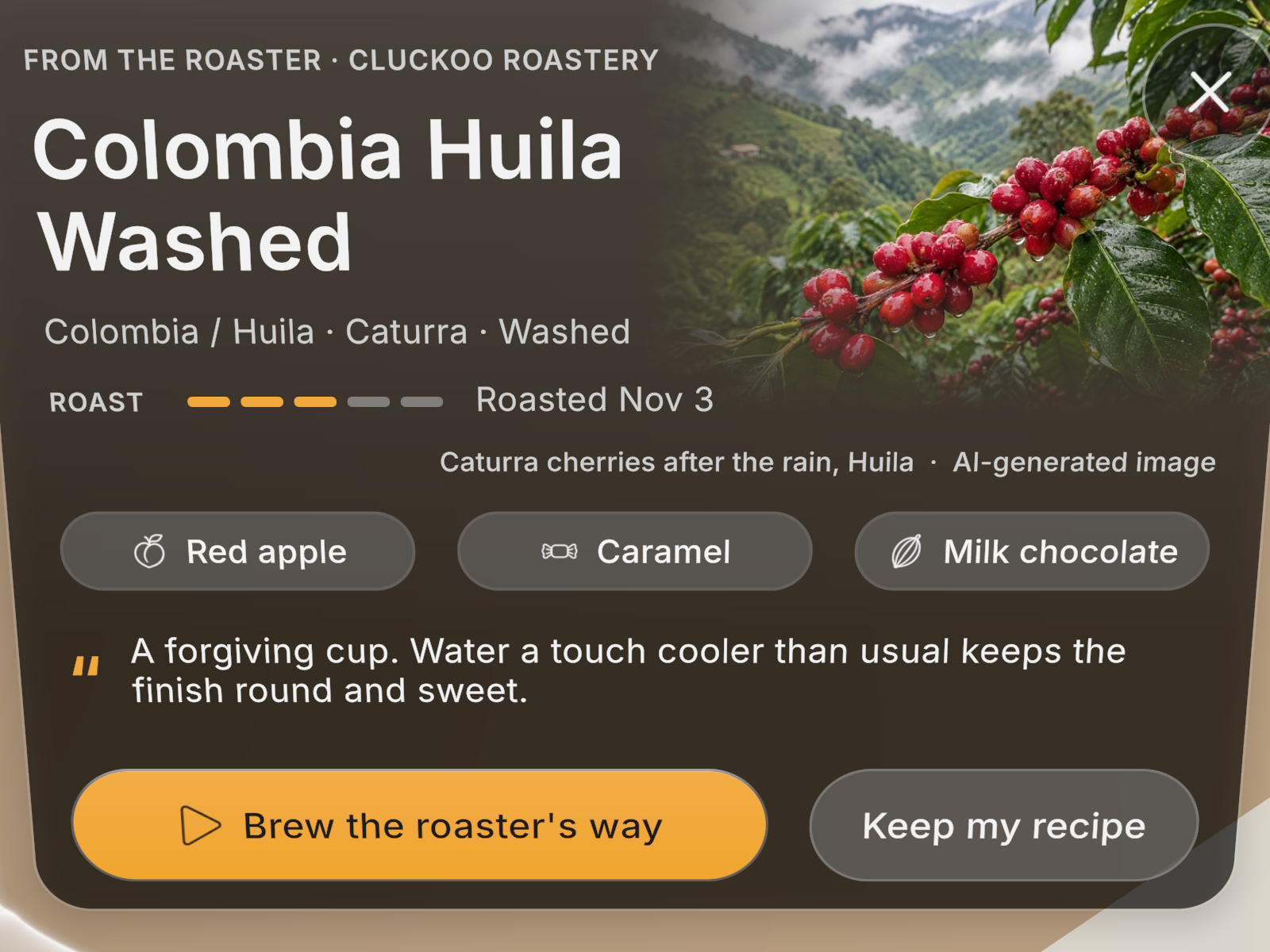
A roaster's QR code brings up its bean card: notes, advice and "Brew the roaster's way". Editor render; photo AI-generated.
-

A sample bean card to try it yourself: print it or show it on a bright screen, then press Scan QR in the app.

Inspiration
Hitoiki (ひといき) is Japanese for "taking a breath": a small pause in the rush of an ordinary day.
Japanese tea culture has long treated preparing a drink as exactly that kind of pause: a time to slow down and be fully present. For many of us today, the daily drink is coffee. We wanted brewing it to be that pause.
But you cannot take a breath while you are struggling. Pour-over coffee is a skill of the hands. Where should the water land? How high do you hold the kettle? How fast do you pour, and when do you stop? Recipes give you numbers and videos show you technique, yet a gap remains between watching and doing. You look at a screen, look back at your hands, and try to reproduce what you saw. Your attention is on the screen, and the moment is gone.
What if the lesson appeared exactly where you need it, right over your own dripper? That question became Hitoiki.
Better coffee is only part of the goal. We want brewing itself to become a moment to slow down, use your senses, and eventually share with someone else.
What it does
Hitoiki turns your own table into a mixed reality coffee lesson.
Put on Meta Quest 3, sit down, and look at your real dripper. A ring of light settles on its rim. A gentle spiral shows where to pour, and a translucent "ghost kettle" demonstrates each movement at the right height and pace. You follow with your own kettle, so you learn through your hands.
Light tells you where. Sound tells you when. Each pour ends with a soft, porcelain-like note. In the pause between pours, an amber arc slowly fills to prepare you for the next step. Brewing becomes a quiet rhythm.
- Read Scale (beta): the headset camera reads the lit digits on your kitchen scale and checks how much water you poured.
- "How does it taste?": after brewing, Hitoiki asks. If the cup was sour, it suggests a finer grind next time. If it was bitter, a coarser one.
- Recipes by QR code: a QR label on a bean bag brings up its roaster's recipe and tasting notes, so the knowledge behind each coffee reaches the person brewing it. Five sample bags are built in today.
- No dripper at hand? Set a mug or a glass in its place: the ring finds its rim and the whole guided brew runs, no water needed. Or open the virtual brewing space: five modeled drippers, a one-minute introduction, and a virtual kettle whose pour becomes a trail of light you can replay.
Everything works seated, with hands only. One cup takes about three to four and a half minutes. And the coffee is real: your tools, your hands, your cup.
How we built it
Hitoiki is built in Unity 6 with Meta XR SDK v207. We started from scratch inside the competition window and followed one principle throughout: technology should support the physical ritual and never interrupt it. Each Meta capability it uses is described in the capabilities section of this submission.
Textures, icons, coffee bean photographs and the photograph in our key visual were generated with OpenAI image models; AI-generated photographs are labeled inside the app. The app runs entirely on the headset and does not request internet permission.
Challenges and what we learned
1. When to guide, and when to judge
We first tried to estimate the real kettle's spout position from wrist tracking and score every pour. The system sometimes followed the wrong hand, so its judgments could not be trusted. We changed direction: Hitoiki demonstrates the ideal motion and lets the user follow, and the physical scale gives measurable feedback where it is available. We learned that a calm experience people can trust is worth more than extra technical ambition.
2. Reading a scale in a real kitchen
Steam, reflections, and the moving kettle often hid the digits from the passthrough camera. Reading the weight after the display settles, instead of continuously during the pour, made it far more reliable. The feature is still in beta, but it shows how mixed reality can connect everyday tools to digital guidance.
3. Sound carries timing
A tester told us the hardest part was knowing when each pour should end. Our first instinct was to improve the visuals. We added a distinct sound at the end of each pour instead, and the problem went away. When hands and eyes are busy, sound communicates timing better than one more thing to look at.
4. Leaving room for the experience
Mixed reality makes it easy to surround people with numbers, labels, and animation. Inspired by the quiet pauses of Japanese tea culture, we kept removing things until the physical act of brewing stayed at the center. The interface appears when it is needed and fades when it is not.
What's next
Our next goal is to turn a personal ritual into a shared one. In Japanese tea culture, preparing tea creates a moment of connection between host and guest. We believe mixed reality can carry that spirit across distance.
Imagine two friends in different cities. Each sits at their own table with their own kettle and dripper. They follow the same recipe, brew side by side, and talk while the coffee slowly drips. Both cups are real, and the moment is shared.
To get there, we plan to build:
- Shared brewing sessions: synchronized brewing and conversation for people in different places.
- Recipes from baristas and roasters: recording pour patterns and amounts with open-API coffee scales, so the ghost kettle can reproduce an expert's technique.
- Online recipe discovery: brewing recipes from roasters and coffee communities around the world.
- More rituals: the same approach applied to other skills of the hands, from Japanese tea to traditional crafts.
Hitoiki begins with a single cup of coffee. We want it to grow into a mixed reality experience that helps people learn with their hands, enjoy everyday rituals, and connect by making something together.


