-
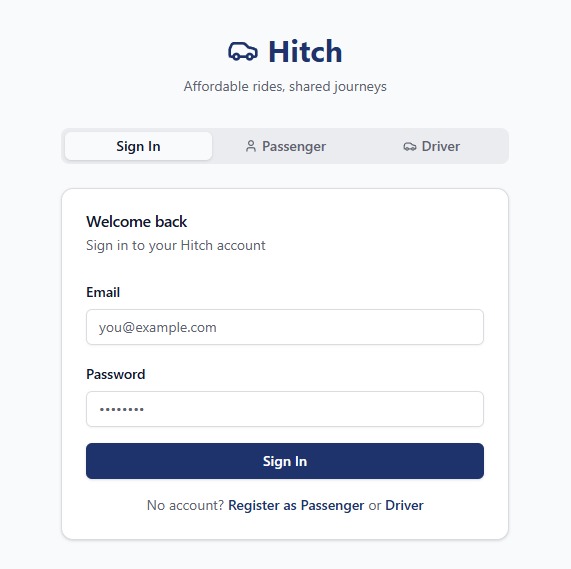
Log in/Sign up Page
-
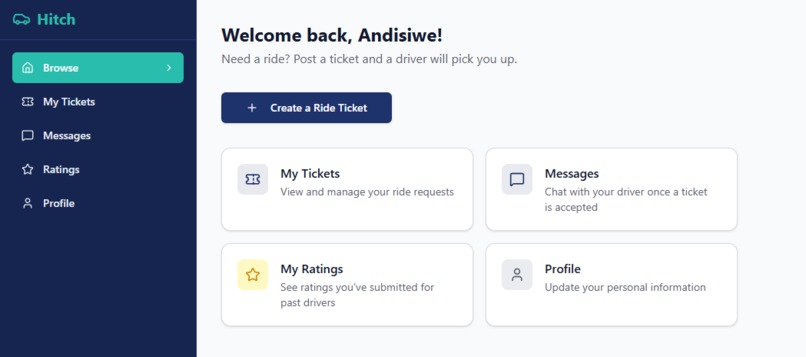
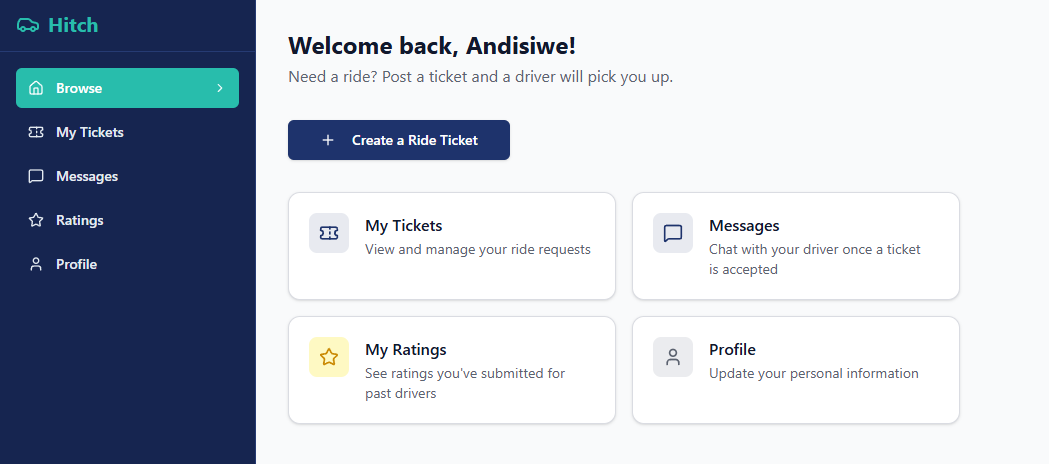
Dashboard
-
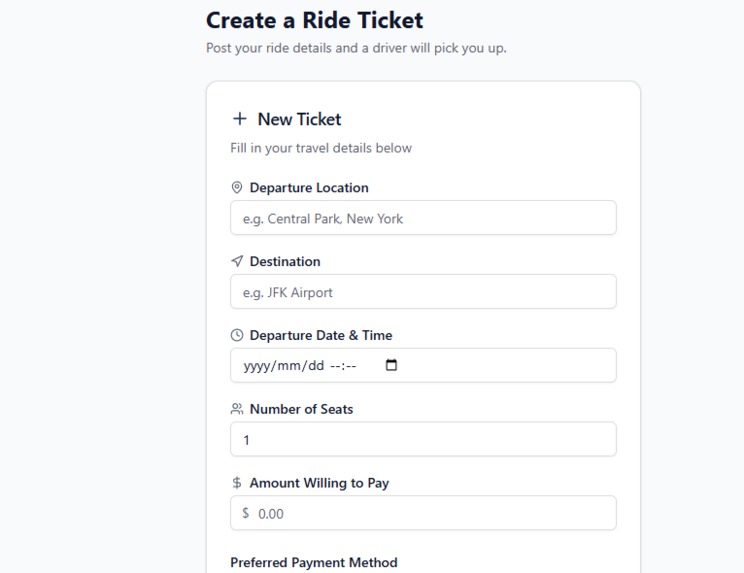
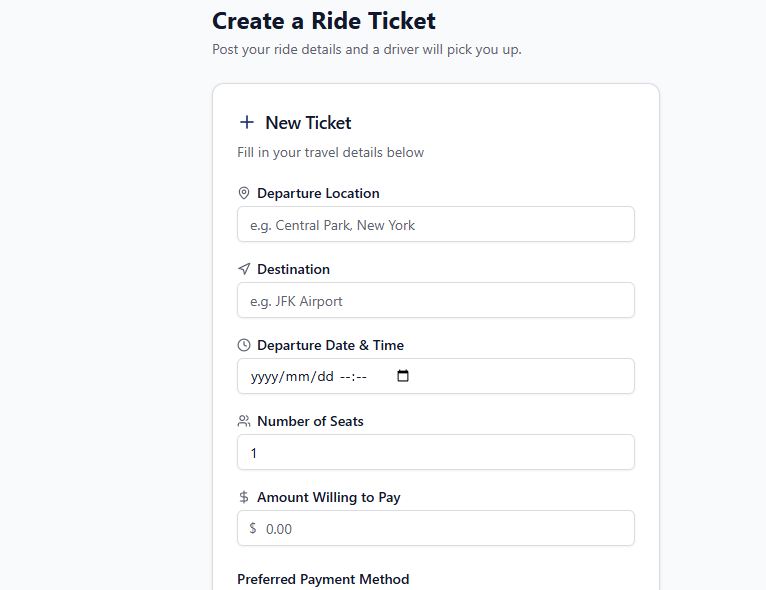
Create Ticket Page
About the Project
This project was inspired by a real experience I had while trying to travel to a conference on a very tight budget. The conference organizers only covered my flights, but the airport was about two hours away from where I lived, and I still needed transport to get there. At the time, I turned to Facebook “lift pages,” where people post requests for rides or advertise available seats in cars traveling to certain destinations. I made a post looking for someone heading toward the airport around the same time I needed to leave. The process was much slower and more stressful than I expected. Posts were constantly being pushed down by newer posts, many drivers were offline or checked their phones infrequently, and communication was fragmented across comments and WhatsApp messages. Eventually, someone contacted me on WhatsApp because they were also traveling toward my destination, but our schedules did not align. Since I was rushing to catch my flight, I could not wait for them. After another hour or two, I finally found a favourable match, but by then I had already experienced how inconvenient and unreliable the process could be. That experience made me realize that thousands of people already rely on informal ride-sharing communities every day, especially students and young professionals trying to save money. However, the process is still largely manual, unstructured, and sometimes unsafe. I started thinking about how much better this could work if there were a dedicated platform built specifically for matching passengers and drivers efficiently and securely. This idea became even more important to me as fuel and transport costs continued rising. Many people are struggling with expensive travel costs, while drivers are also looking for ways to reduce fuel expenses by sharing rides with others heading in the same direction. I wanted to create a solution that benefits both sides.
What the Project Does
The app is designed to help passengers quickly find drivers already traveling toward their destination, while also helping drivers fill empty seats and reduce travel costs. Instead of relying on Facebook posts that can easily get buried, the platform uses structured ride listings, real-time matching, and direct communication features to make the process faster and more reliable. The project also focuses heavily on safety by introducing features such as verified profiles, ratings, trip details, and better accountability between passengers and drivers.
How I Built It
I built the project by focusing first on the core ride-matching experience. The main priority was creating a system where users can: • Post available rides or ride requests • Match based on destination and travel time • Communicate easily and quickly • Improve trust and safety between users I also spent time thinking about the user experience because many existing informal systems are difficult to navigate, especially during urgent travel situations.
Challenges I Faced
One of the biggest challenges was designing a system that balances convenience, affordability, and safety at the same time. Ride-sharing can be extremely useful, but trust is critical when strangers are traveling together. Another challenge was thinking through real-world logistics like timing mismatches, cancellations, and ensuring that users can quickly find relevant rides without scrolling endlessly like they do on social media pages. I also learned that solving a real problem requires understanding not just the technical side, but also the human side: stress, urgency, affordability, and trust all play a huge role in transportation.
What I Learned
This project taught me that some of the best ideas come from personal frustration and real-life experiences. I learned how important it is to build solutions around actual user pain points instead of assumptions. More importantly, I realized that technology can make everyday life significantly easier when it focuses on accessibility, efficiency, and safety for ordinary people.
What’s Next for Hitch
The next step for Hitch is turning the idea from a prototype into a fully operational platform that people can rely on every day for affordable and safer long-distance travel. One of my biggest goals is to formally develop and launch the app at scale, starting with student communities, young professionals, and commuters who already rely heavily on informal ride-sharing networks. Winning this hackathon would be a massive step toward making that possible. Because of the strength of the dollar-to-rand exchange rate, the prize funding would provide meaningful start-up capital that could directly support development, testing, infrastructure, and early deployment. The roadmap for Hitch includes: • Expanding the ride-matching system with smarter location and timing algorithms • Building verified user profiles and stronger safety features • Adding live trip tracking and emergency support tools • Introducing ratings, reviews, and trust scoring between passengers and drivers • Optimizing the platform for low-data and mobile-first usage, especially in African markets • Launching pilot programs around universities, airports, and major travel routes Long term, I want Hitch to become more than just a ride-sharing app. I want it to become a reliable mobility network that helps people travel affordably, reduce fuel costs, and make transportation more accessible across South Africa and eventually the rest of Africa. Most importantly, I want to solve a problem that I personally experienced: the stress of needing transport urgently without a reliable system to connect people efficiently and safely. MeDo (AI-powered full-stack app development platform), Natural language prompting for app generation and iteration, Frontend and backend components generated and refined through MeDo, Mobile-first UI/UX design principles, Real-time ride-matching system architecture, Cloud-based deployment and hosting tools integrated through MeDo, Database and authentication systems configured within the MeDo platform, and WhatsApp-inspired communication workflow concepts for user interaction and coordination.
Built With
- architecture
- biome
- config-driven
- git
- html5
- medo
- node.js
- pnpm
- postcss
- react
- supabase
- tailwindcss
- typescript
- vite

Log in or sign up for Devpost to join the conversation.