-
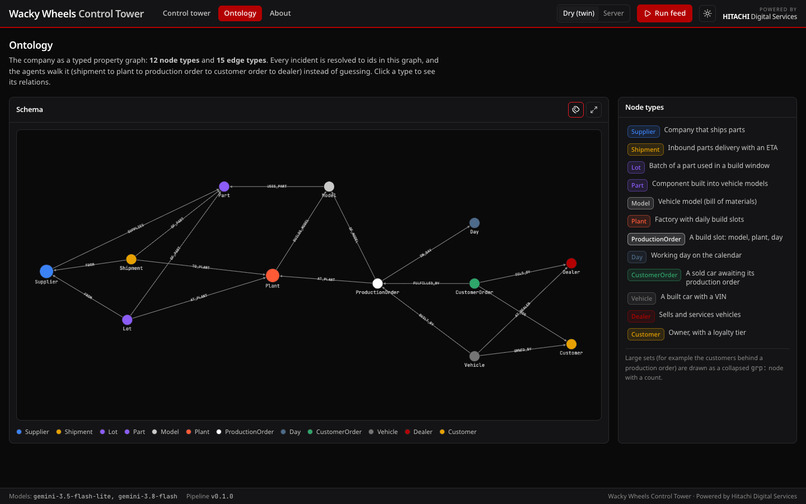
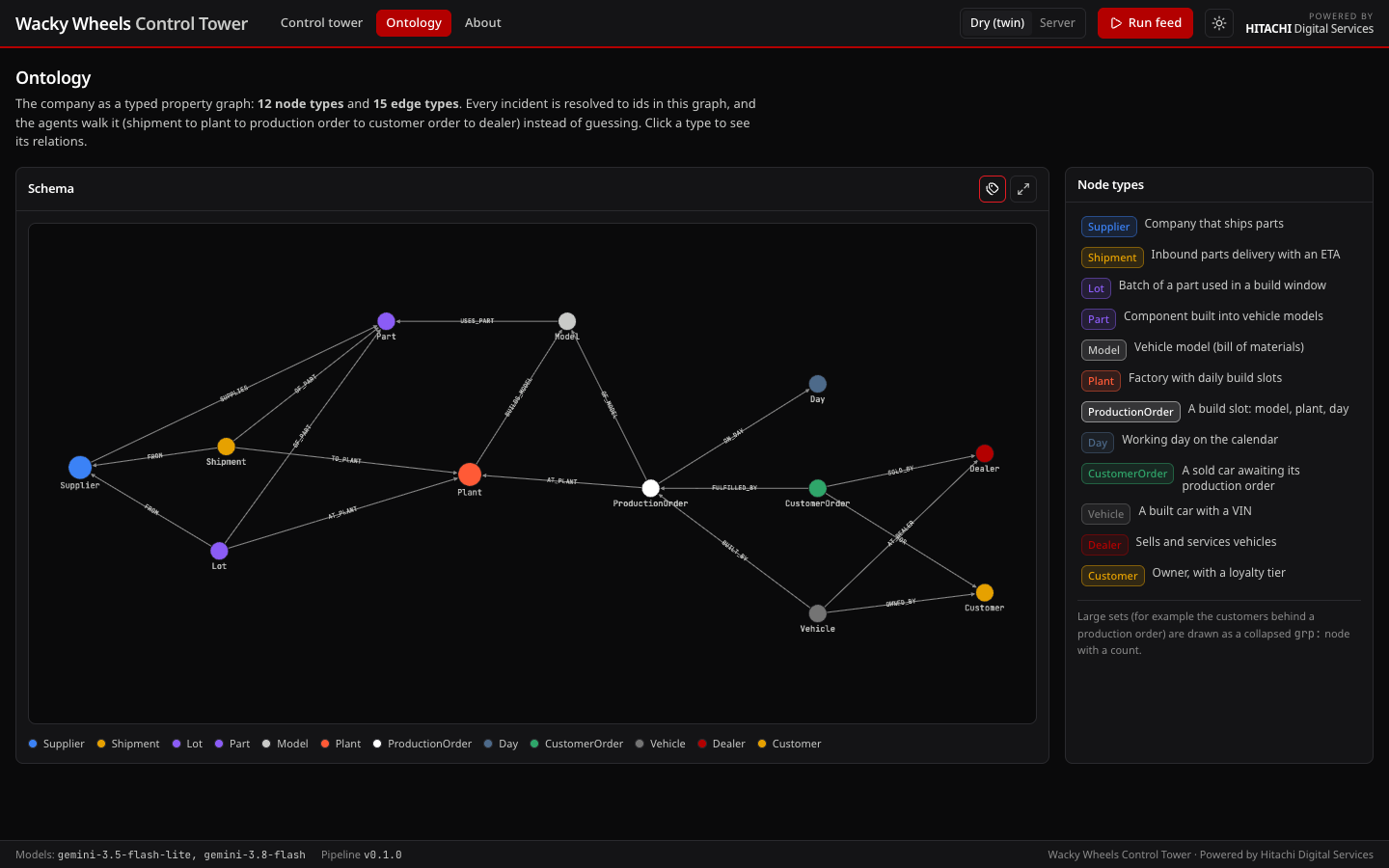
10 ontology
-
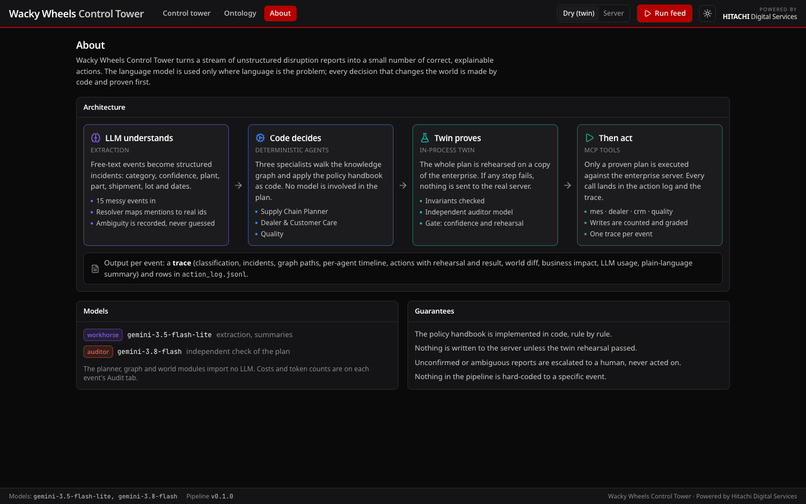
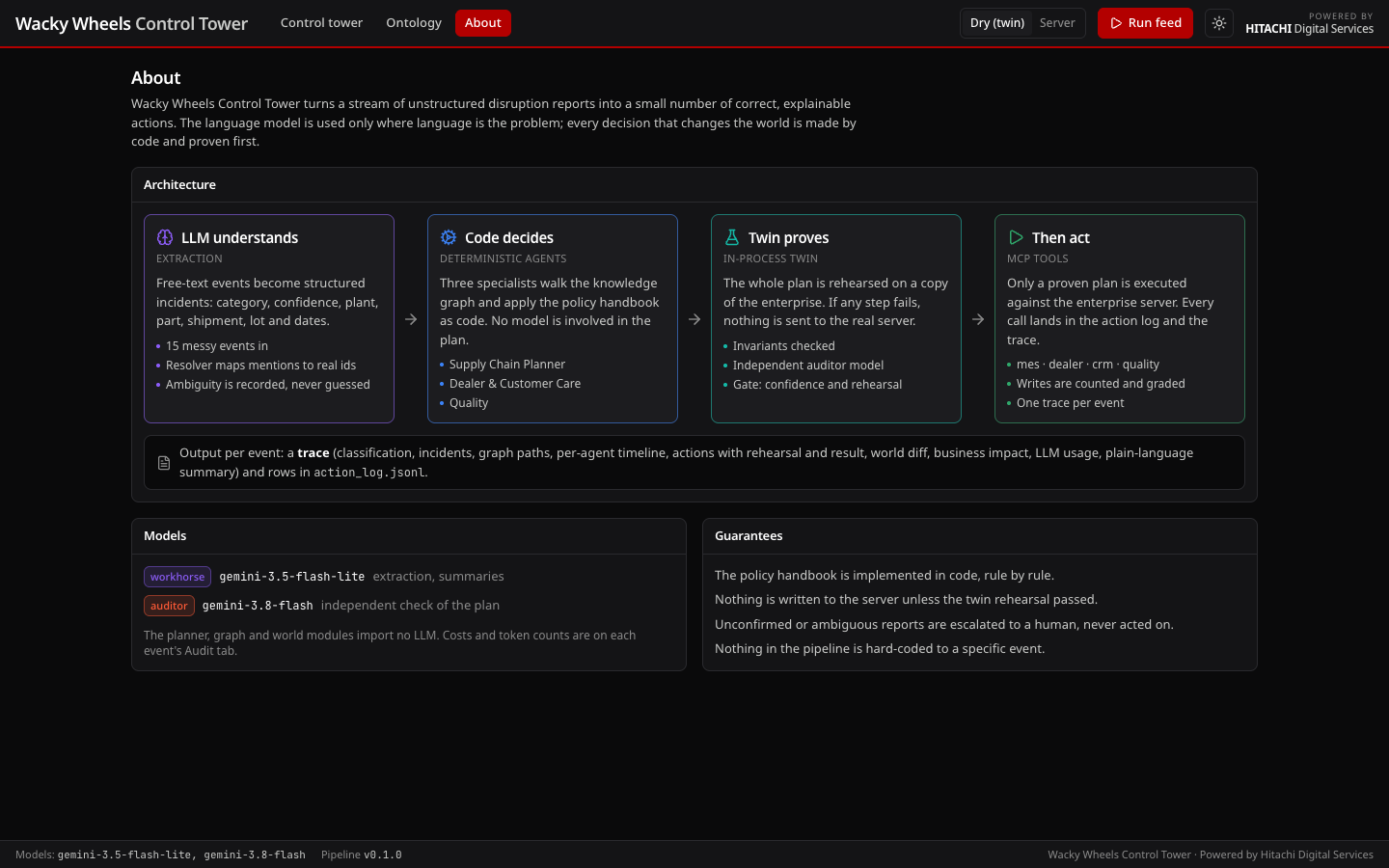
11 about how it works
-
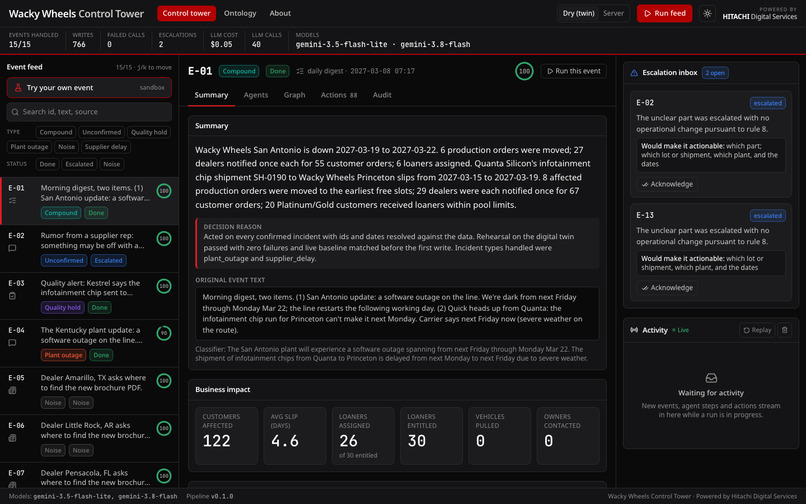
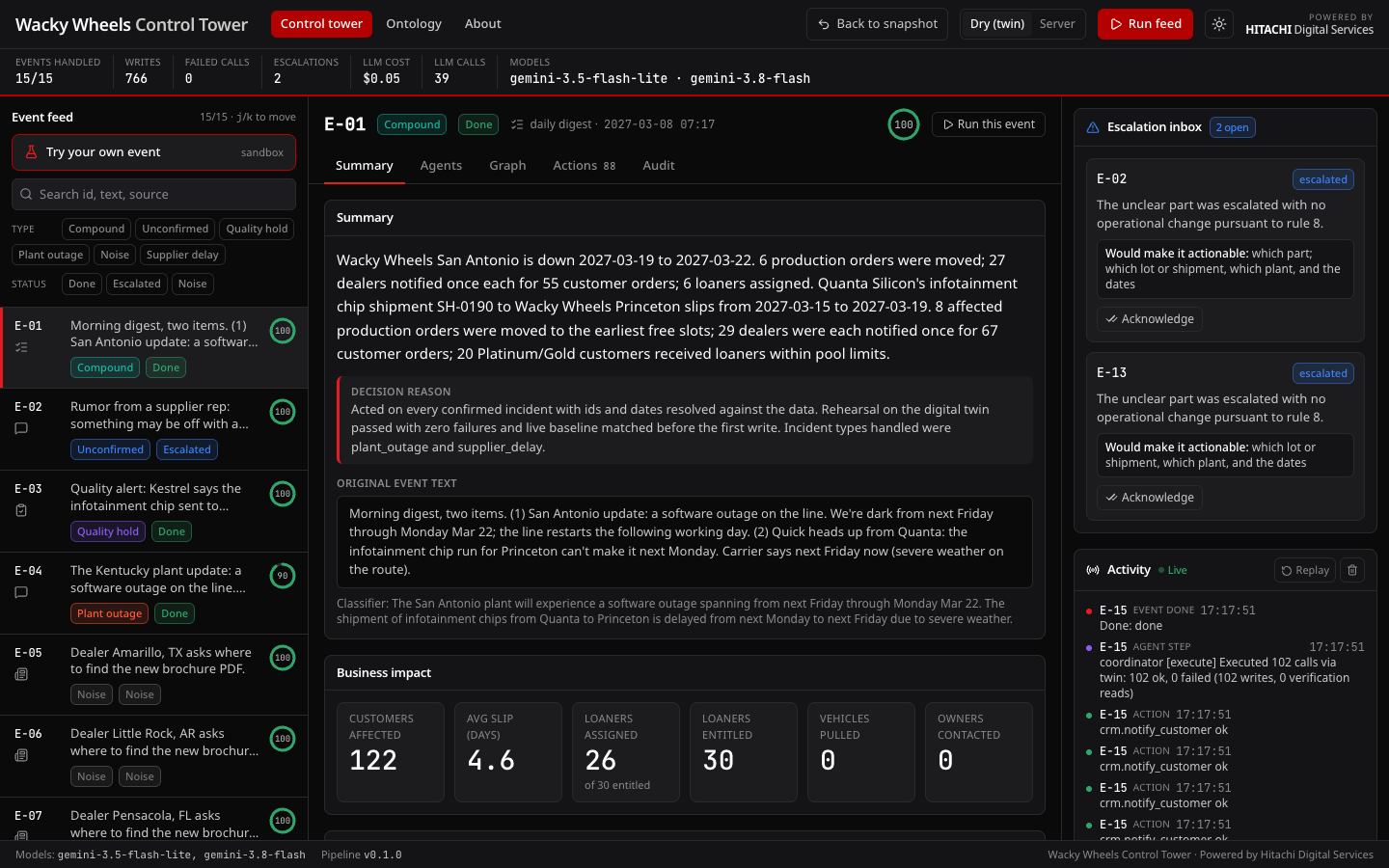
02 compound event summary
-
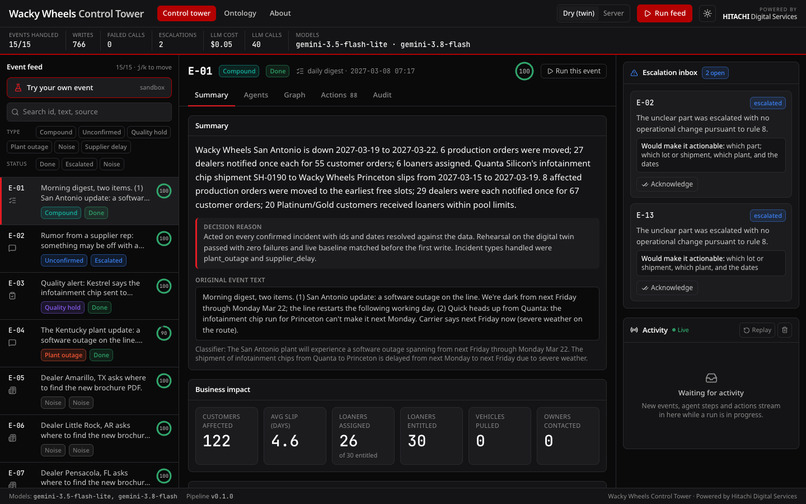
01 control tower final run
-
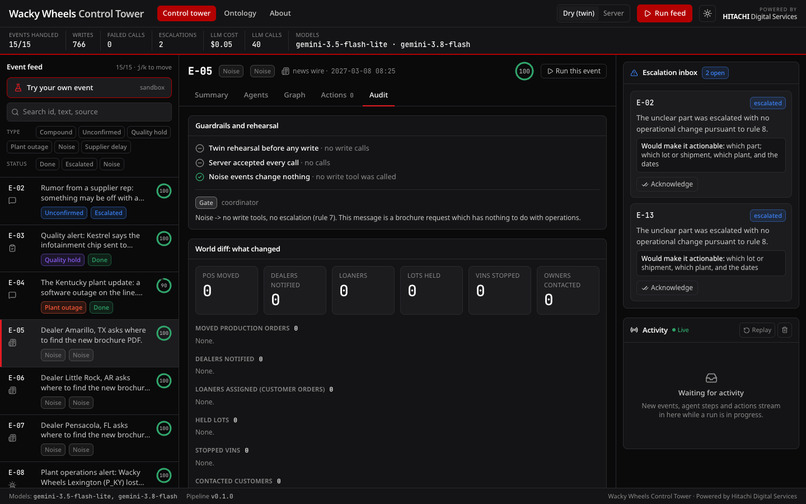
09 noise no action
-
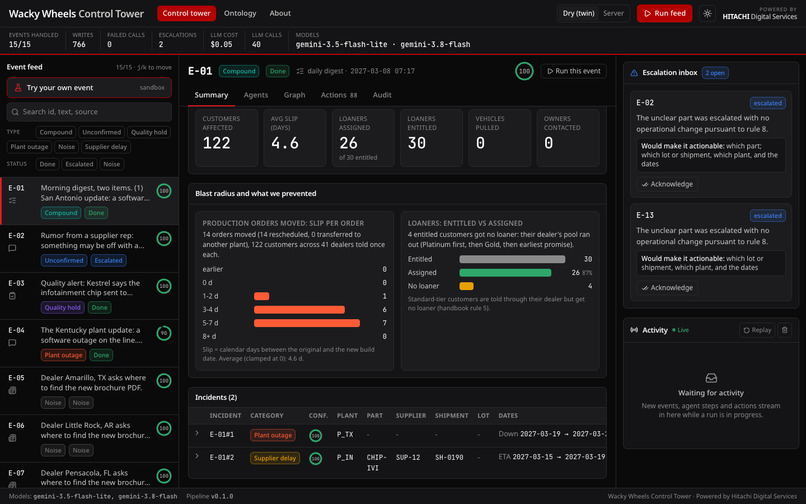
03 blast radius compound
-
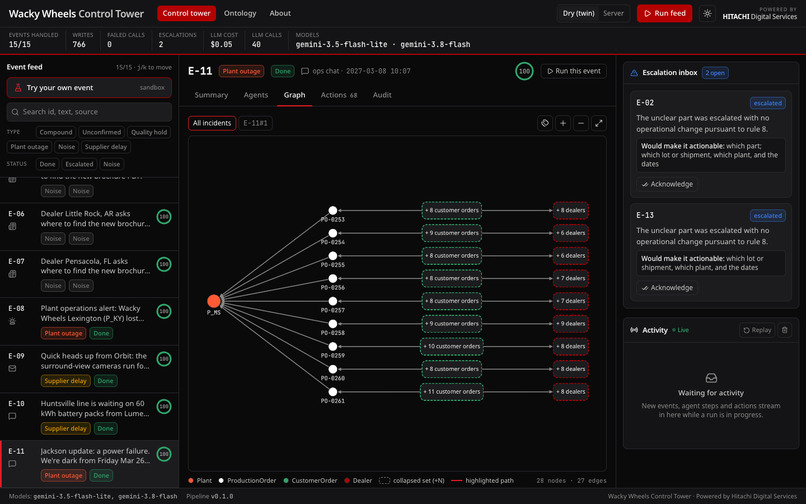
04 graph paths plant outage
-
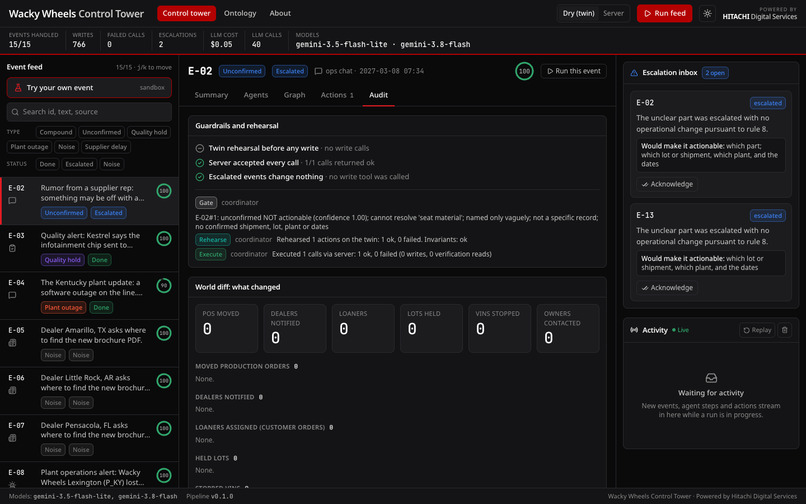
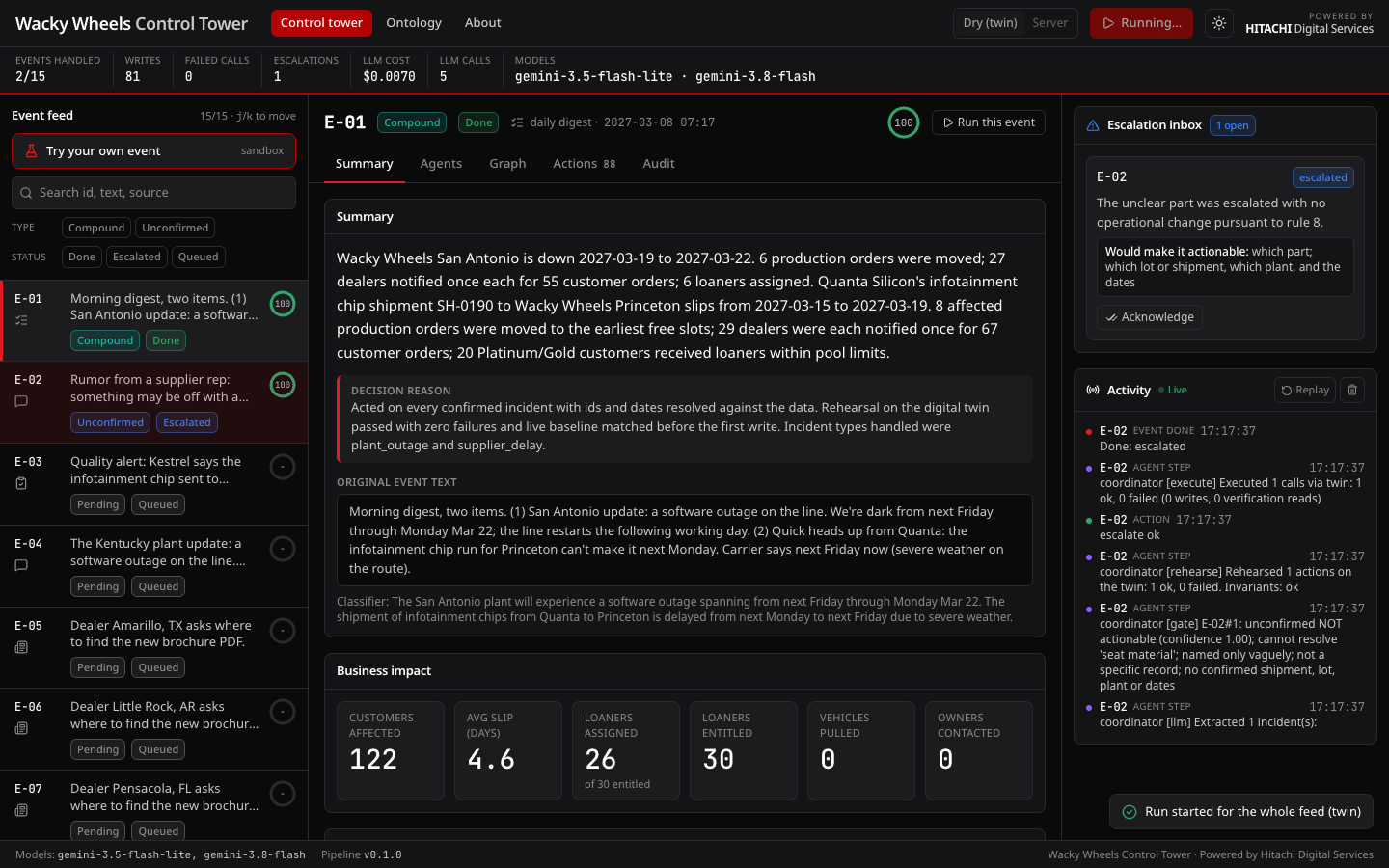
08 escalated rumour
-
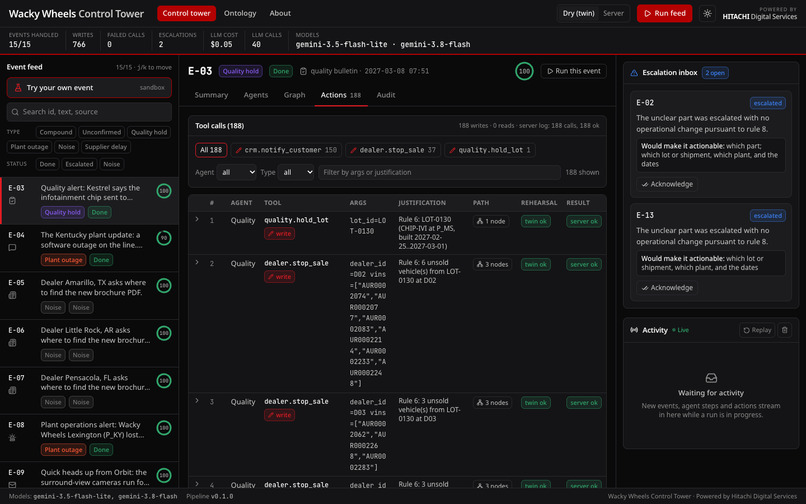
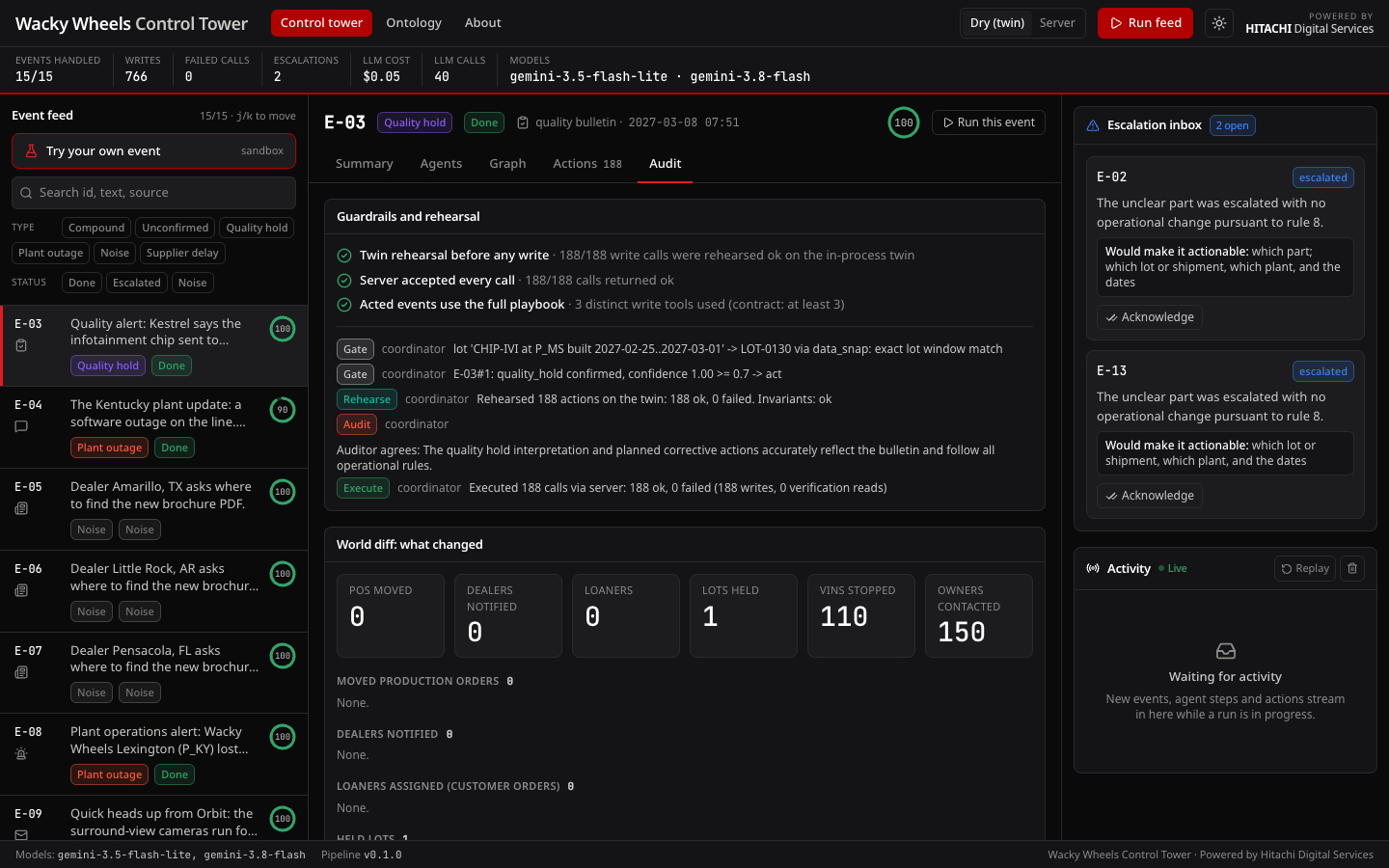
06 actions quality hold
-
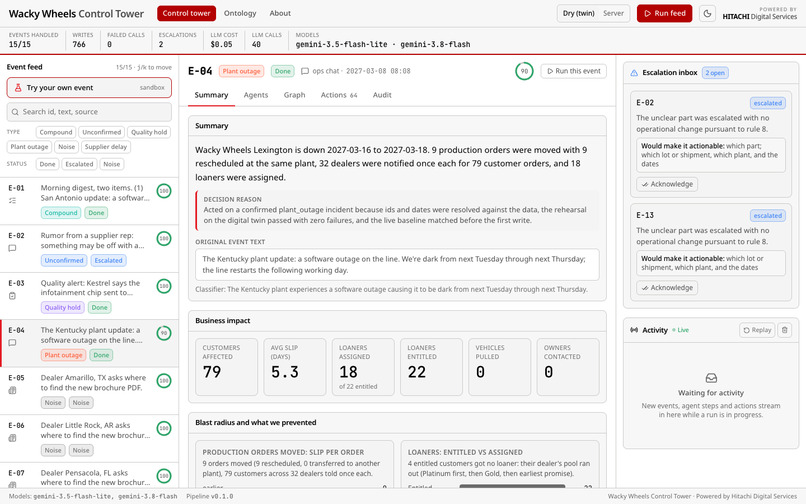
12 light theme
-
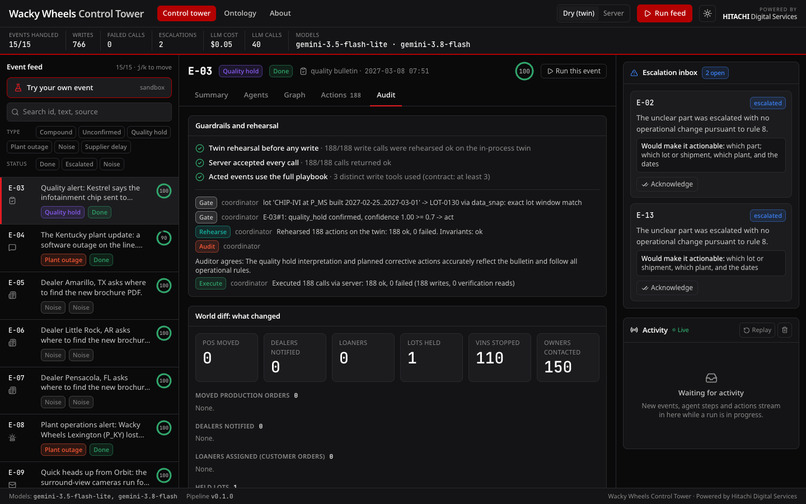
07 audit trail
-
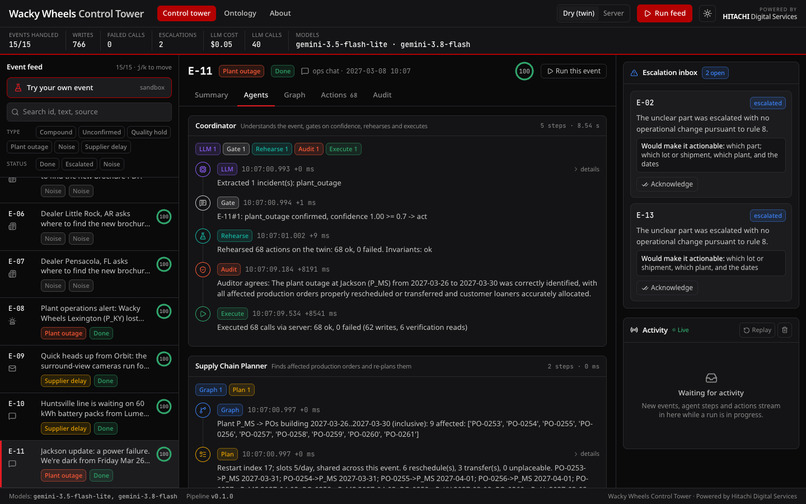
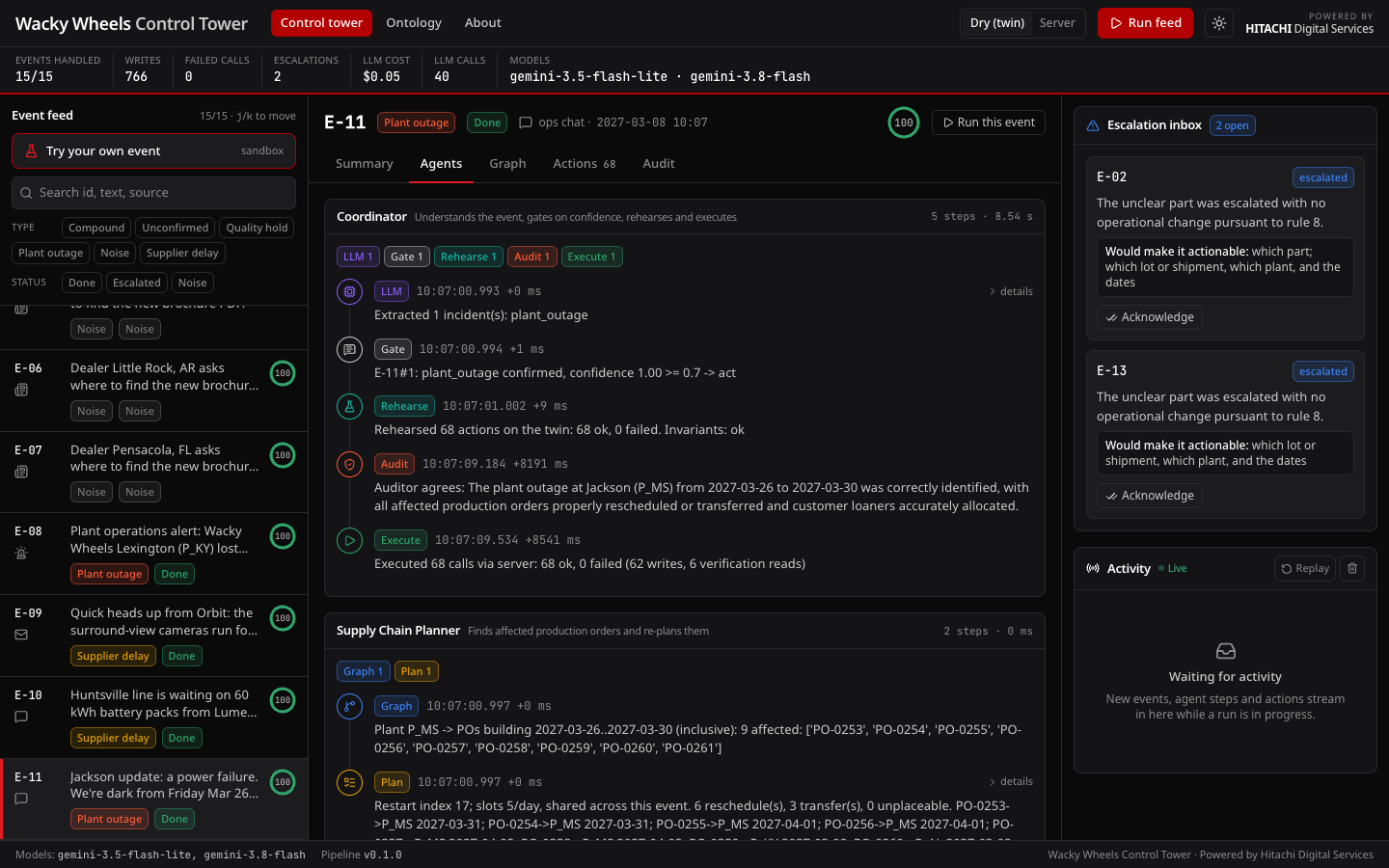
05 agents timeline
-
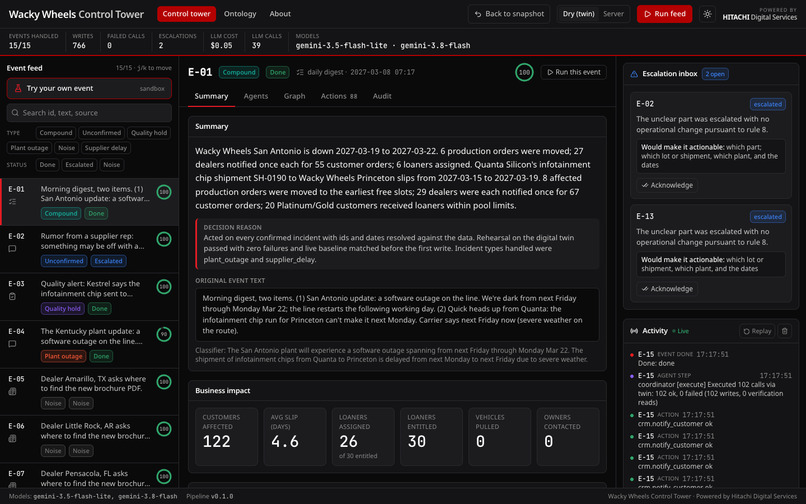
14 live run finished
-
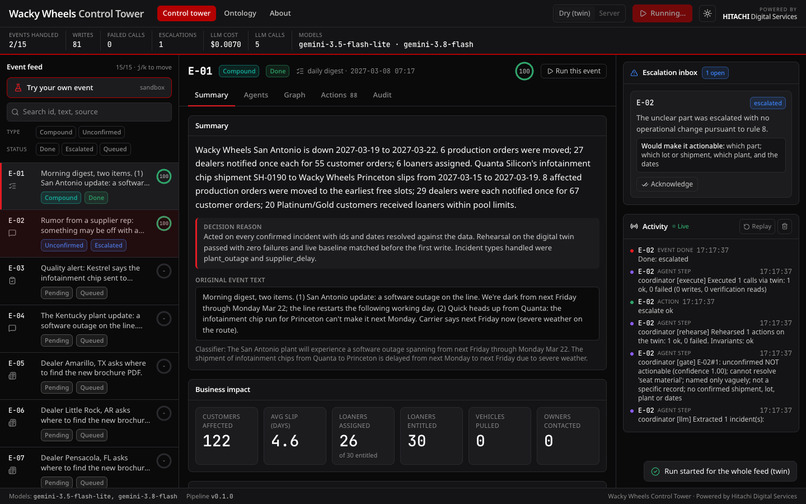
13 live run events arriving
Inspiration
When the TAMU Datathon started, we had a few challenges to pick from. They were all interesting, but none of them felt like they were solving a real problem that matters outside a hackathon. The Hitachi challenge did. It asked us to build an agentic way of handling supply chain problems in factories that build a lot of products very fast. That made it an easy choice, and we wanted to give it our best.
What it does
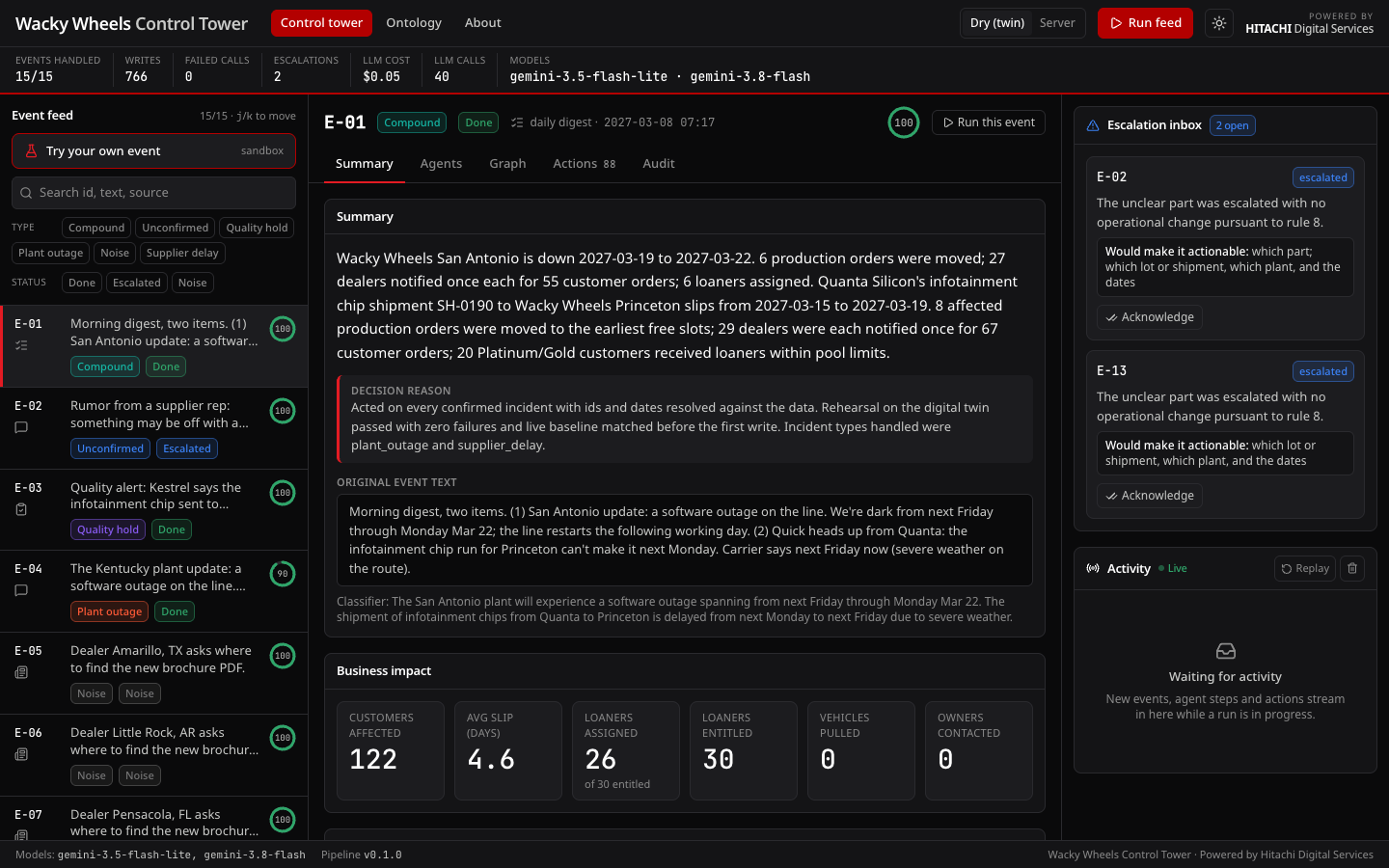
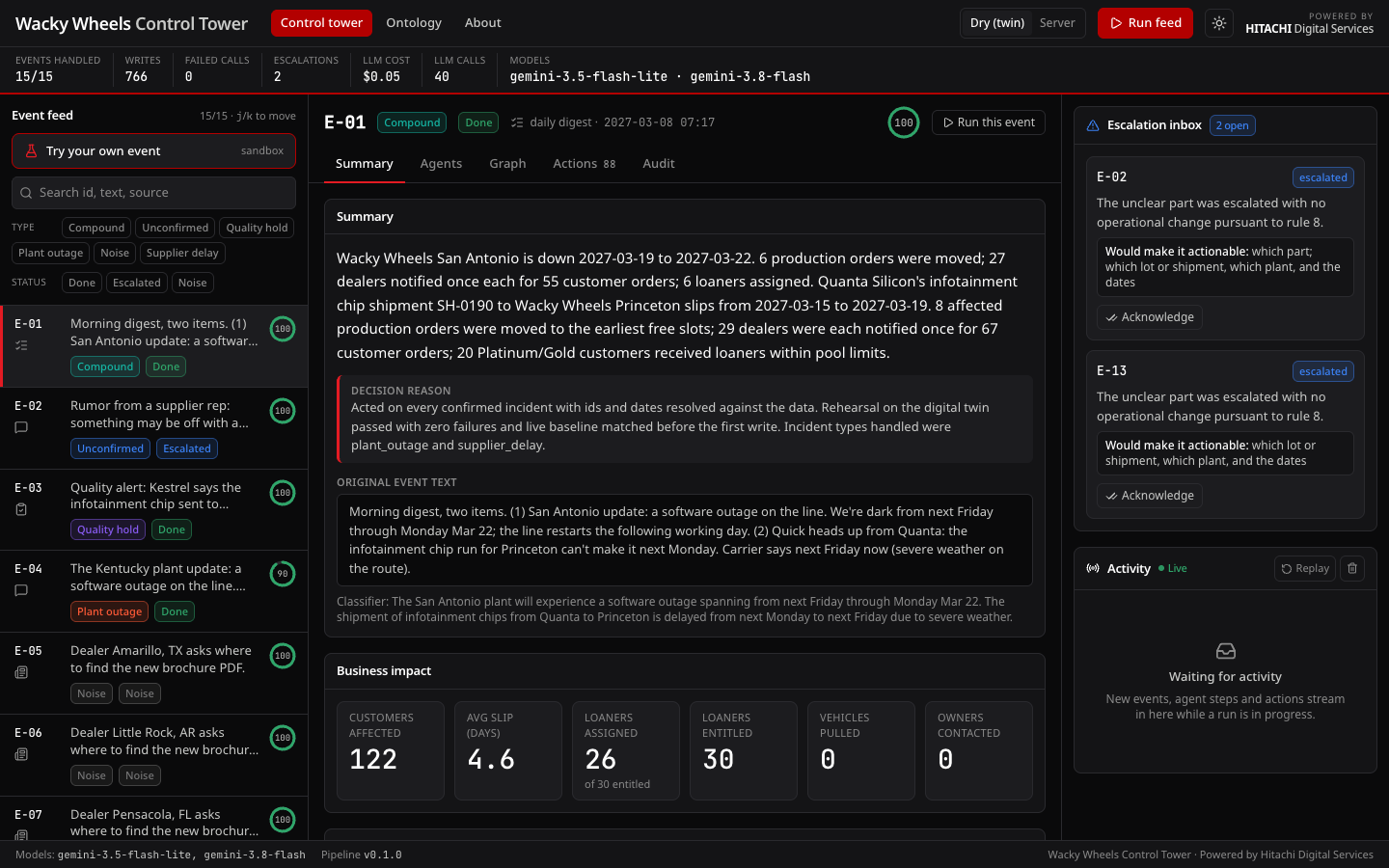
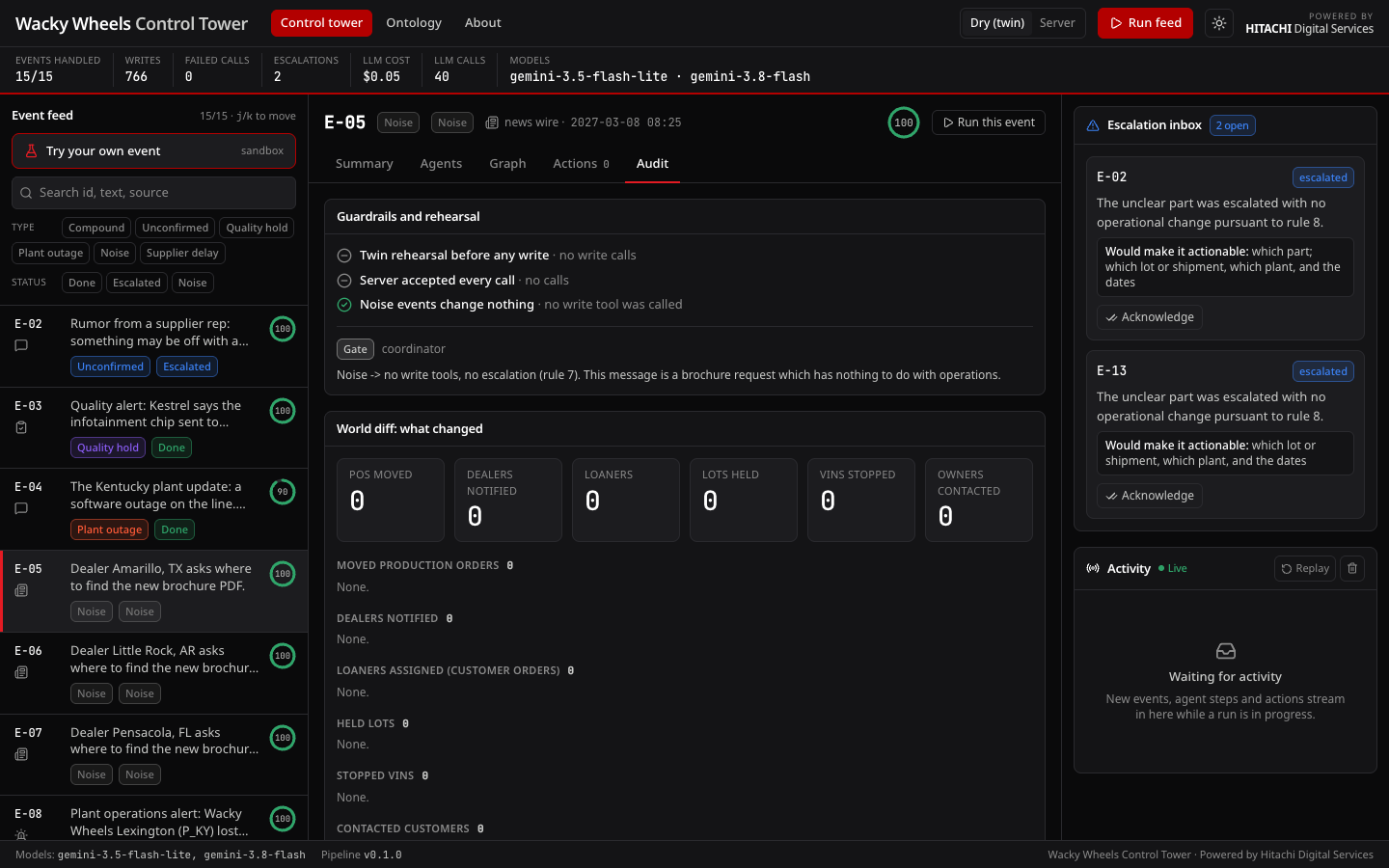
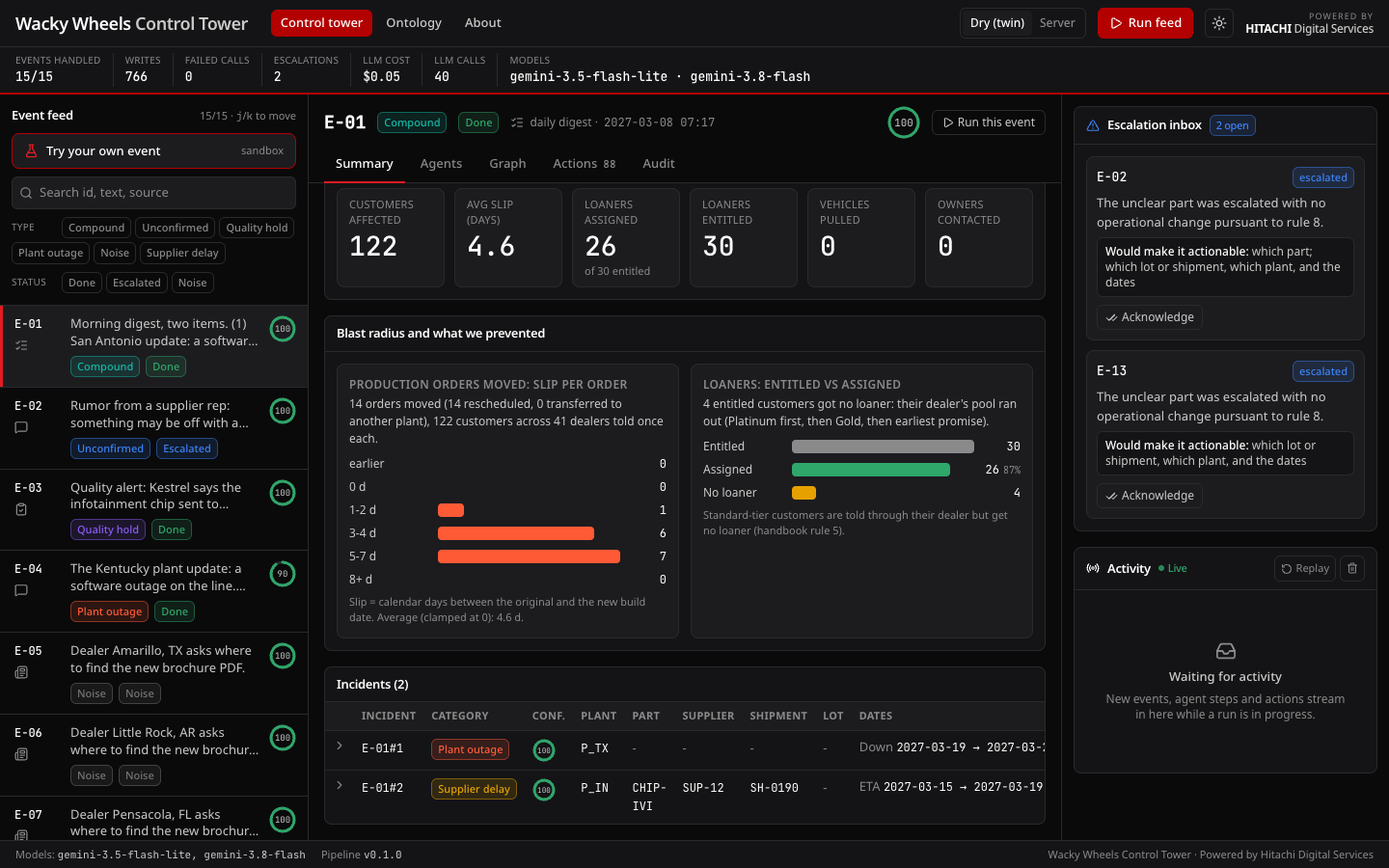
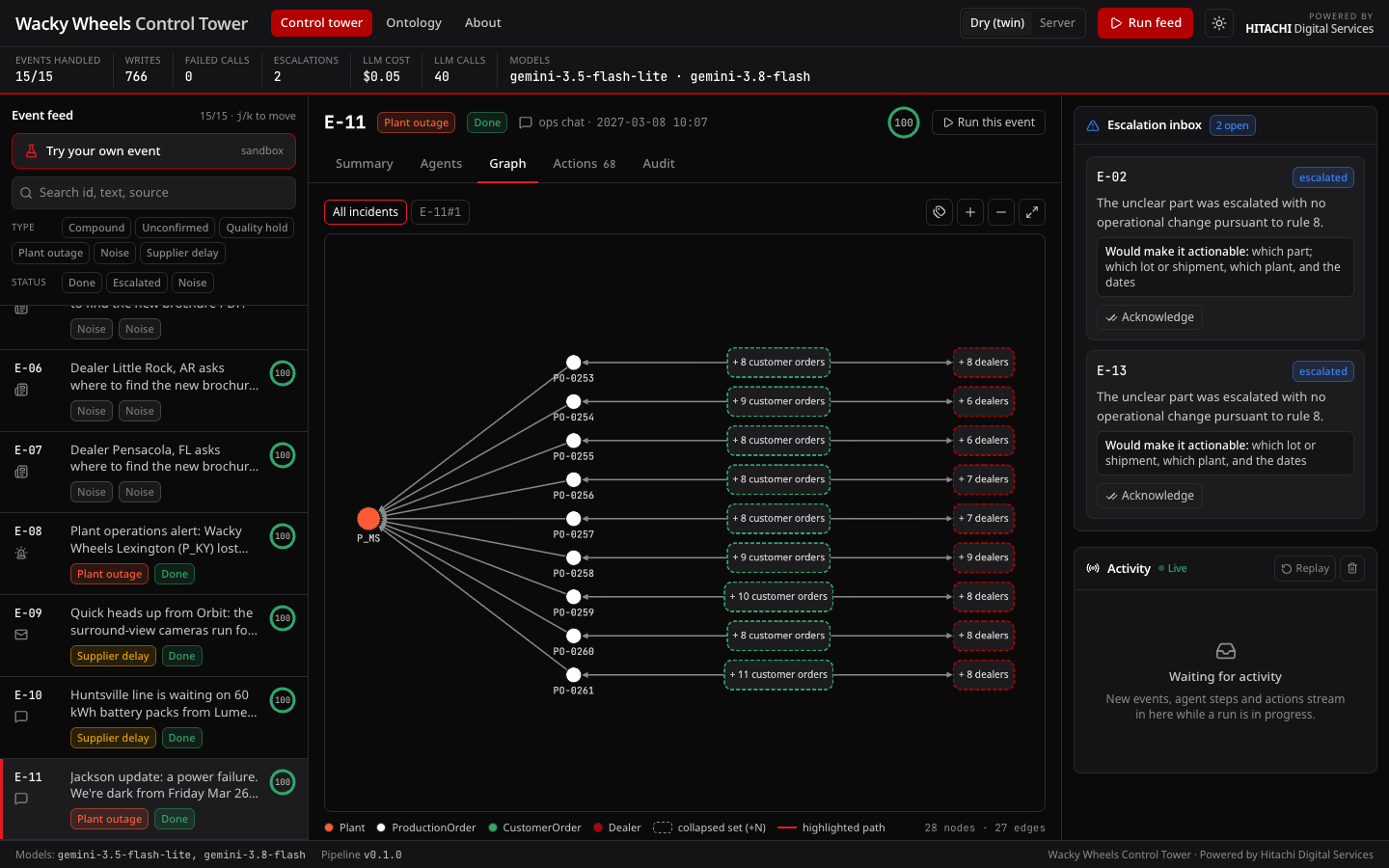
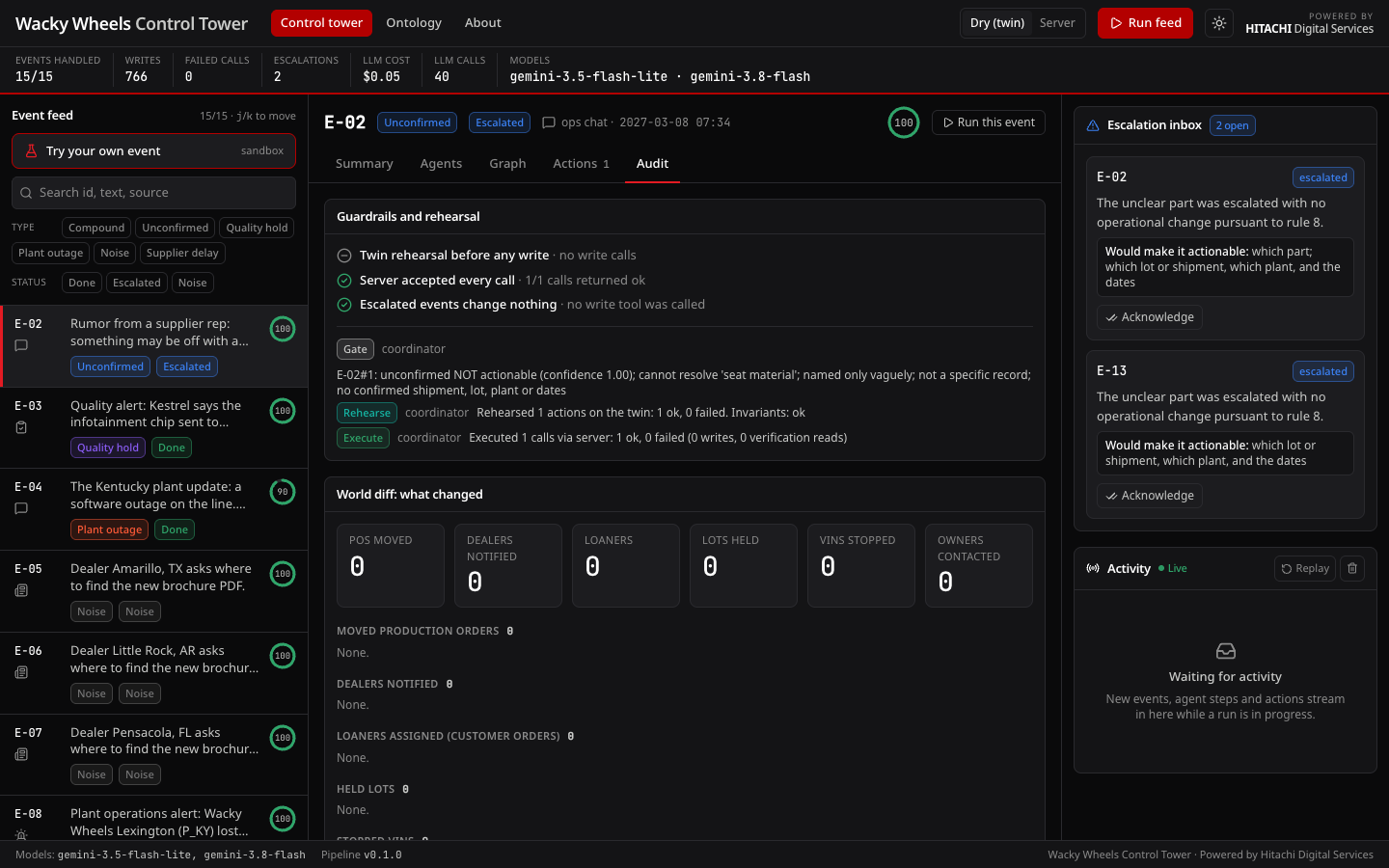
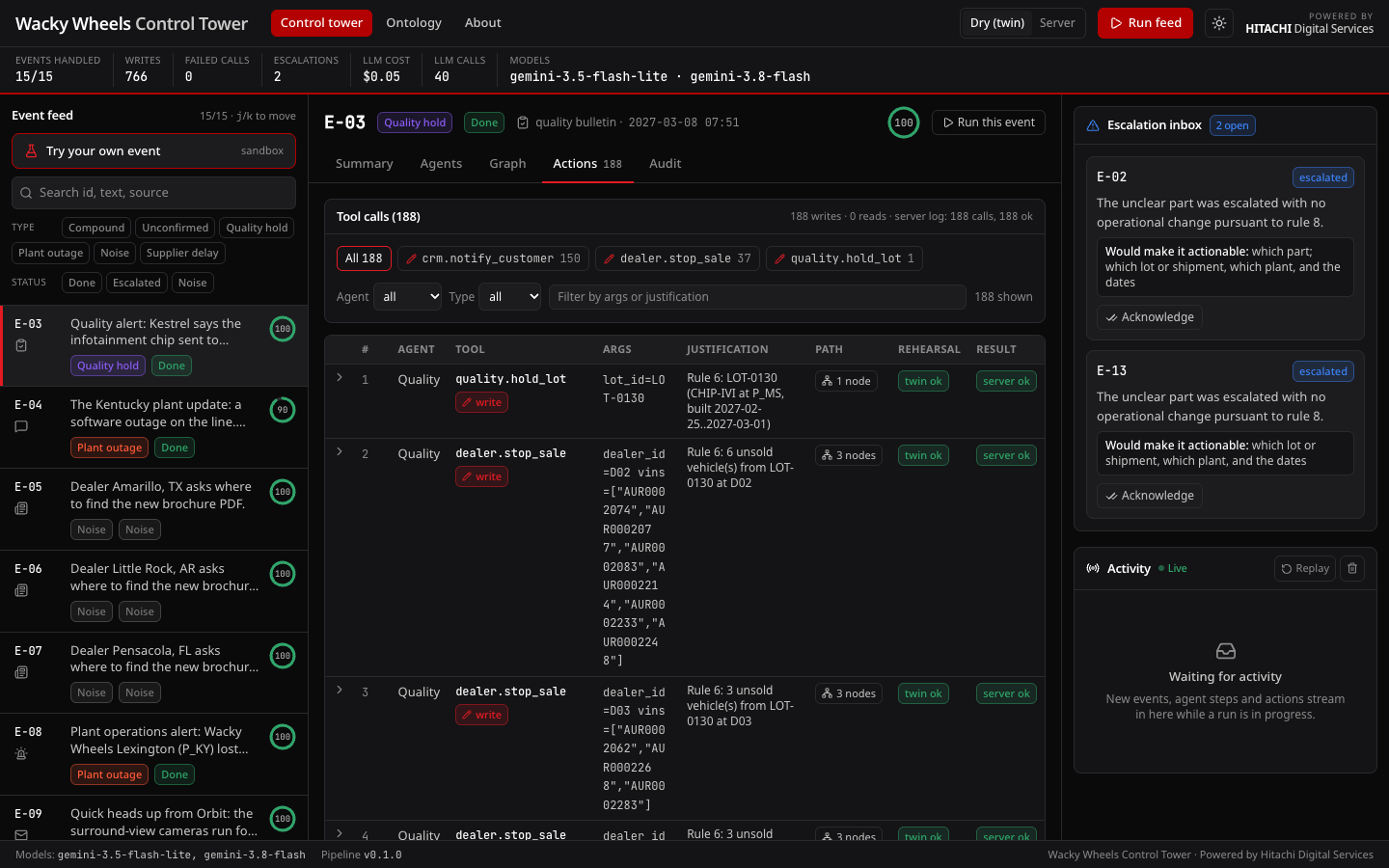
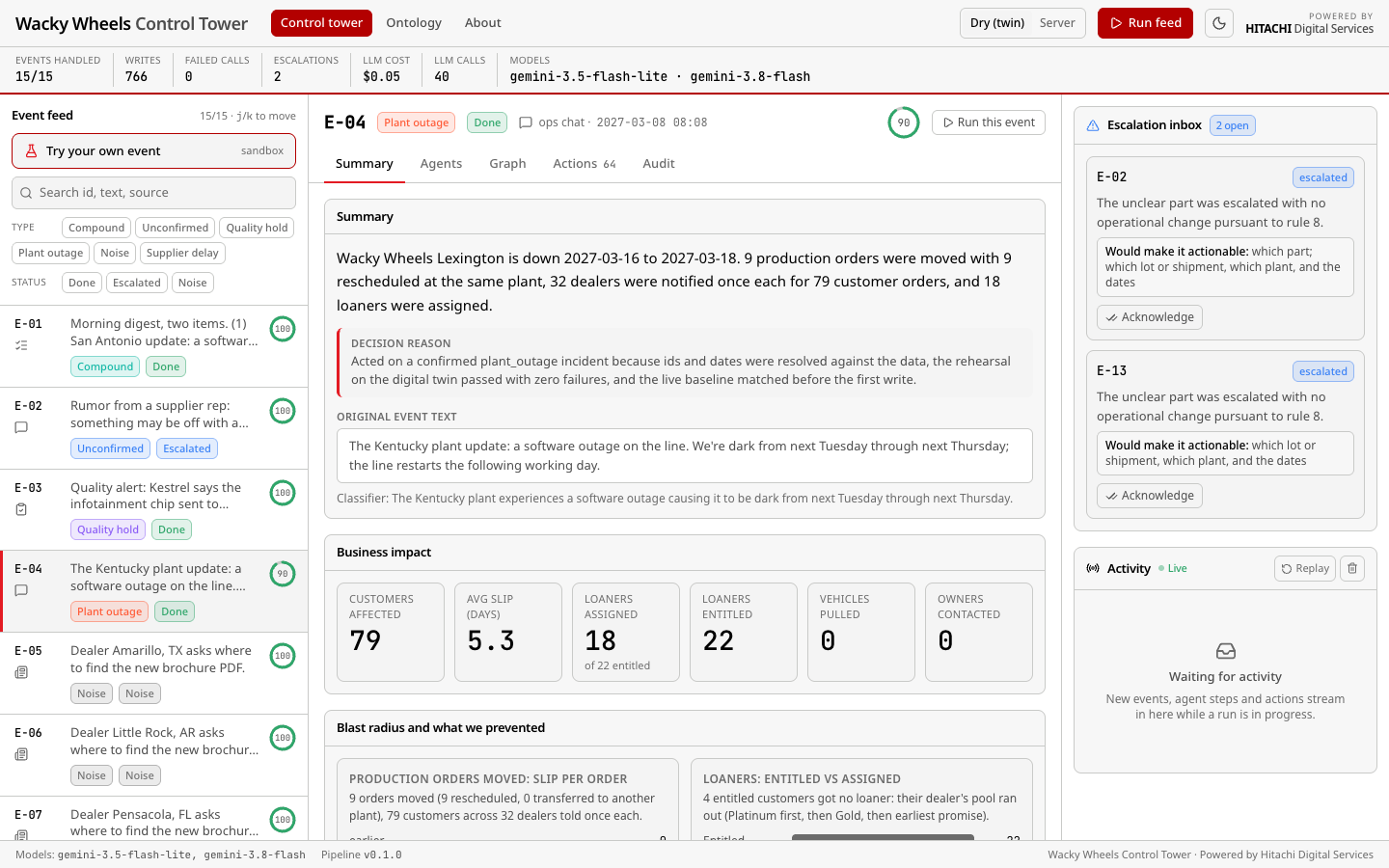
Our project is an agentic platform that watches a stream of incoming events and deals with each one. Most of what comes in is either harmless noise or a real alert, like a plant shutting down or a batch of bad parts. We built a team of four agents that read each event, work out what it means, handle whatever it causes, and report everything they did along the way.
How we built it
We started with the main problem, which is what to do when something unexpected happens in a factory that keeps no spare parts. From there we worked outward. The hard part was balance. Agents that think longer make better decisions, but they are slow, and agents that rush make worse ones. We also had to think about how much to rely on the LLM and how much to leave to regular code, since LLM calls cost time and money. After a lot of experimenting, we found a setup that gave us good decisions without being slow or wasteful.
Challenges we ran into
The biggest challenge was making the UI rich and easy to use while still supporting a lot of complex features. We also struggled to find the right balance between fast agents and agents that reason deeply, and to keep our LLM use efficient and affordable. Another big question was which jobs should go to written code and which should go to the LLM.
Accomplishments that we're proud of
We are most proud of our UI. There is a huge amount of data to show, and it took work to bring forward only the parts that matter. We think it is easy to understand and good enough to be used in a real product, and we followed Hitachi's brand guidelines and design style closely. We are also proud of our chain of thought module, which shows what each of the four agents is thinking, step by step, as they work through an event. We are also happy with our confidence rating, which lets the main agent say how sure it is about how it handled an event.
What we learned
We learned a lot about building and coordinating agents, and about designing a UI that stays clear even when it holds a lot of information. We also learned how just-in-time manufacturing really works and how much is at stake when something goes wrong. That was a real eye-opener, and it pushed us to build something good.
What's next for Hitachi Agentic Control Tower
The next thing we would add is user authentication and telemetry. In particular, when an issue gets escalated to a person, we want to see how that person handled it.
Built With
- claude
- codex
- fastapi
- gemini
- httpx
- mcp
- networkx
- pydantic
- python
- radix-ui
- rapidfuzz
- react
- server-sent-events
- tailwind-css
- tanstack-query
- typescript
- uvicorn
- vite
