-
-
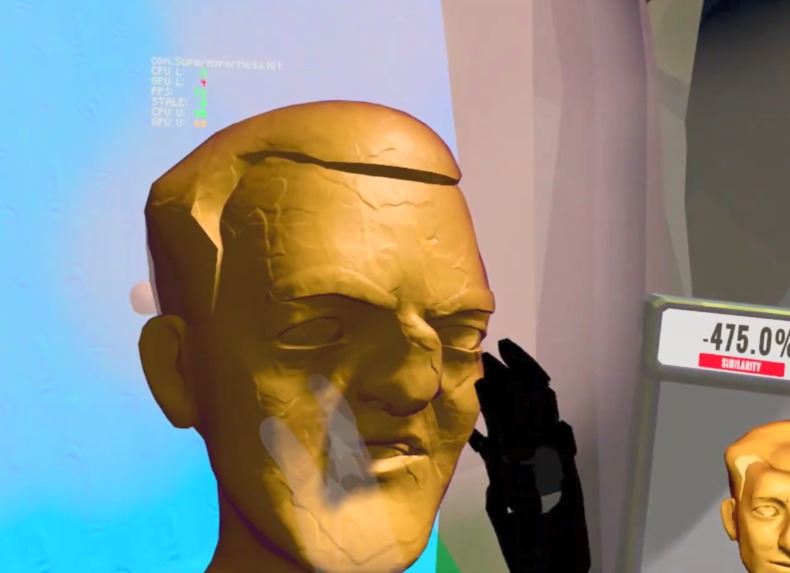
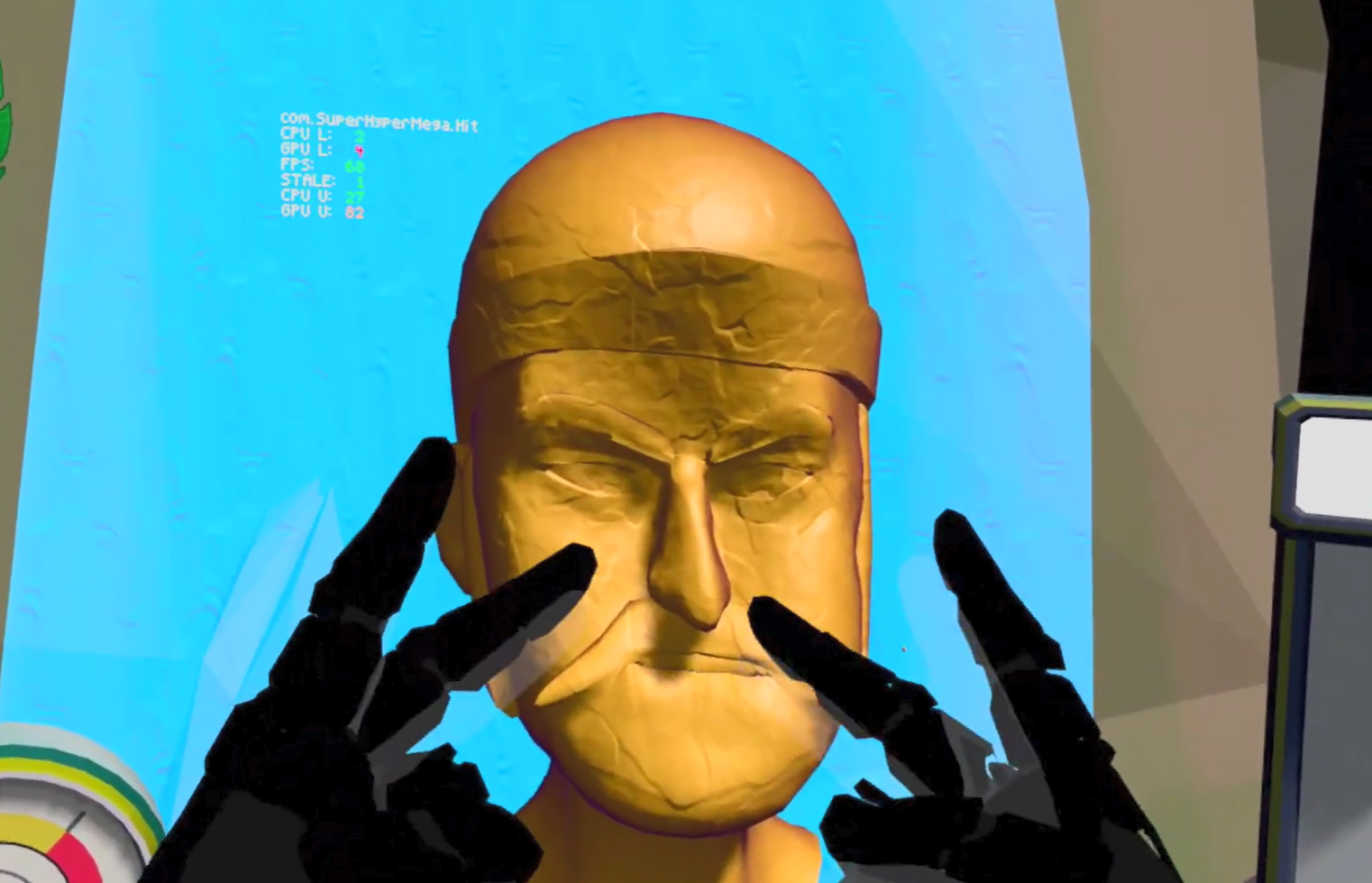
Showing the good damage calculation on Hit (with Hands!)
-
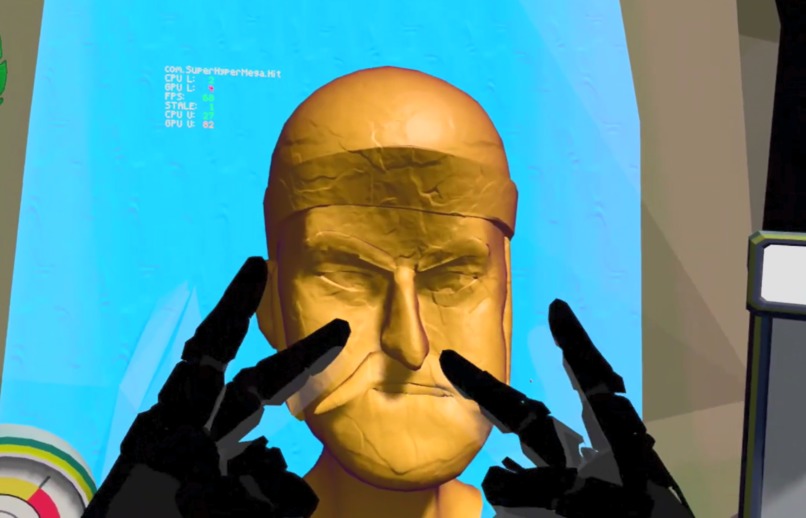
Exact colliders on hands - you can poke, as well as punch and slap
-
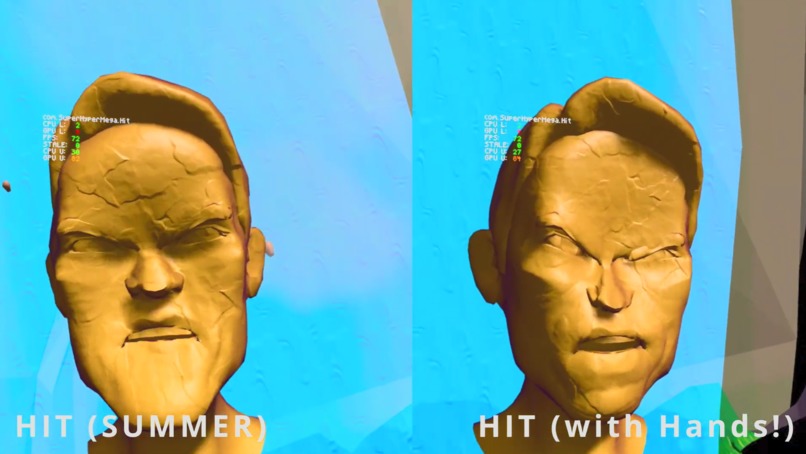
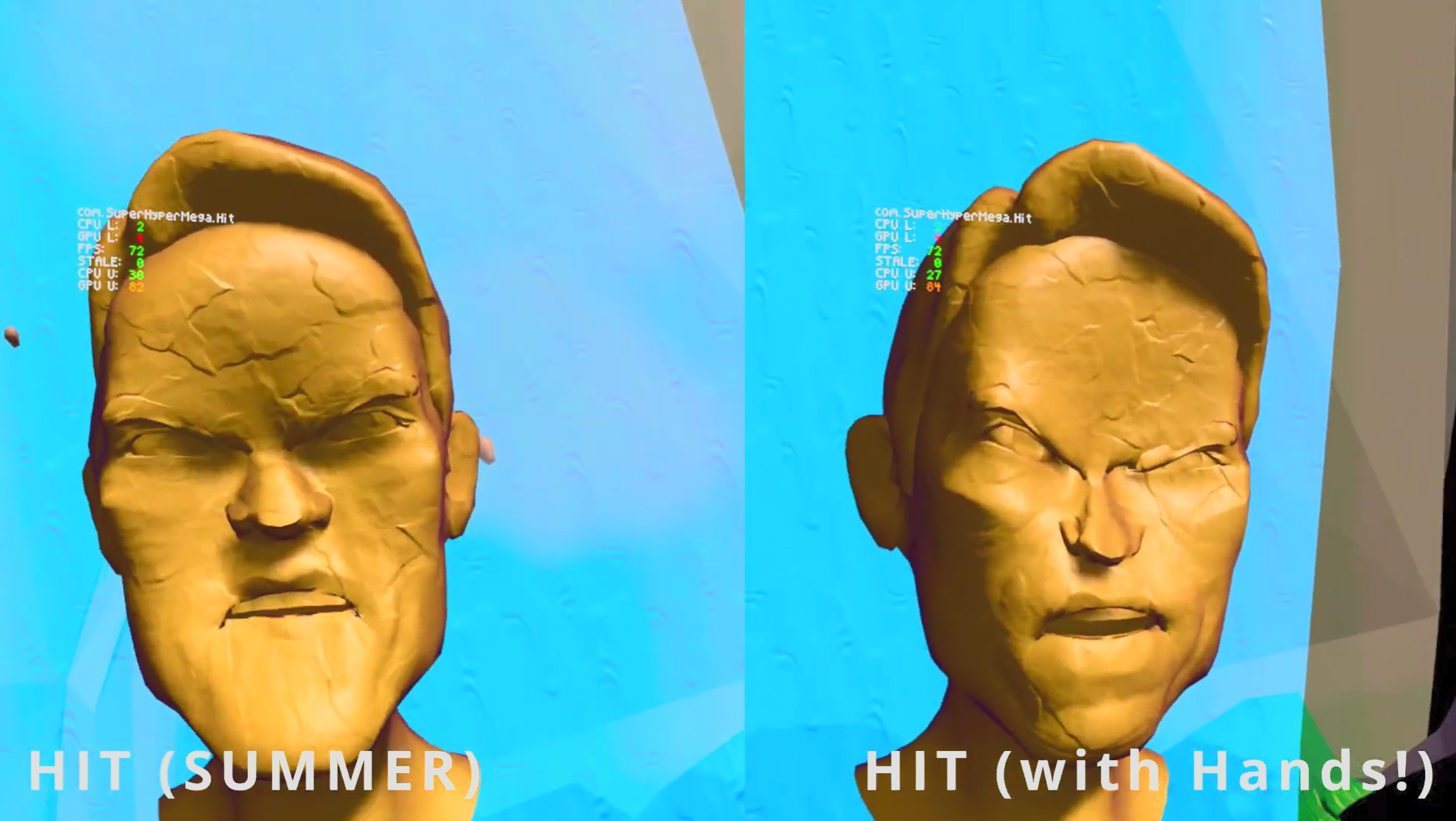
Side-by-side comparison of controller hitting vs hands
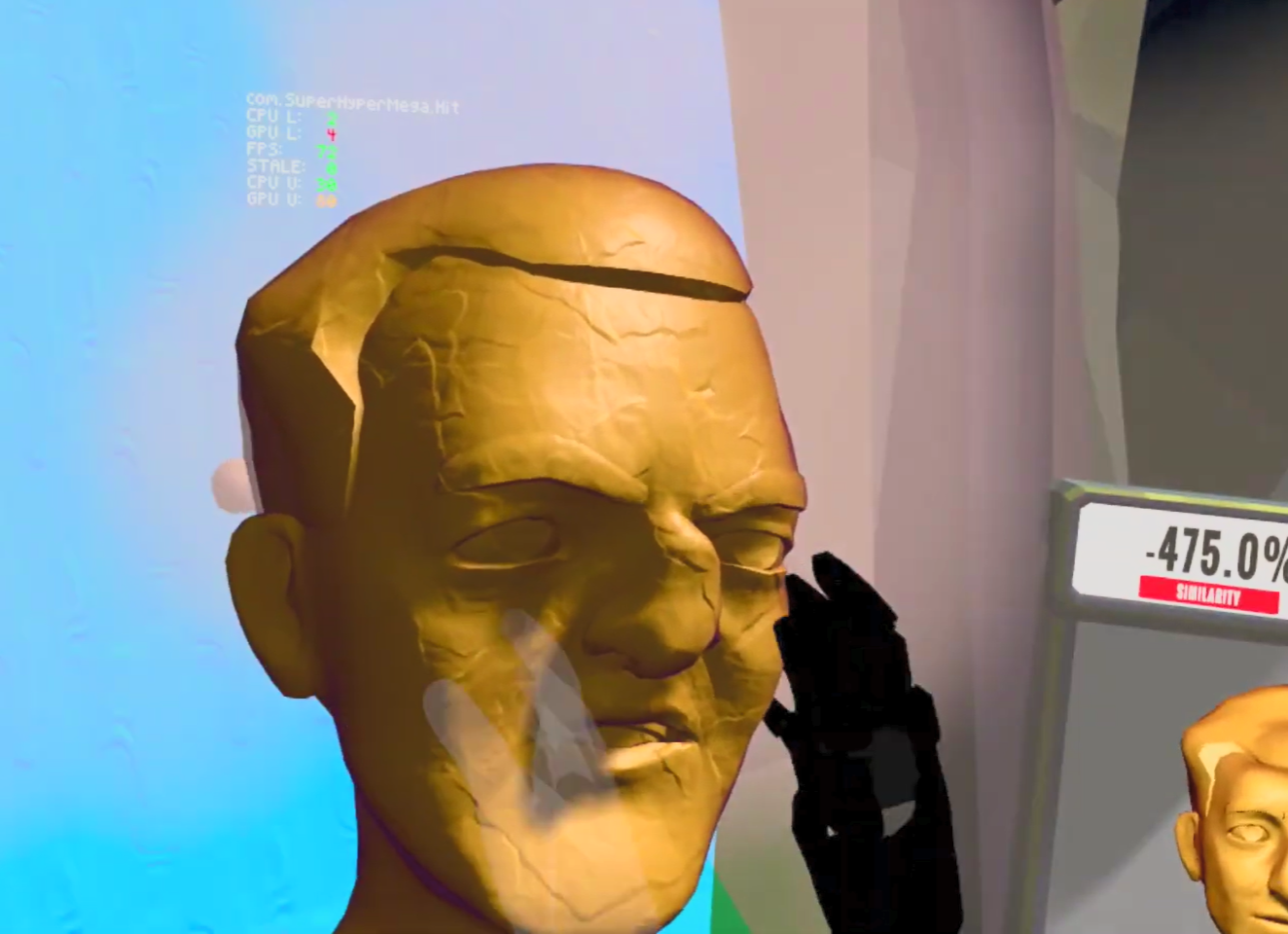
Inspiration
When we first released HIT, we relied on controllers because hand-tracking simply couldn’t keep up with the speed and force of real punches. Eight months later, with improvements in Meta Quest’s hand-tracking capabilities, we challenged ourselves to revisit the idea. This time, with a lot of experimentation, we finally achieved what we originally dreamed of: HIT, fully playable with nothing but your hands.
What it does
This version of HIT focuses entirely on delivering high-fidelity, high-speed hand interaction with the iconic clay heads, with no controllers required. You can walk up and slap, tap, whack, and punch using your real hands, with immediate, satisfying feedback.
The core innovation is our new physical hand-following system. The in-game “punching” hand mirrors the Quest-tracked real hand while adding a computed velocity model that preserves the physicality required for HIT’s damage system. Because HIT relies on physics-based impact forces - not animation triggers - simply mapping Quest hand positions wasn’t enough. The standard Meta SDK hand implementation couldn’t deliver accurate, high-speed collision impulses on its own, and would often simply pass through the head without collision.
To solve this, we built a hybrid system where your real hand appears as a semi-transparent “ghost” and the physical in-game hand follows it with imperceptible delay but correct physical velocity. This creates precise, gratifying impact collisions even during extremely fast swings - something we couldn’t achieve when the game originally launched, nor with just a vanilla hands integration.
How we built it
We began by integrating Meta’s Building Blocks hand tracking into the existing HIT codebase. However, direct tracking produced inaccurate collisions and unreliable punches, especially at high speeds.
Our successful solution was to extend our original custom controller-tracking system to support hand tracking. The in-game physics hands then aggressively follow the tracked hands, inheriting their motion but applying physics-authentic velocity. This preserved the feel of the original game while enabling true controller-free interaction.
To help with UX clarity, we introduced dual-hand visualization: the ghost hand for precision feedback and the physical hand for gameplay interactions. This will reduce confusion and improved time-to-fun for new players.
Challenges we ran into
The main challenge - besides accurate high-speed punching - was preventing unintended grabs. In the original HIT, players can pick up the clay head, but the new hand-tracking system sometimes interpreted a fast punch as a grab. For this stripped-down version, we disabled grabbing entirely to preserve gameplay flow. We’re now testing velocity-aware grab suppression so players won’t accidentally grab objects mid-punch.
Accomplishments we’re proud of
Getting punches to feel powerful, accurate, and fun without controllers is a huge leap forward for HIT and a meaningful demonstration of how far Quest hand tracking has come and how it can be used.
What we learned
Physics-accurate Quest’s hand-position recognition at high velocity pushes the limits of the hardware - but with a thoughtful physics integration, it’s possible to get an exciting result!
What’s next for HIT (with Hands!)
We’re exploring two release paths: a standalone MR, controller-free version ideal for passthrough devices; or an update to the full game with optional hand support - dependent on perfecting our improved grabbing system.
Built With
- quest
- unity
- vr


Log in or sign up for Devpost to join the conversation.