Inspiration
As a lifelong history enthusiast, I grew frustrated with static textbooks that disconnected events from their geographic context. I wanted to create a tool that let people "walk through time"—to see how empires rose and fell on a map, and connect historical events to the places they happened. Living in a region rich with ancient landmarks, I also dreamed of blending modern tech (AR) with history to make the past tangible for travelers and learners alike.
What it does
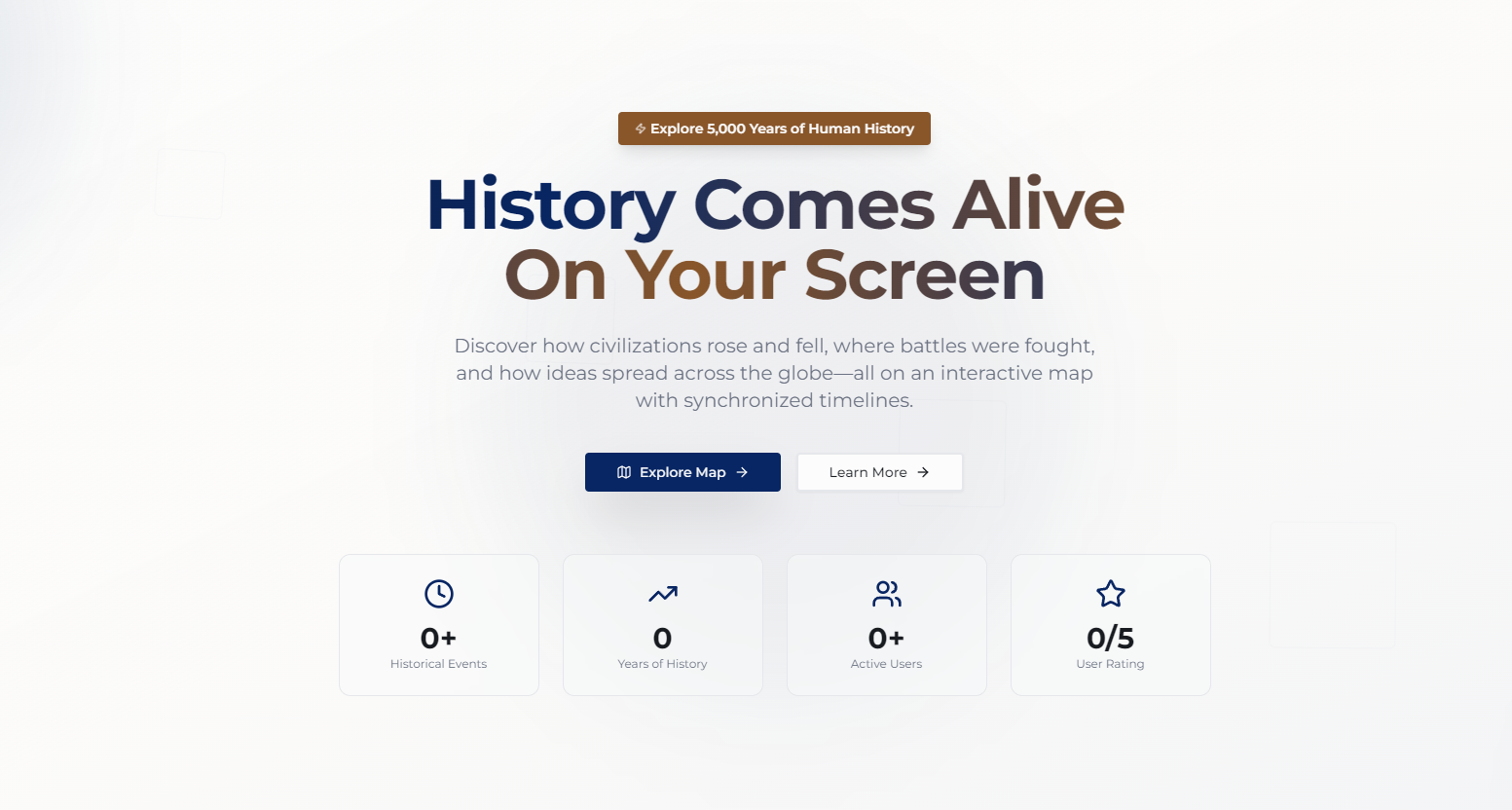
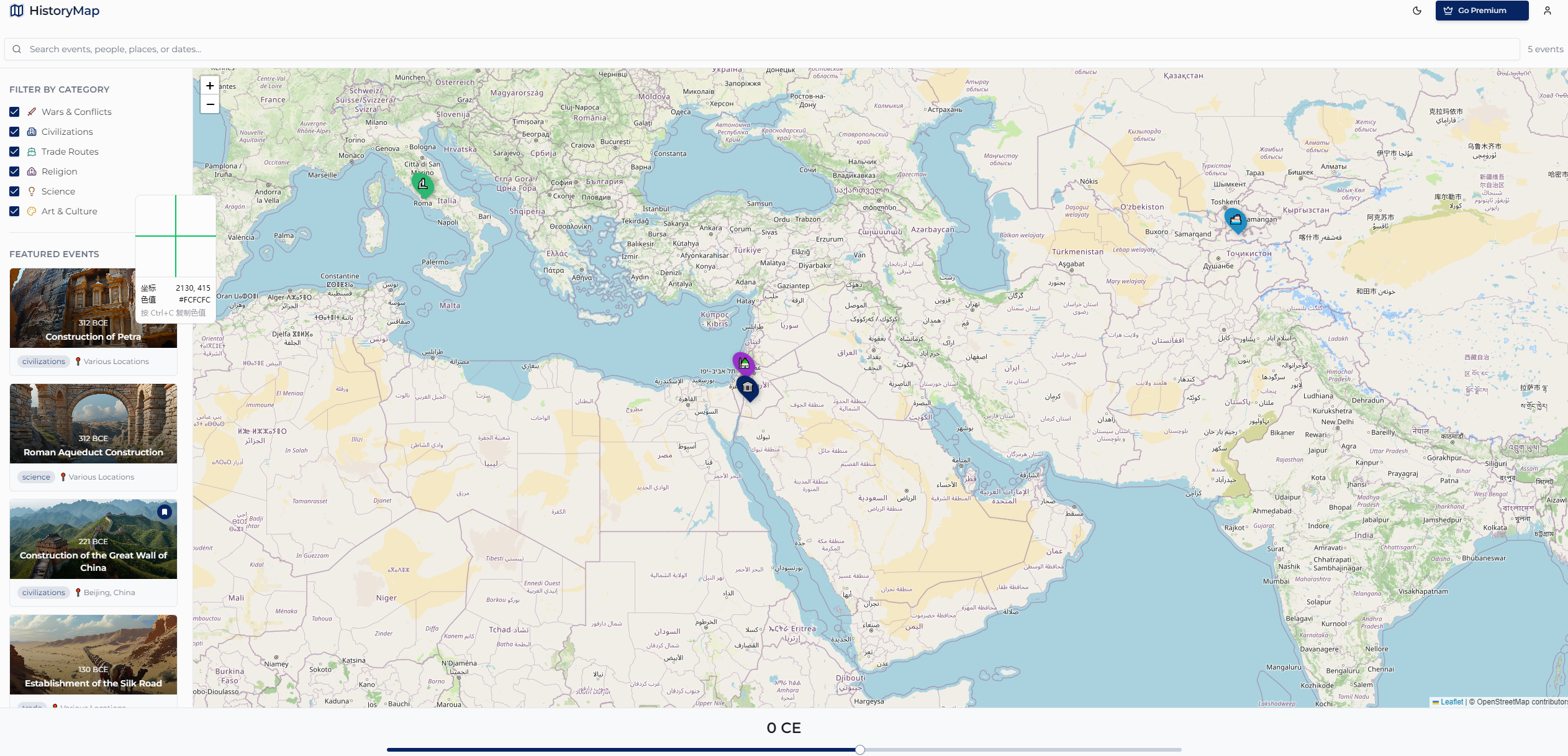
HistoryMap is an interactive web app that visualizes 5,000 years of world history on a global map, synced with a timeline slider. Users filter events by category (wars, culture, science), click markers for detailed multimedia info, and save bookmarks (limited for free users). Premium features include AR historical overlays at landmarks, a travel route planner for custom historical itineraries, and offline access to map data.
How we built it
We started with React for the frontend to ensure smooth UI/UX, paired with Node.js/Express for the backend. Mapbox API formed the core of the interactive map, with PostgreSQL storing historical event data and user preferences. We integrated AR.js for augmented reality features, Stripe API for premium subscription processing, and PDFKit to generate downloadable fact sheets/itineraries. Firebase handled real-time sync of bookmarks and user profiles across devices.
Challenges we ran into
The biggest hurdle was historical accuracy—syncing political borders, city locations, and event markers to specific time periods required curating massive datasets and building logic to animate transitions smoothly (capping at 2 seconds for performance). We also struggled with AR.js compatibility across mobile devices, and optimizing offline data storage to balance file size with content depth for premium users.
Accomplishments that we're proud of
We built a seamless timeline-map sync that updates in real time at 60fps, and successfully integrated AR overlays that let users see 3D reconstructions of landmarks as they appeared centuries ago. We’re proud of the freemium model that makes core history exploration accessible to all, while premium features add meaningful value for travelers. The app is fully responsive across desktop/tablet/mobile and supports 5 languages, reaching a global audience of learners.
What we learned
We deepened our expertise in GIS mapping, AR development, and user-centric design—learning to prioritize performance (e.g., throttling map updates for rapid timeline drags) without sacrificing historical accuracy. We also gained insight into subscription monetization and user retention, and the importance of accessibility (keyboard navigation, dark/light modes) for diverse users.
What's next for this project
We plan to expand AR support to more historical sites across Europe and North America, add AI-powered historical storytelling (connecting related events dynamically), and integrate native mobile app support (currently web-only). We also aim to partner with museums to add exclusive multimedia content, and refine the travel route planner with real-time transit data for even more practical itineraries.
Built With
- ar.js
- mapbox-api
- node.js
- postgresql
- react

Log in or sign up for Devpost to join the conversation.