-
-
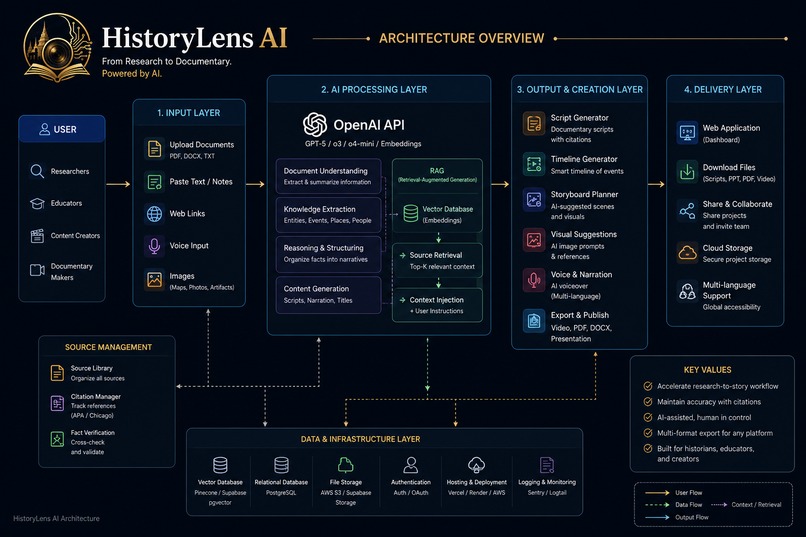
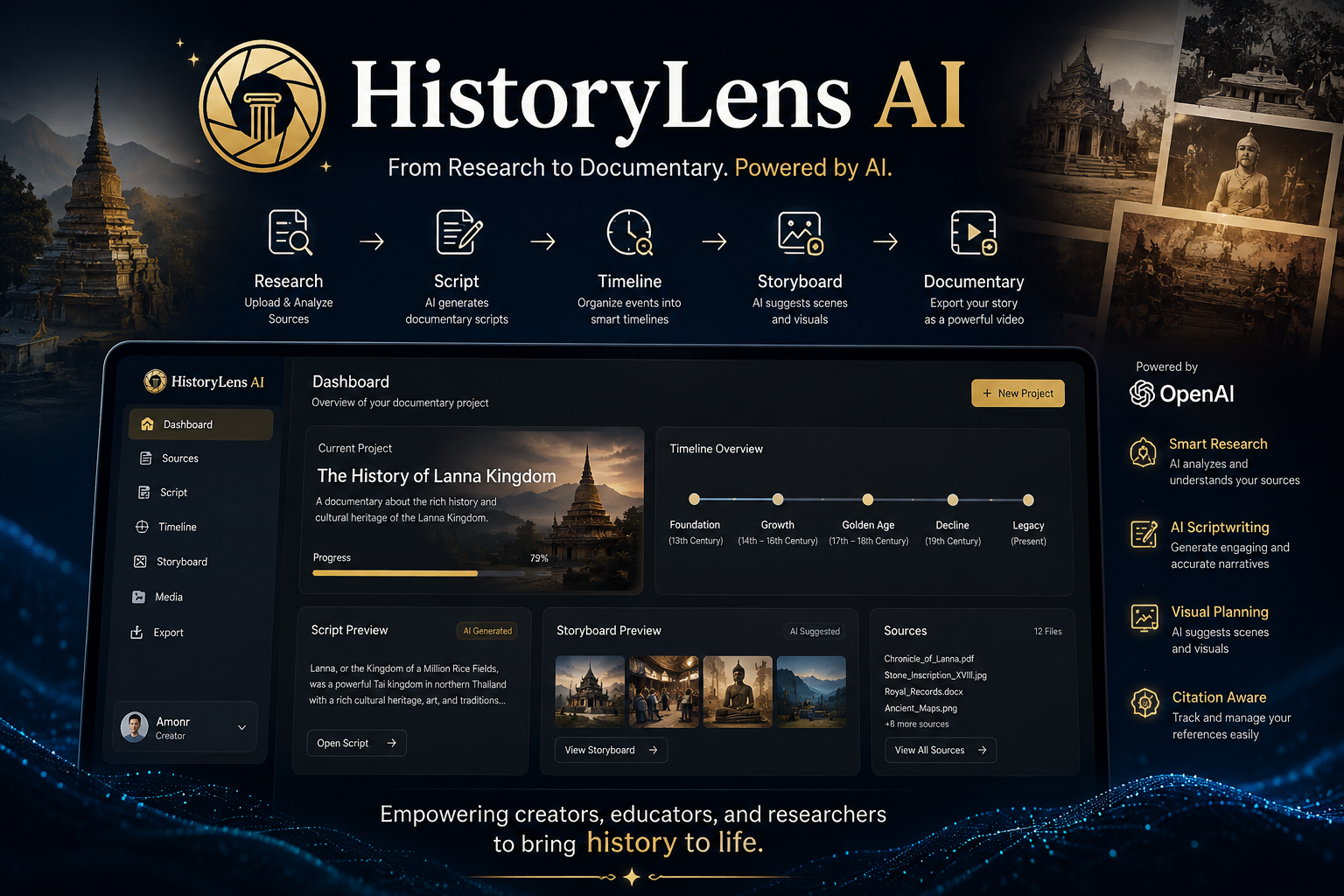
Built with GPT-5 and Codex to transform historical research into scripts, timelines, storyboards, and citation-aware workflows.
-
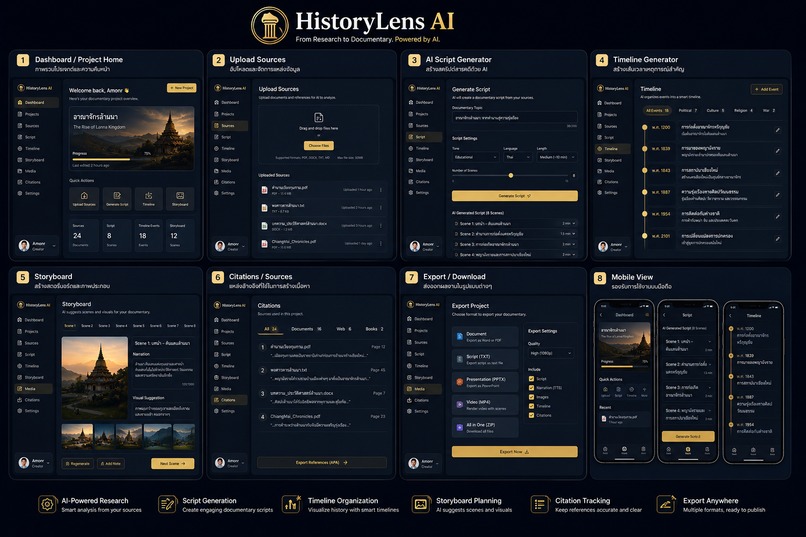
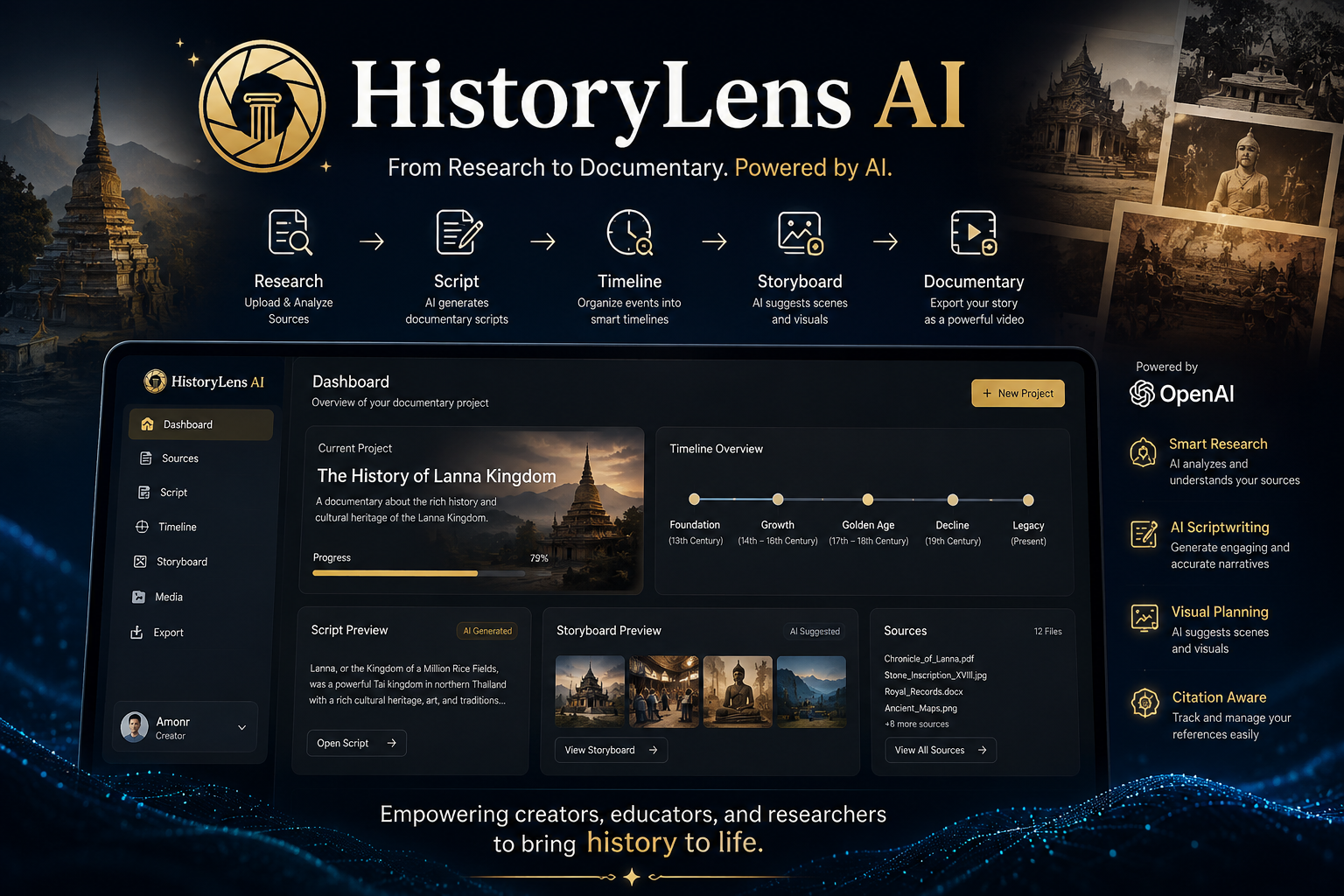
Upload historical research and HistoryLens AI turns it into scripts, timelines, storyboards, citations, and export-ready documentaries.
-
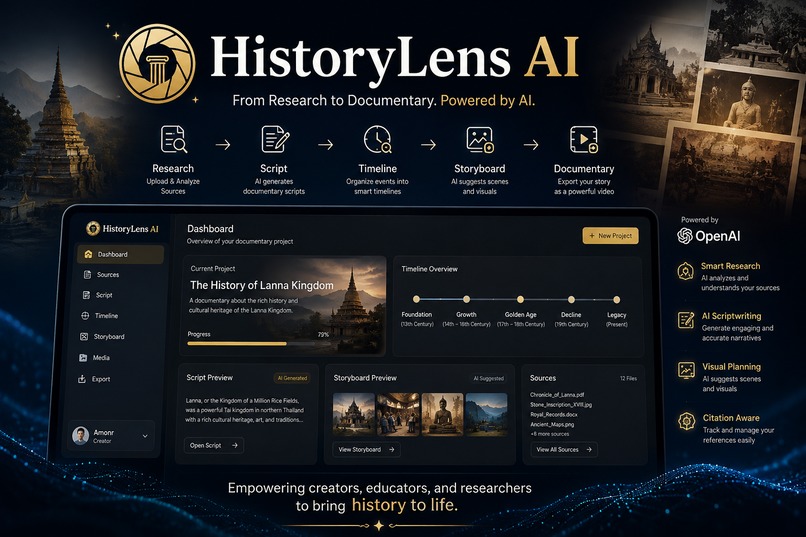
Our biggest challenge was balancing AI creativity with historical accuracy while encouraging users to verify citations.
-
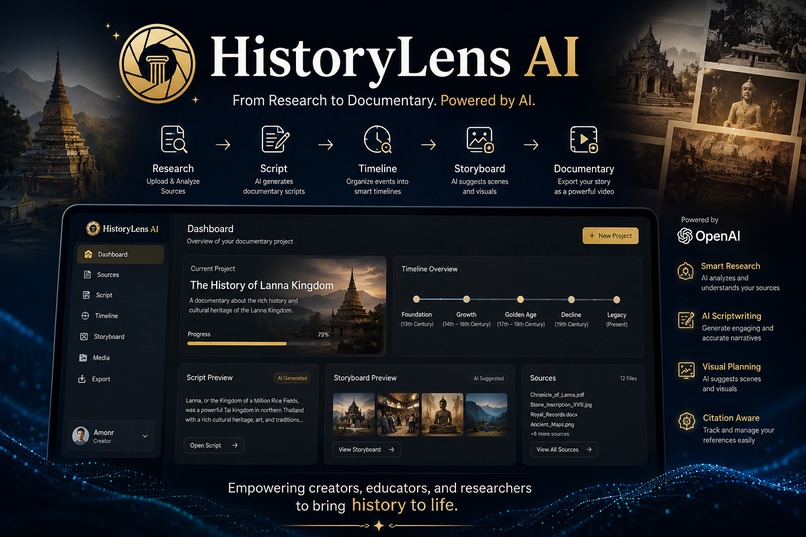
HistoryLens AI historians, educators, creator trusted research into structured documentaries with AI—faster, smarter, and citation-aware.
-
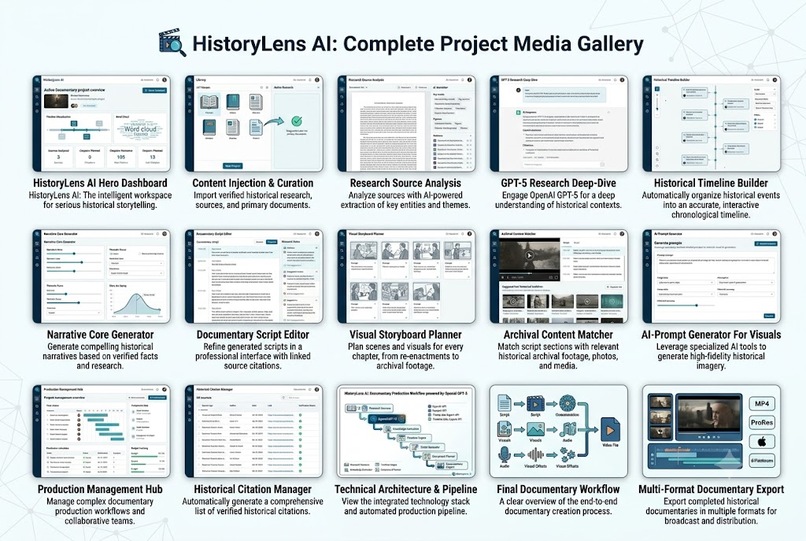
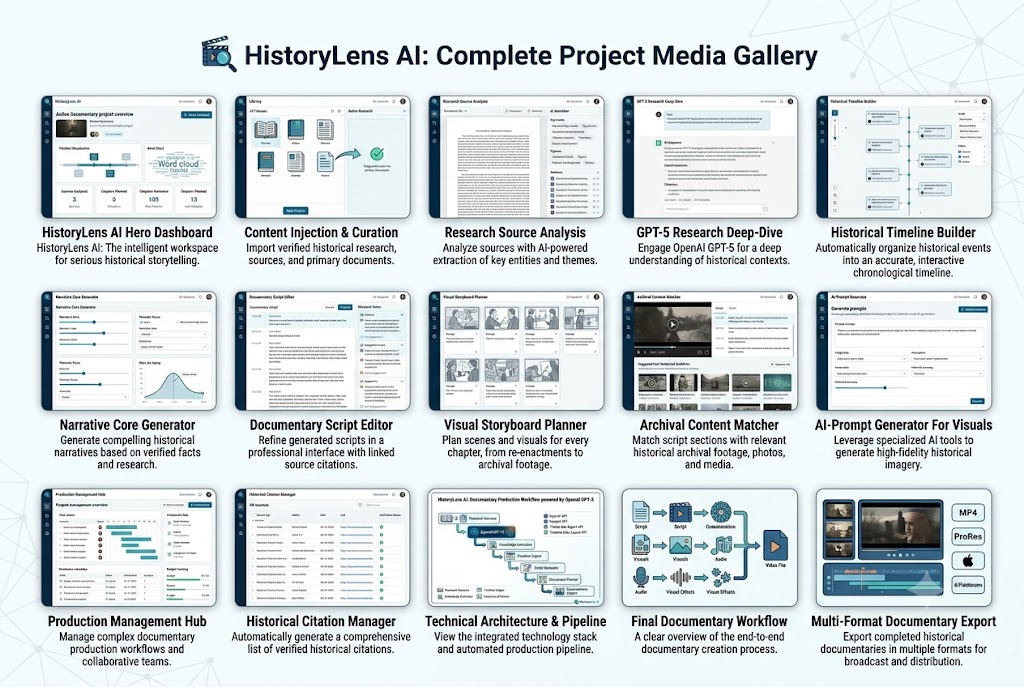
HistoryLens AI: Full documentary workflow from raw research sources to final production export, powered by GPT-5.
Inspiration
HistoryLens AI
Inspiration
Creating accurate historical and educational content is time-consuming. Writers and creators often spend hours researching sources, organizing information, drafting scripts, and planning visuals.
HistoryLens AI was inspired by the idea of helping educators, researchers, and documentary creators transform trusted historical sources into structured storytelling with AI assistance.
What it does
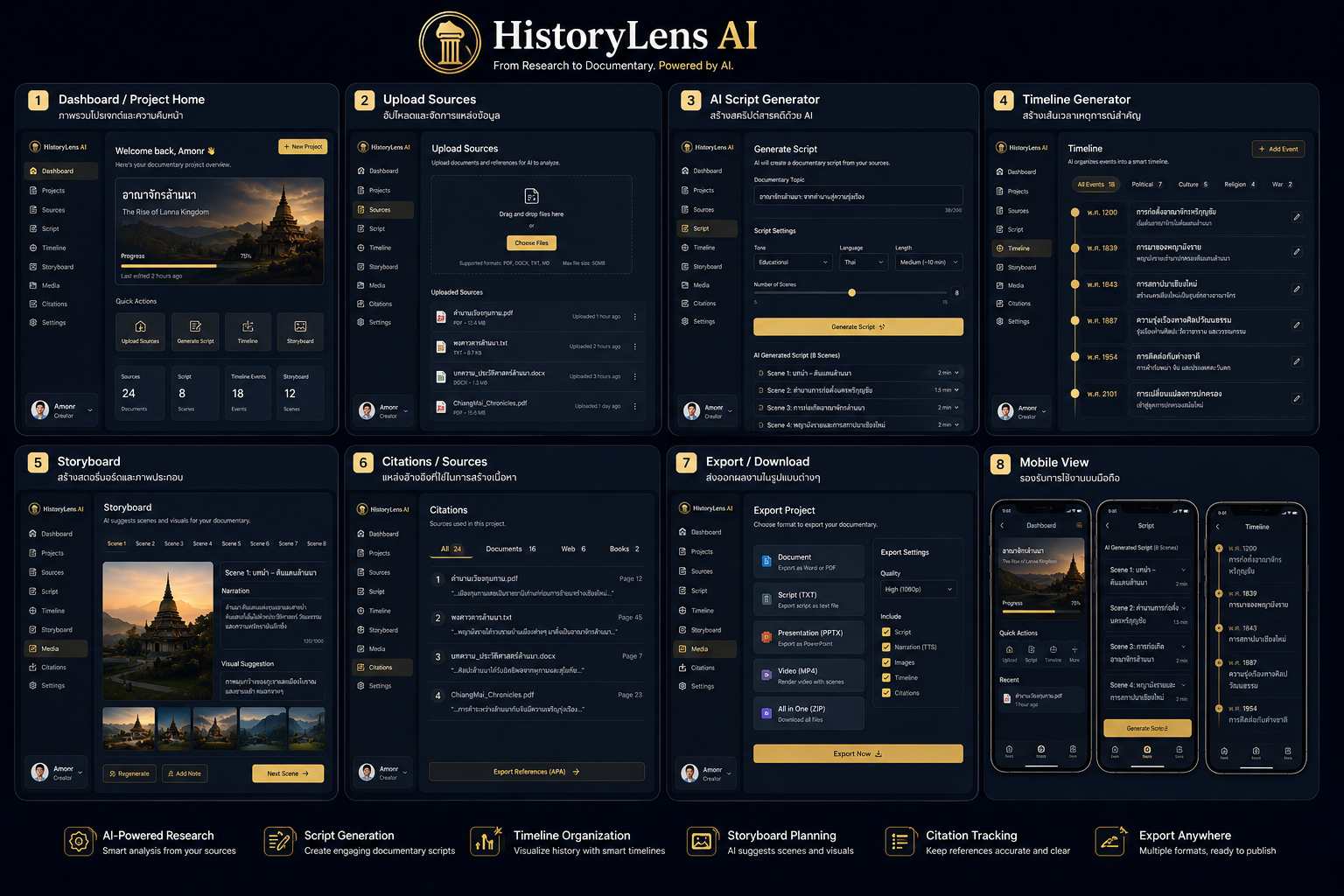
HistoryLens AI helps users:
- Generate documentary-style scripts from research notes
- Organize historical events into a clear timeline
- Suggest narration and scene structure
- Create storyboard ideas for each section
- Keep track of source references used during generation
The goal is to accelerate the creative workflow while keeping humans in control of the final content.
How we built it
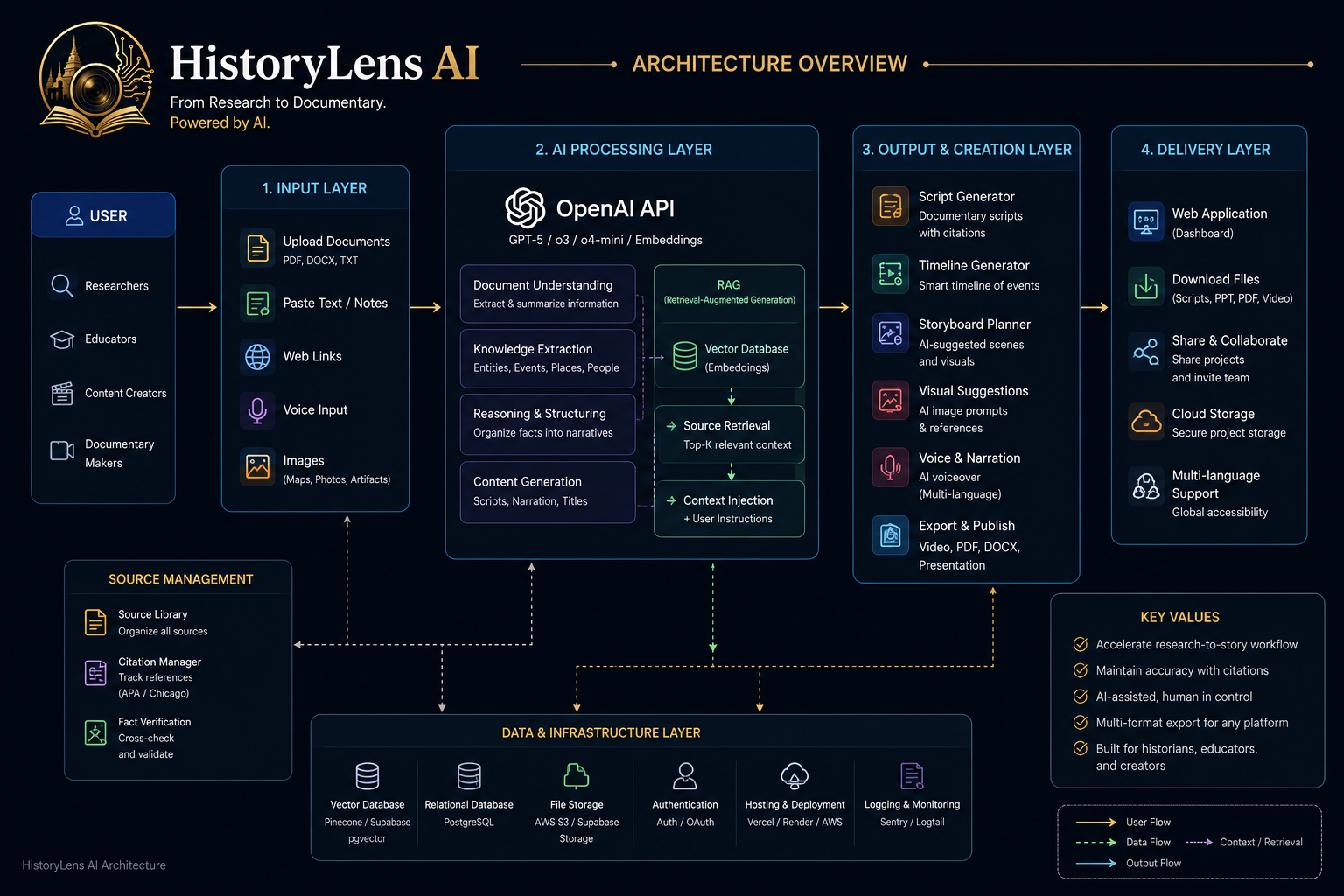
HistoryLens AI uses OpenAI models for natural language understanding and content generation.
The application combines:
- AI-powered script generation
- Timeline organization
- Storyboard planning
- Citation-aware workflows
- A modern web interface
Challenges we ran into
One challenge was balancing creativity with factual accuracy. AI can generate engaging narratives, but historical topics require careful handling and source verification.
Another challenge was designing a workflow that assists creators without replacing their editorial judgment.
Accomplishments that we're proud of
- Built an end-to-end documentary creation workflow
- Reduced research organization time
- Produced structured scripts and storyboard suggestions from user input
What we learned
We learned that AI is most effective when it works as a creative assistant rather than an autonomous author. Human review remains essential for historical accuracy.
What's next for HistoryLens AI
Future work includes:
- Retrieval-Augmented Generation (RAG) for verified sources
- Multi-language documentary generation
- AI voice narration
- Automatic image generation
- Collaborative editing for teams ## What it does
How we built it
Challenges we ran into
Accomplishments that we're proud of
What we learned
What's next for HistoryLens AI
Built With
- codex
- gpt-5

Log in or sign up for Devpost to join the conversation.