-
-
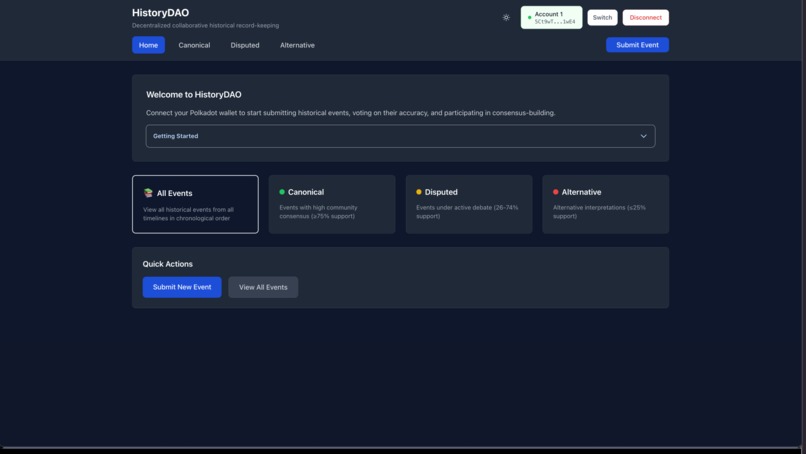
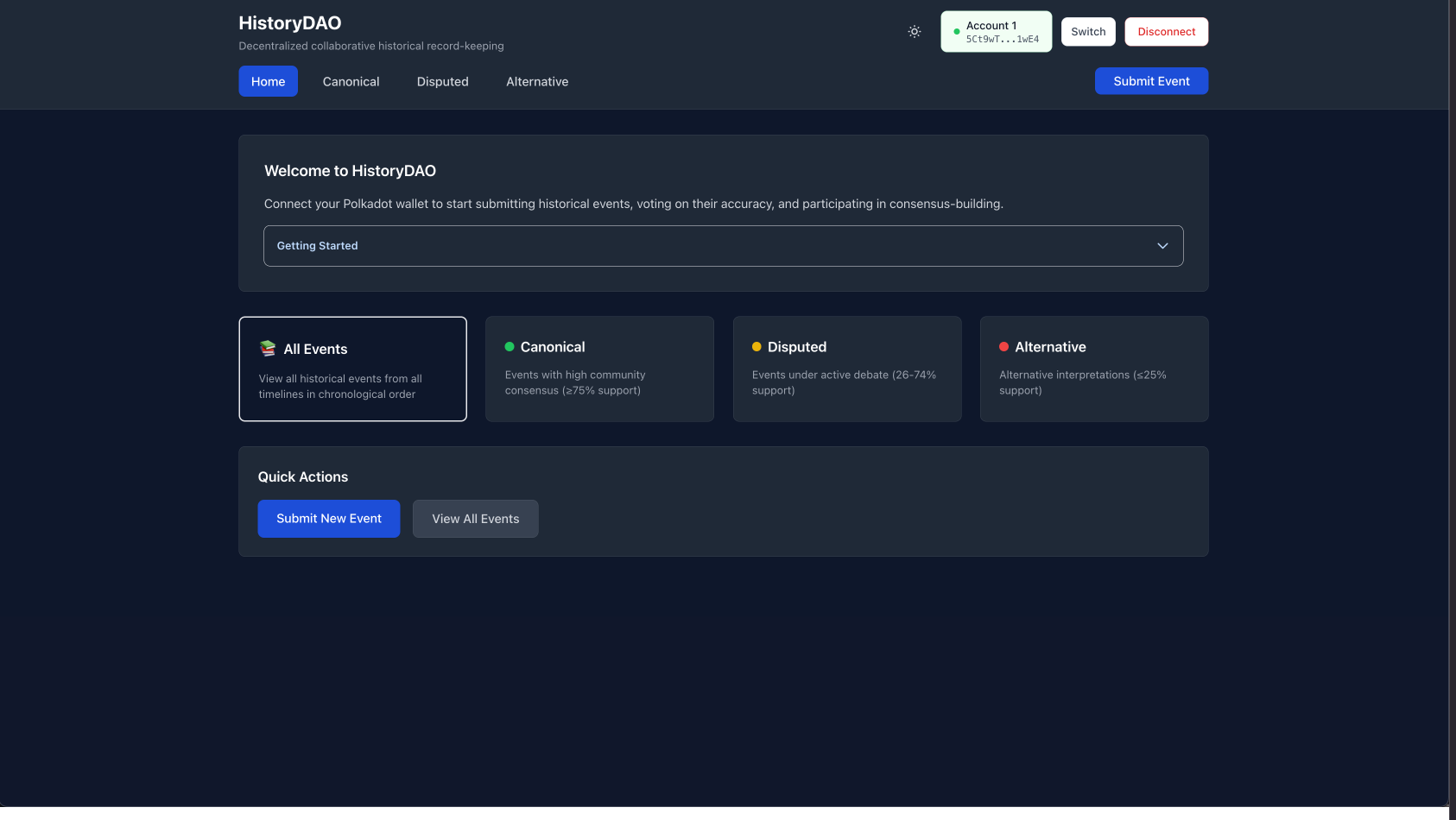
Home Page
-
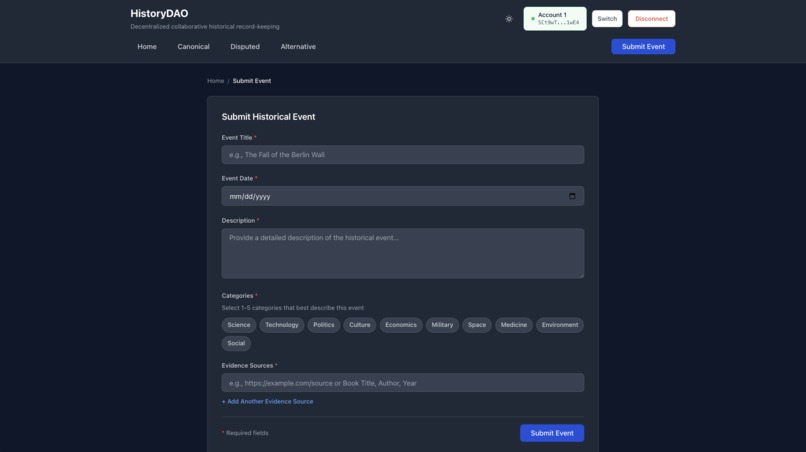
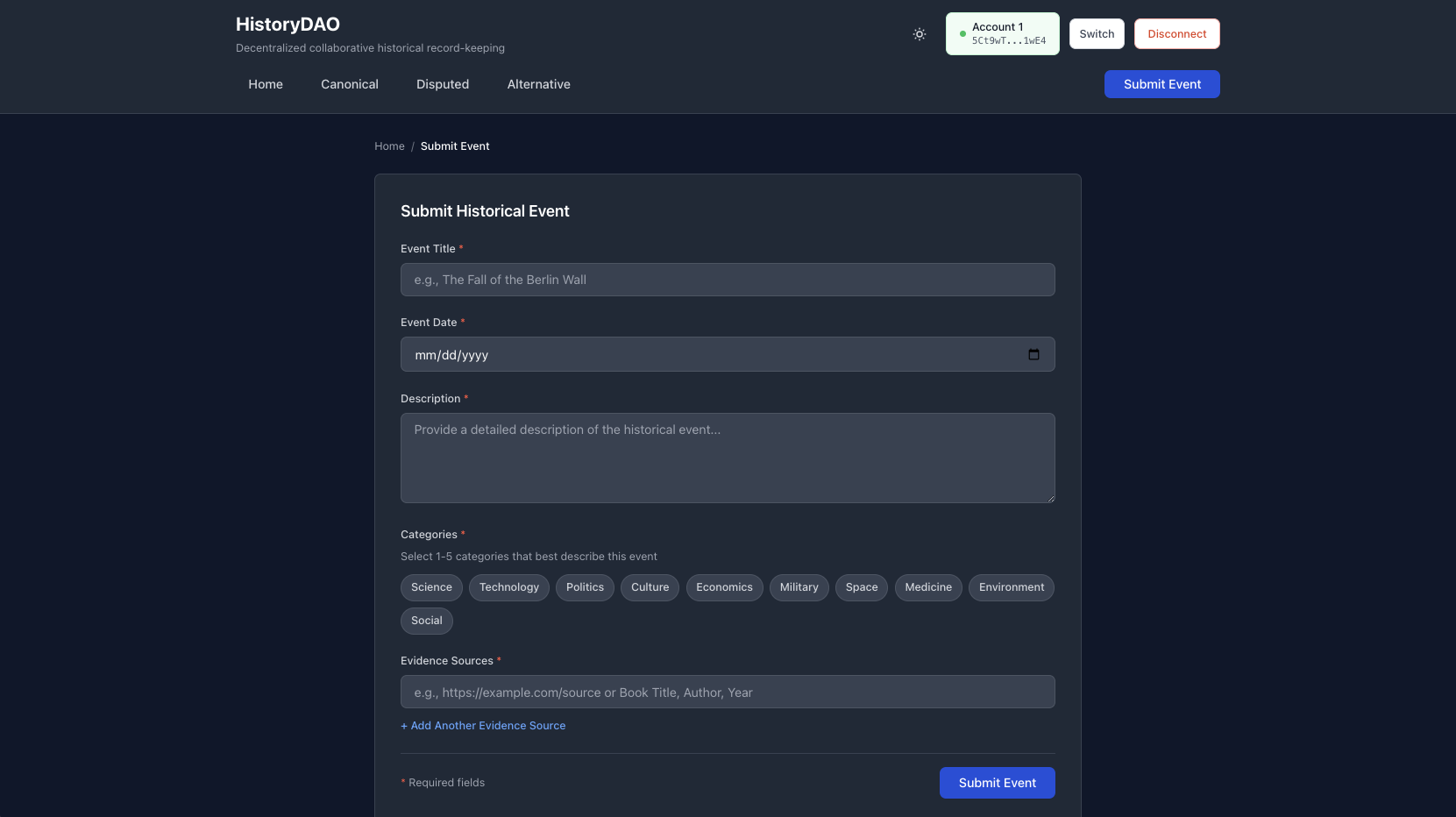
Add Event Form
-
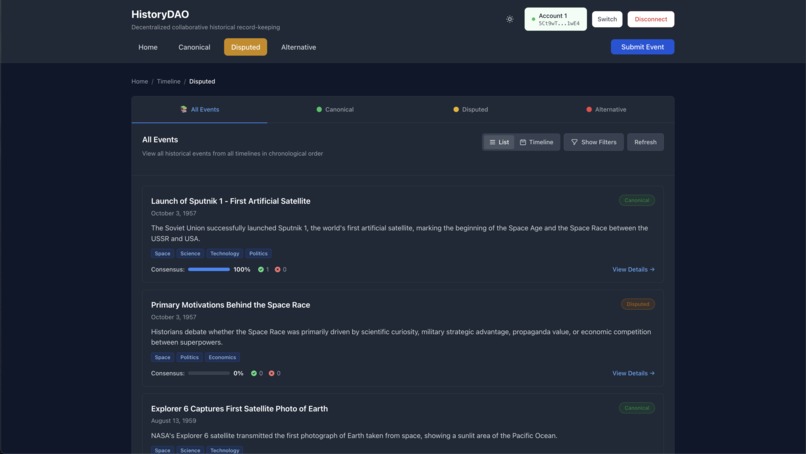
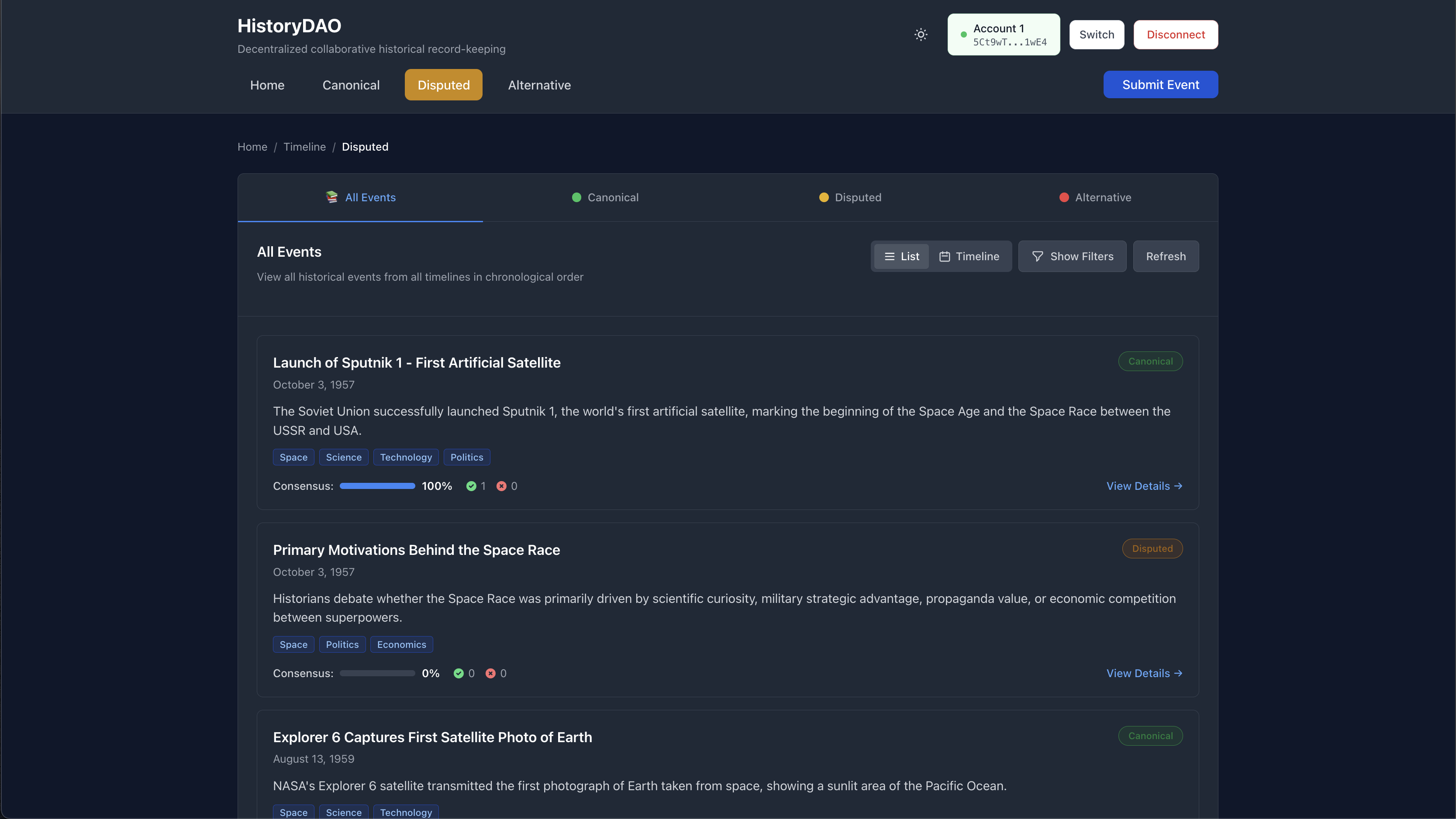
All Events Timeline
-
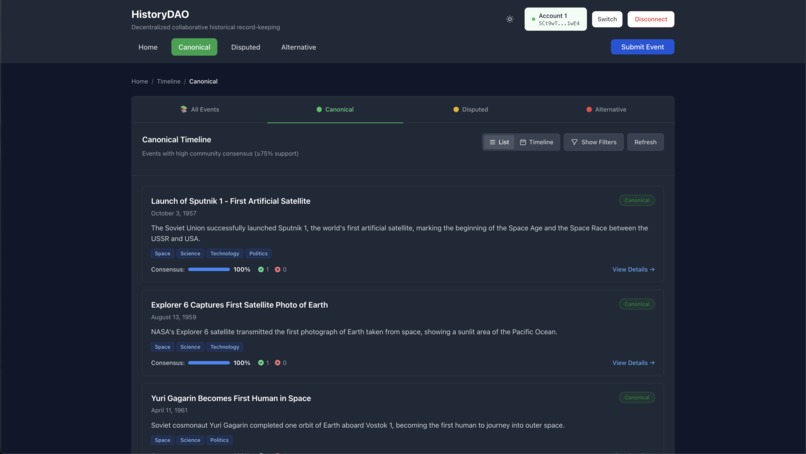
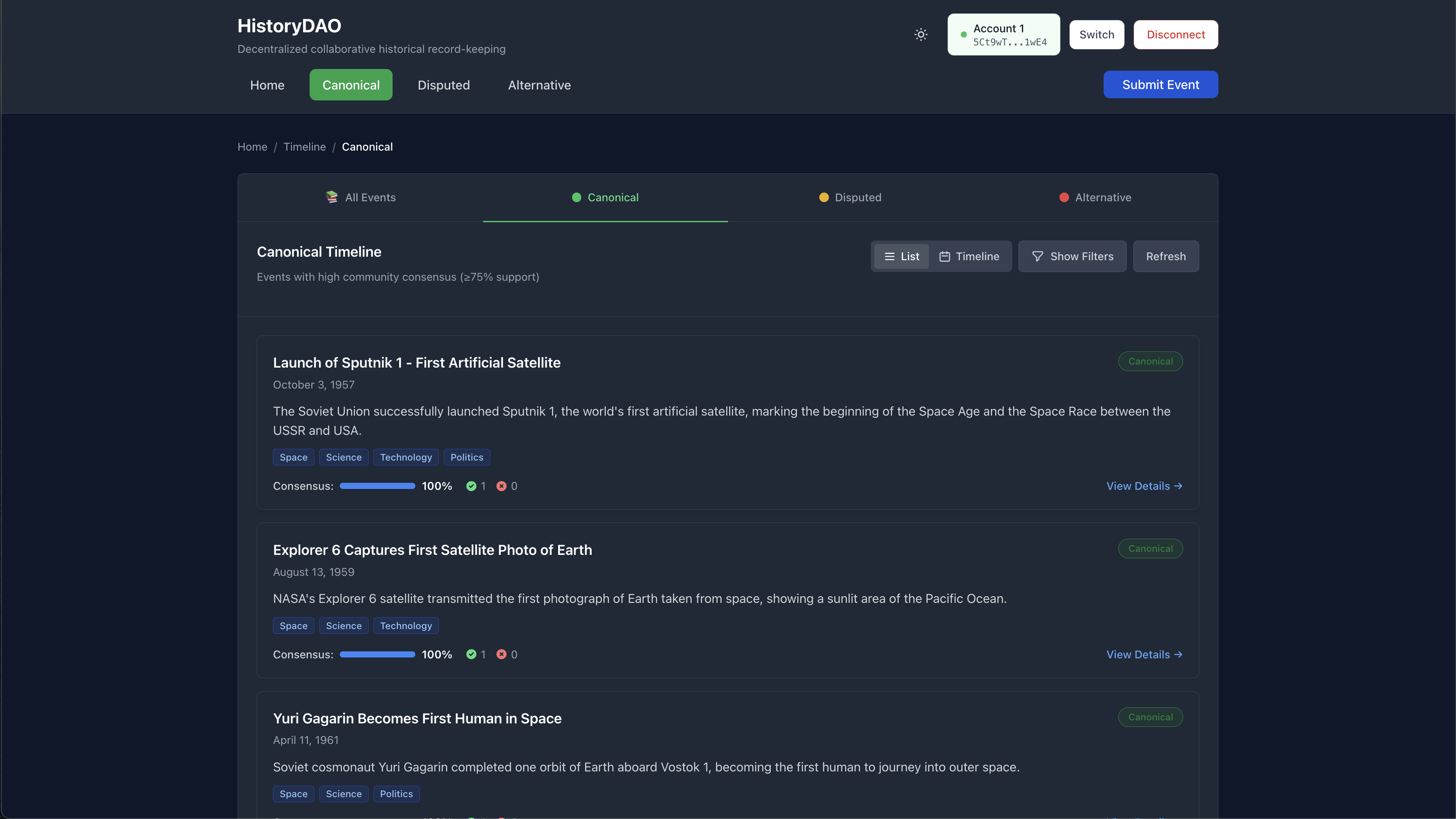
Canonical Timeline
-
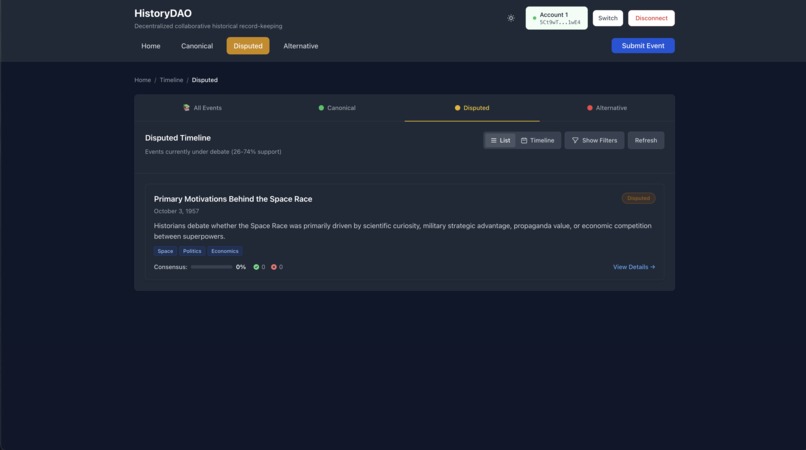
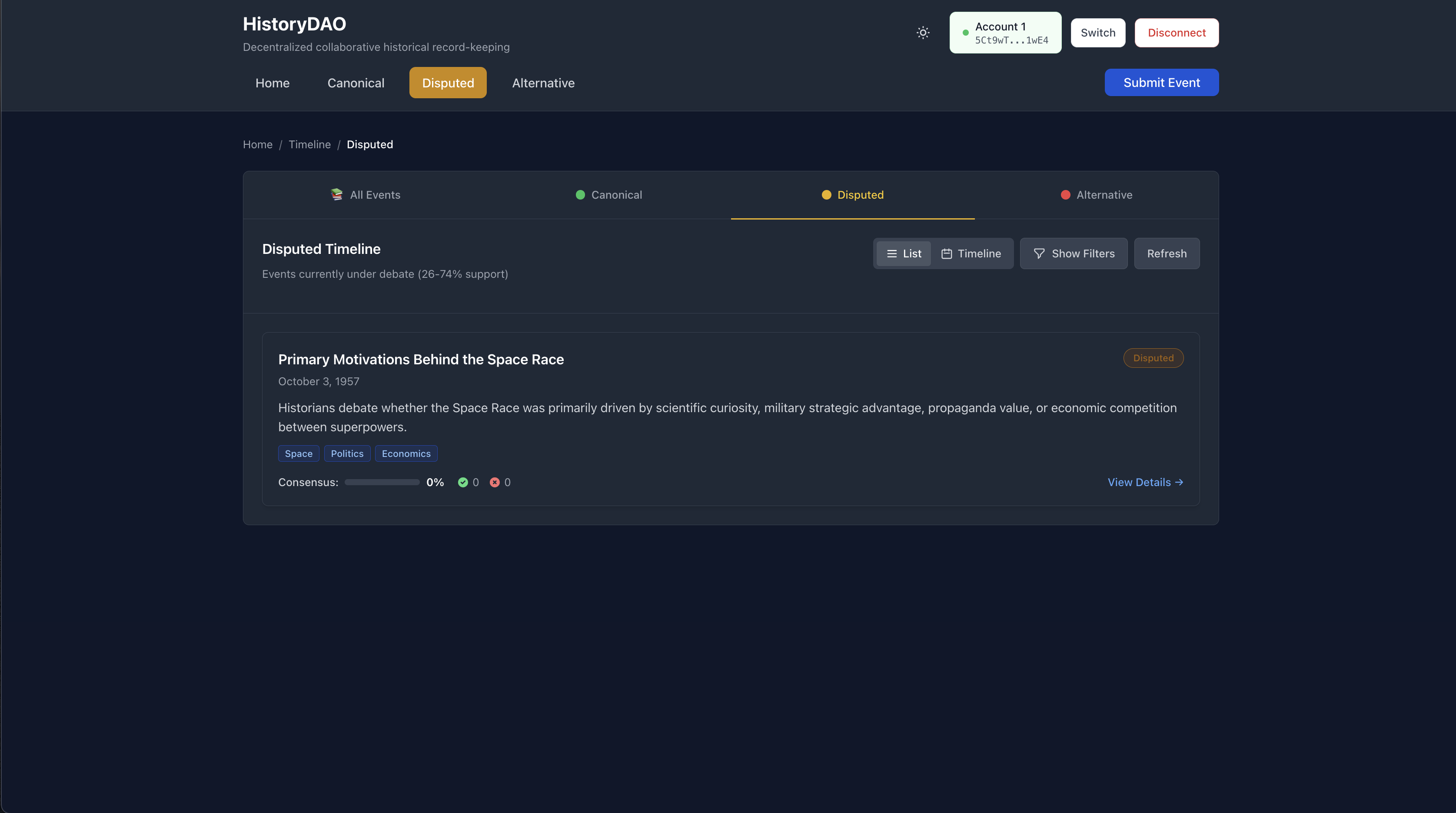
Disputed Timeline
-
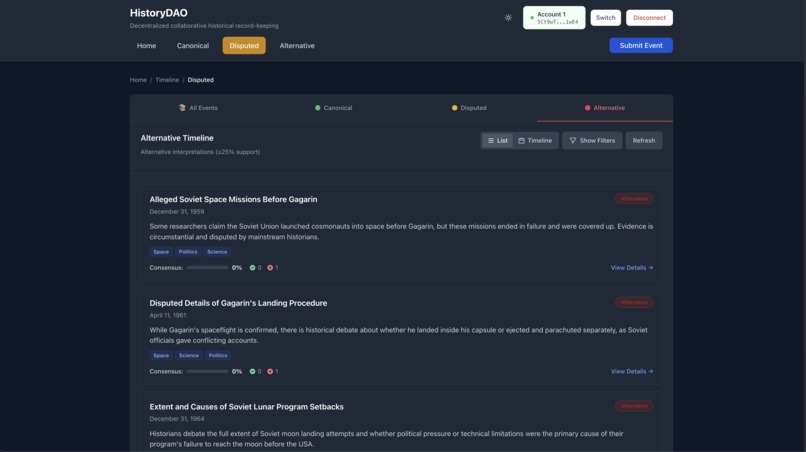
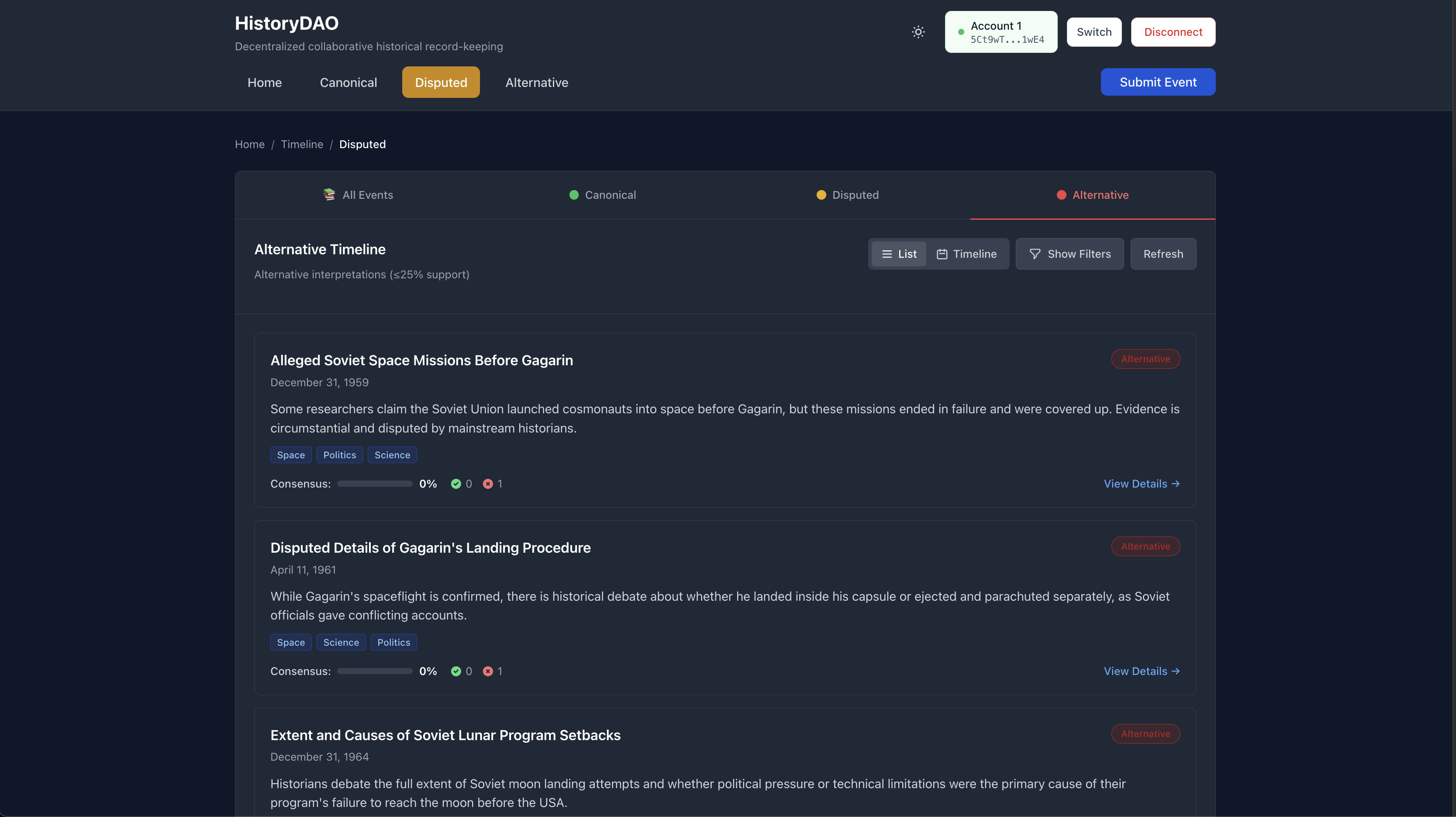
Alternative Timeline
-
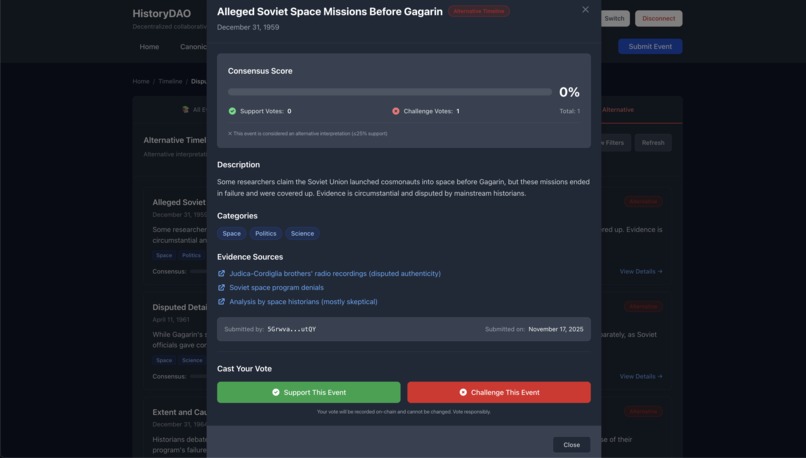
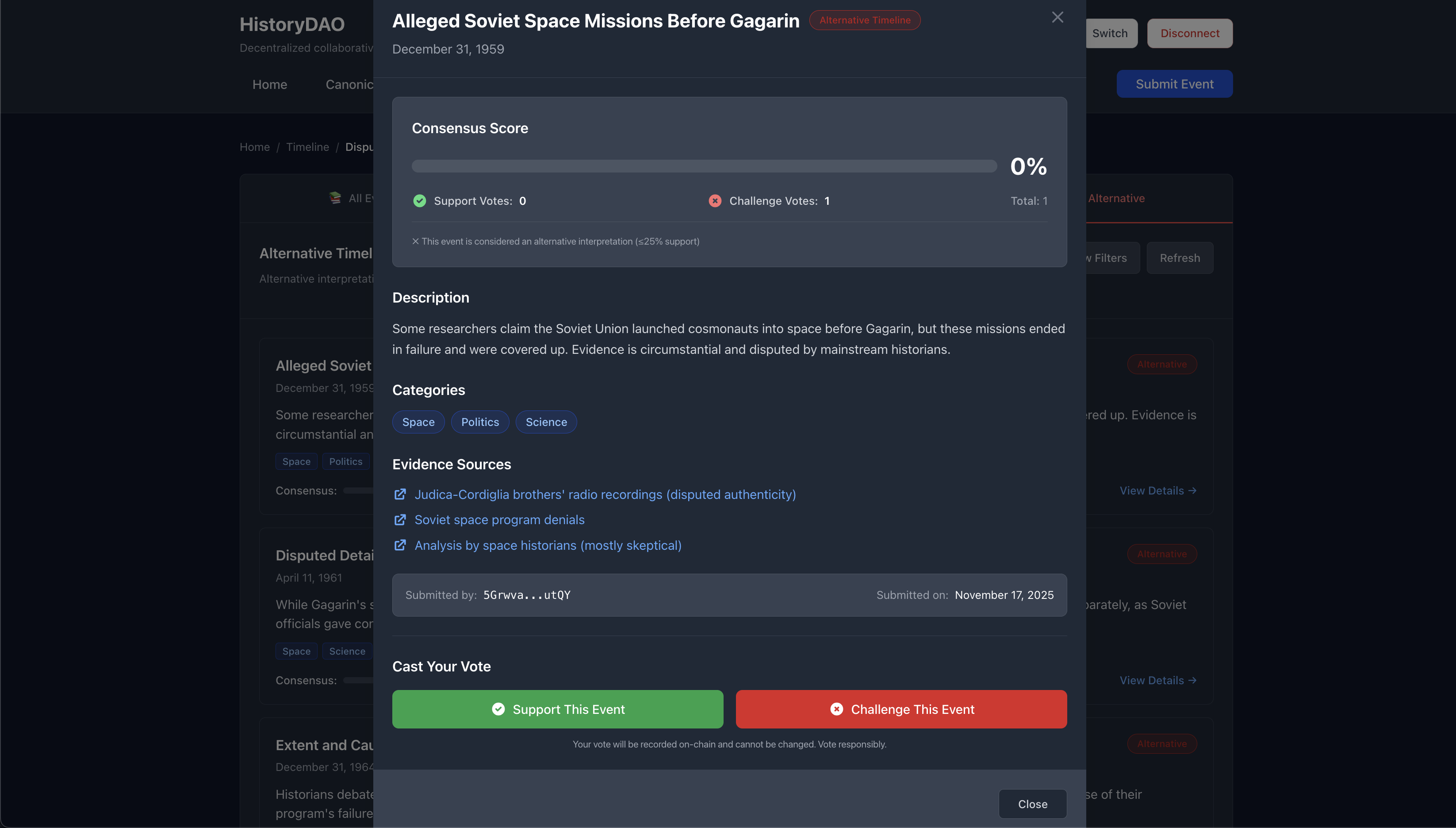
Event Details
Inspiration
I've always been fascinated by history, but I realized there's no single place to explore world history that shows both the facts everyone agrees on AND the stuff people are still arguing about. History isn't black and white—there are accepted facts, ongoing debates, and wild conspiracy theories all mixed together. I thought, what if we used blockchain to create a historical record where the community decides what's true, what's debatable, and what's just alternative theory? That's how HistoryDAO was born.
What it does
HistoryDAO lets anyone submit historical events with evidence, and the community votes on whether they believe it or not. Based on the votes, events automatically sort themselves into three timelines: Canonical (the stuff most people agree happened), Disputed (events people are still debating), and Alternative (conspiracy theories and fringe ideas). You can browse all events together or filter by topic like Space, Politics, or Science. Everything lives on the blockchain, so it's permanent and transparent—no single person controls the narrative.
How I built it
This is my first successful blockchain project ever, and I did it with Kiro AI. The project built a smart contract in Rust using ink! that handles all the voting and event storage on Polkadot. The frontend is React with TypeScript, and used Polkadot.js to connect wallets and talk to the blockchain. Kiro walked me through writing smart contracts, deploying them locally, and also building the UI.
Challenges I ran into
- Learning ink! smart contract development and Rust's ownership model from scratch
- Understanding Polkadot.js API and how to integrate wallet connections with the Polkadot ecosystem
- Setting up and running a local Substrate Contracts Node for development and testing
- Implementing consensus logic that automatically categorizes events across timelines based on community votes
- Managing asynchronous blockchain transactions and providing real-time feedback to users
- Debugging contract deployment issues and understanding gas estimation in Substrate
- Figuring out how to structure on-chain storage efficiently to minimize costs
Accomplishments that we're proud of
- Built a fully functional dApp on Polkadot from scratch as my first blockchain project (with Kiro's help!)
- Successfully deployed and tested ink! smart contracts on Substrate Contracts Node
- Created an innovative three-timeline consensus system that leverages Polkadot's capabilities
- Integrated Polkadot.js extension seamlessly for wallet authentication and transaction signing
- Designed an intuitive UI that makes Web3 interactions feel natural and hides blockchain complexity
What I learned
This project was my introduction to the Polkadot ecosystem, and it completely changed how I think about building applications. I learned how ink! smart contracts work on Substrate, why Polkadot's architecture enables specialized use cases like this, and how the Polkadot.js API bridges the gap between users and the blockchain.
What's next for History DAO
- Fix voting so people can't vote multiple times on the same event
- Let verified experts have more voting power in their field of expertise
- Support images, videos, and audio as evidence (not just links)
- Deploy to a real Polkadot parachain so people can actually use it
- Connect related events to show how history flows together
- Add multiple languages so history is accessible to everyone
- Let the community vote on platform rules through DAO governance

Log in or sign up for Devpost to join the conversation.