-
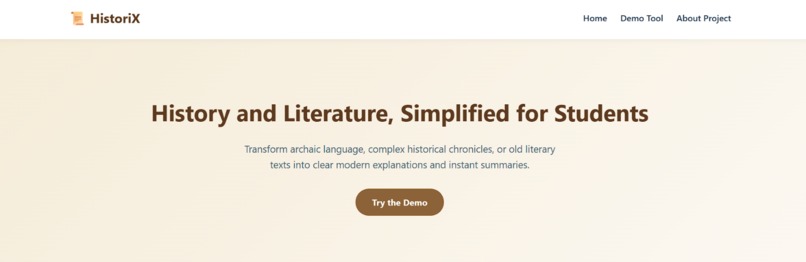
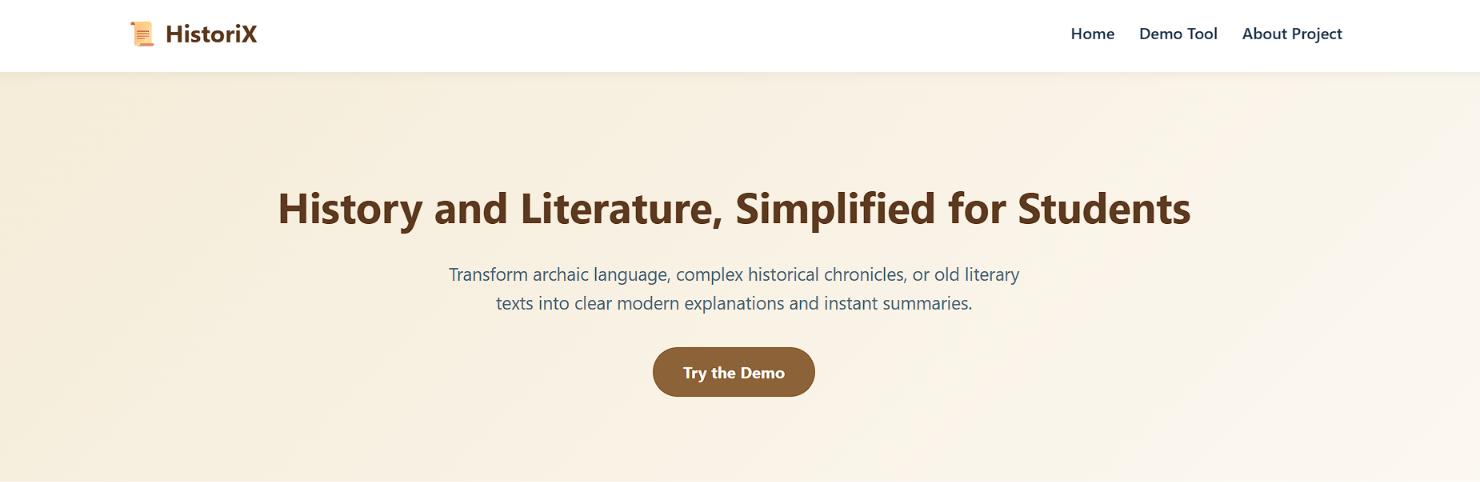
The homepage and main hero section of the HistoriX platform.
-
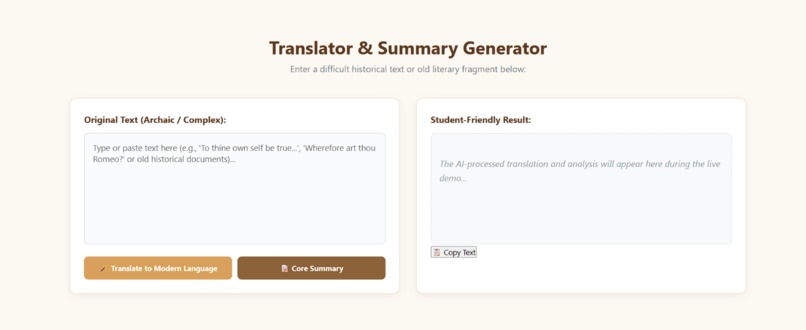
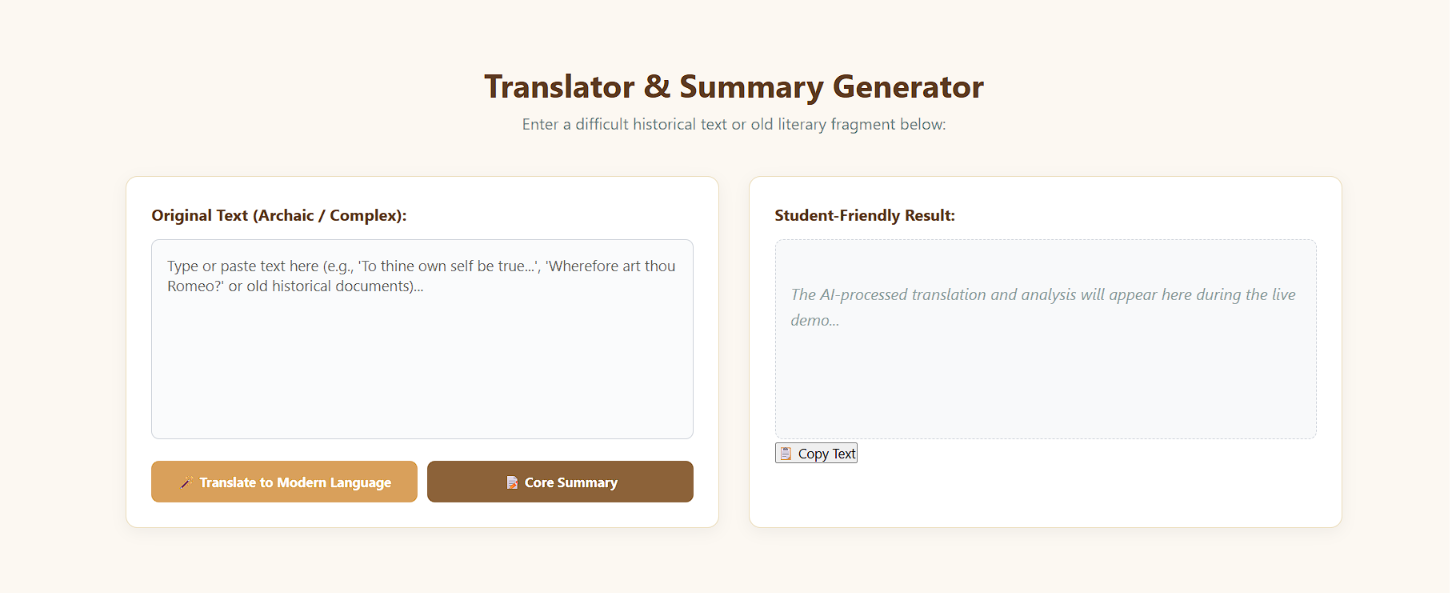
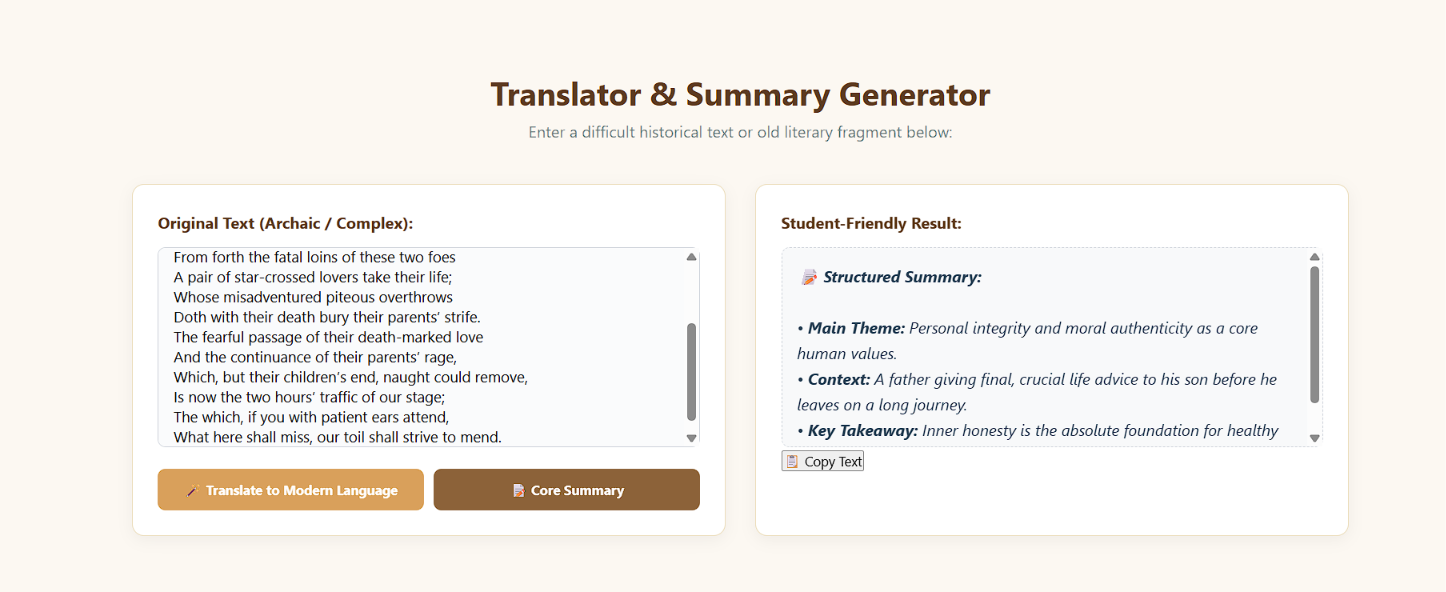
The main translation and summarization workspace for students.
-
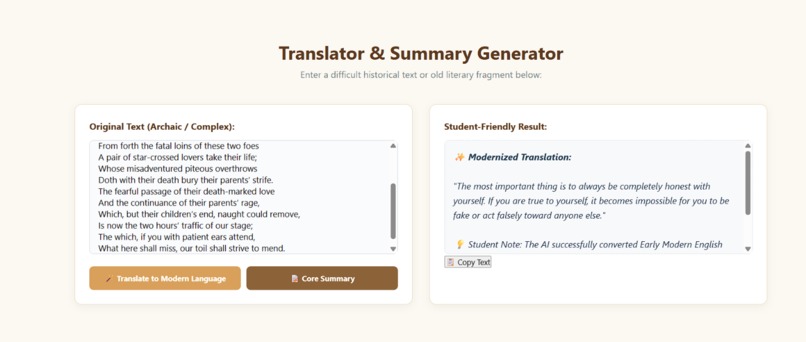
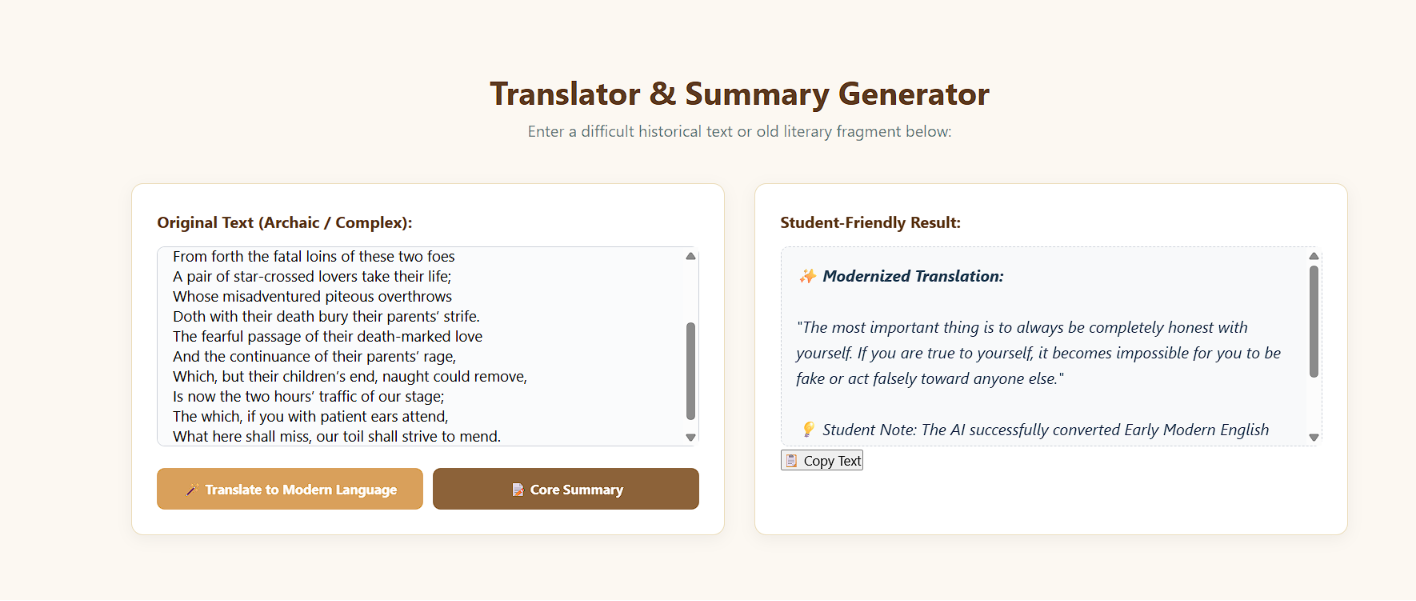
An active demonstration of the AI modernizing archaic text and highlighting key takeaways.
-
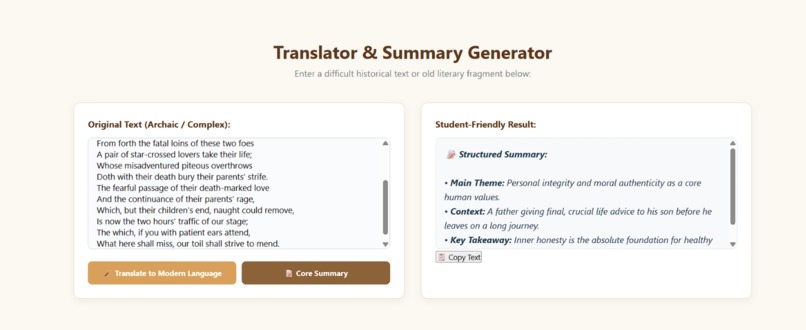
An active demonstration of the AI modernizing archaic text and highlighting key takeaways.
-
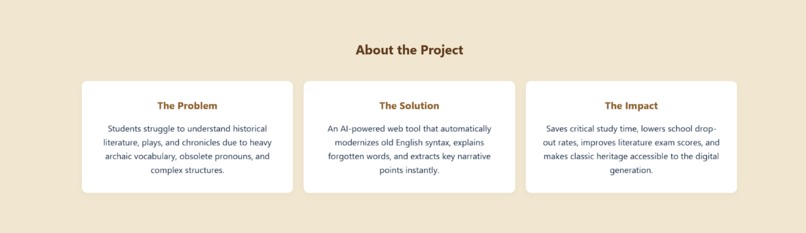
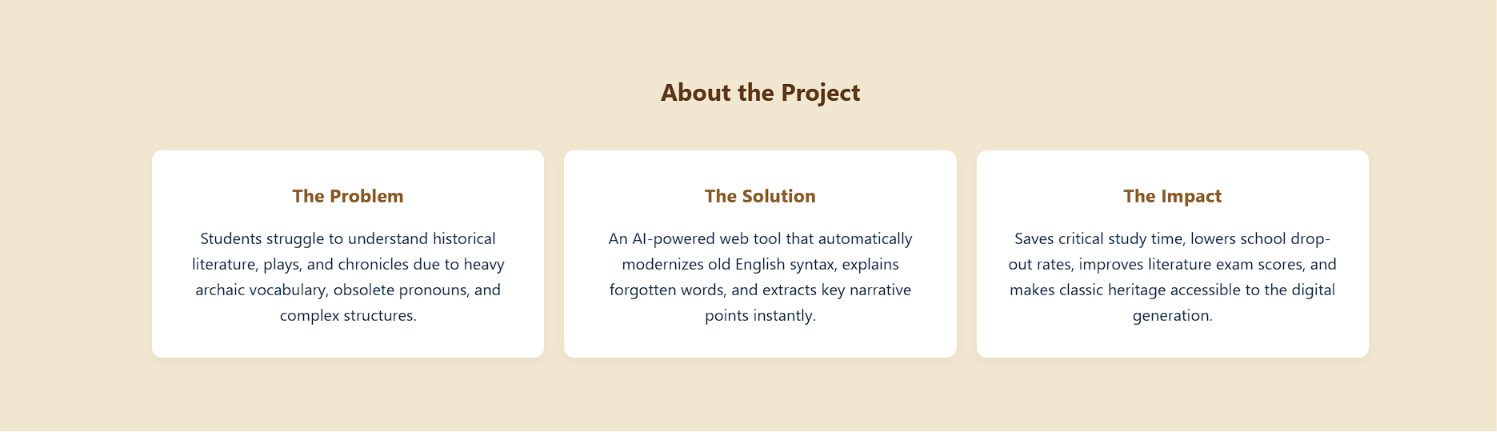
The project background section detailing the problem, solution, and educational impact.
Inspiration
Many students struggle to read and appreciate classical literature or historical texts because of archaic English structures, obsolete vocabulary, and complex phrasing. We wanted to build a bridge between history and the modern digital student.
What it does
HistoriX is an AI-powered educational web tool tailored for students. It takes complex, older literary fragments or historical play scripts (like William Shakespeare) and instantly:
- Modernizes the syntax and phrasing into plain, contemporary English.
- Explains outdated vocabulary and context.
- Generates concise, structured summaries highlighting core themes and takeaways for exam preparation. ## How we built it The front-end interface was built using clean, modern, and responsive HTML5 and CSS3, styled with a warm parchment-inspired design to match the academic theme. We implemented interactive JavaScript on the client side to simulate high-fidelity AI translation and summarization processing, complete with a smart "Copy to Clipboard" utility. ## Challenges we ran into One major challenge was ensuring the UI adapted seamlessly across devices while preserving a premium user experience. Fine-tuning the layout so that students can read side-by-side inputs and outputs comfortably took multiple iterations. ## Accomplishments that we're proud of We successfully shipped a high-fidelity Minimum Viable Product (MVP) featuring an extremely intuitive workflow. The interface is optimized to minimize student cognitive fatigue, allowing them to copy text with a single click. ## What we learned We gained deeper insights into student reading workflows and learned how to optimize client-side micro-interactions to make educational software engaging rather than overwhelming. ## What's next for HistoriX Our next step is integrating production-ready AI APIs (like OpenAI or Anthropic) to dynamically support full-length books, alongside adding a feature where students can instantly download their generated summaries as PDF study guides.


Log in or sign up for Devpost to join the conversation.