-
-
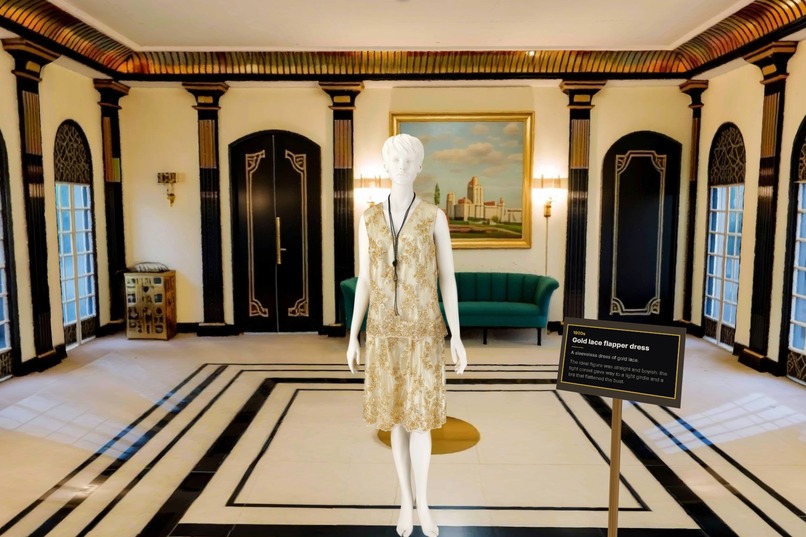
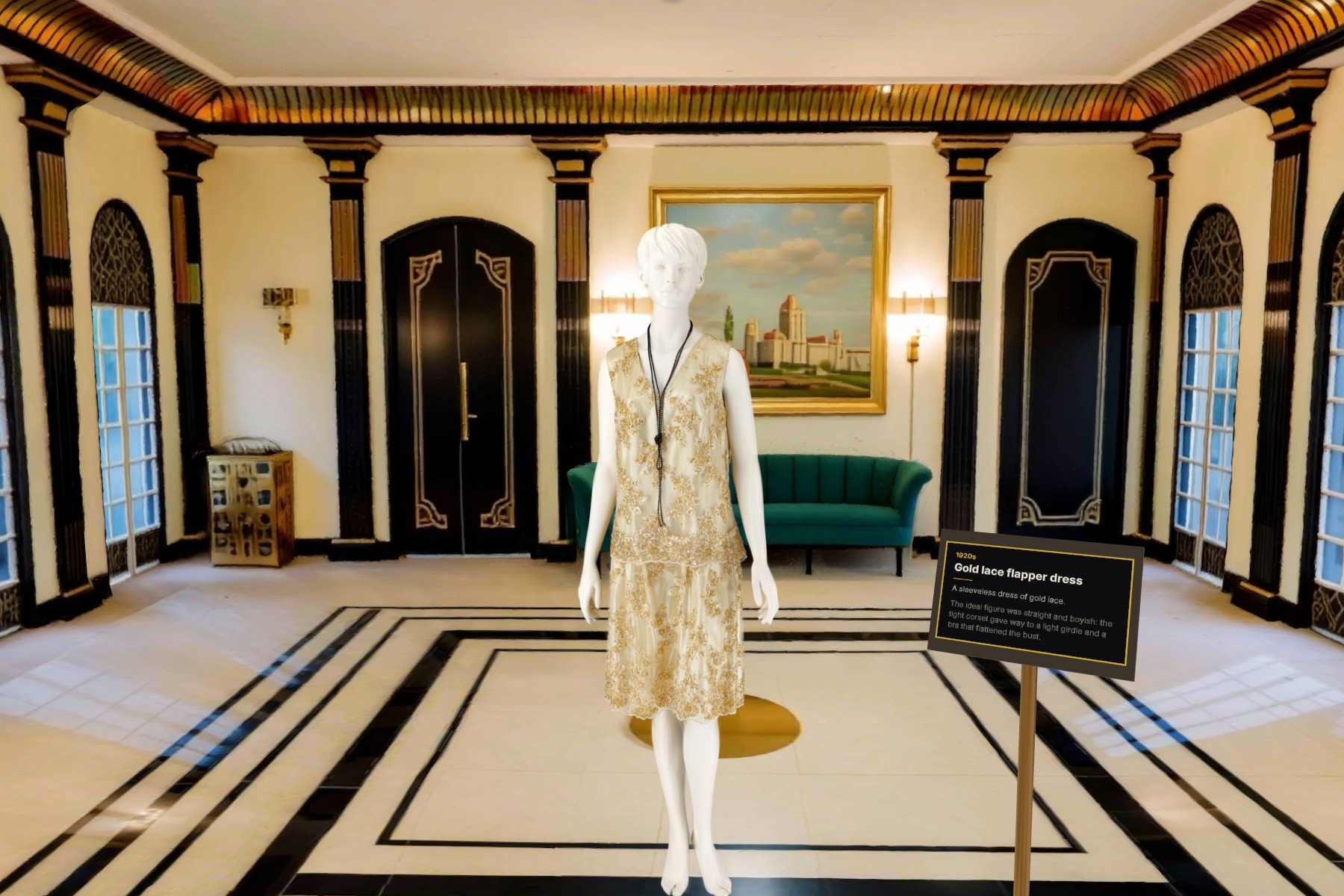
A gold lace flapper dress in a 1920s salon.
-
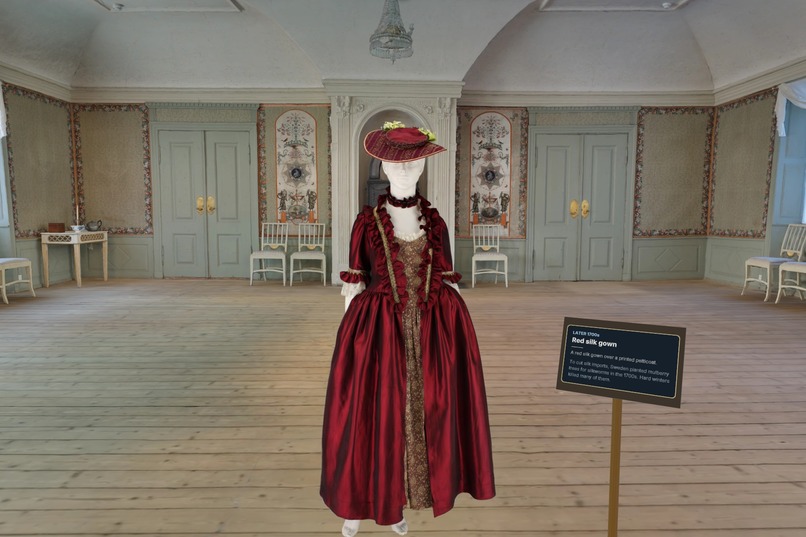
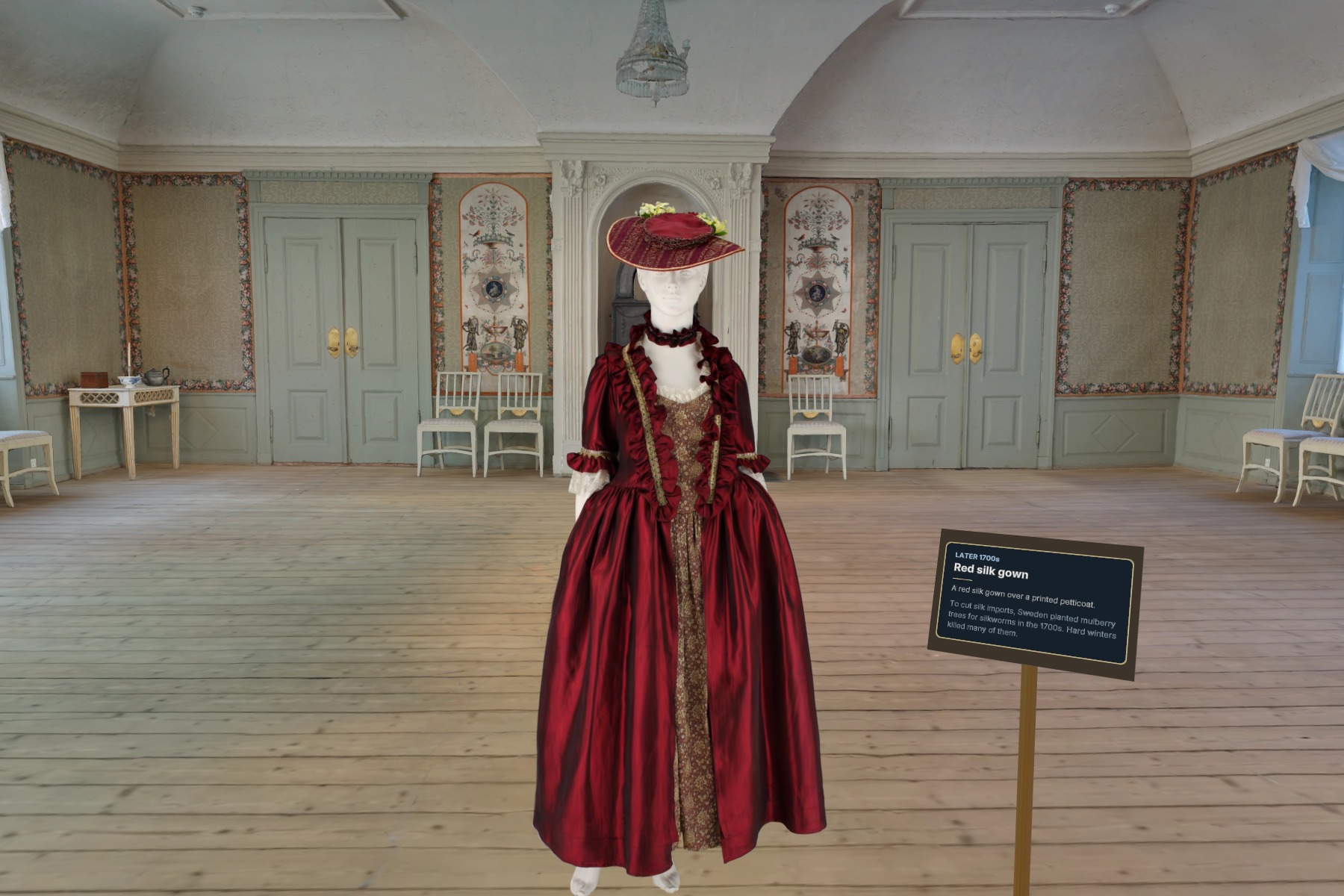
A red silk gown, open over a printed petticoat, in an 18th-century ballroom.
-
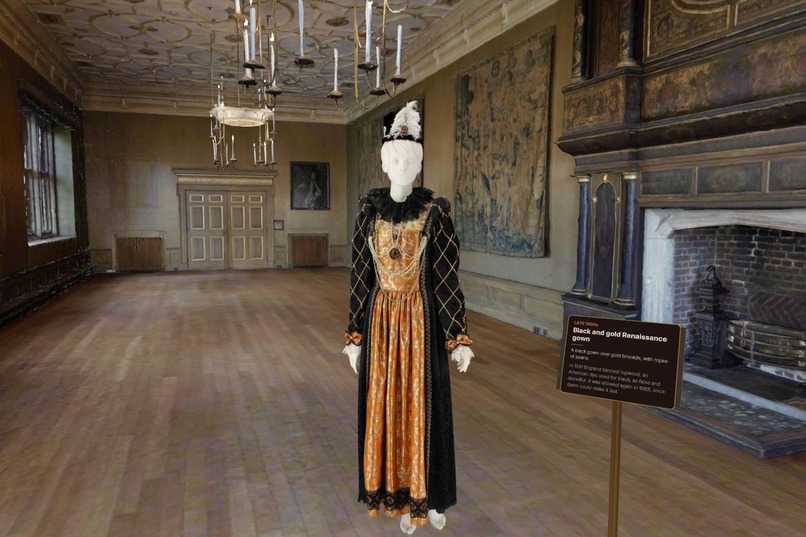
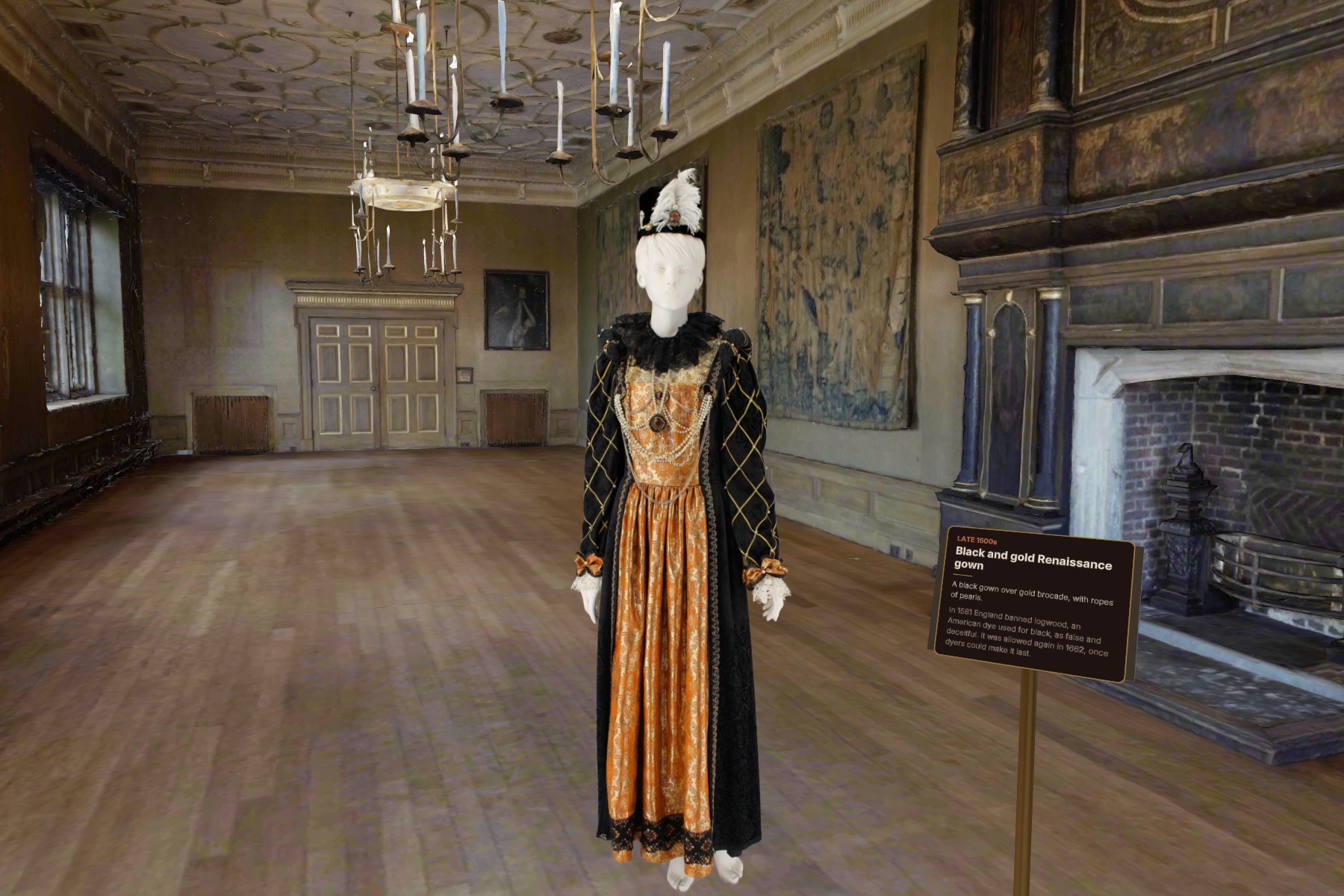
A black and gold Renaissance gown in a 1500s great chamber, with its plaque.
-
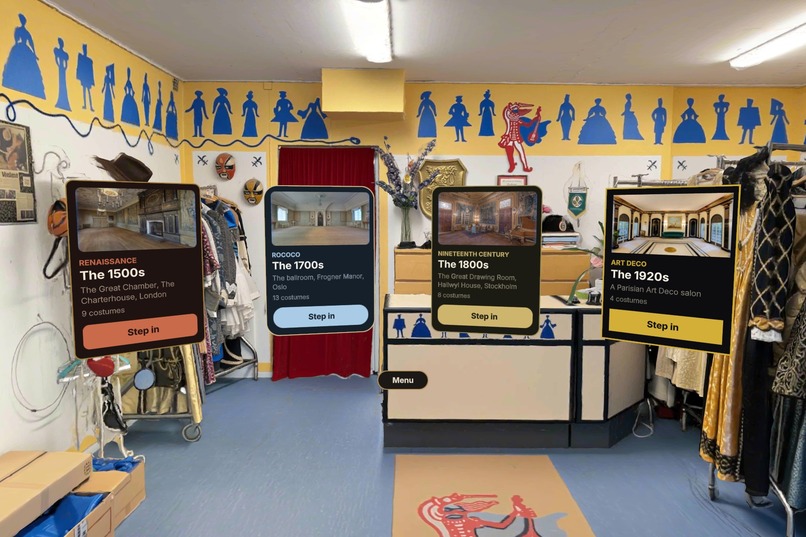
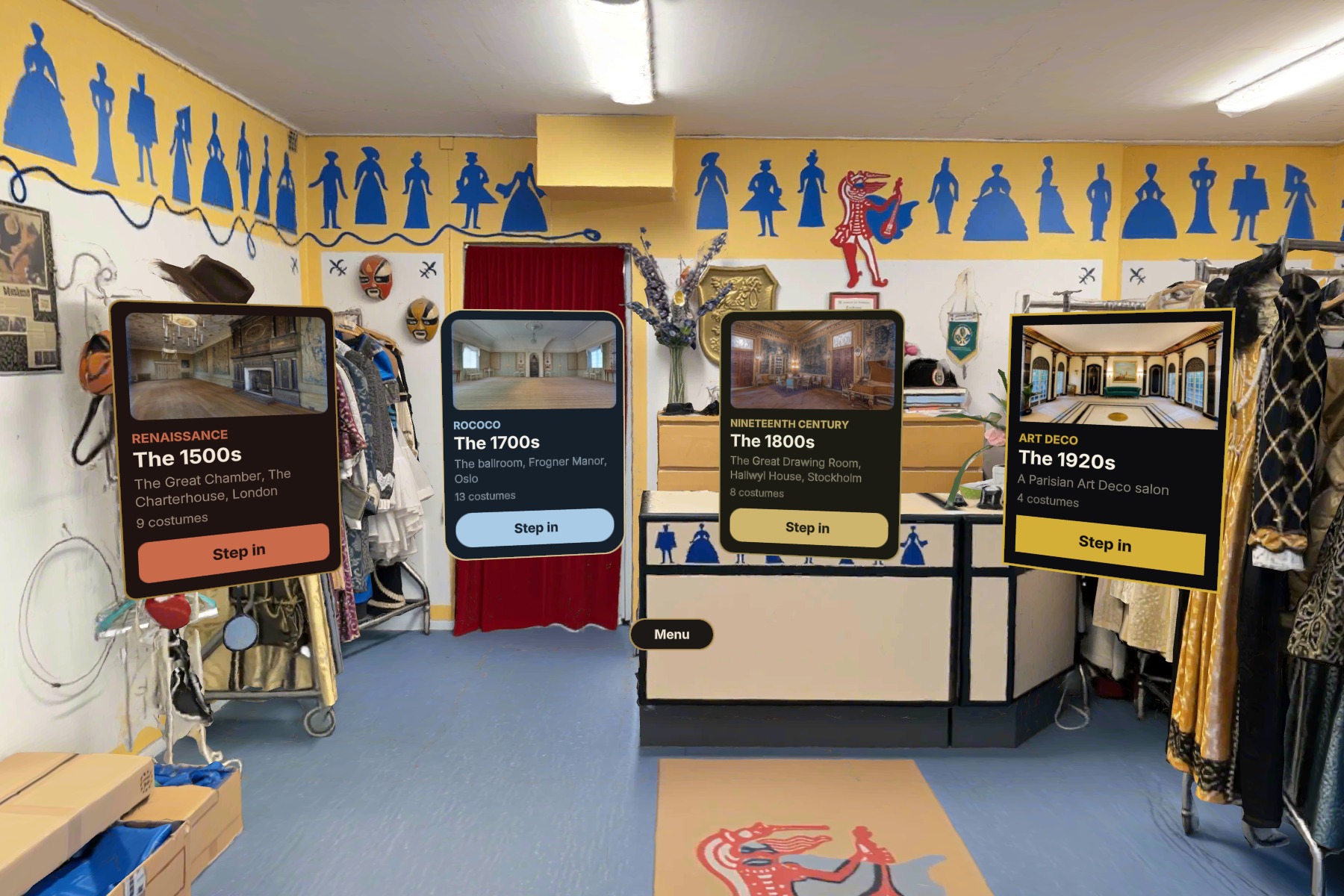
The costume shop as it is today, where you choose an era to visit.
Inspiration
We scanned 86 handcrafted costumes at a long-established Stockholm costume shop as Gaussian splats. We wanted to show them the way a museum would: each in a room of its own time, in VR, from a web link.
What it does
You start in the costume shop as it is today and pick an era: the 1500s, 1700s, 1800s or 1920s. Each is a period room with its own sound, 34 costumes in all. Turn a costume with your hand, bring it closer, switch costumes from the dock, browse them all in the gallery, and read the plaque beside each: a short description and a historical fact. Seated, with bare hands or controllers.
How we built it
- IWSDK and WebXR, with UIKitML panels for the menus, dock, gallery and plaques.
- Costumes: Gaussian splats of about 100,000 splats each, drawn with Spark on three.js.
- Rooms: three Creative Commons 3D scans and a 1920s salon generated with an AI world tool.
- Sound: Creative Commons and public-domain music and recordings, mixed per room.
Challenges
Designing a Gaussian splatting capture process for objects this large. A costume on its mannequin is close to two metres tall and wide at the hem, while its lace and embroidery are millimetres across. The process had to cover the whole figure, keep that detail sharp, and work for all 86 costumes.
What we learned
How carefully a capture has to be planned to keep millimetre detail across a whole figure. And a good deal of costume history, from writing the plaques.

