-
-
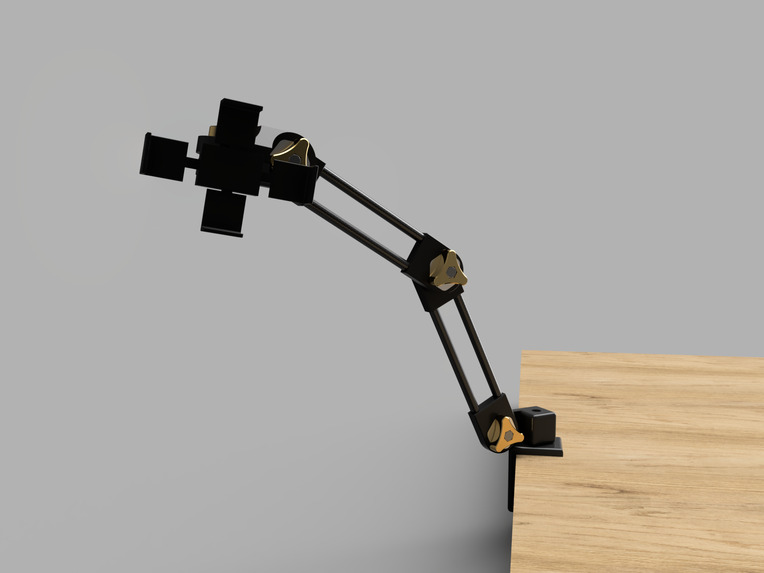
Front Render
-
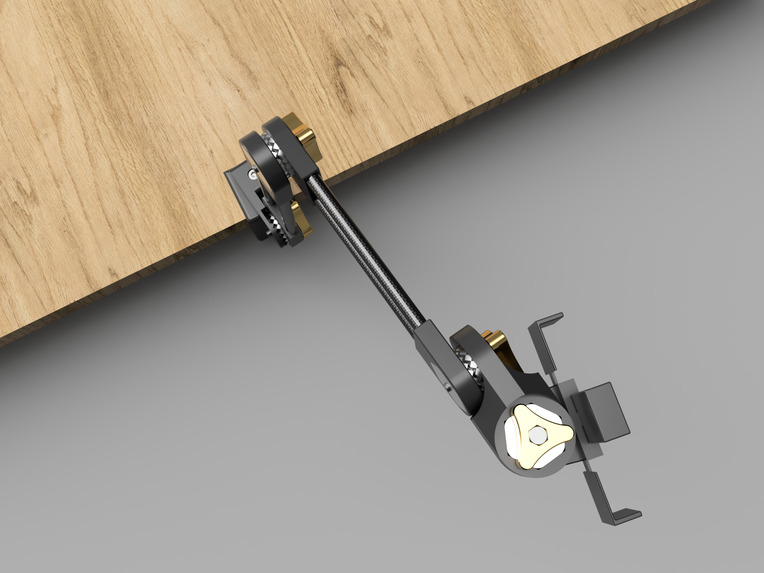
Top Render
-
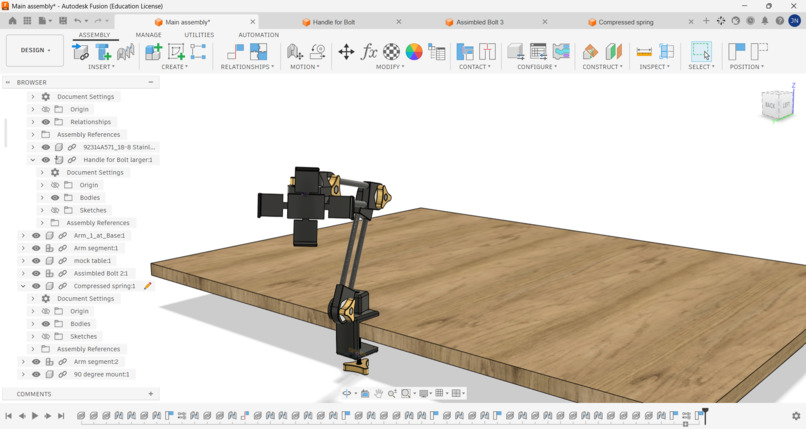
Front View of Model
-
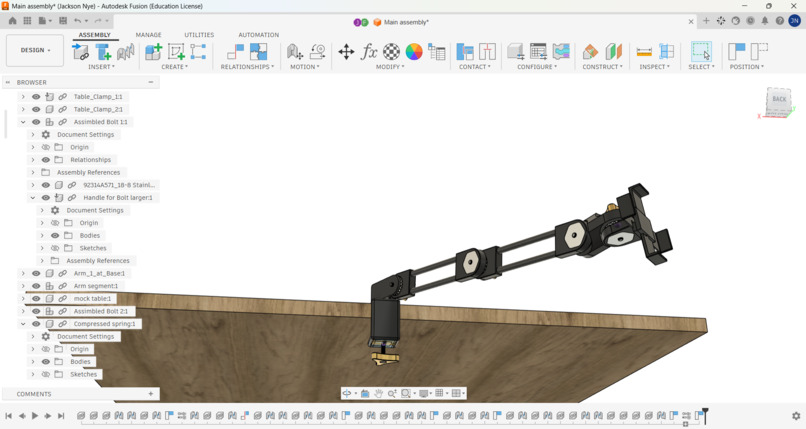
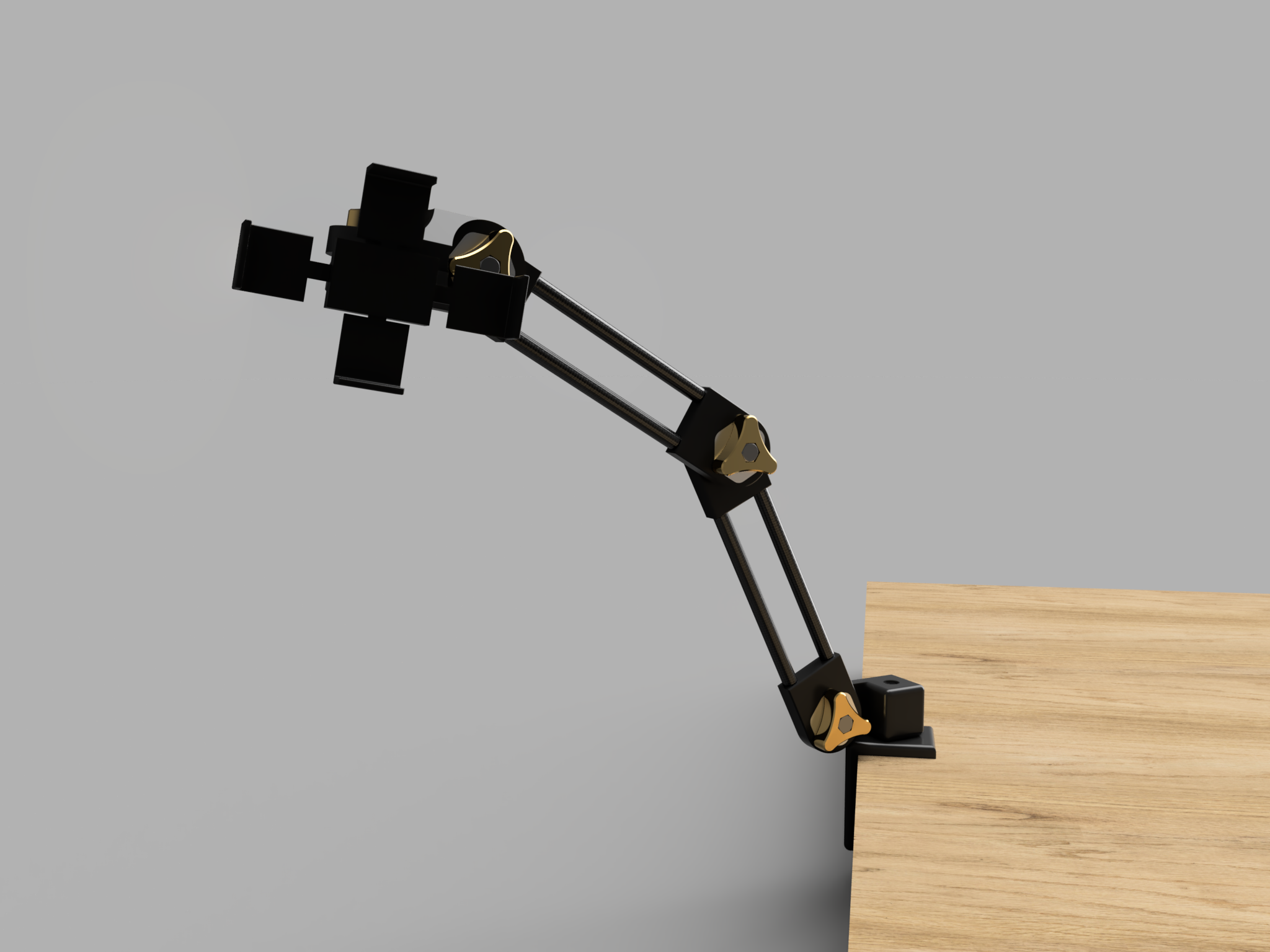
Extended Arm
-
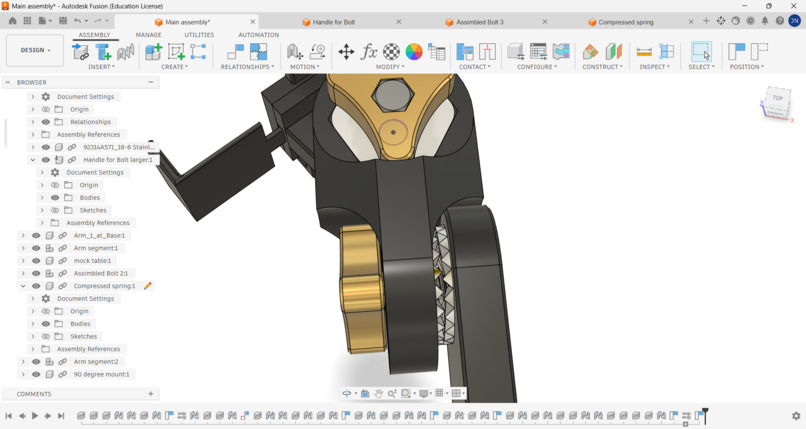
Close up on Hirth Joint Near Tablet Mount
-
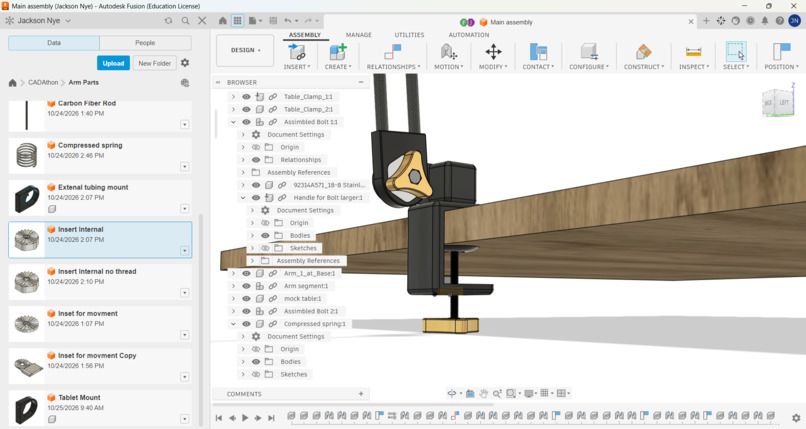
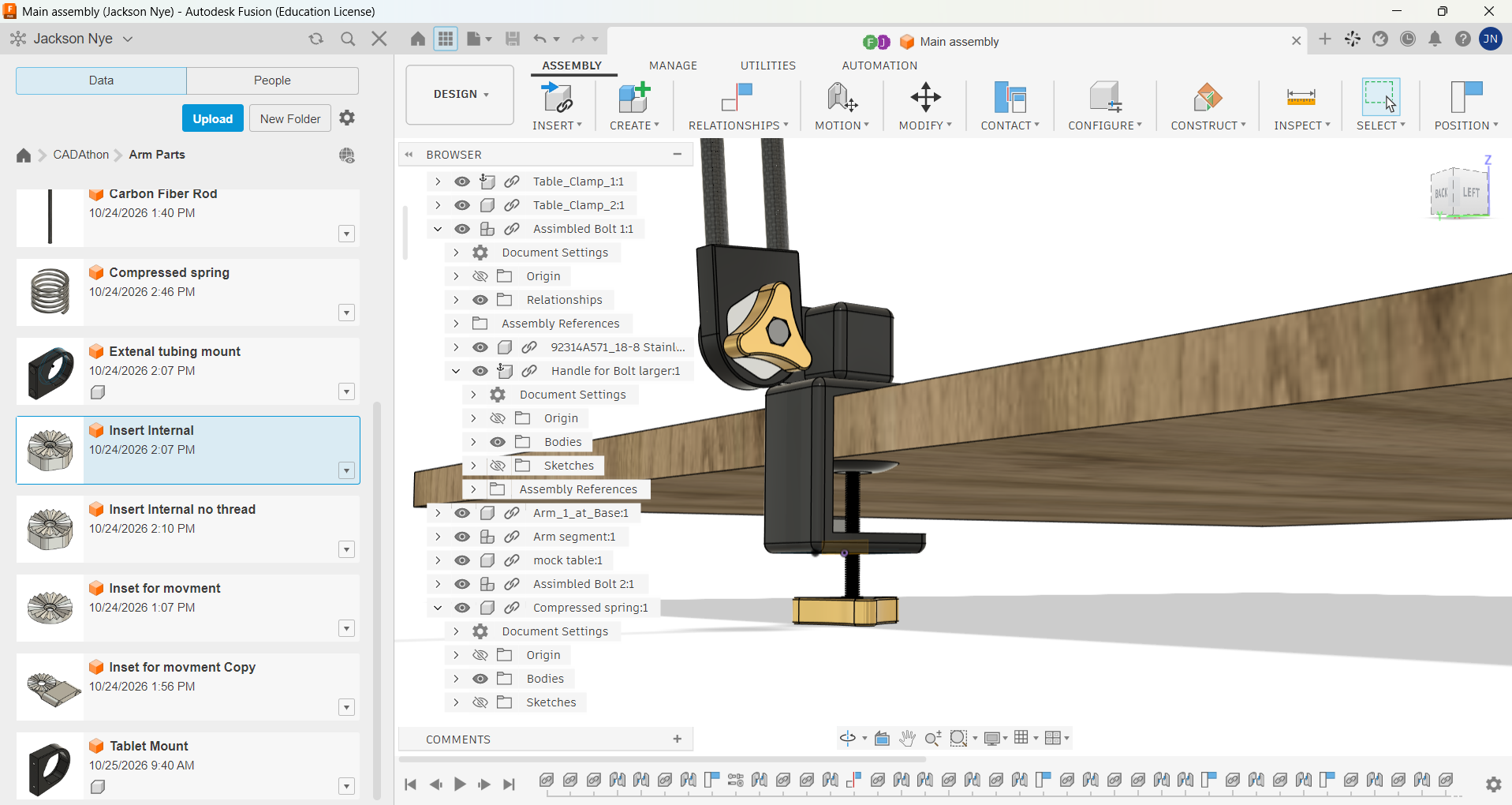
Close up of Table Clamp
-
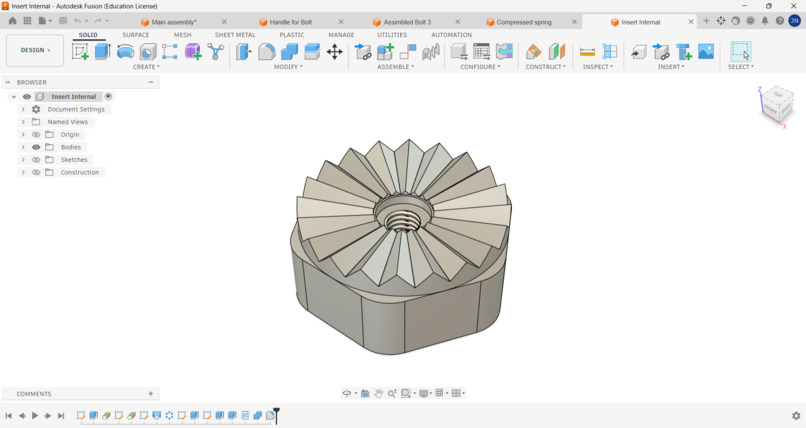
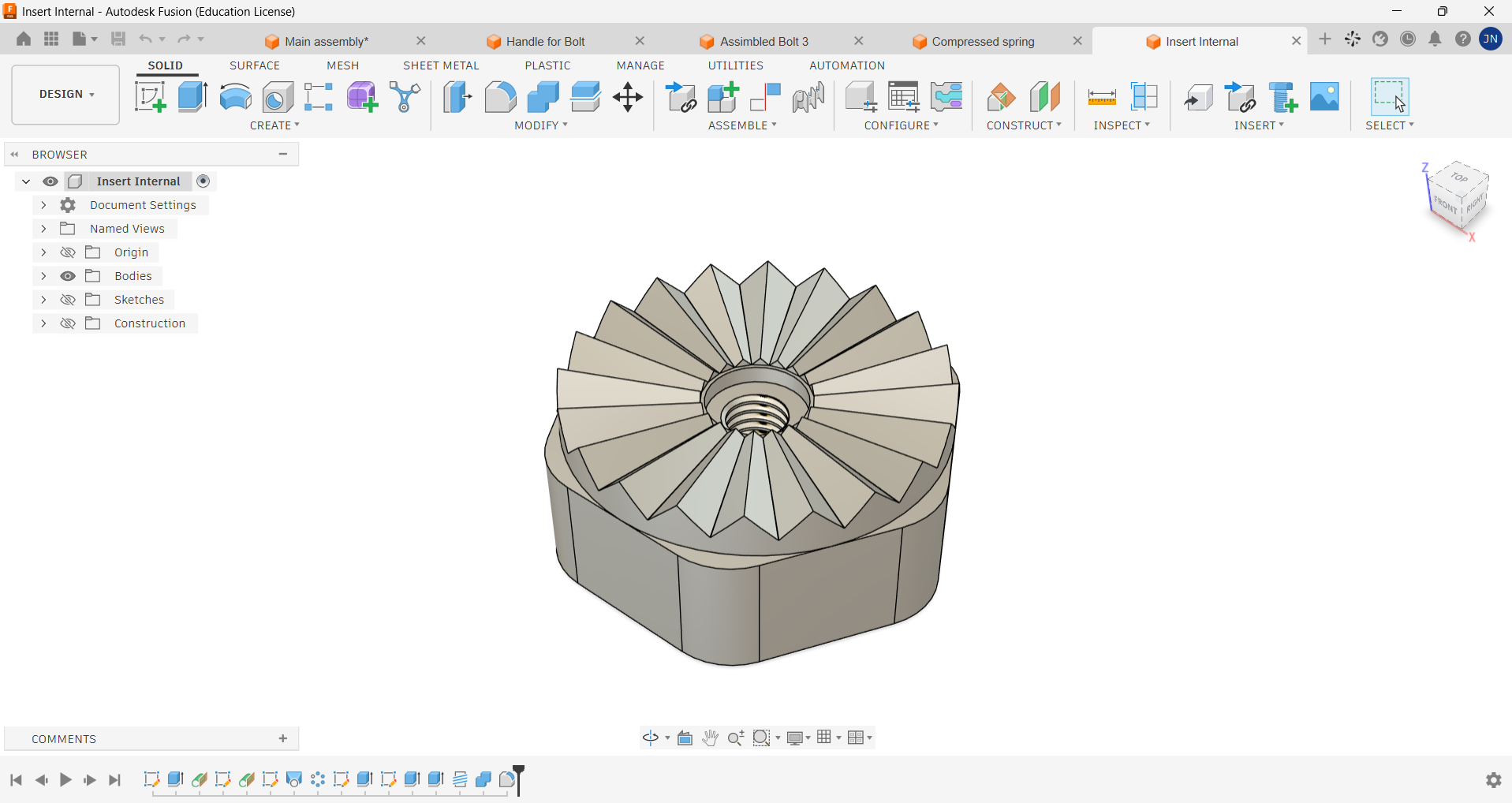
Hirth Joint Insert
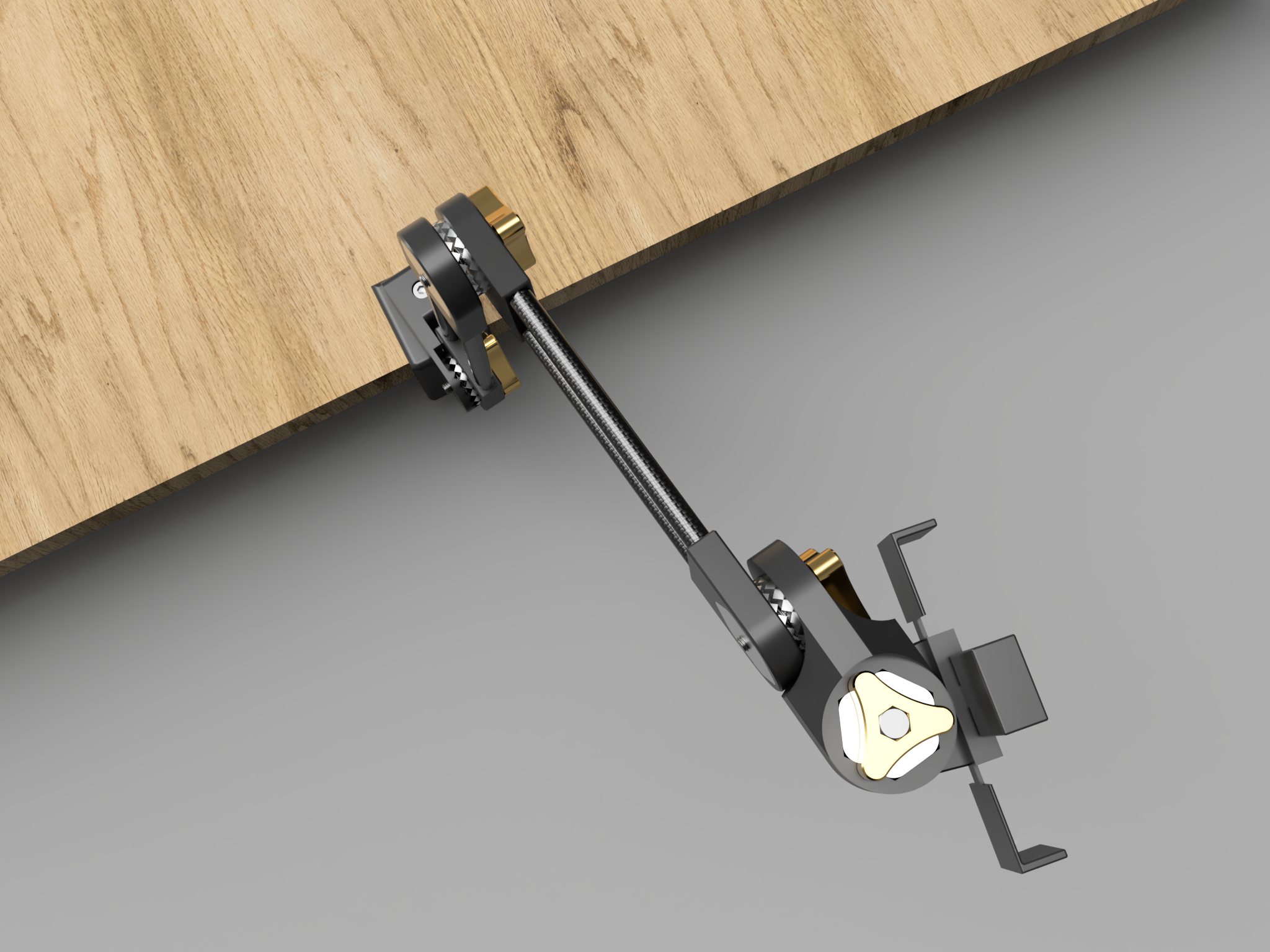
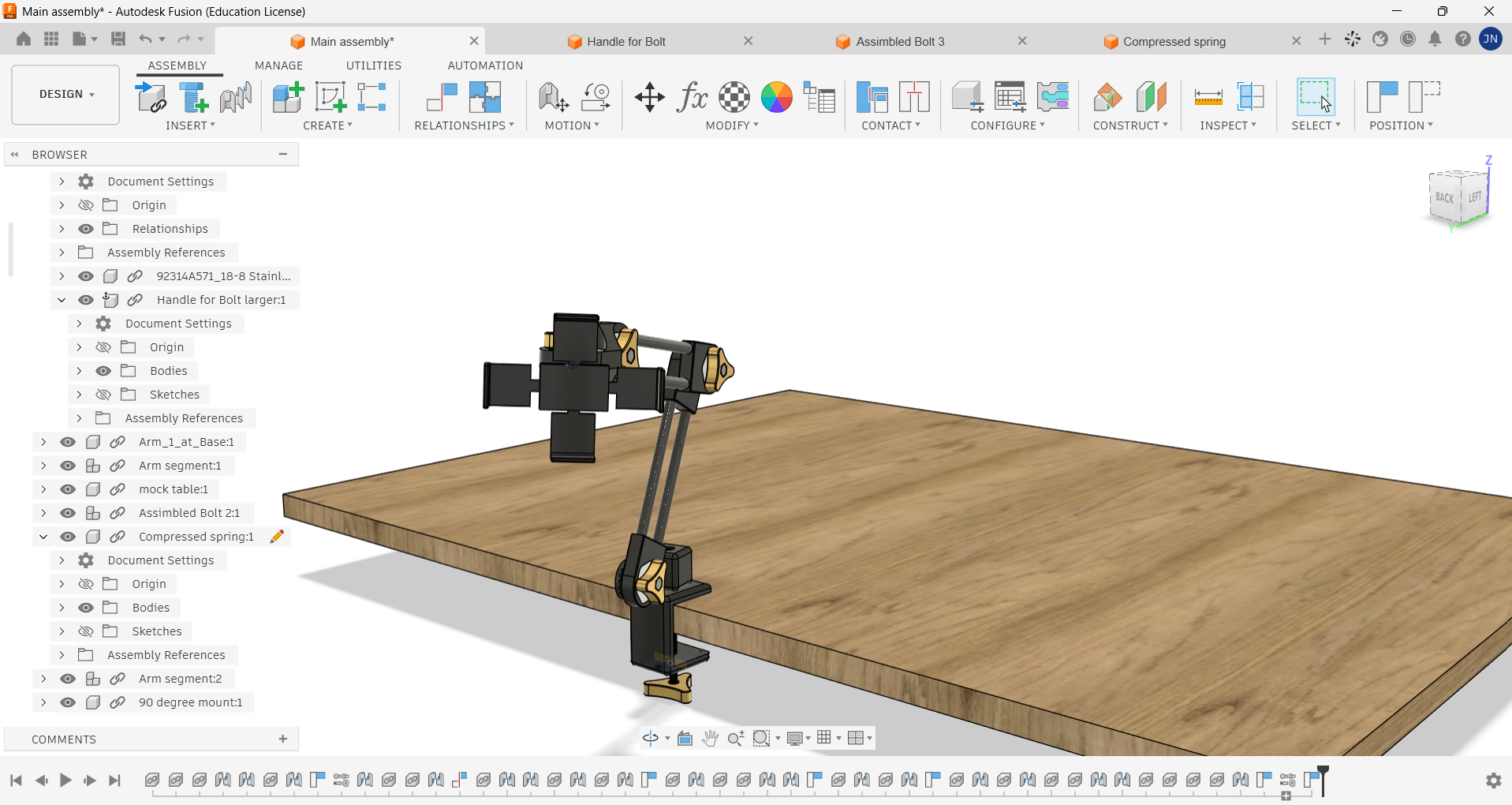
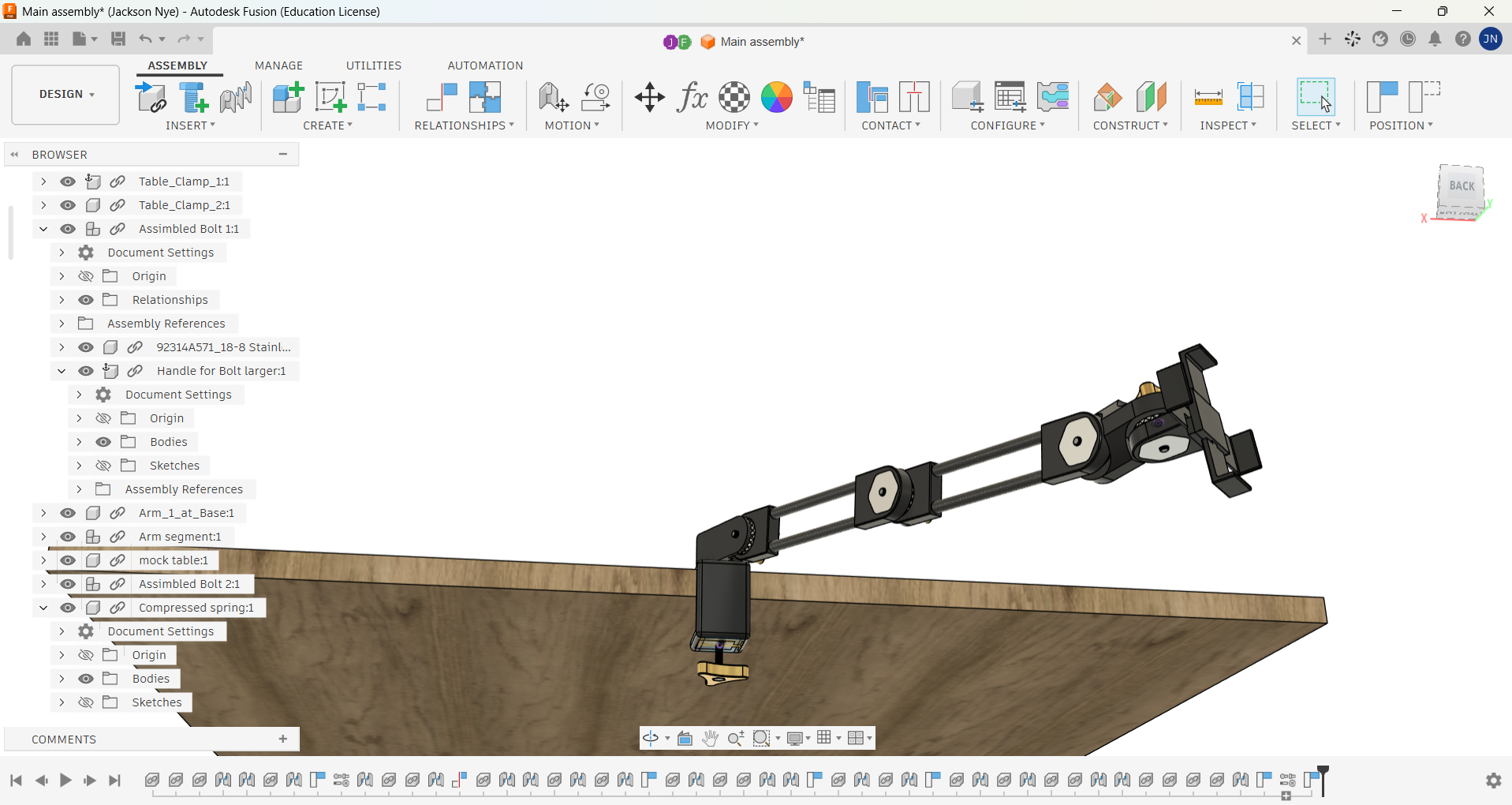
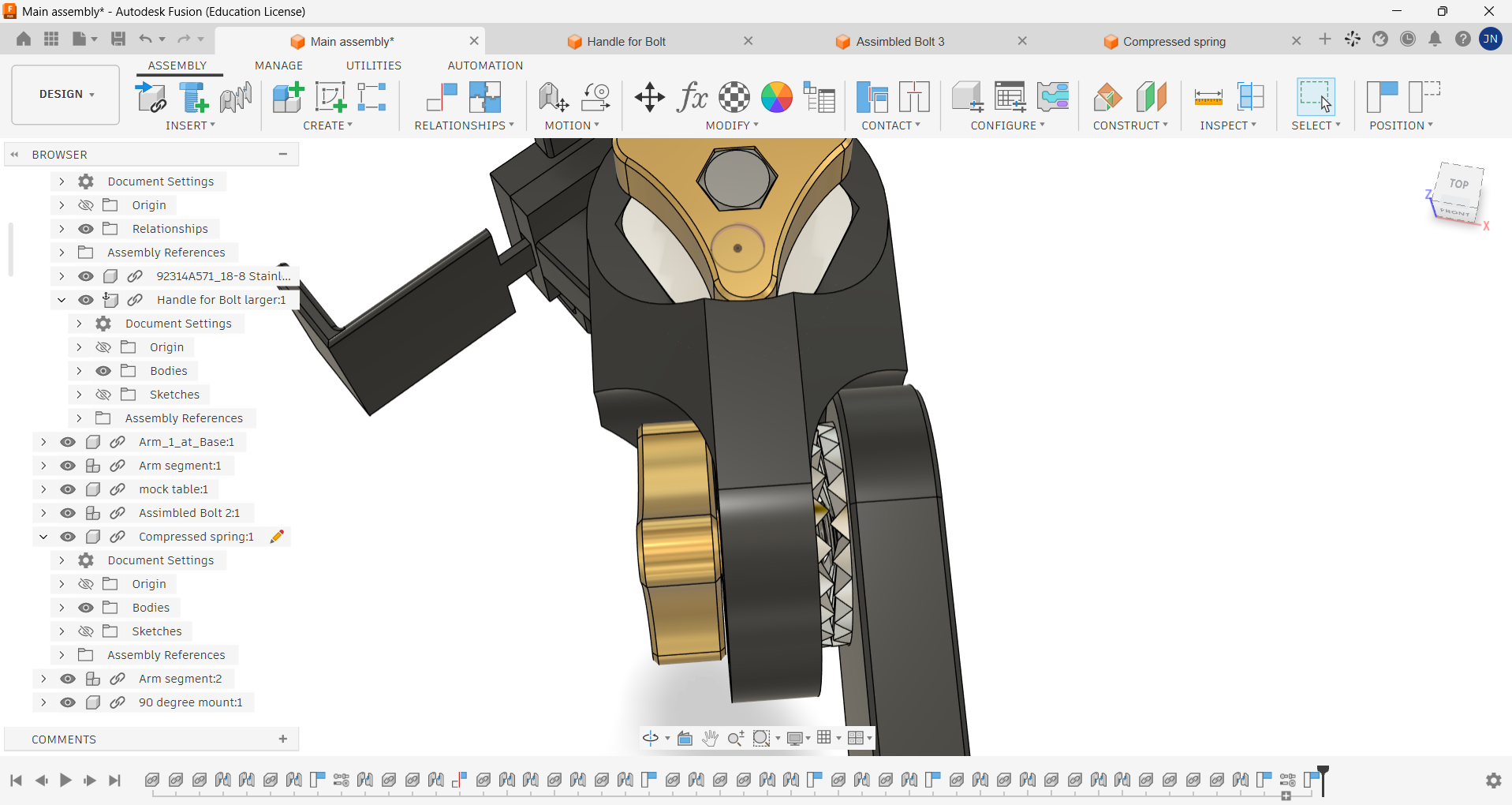
Teammate Names: FNU Dhruv Jackson Nye
Inspiration
Friction-based mounting arms, like those with ball-and-socket joints, sag and wear over time. Especially when supporting heavier devices like tablets or augmentative communication tools. These mounting arms also offer limited flexibility. And for users with physical disabilities or limited range of motion, a mounting arm that slips out of place can completely cut off access to their device. By utilizing Hirth joints, the arm predominantly relies on intersecting physical geometry rather than surface friction, guaranteeing that the device remains permanently locked at the desired angle regardless of the applied load.
What it does
The Hirth Joint Repositionable Tablet Arm is a heavy-duty, modular mounting system. It anchors to a table using a robust C-clamp and utilizes a parallel linkage system to allow vertical height adjustments without altering the viewing angle of the attached device. The primary articulation points utilize interlocking radial teeth (Hirth joints) secured by M8 screws from Mcmaster-carr. These screws provide absolute rigidity once tightened. The end-effector features an adjustable grip designed to securely hold a tablet or control interface.
How we built it
The assembly was modeled collaboratively using Fusion 360, breaking the design down into modular components, i.e., the desk clamp base, the parallel linkage struts, the interlocking hubs, and the tablet carriage.
The core of the design revolves around 42 mm outer diameter Hirth joints. We engineered the joints with 20 interlocking teeth. The angular resolution for each adjustment step is determined by the number of teeth N: $$\theta = \frac{360^\circ}{N}$$ $$\theta = \frac{360^\circ}{20} = 18^\circ$$ This provides discrete $$18^\circ$$ locking intervals, offering a balance between fine angular adjustment and structural tooth thickness for 3-D printing. The central axis of each joint houses an M8 screw, which provides the necessary axial force $$F_a$$ to keep the meshed teeth fully seated against rotational shear loads.
Challenges we ran into
One of the primary CAD challenges was modeling the Hirth joint geometry to ensure perfect meshing without binding. Calculating the correct draft angles and depth for the 20 radial teeth required precise circular patterning, ensuring that the 3D-printed tolerances would allow the faces to seat completely flush. Additionally, designing the parallel linkage struts, which are visible in the model as dual slender arms, required careful geometric alignment so the arm could articulate smoothly without the pivot points restricting the range of motion.
Accomplishments that we're proud of
We successfully integrated a highly rigid mechanical lock into a sleek, functional profile. The 42 mm diameter of the Hirth joints provides a massive surface area for torque distribution, ensuring the plastic teeth will not shear under the weight of a heavy tablet. The use of a parallel linkage system elevates the design from a simple pivoting stick to a true kinematic mechanism, allowing ergonomic positioning with minimal effort.
What we learned
We gained significant experience in modeling complex radial geometries and applying kinematic joints in Fusion 360 to validate the parallel linkage motion. Balancing the mathematical constraints of the Hirth joint. Specifically, maximizing the tooth count for finer adjustment angles while maintaining a tooth root thickness capable of surviving the shear stress provided a highly practical lesson in mechanical design for additive manufacturing.
What's next for Hirth Joint Repositionable Tablet Arm
The immediate next step is physical prototyping and tolerance testing to dial in the clearances on the 3D-printed Hirth teeth. We plan to perform static stress simulations (FEM) on the parallel linkages to optimize their thickness-to-weight ratio. Finally, we aim to refine the ergonomic knobs on the M8 screws, ensuring they can be easily tightened and released by users with limited grip strength or fine motor control.

Log in or sign up for Devpost to join the conversation.