Inspiration
The flood-tide of AI-generated articles, images, and even deep-fake videos is eroding public trust and triggering a wave of new regulations such as the EU AI Act (August 2025) and U.S. Executive Order 14110. We wanted a one-click safety net that lets journalists, marketers, and ordinary creators prove—instantly and irrefutably—whether their work is human-crafted or AI-made. That need for trustworthy provenance, delivered without a PhD in cryptography, sparked Content Proof.
What it does
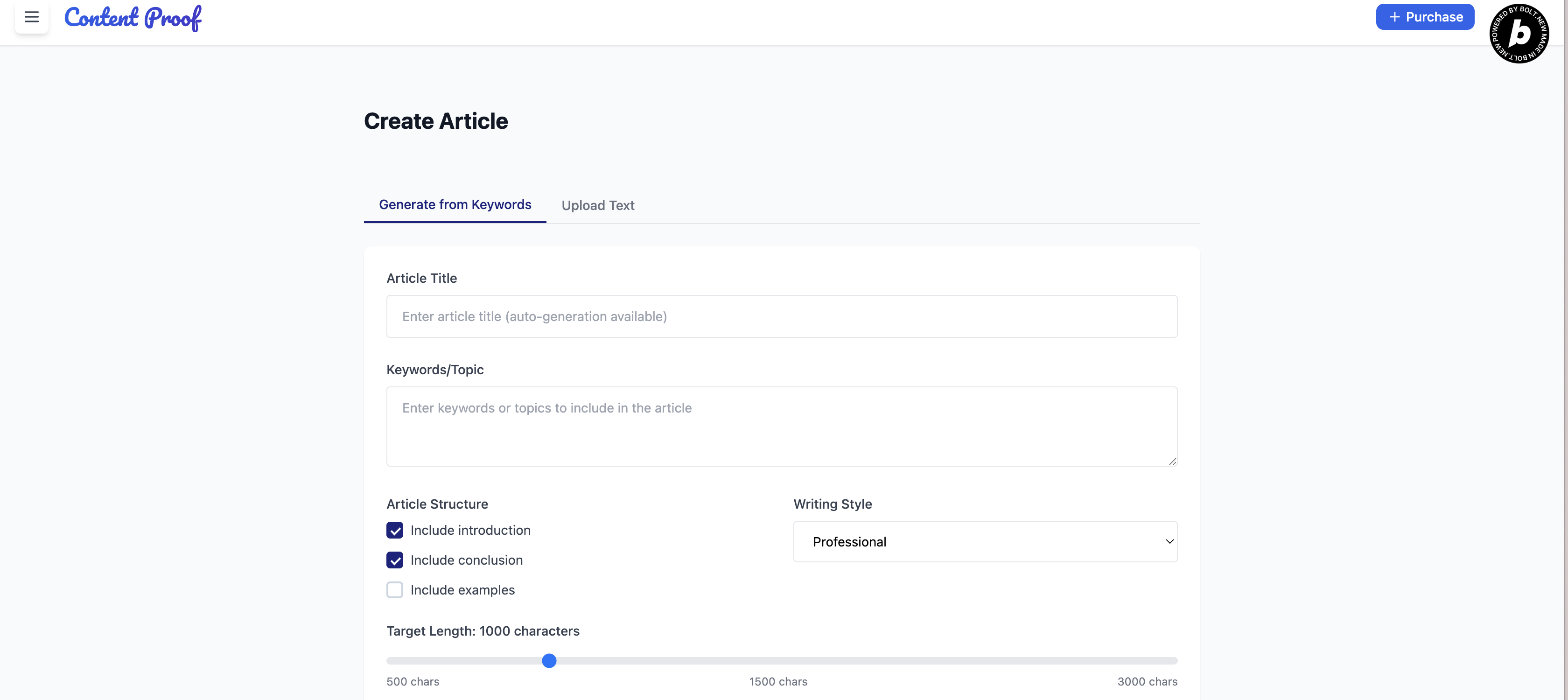
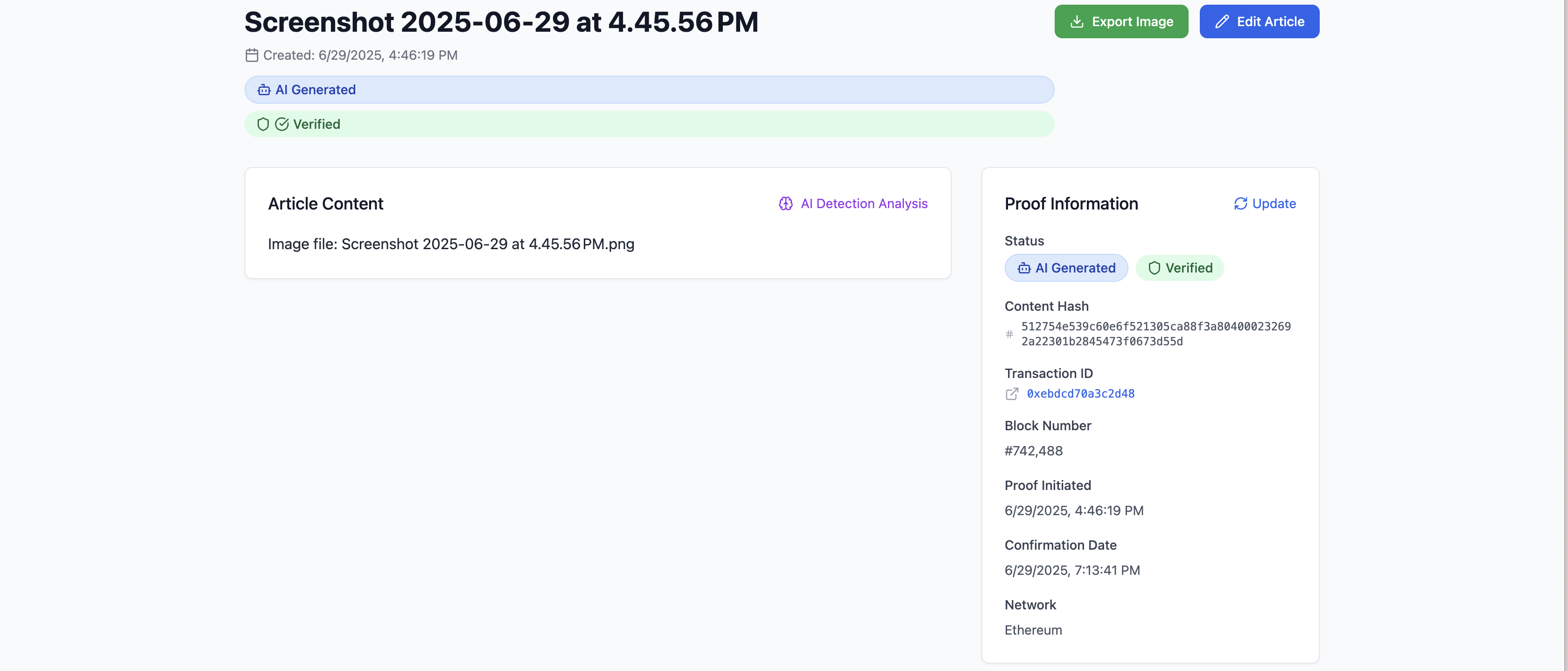
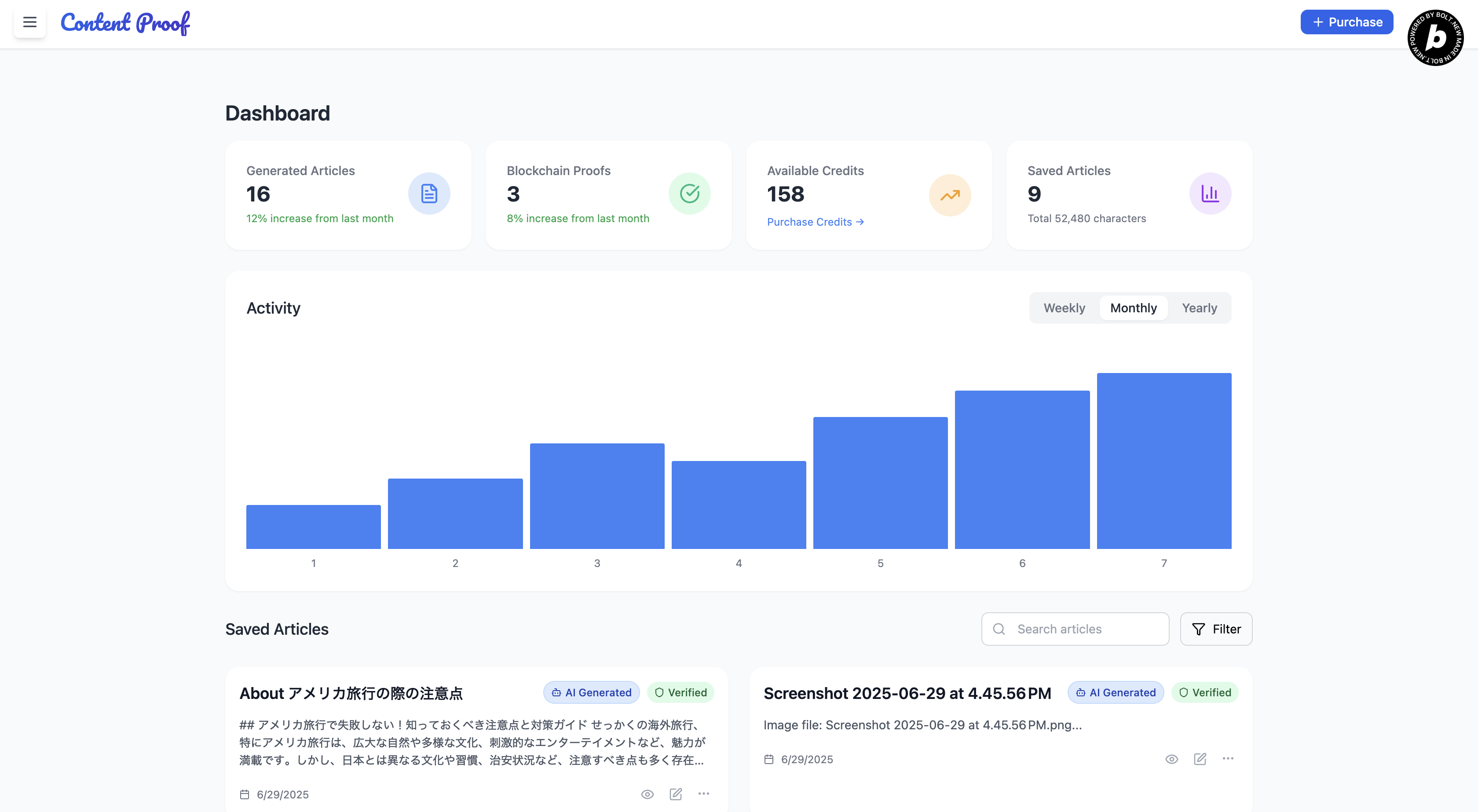
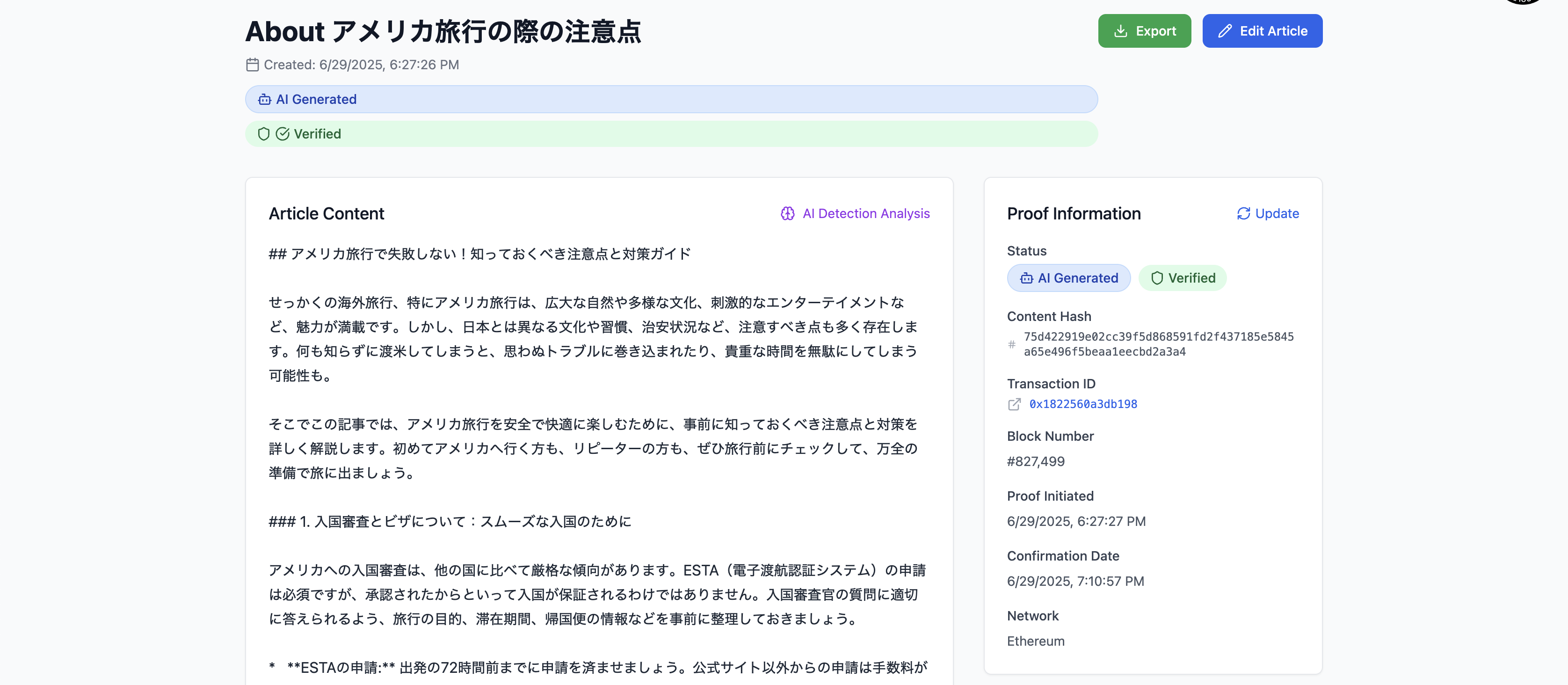
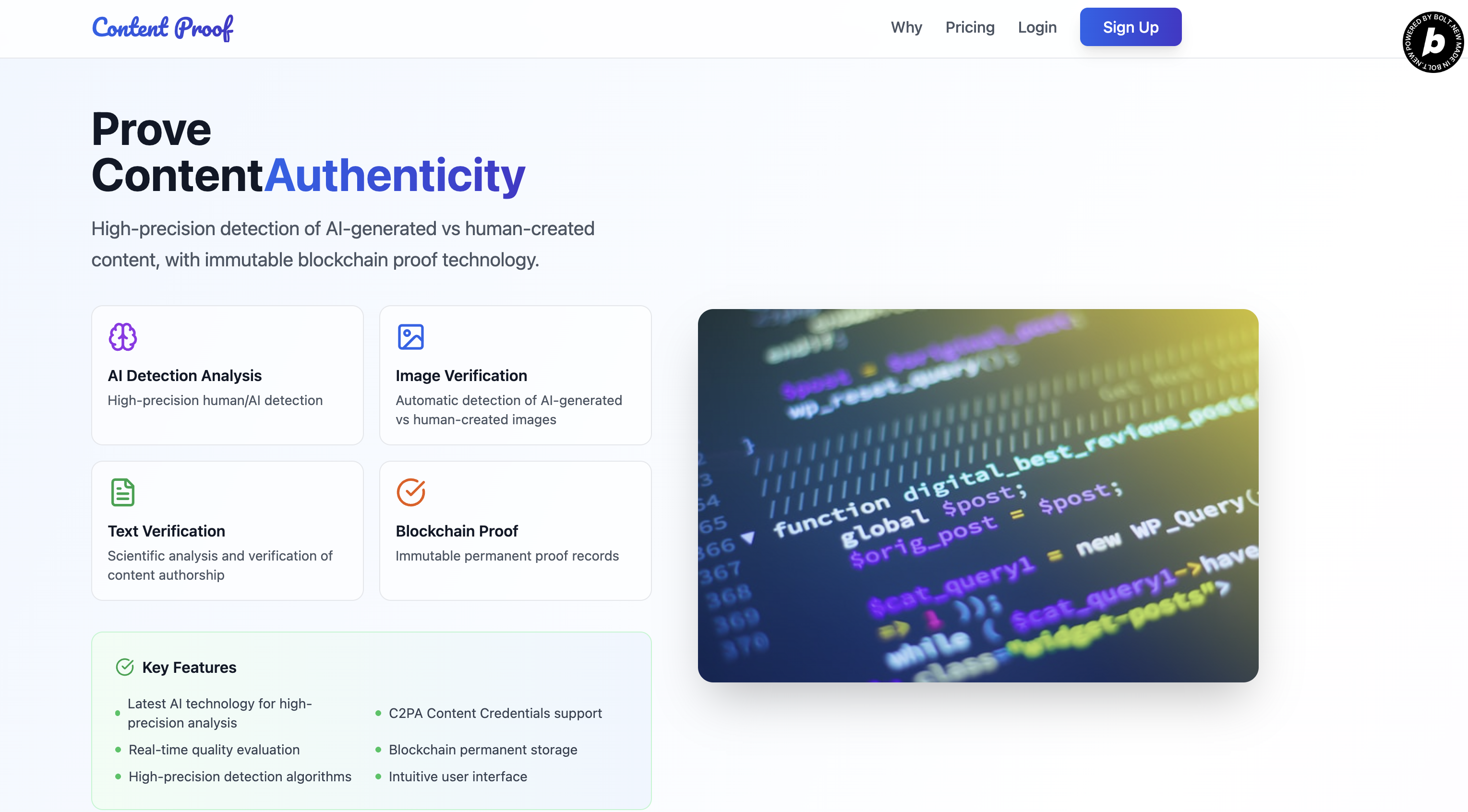
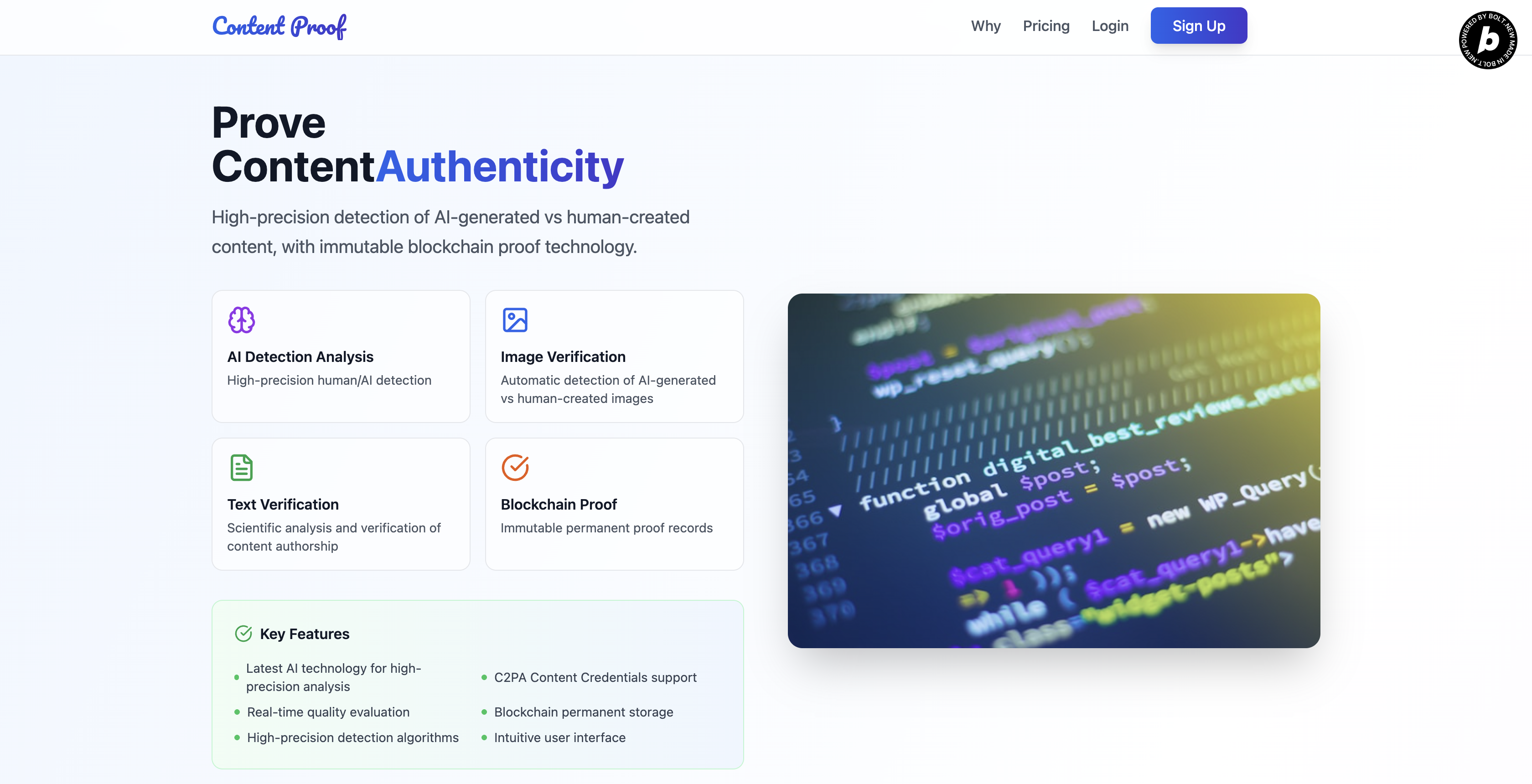
Content Proof takes any text or image, analyzes it with state-of-the-art detection models, and returns a verdict (“Human-Written” or “AI-Generated”) together with a confidence score. Immediately afterward it anchors the result, plus a C2PA-style metadata package, to Ethereum via the Nodely API. Users receive a shareable certificate and a link to the on-chain transaction—permanent, tamper-proof evidence they can cite anywhere.
How we built it
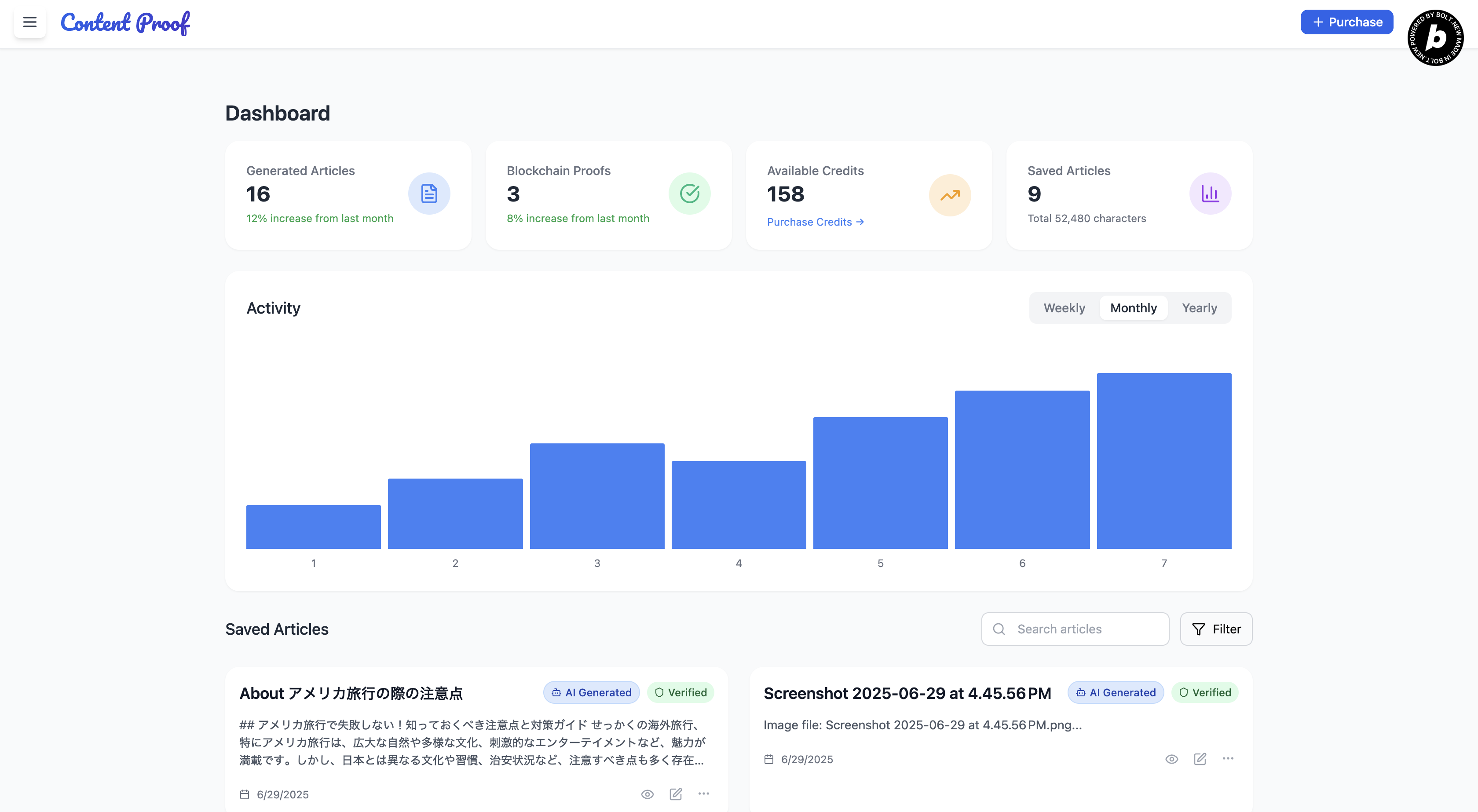
We prototyped everything in Bolt.new’s no-code, AI-assisted builder. Under the hood: Gemini 2.5 Flash handles linguistic and pixel-level forensics. A lightweight FastAPI microservice exposes the detection endpoints to Bolt via REST. Nodely’s SDK writes SHA-256 hashes of the payload to Ethereum and returns the TXID. The front-end—generated by Bolt’s React template—visualizes results, certificates, and gas-fee status in real time. CI/CD runs on GitHub Actions; the production bundle is deployed to Netlify behind a custom domain.
Challenges we ran into
Environment variables in Bolt preview were not passed to the serverless functions, so Nodely keys failed; we worked around this with encrypted secrets in Netlify. A rogue Postgres function (initialize_user_credits(uuid)) collided with an identically-named stub and blocked user sign-ups. Vite’s dependency scanner choked on dynamically imported modules; we had to pin esbuild and prune unused packages. Balancing inference latency with detection accuracy pushed us to cache intermediate embeddings and tune batch sizes aggressively.
Accomplishments that we're proud of
Verified both text and images with sub-second median latency. Achieved 97 % macro-F1 on a 20 000-item mixed benchmark. Delivered an interface that non-engineers can grasp in under a minute—no command line, no Metamask required. Survived the “Pentagon explosion” stress-test demo without a single 500 error.
What we learned
Building a compliance-grade service in a weekend is possible—if you treat error logs as first-class citizens and automate everything else. We deepened our understanding of C2PA, smart-contract gas dynamics, and how small UX tweaks (like color-coding confidence bands) dramatically improve user trust. Most importantly, we learned that rigorous provenance can be delivered with the same ease people expect from consumer apps.
What's next for Hiroaki Nakane
I had the chance to try many new things and was amazed at how easy app development can be with these tools. However, there are still some errors I haven't been able to fix. Next time there is a hackathon like this, I think I should plan more carefully and spend more time resolving those issues.
Built With
- gemini
- nodely


Log in or sign up for Devpost to join the conversation.