-
-
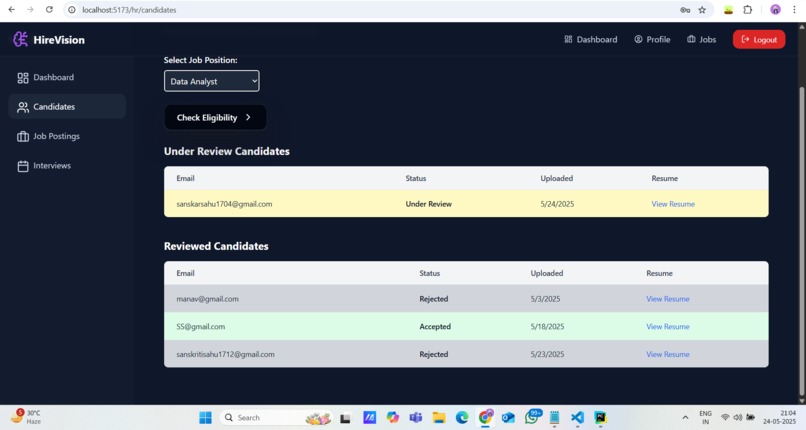
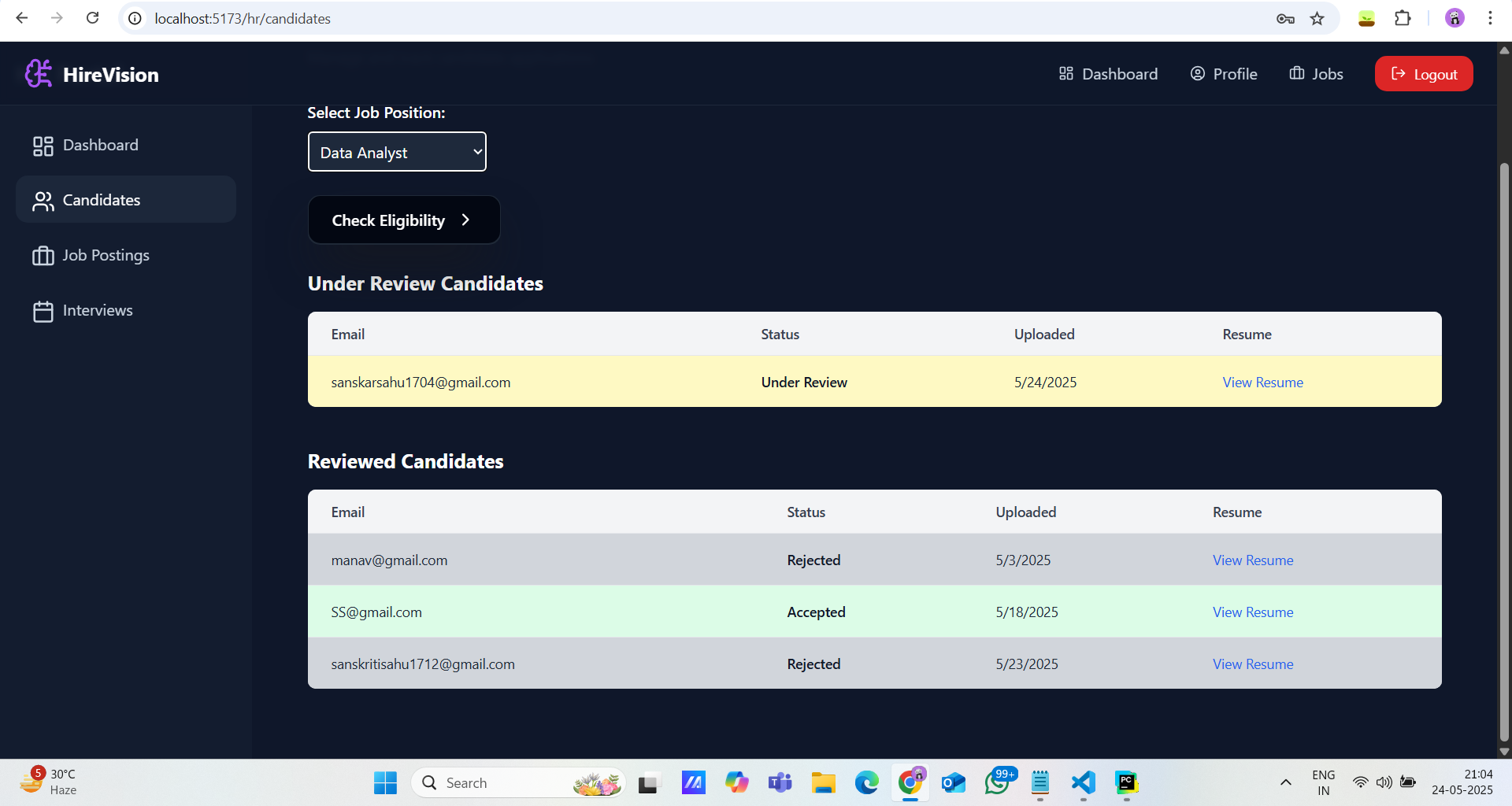
Applied candidate list on the HR dashboard for the job he/she posted
-
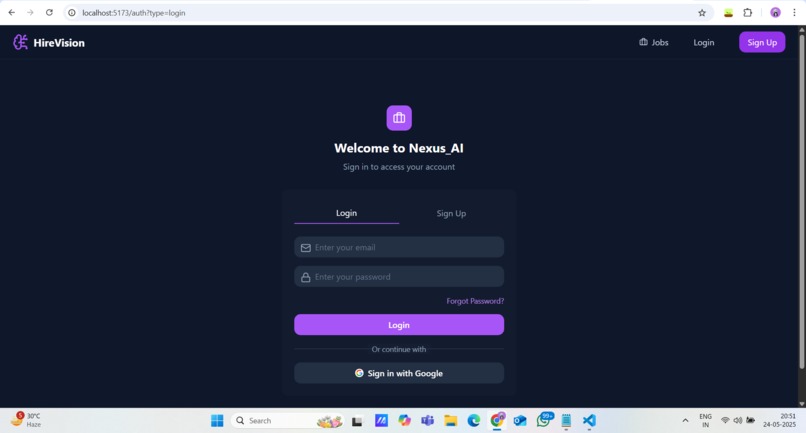
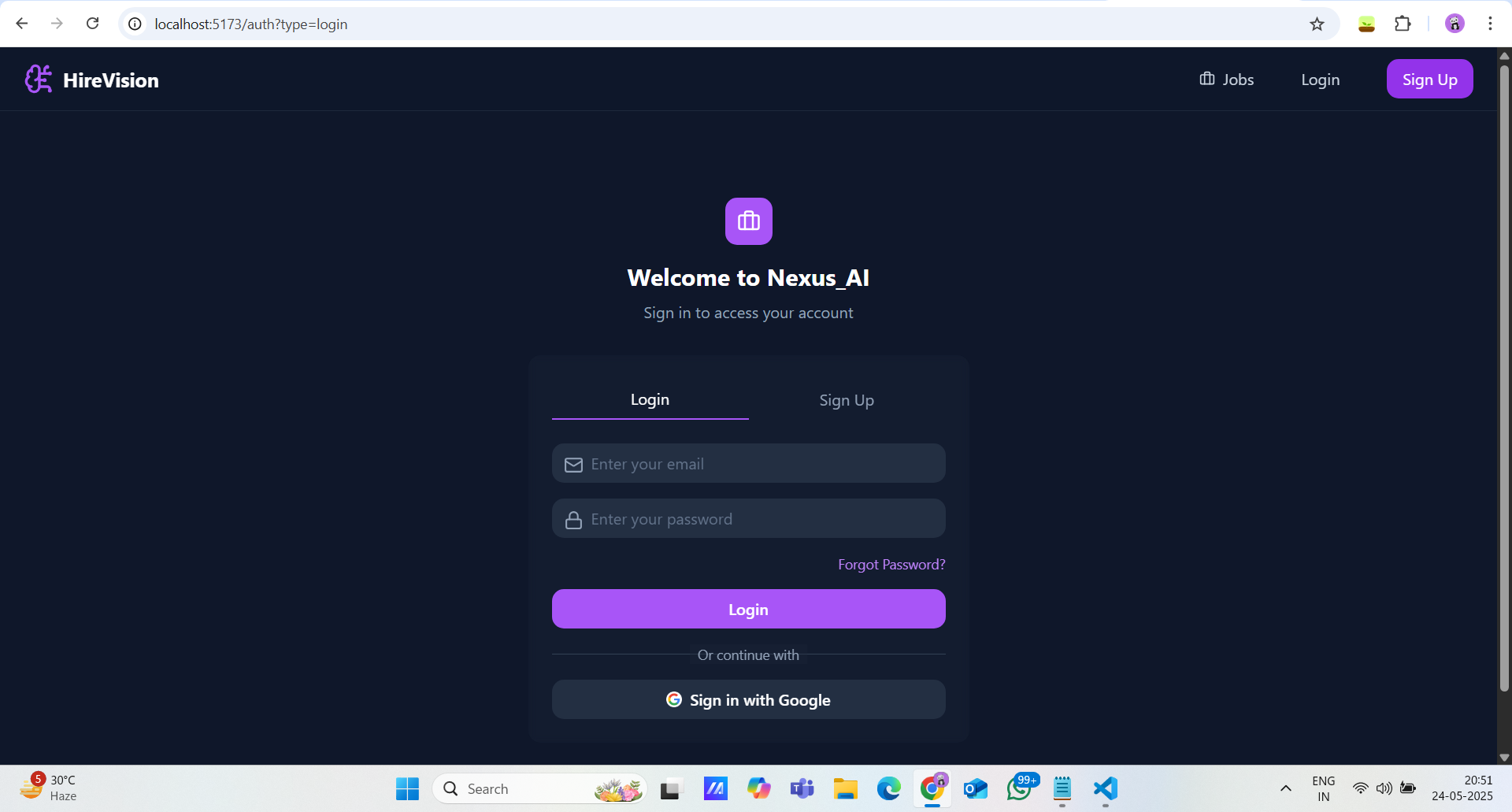
Login page
-
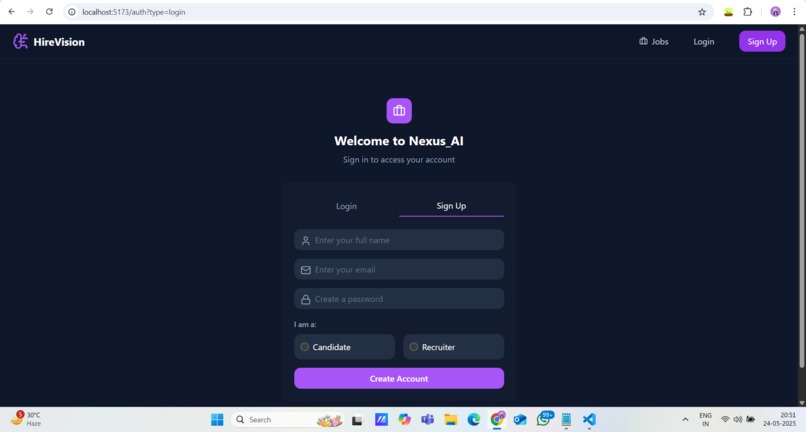
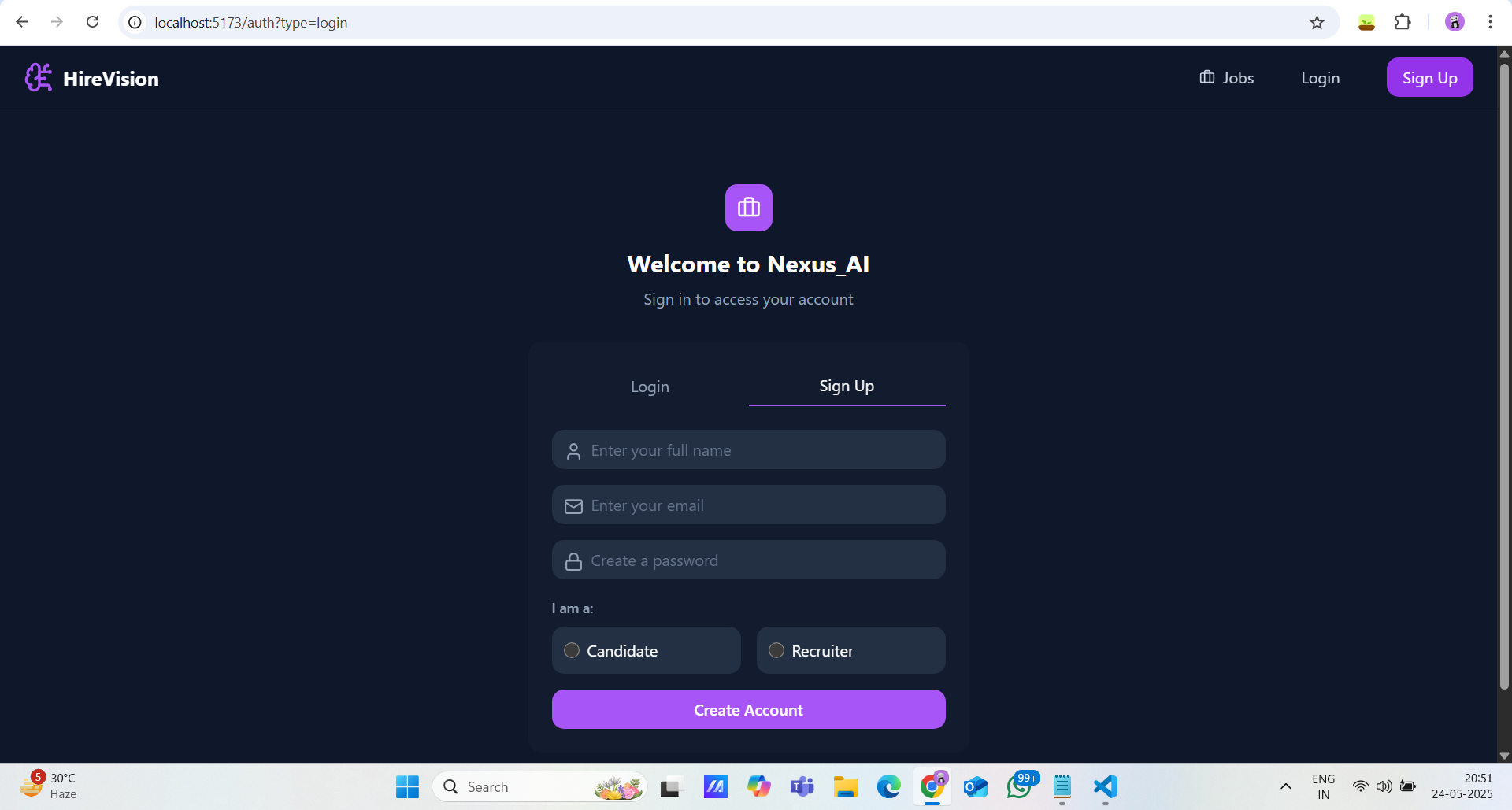
Sign-Up page
-
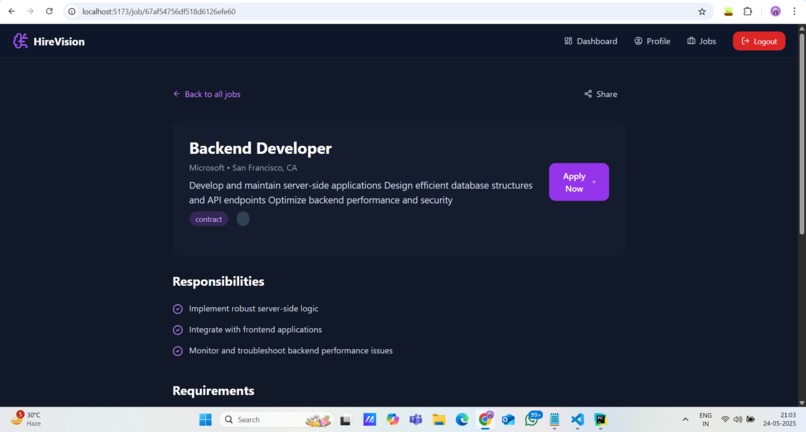
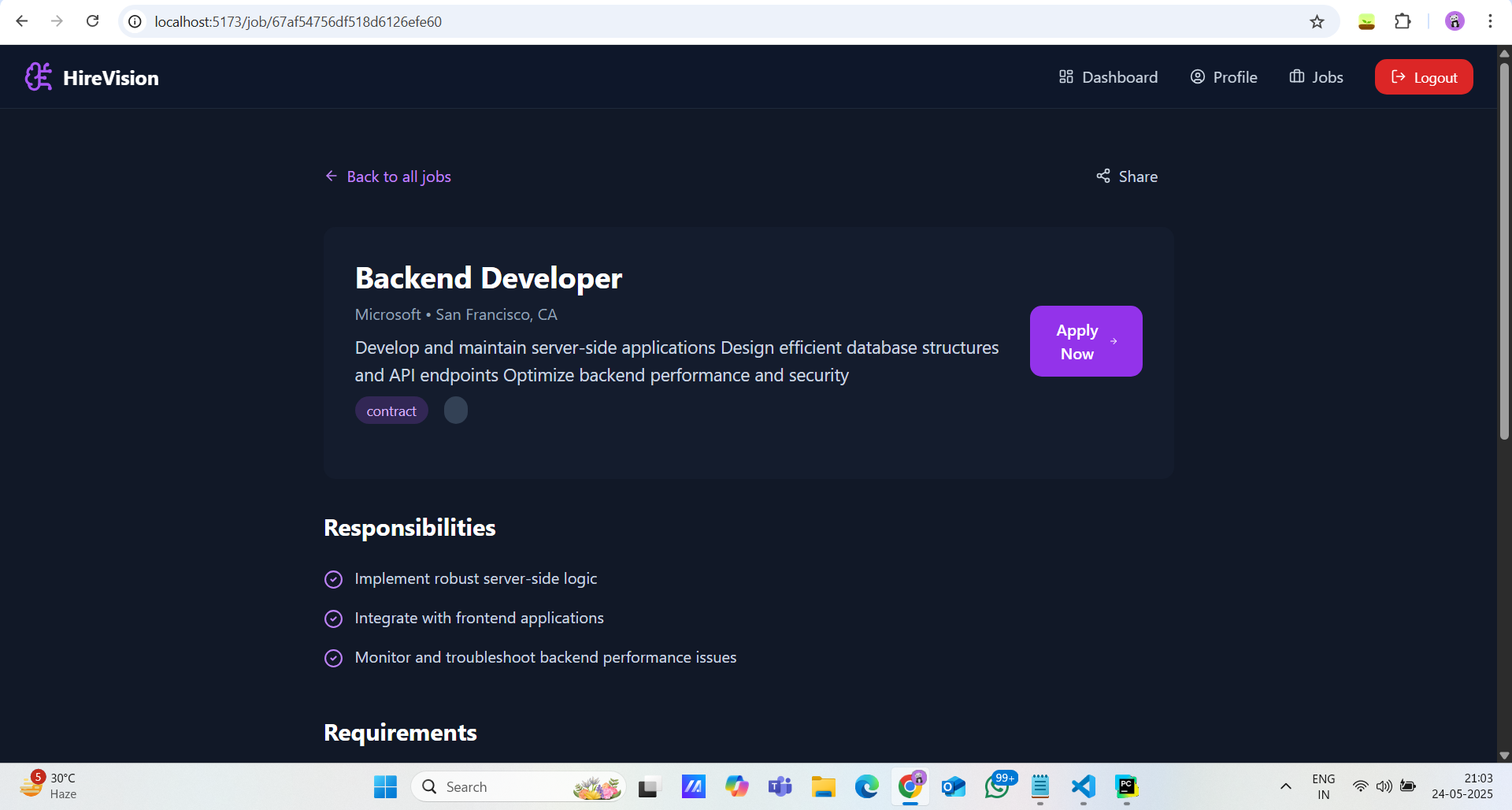
Job description in Candidate account
-
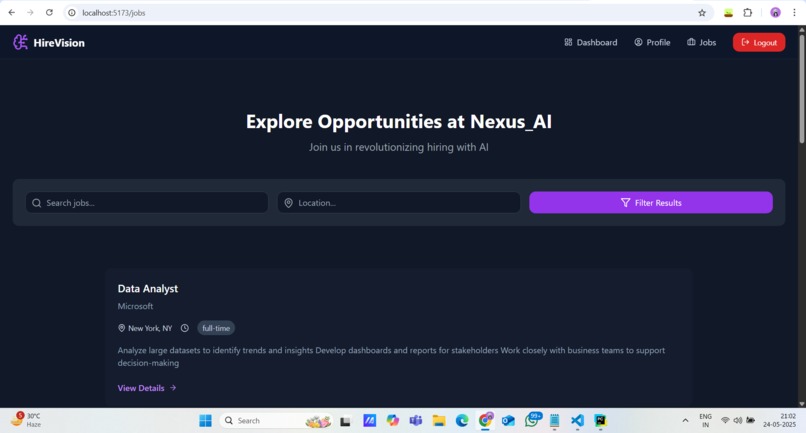
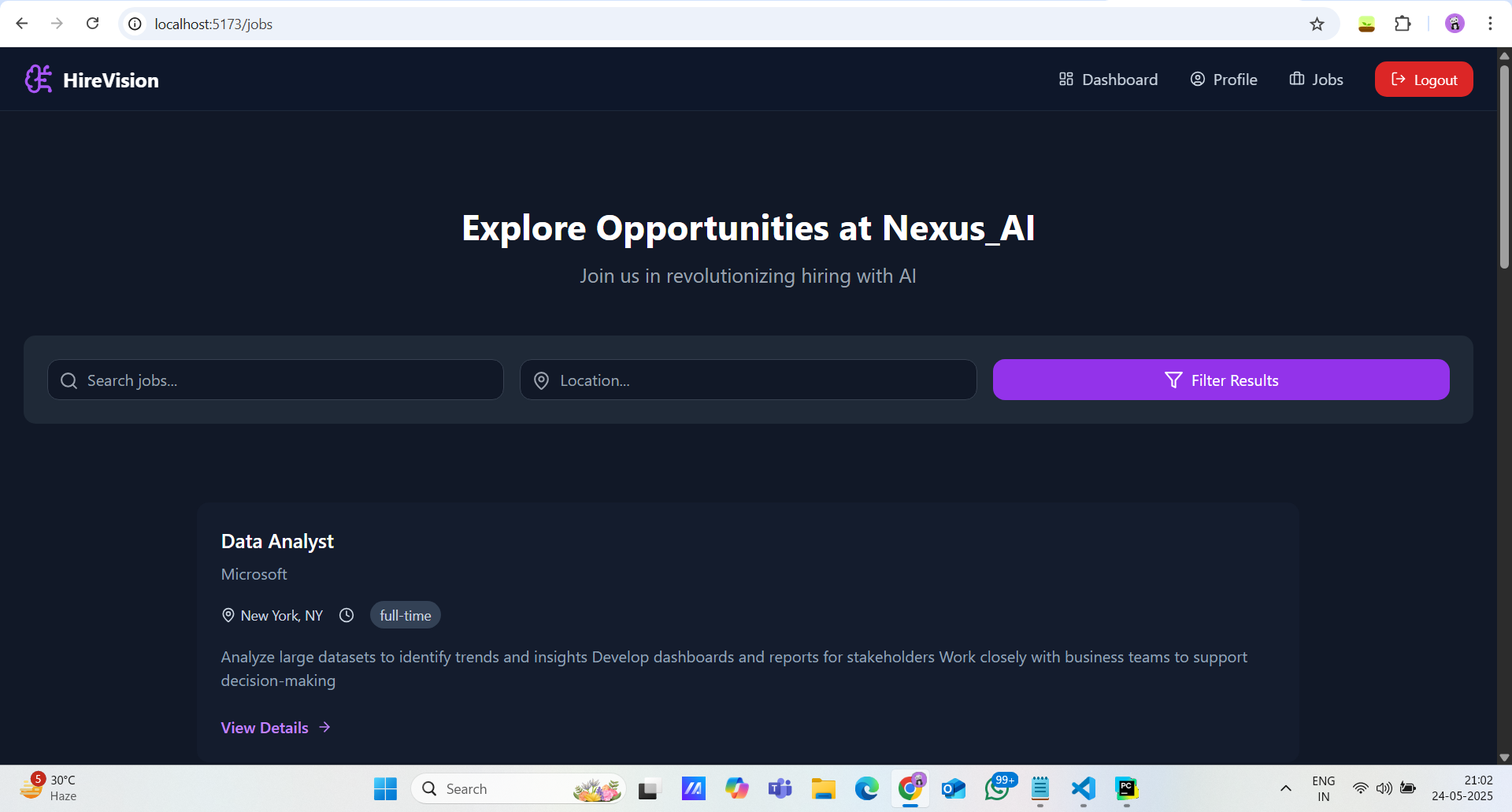
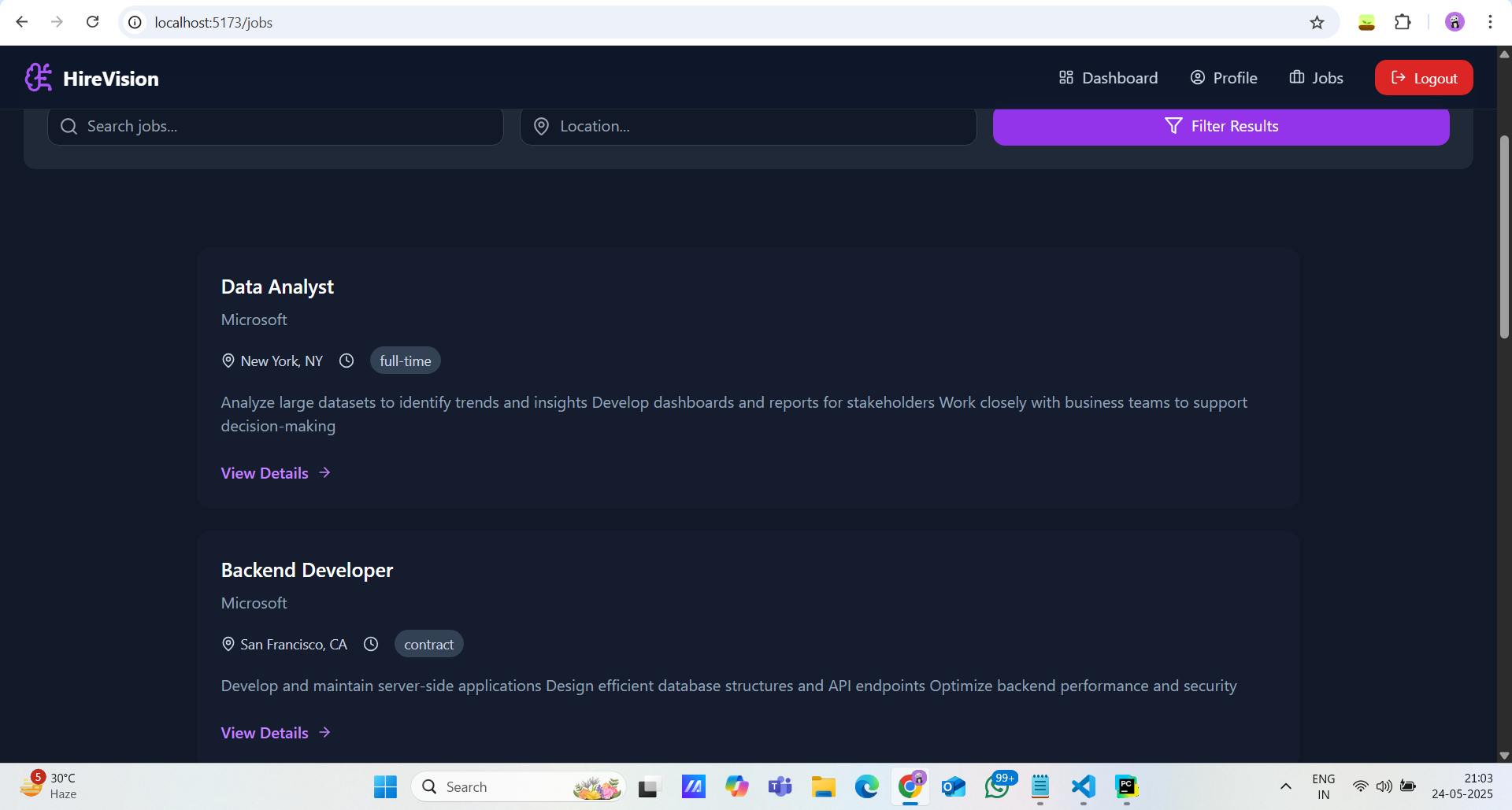
Posted Jobs List in Candidate account
-
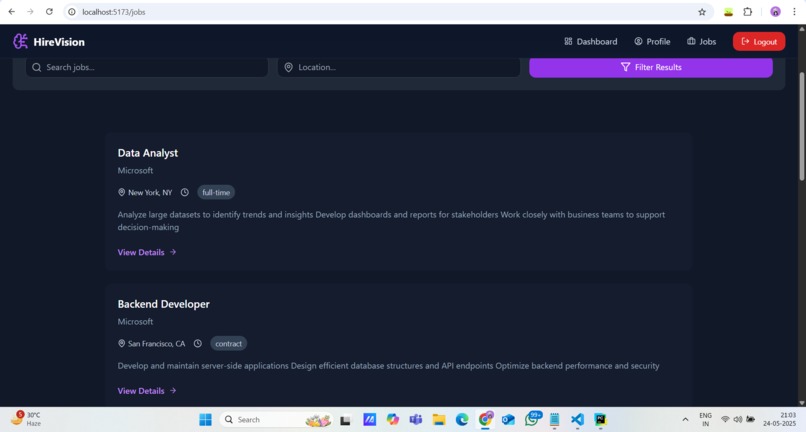
Posted Jobs List in Candidate account 2
-
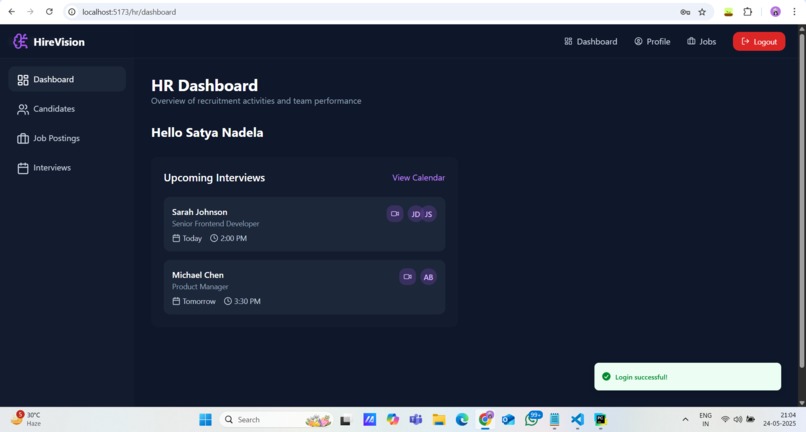
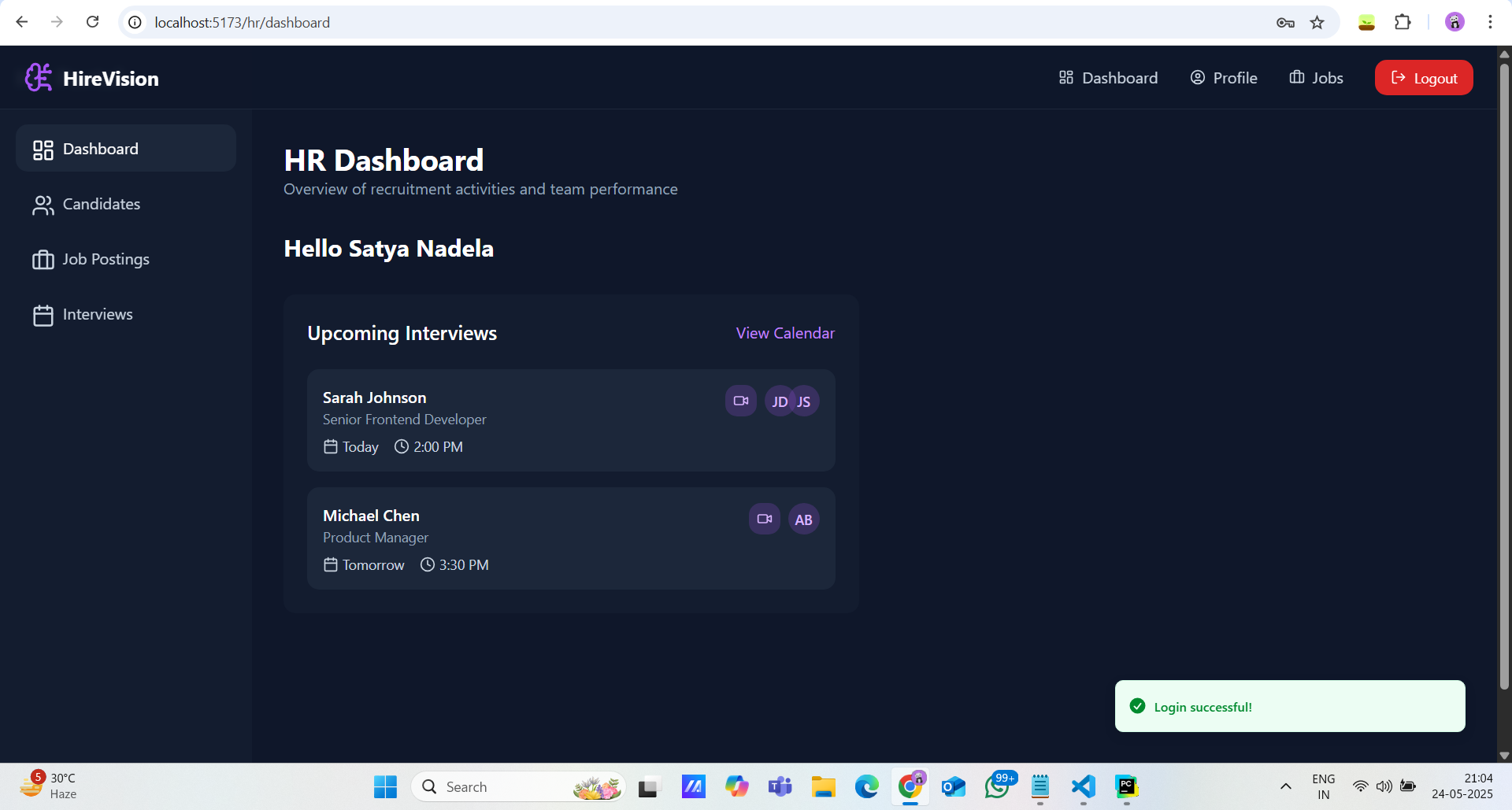
HR dashboard
-
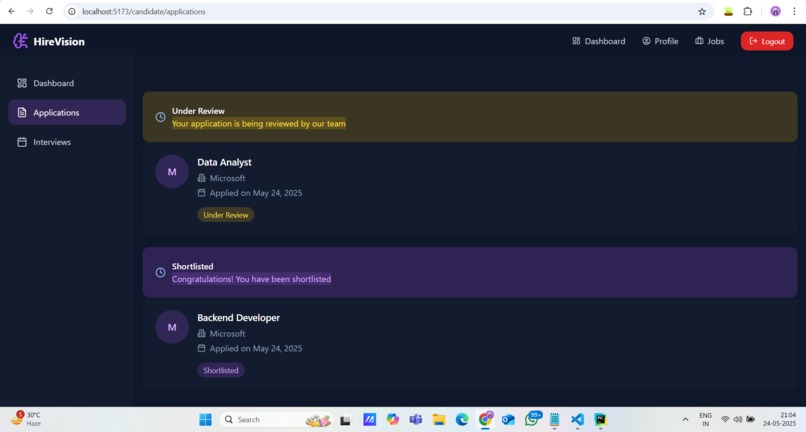
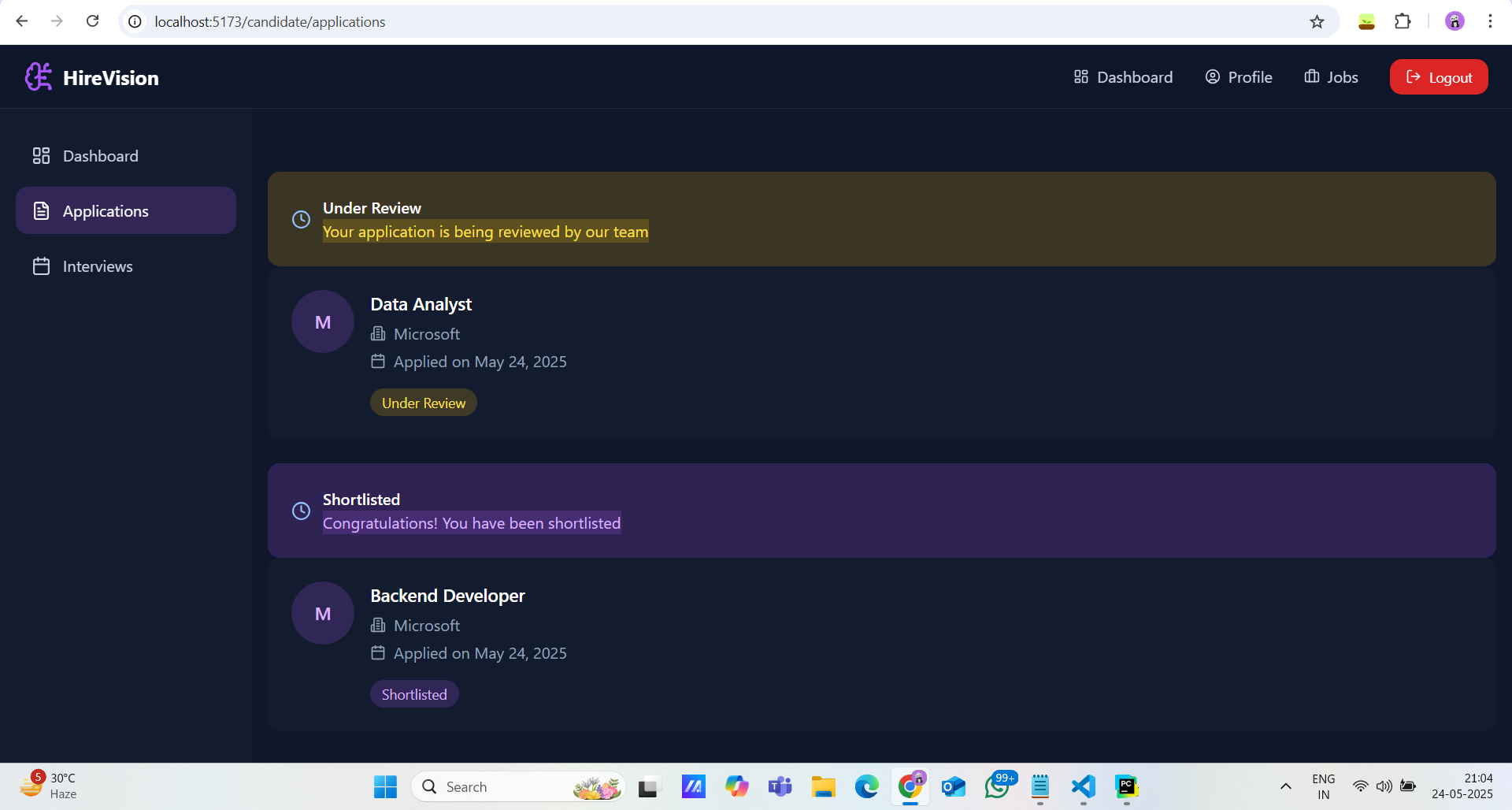
List of applied jobs in the candidate application section
-
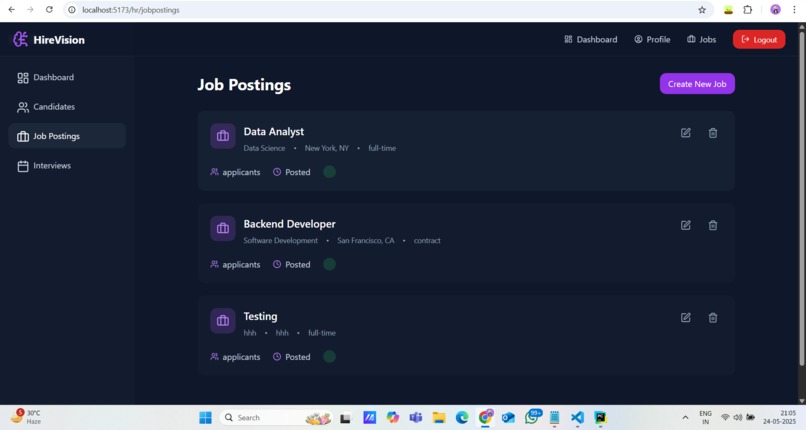
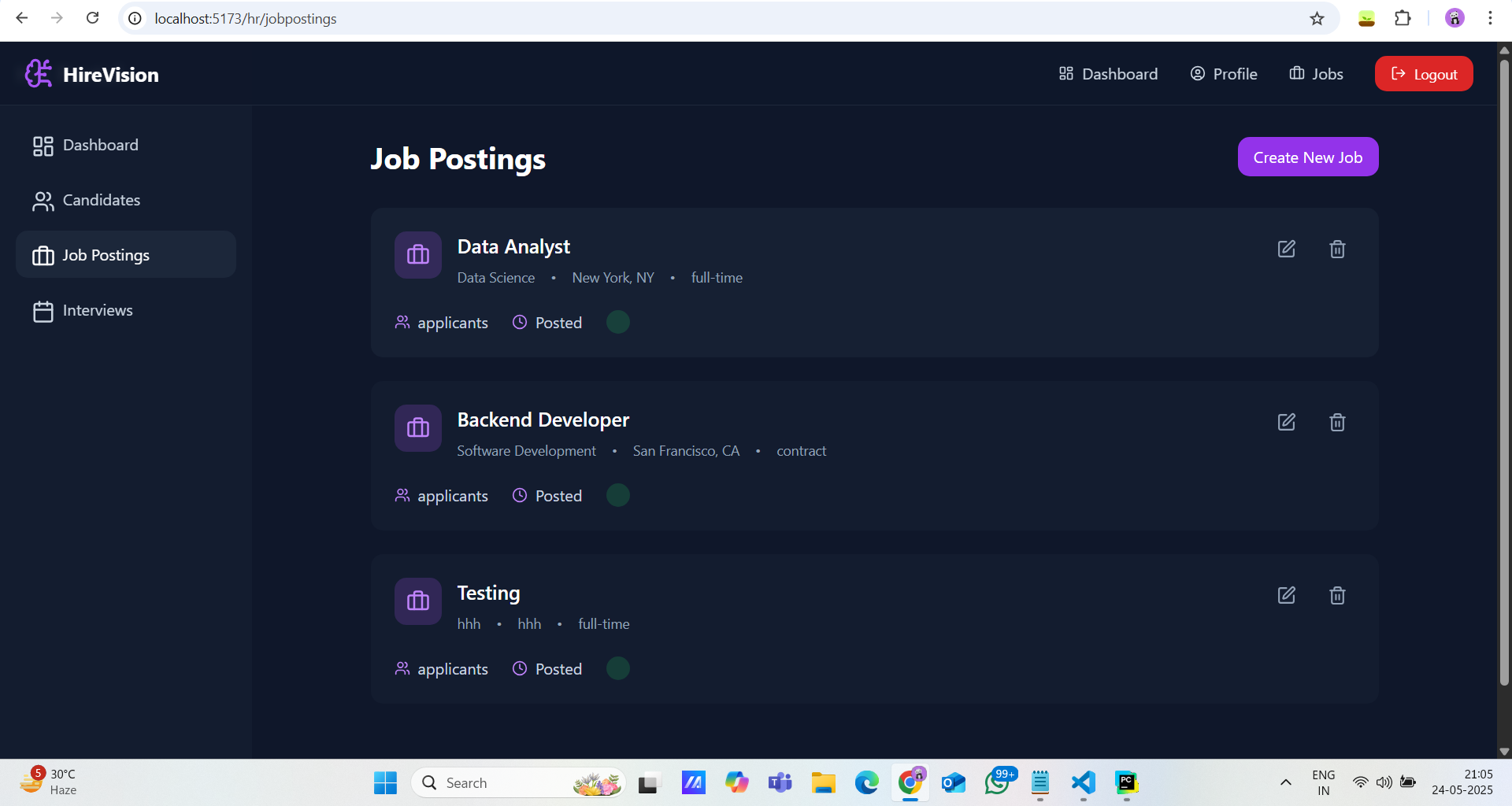
List of jobs posted by the HR/Recruiter
-
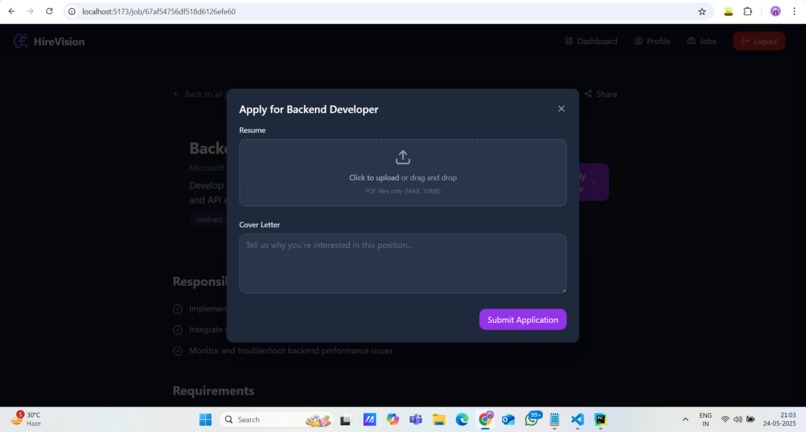
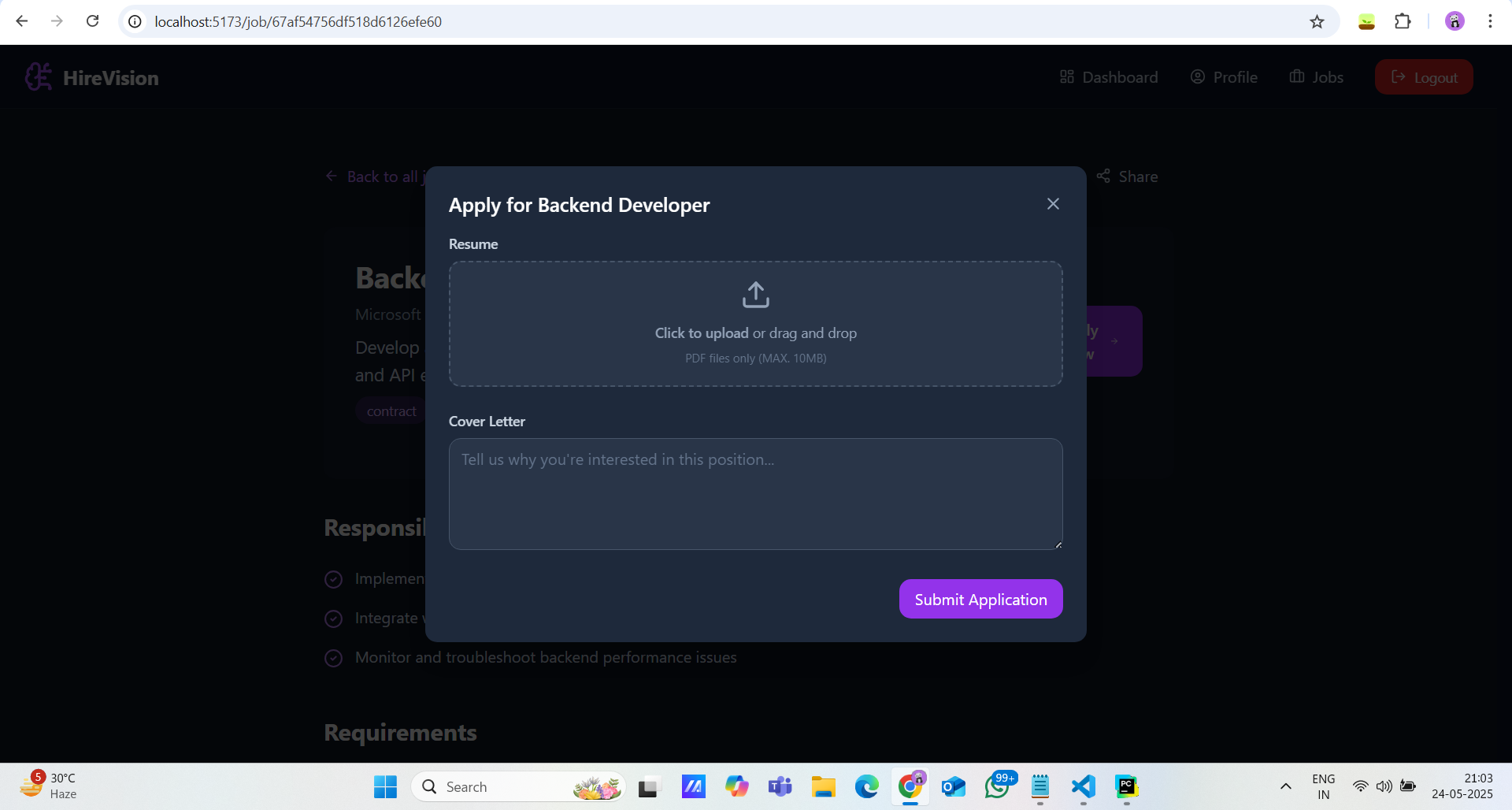
Candidate applying for job by submitting resume
-
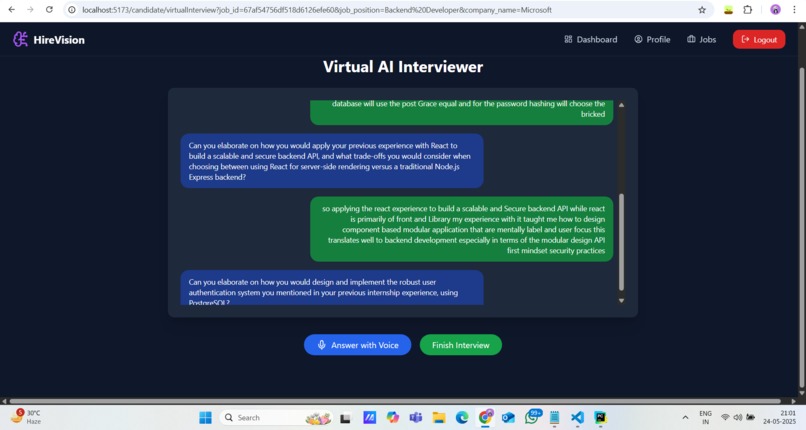
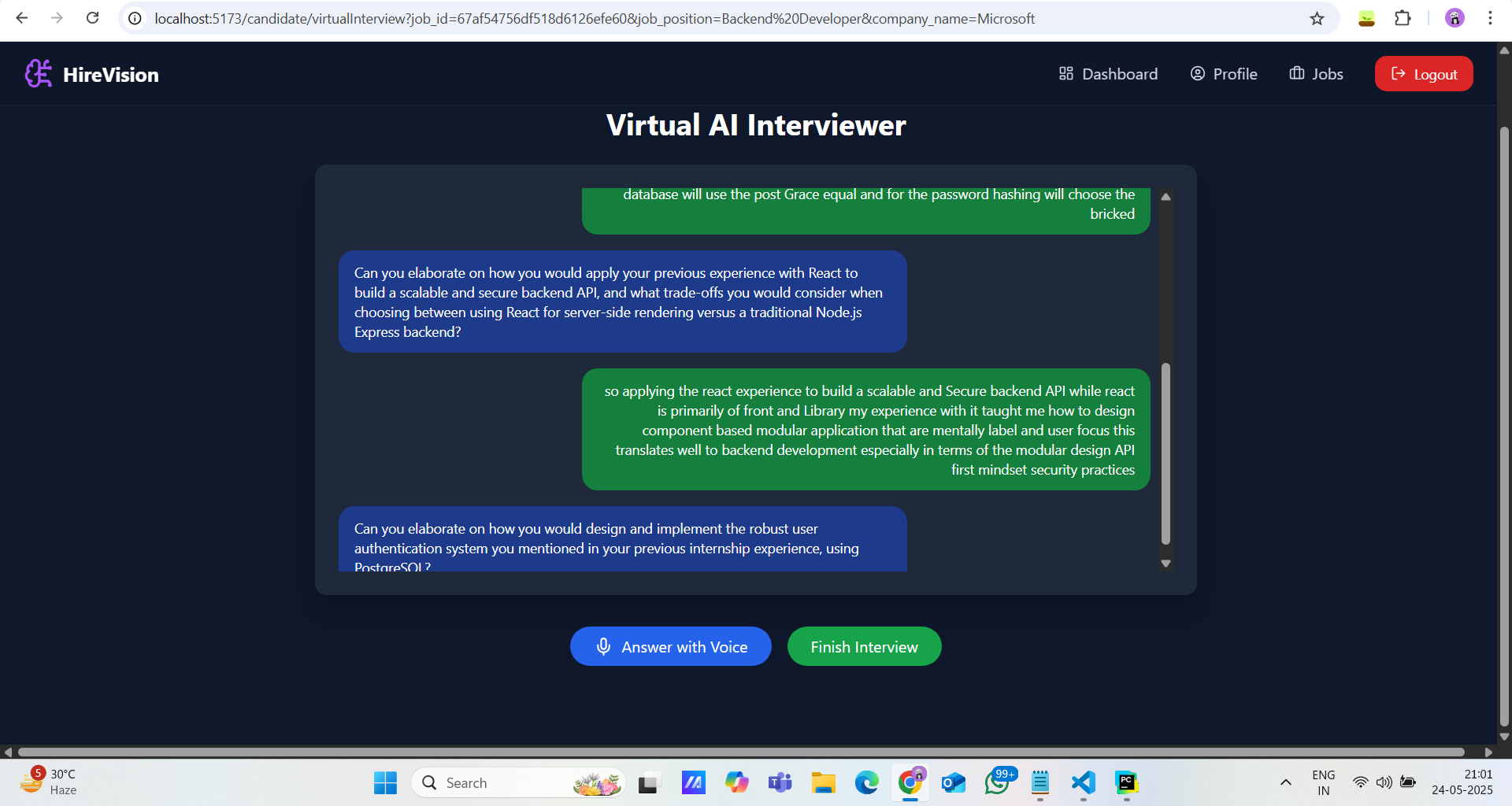
Virtual Interview snapshot
-
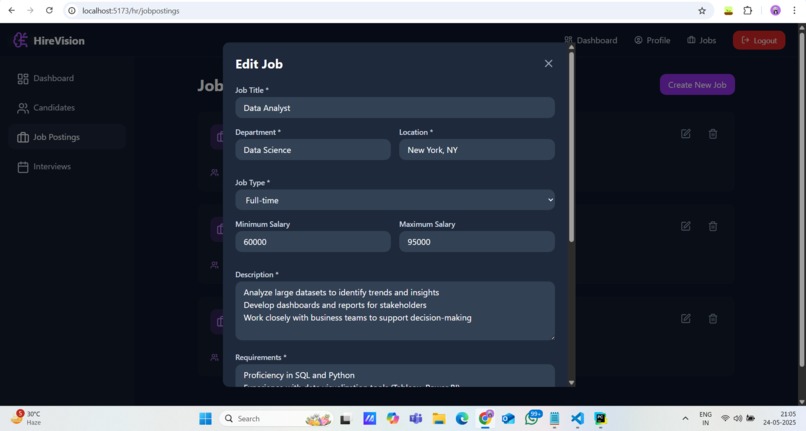
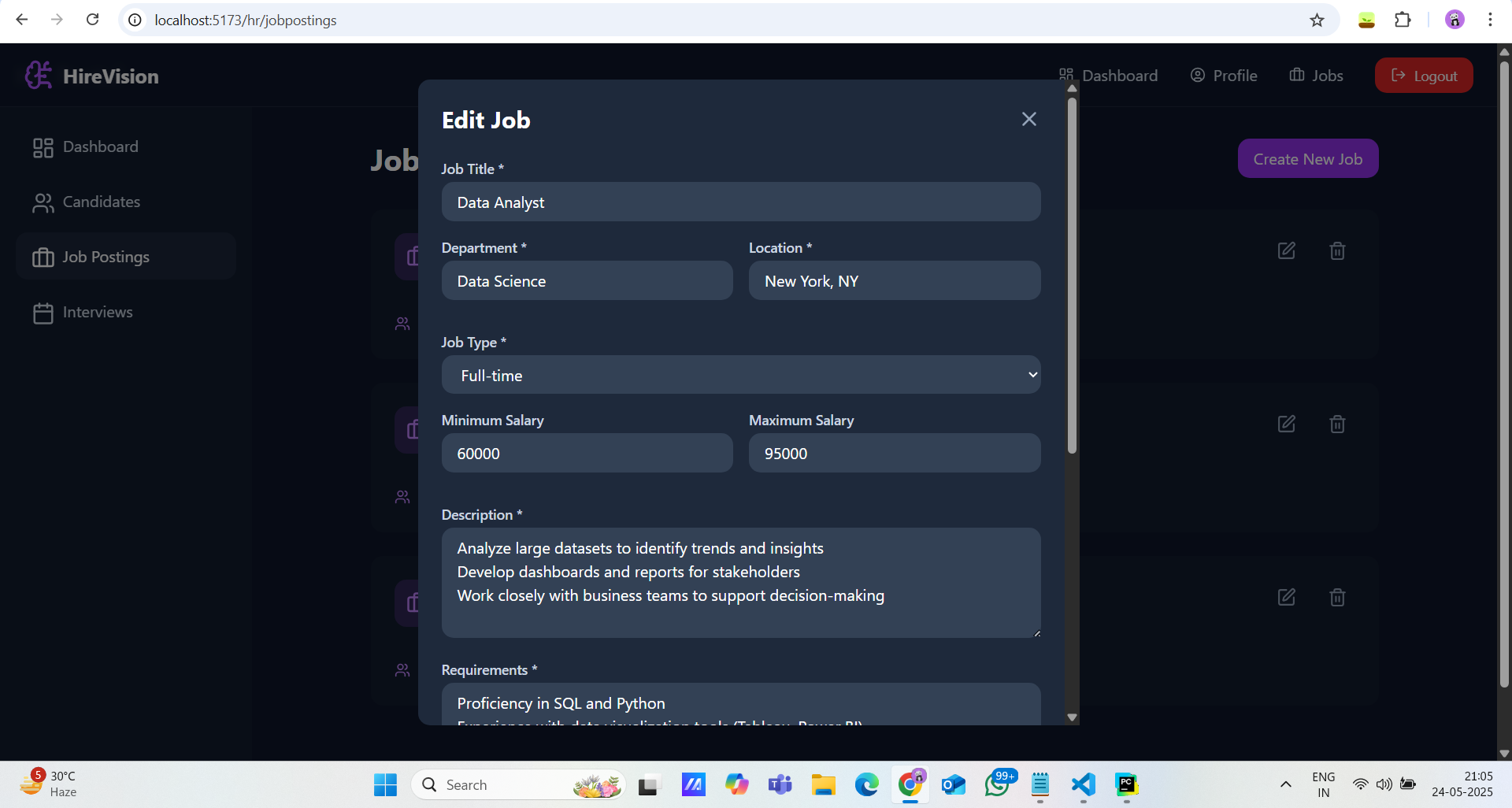
Edit job by HR in HR dashboard
-
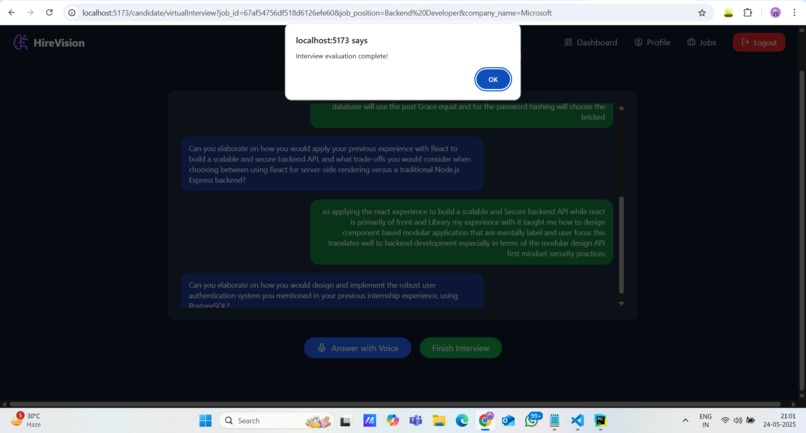
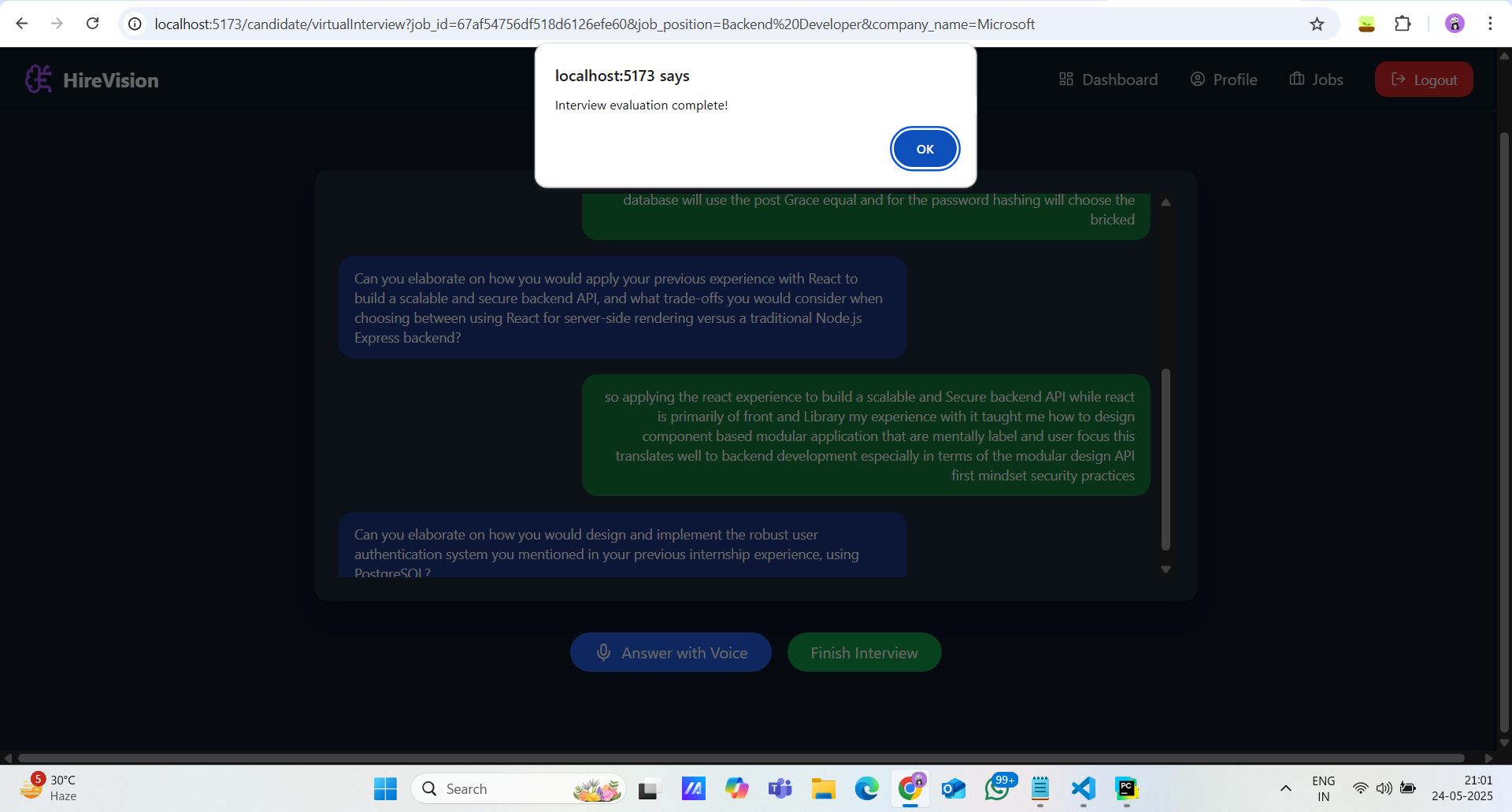
Virtual Interview completion
-
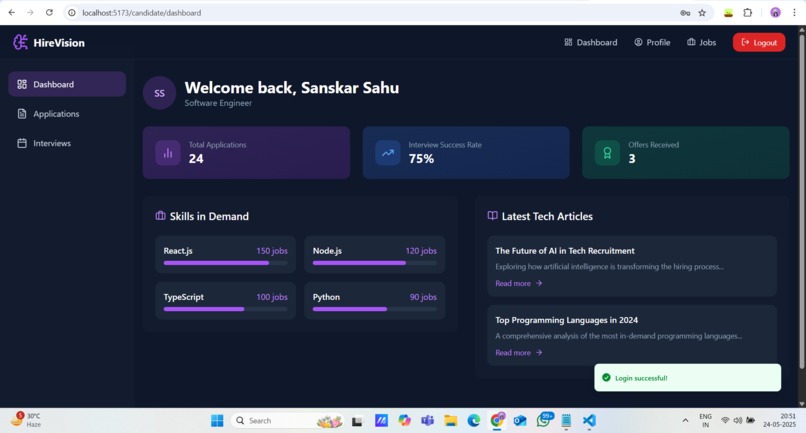
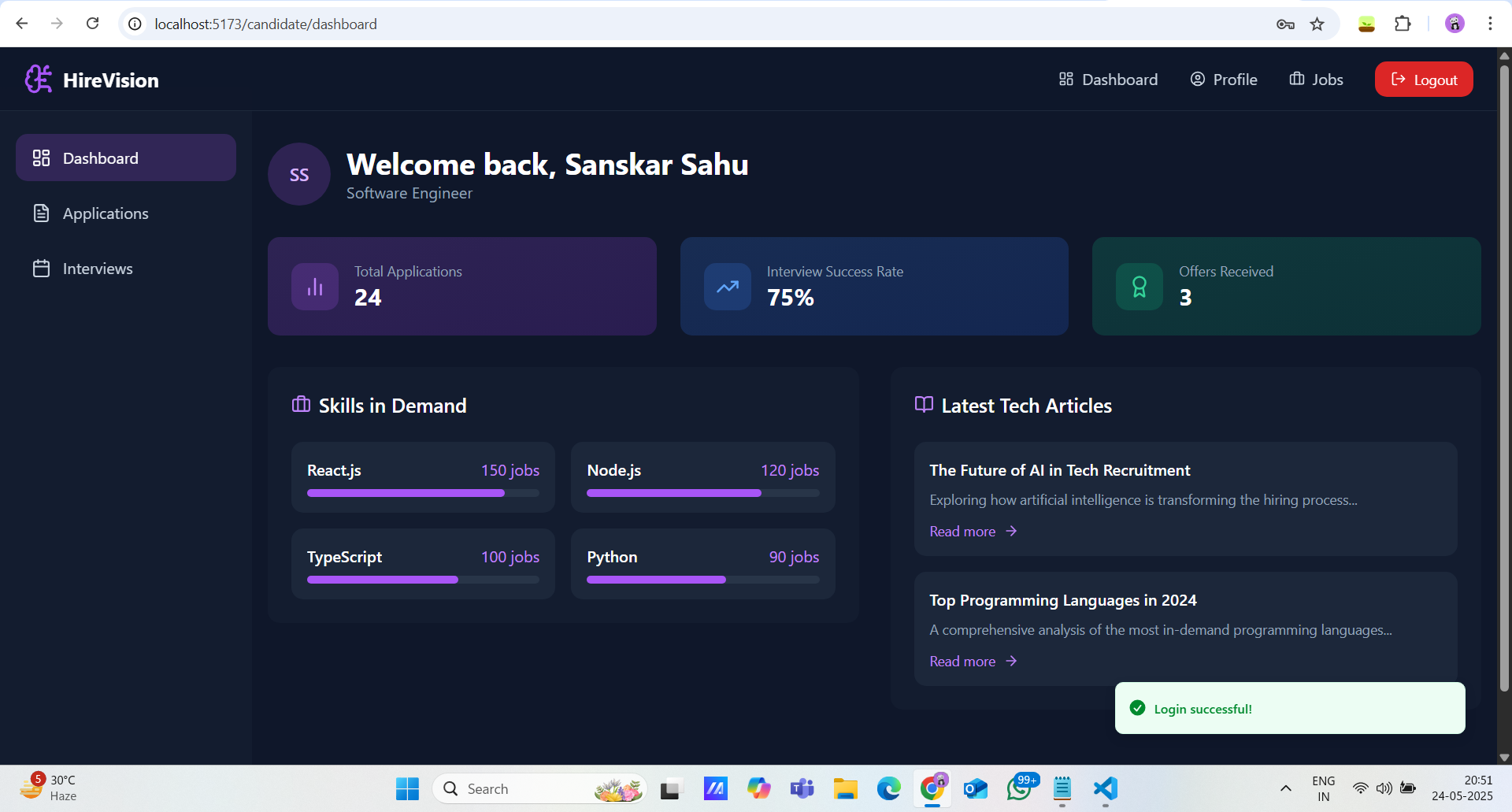
Candidate dashboard
-
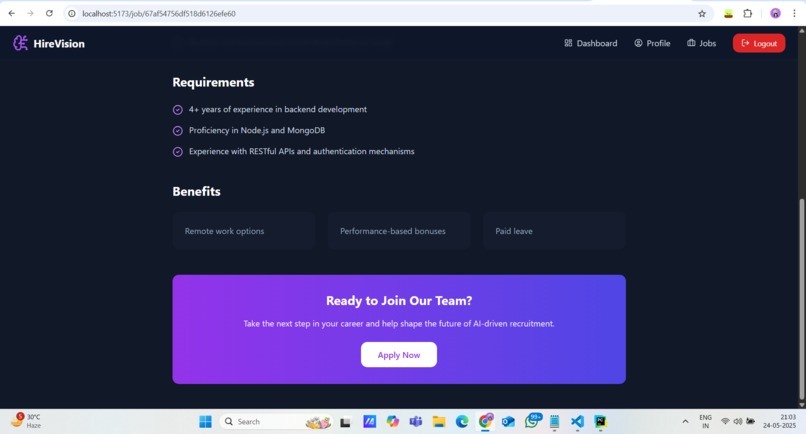
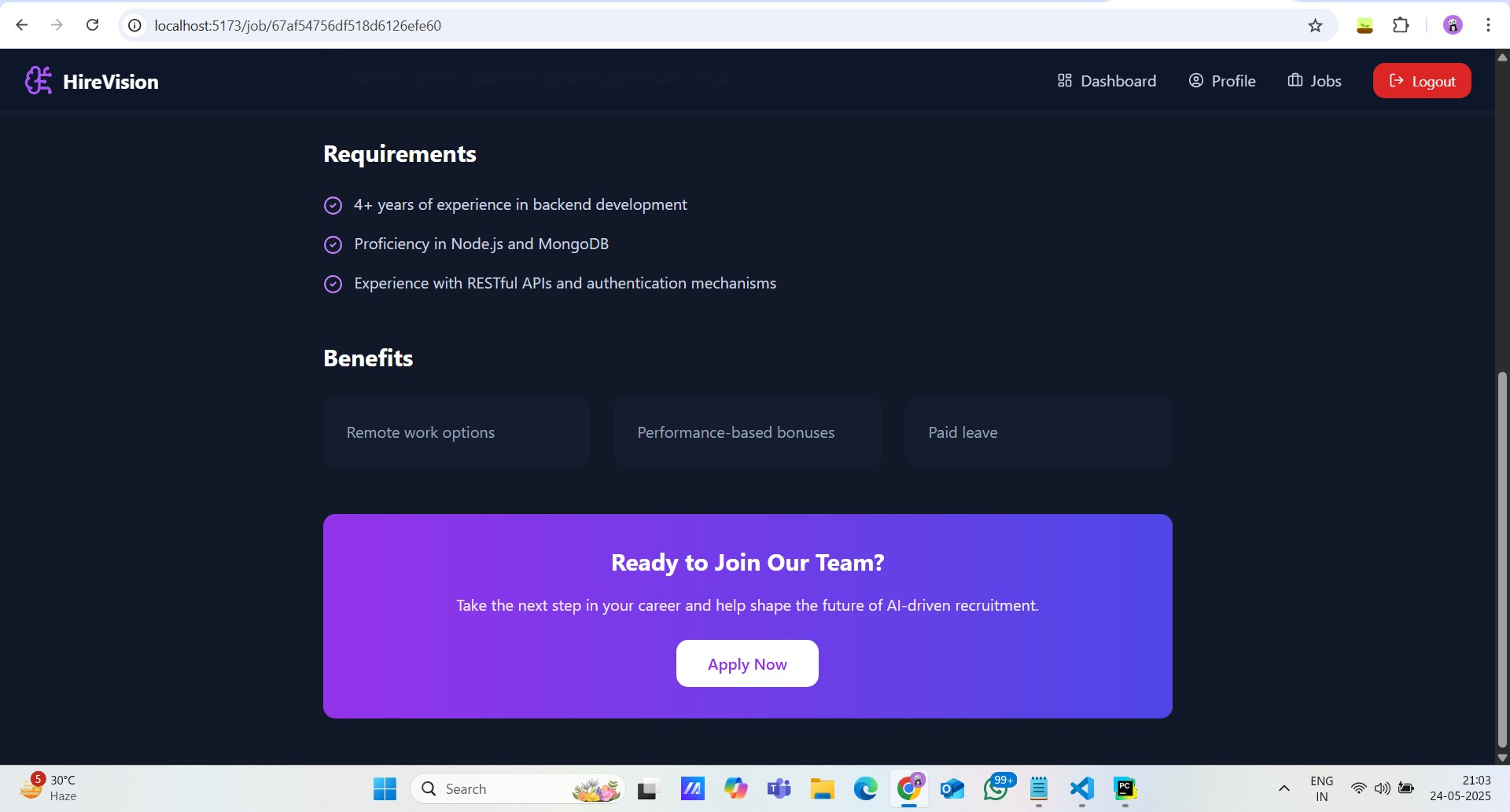
Job description in Candidate account 2
-
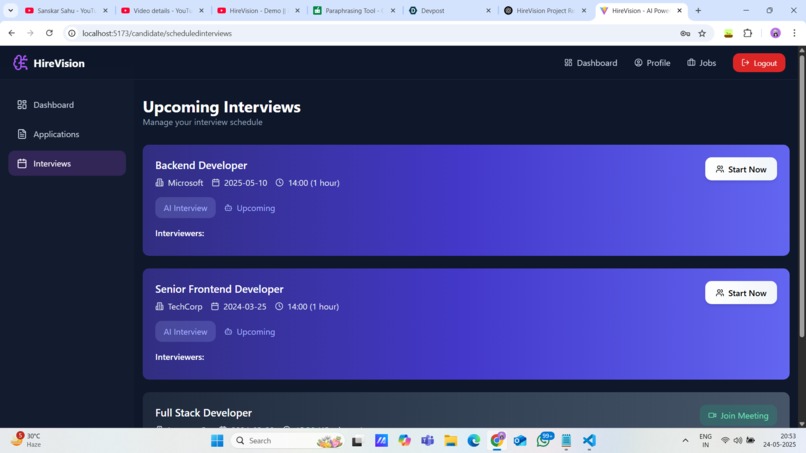
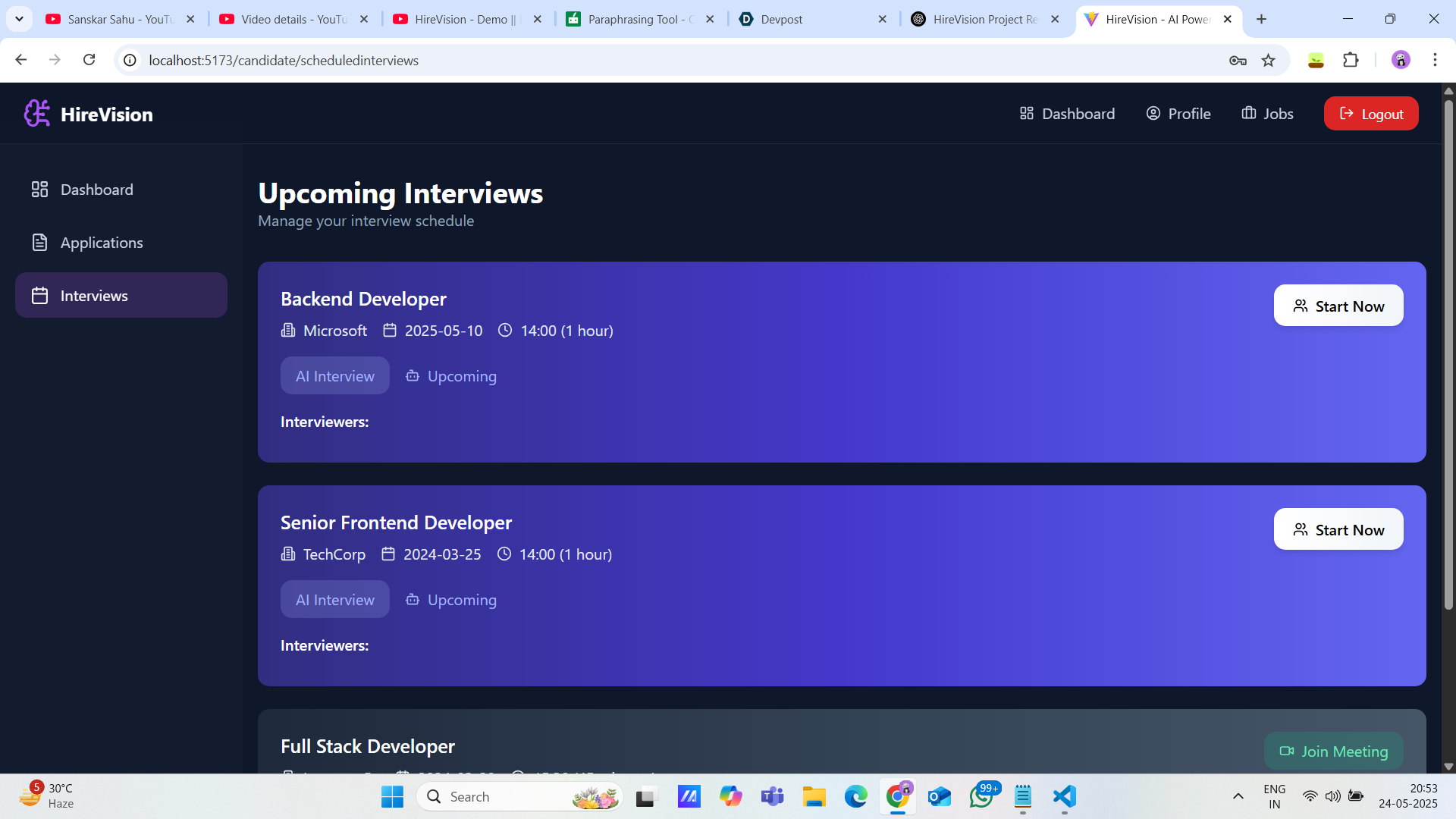
Interviews Scheduled list in candidate account
-
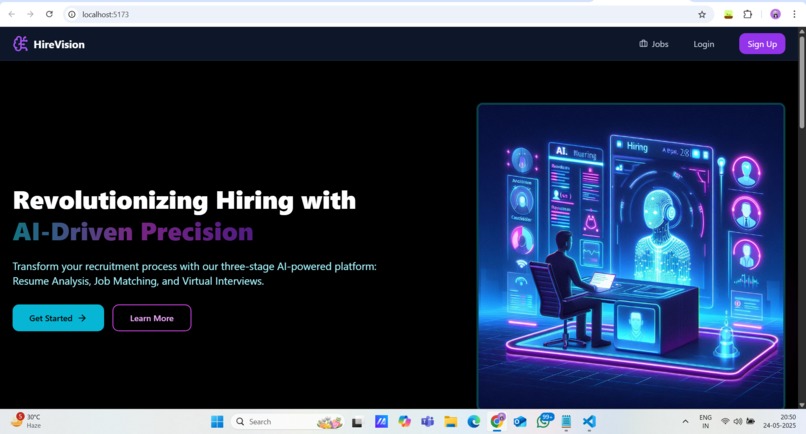
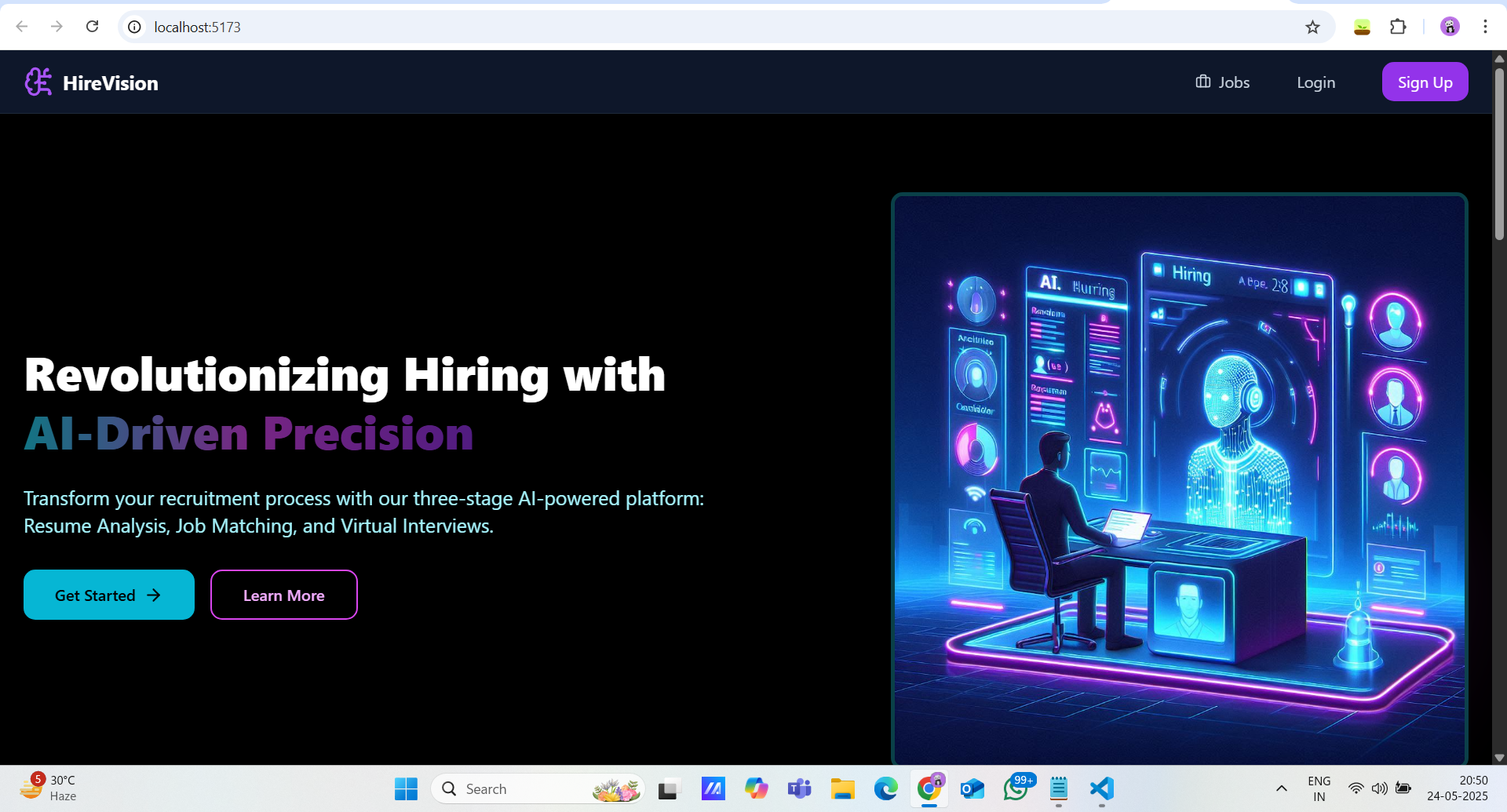
Landing Page
Inspiration
At a hackathon hosted by IIIT Gwalior, we were given the problem statement, "Optimize and revolutionize hiring process." We discussed how we could incorporate AI to streamline and automate this process, which gave rise to the idea to create the Hirevision plateform.
What it does
Hirevision essentially does resume screening with help of AI, by efficiently reviewing thousands of resumes to determine who is qualified for the position. It also conducts a preliminary virtual interview to narrow down the candidate pool and assists HR and recruiters in choosing qualified candidates. The candidate is qualified to move on to the HR interview if he passes the resume screening and virtual interview.
How we built it
We first developed a simple hiring platform where recruiters can post openings, candidates can view and apply for the position, and recruiters have access to all of the applied candidate's information. The MERN stack was used to develop all of this. Additionally, we developed a robust authentication system using JWT and comprehensive database of candidates, recruiters, positions, applied jobs, and other data. Additionally, we used AWS S3 storage to keep the candidate's resume. Then we created a seperate microservice of sonar-pro LLM, which we used in resume screening and virtual interview question generation.
Challenges we ran into
The primary difficulties we encountered when developing Hirevision were making sure that data moved correctly between the frontend and backend and processing and converting the data into information that the LLM could utilize and vice versa.
Accomplishments that we're proud of
- Built a Functional AI-Powered Hiring Assistant: We successfully developed HireVision, a virtual interview platform that automates the initial screening process using a Large Language Model (LLM). The system analyzes resumes, generates personalized interview questions, and evaluates responses—all in real-time.
- Seamless End-to-End Workflow: From uploading resumes to final candidate assessment reports, we built a full-stack solution with React.js (frontend), Node.js/Express (backend), and MongoDB (database), ensuring scalability and smooth user interaction.
- Real-Time Evaluation and Feedback: Our system could not only simulate interview questions but also evaluate answers instantly, mimicking an HR screening round, which is a significant step toward automating talent acquisition.
- Overcame Hardware Constraints: Despite limited access to high-end machines, we optimized performance and used cloud solutions like AWS S3 and Ngrok to make the system operational.
What we learned
- MERN Stack Integration with AI Models(especially sonar-pro): We deepened our understanding of integrating machine learning models within a full-stack web app, handling challenges like API endpoints, model latency, and async data flow. 2.System Design and Scalability Thinking: Building HireVision taught us how to think like product engineers—designing for usability, performance, and future scalability. 3.Handling Data Privacy and Security: Since resumes contain sensitive information, we learned the importance of secure data handling, JWT authentication, and building access-controlled APIs.
What's next for HireVision
- MCQs round As part of the employment process, we intend to incorporate MCQs-based technical and aptitude assessment rounds. Sonar-pro LLM will produce the questions in real time and dynamically.
- Voice and Video Interview Integration: Our next step is to introduce real-time voice and video-based interviews where the AI can interact with candidates using speech-to-text and text-to-speech technologies, creating a more natural interview experience. 3.Advanced Candidate Scoring System: We'll enhance the evaluation process using a multi-metric scoring model, considering not just the correctness of answers, but also communication skills, confidence level (via sentiment analysis), and domain-specific understanding.

Log in or sign up for Devpost to join the conversation.