-
-
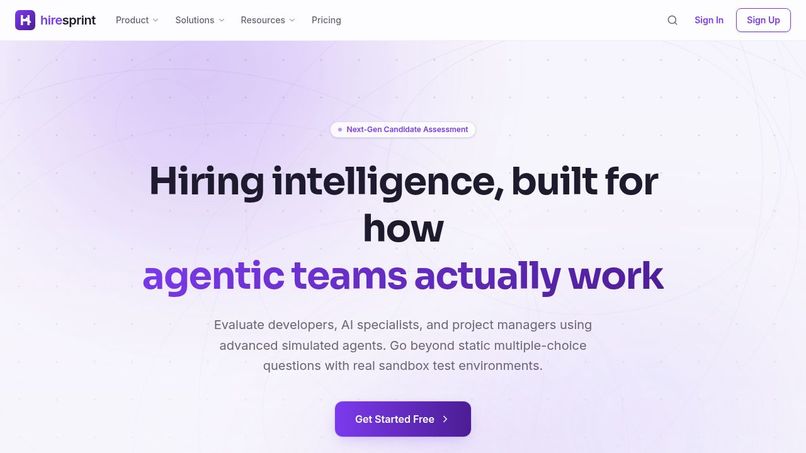
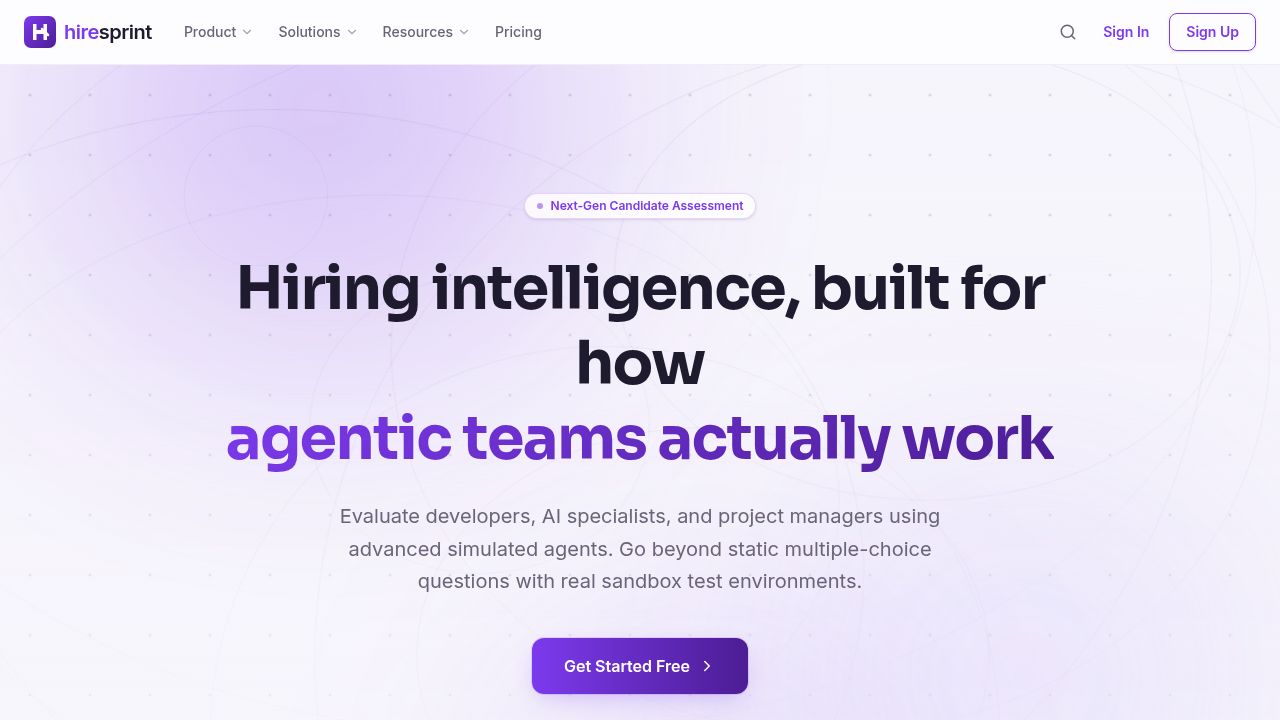
Landing Page
-
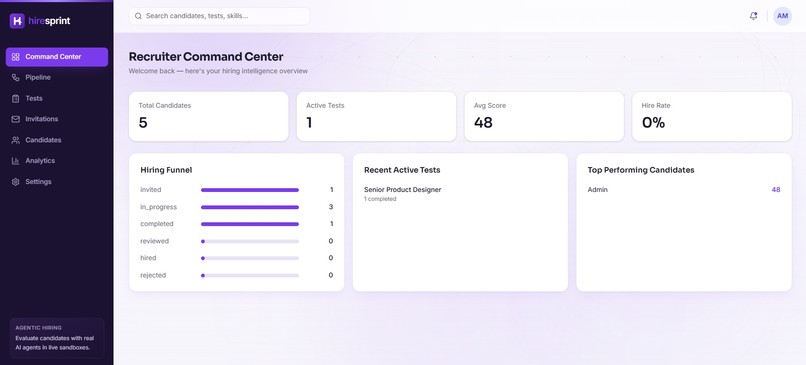
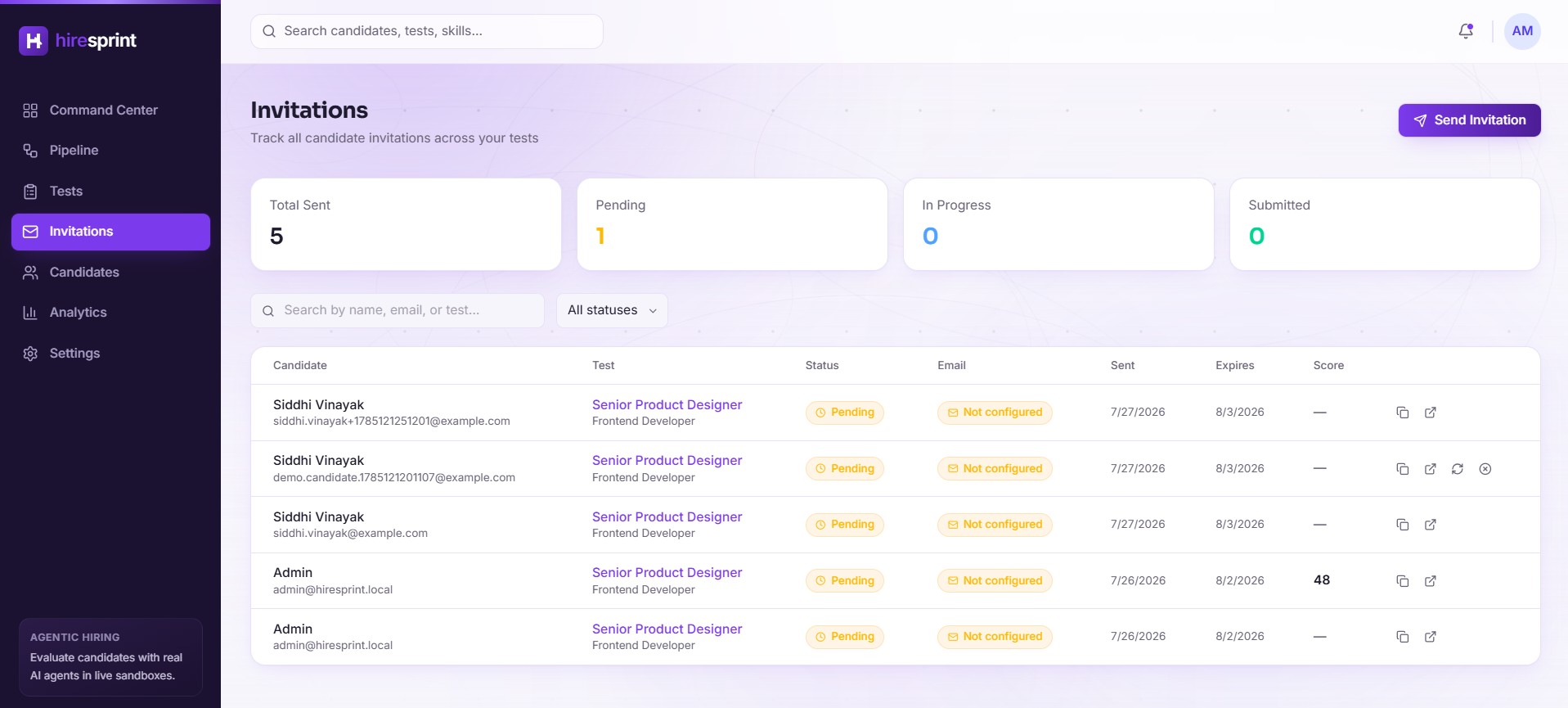
Home Page of Recruiting company
-
-
-
-
-
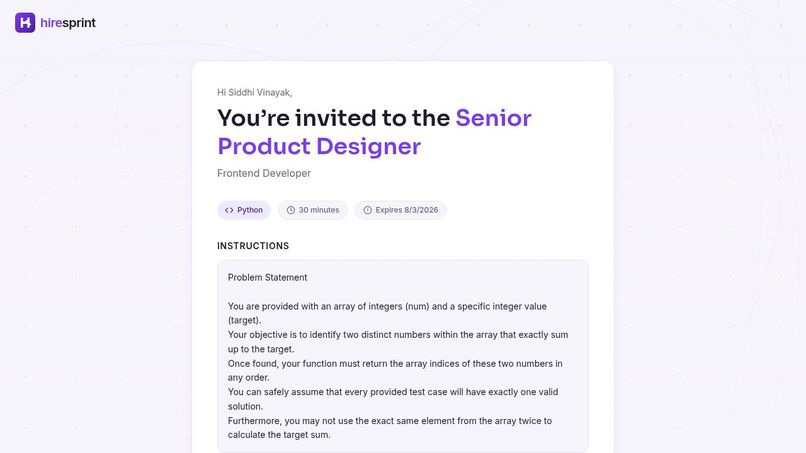
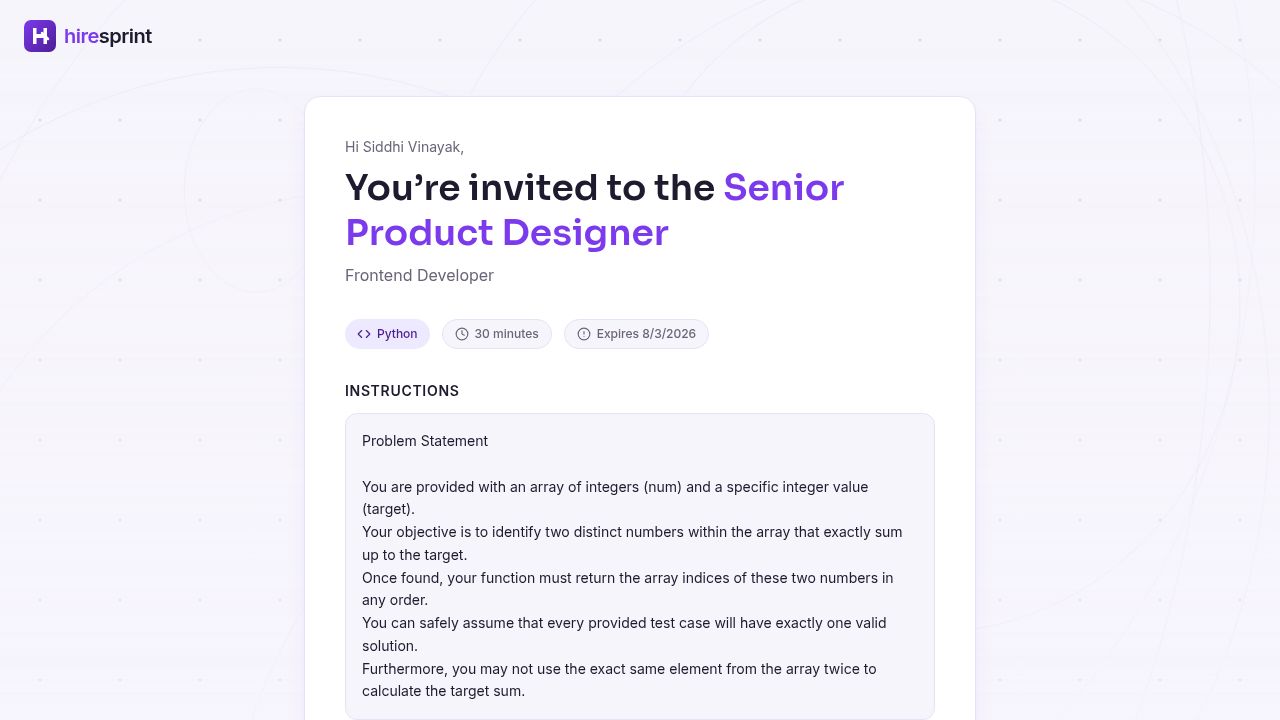
Candidate welcome page
-
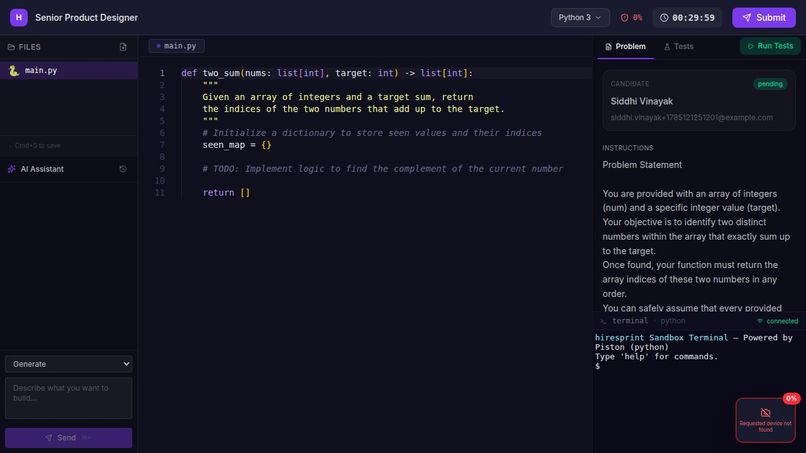
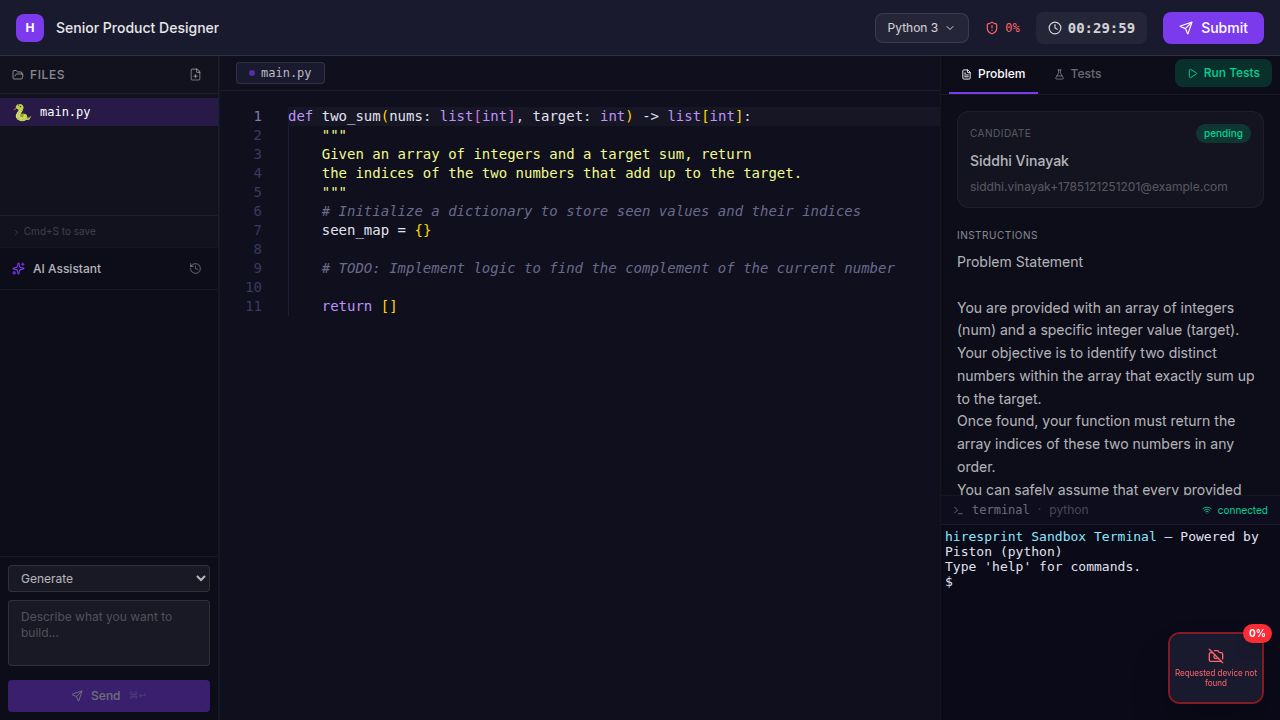
Candidate Workspace during test
-
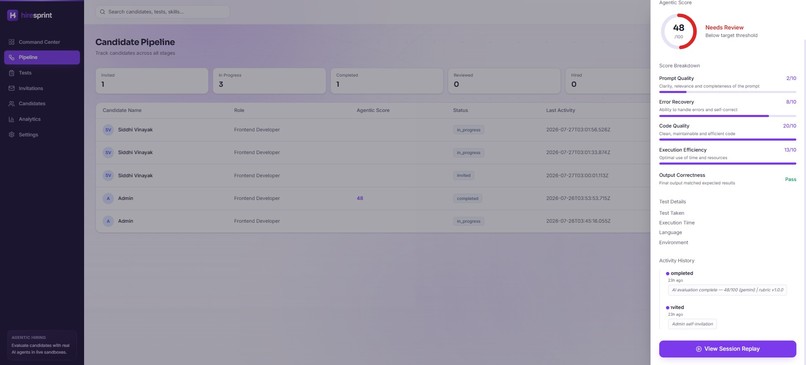
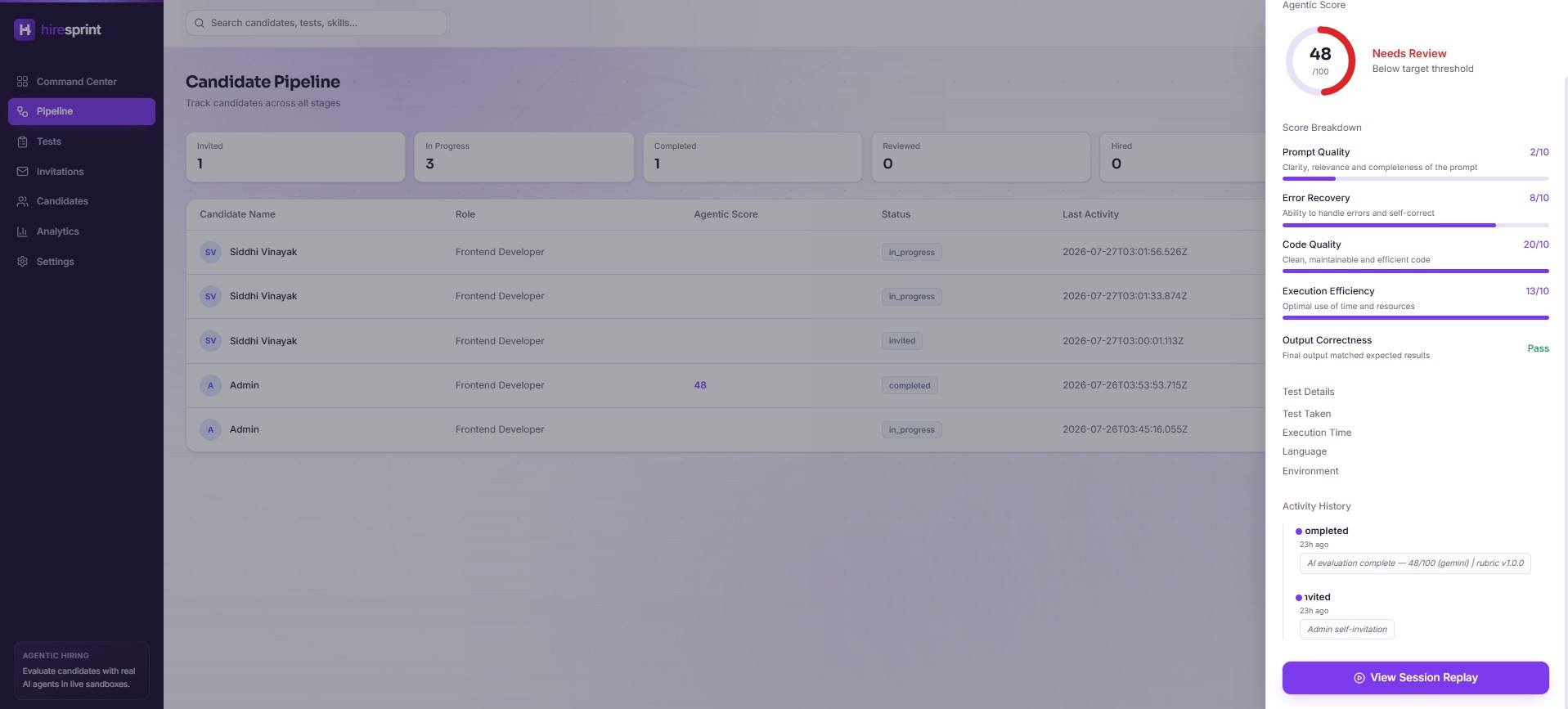
Evaluation Scoring Param
-
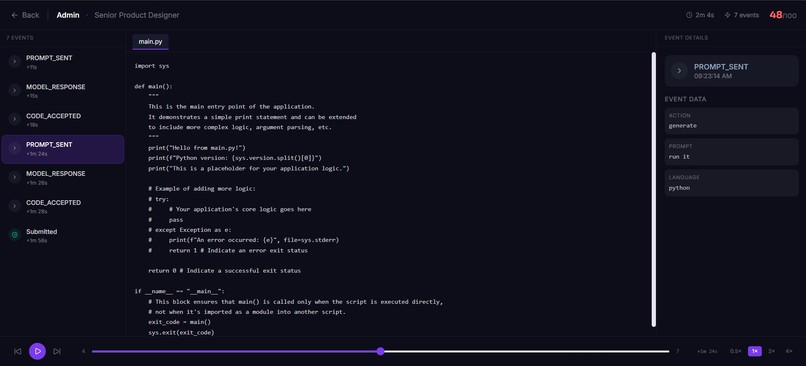
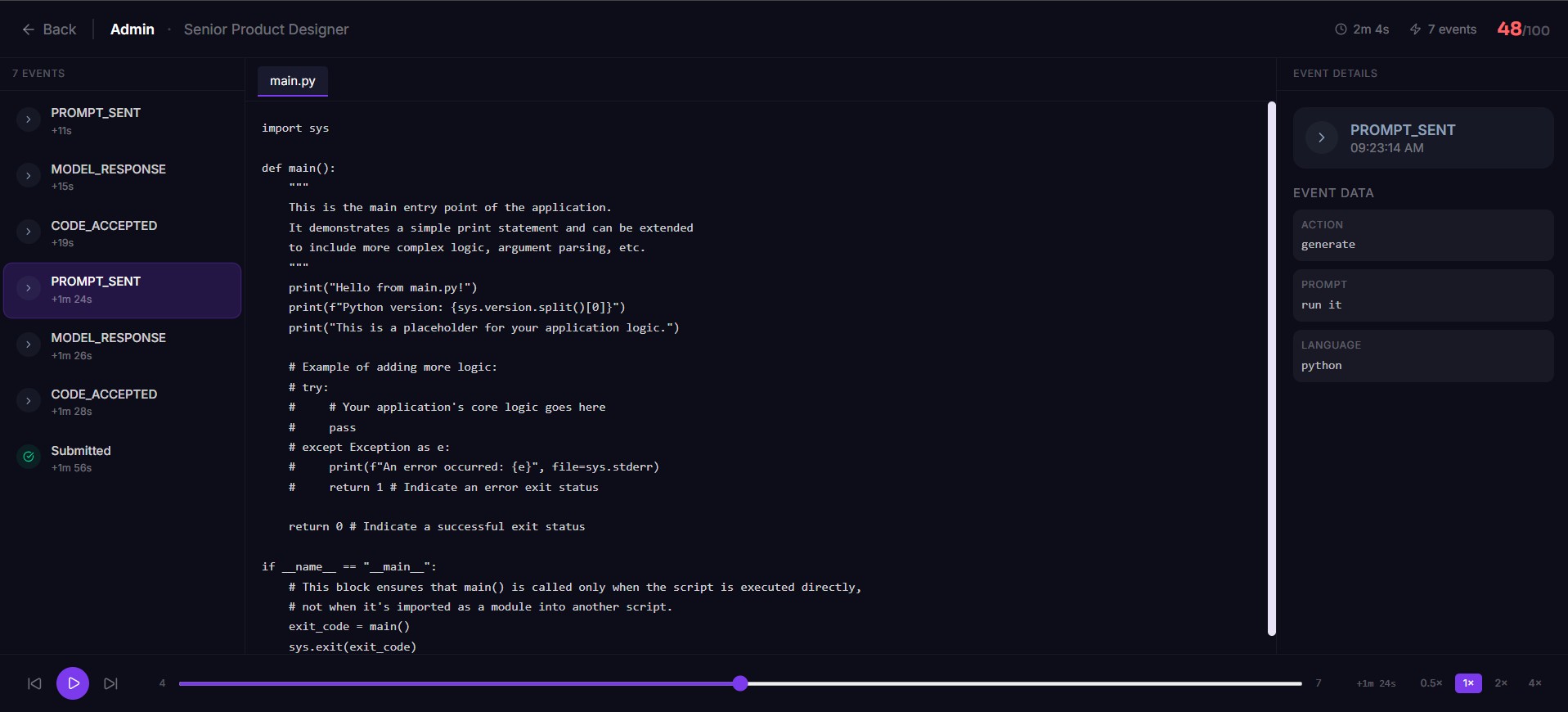
Replay video
-
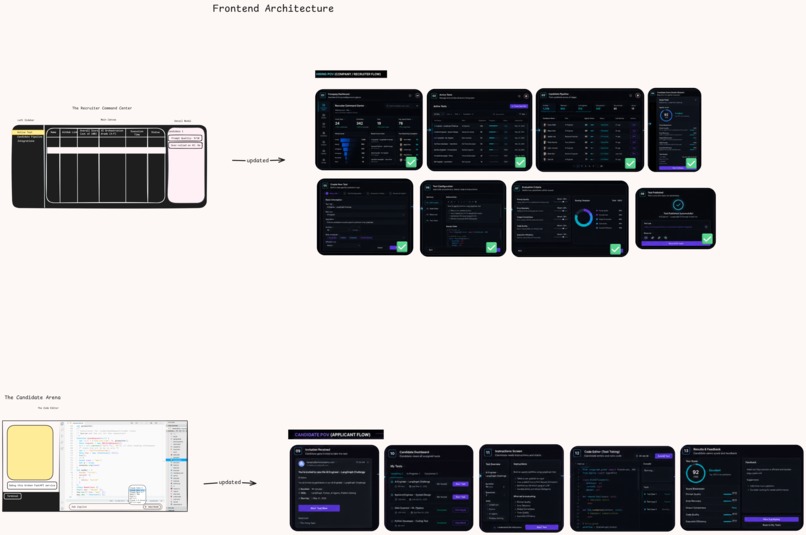
During Ideation
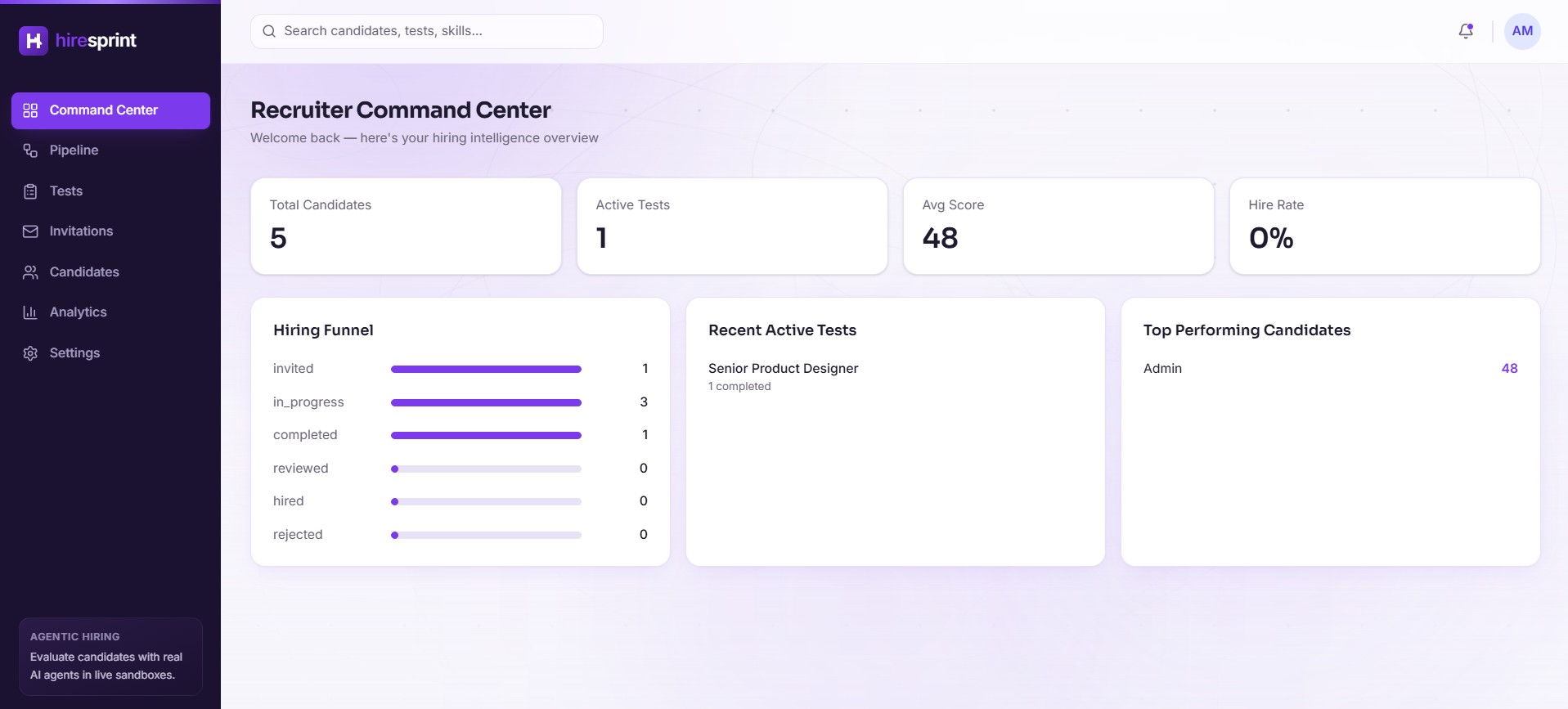
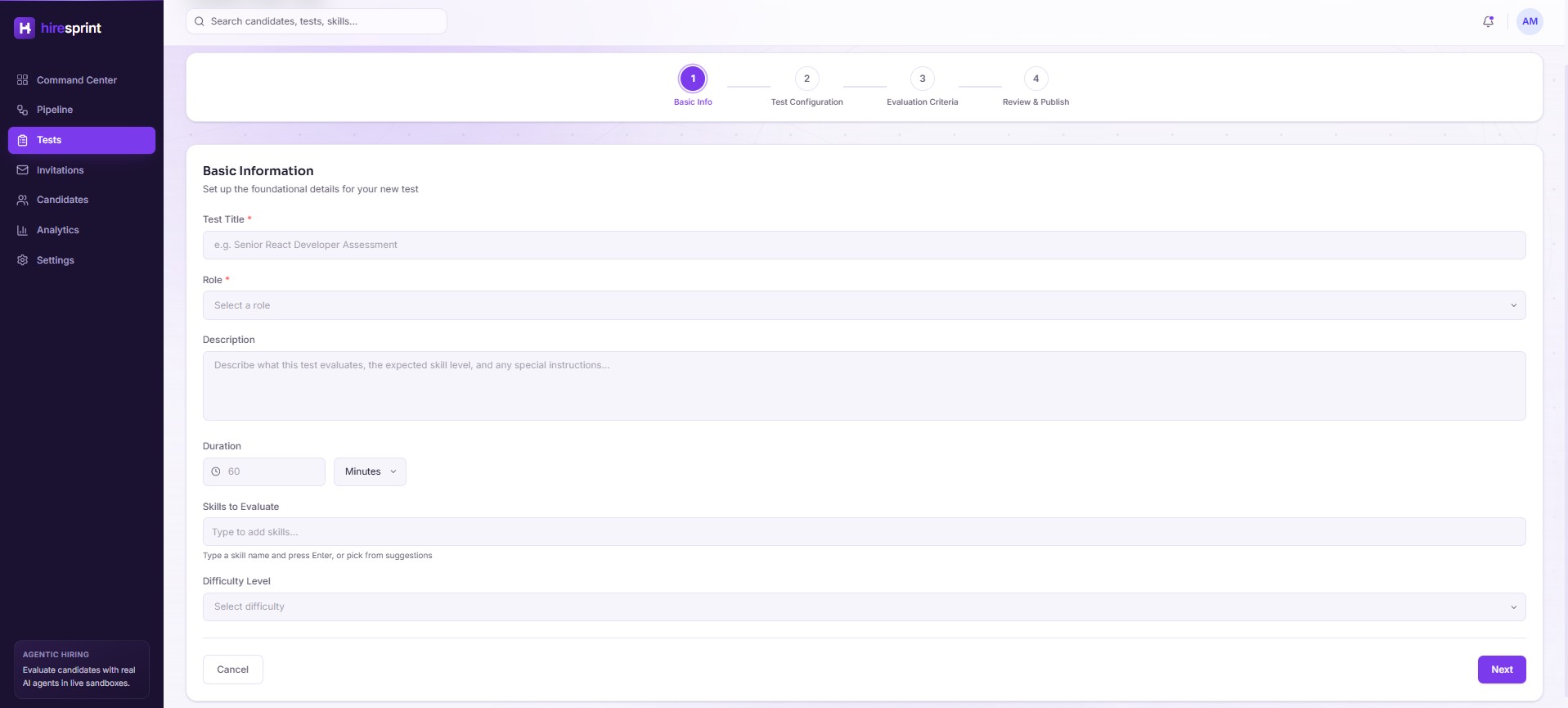
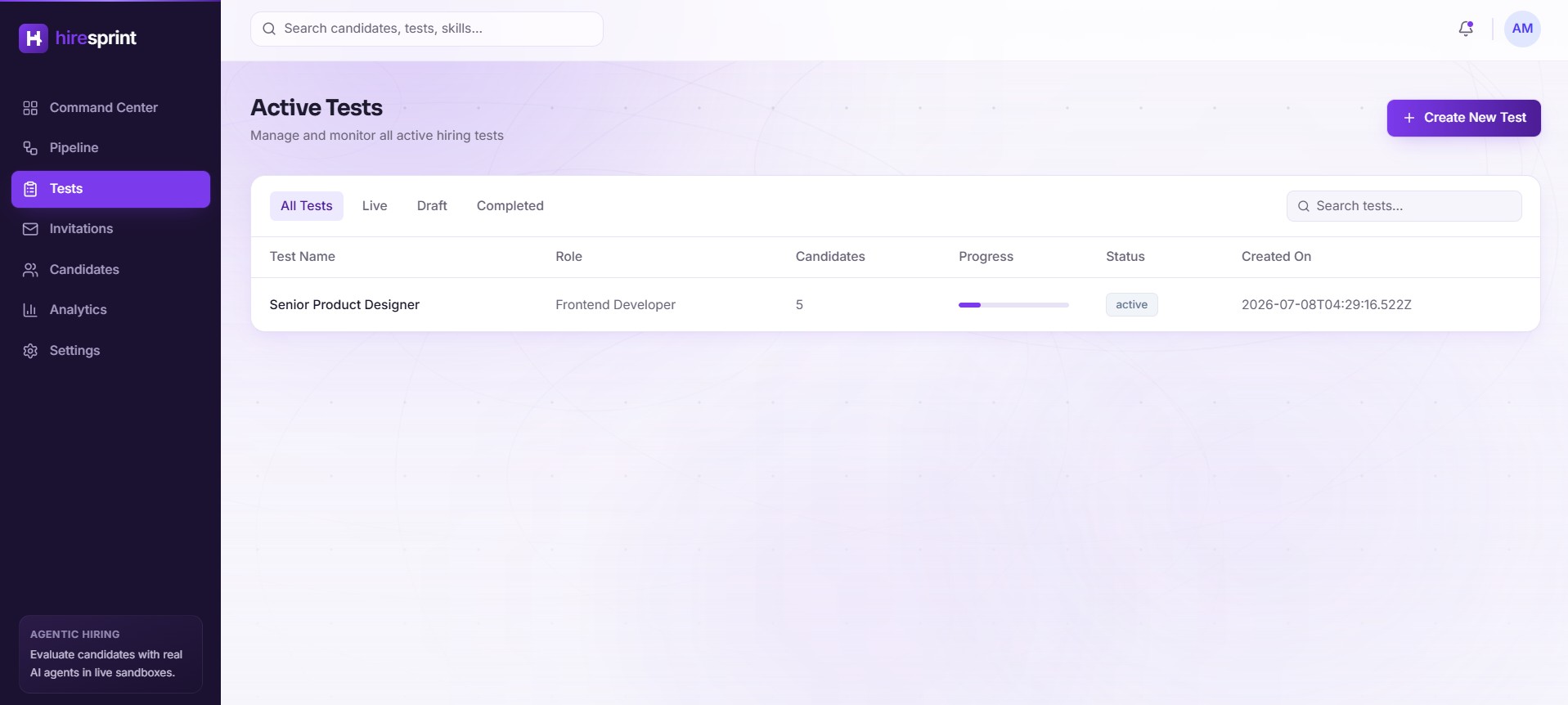
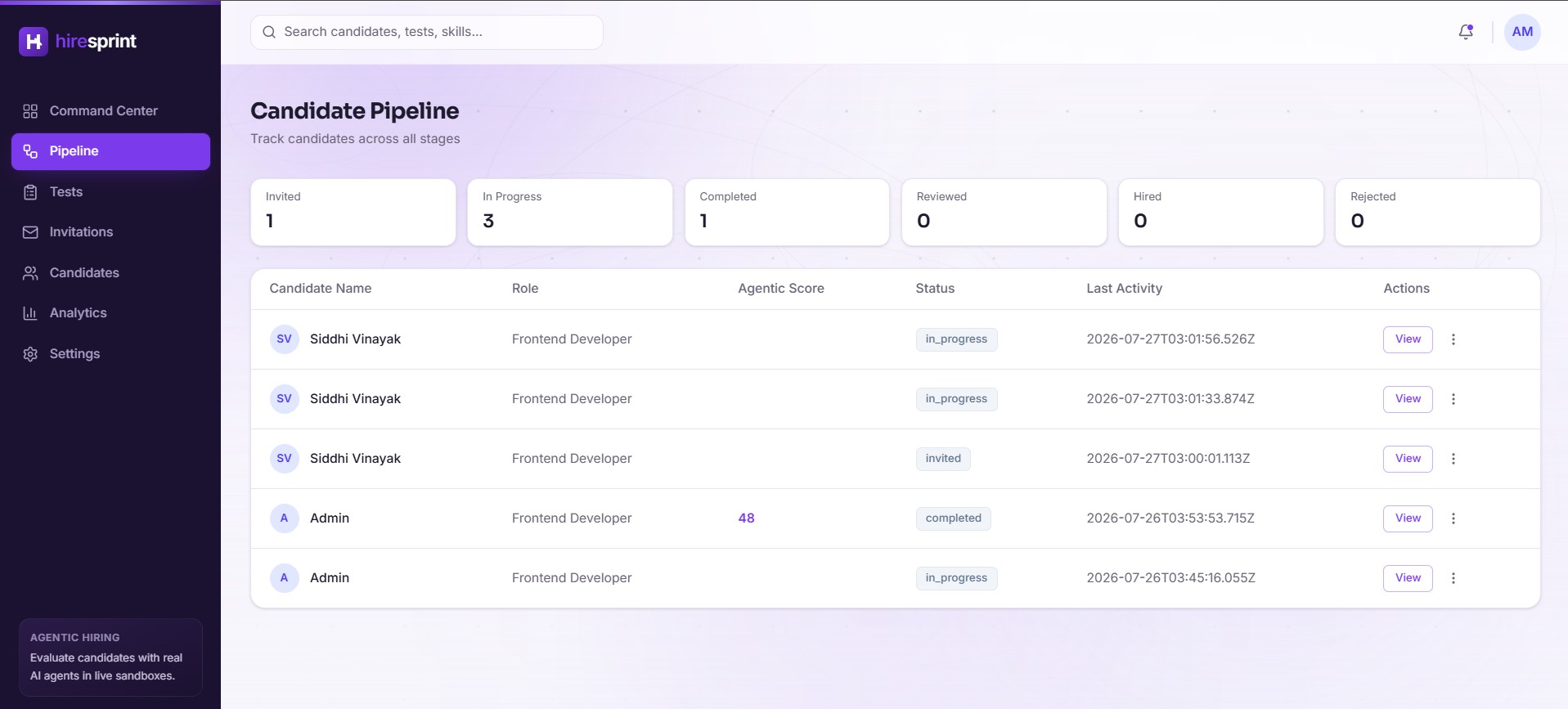
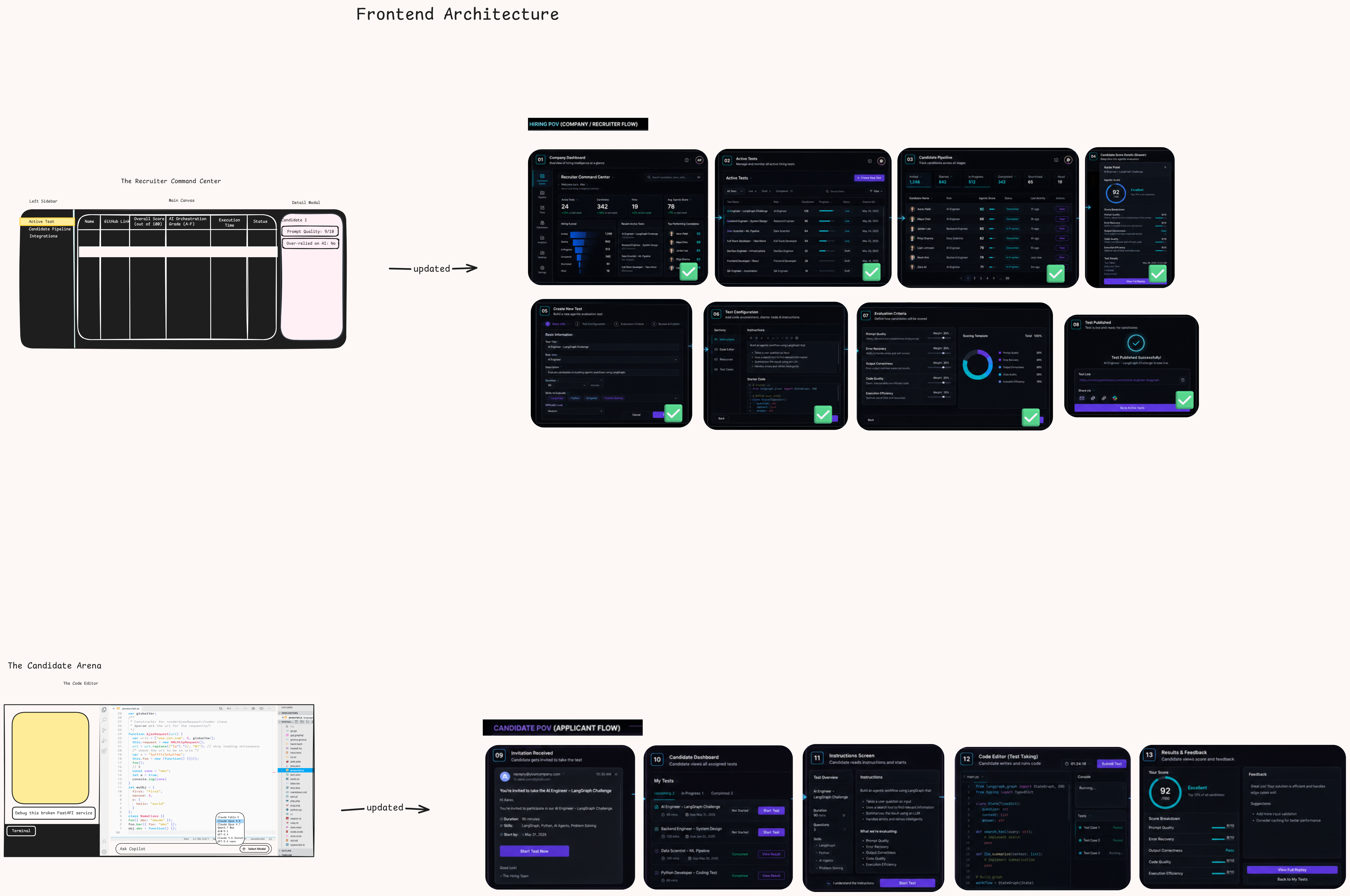
Inspiration We kept seeing the same gap in technical hiring: interviews ask candidates to write functions from scratch in isolation, but day-to-day engineering now happens with AI pair programmers, sandboxed runtimes, and cloud-based tooling. The best engineers are not the ones who memorize syntax—they are the ones who can describe a problem clearly, recover when an AI model hallucinates, and keep a secure, productive workflow under pressure. We built hiresprint to make that real-world collaboration measurable.
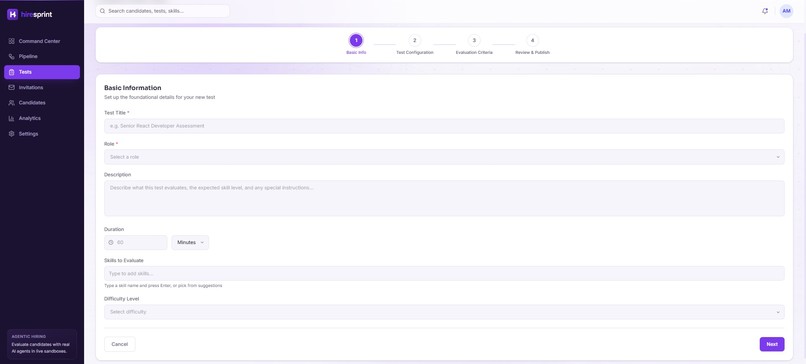
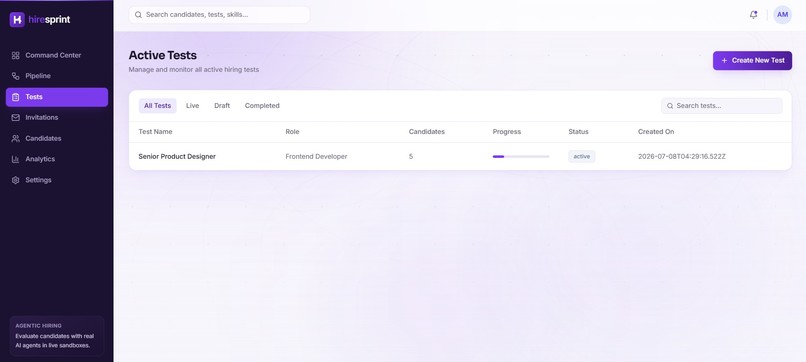
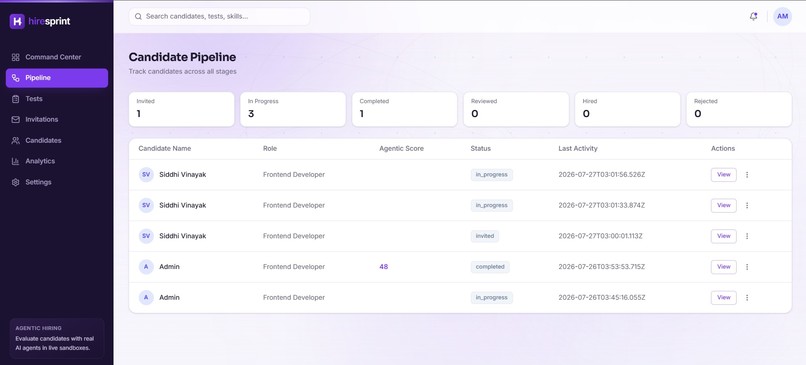
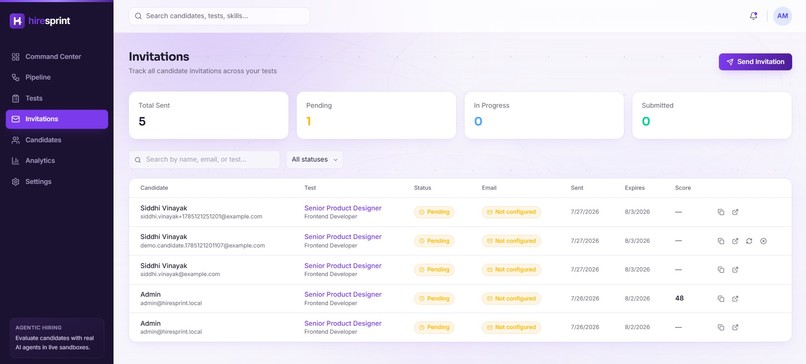
What it does -hiresprint is an end-to-end agentic hiring platform. -Recruiters build custom technical assessments through a multi-step wizard. -Each assessment defines a rubric, test cases, starter code, and a time limit. -Candidates receive a unique invitation link and enter a browser-based IDE. -Inside the workspace, candidates write code in Monaco, run it in a real terminal via xterm.js, and collaborate with an AI assistant panel. -All execution is sandboxed through the Piston API. -Security telemetry captures tab switching, focus loss, copy/paste events, and other integrity signals. -A LangChain + Gemini 2.5 Flash engine scores the session across correctness, efficiency, prompt quality, error recovery, and code quality. -Recruiters receive a structured report with scores, qualitative feedback, and security observations.
How we built it -Frontend: React 19, Vite 8, React Router 7, Tailwind CSS 4, Monaco Editor, xterm.js, Recharts, and Lucide React. -Backend: Node.js, Express, PostgreSQL, JWT authentication, and the ws library for real-time terminal sessions. -AI Engine: LangChain orchestrating Gemini 2.5 Flash for qualitative scoring and deterministic scorers for test-case validation. -Sandbox: Piston API for isolated, multi-language code execution. -Security: A frontend security monitor and backend logging pipeline for integrity events. -Design: A light, professional UI with a custom SVG/text brand mark, topographic background, and founder section.
Challenges we ran into -Real-time terminal synchronization: Keeping xterm.js, the backend WebSocket, and Piston execution state in sync without losing candidate input or output. -Sandboxing without Docker: Replit does not support containerization, so we used the Piston API to execute candidate code safely across languages. -LLM scoring consistency: Designing a weighted rubric, confidence floor, and security penalty model that produces stable, explainable scores. -Secure but non-intrusive monitoring: Capturing enough integrity signal to flag cheating without degrading the candidate experience. -Authentication for live sessions: Ensuring invitation tokens are validated before WebSocket connections are accepted, with hard-close behavior on invalid tokens. -Accomplishments that we're proud of -A working, full-stack product with real AI evaluation and real sandboxed code execution—no mocks. -A custom-built brand identity using only code (SVG/text logo) and a consistent light, gradient-heavy design system. -A multi-dimensional scoring engine that combines deterministic correctness with LLM-driven qualitative assessment. -End-to-end security telemetry that gives recruiters visibility without surveillance-level friction. -A clean recruiter dashboard, test builder wizard, candidate pipeline, and AI-augmented workspace built from scratch.
What we learned -AI evaluation needs structure. Raw LLM scores are too noisy. Combining them with deterministic test cases and a weighted rubric makes results trustworthy. -Real-time systems are hard to debug. Terminal sessions require careful connection lifecycle management, reconnection handling, and clean resource disposal. -Design is a product signal. A consistent, professional UI builds recruiter confidence as much as the underlying engine does. -Schema migrations must be idempotent. Using ALTER TABLE ... ADD COLUMN IF NOT EXISTS keeps boot-time setup safe and repeatable. -Git workflows matter. Keeping feature branches clean and pushing through Replit’s git tooling avoids the token-auth friction of raw shell pushes.
What's next for hiresprint -Candidate welcome and landing page before entering a test. -Recruiter session replay of candidate workspace activity. -Detailed evaluation results page with full rubric breakdown. -Email invitation delivery with magic links.
provider registration alongside Gemini. -Admin oversight and role management.
Why AI is now a teammate. Hiring should measure how candidates use it, not ignore it. Rote coding problems are noisy. They test recall, not real engineering judgment. Cheating is harder to detect. Take-home tests and screen-shared IDEs offer limited integrity signals. hiresprint makes the assessment environment itself AI-native, integrity-aware, and observable.
Who It Is For Role-Use Case 1) Recruiters / Hiring Managers -Build role-specific tests, invite candidates, and review AI-generated performance reports. 2) Candidates -Complete a realistic, AI-assisted technical task in a browser-based IDE. 3) Engineering Leaders -Calibrate hiring rubrics and reduce bias with structured, multi-dimensional scoring.
Built With
- gemini
- langchain
- monaco-editor
- node-express
- piston
- postgresql

Log in or sign up for Devpost to join the conversation.