-
-
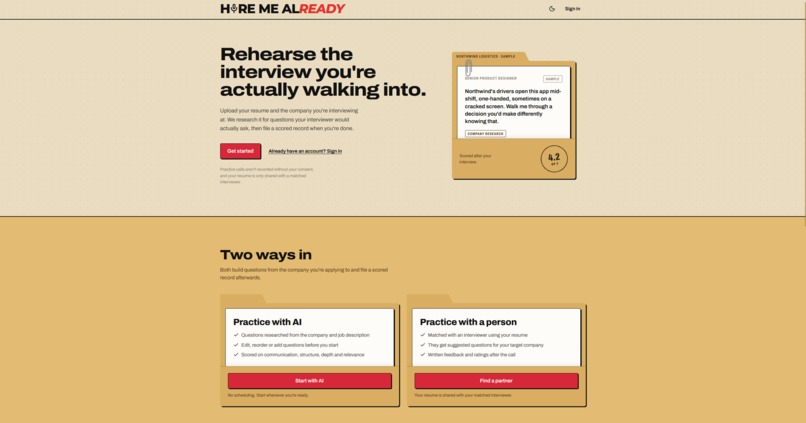
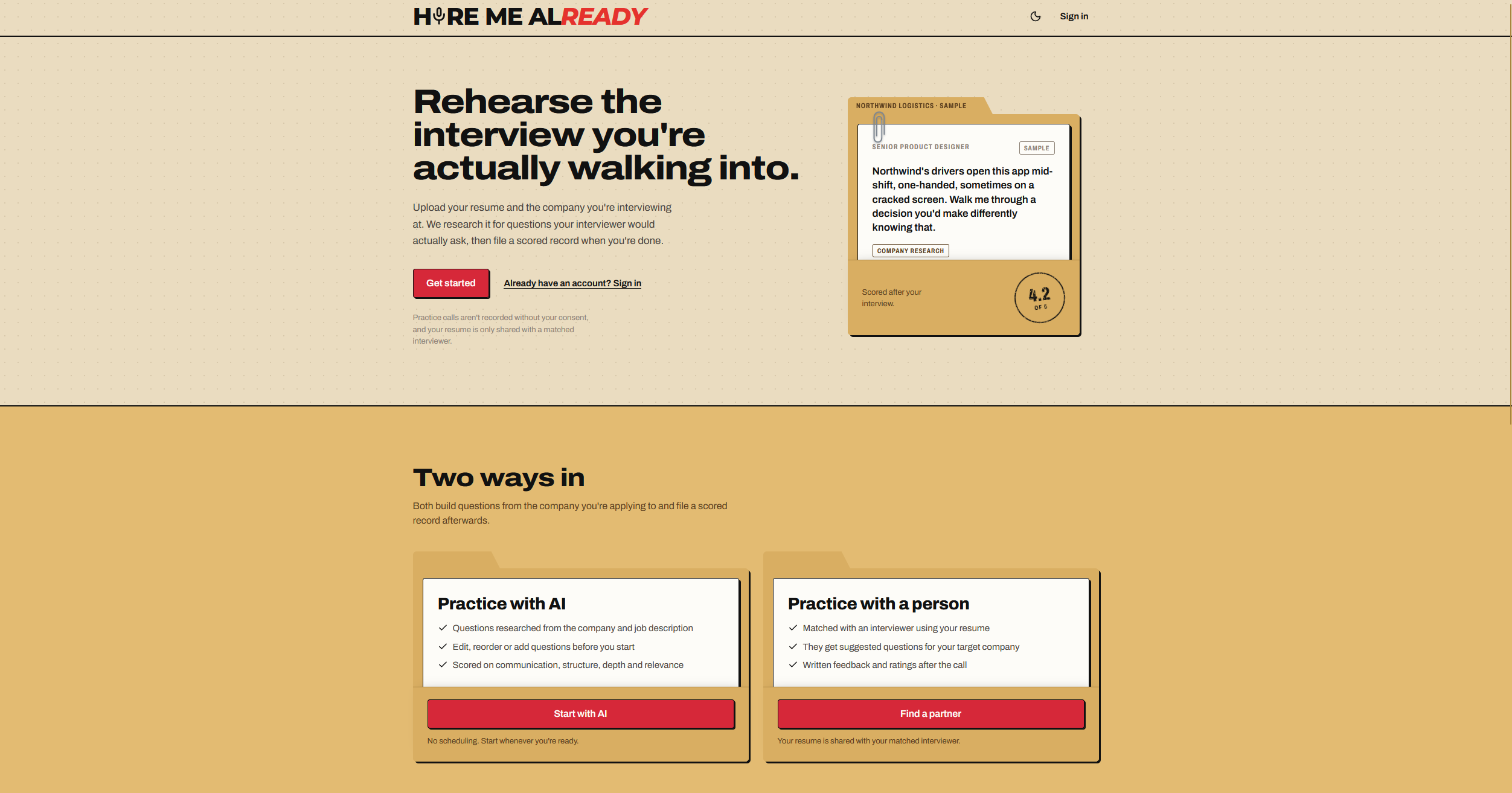
Home Page
-
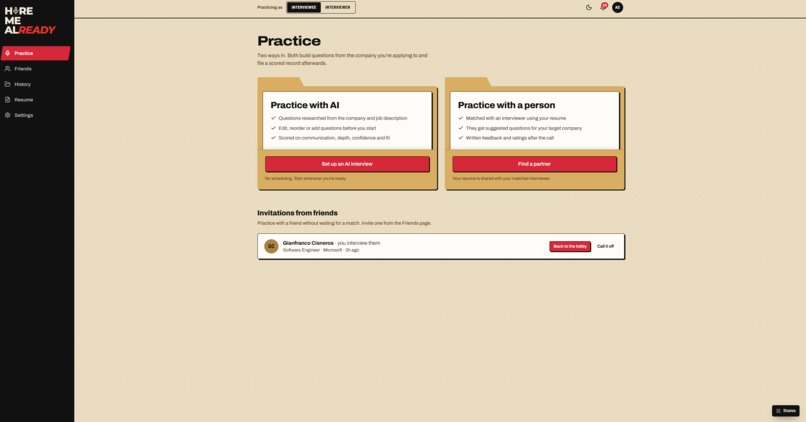
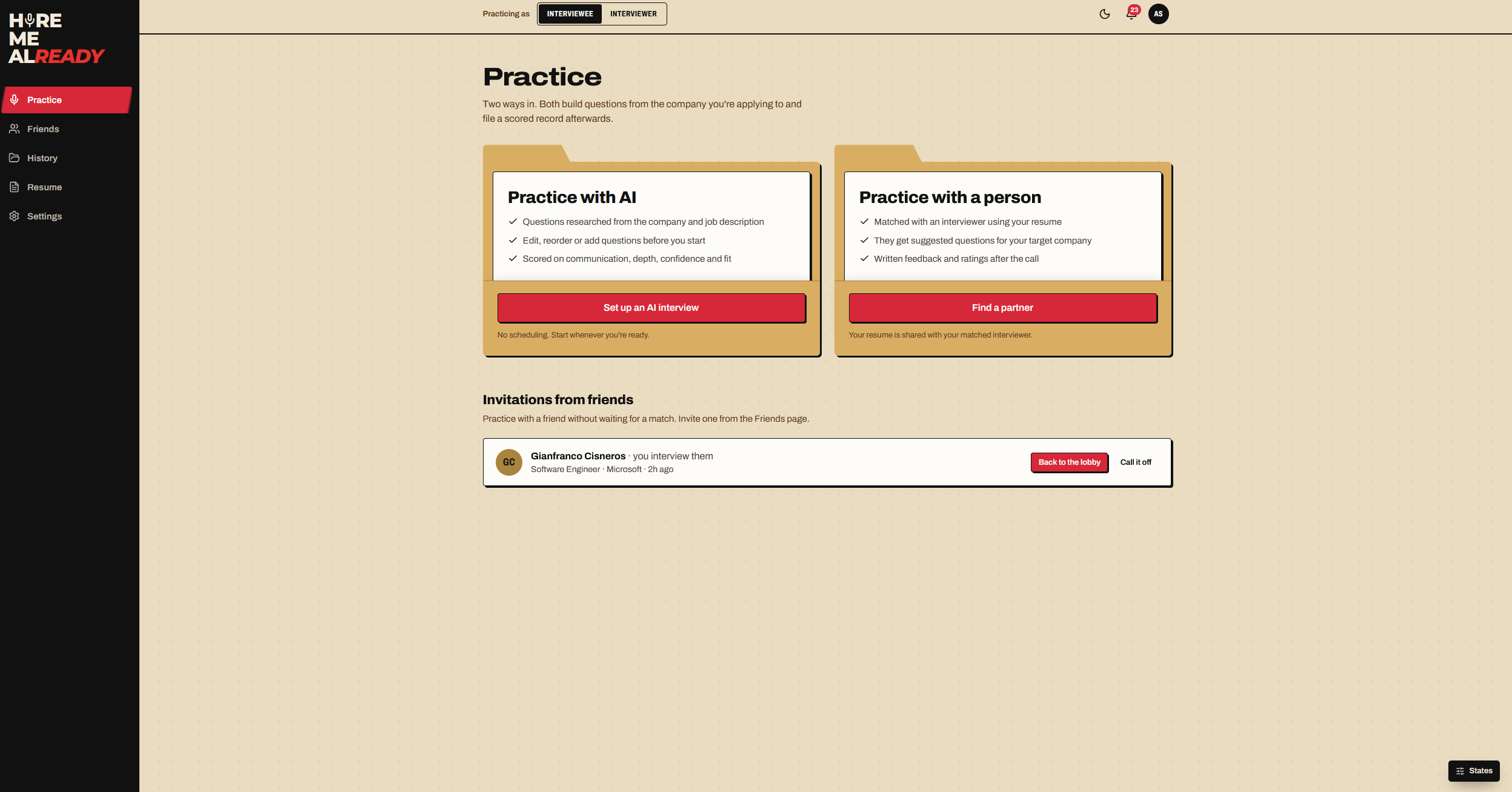
Practice Page
-
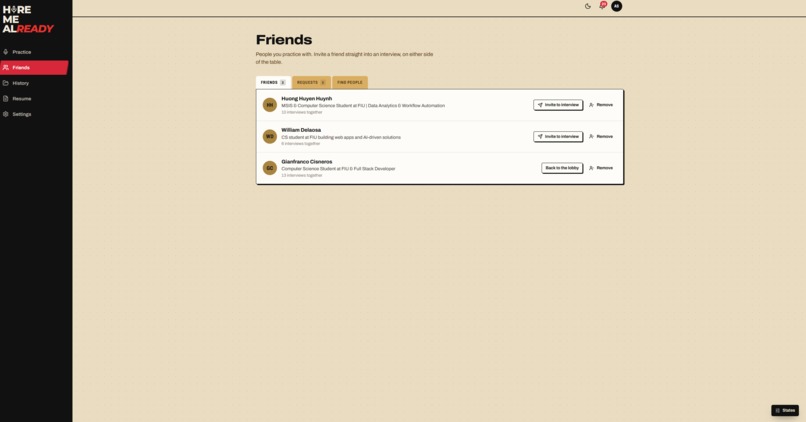
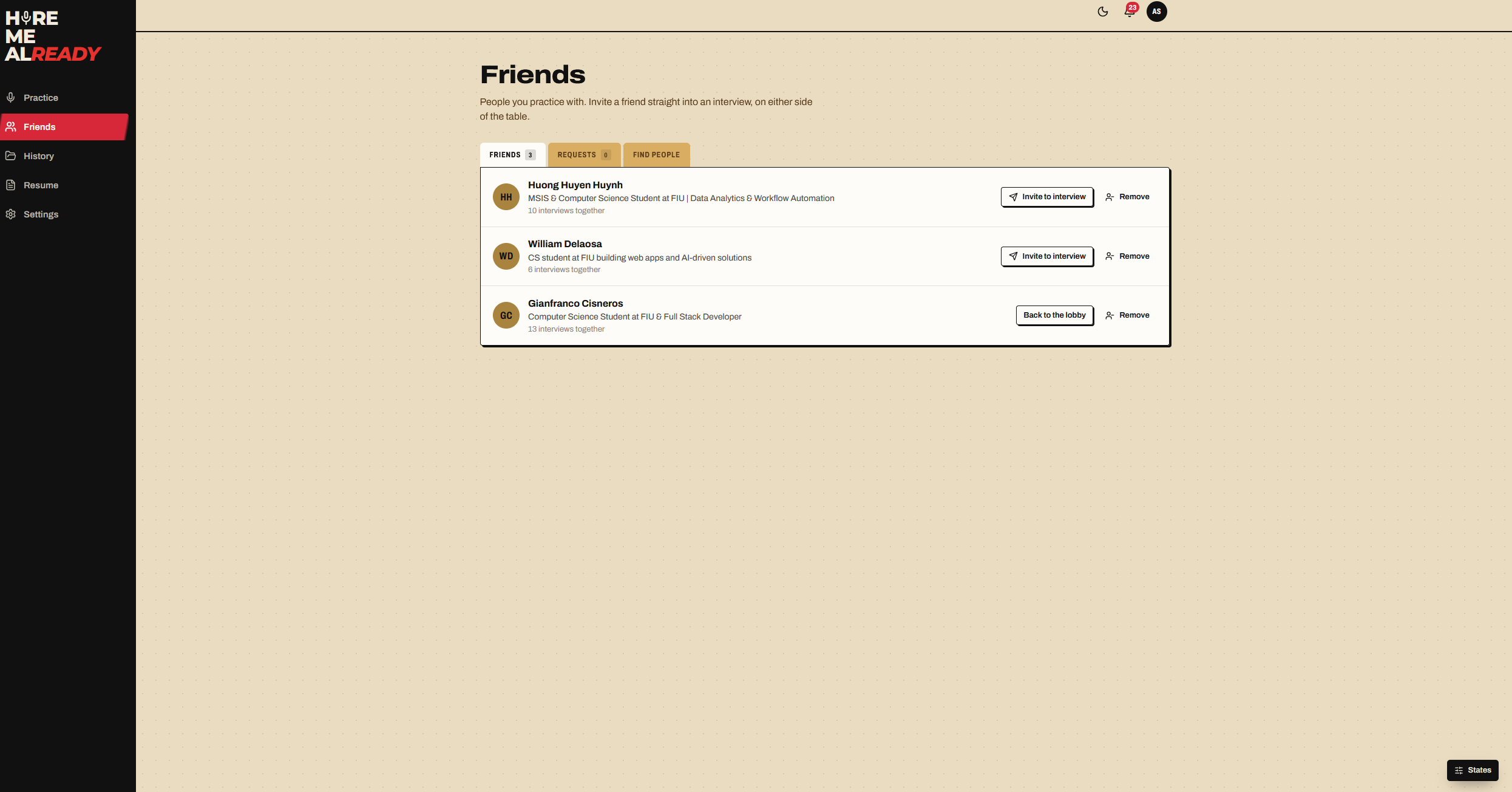
Friends Page
-
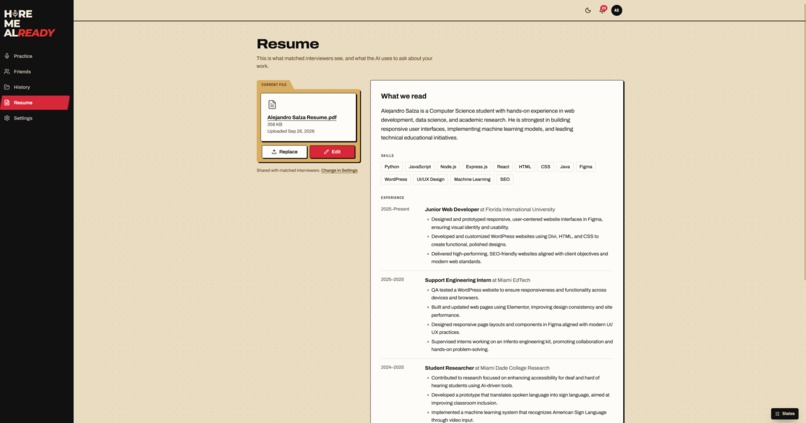
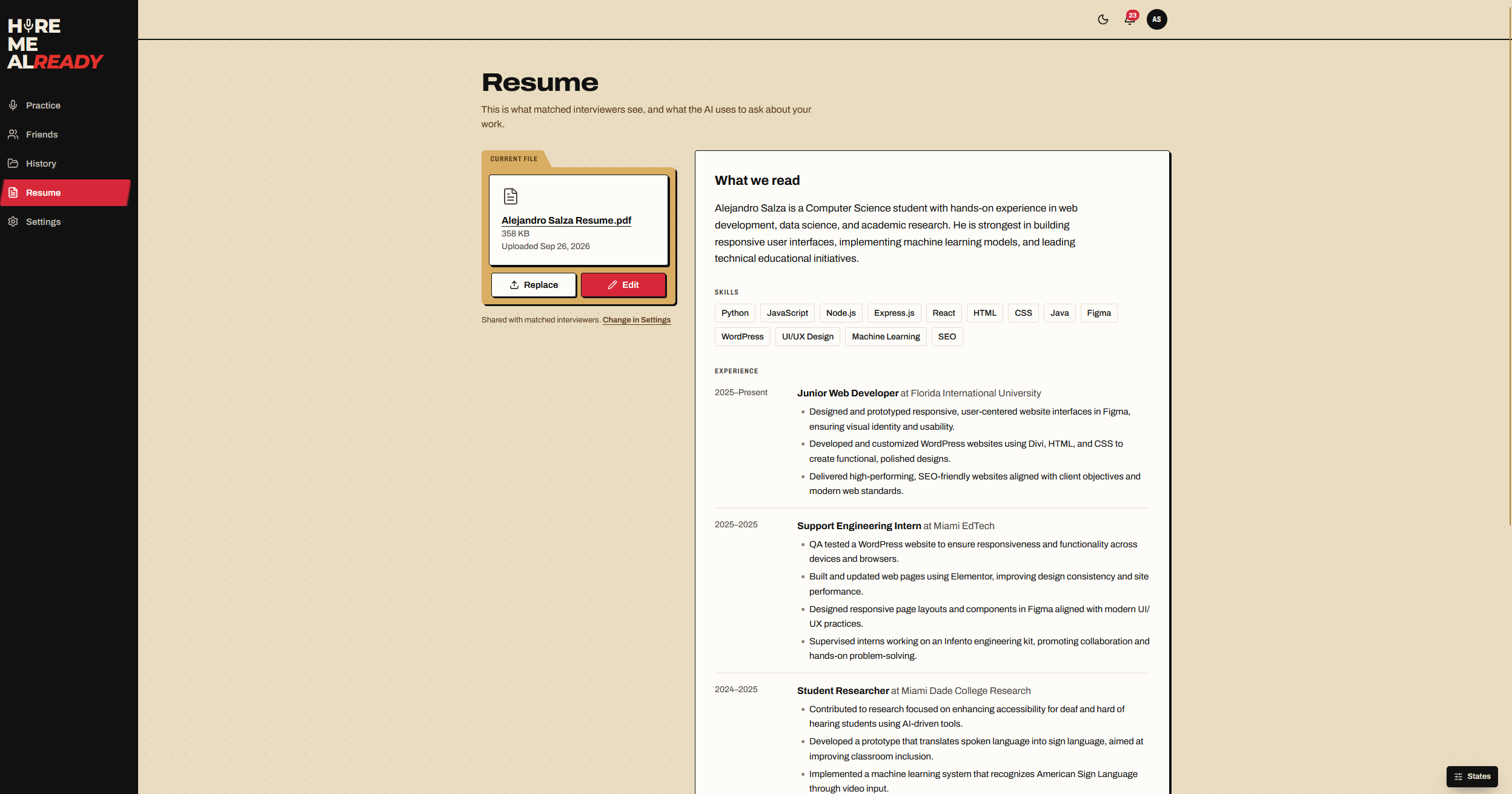
Resume Page
Inspiration
Interview prep is broken. Generic question lists don't tell you what this company will ask, practicing alone doesn't tell you how you come across, and friends go easy on you. We wanted practice that feels like the real thing: tailored to the job you want, available anytime, and honest afterward.
What it does
HireMeAlready gives you two ways to rehearse:
- Talk to an AI interviewer. Upload your resume, name the role and company, and get tailored questions. Then do a live voice interview. When you hang up, you get a transcript and a breakdown of how you did, question by question.
- Interview a real person. Join the queue as interviewer or candidate and get matched with someone whose background resembles yours. You're dropped into a live video call, and the interviewer sees your resume plus suggested questions for the company.
Everything lands in your history, so you can review past interviews and see what to work on. There's also a friends system, notifications, and reporting to keep calls safe.
How we built it
Next.js and Tailwind on the front end, Postgres with pgvector for resume matching, and Gemini for parsing resumes, generating questions, and analyzing interviews. The voice interviewer is an ElevenLabs agent powered by Gemini. Video calls run peer to peer over PeerJS and our own TURN server, all deployed with Docker and Caddy on a DigitalOcean droplet at hiremealready.study.
Challenges we ran into
Getting video to work on real-world networks. Venue Wi-Fi blocks the traffic WebRTC depends on, so we hosted our own relay server and built a test page to verify calls on any network. We also discovered Docker was silently bypassing our firewall, and that Chrome throttles background tabs so aggressively that people looked like they'd left the queue when they hadn't.
Accomplishments that we're proud of
The whole loop works: resume in, tailored questions out, a real voice conversation, and actionable feedback at the end. And our live video calls run entirely on infrastructure we built and host ourselves.
What we learned
The video code is the easy part of WebRTC; networks are the hard part. And with four people and 36 hours, agreeing on shared interfaces early was what let us build in parallel without blocking each other.
What's next for HireMeAlready
Built With
- better-auth
- caddy
- css
- digitalocean
- elevenlabs
- gemini
- next.js
- pgvector
- postgresql
- tigerdata
- typescript
- webrtc


Log in or sign up for Devpost to join the conversation.