-
-

Our logo - the Caduceus with binary instead of snakes
-
-
-
-
-
-

Inspiration
In May 2021, a group of malicious hackers spread malware to attack Windows-running hospital machines in Ireland, delaying or canceling up to 80% of patient interactions across the country.
This isn't isolated; we found that over 17% of the malware attacks in the world are directed at healthcare systems, and along with hospital delays and machine failure, up to 846 million patients across the globe have had their personal information leaked.
The main way to prevent cyber-attack impacts in hospitals is a process called segmentation, but planning it is a complex optimization problem that requires constant monitoring, takes weeks to plan, and involves unintentional trade-offs.
What Hippocratech does
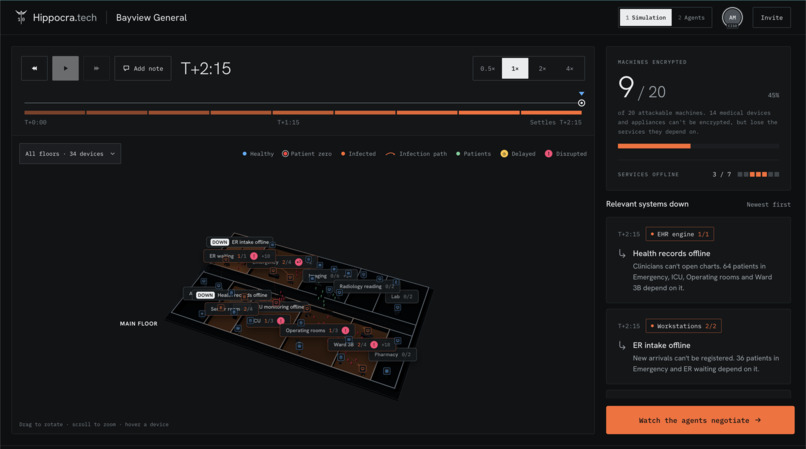
Hippocratech is a cyberattack simulation and segmentation development platform. With Hippocratech, hospital operational staff can simulate malware spreading across their systems and create a segmentation plan optimized to support hospital device connections while still containing the spread.
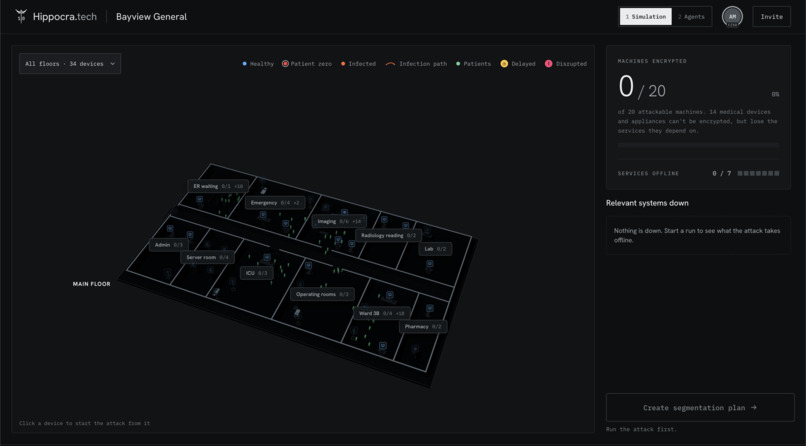
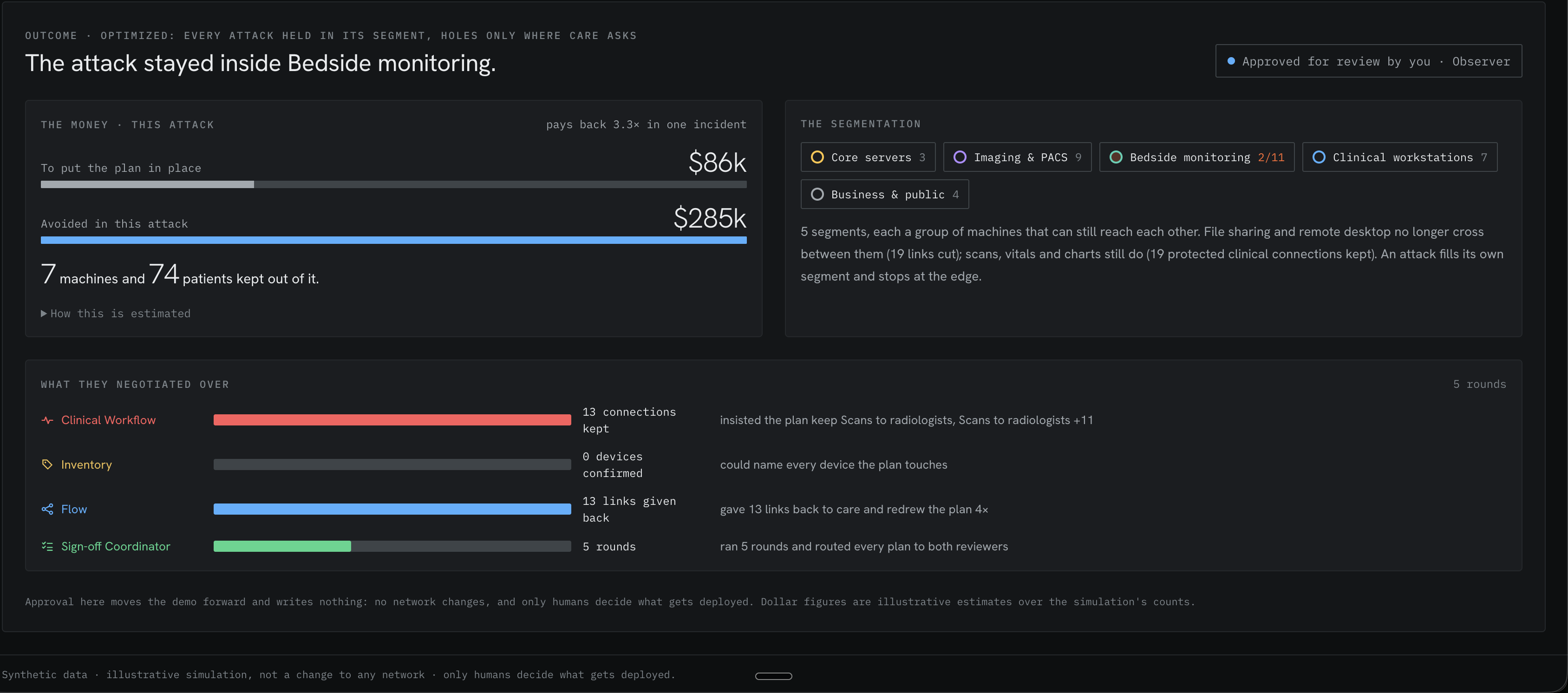
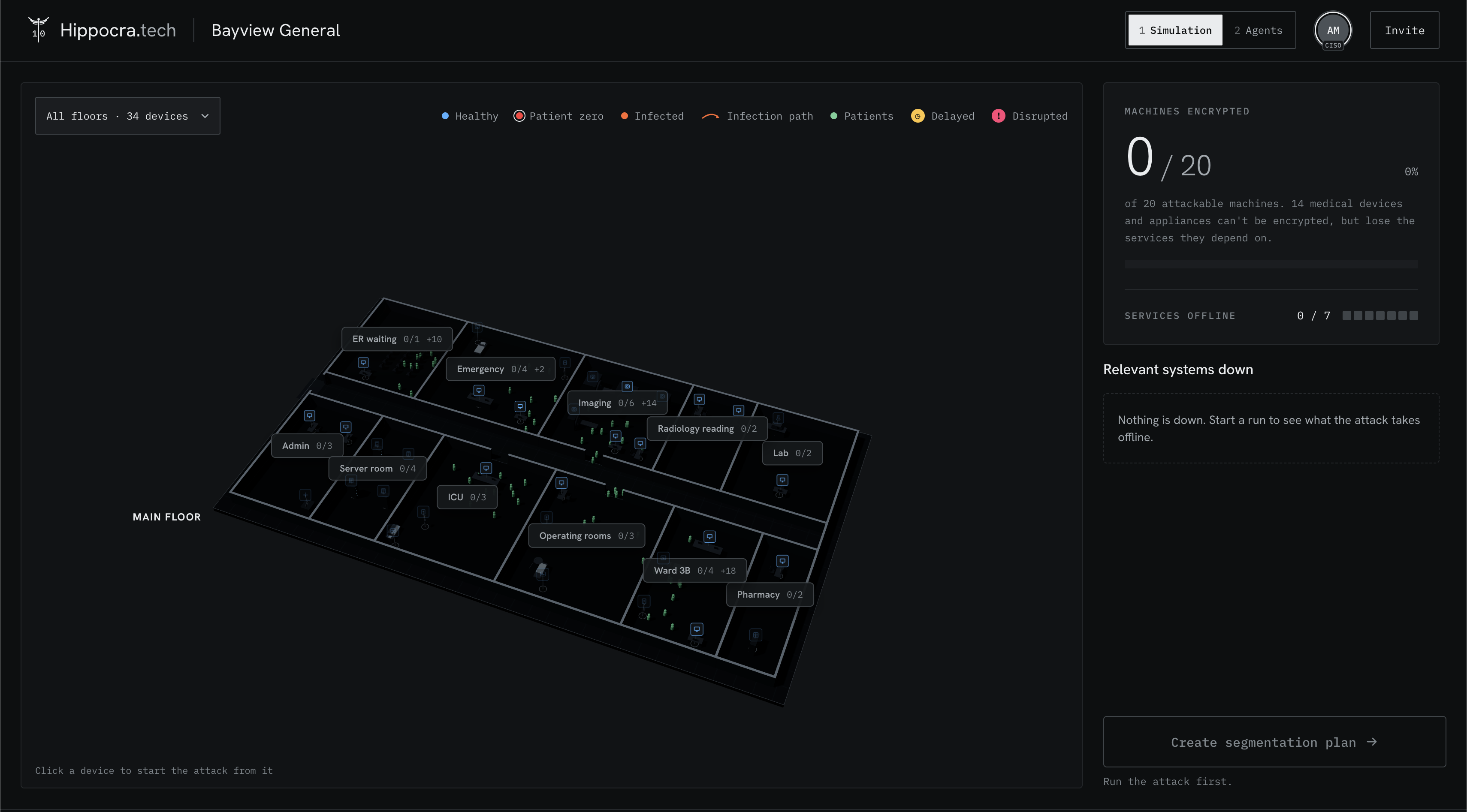
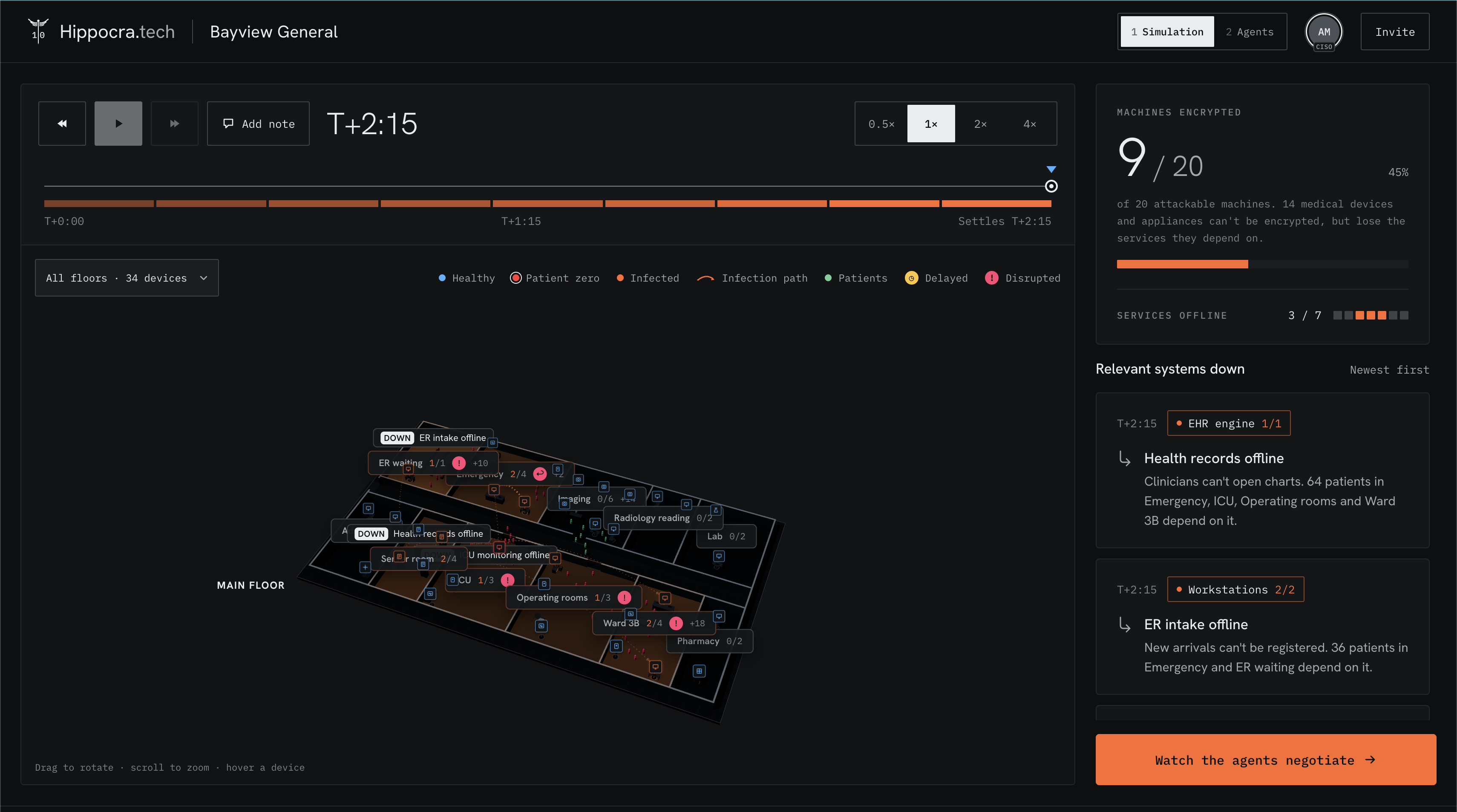
First, an operational staff member loads a 3D model of the hospital, including its layout and machine placement. They can also invite other staff to view the model with real-time updates. After choosing a starting machine, the website simulates an injection at that machine and models its spread. Each staff member can scrub through the simulation on their own and annotate what they notice. When the team is ready, three topical subagents and an orchestrator deliberate on a segmentation plan; once they agree, they simulate the plan and compare it with the original run.
How we built it
We built Hippocratech in a Next.js web app where the agent and simulation logic were created in Python, and the UI and 3D components were created using Tailwind CSS and Three.js.
- Modeling the Hospital: We generate the entire 3D hospital in Three.js from a single JSON file describing floors, rooms, devices, and network links, placing every device in its room. Each machine has a Next.js tooltip whose details change with the viewer's role, served through SpacetimeDB views.
- Malware Injection Simulation: We run the ransomware simulation inside SpacetimeDB as a scheduled reducer that advances the attack tick by tick from a user-chosen patient zero. Every client subscribes to the same state, so Three.js renders the spread identically on every screen. A Next.js timeline slider lets each user scrub through history independently.
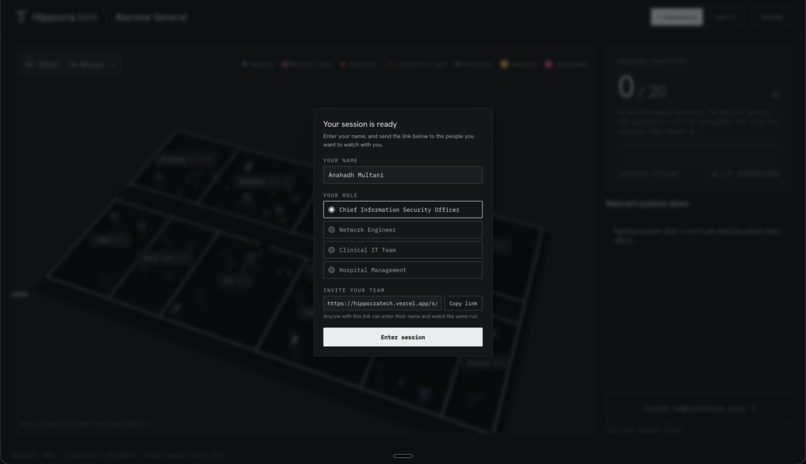
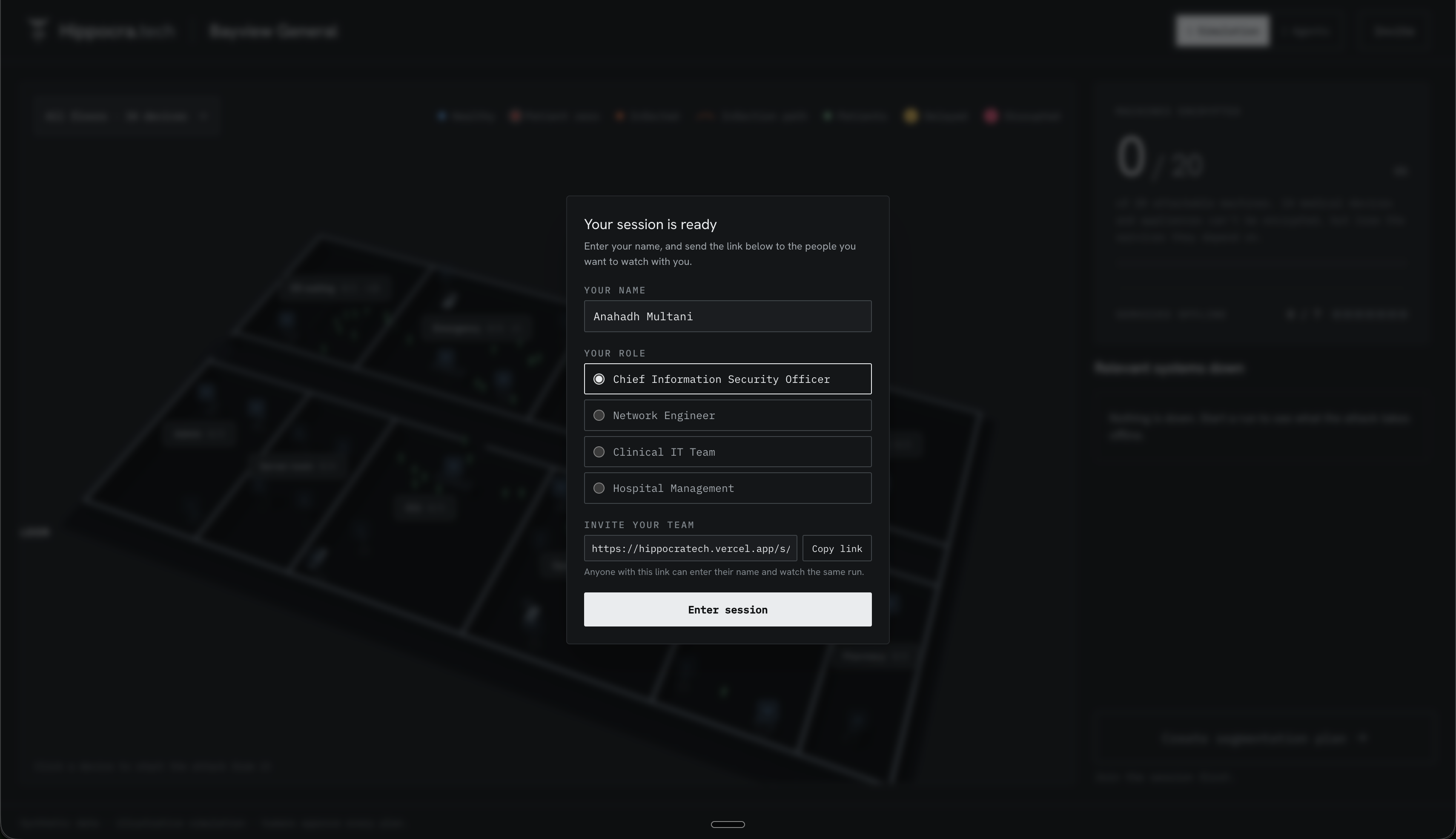
- Staff Collaboration and Annotation: Security, clinical engineering, and operations staff join one live session with their own roles, with presence and the approval gate synced through SpacetimeDB. Users pin annotations to the timeline, and SpacetimeDB stores them and shows them to every participant in real time.
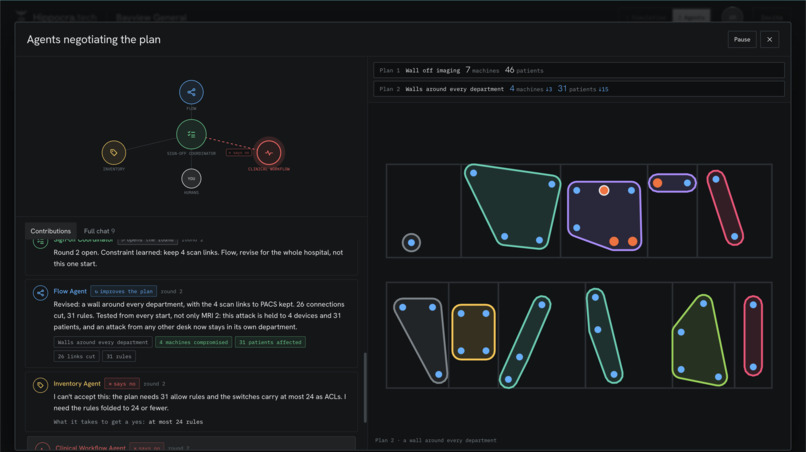
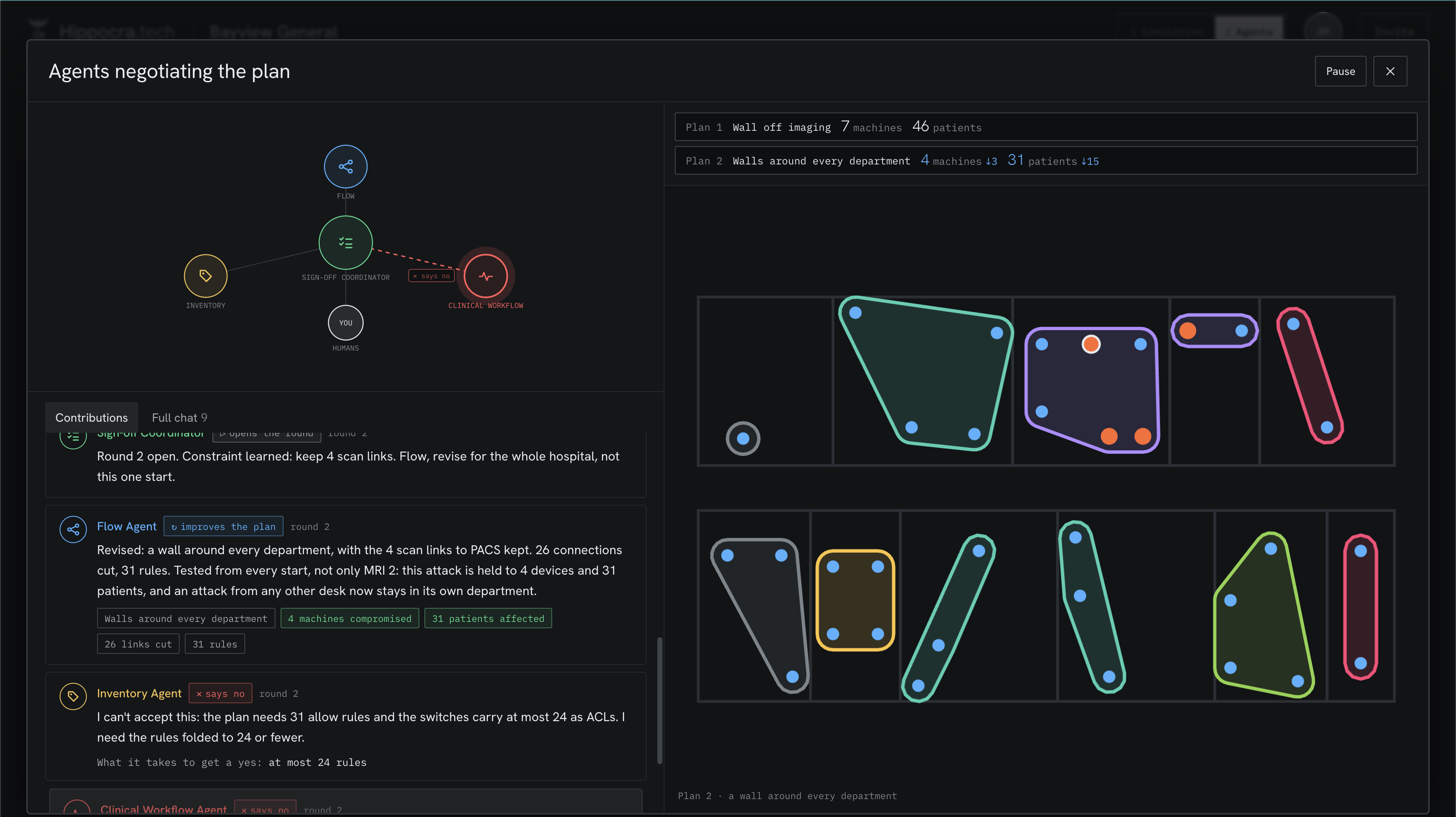
- Agent Orchestration: Four Fetch.ai uAgents on Agentverse negotiate a defense, woken by SpacetimeDB watchers that also record every message. The conversation is animated live in Next.js, with Claude Haiku 5.5 as the agents' model for fast, precise reasoning.
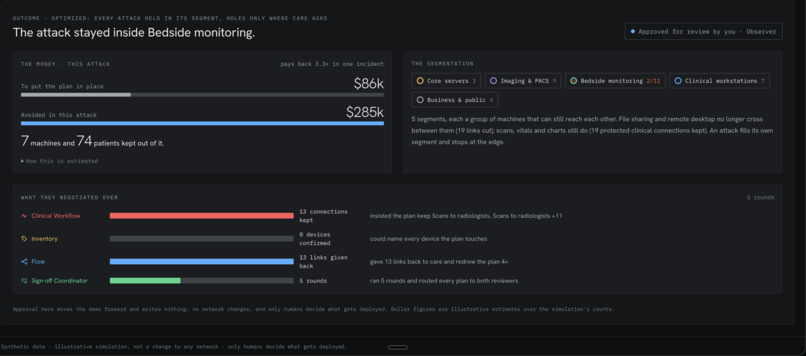
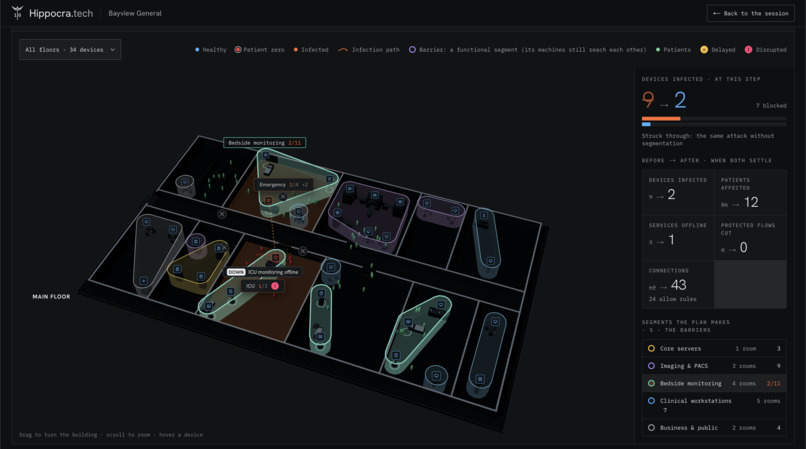
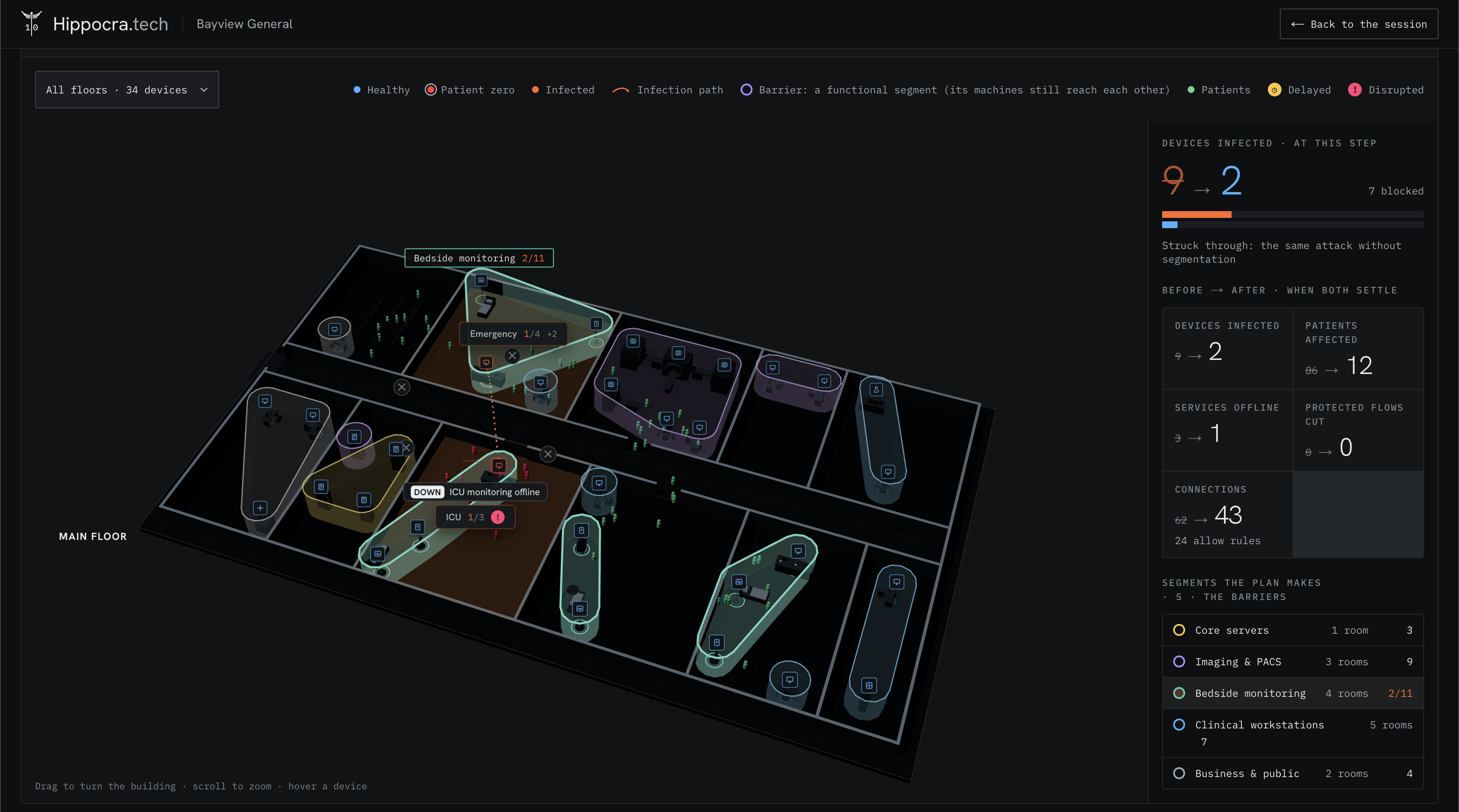
- Segmentation: We turn the agents' recommendations into segmentation policy files and render them in Next.js for visual confirmation. The simulation then re-runs on the segmented network graph, and we compare the results against the original attack to display impact.
Challenges we ran into
Our biggest challenges came from user experience, starting with how to display segmentation. Once the agents produced a plan, we had to show it in a way anyone could read, since many healthcare professionals aren't familiar with network infrastructure. We solved this with a shape system that groups connected devices into blobs and polygons, making network zones and their connections intuitive for all collaborators.
Another challenge came with making our AI system forward-facing and interpretable. Our agents negotiate in the background, but hospital staff need to see how a plan was reached before they can trust it. We solved this with a live Agent Room that animates every message between agents and highlights the devices and connections each one refers to. Every decision is visible and explained, so humans stay in control of the final call.
Accomplishments that we're proud of
We're proud of building a real-time simulation where every user watches the same deterministic ransomware attack spread through a 3D hospital at the same moment. We're also proud of orchestrating multiple AI agents with competing goals that negotiate a defense, pause to ask humans when they're unsure, and show every step of their reasoning live. Finally, we turned their proposals into tested network policies and replayed each one against the original attack, proving it contains the spread without breaking patient care.
What we learned
We learned how to build real-time apps where users can share state with each other using TimescaleDB, which will be useful for future collaboration apps. Additionally, we learned how to make agent orchestrations using Fetch.ai, and how to engineer systems to not only be efficient but maximally interpretable by humans who need to govern those systems.
What's next for Hippocratech
Next, we want to add in-app hospital editing, so operational staff can update the layout as rooms and equipment change without rebuilding the model from scratch. We also want to give our agents more tools, letting them pull established deterministic models into their reasoning to complement our agent orchestration. Finally, we plan to add richer device specifications, like manufacturer and model, so each recommendation reflects the exact equipment a hospital runs.
Agentverse uAgents:
Inventory Agent: https://agentverse.ai/agents/details/agent1qtmzpr90e9dlv2aqz3g06xs9zwjqfnf9nfw32fjgxraz45f7y6atqnnf7mp/profile Flow Agent: https://agentverse.ai/agents/details/agent1qv33yl56hxarmtxnyu42rllrldwdpkyszzcnwzphtlgvsr7end77cyu8wrq/profile Clinical Workflow Agent: https://agentverse.ai/agents/details/agent1qvszrjp505888yx3959ywsy8w39u20lsuplr6he4ta5j49u9sv2ucask9sh/profile Coordinator Agent: https://agentverse.ai/agents/details/agent1qdky5mlj78706l87xyvmfthwgevxl4w8uxglpzdc2q49jfw648tux394rsn/profile
Built With
- fetch.ai
- next
- python
- react
- spacetimedb
- tailwind
- three.js
- typescript

Log in or sign up for Devpost to join the conversation.