-
-
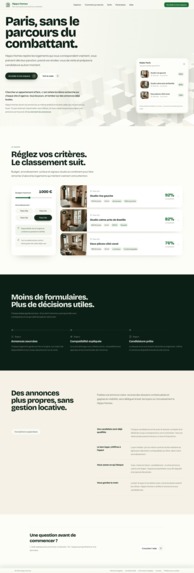
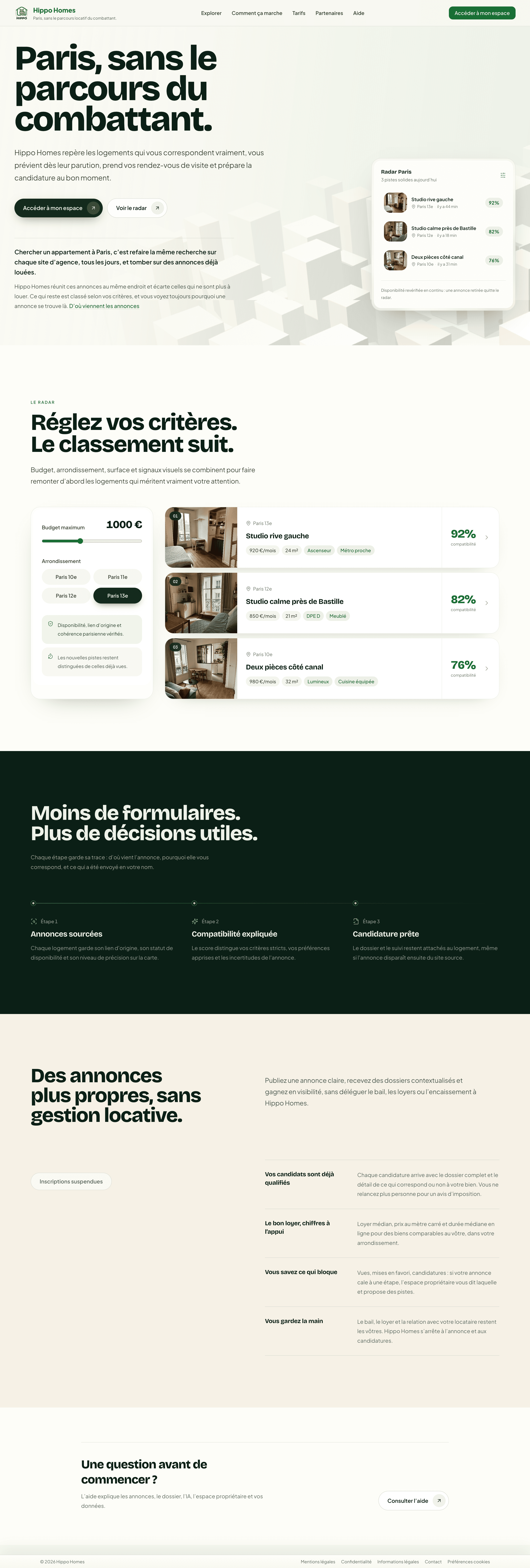
Landing Page - Paris Without the Apartment Search Grind
-
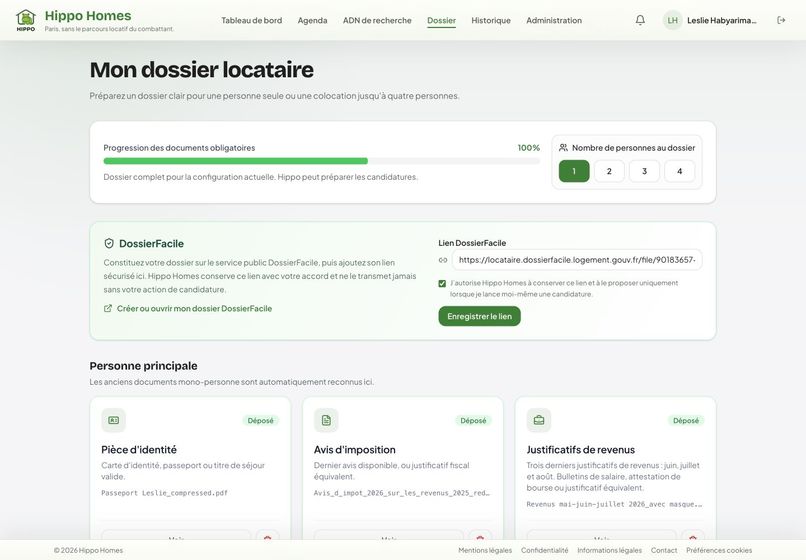
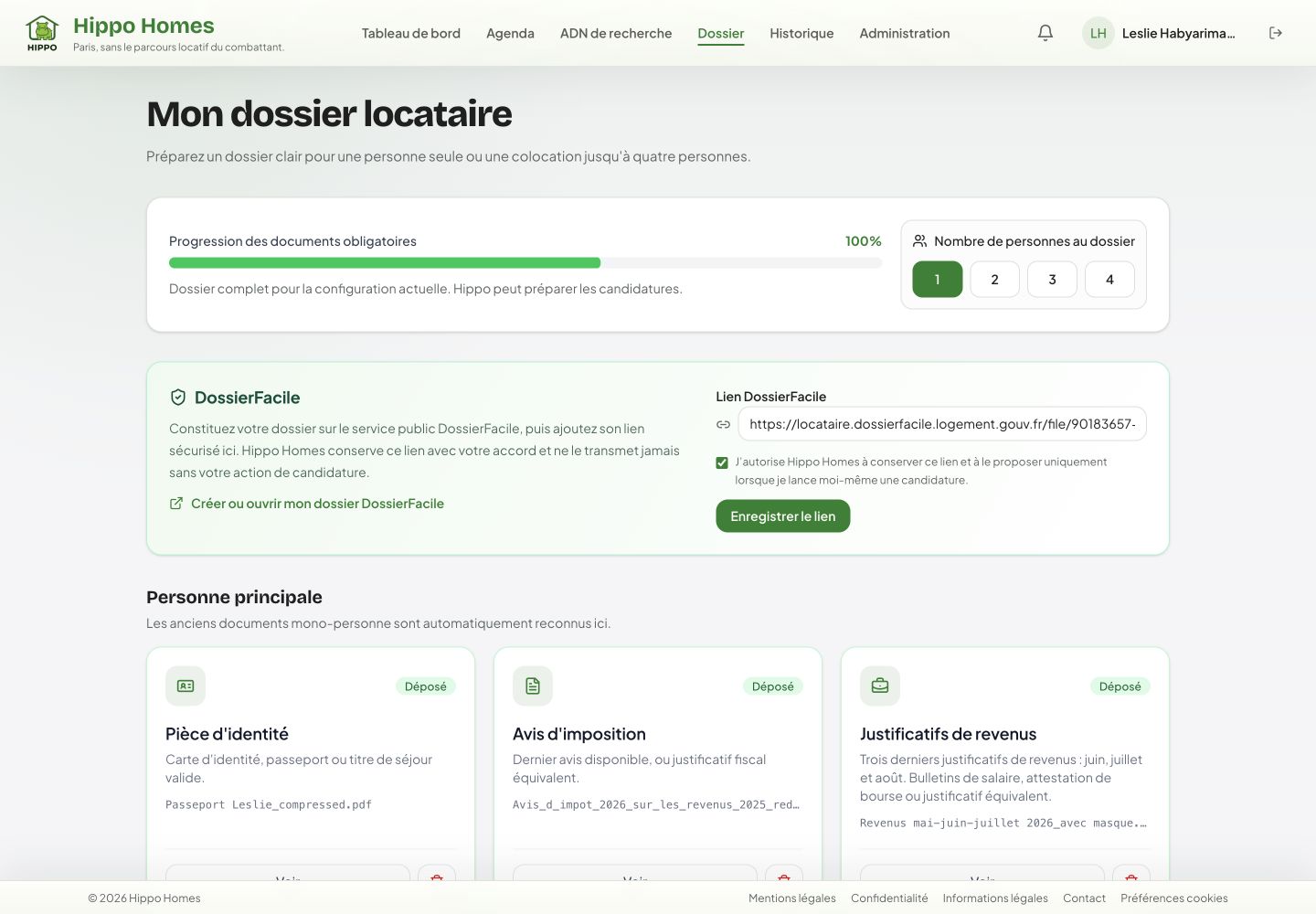
Application Profile and Rental File
-
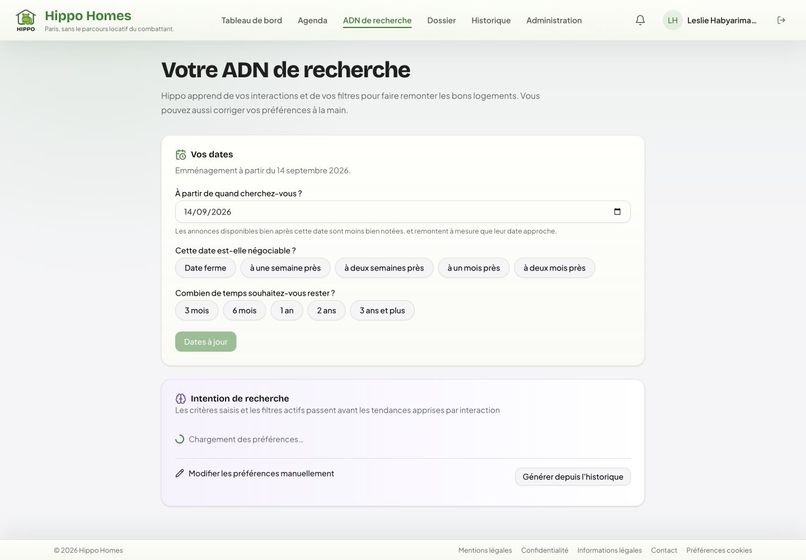
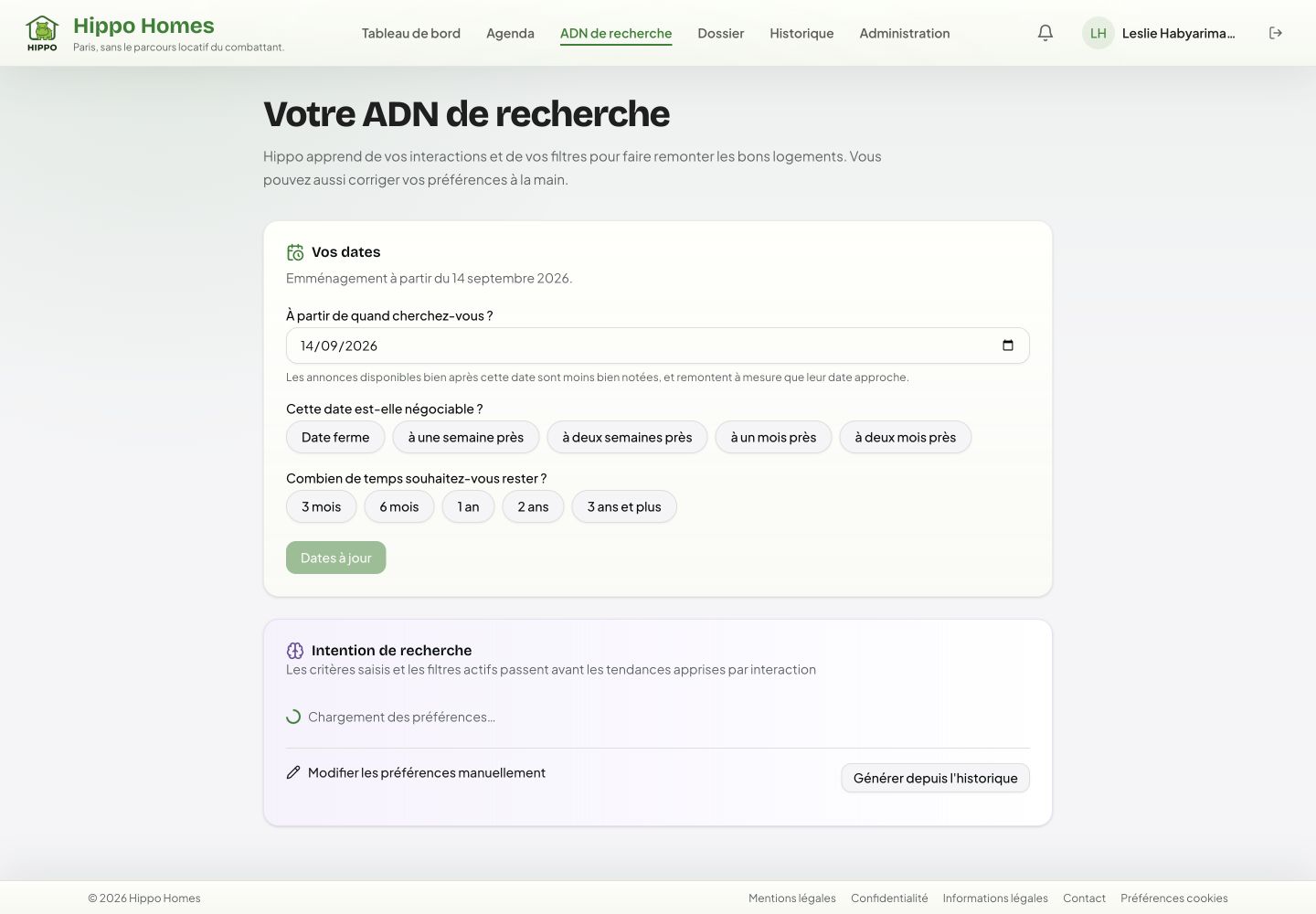
Search DNA - Learned Apartment Preferences
-
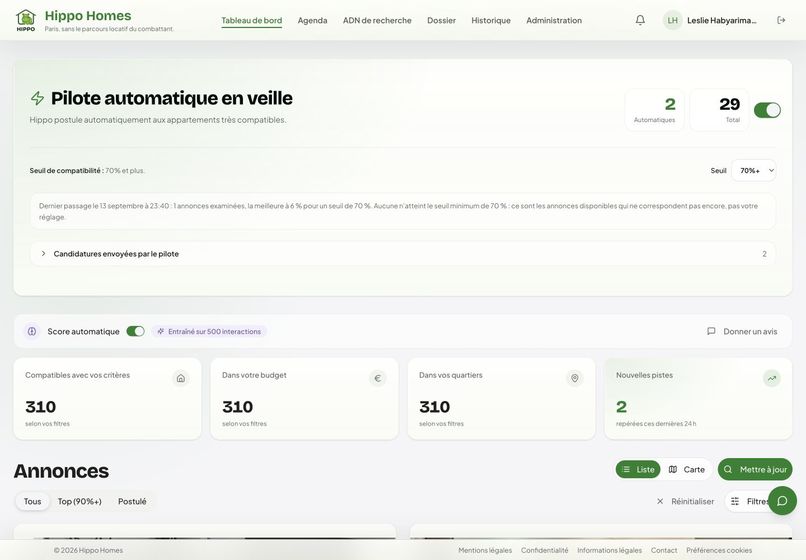
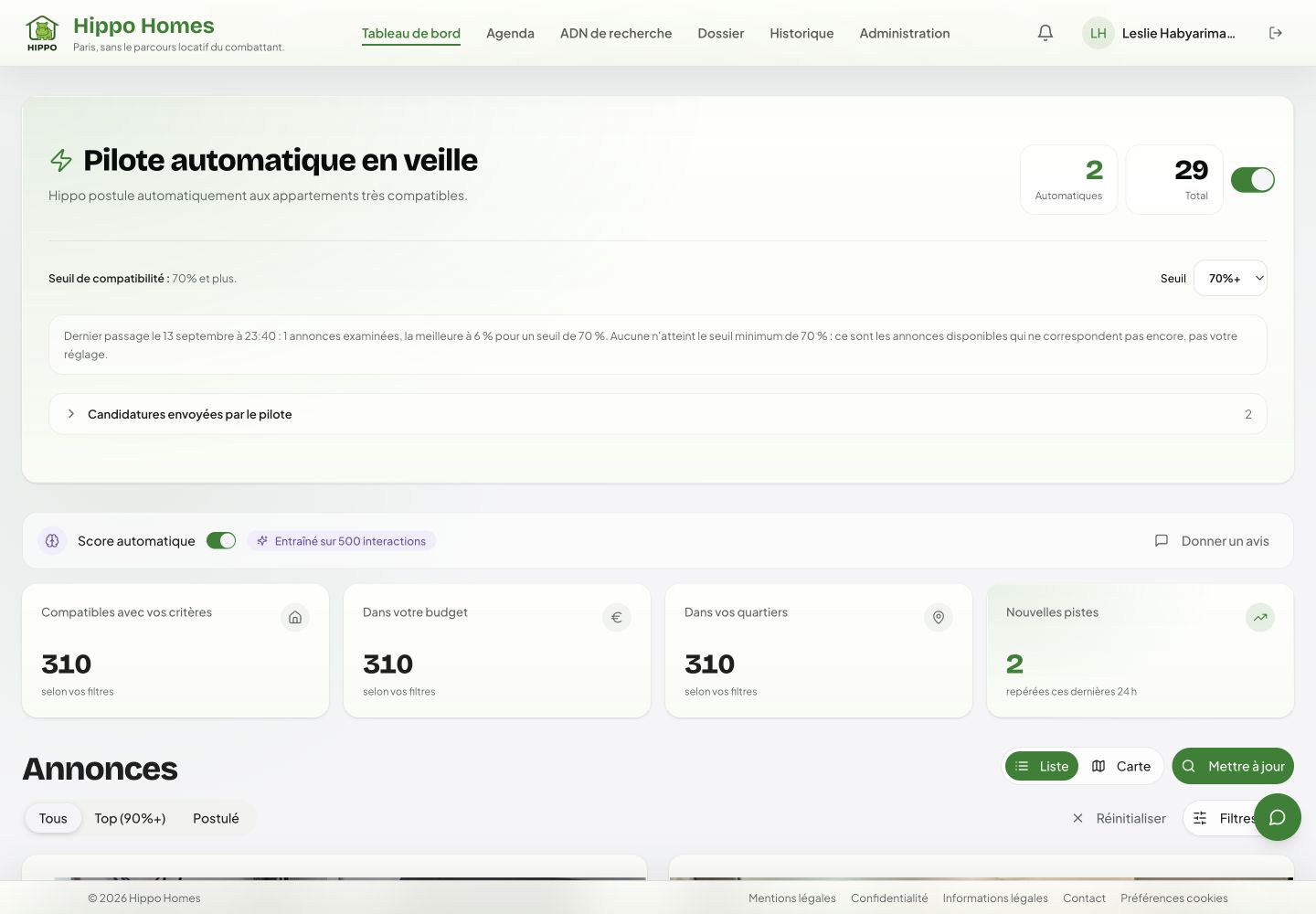
Logged-In Dashboard - Autopilot and Listing Feed
-
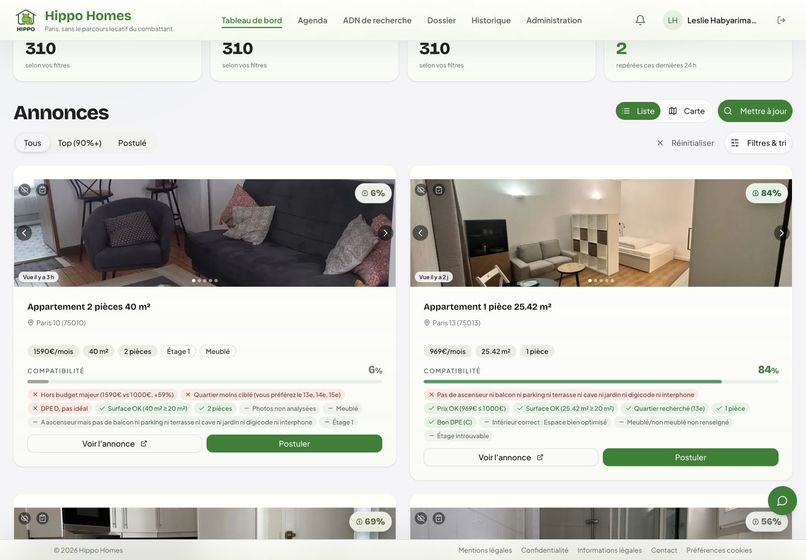
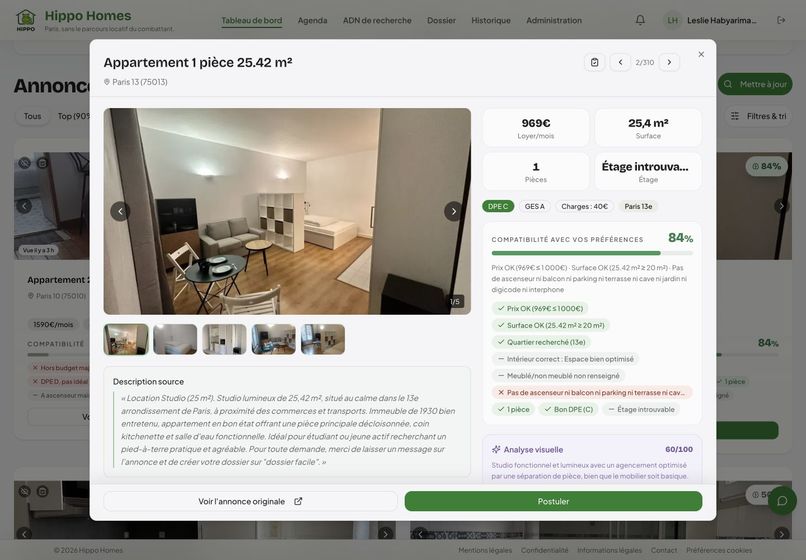
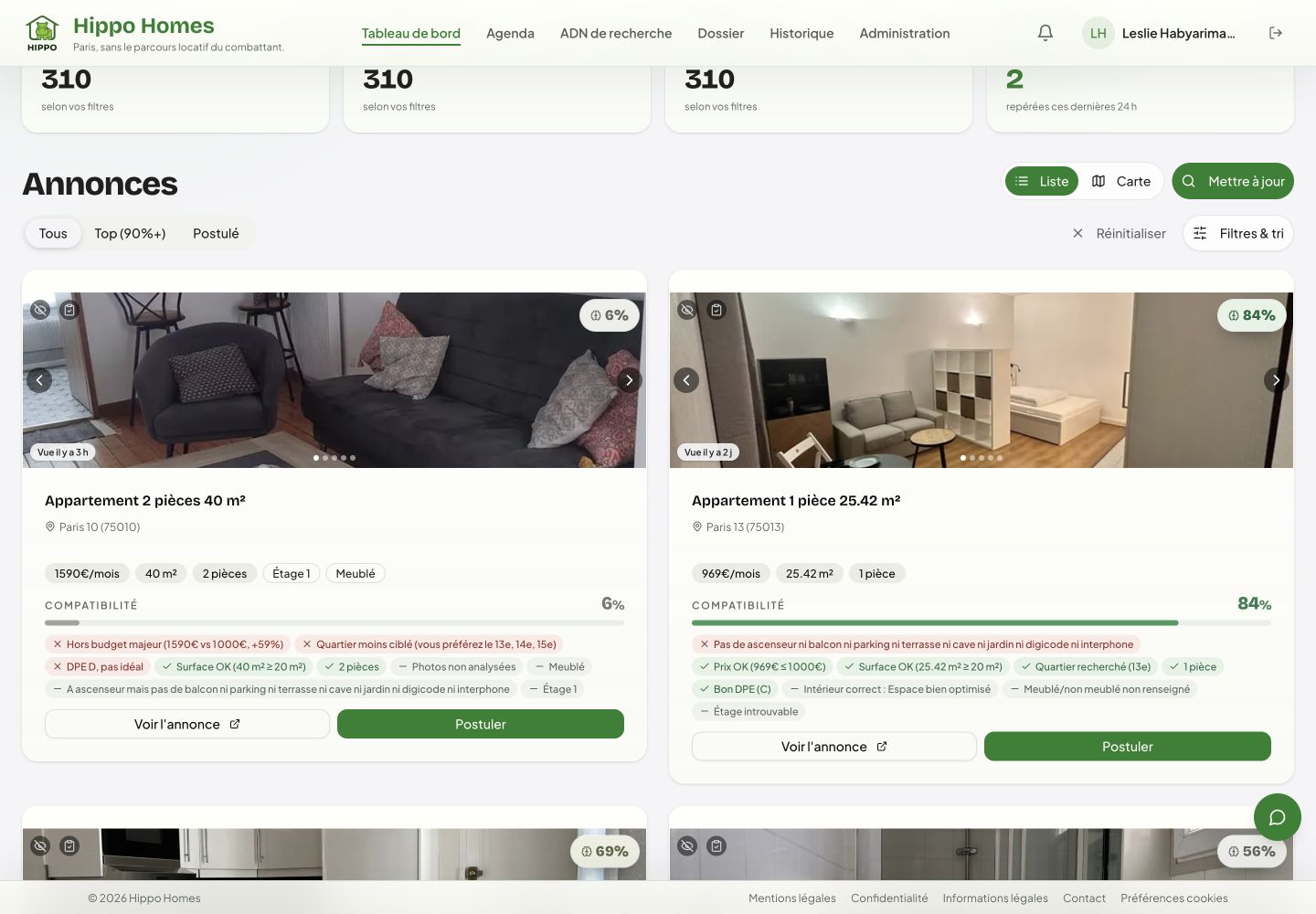
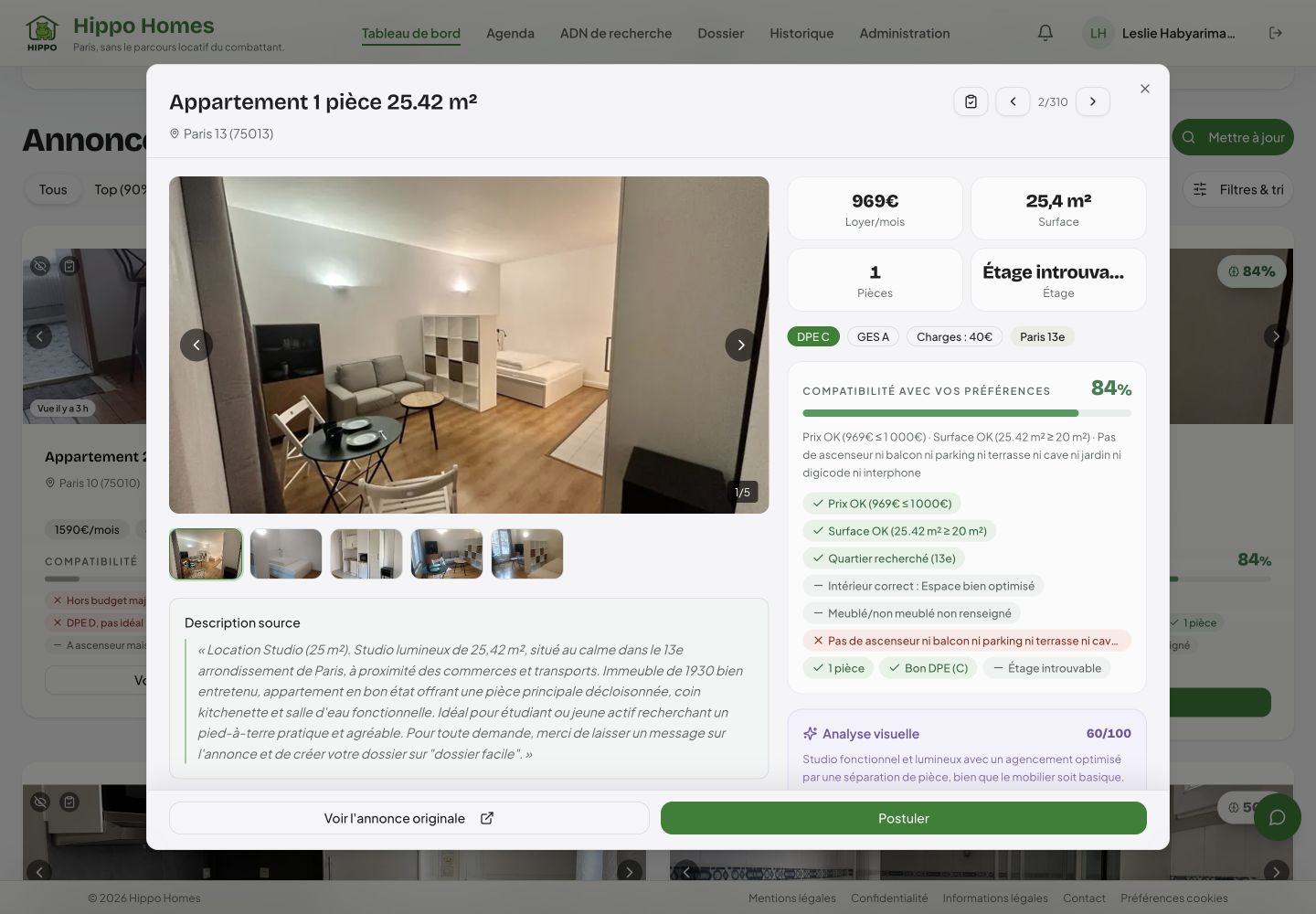
Apartment Feed with Personal Match Scores
-
-
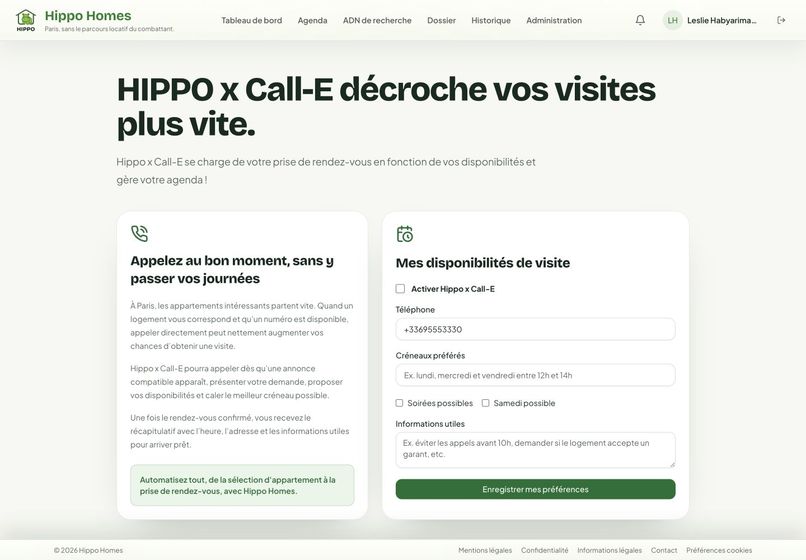
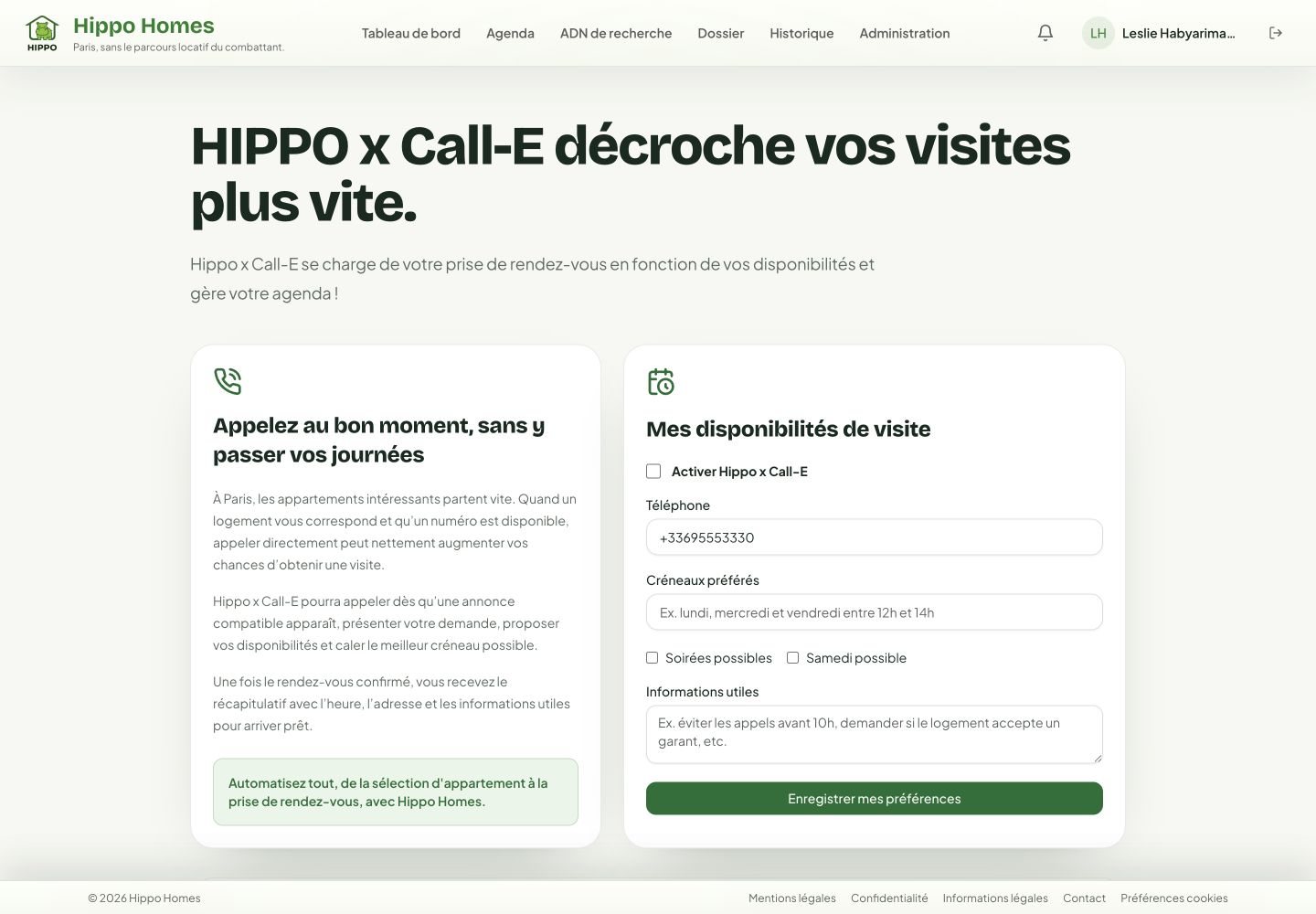
HIPPO x Call-E Visit Scheduling
-
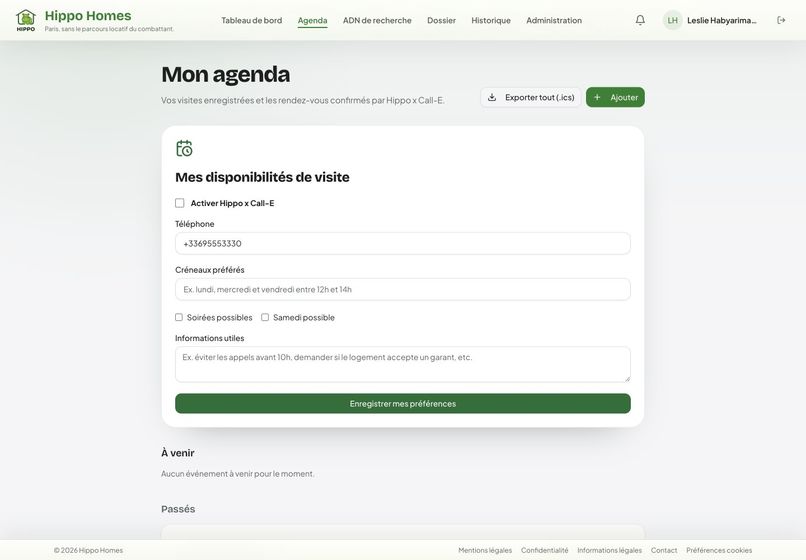
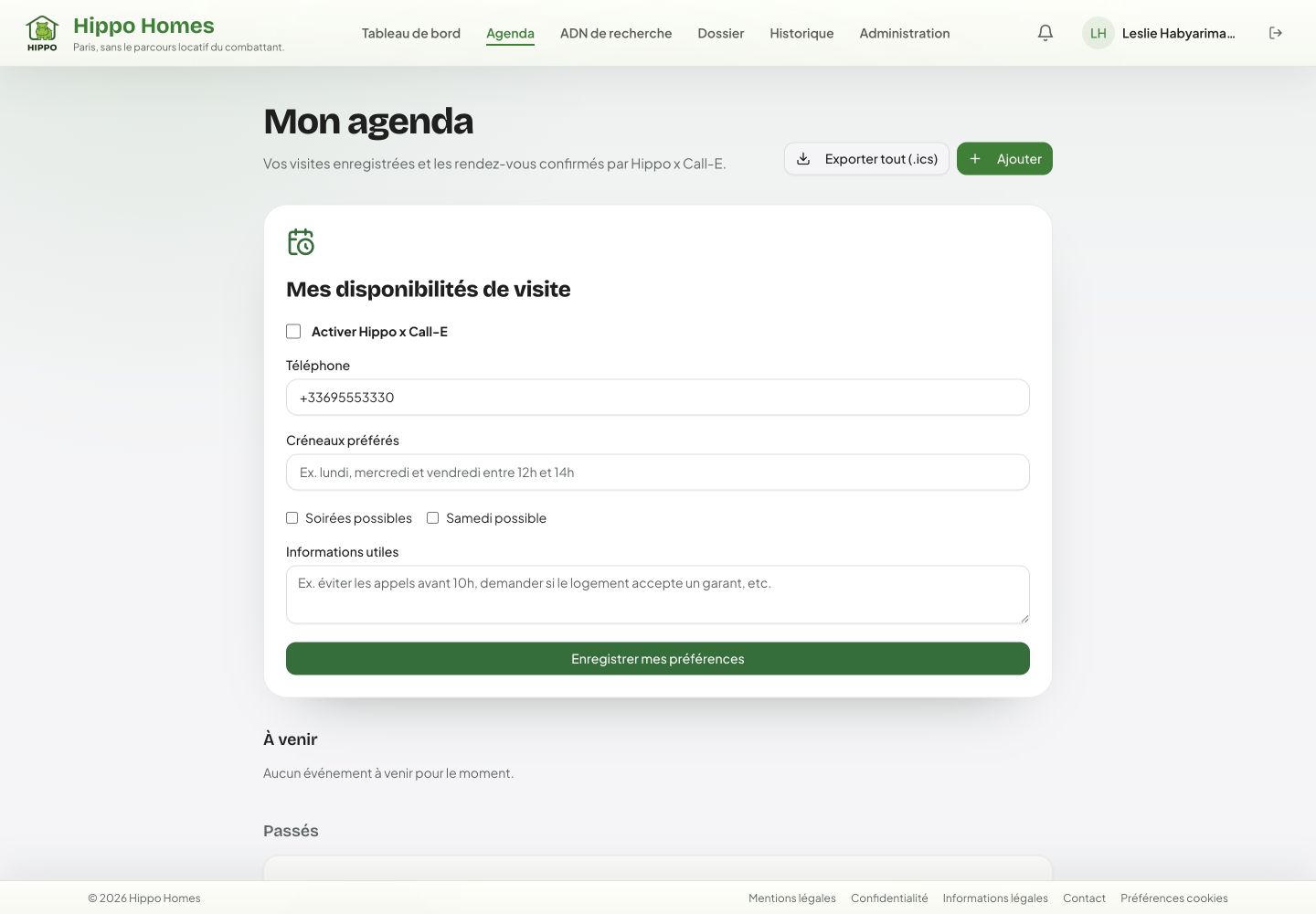
Agenda - Visits and Call-E Scheduling
-
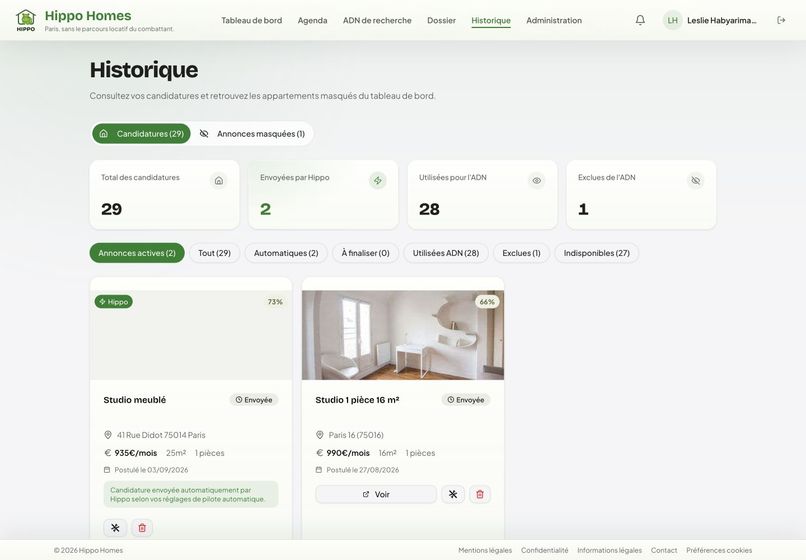
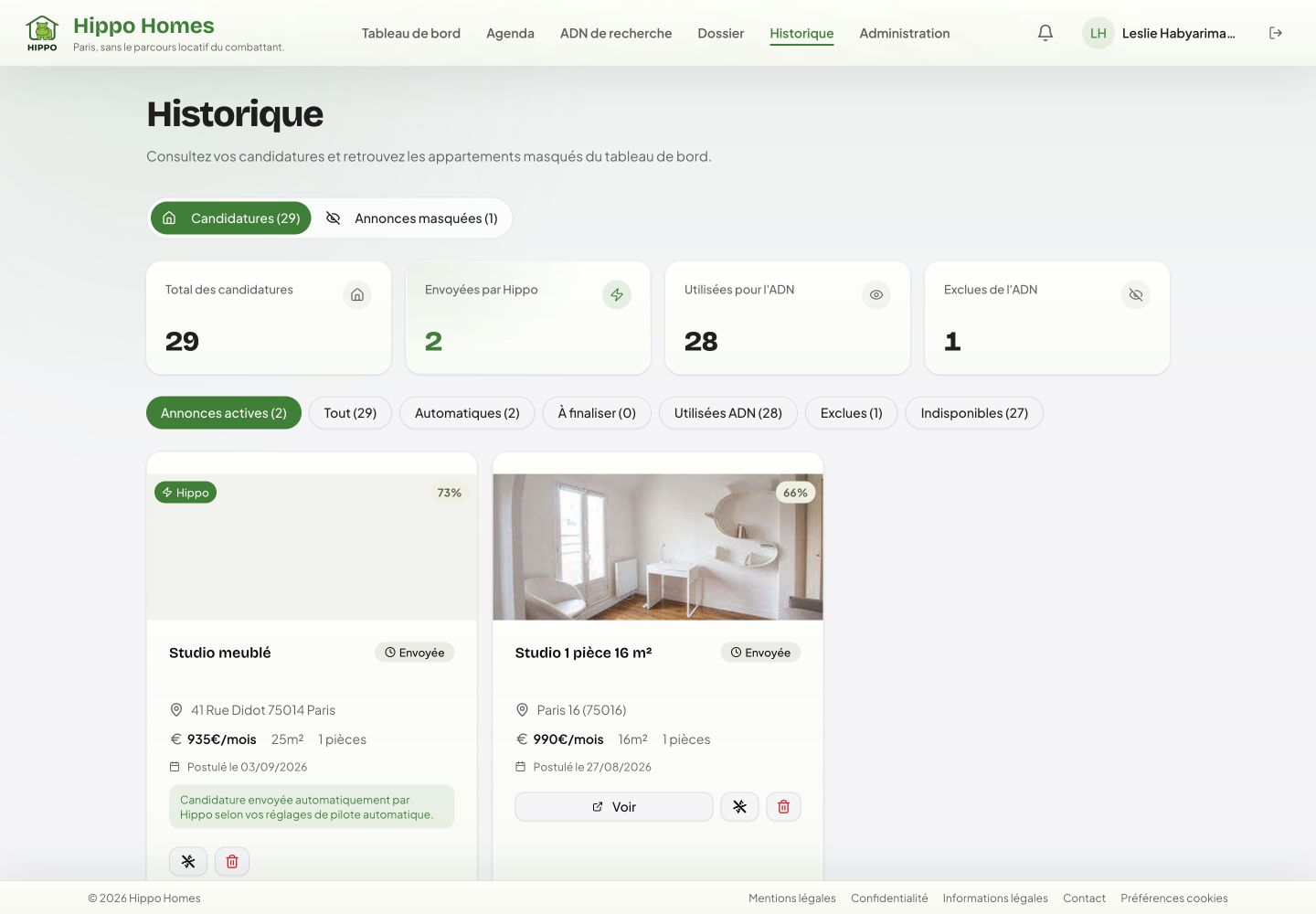
Application History and Tracking
-
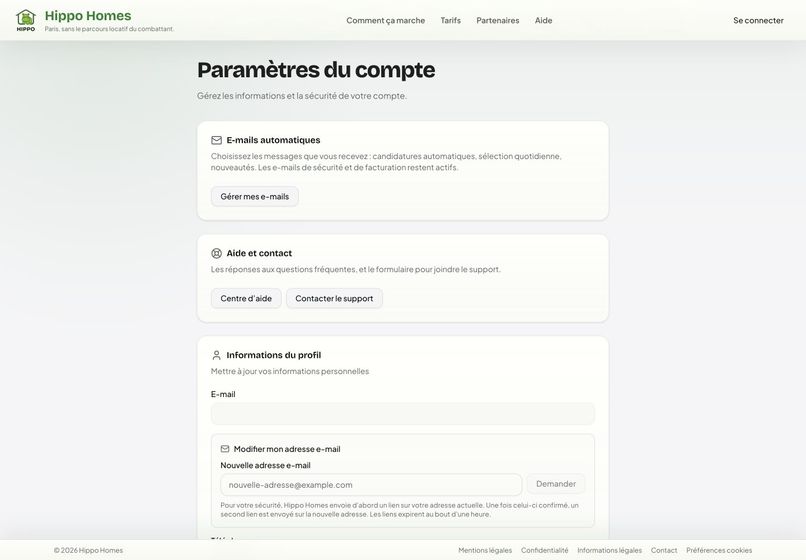
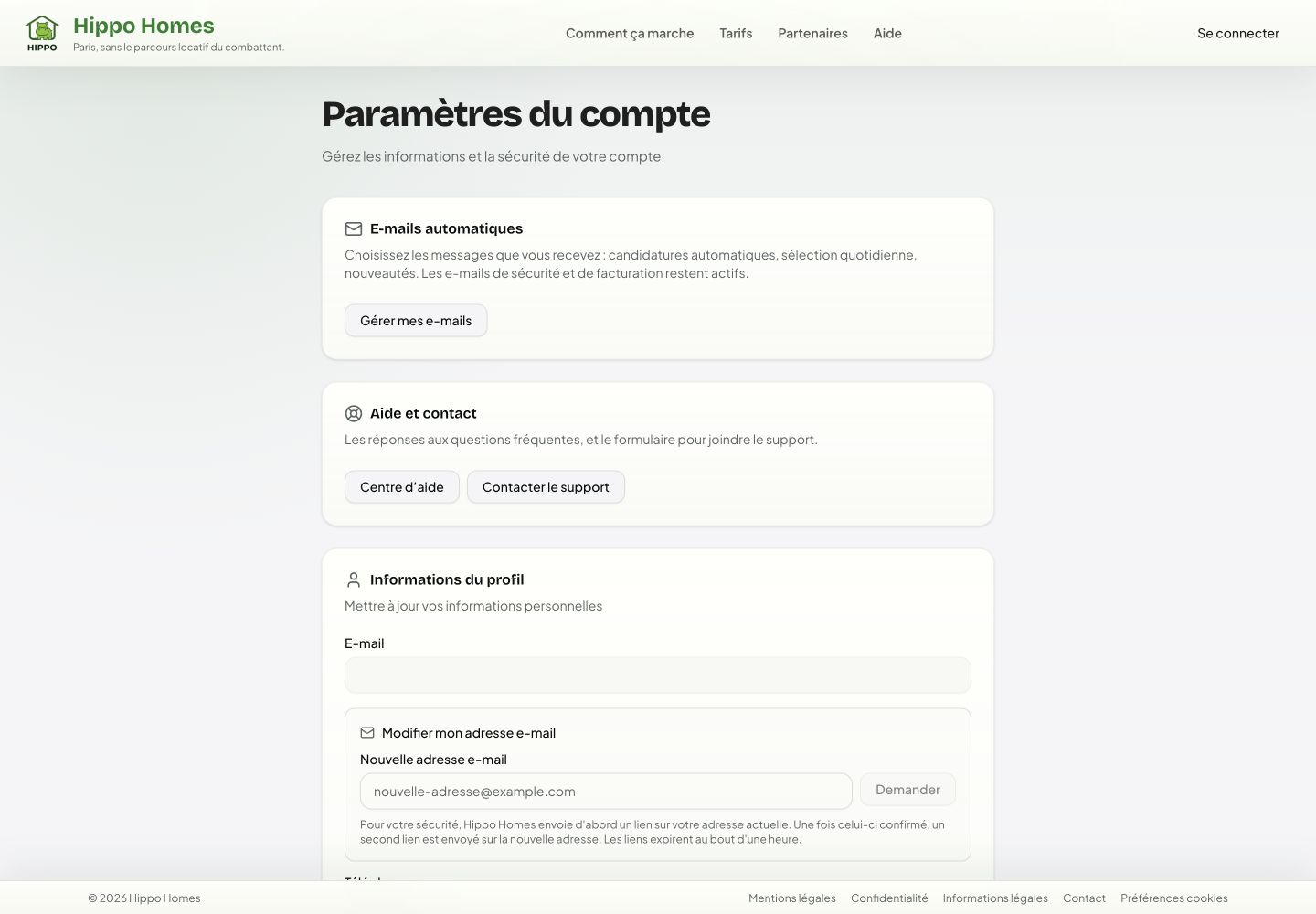
Account and Security Settings
-
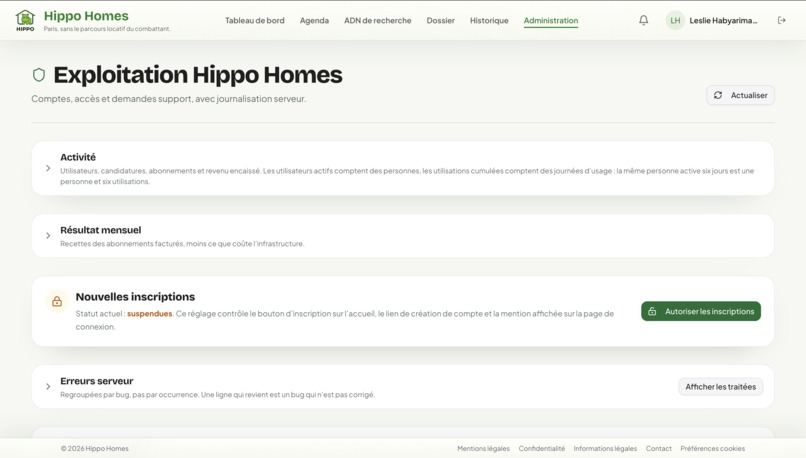
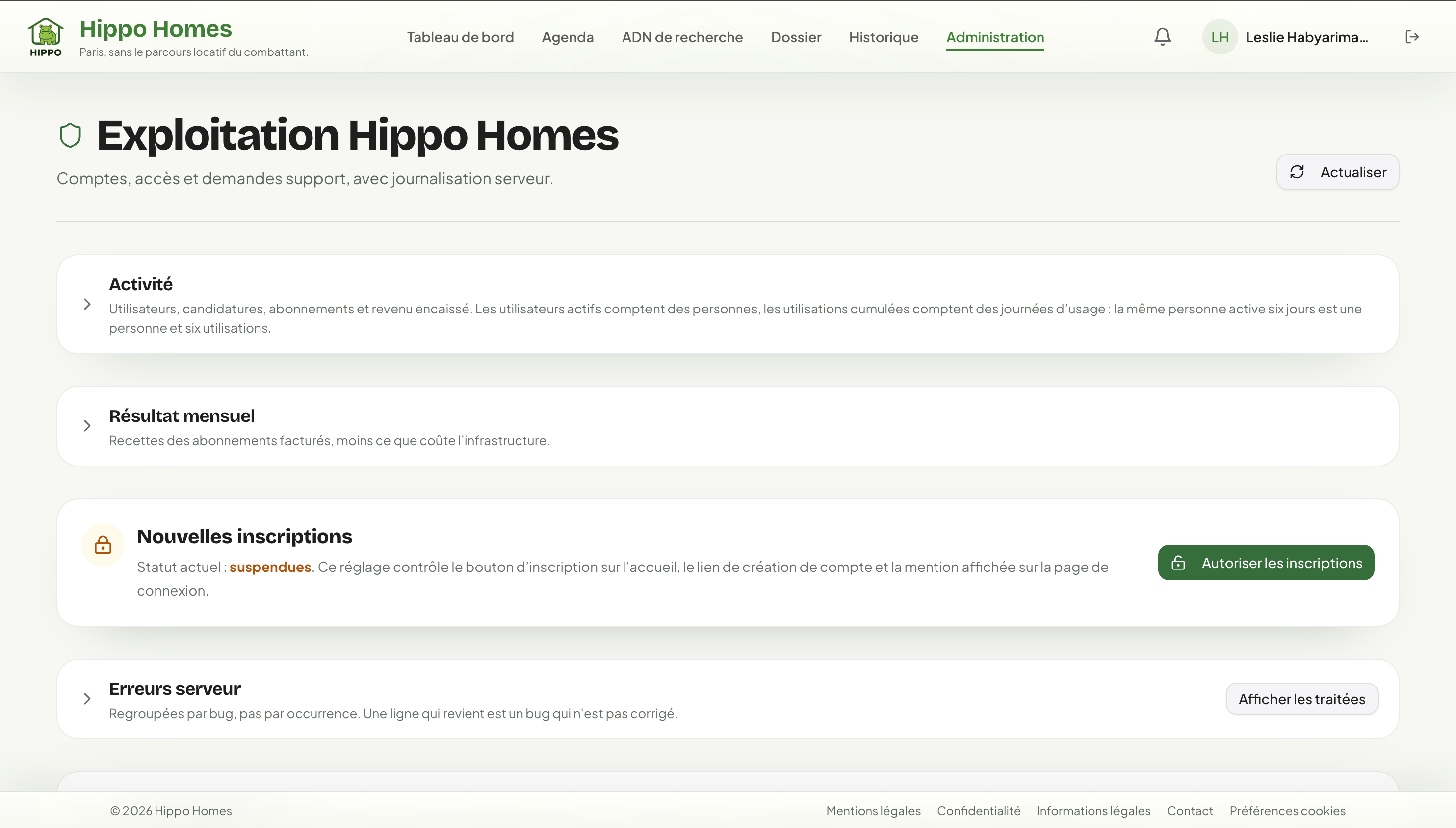
Admin Area and Support Management
Inspiration
HippoHomes started with my own experience of looking for an apartment after moving to Paris.
At the time, I was living in temporary accommodation that I had to leave by the end of the month. I needed to find a permanent home quickly. The problem was that most apartments were posted during the day, while I was at work. I could not spend the whole day checking listing websites.
In Paris, having a good application is often not enough. You also need to be one of the first people to see the listing, apply, call the agency and arrange a visit. Some apartments received more than 250 applications in less than an hour.
I started taking days off work just to refresh listing websites. As soon as something appeared, I had to apply, call the agency and sometimes visit the apartment that same day. Even when I managed to get a viewing, there could be twenty other people visiting at the same time.
I kept investing time, energy and hope into the search, only to be rejected again and again.
Eventually, I was selected for an apartment. It was far from the metro line I used to get to work, smaller than I needed and slightly above my budget. Most of the ceiling was so low that I could only stand upright in a few square metres of the apartment.
Most importantly, it had mold, and I am allergic to mold.
Normally, I would never have accepted it. But after weeks of stress, missed work and rejection, I was exhausted. I felt that if I refused it, I might end up with nowhere to live. So I accepted an apartment that did not meet my needs and could affect my health.
On the evening I moved in, I realized that the mold was too severe for me to stay there. My health was already sensitive, and staying in that environment would have made it worse. I had to leave the apartment the following day and start searching all over again.
That was when I thought: there has to be a better way.
Finding a home should not require people to stop working, refresh several websites all day, compete with hundreds of applicants and eventually accept an unsuitable or unhealthy apartment because they are exhausted and afraid of ending up with nothing.
The housing market should be fairer, and I believe technology can help make it fairer.
That is why I created HippoHomes.
HippoHomes is an AI apartment hunter that handles the repetitive and time-sensitive parts of the search. It learns what the user is looking for, monitors the market, identifies suitable apartments as soon as they appear and helps the user respond before the opportunity is gone.
But finding the right listing is only part of the problem. Someone still needs to call the agency, check whether the apartment is available, ask questions, introduce the applicant and try to arrange a viewing.
This is where Call-E becomes essential.
With Call-E, HippoHomes does more than recommend apartments. It can call agencies, collect missing information, check availability and try to arrange a visit while the user is at work or simply living their life.
The goal is not to give certain applicants an unfair advantage. It is to reduce the disadvantage faced by people who cannot spend every working day monitoring listings and calling agencies.
Let me show you how HippoHomes works and how each feature responds to a real problem I faced during my own apartment search.
What it does
HippoHomes is an AI apartment hunter that learns what each user is really looking for. It does this through their stated preferences and the way they interact with listings.
Users enter their budget, preferred locations, commuting needs, activities, lifestyle and essential criteria. As they browse apartments, HippoHomes learns which ones they like and looks for patterns in their choices. These patterns form what we call their Search DNA.
HippoHomes then:
- Monitors apartment listings continuously.
- Analyses and ranks new apartments based on how well they fit the user.
- Explains why an apartment may be a good match.
- Considers the price, location, commute, layout, amenities, lifestyle and nearby activities.
- Lets users prepare the information and documents needed for an application.
- Alerts users when a strong match appears.
- Uses Call-E to contact the agency or property representative.
- Checks whether the apartment is still available.
- Asks questions that the listing does not answer.
- Shares relevant information about the applicant, with their permission.
- Tries to arrange a viewing based on the user’s availability.
- Gives the user a summary of the call, including what was confirmed, what the agency requires and what needs to happen next.
The user stays in control. They review the apartment and authorize the call before it is made. HippoHomes cannot make financial commitments, accept contractual terms or provide information that the user has not approved.
Without Call-E, HippoHomes can find and recommend an apartment. With Call-E, it can help the user contact the agency and get closer to an actual viewing.
How we built it
HippoHomes is a web application built with Next.js. Supabase is used for authentication, user information, apartment preferences, application profiles and database access.
The matching system combines the preferences entered by the user with patterns from the apartments they like. This information is used to build their Search DNA.
New listings are collected and put into a consistent format so they can be compared. HippoHomes then calculates a personal match score and explains the main reasons behind it.
Before making a phone call, HippoHomes prepares a call brief containing the information needed for that specific apartment. The user decides what information Call-E is allowed to share.
The brief can include:
- The listing reference and address.
- Questions about the apartment’s availability.
- Relevant information about the applicant.
- Details that were missing from the listing.
- Times when the user is available for a visit.
- Clear limits on what the agent is allowed to confirm.
Call-E uses this information to place the call. The agent explains that it is calling on behalf of a prospective tenant, checks whether the apartment is still available, asks relevant questions and tries to arrange a viewing.
After the call, HippoHomes records the useful results, such as the call status, apartment availability, documents requested by the agency, answers to the user’s questions, possible viewing times and any follow-up action required.
The user gets a clear summary of the conversation and knows exactly what to do next.
This brings together several tasks that people normally have to manage separately: searching, checking availability, calling, taking notes and arranging visits.
Challenges we ran into
One of our main challenges was deciding what the phone agent should be allowed to do without asking the user again.
Apartment calls can involve personal information, questions about income or employment, eligibility requirements and possible viewing times. We had to define what the agent could answer, what information it could share and when it should wait for the user’s approval.
Phone conversations are also unpredictable. An agency might say that the apartment is no longer available, transfer the call, request information in an unexpected order, offer another property or ask something the user has not authorized the agent to answer.
The agent needed to handle these situations without losing track of the reason for the call or sharing information it should not share.
Another challenge was turning a conversation into information the application could use. A transcript is not enough. HippoHomes needs to separate confirmed facts from suggestions, unanswered questions and possible next steps.
Privacy was another important part of the work. We needed to limit the amount of personal information shared during a call, ask for the user’s permission and give them a clear record of what happened.
We also had to consider unanswered calls, voicemail, callbacks, outdated listings, unavailable agents and situations where a viewing cannot be booked immediately.
Accomplishments that we're proud of
We are proud that HippoHomes does not stop at recommending apartments. It helps users act on the opportunities it finds.
The project brings together several parts of the apartment search:
- Understanding what the user needs.
- Learning from the apartments they like.
- Monitoring new listings.
- Ranking apartments based on personal relevance.
- Preparing the next action.
- Calling the agency.
- Recording the useful results of the conversation.
- Helping the user get a viewing.
We are especially proud of how Call-E fits into the full HippoHomes experience. The phone call is not a separate demonstration added to the product. It starts from a real apartment selected for a real user, has a clear purpose and returns information that HippoHomes can use.
The system does not simply tell users that they should call an agency. It helps them make that call and find out what happens next.
What we learned
We learned that finding a good listing is not enough.
Users do not just want a list of apartments. They want to reach the agency, get reliable information and arrange a viewing. A recommendation only becomes useful when the user can act on it.
We also learned that building a useful phone agent requires more than writing a conversational prompt. The agent needs a clear goal, the right information, limits on what it can say, a plan for unexpected situations and a useful way to report the result.
Call-E helped us understand how phone calls can become part of an application’s normal workflow. Many agencies still rely heavily on the telephone, so calling is often the only way to connect an online apartment search with what is actually happening in the agency.
We also learned that users need to stay in control. HippoHomes should remove repetitive work without making personal or contractual decisions on their behalf.
What’s next for HippoHomes: AI Apartment Search
Our next step is to integrate Call-E more deeply into the apartment search.
We want to offer different types of calls depending on what the user needs. For example, the agent could check availability, ask for more information, find out whether the applicant meets the agency’s requirements, follow up on an application or request a viewing.
Users will be able to decide exactly which parts of their profile can be shared. Sensitive answers will require their approval.
We also want to improve scheduling. HippoHomes could compare the user’s availability with the times suggested by the agency, manage callbacks and make follow-up calls when necessary.
The results of each call will update the apartment inside HippoHomes. Users will be able to see whether it is still available, whether the agency has responded, which documents are required and whether a visit has been proposed.
For agencies and property owners, HippoHomes could also make enquiries easier to manage. Instead of receiving a large number of incomplete or unsuitable applications, they could receive clear information from applicants who match their stated requirements and coordinate visits more efficiently.
In the future, HippoHomes will also provide information about rental prices, sale prices, neighbourhood trends and possible investment opportunities. This could help people compare renting, buying and investing in different locations.
We are starting in Paris because the market is highly competitive and the search process is especially stressful. After that, we want to expand to other European cities facing similar housing problems.
Our long-term goal is to move housing from a search market to a matching market.
Instead of spending their days refreshing websites, users should have an apartment hunter that understands what they need, finds suitable homes, contacts agencies and helps them arrange real visits.
Call-E makes that possible.
Built With
- ai
- api
- call-e
- data
- firebase
- javascript
- ml
- next.js
- node.js
- postgresql
- react
- supabase
- typescript

Log in or sign up for Devpost to join the conversation.