-
-
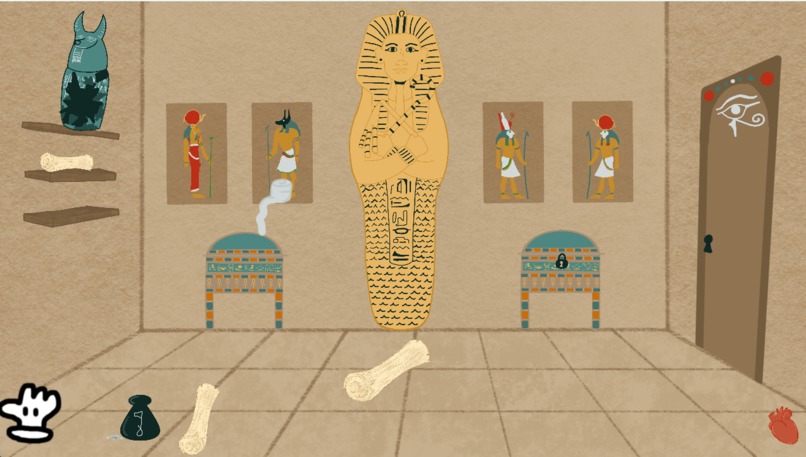
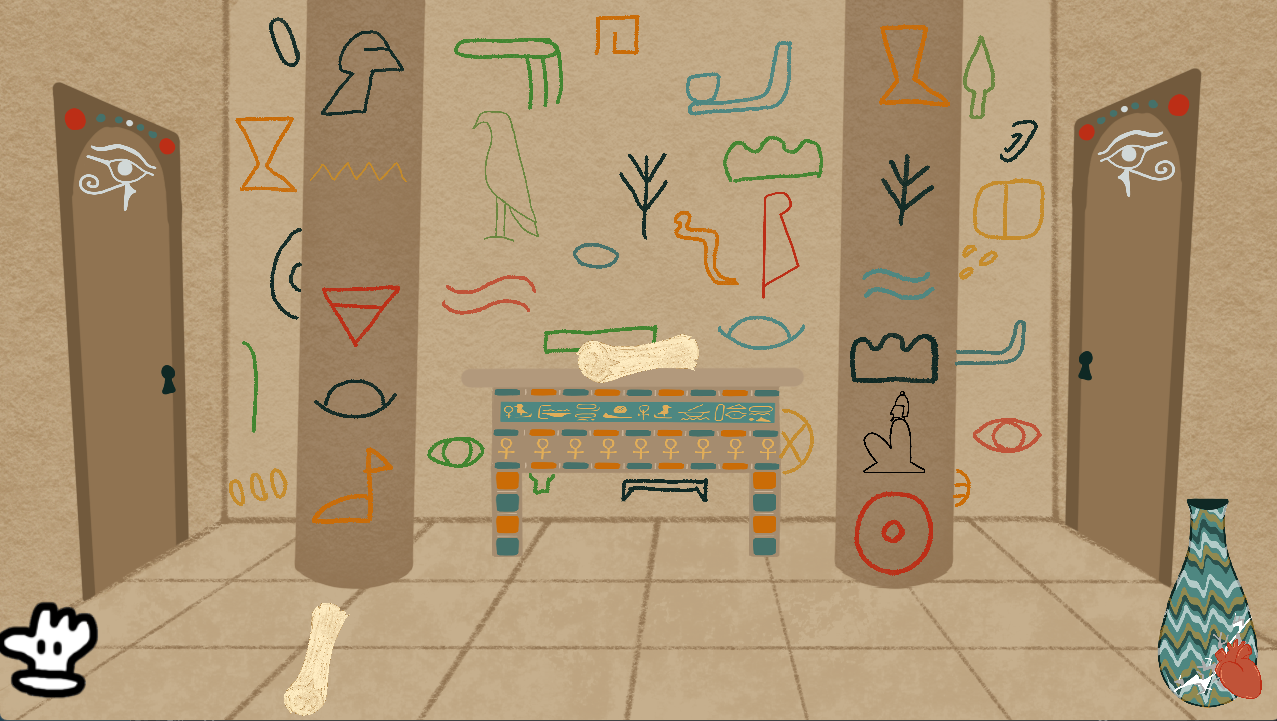
Room 1: Embalming Process + Symbolism
-
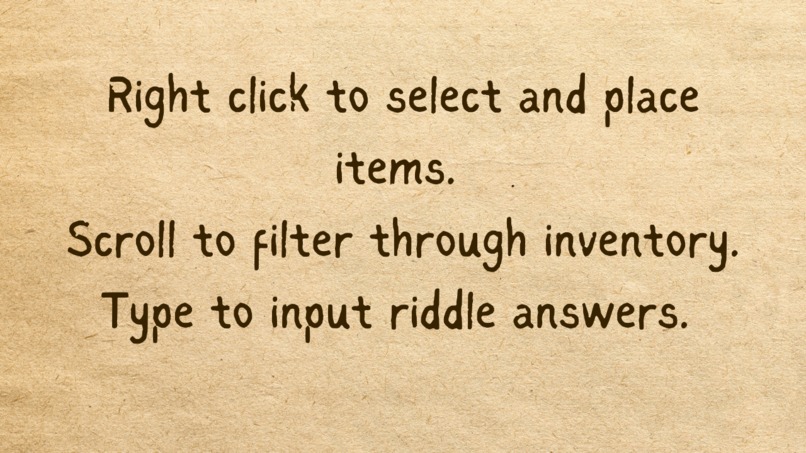
-
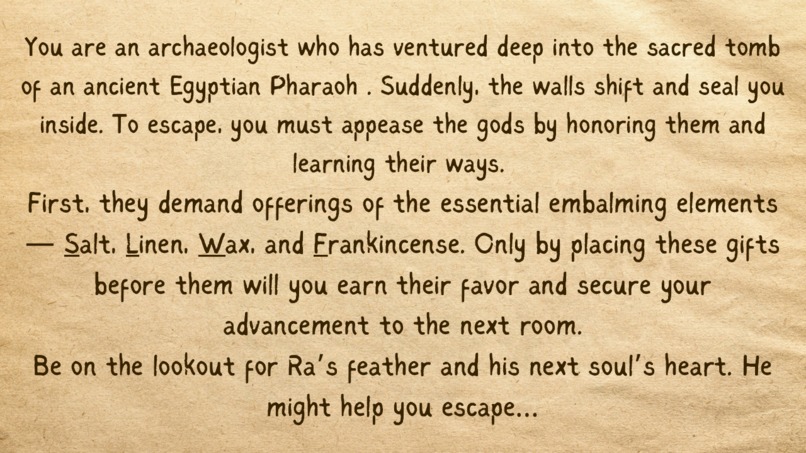
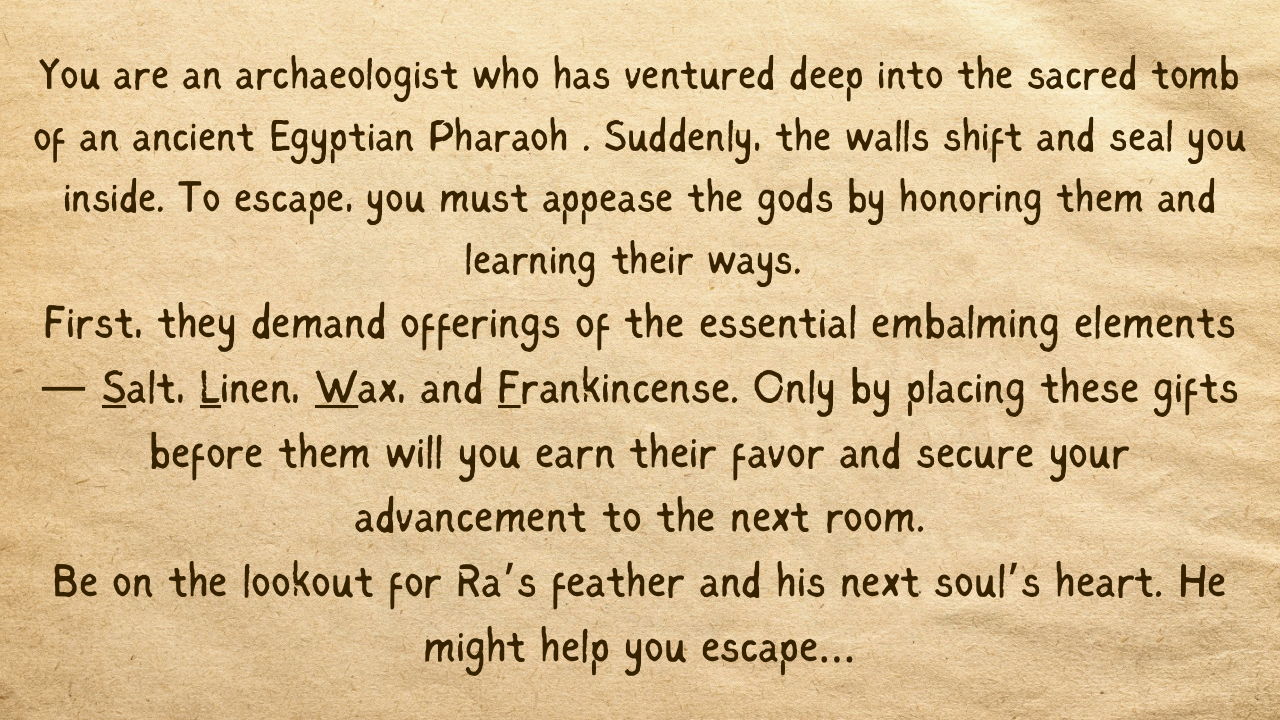
Welcome Message
-
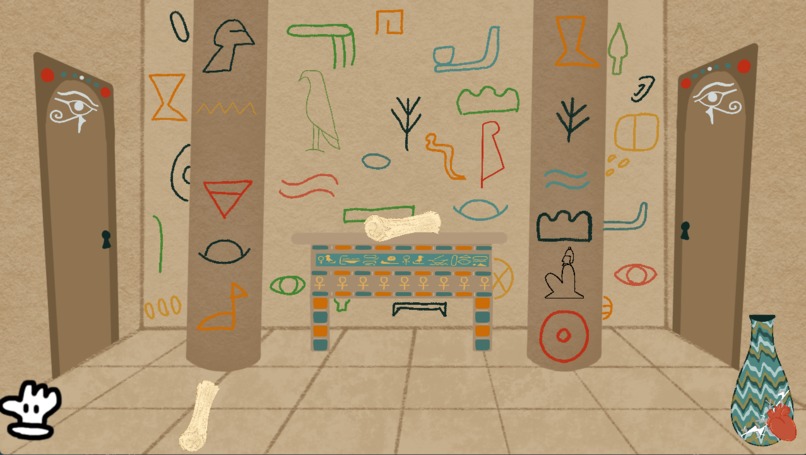
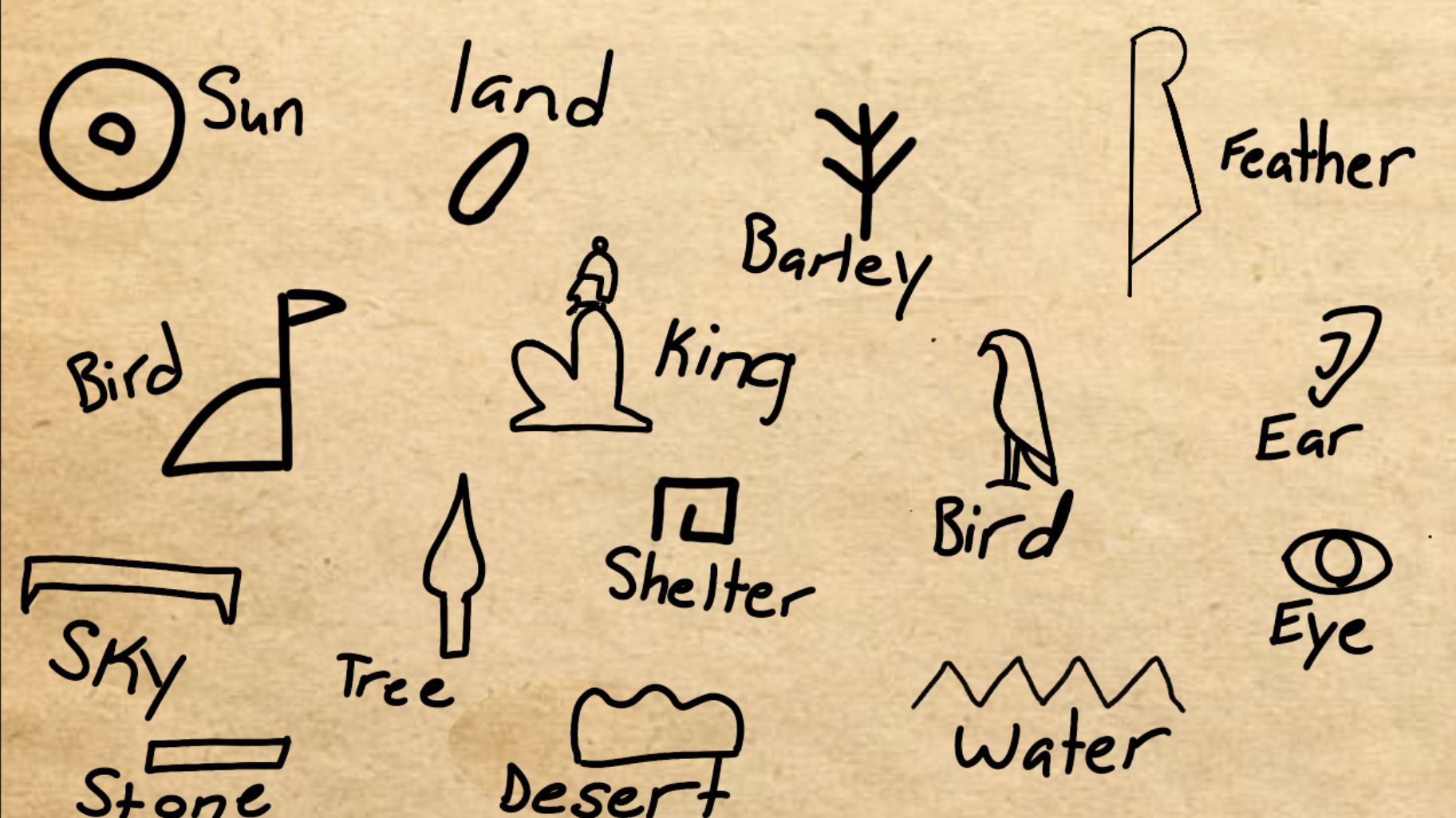
Room 2: Deciphering Hieroglyphs
-
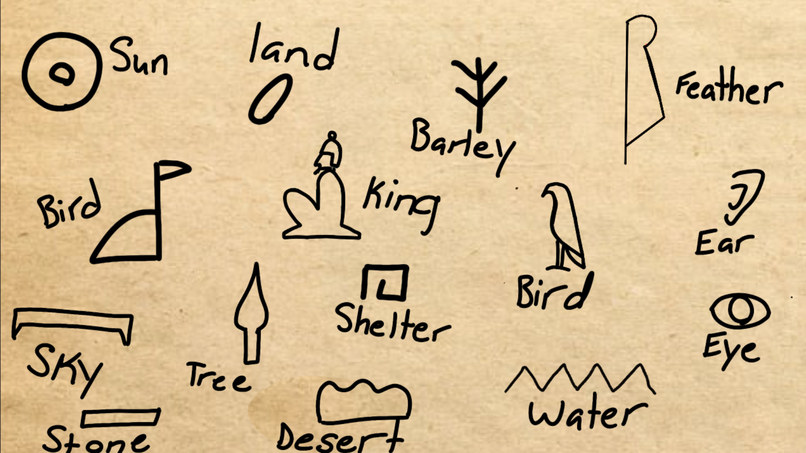
Hieroglyph Key
-
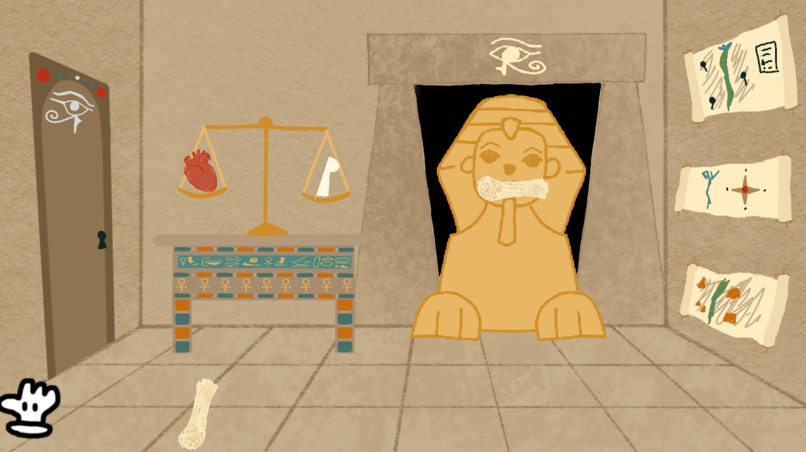
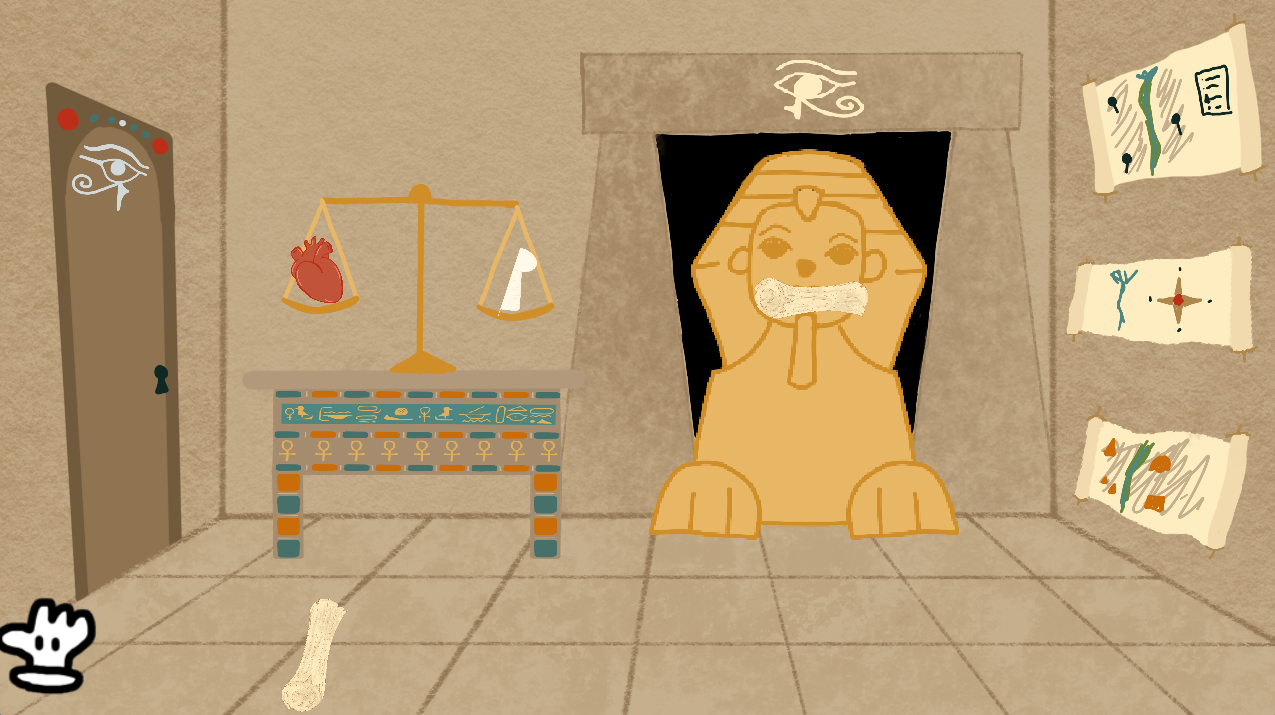
Room 3: Geography Riddle Room
Inspiration
Inspired by the rich culture of ancient Egypt, we set out to create a game that blends education with excitement. For the illustrations and game assets, we drew inspiration from authentic Egyptian artifacts, many of which can be found at the MET art museum. Our goal was to bring history to life through an immersive and engaging experience.
What it does
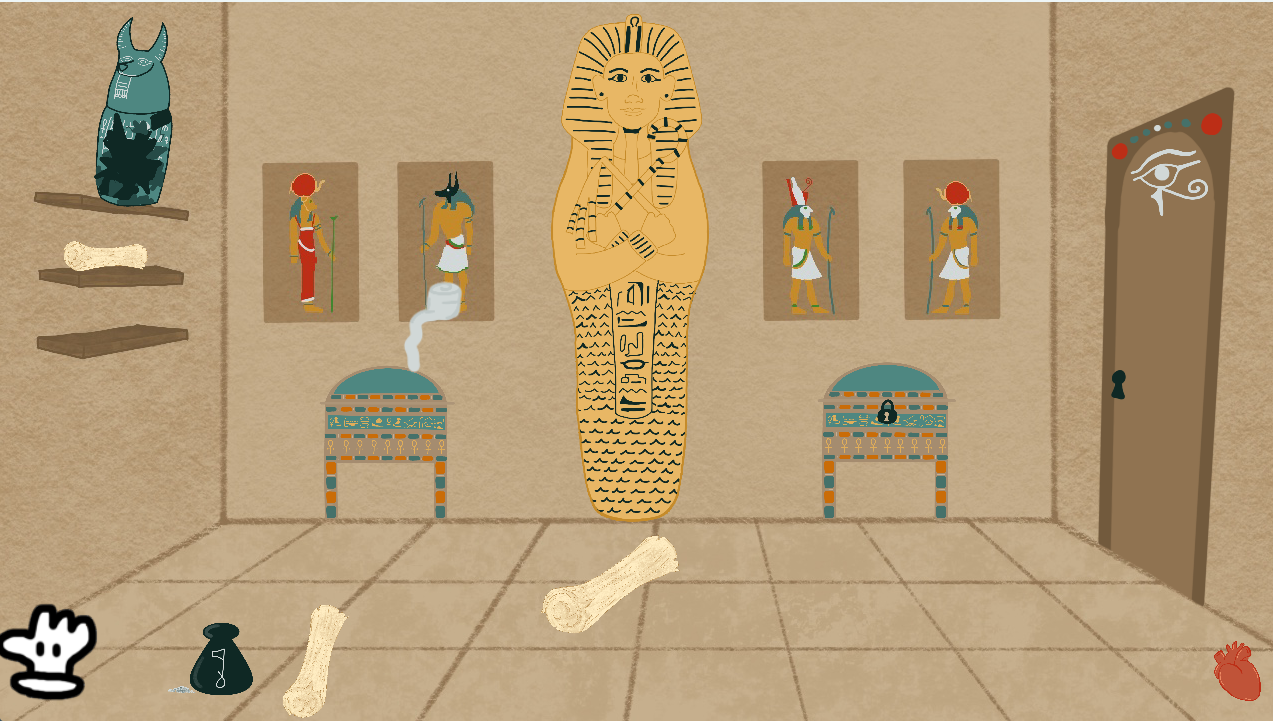
Our escape room adventure takes players through 3 different immersive rooms: the Embalming Chamber, the Hieroglyph Deciphering Room, and the Egyptian Geography Room. Along the way, players will uncover fascinating facts about mythological gods, decode ancient hieroglyphics, and explore Egypt’s diverse landscapes. With 15 puzzles and riddles, over 12 educational insights into Egyptian culture, and more than 50 hand-drawn game assets and backgrounds, there's always something new to discover!
How we built it
My partner and I collaborated using GitHub to share files and streamline development. We built the interactive game environment in Godot, despite both being relatively new to the engine—Caleb had only used it once before, while Isabella learned it over the course of the weekend. For the game's visual assets, Isabella used Procreate and Canva, drawing inspiration from historical artifacts found on Pinterest and the MET art museum website. We also incorporated sound effects and a sound track to fully immerse players in our game.
Challenges we ran into
Unfortunately, we encountered an issue with our Git commands, which led to the loss of a significant portion of our work across our two devices. However, thanks to our organized file management, clear communication, and detailed notes, we were able to backtrack and recover efficiently. Initially, Isabella used Adobe Illustrator to create the game assets but quickly realized that the process was too time-consuming on a computer. To adapt, she switched to her iPad, allowing for a more efficient and intuitive workflow.
Accomplishments that we're proud of
Caleb is proud that we successfully delivered the full scope of our original vision. On the first night, we planned for three rooms and ten puzzles, but as development progressed, we realized the game would be even stronger with additional content—so we took on the challenge to create 15 puzzles. We hadn't initially planned to include sound effects, but we realized they would greatly enhance the player experience. Despite being a team of two beginners, we accomplished an impressive amount. Isabella is proud of diving into an entirely new software—Godot—over the course of the weekend. Having never used it before, she embraced the challenge and was excited to learn and apply her new skills in real time.
What we learned
Caleb learned firsthand the importance of proper file management while also expanding his skills in Godot. Meanwhile, Isabella took on the challenge of learning Godot from scratch, mastering the basics of the software over the course of the weekend.
What's next for Hide and Sphinx: Escape the Tomb
later
One idea we had but didn’t get to implement was a timer element. We believe this would add an extra layer of challenge and excitement, encouraging players to think quickly under pressure. It would also introduce a competitive aspect, allowing players to return and try to beat their previous high scores.


Log in or sign up for Devpost to join the conversation.