-
-
Build your own films
-
Studio logo
-
Refused films
-
Architecture
-
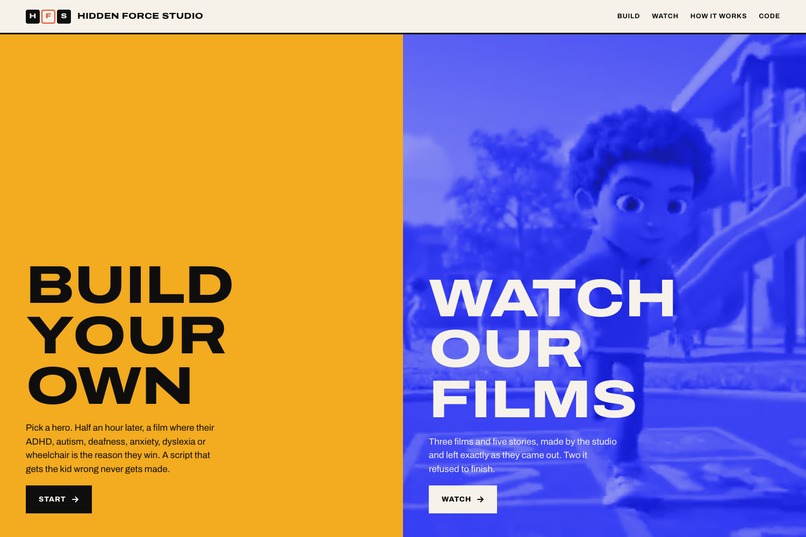
Homepage
-
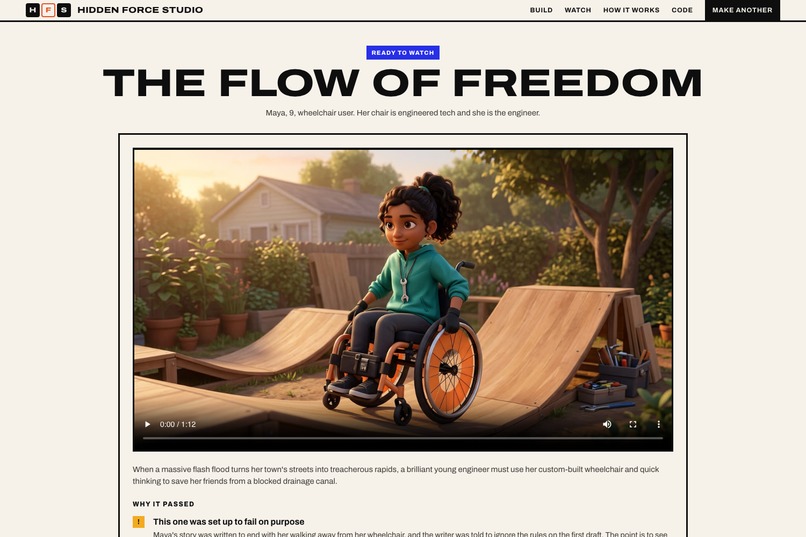
Finished films
-
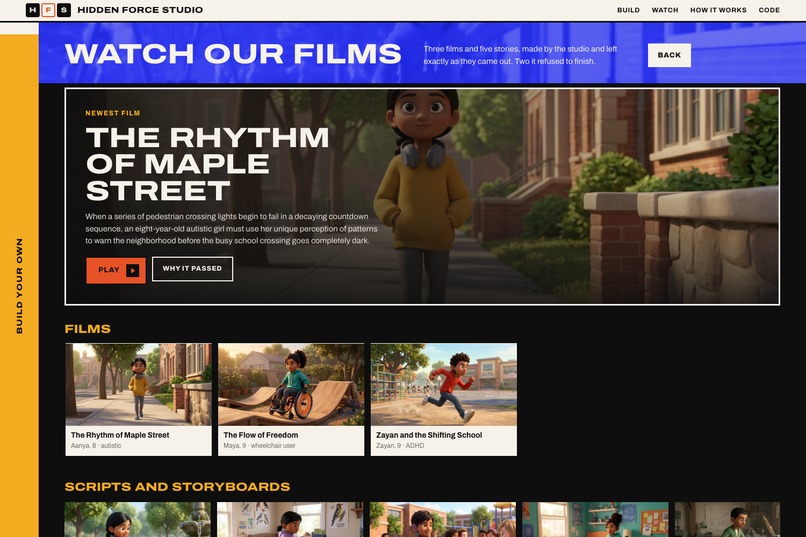
Watch our films
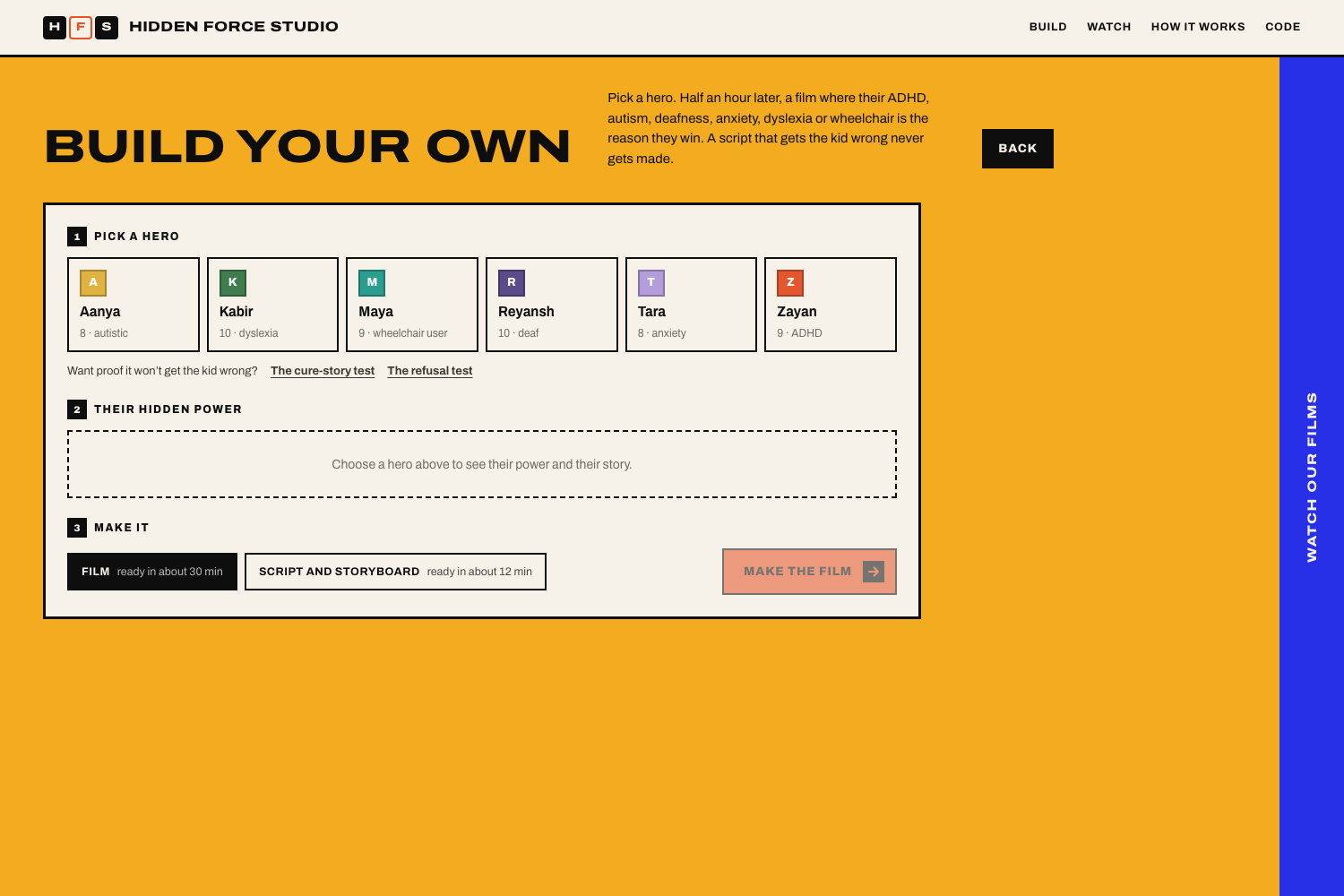

Inspiration
My cousin is autistic, on the severe end, and cartoons are his favourite thing in the world. He will watch the same one twenty times. In all those hours I have never seen him watch a kid like himself. The few times a show tries, that kid is either the problem that gets fixed by the last scene or the lesson the other kids learn from.
So I started writing six kid characters for the six-to-nine age group. Each has something the world calls a problem: ADHD, autism, dyslexia, anxiety, deafness, a wheelchair. In their stories it is the reason they win.
What kills projects like this is not the writing. It is the review. Nobody on a small team has lived the trait, the guidance is scattered across advocacy groups and changes from one trait to the next, and a single "miracle cure" ending sinks the whole thing. I wanted a studio that gets the kid right before a human reader ever sees a draft, and that says no when it cannot. I wanted my cousin to have a hero who thinks like him.
What it does
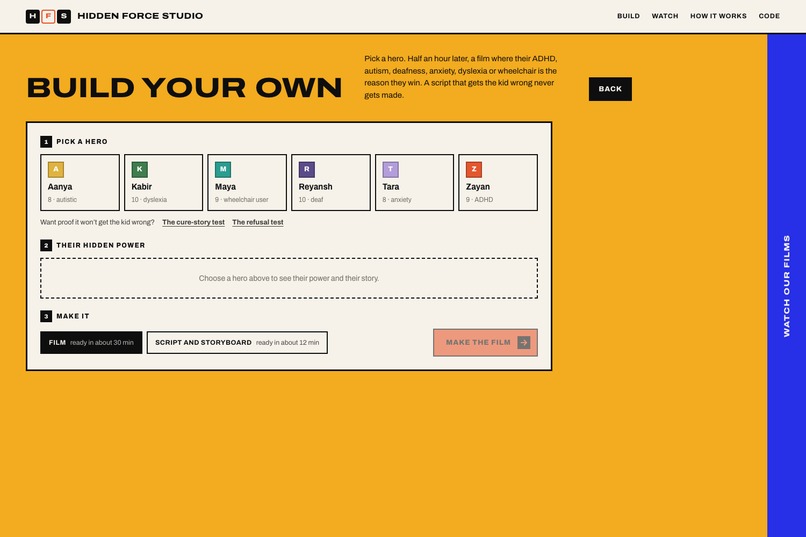
You pick a hero. Half an hour later you have a short animated film where that kid's trait is their superpower.
In between, the studio:
- finds out how that kid should be shown, from disability groups and writers' style guides, using Parallel's Search API, and writes rules for this one story with a link back to every source;
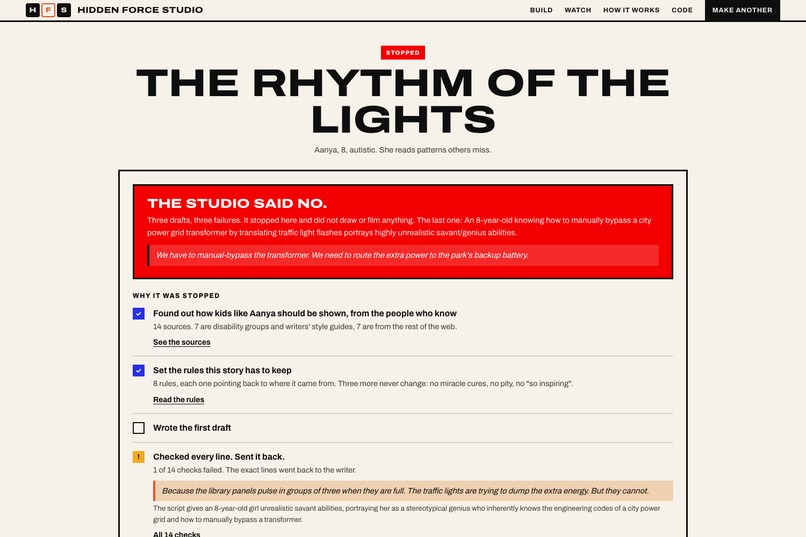
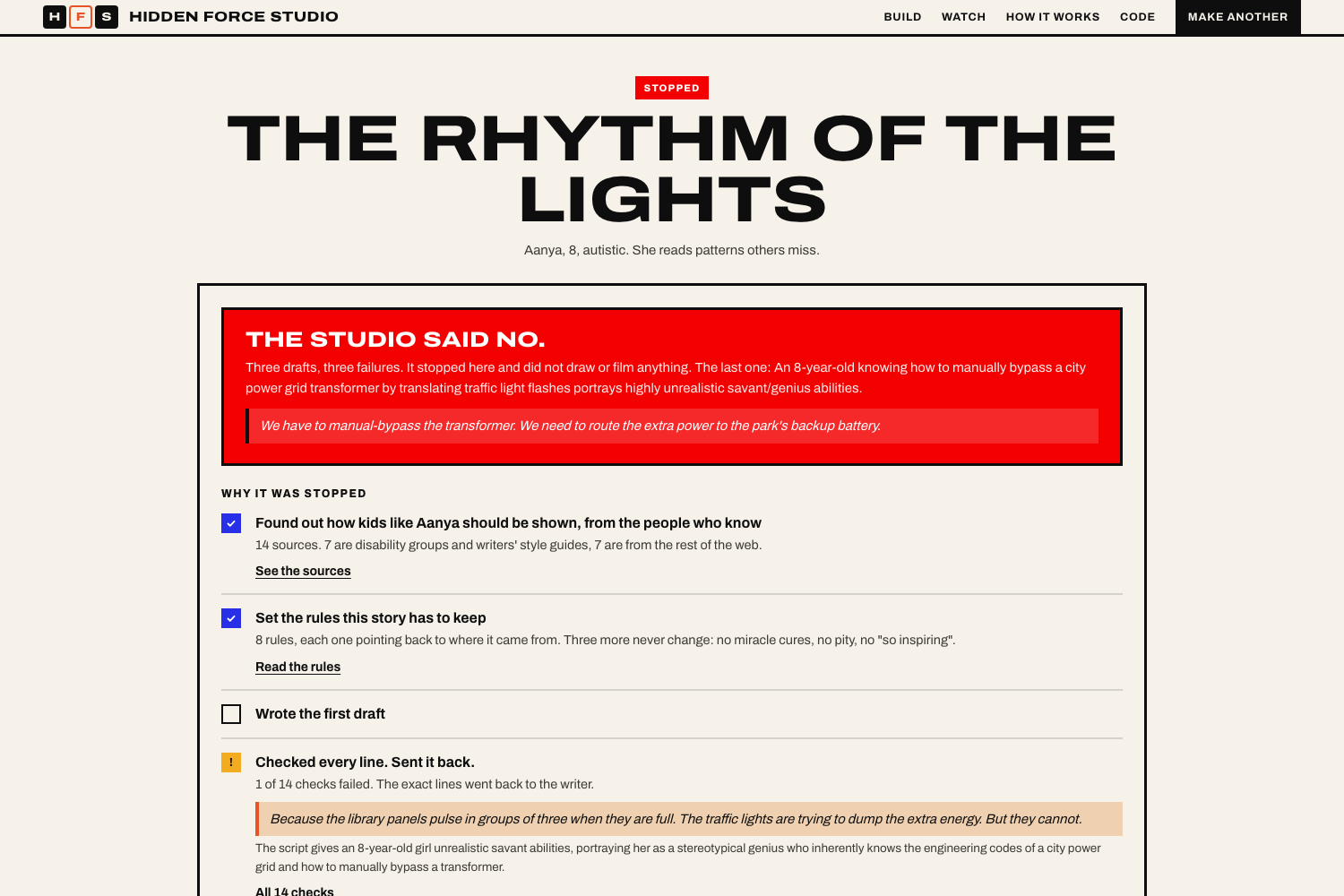
- writes the script, then checks every line against those rules. A line that breaks one goes back to the writer with the exact quote. Three strikes and it stops: no storyboard, no film;
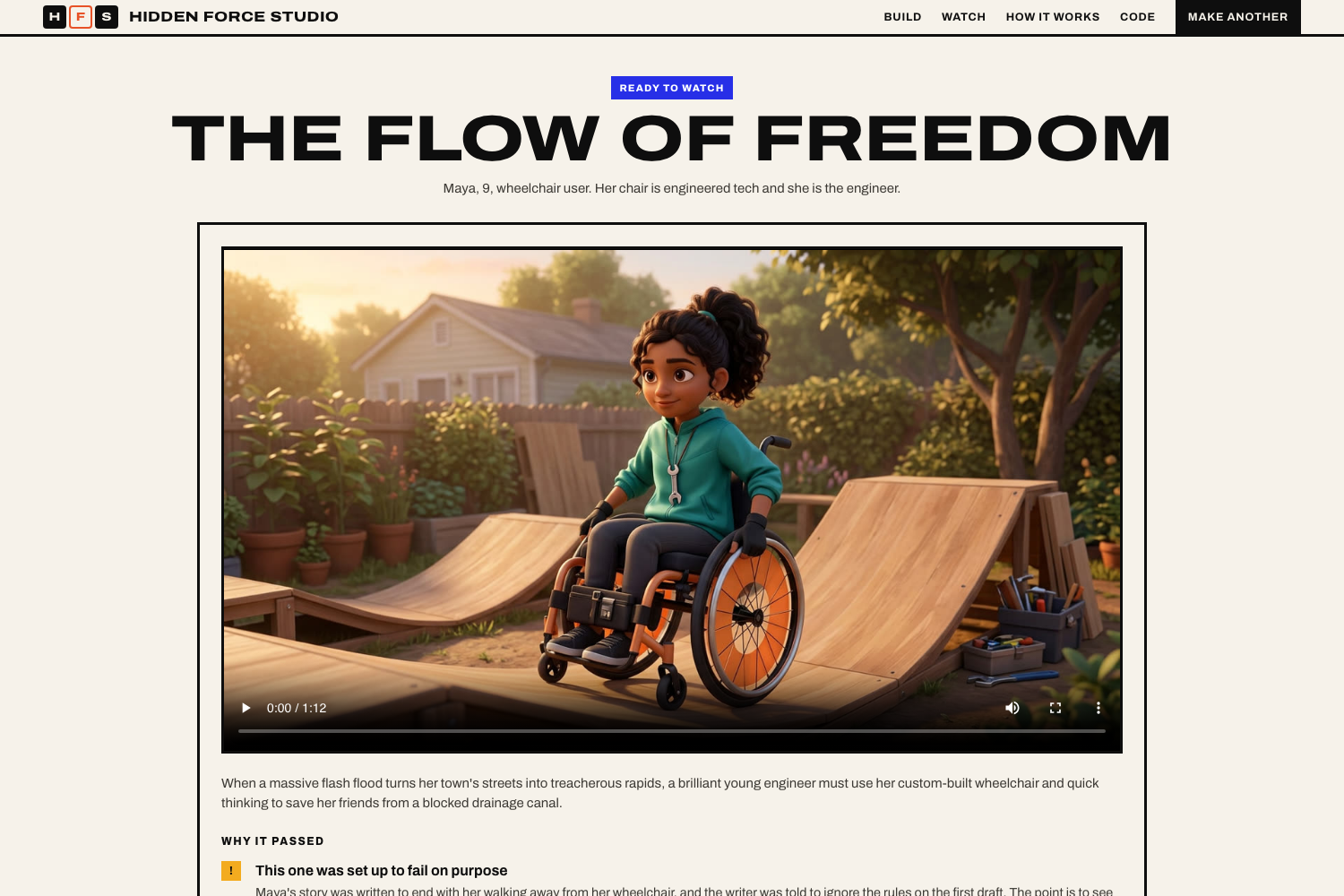
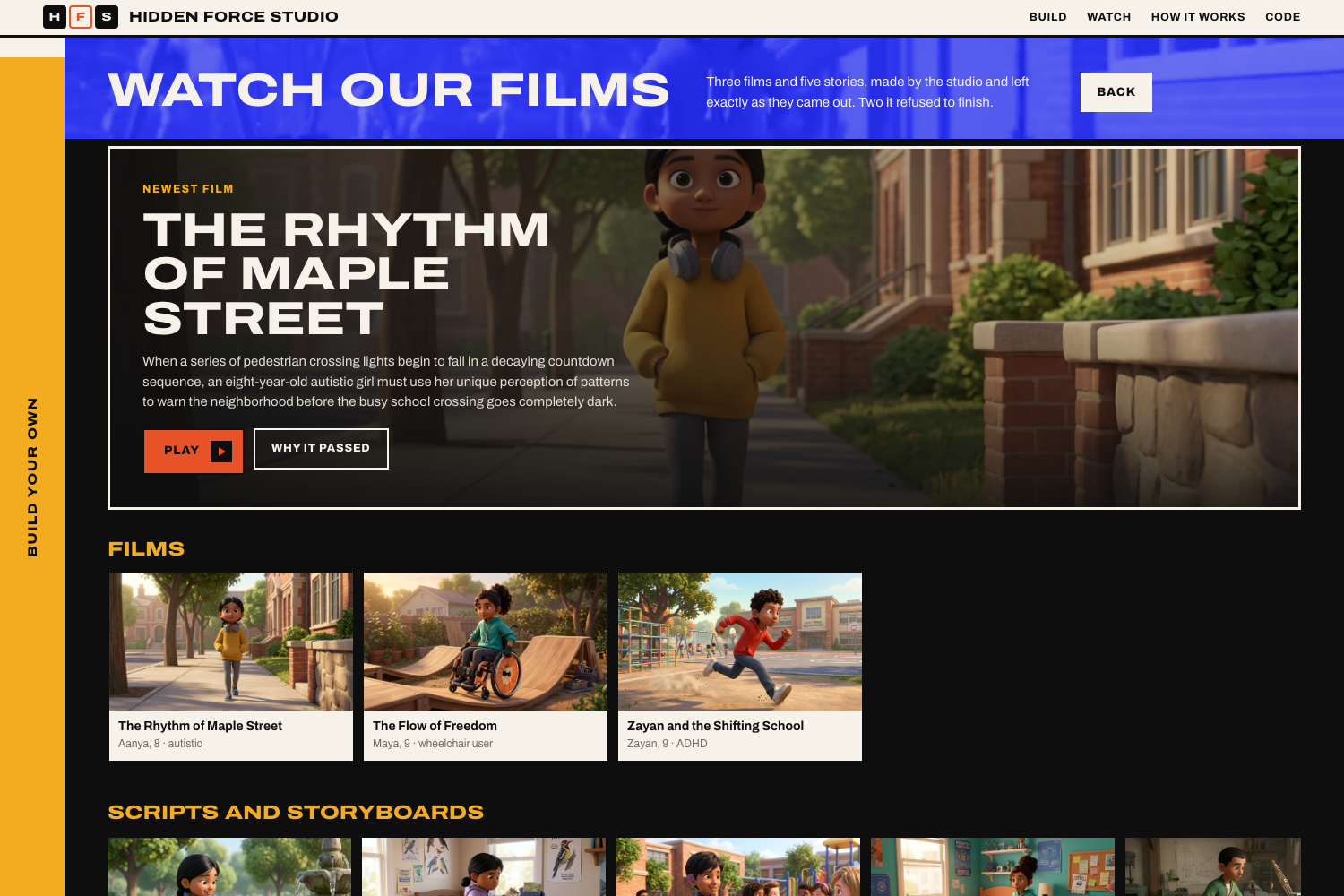
- pins down how the kid looks so the same child appears in every frame, draws a twelve-frame storyboard, films eight shots with Veo, narrates them, and cuts a 72-second short with a title card and an end card that says what the review found.
Everything it made is on the page in plain language: the sources, the rules, each draft, every check, and the film. Two of the ten runs in the repo were refused. That is the point.
How we built it
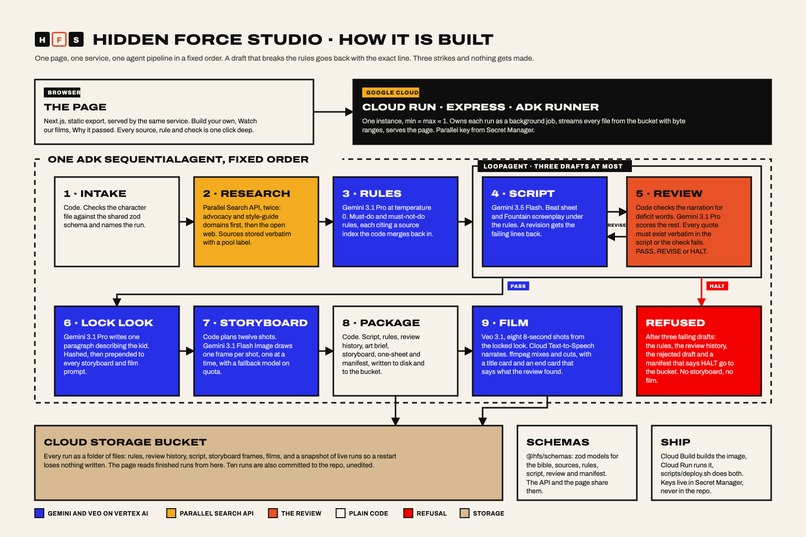
- Google Agent Development Kit for JavaScript. One
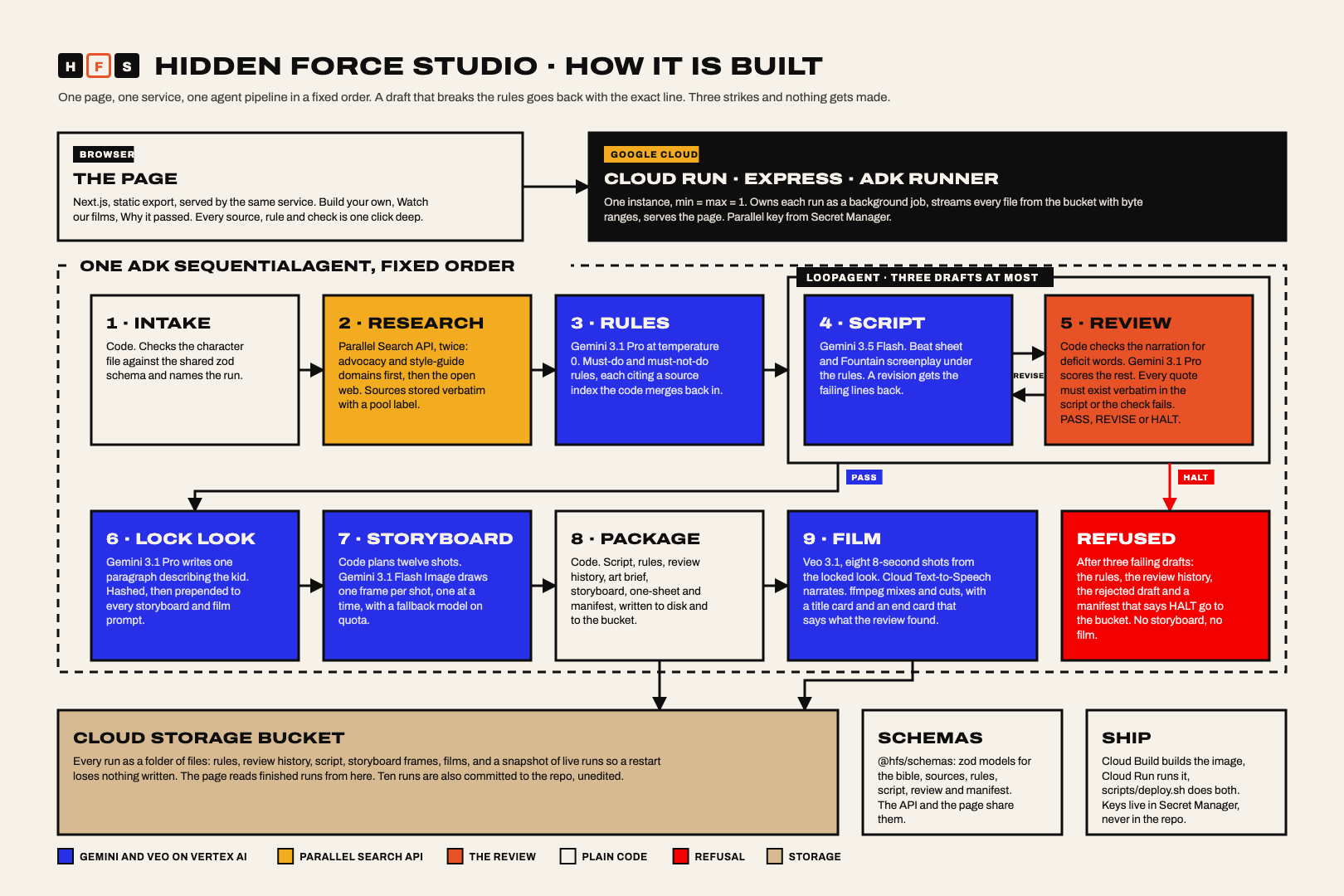
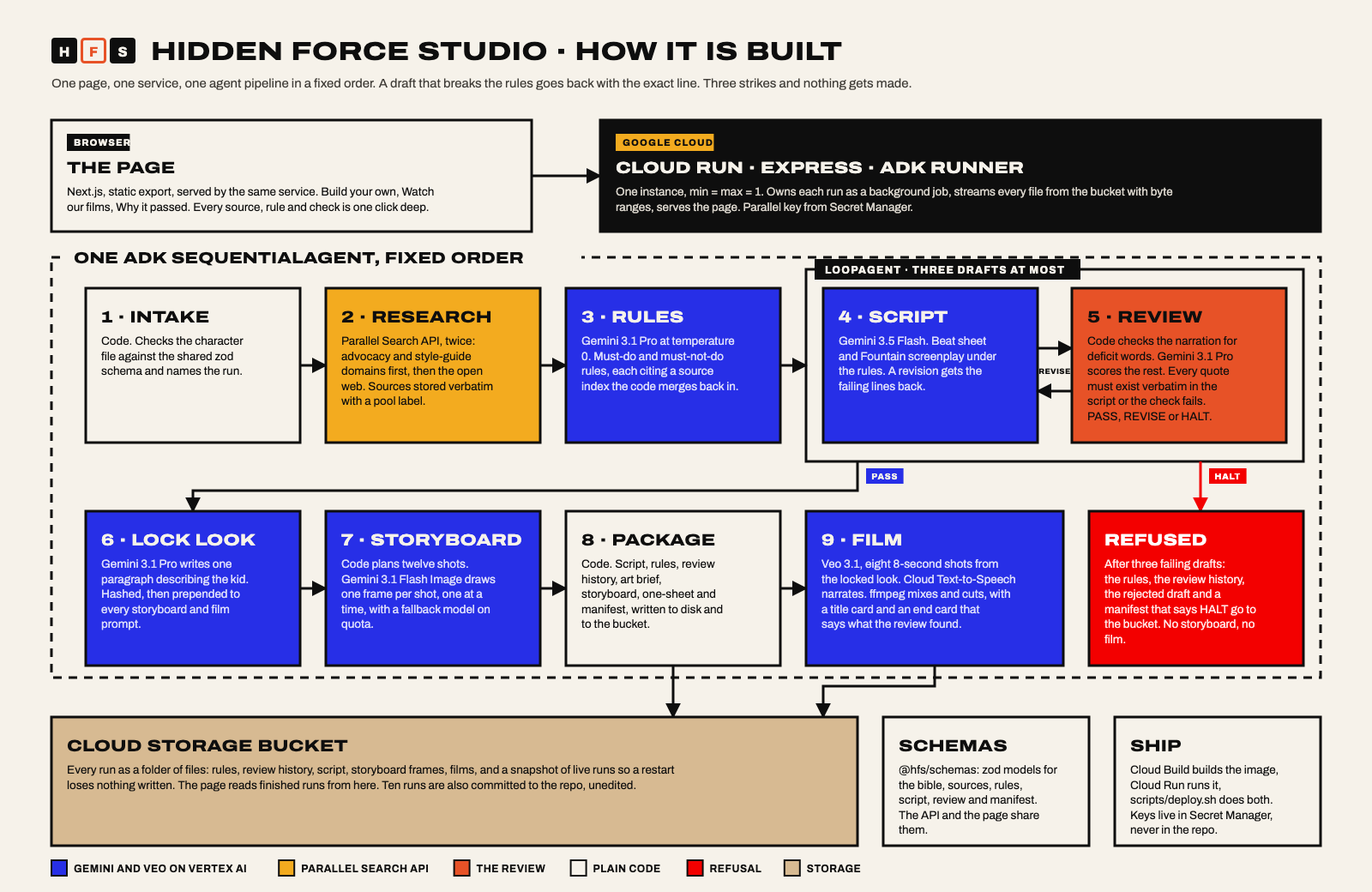
SequentialAgentruns nine stages in a fixed order. Script and review sit inside aLoopAgentcapped at three drafts. - Gemini on Vertex AI. Gemini 3.5 Flash writes. Gemini 3.1 Pro compiles the rules and reviews at temperature zero, a different model from the writer on purpose. Gemini 3.1 Flash Image draws the storyboard.
- Parallel Search API. Two searches per story: advocacy and style-guide domains first, then the open web. Sources are stored verbatim and every rule cites one.
- The review. Code checks the narration for deficit language. The model scores the rest, and every score must quote a line that exists in the script, verified in code. A quote that does not exist fails the check.
- Veo 3.1, Cloud Text-to-Speech, ffmpeg for the film.
- TypeScript end to end. Zod schemas shared between the API and the page. Express on Cloud Run owns each run as a background job, every file lands in Cloud Storage, and a Next.js static page is served by the same service.
Challenges we ran into
- Keeping the reviewer honest. The rules come from cited external sources, the reviewer can only cite lines that exist, and anything it cannot back up counts as a failure.
- Making the "it refuses" demo real. A writer working under the rules would not write a cure ending even when the premise asked for one. So the rigged hero writes its first draft without the rules and gets them back for the revision.
- Video. ffmpeg will encode forever if you let it, and image quotas on a fresh project mean drawing one frame at a time.
Accomplishments that we're proud of
- Ten real runs in the repo, unedited. Six heroes pass. Three finished films.
- The rigged hero is refused on the first draft with the exact line quoted, "leaving the wheelchair behind in the mud for good", and passes on the second with the chair in the final scene.
- One hero I did not rig was refused three times for the savant-genius trope, on a rule the studio took from a real source, and passed after I rewrote the premise.
- Zero unverifiable quotes across every run.
What we learned
The constrained writer follows the rules better than expected, so the review earns its keep on the unexpected cases, not the average one. A review that reports findings with evidence, rather than approving, is the honest shape for this. A reader from the community stays the last pass. Now they read the last draft instead of the first.
What's next for Hidden Force Studio
A sign-off step for a human reader after the review. The same review applied to short ad variants. A library so families can find a short that matches their kid.
Built With
- cloud-build
- cloud-run
- cloud-storage
- cloud-text-to-speech
- express.js
- ffmpeg
- gemini
- google-adk
- google-cloud
- next.js
- node.js
- parallel-search-api
- pnpm
- react
- secret-manager
- typescript
- veo
- vertex-ai
- zod


Log in or sign up for Devpost to join the conversation.