Inspiration
OpenSoundLab (OSL) is my mixed-reality studio for modular synthesis on Meta Quest: you patch in your own room, with cables, dials and speakers standing in space. It is a tool for people who know modular patching, and modular synthesis has a learning curve. Spherical Sounds is the way in for everyone else: you only listen, and nothing has to be learned first.
Spherical Sounds began as a plan for a music label for spatial audio, the kind of head-tracked 3DOF listening that streaming services offer today. OSL was already my tool for arranging sound in space. Then the competition made me ask a different question: why stop there? Why deliver into someone else's format, when the headset can be the whole chain: the studio, the distribution channel and the player, with music that does not only turn with your head but unfolds in your room?
Two older threads came together here. One is RjDj, the long-discontinued iOS app that published music as reactive patches instead of recordings. The other is my research at the Institute Digital Communication Environments in Basel on Sonic Imagination: speculative scenarios that are experienced as spatial sound.
What it does
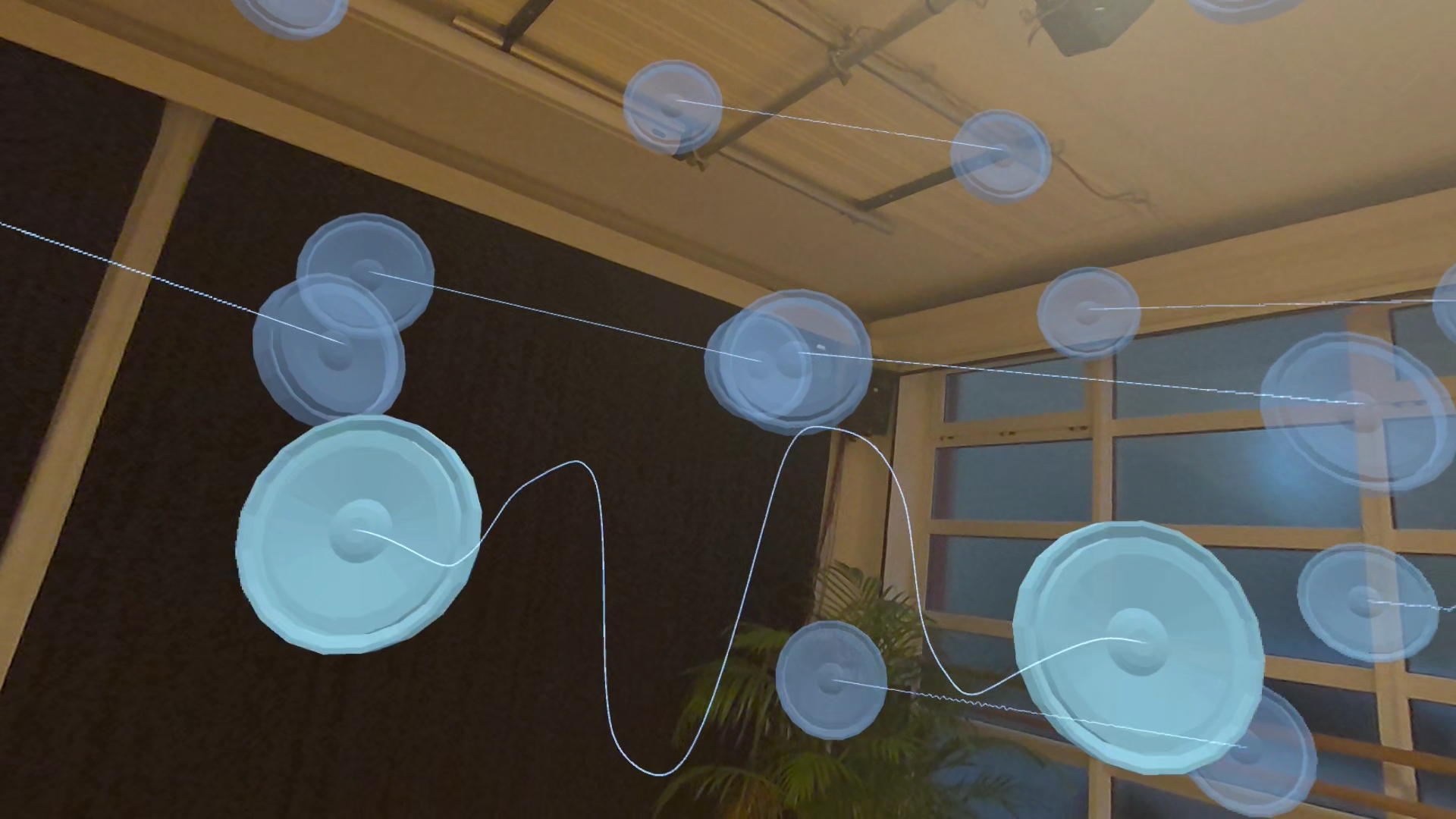
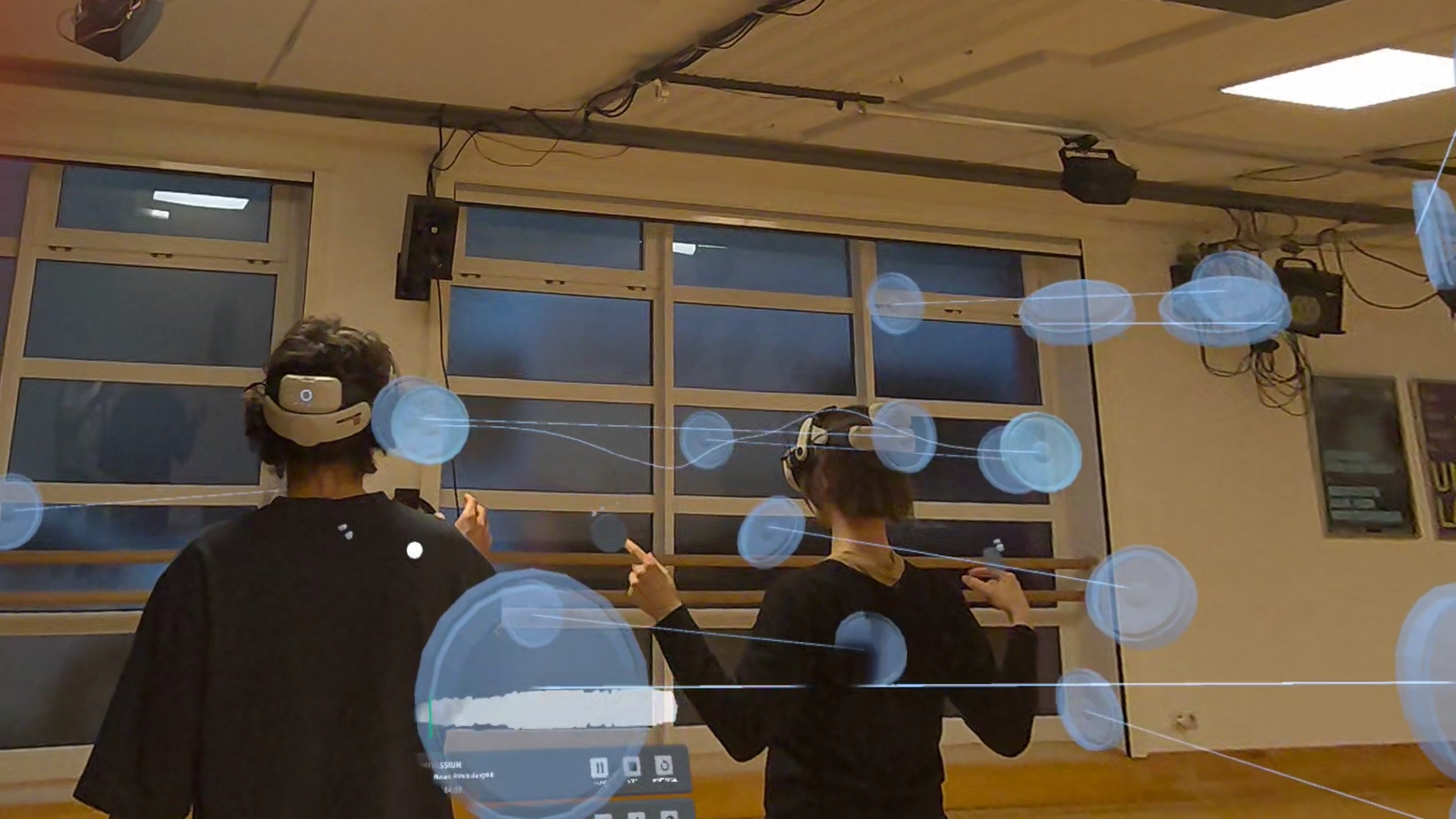
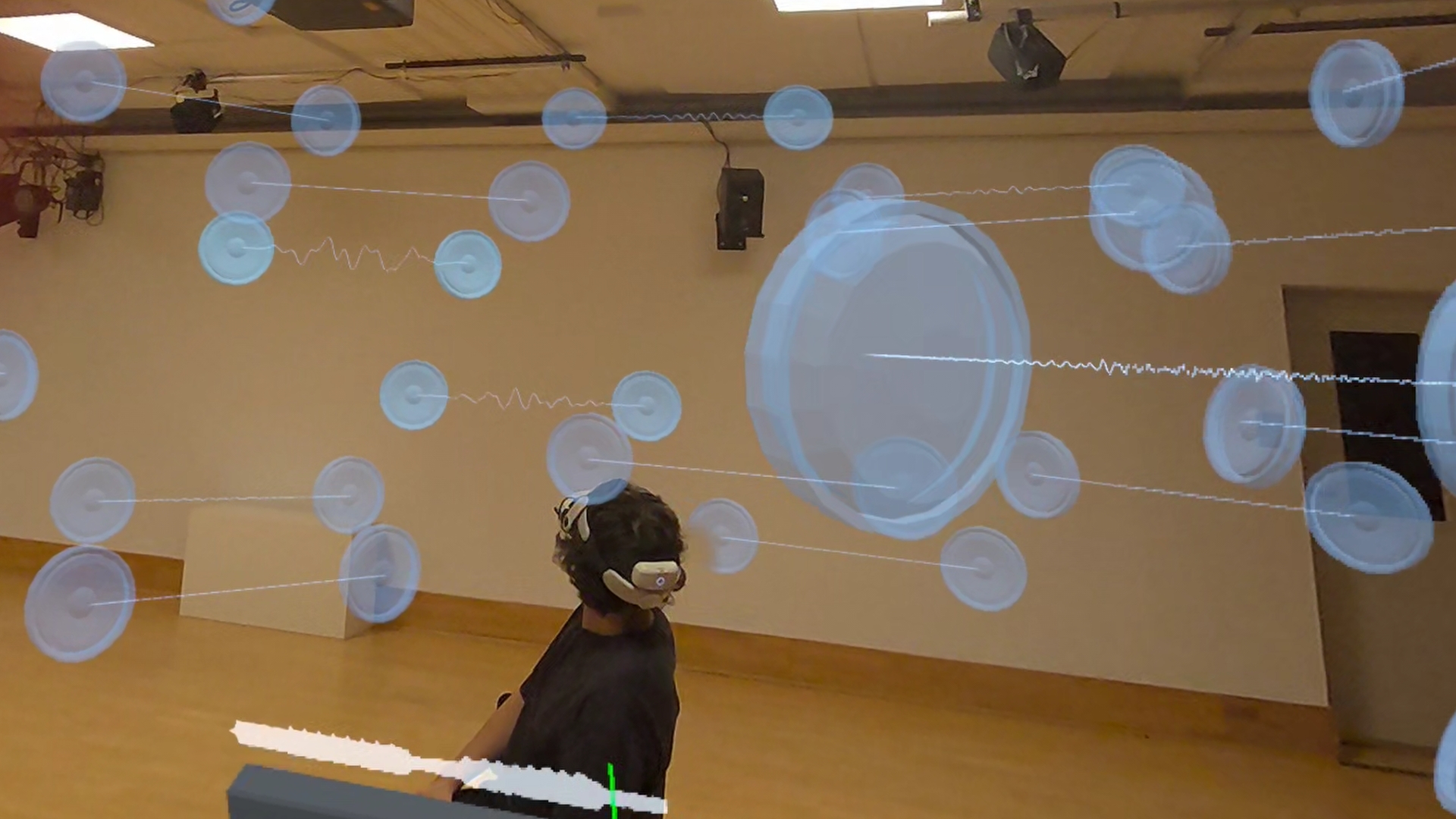
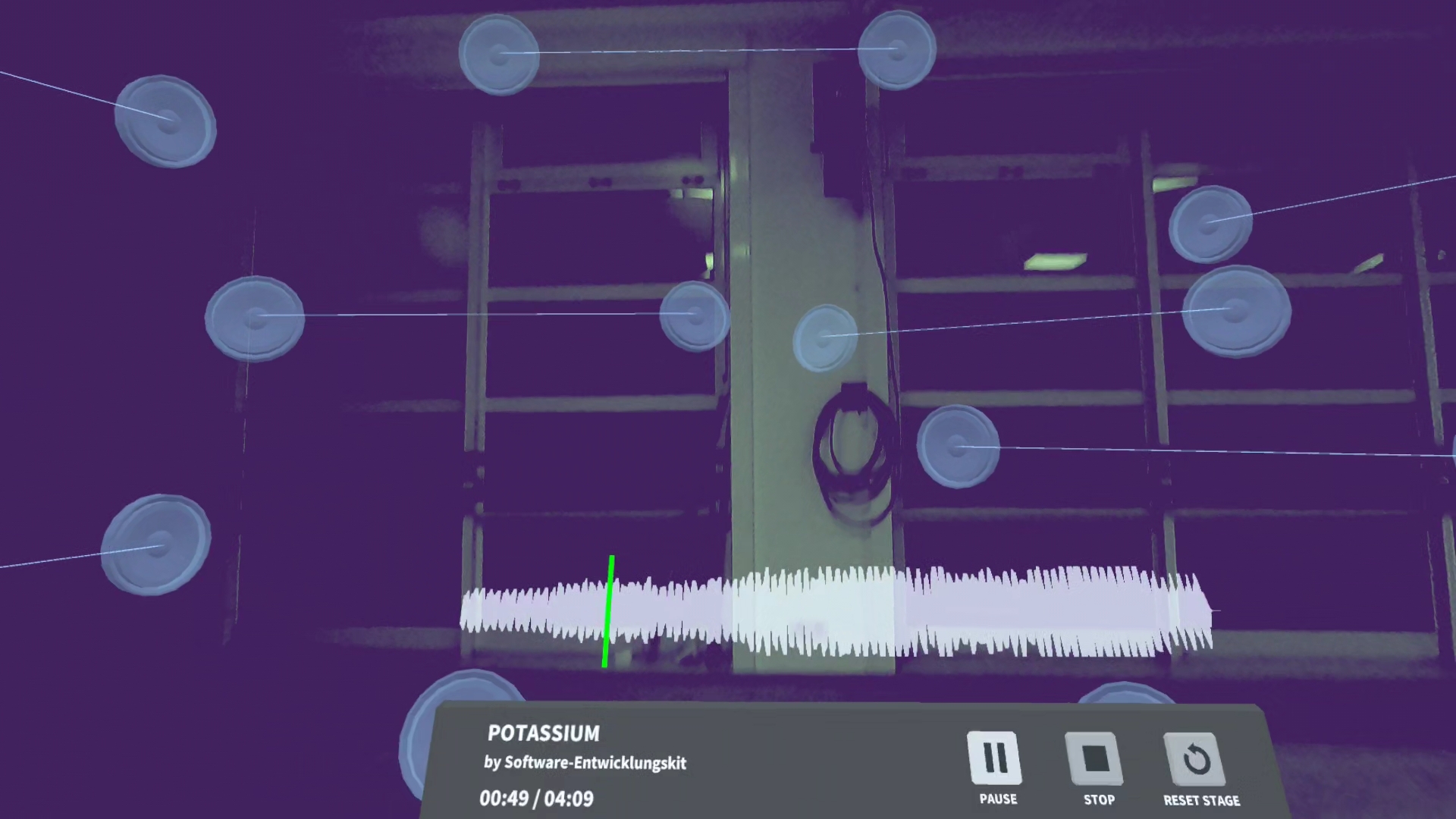
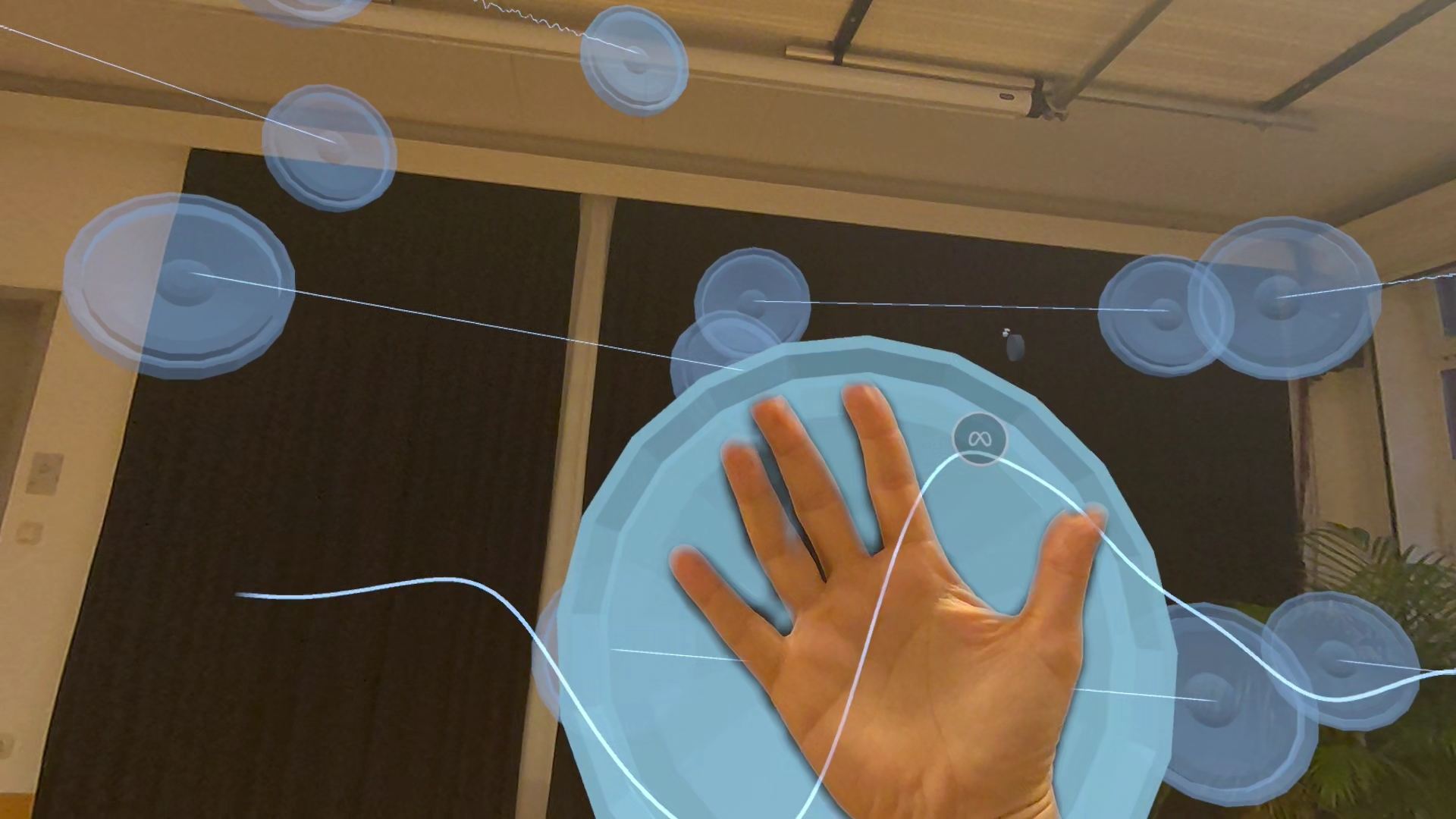
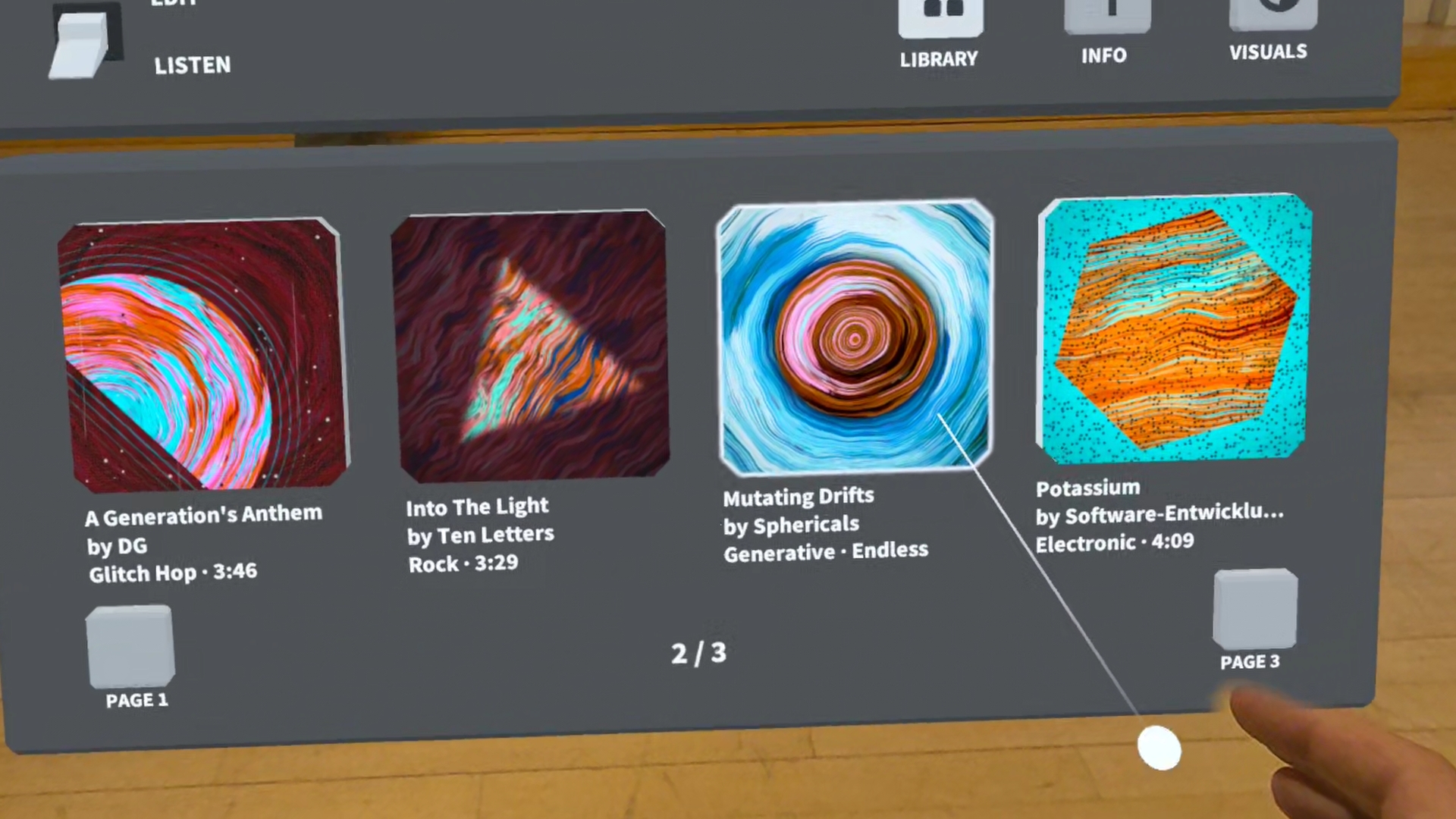
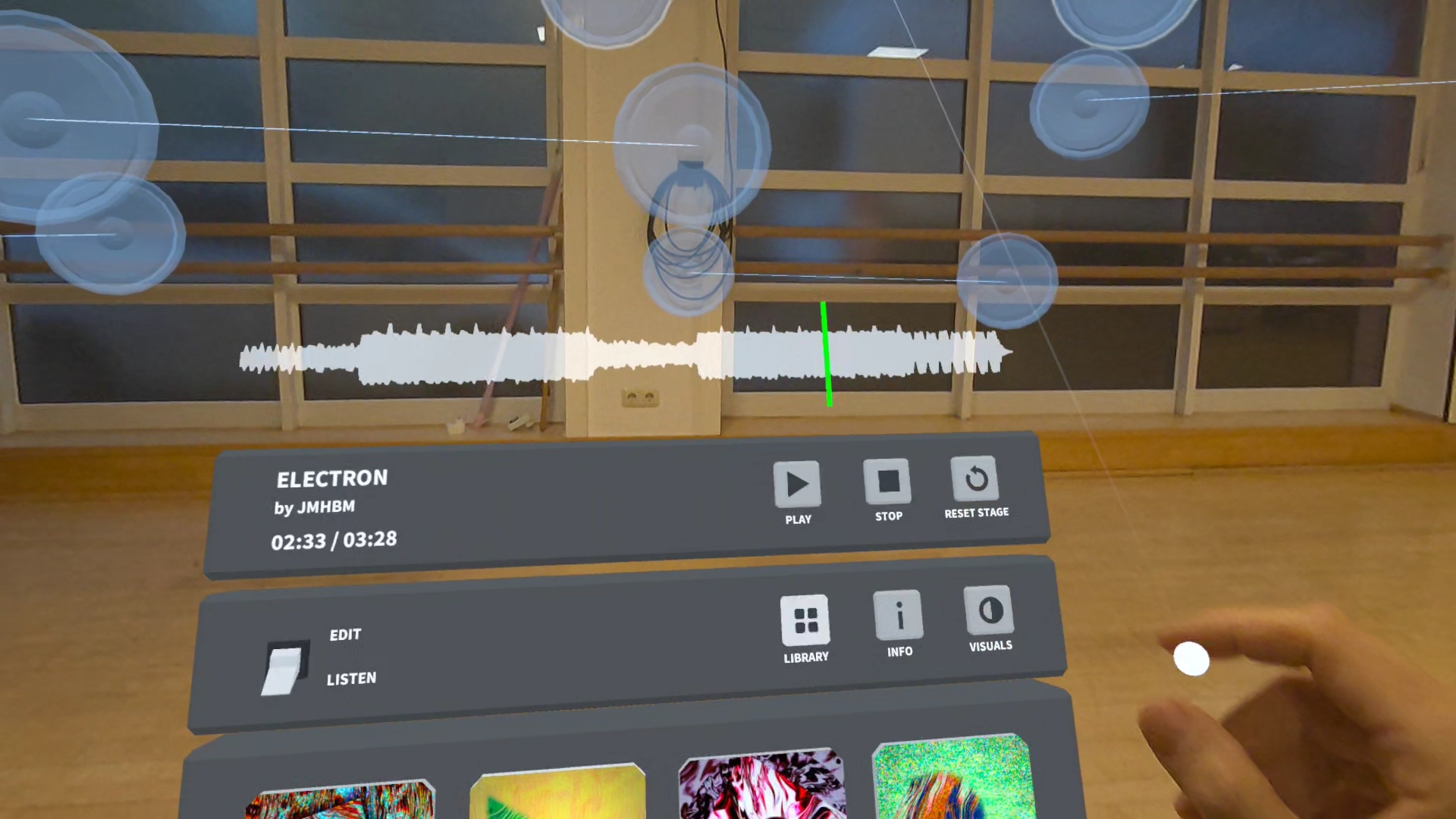
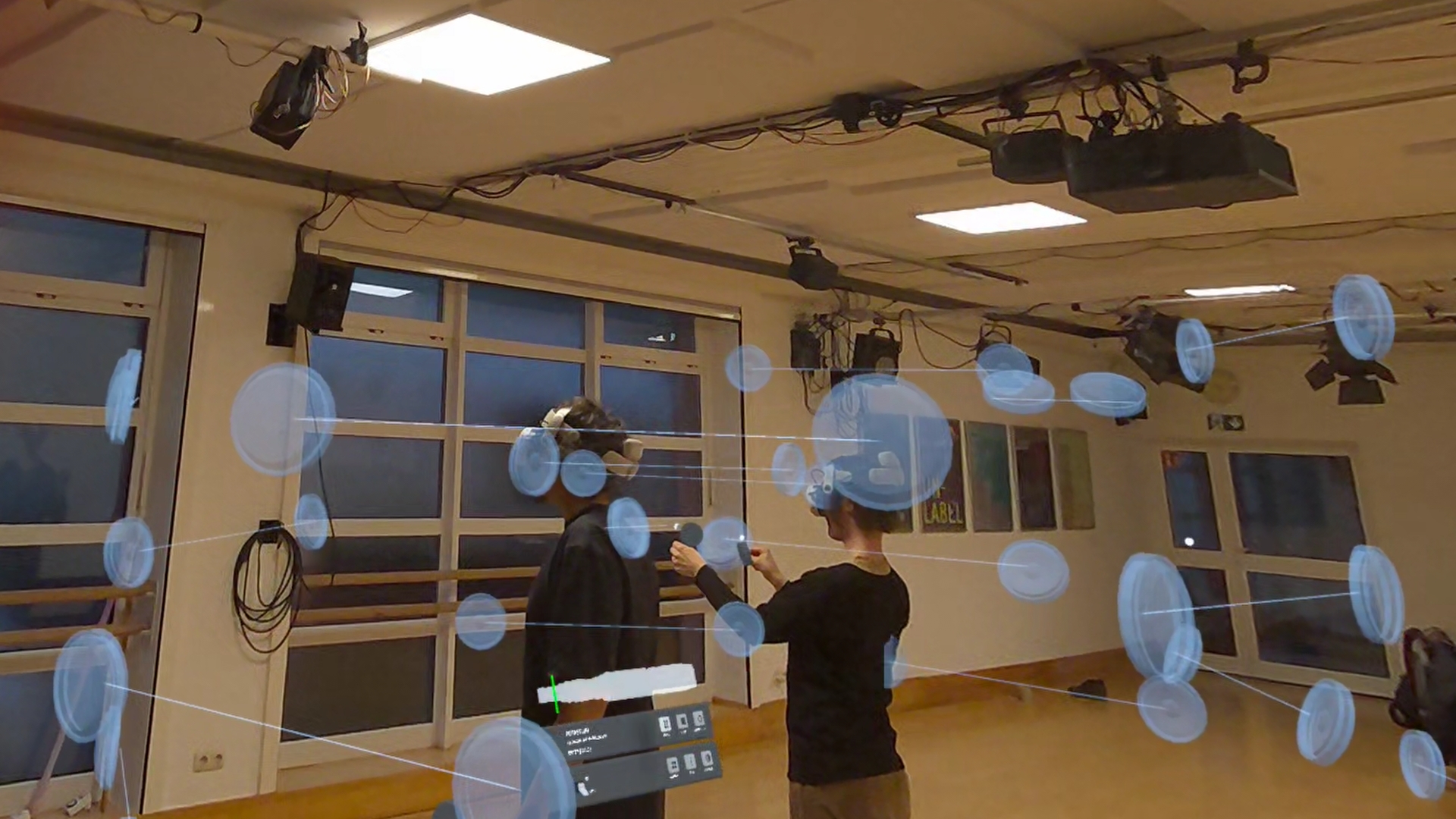
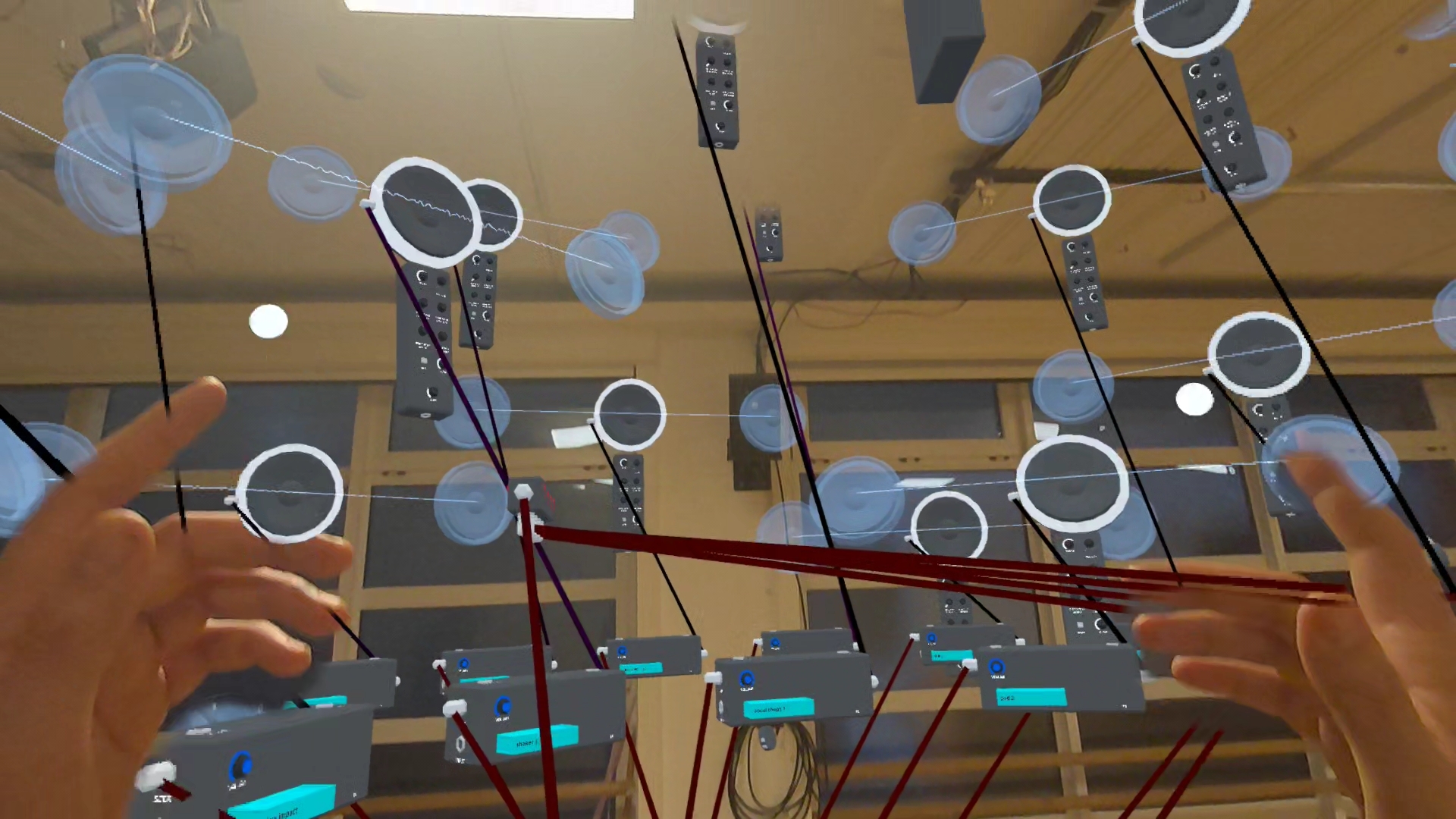
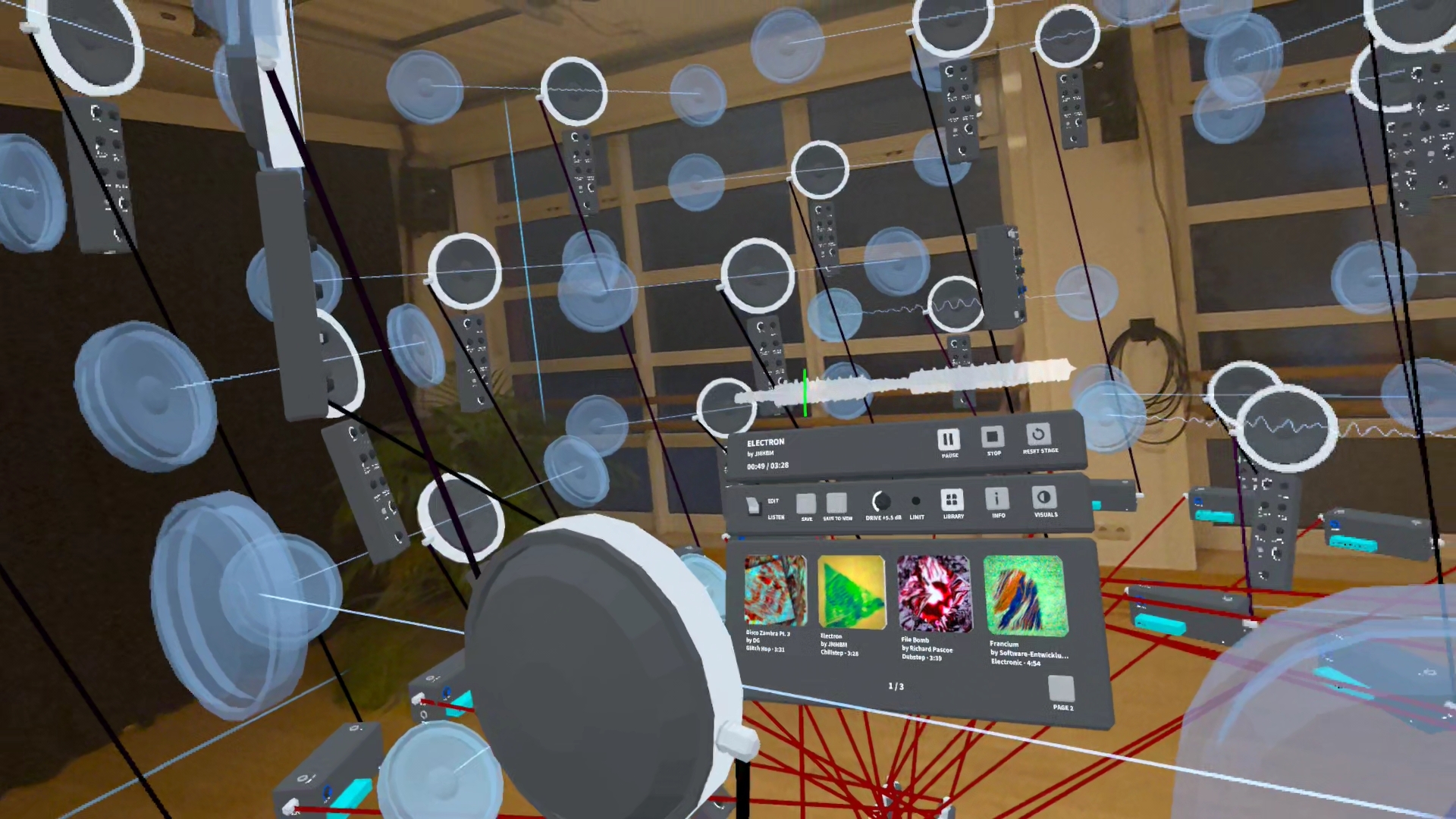
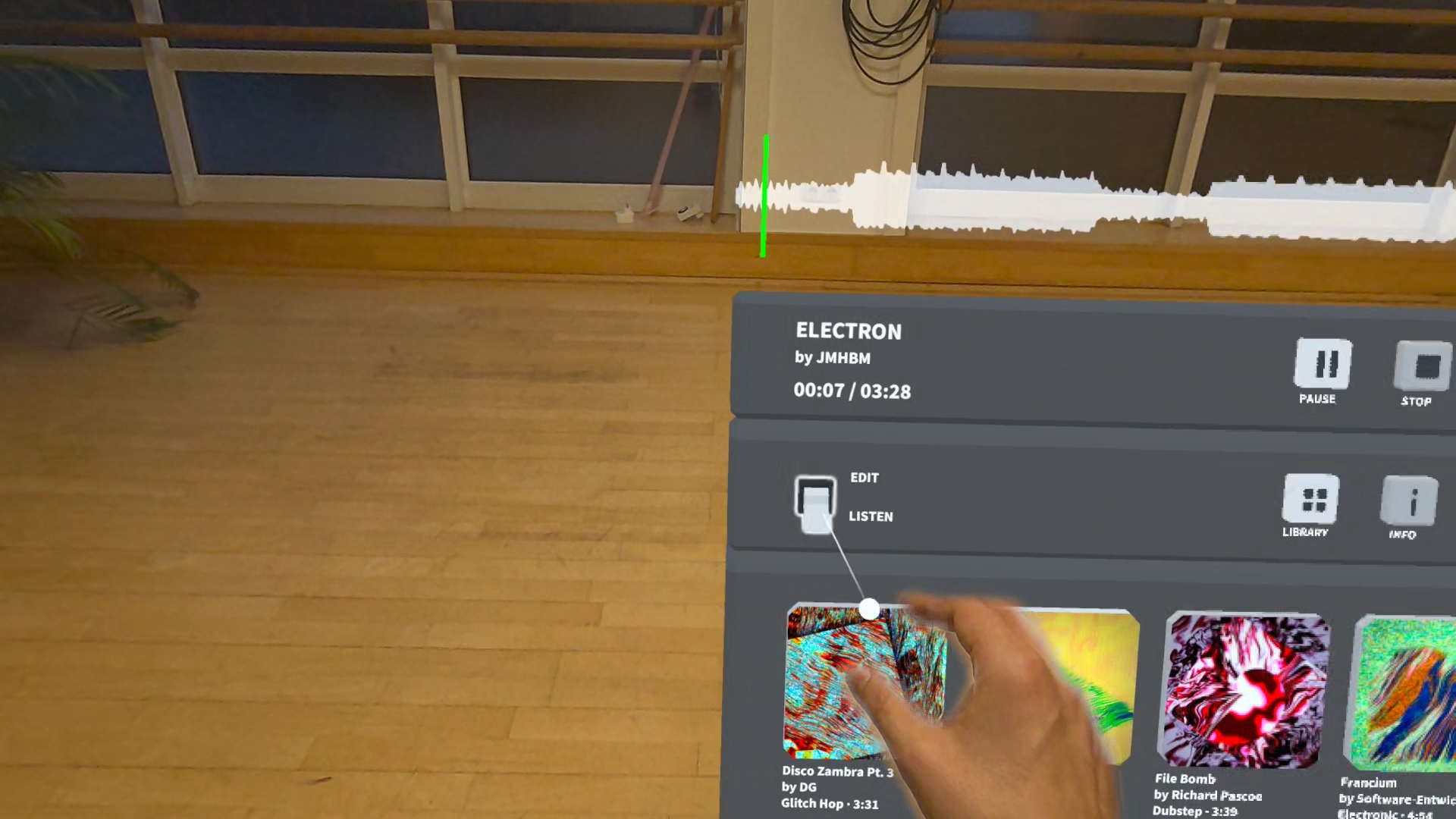
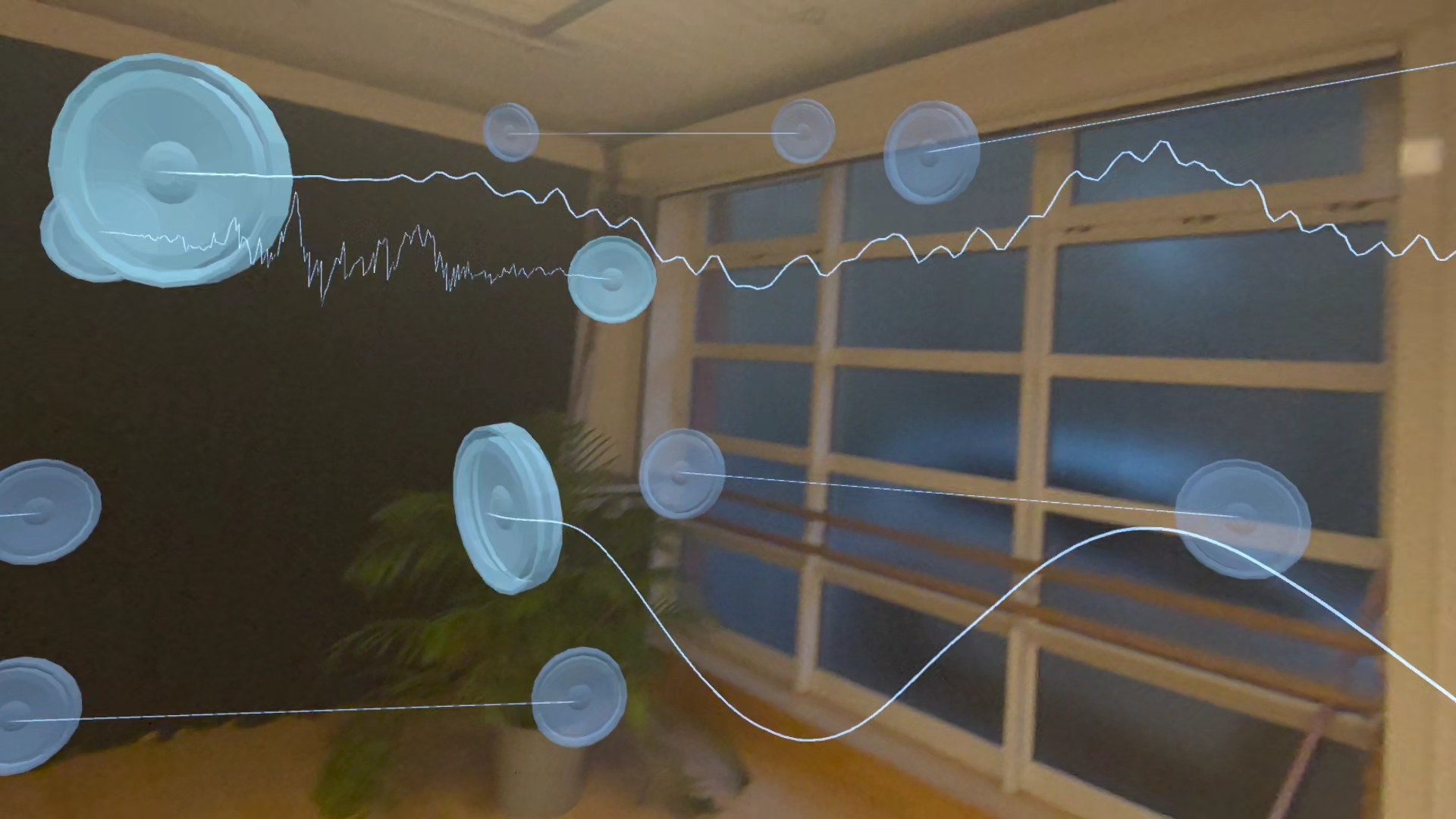
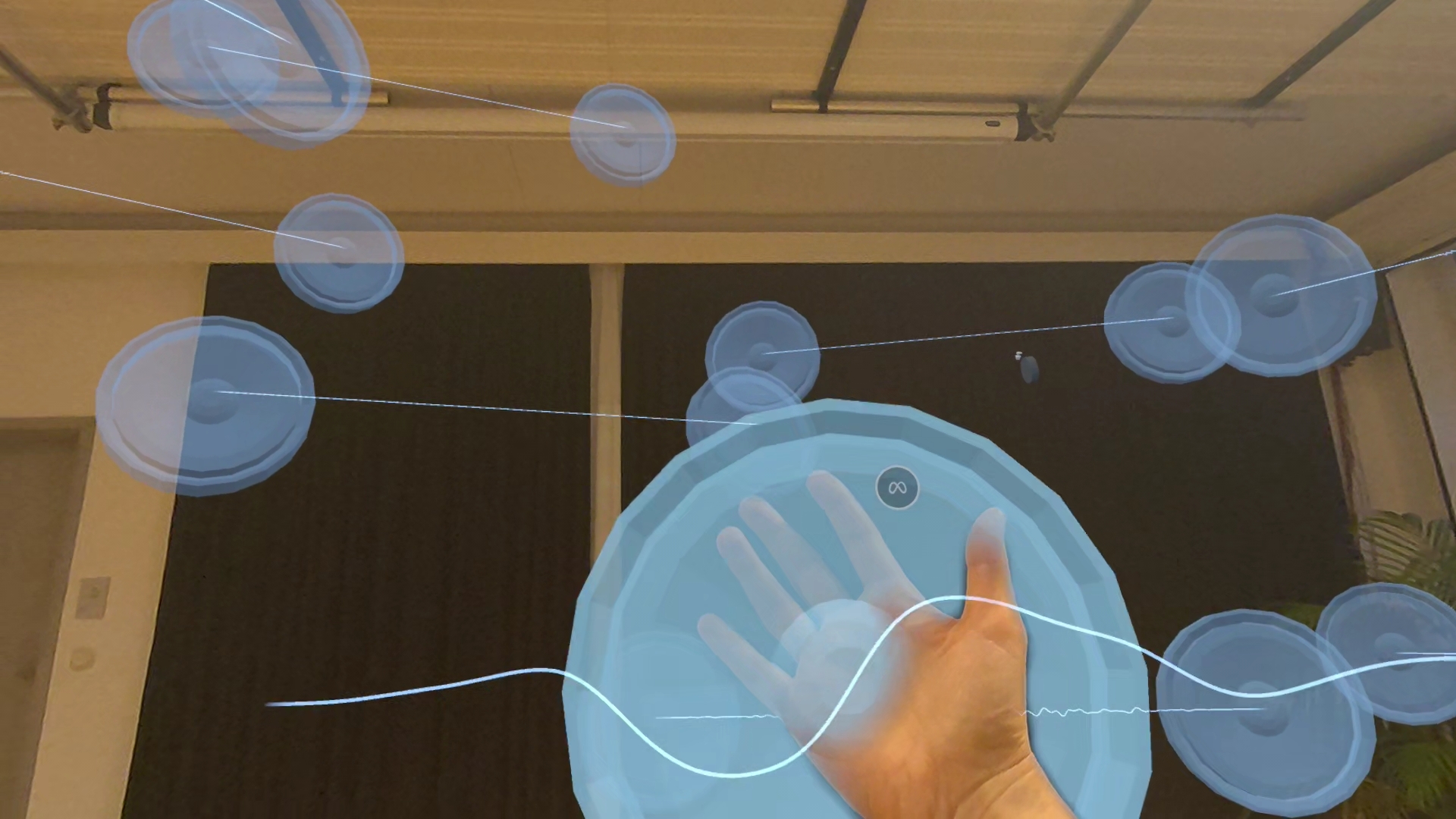
Spherical Sounds is a music player inside OSL. You pick a piece from a library panel, and every stem of the multitrack recording plays from its own speaker, placed around you in your real room. You sit in the middle of the music.
- Lean back. Everything works from your seat, with bare hands: choose a piece, scrub through it, bring a speaker closer.
- Or get up. The music stays where it is in your room. Lean towards an instrument, walk around it, stand between two of them: there is always more to discover.
- True stereo sources. Most stems are not folded to mono, as spatializers usually do. Each is a pair of emitters with a stereo width, which gives an open, wide impression I had not heard in a headset before.
- A sweet spot with a door. Leave the arrangement and everything fades out together, the direct sound sooner than the reverb, like leaving a concert hall or a club while the band plays on.
- Sound you can see. Stereo speakers that show each channels's waveform in high precision.
- Music that is free. Every recording in the library is in the public domain, given away by its artists for anyone to use. I arranged each one for the room.
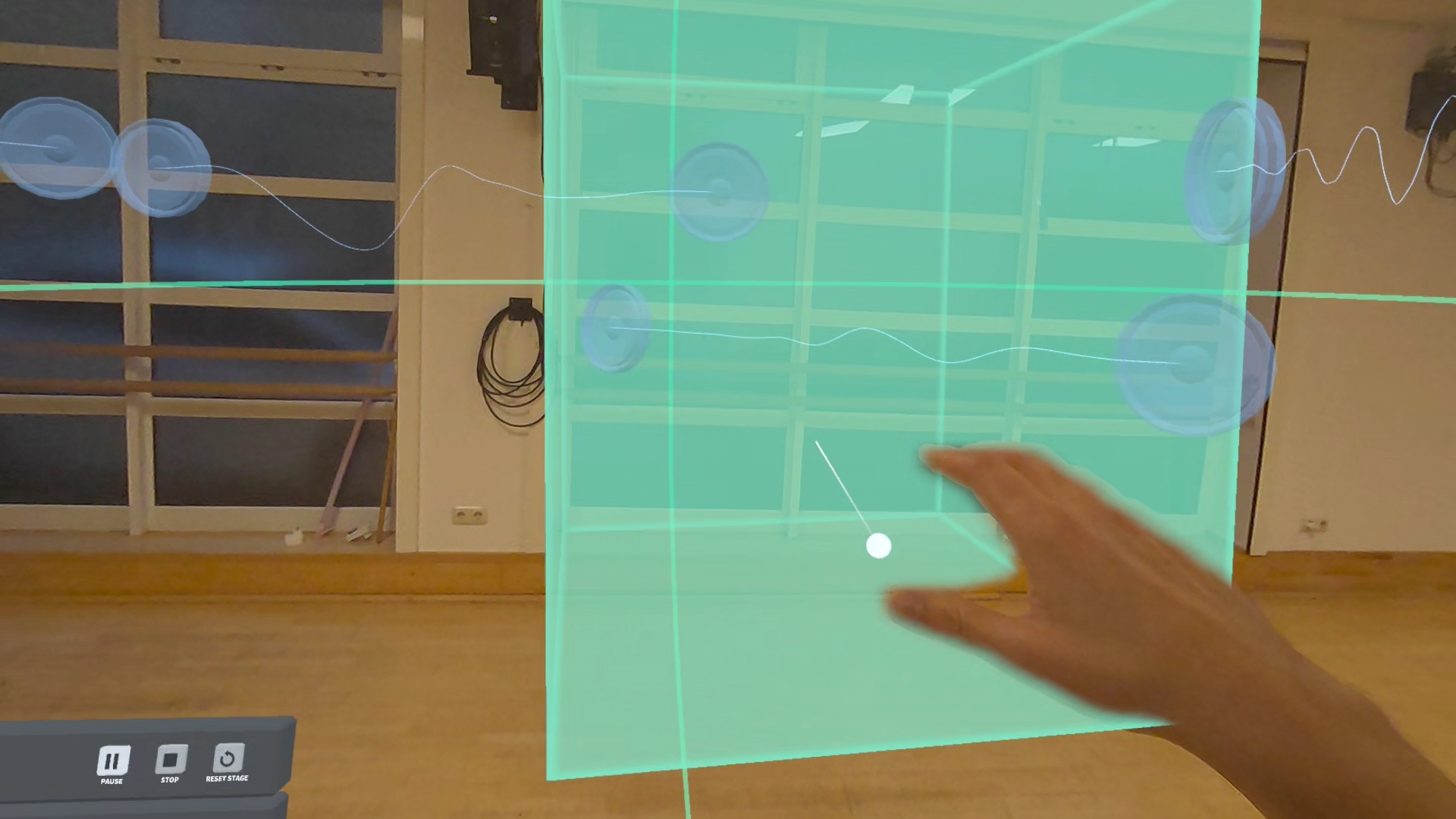
- Pieces without an end. Not every piece is a recording. Mutating Drifts writes new melodies by chance, every time, and zones in the room react to you: reach in and the sound changes, step inside and it changes again.
- Together. It is multi-user, in the same room through colocation or remotely: everyone hears the piece from their own position.
- The EDIT switch. One switch reveals the complete patch behind a piece: players, cables, mixers, reverb rooms. Every piece is open. You can change it, learn from it, and follow the built-in tutorials into OSL. Listening is meant to make you curious about how the music is made.
How I built it
OSL began in 2020 as a fork of SoundStage VR by Logan Olson, which Google released under the Apache 2.0 licence, and has grown far beyond it since. It is built in Unity with a native C++ audio library, and it was modular enough to grow a player on top of it: a piece is simply a patch.
For spatialization I use OpenResonance, my update of Google's Resonance Audio, made together with Martin Rumori. It now builds for 64-bit ARM, brings the SADIE II HRTF sets, which sound less coloured, and records and plays Ambisonics up to third order. I want to give it back to the community as an open spatializer.
For Spherical Sounds the audio side had to grow: a piece with 34 stems now streams from disk, sample-locked, and starts in under two seconds. In the same period I moved OSL to Unity 6 and OpenXR.
One detail I am fond of: real things cover virtual ones only within arm's reach. Your hands still pass in front of a speaker, but your walls do not hide the ones that stand beyond them, because the music may well be larger than your room.
AI assistance helped a lot. For experimental software like this, where one person builds audio DSP, networking, interaction and tooling at once, it is a gift.
Challenges
There was no single wall. The real challenge was the reframing: Spherical Sounds had to turn a professional tool into an entertainment product that feels right to people who have nothing to do with modular patching and little experience with spatial audio. Under the surface a piece is close to a small audio workstation: many channels, a mixer, reverbs and delays running live. All of that had to open like a music player and feel like one. That polish took longer than the way to the first prototype, and it is where the value of the project lies.
What I learned
I first gave every speaker its natural distance falloff. It seemed physically right, but it felt wrong: as soon as you move through the field, the balance of the piece falls apart. Music that was mixed with care should stay mixed. So the falloff now belongs to the room, not to the single speaker.
I also learned that spatial mixing wants to be done in space: in the room, for the room, with your whole body instead of sitting at a computer.
What's next
An early-access update of OSL comes next, the full release by December 2026. You can already save your own patch as a new piece in the library. The library will keep growing with free and contracted music, arranged for the room piece by piece. In 2027 Spherical Sounds becomes a music label platform: stream pieces by others, send in your own, and album releases. Mutating Drifts is a first step beyond multitrack recordings. More generative pieces will follow, and interactive formats where you sing along, set parameters or shape the sound with your body.


