-
-
Meet Joy, your new mixed-reality companion.
-
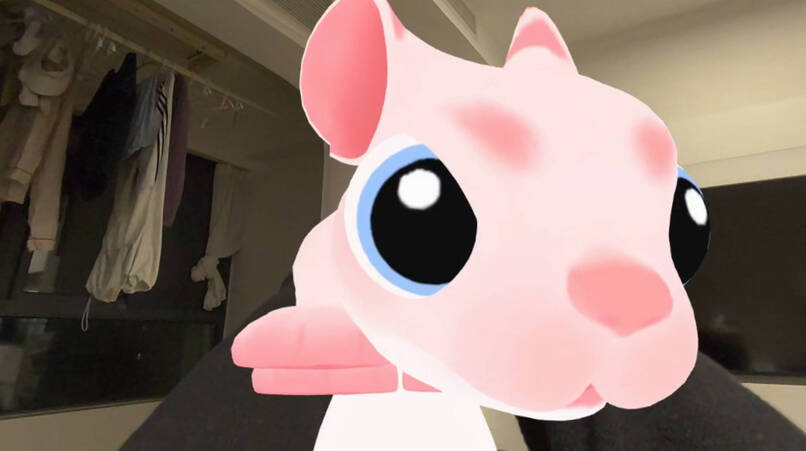
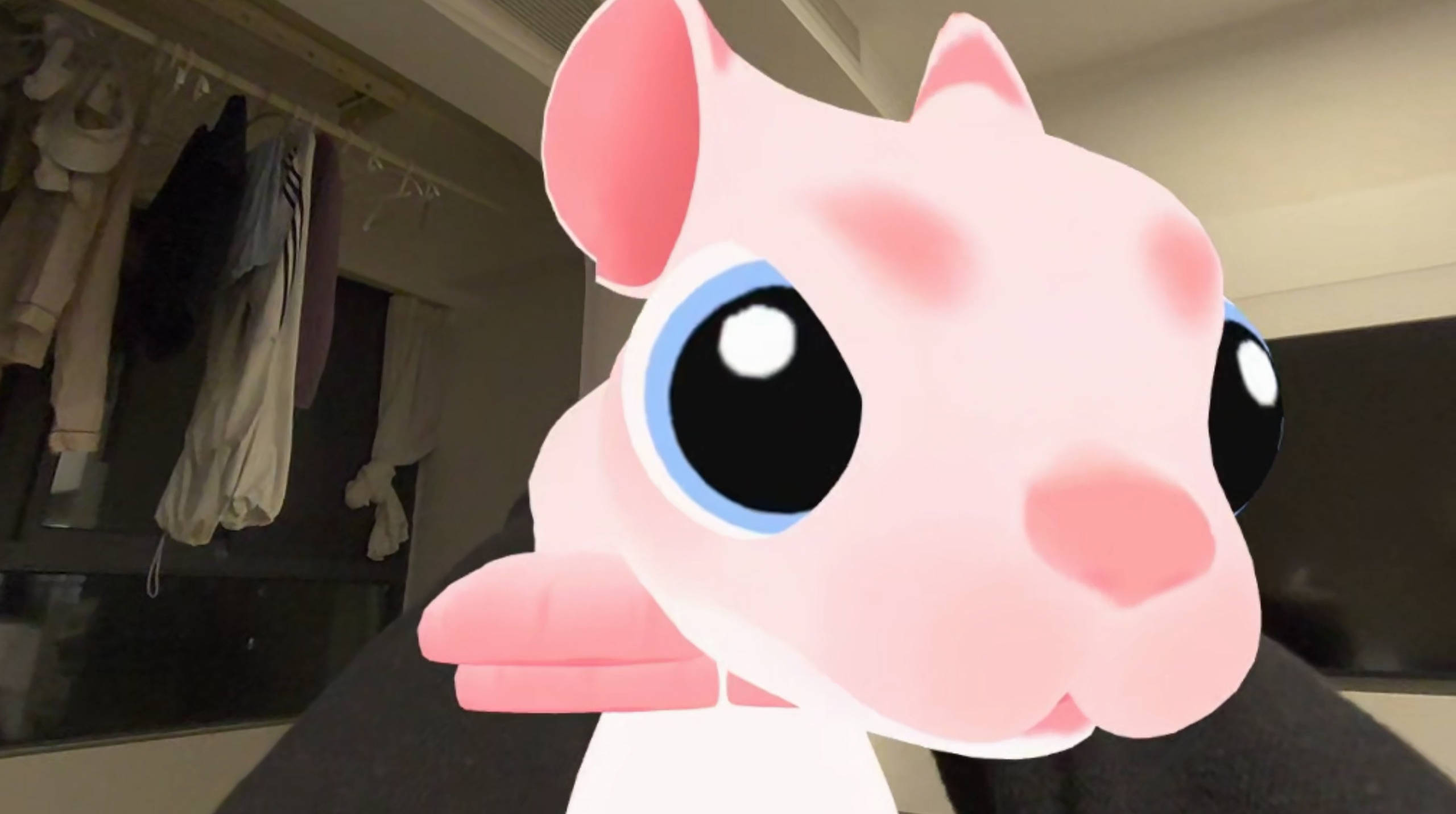
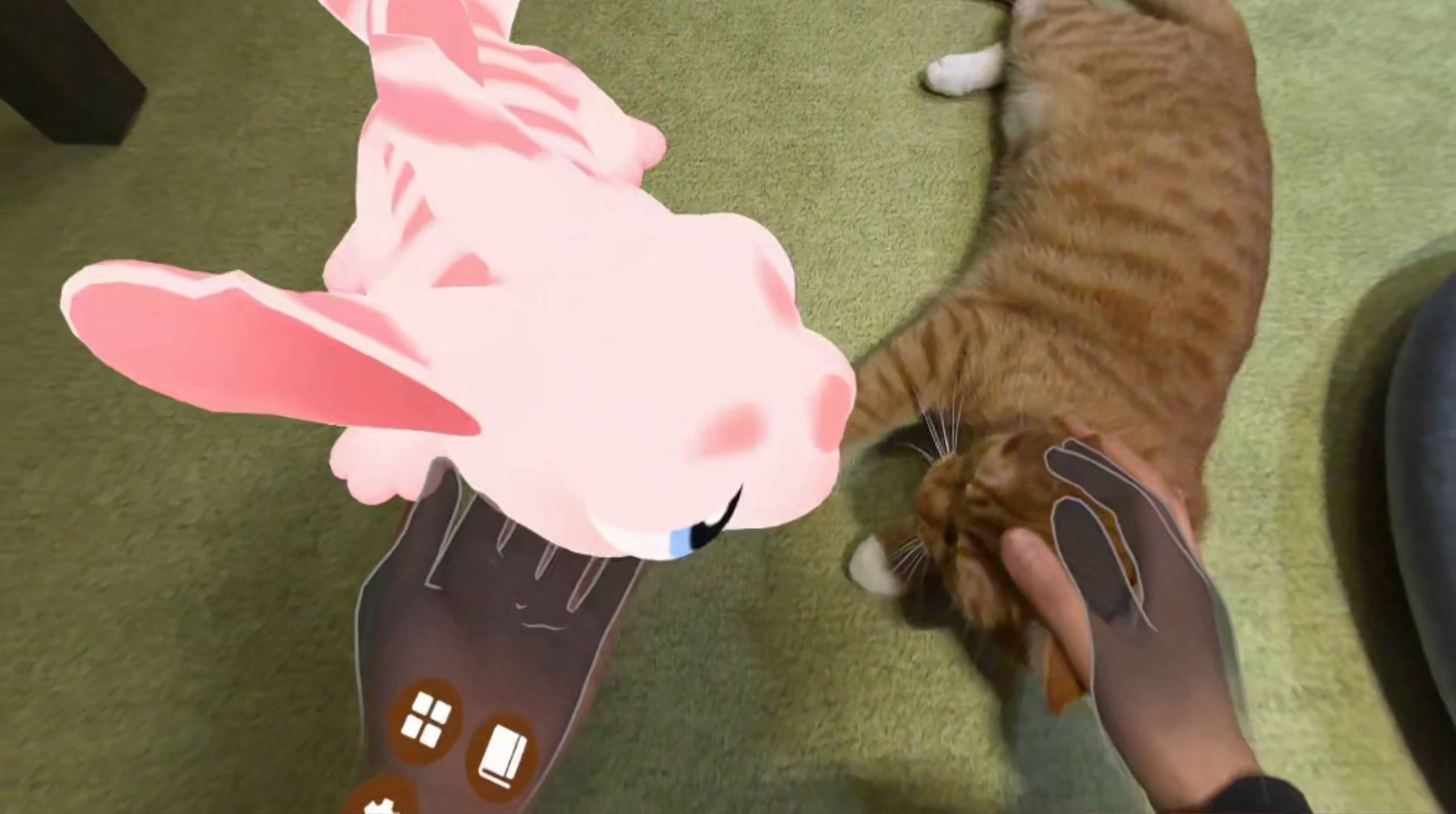
Pick Joy up in your hands and enjoy a closer moment together.
-
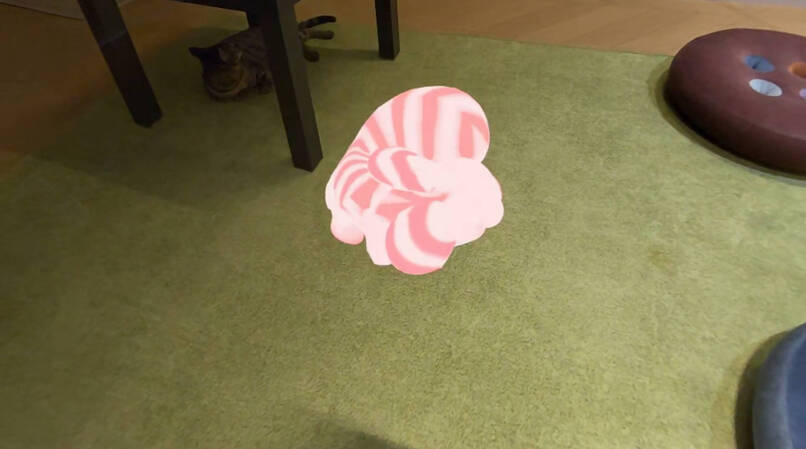
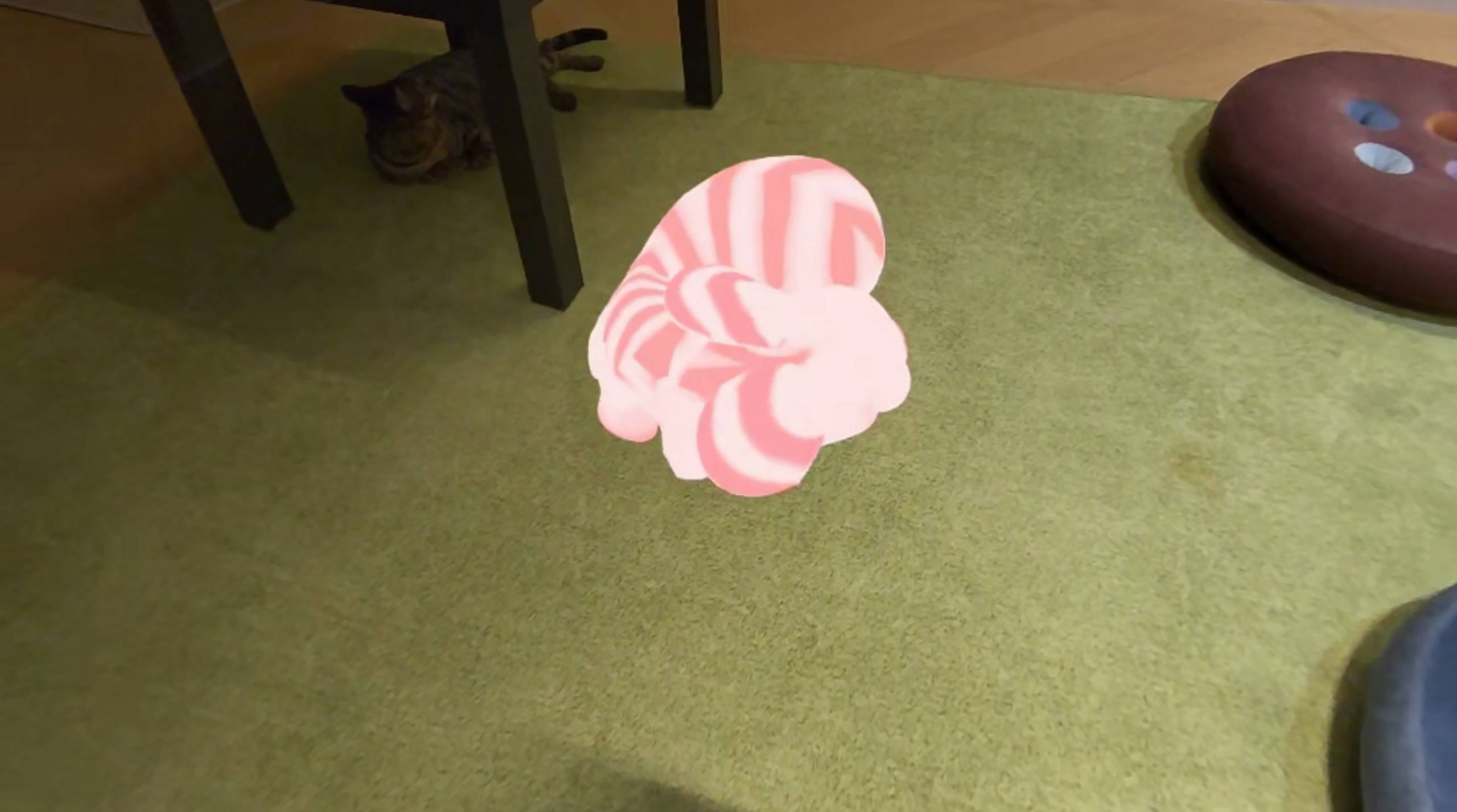
After a day of play, Joy curls up for a peaceful nap.
-
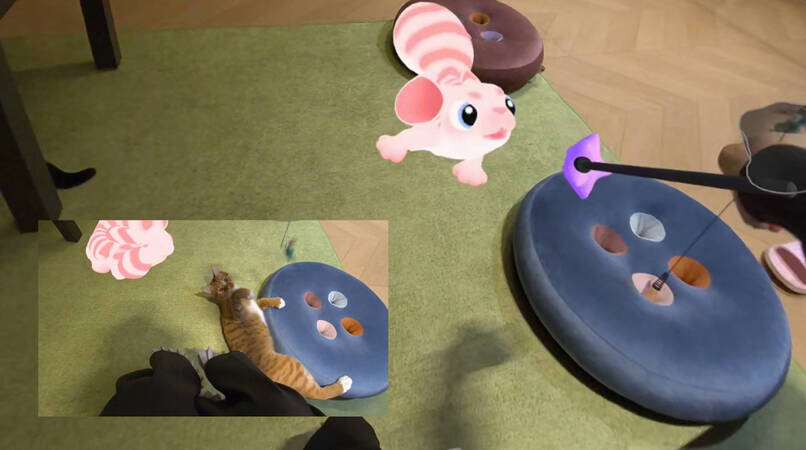
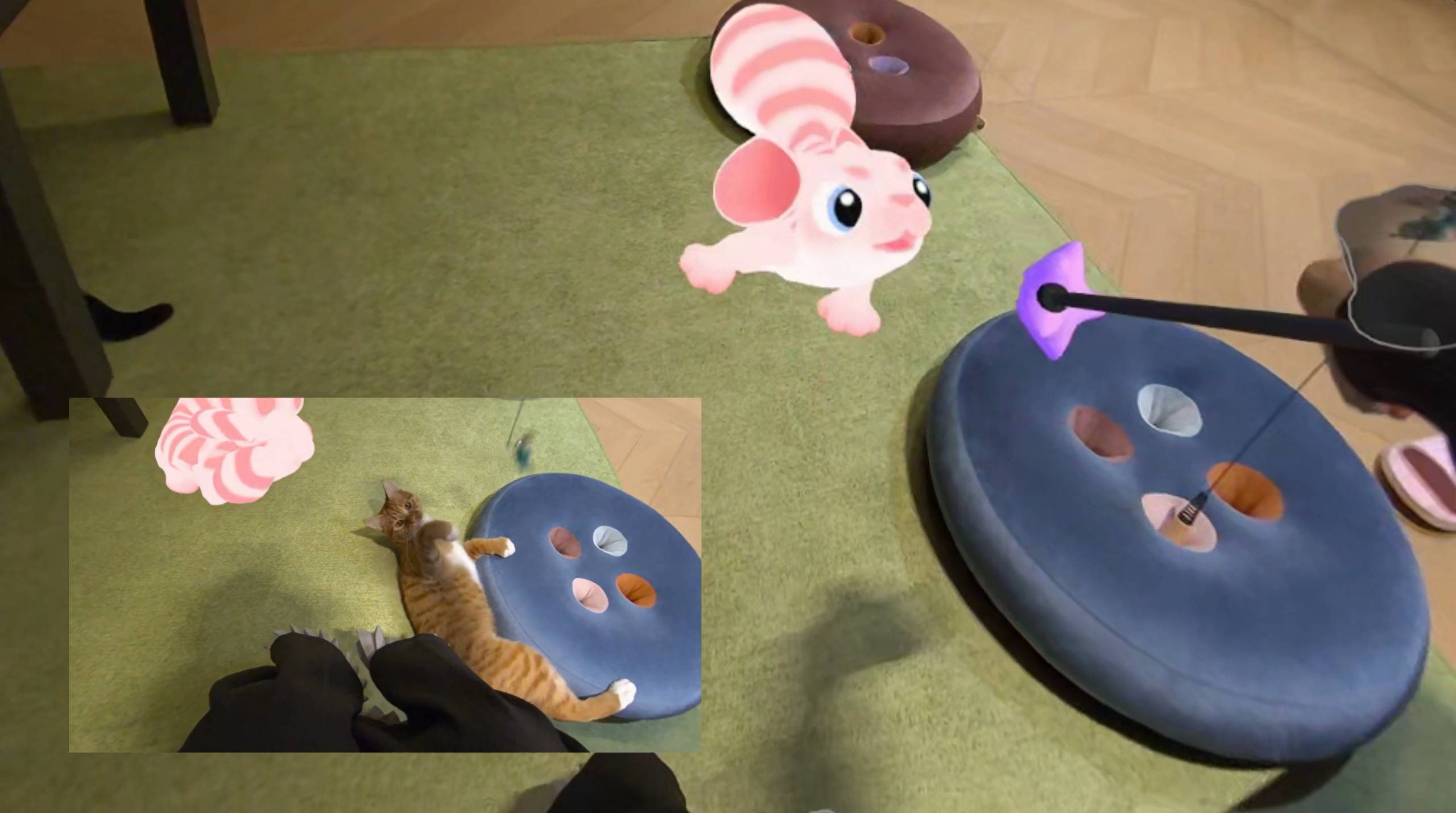
Use interactive toys to invite Joy into playful activities.
-
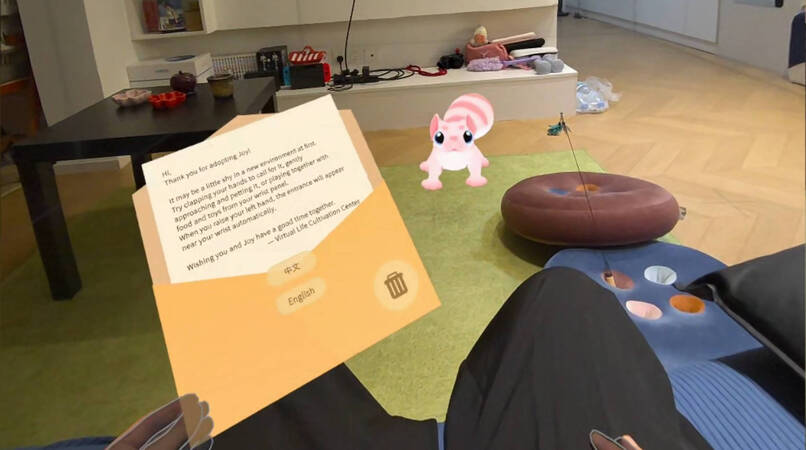
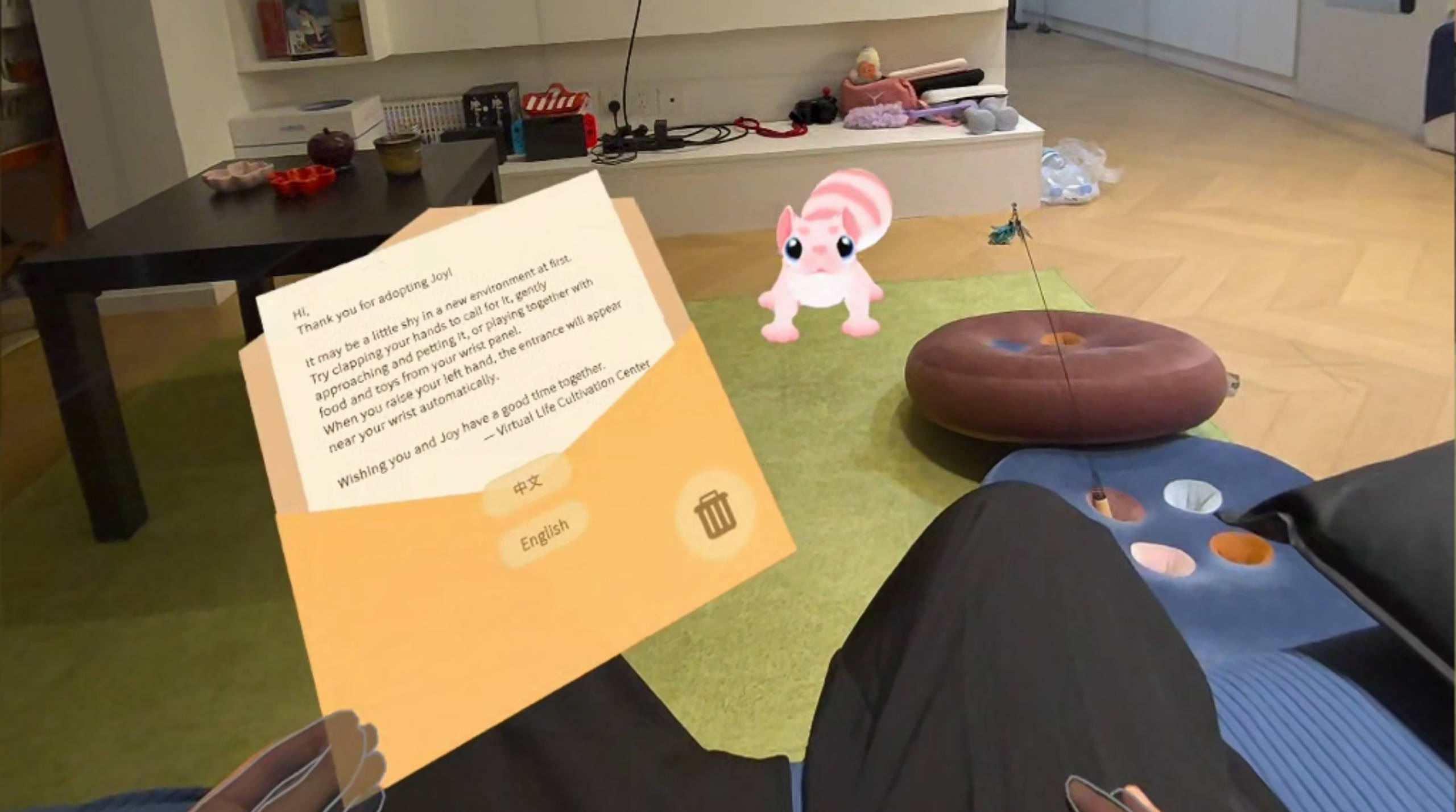
A welcome letter introduces Joy and guides you through your first steps together.
-
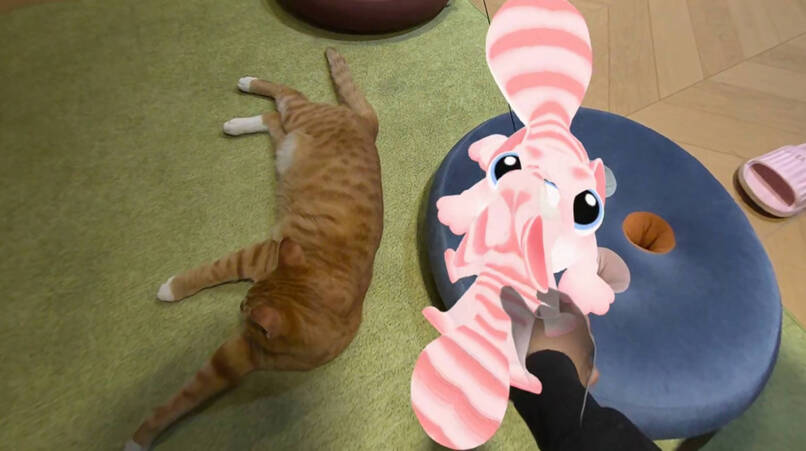
Play a fun toss-and-catch game with Joy and a soft toy.
-
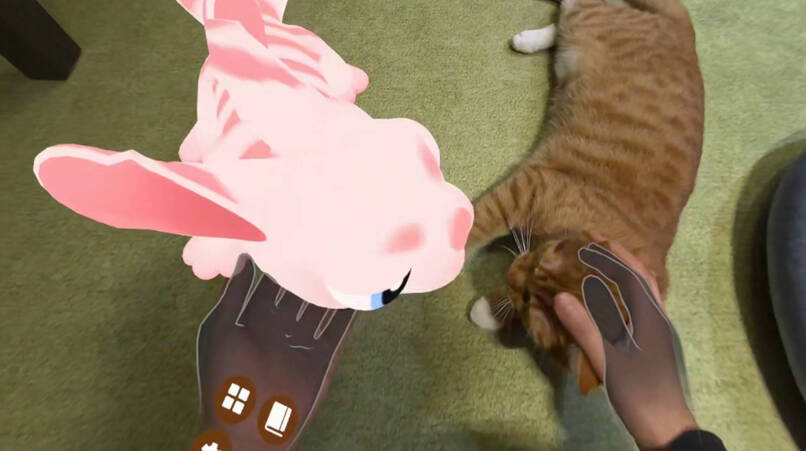
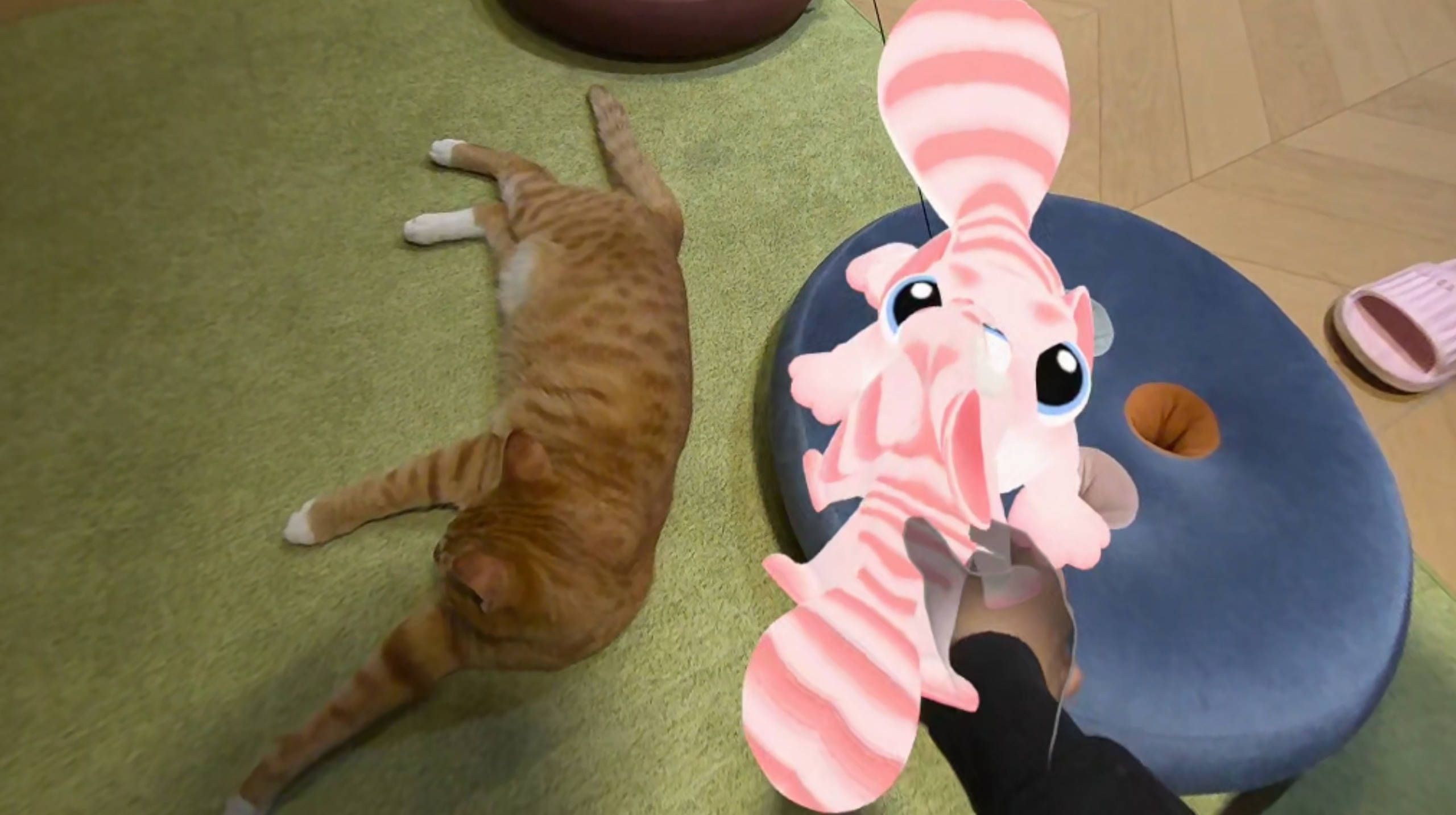
Joy shares your everyday space with real pets, bringing virtual and physical companionship together.
-
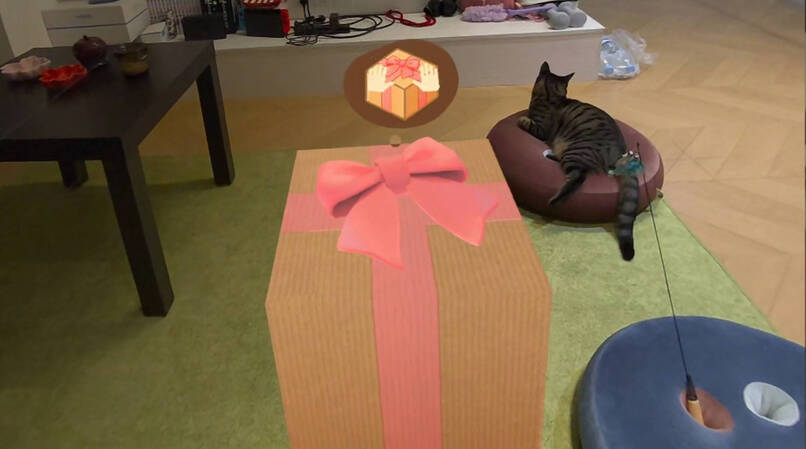
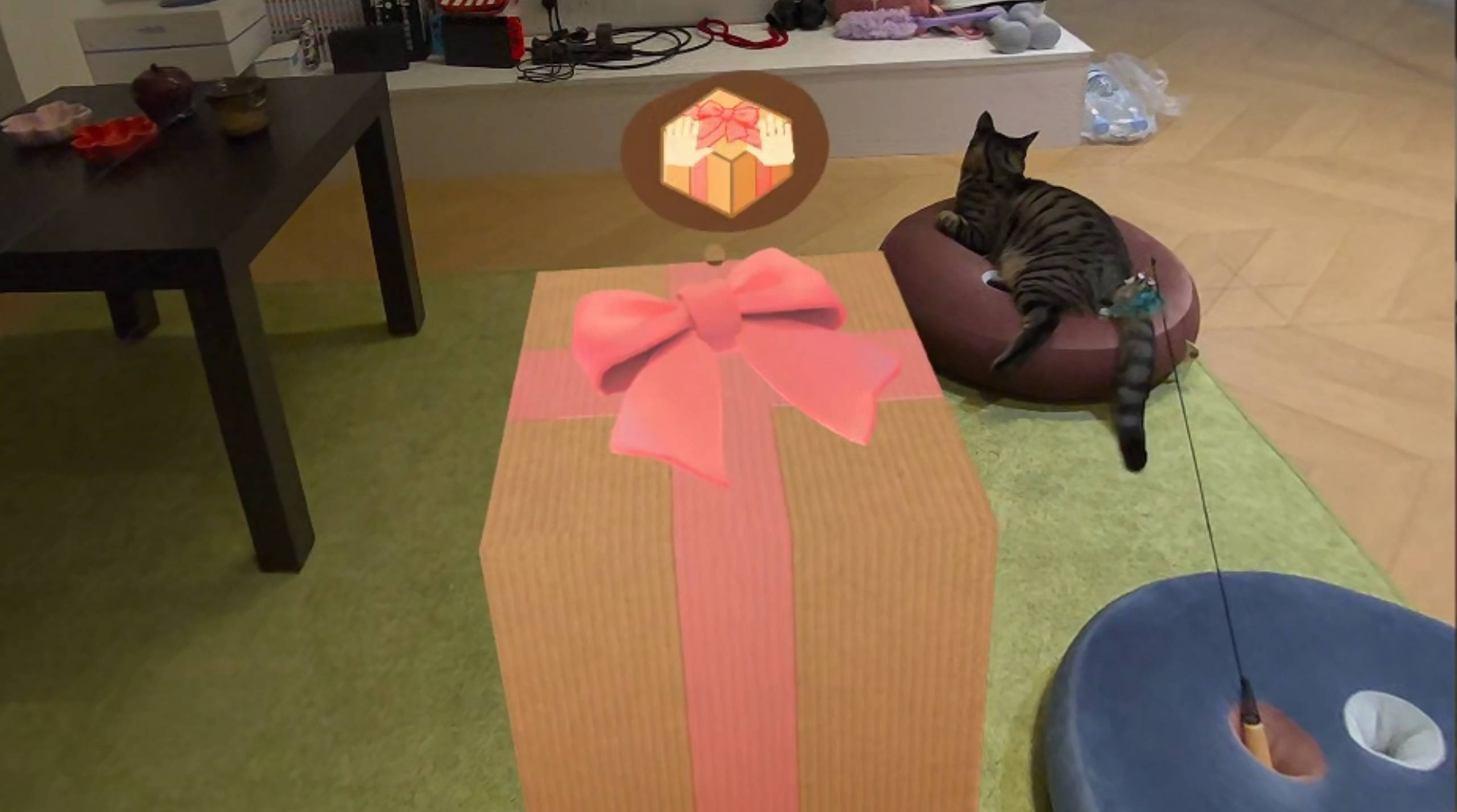
A surprise gift appears in your room, adding a little magic to your everyday space.
Inspiration
The project began as my master's graduation research, exploring how mixed reality virtual pets could provide emotional companionship through brief, everyday interactions. I wanted to explore two questions: What makes a virtual creature feel alive, and what makes interacting with it feel natural? I imagined a little creature with its own emotions, needs, and quirks, rather than one that simply follows commands. Mixed reality offered an opportunity to make this relationship more intuitive and embodied, allowing people to interact with a virtual companion through familiar gestures in their own living spaces.
What it does
Meet a magical little pet in your everyday world. Hi! I'm Joy is a casual mixed reality pet experience that begins with a mysterious adoption letter. Players welcome Joy into their homes and get to know a curious little creature with a personality of its own. You can feed, pet, hug, and play with Joy, or simply watch it explore your surroundings. Sometimes it's playful and affectionate; other times, it might prefer to rest or do its own thing. Through these everyday encounters, Joy gradually becomes a little companion in your real-world space.
How we built it
Developed in Unity for Meta Quest 3, Joy features a behavioral architecture connecting perception, internal needs, motivations, and actions. Variables such as hunger, energy, mood, and social needs guide its decisions, allowing Joy to respond according to both the environment and its own internal state. I combined this system with procedural animation, parameter-driven behaviors, and Meta Quest's spatial understanding capabilities to make Joy's movements and environmental interactions feel believable. The experience uses natural, hands-first interactions such as feeding, petting, and hugging, with a focus on brief, seated-friendly play sessions.
Challenges we ran into
Communicating without words. Expressing Joy's feelings through body language, behaviors, and facial expressions felt more natural than using text or numerical indicators, but wasn't always easy to understand. I introduced a magical magnifying glass that lets players peek into Joy's inner world, balancing clarity with playful discovery. Belonging in the real world. A virtual pet shouldn't simply pass through furniture. Using Meta Quest's spatial scanning and scene understanding, I enabled Joy to interact with real surfaces, such as jumping onto tables or sleeping on a bed. Making interaction effortless. I wanted calling Joy over to feel like calling a real pet. Alongside voice recognition features still in development, I'm exploring a clap-to-call interaction as a simple, intuitive alternative to buttons and menus.
Accomplishments that I'm proud of
A foundation for digital life. I built a complete behavioral architecture connecting perception, internal states, decision-making, and expression, designed to support richer and more intelligent behaviors in the future. Making Joy feel alive. Through procedural animation, parameter-driven behaviors, and carefully tuned transitions, I worked to give Joy fluid, expressive movements without the stiffness of scripted characters. Natural embodied interaction. I'm proud of shaping the experience around intuitive physical interactions, making the technology feel less like an interface and more like a companion.
What we learned
Building Joy taught me that believability comes from consistency, not just complexity. A sophisticated behavioral system matters little if movements, expressions, and reactions don't feel connected. Small details in timing and feedback can make a surprising difference. I also learned that making an interaction feel effortless often requires more thoughtful design and engineering behind the scenes.
What's next for Hi! I'm Joy
I'm continuing to turn Joy from a research prototype into a complete mixed reality experience, exploring AI-driven behaviors, richer personality expressions, and more natural interactions through voice recognition and everyday sounds. I hope to keep expanding Joy's autonomy and its ability to adapt to everyday surroundings, creating more small moments of play, care, and connection.
