-
-
Wellth.AI Logo
-
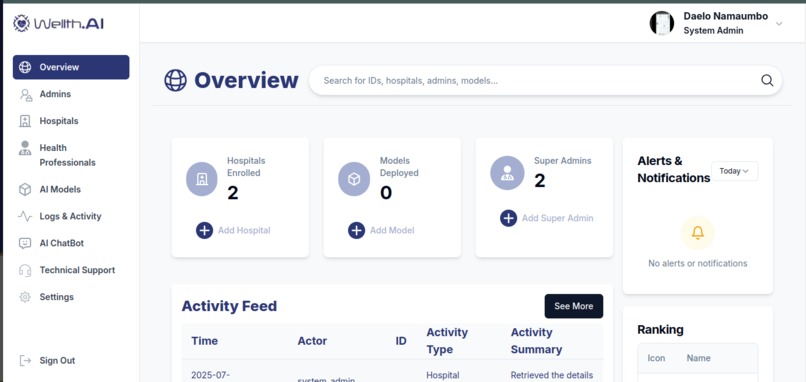
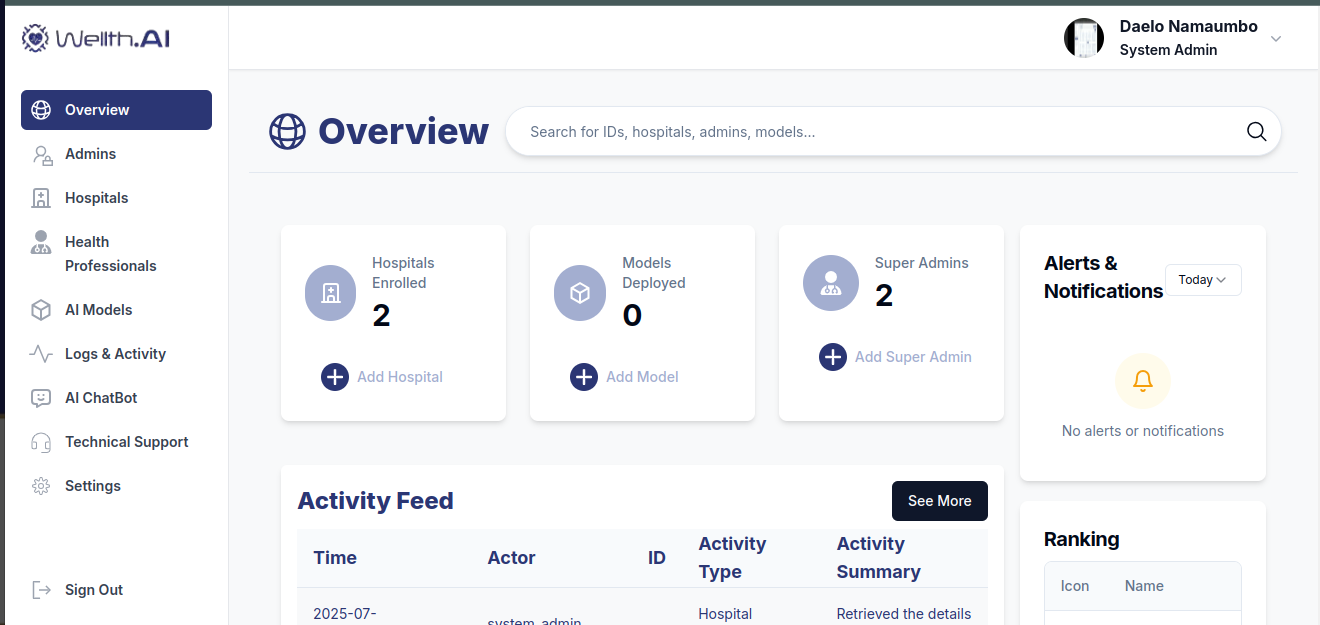
System Admin Overview Interface
-
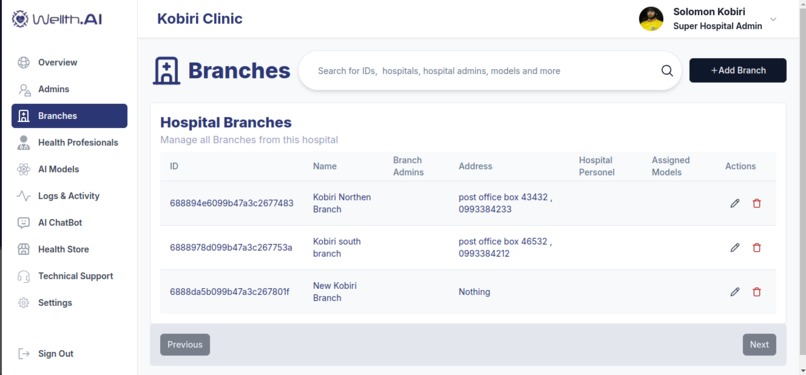
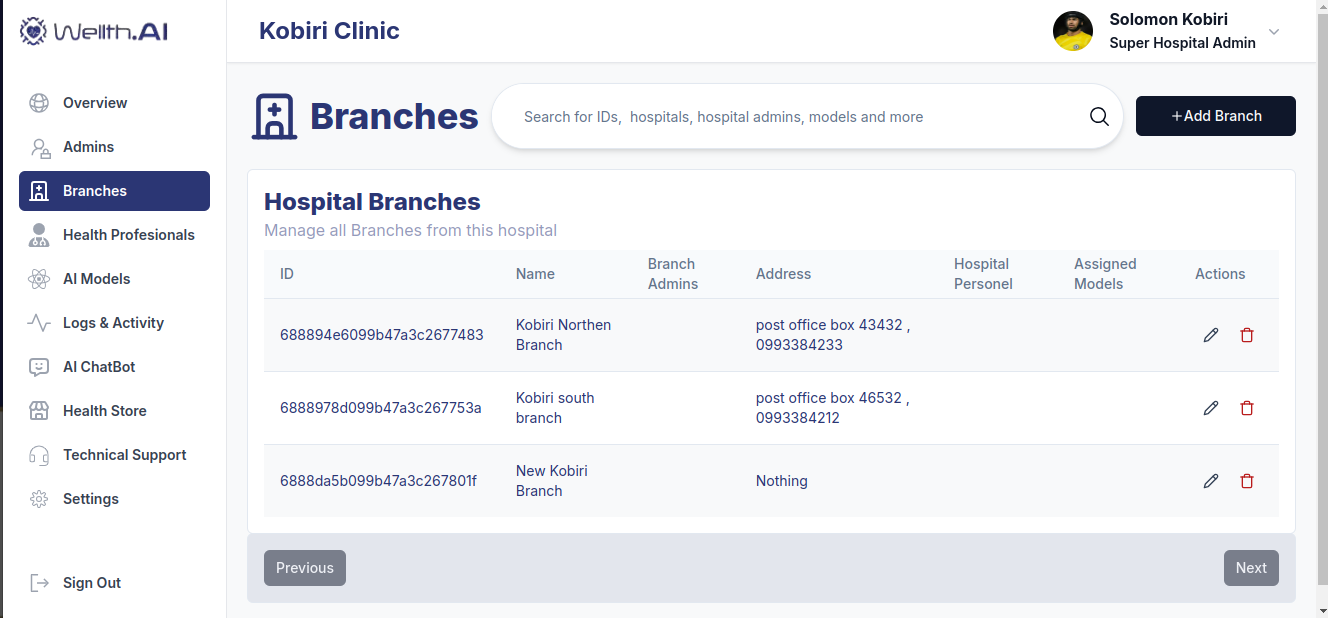
Hospital Admin Branches Interface
-
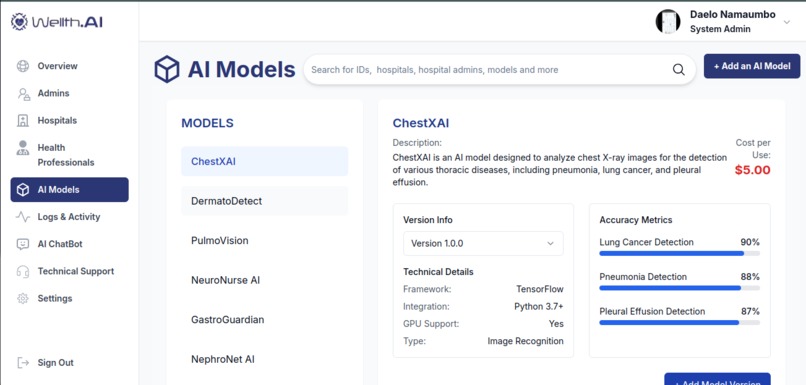
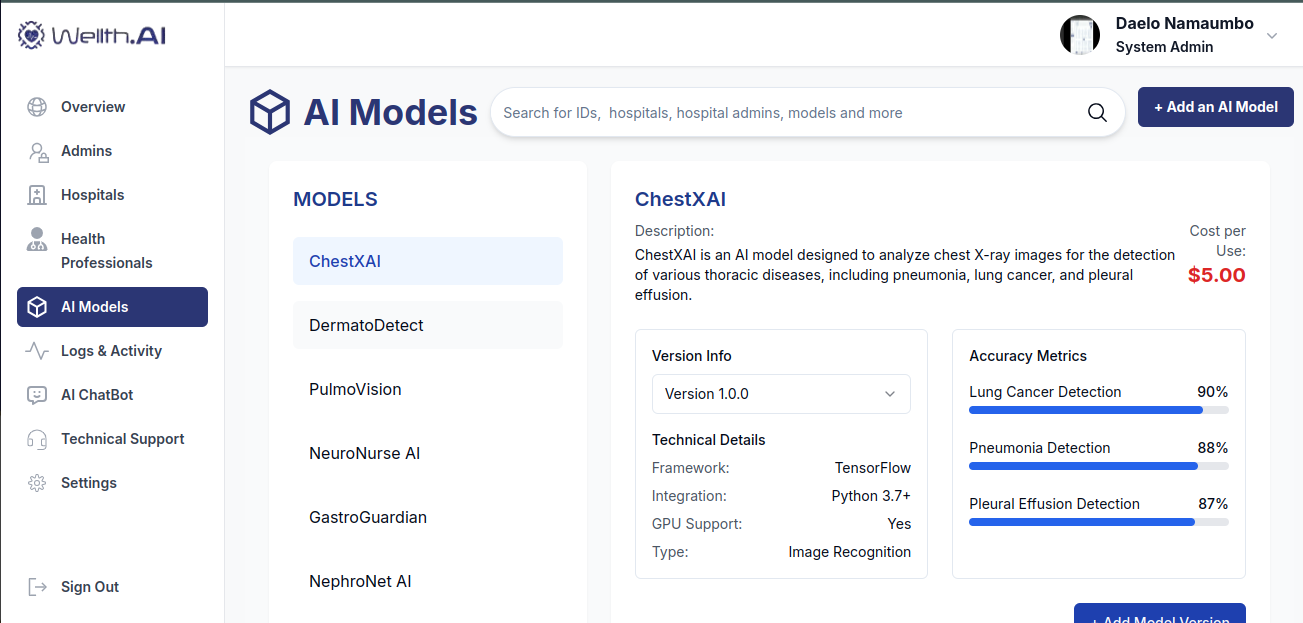
AI Models Interface
-
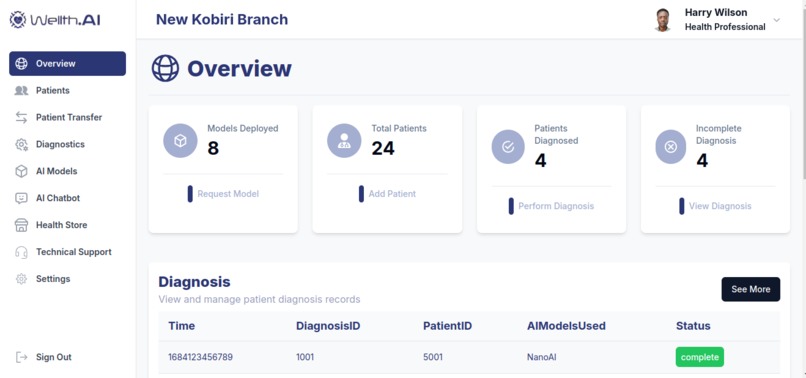
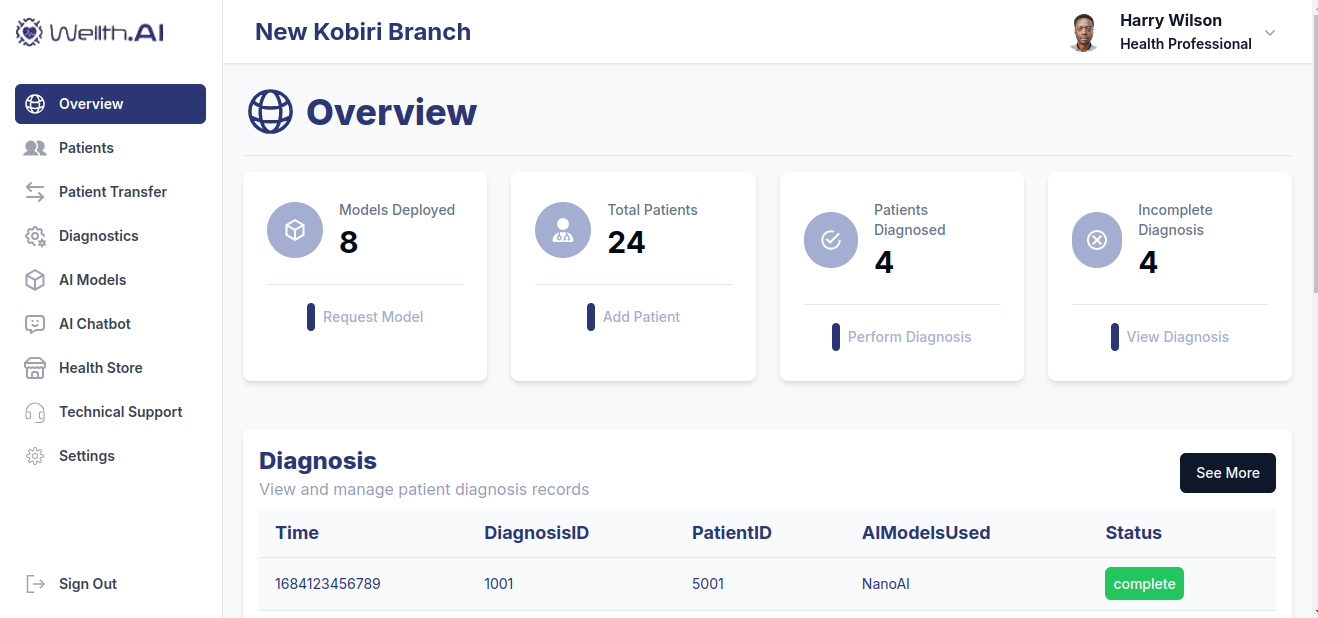
Health Professional Overview Interface
-
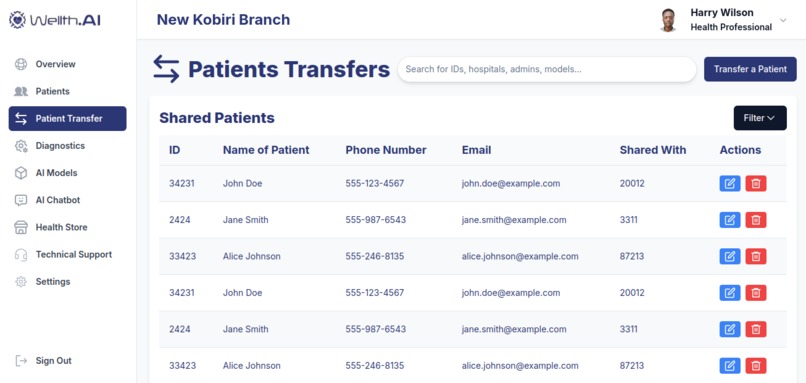
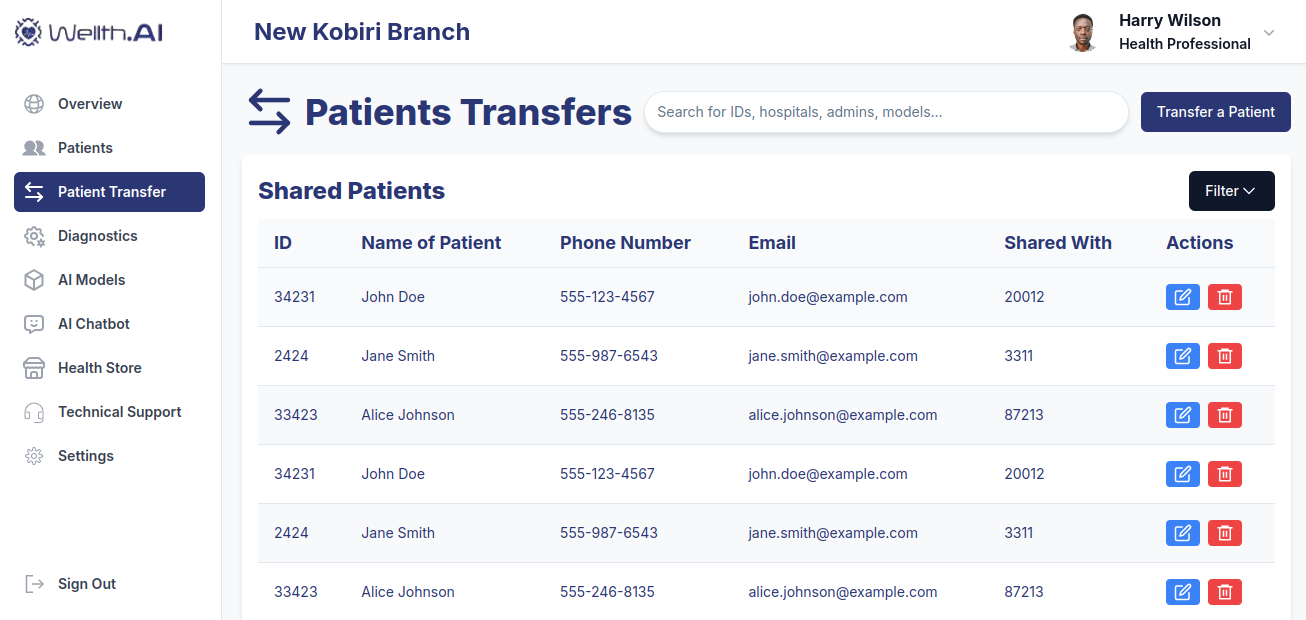
Patients Transfer Interface
Our Journey with Wellth.AI
Our inspiration is rooted in a problem we witness every day right here in Ghana. With a healthcare landscape of over 500 facilities, we saw a recurring and distressing pattern: dedicated, skilled health professionals were being stretched to their limits. This wasn't due to a lack of effort, but due to deep-seated inefficiencies within the very flow of healthcare delivery.
We were moved by the direct human impact of these systemic issues:
Clinician Burnout: The exhaustion of our healthcare providers is a silent crisis that affects everyone.
Compromised Patient Care: We saw that the quality of care was being compromised due to the inefficiencies in the healthcare delivery flow.
Excessive Waiting Times: It is unacceptable for patients to routinely wait more than three hours for care.
Poor Communication: A critical lack of information exchange between key stakeholders like doctors, labs, pharmacies and regulators has created gaps in eliminating bottlenecks in patient-centered care.
This wasn't just data on a page; it was the reality for our friends, family, and community. We were inspired to build a solution not just for the sake of technology, but to restore efficiency and quality to the healthcare our people deserve.
What We Learned
Our first step was to move beyond assumptions and truly learn about the ecosystem. We learned that the healthcare delivery flow is a complex network of interactions and dependencies. It's not a linear problem. Our key learnings were:
A Systemic, Not Singular Problem: The patient journey involves multiple, distinct stages, from the initial consultation to the laboratory and pharmacy, each with its own set of problems, such as manual documentation reviews and expensive tests.
Diverse Stakeholder Needs: We can not create value with a one-size-fits-all approach. We learned that each customer segment has unique needs. Hospitals need to increase efficiency and revenue. Pharmacies need tools to validate medications and manage inventory and medical labs require assistance with diagnostics.
The Competitive Landscape: We studied the market and learned that while there are players in disease diagnostics, patient-centered apps, and professional assistants, our unique strength lies in creating a unified platform that integrates these functions seamlessly. This deep dive into the specific pain points of each stakeholder (the doctor, the nurse, the pharmacist, the lab technician) was critical. It taught us that our solution had to be a multi-purpose digital platform that serves everyone in the value chain.
What it does
Wellth.AI, is architectured to intervene at every critical point: It begins with Patient Onboarding where a Nurse logs vitals, creating a digital record from the start. Before the doctor's consultation, a Medical Insights Agent analyzes patient data to provide summarized patient historic data and recommendations.
The Clinician uses AI tools like a medical chatbot for research and AI models for diagnosis during the consultation process to enhance speed and testing of hypothesis before diagnosis.
The journey continues to the Pharmacy, where AI assists the Pharmacists with validating the prescription.
AI is used in Lab Diagnostics for more advanced and accurate analysis. The platform provides a holistic digital marketplace integrating AI-driven tools that support every stage of the patient journey within a hospital setting
It connects multiple hospitals, enabling a seamless, secure and ubiquitous flow of patient information across facilities, thereby enhancing continuity of care. The platform integrates pharmacies, allowing healthcare providers to efficiently search for and fulfill prescriptions, improving medication access and adherence.
In conclusion, our core focus is on creating an advanced AI-powered platform that uses real-time data processing and predictive analytics. The goal is to develop a system that seamlessly integrates with existing hospital infrastructure, making adoption as smooth as possible. We are building a suite of specific tools to support each player in their respective phases of the healthcare delivery flow.
How We Built Our Project
Our building process has been methodical, moving from high-level strategy to detailed product architecture.
Strategic Foundation: We started by creating a comprehensive Business Model Canvas. This forced us to define our key activities: focusing on digital platform development and strategic partnership development. It also clarified our essential resources, namely our people, our technology, and our partnerships.
Architecting the Solution: We designed a step-by-step digital workflow that mirrors and enhances the patient journey. To enhance the healthcare solution for resource-constrained environments, the strategic plan focuses on comprehensive adaptations for resilience and efficiency. This involves evolving the frontend into a Progressive Web Application (PWA) using lightweight frameworks and UIs optimized for smaller screens, which enables on-device data storage to mitigate connectivity issues. For the backend, the focus is on exploring microservices and caching to gracefully handle intermittent internet disconnections. To ensure operational independence, an investigation into using local Intranet or Bluetooth for data transfer is planned, backed by a local file system. Furthermore, performance optimization will be explored through deployment on Raspberry Pi clusters and shifting analytics to on-device machine learning models, ensuring the system remains robust in facilities with limited internet access.
The Challenges We Have Faced
Embarking on a mission this ambitious in the deep tech space is not without its hurdles. Our primary challenges are centered around three areas:
Technical Complexity: Building a robust, secure, and interoperable AI platform that can handle sensitive patient data is a significant technical undertaking.
Market Adoption and Partnerships: Our success hinges on building strong relationships with our key partners: hospitals, pharmacies, and medical labs. The process of convincing established institutions to adopt new workflows requires a dedicated strategy for direct outreach and partnership development, which we have identified as a key activity and a significant hurdle to overcome as a team.
Funding and Resources: As with any deep tech venture, securing the necessary capital is a challenge. "Fundraising" is a critical activity for us to cover our technology, marketing, and partner acquisition costs. We are actively seeking funding partners who align with our vision to bring this transformative solution to market. We see these challenges not as roadblocks, but as essential parts of the start-up journey. Our clear strategy and deep understanding of the problem give us the confidence to navigate them successfully.
Accomplishments that we are proud of
We have successful completed version 1 of our solution, marking a significant milestone in our journey. Key accomplishments include:
Onboarding Flow: Developed a comprehensive onboarding experience tailored for hospitals, clinicians, and medical laboratories ensuring smooth integration and user engagement across all stakeholder groups.
Medical Chat Assistant & Diabetes Diagnostic Tool: Launched our AI-powered medical chat assistant integrated with a diabetes diagnostic tool, offering immediate access to health insights and clinicians decision support capabilities.
Official Website: Built and deployed our website as a central hub for platform access, information dissemination, and user engagement.
Stakeholder Engagement: Initiated conversations with health professionals to gather feedback and validate the usability of our solution.
What's next for WellthAI
Future works includes: Develop Role-Based Interfaces: Create tailored screens and dashboards for personnel in various hospital units (e.g., triage, pharmacy, lab, admin) to streamline workflows and ensure smooth data flow.
Enhance Patient-Centered Applications: Build mobile-first and web-based platforms that empower patients to access diagnostics, health records, and care plans with integrated support from AI agents.
Integrate Specialized AI Agents: A Triage Assistant for initial symptom assessment and priority routing. A Medical Summarizer for converting raw clinical notes into structured records. A Follow-up Tracker that monitors adherence and flags at-risk patients. A Multilingual Conversational Agent for breaking language barriers in local contexts.
Built With
- amazon-web-services
- docker
- fastapi
- javascript
- langchain
- nextjs
- node.js
- openai-api
- python
- scikit-learn
- vercel

Log in or sign up for Devpost to join the conversation.