-
-
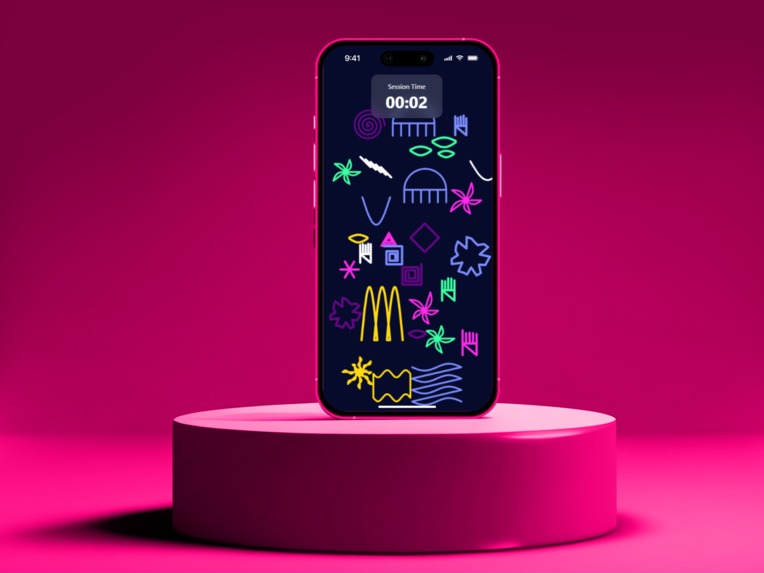
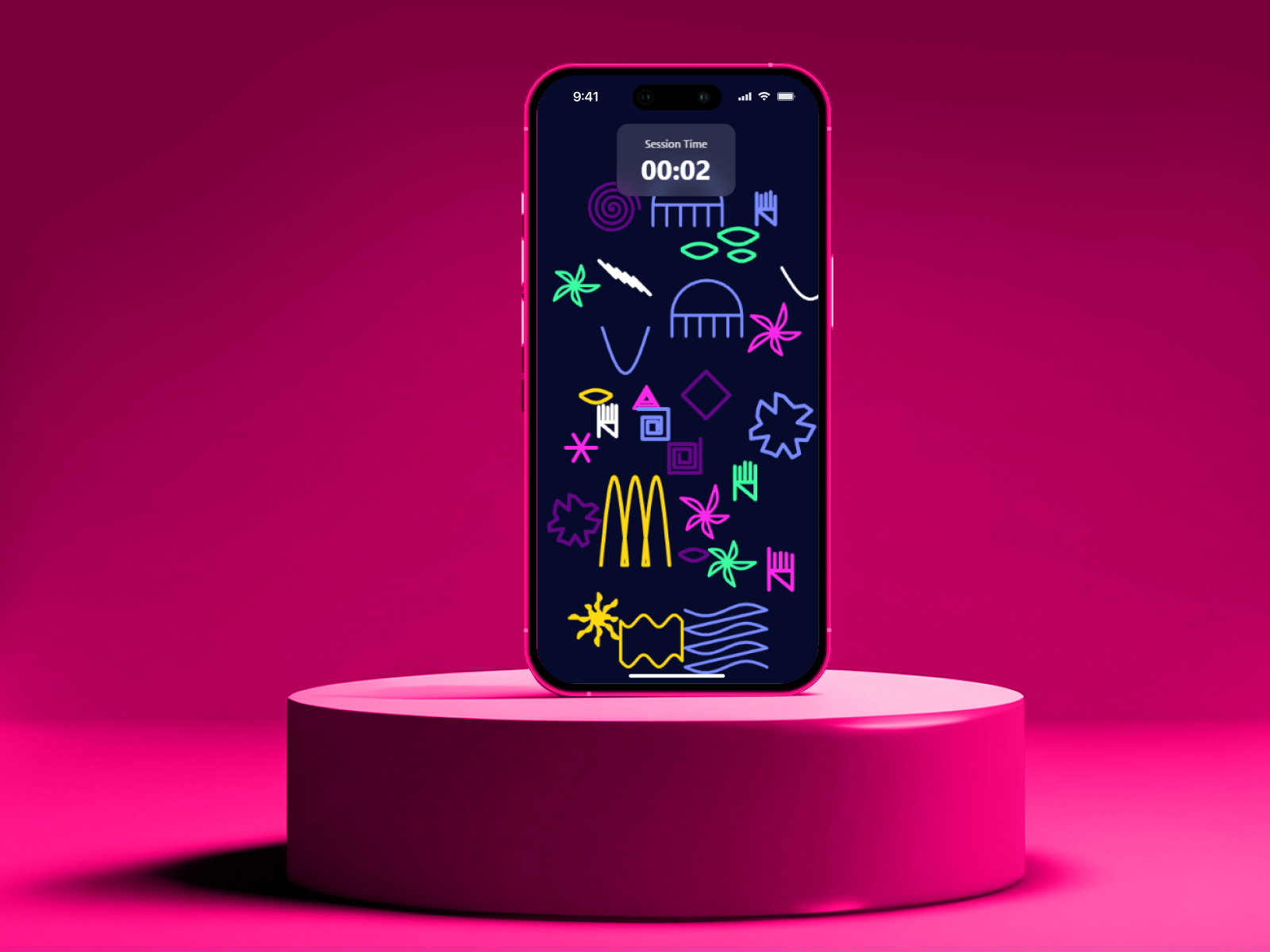
Mockup of the Graffiti screen
-
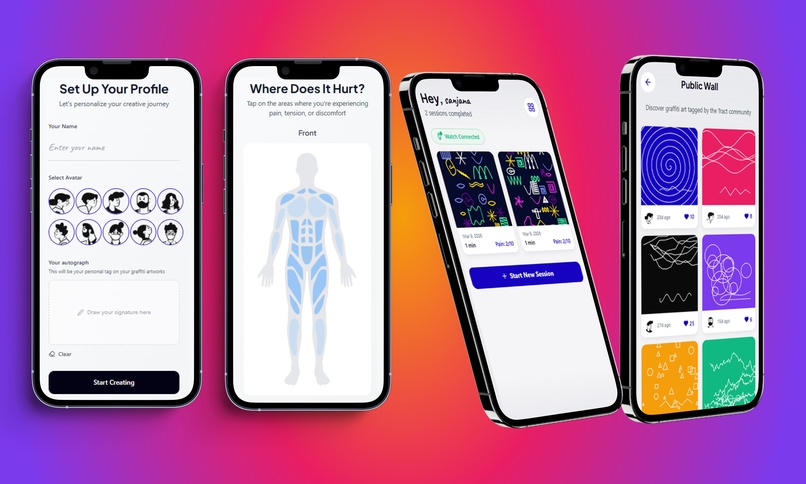
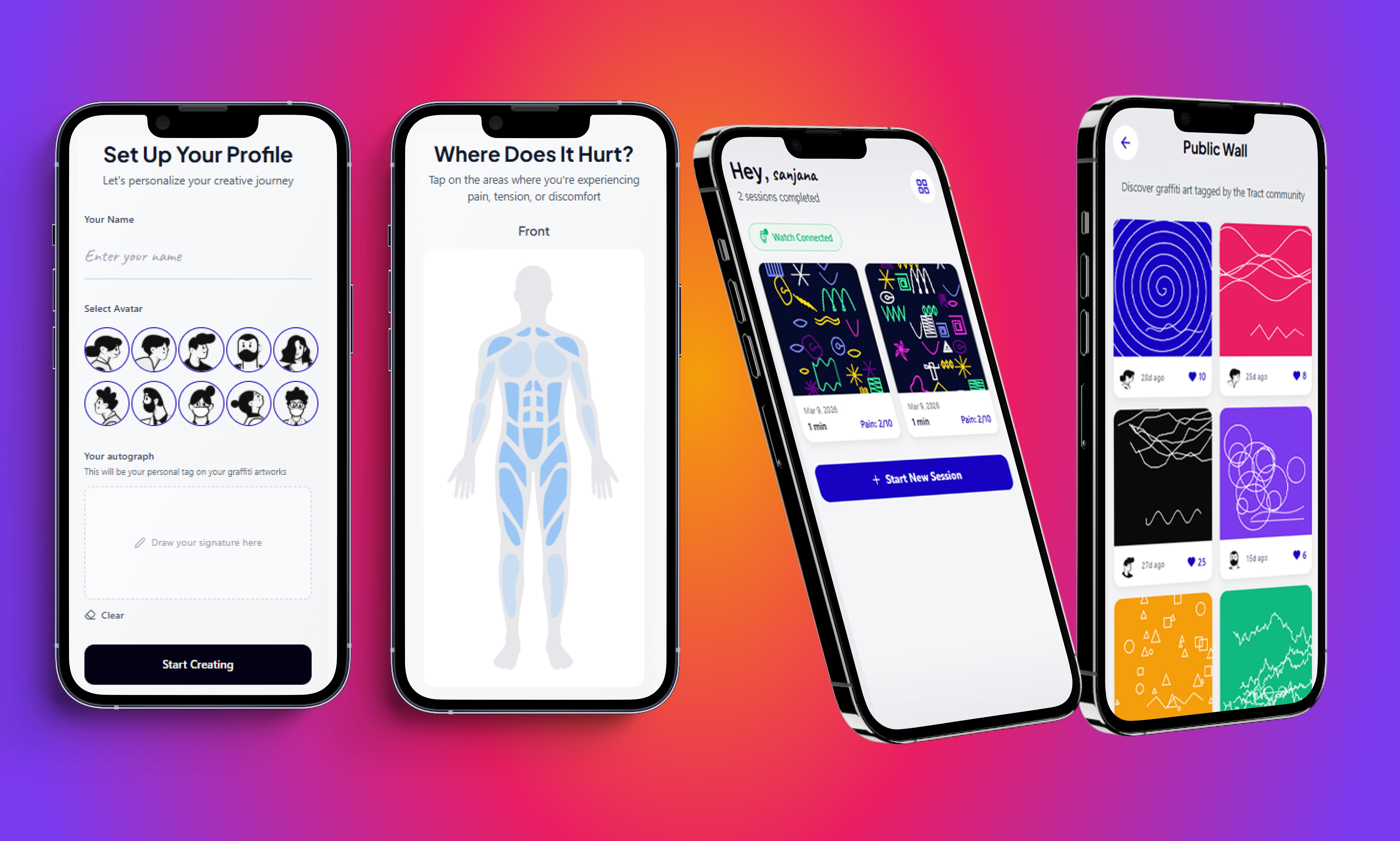
Mockup of interaction with users
Inspiration
Pain is one of the most personal human sensory experiences, yet it remains largely invisible. During physiotherapy, people are often asked to listen to their bodies, but interpreting pain and progress can feel uncertain. This project was inspired by the idea that while pain feels subjective, the body constantly produces measurable physiological signals related to injury and recovery.
These signals are part of nociception, the body’s sensory system for detecting potential tissue damage. The project asks a simple question:
What if nociception could become a visible sense?
What it does
Tract is a speculative tool that transforms nociception signals during physiotherapy into generative graffiti artwork.
A wearable sensor captures physiological indicators associated with pain perception, including heart rate, blood pressure, and sweat levels. These signals are translated into evolving graffiti-style visuals in real time.
Higher pain intensity results in brighter colors and sharper strokes, while lower intensity produces softer textures and muted tones. Each session generates a unique artwork that reflects the body’s emotional and physical state, building a personal timeline of recovery.
How we built it
The system translates physiological signals into visual expression: Body Signals → Nociception Model → Generative Art
Users begin by marking pain locations on a hand-drawn skeleton interface using graffiti spray gestures. During physiotherapy sessions, a wearable collects physiological data while generative strokes evolve in real time.
At the end of each session, the system produces a unique artwork that is added to a personal graffiti wall, creating a visual archive of healing. Users can also explore a shared public graffiti wall, where anonymous artworks from others form a collective expression of recovery.
Challenges we ran into
A key challenge was balancing scientific grounding with artistic interpretation. Physiological signals needed to be translated into visuals without becoming overly technical or overwhelming.
Another challenge was designing responsibly around pain. The system incorporates gentle cues and “creative pause” prompts instead of alarming alerts, ensuring that increased perception supports reflection rather than anxiety. We also had to make sure that the interaction was simple enough to motivate users to adapt to it and ensure that their privacy was protected by hiding their personal health data.
Accomplishments that we're proud of
One of our team members has been experiencing back pain for 3 years, and we’re proud to have designed a solution to help them stay consistent with their physiotherapy sessions and make invisible pain visible by turning nociception signals into dynamic generative graffiti. The project blends art, data, and human-centered design to create personal and public walls that visualize recovery. With safe, intuitive interactions and a future vision of projection murals and community spaces, Painting Pain reimagines physiotherapy as a creative, expressive journey.
What we learned
This project explored how design can make invisible sensory experiences perceptible. Instead of presenting pain through clinical data, the goal was to translate physiological signals into a visual language that is intuitive and expressive.
Working on this project also highlighted the role of speculative design in imagining how future sensing technologies might reshape how we understand our bodies.
What's next for Tract - A sensory visualization of Nociception
In future iterations, generated artworks could be projected onto real walls, allowing users to trace and paint over them. Physiotherapy clinics could host community recovery walls, transforming healing journeys into shared murals.
By turning pain into expression, Tract reimagines recovery as something that can be seen, understood, and created.
Built With
- figma
- react


Log in or sign up for Devpost to join the conversation.