Inspiration
HeyMom was inspired by a simple caregiver problem: the people who need daily check-ins most are often the least likely to open an app, fill out a form, or remember to self-log. Family caregivers want visibility, but constant manual check-ins are exhausting and easy to miss.
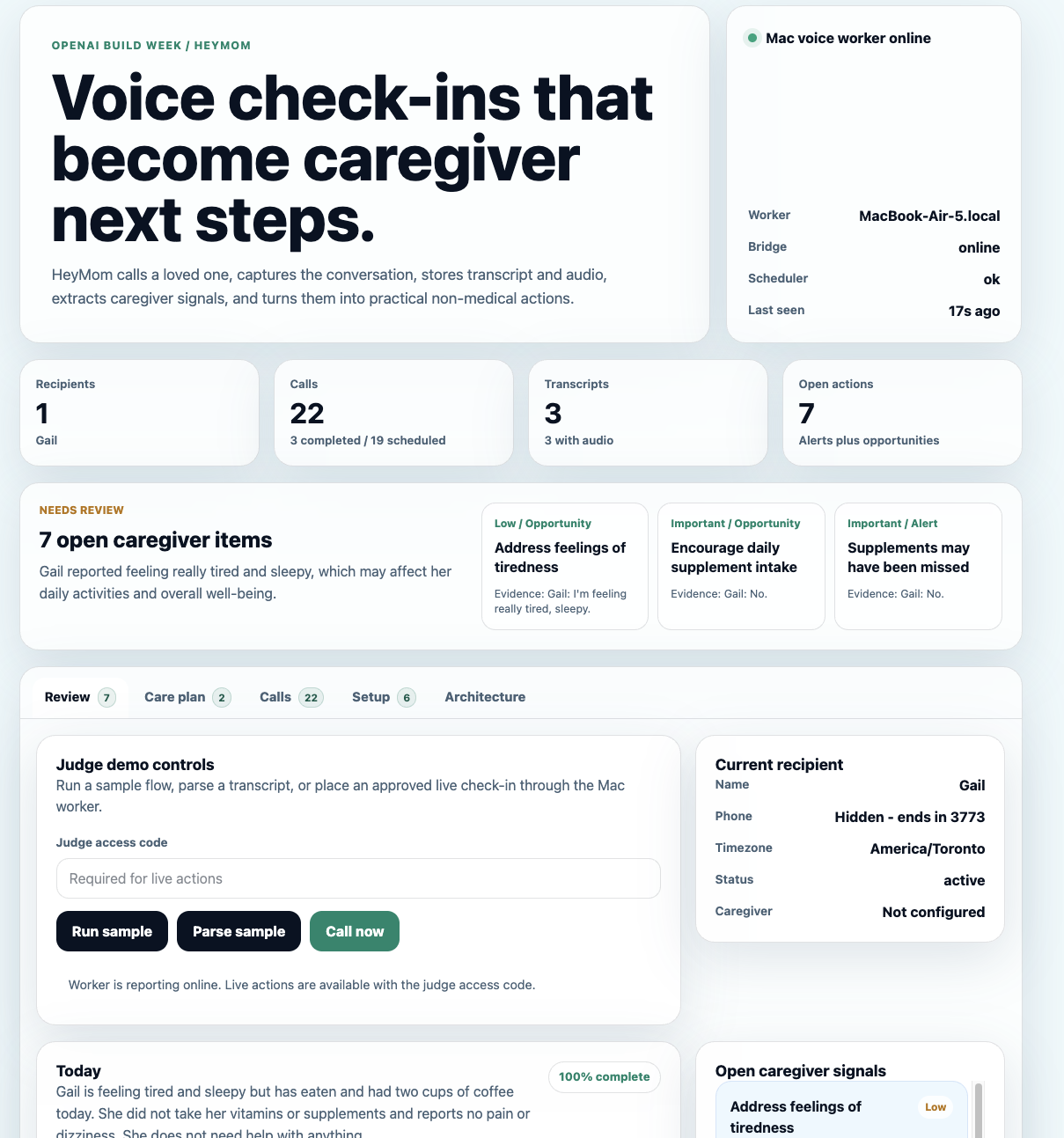
The goal was to make the check-in feel as natural as answering a phone call. HeyMom calls a loved one, asks a few short wellness questions, captures their spoken answers, and turns that conversation into structured caregiver insight.
What it does
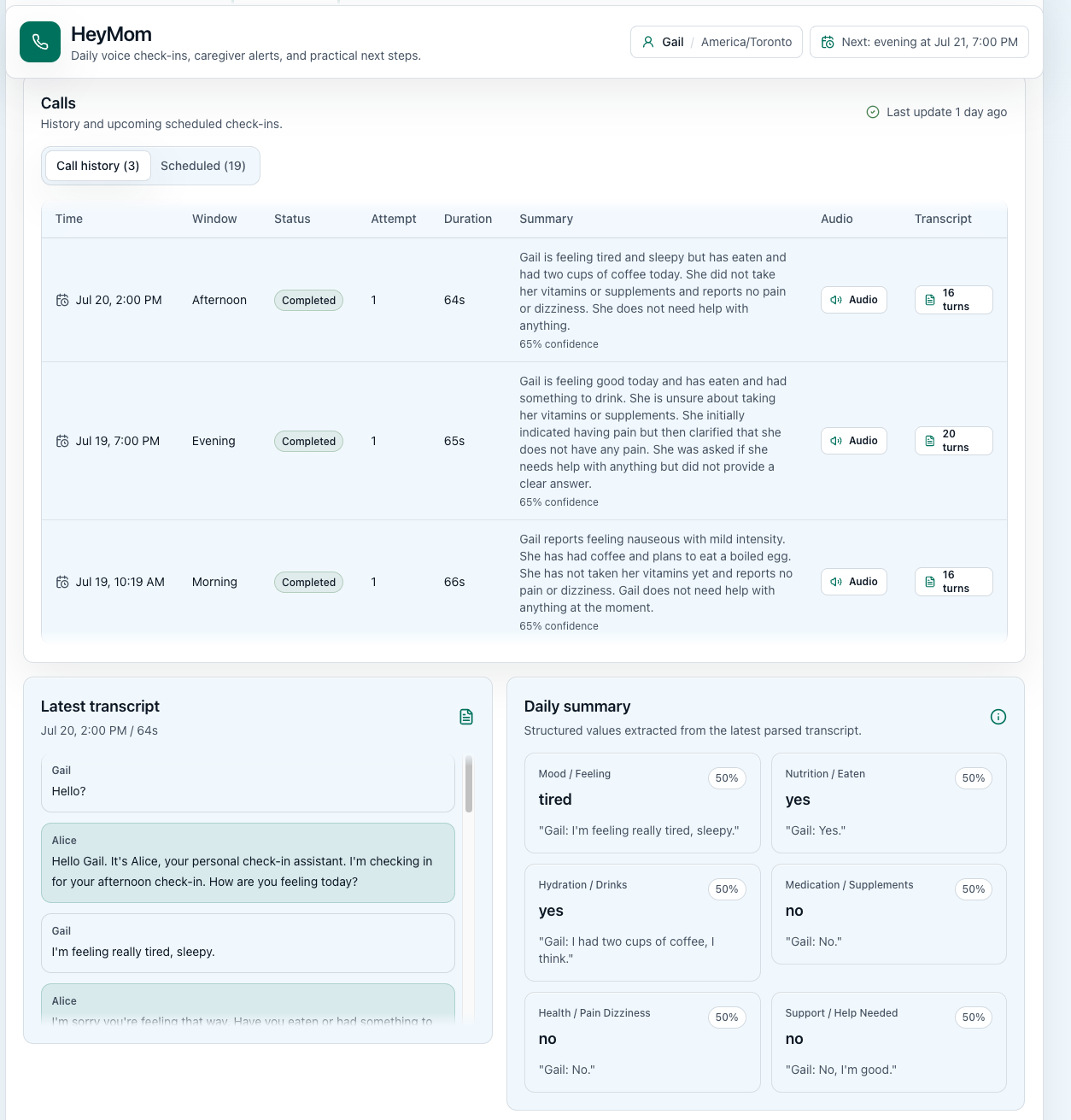
HeyMom is a voice-first caregiver check-in app. A caregiver can trigger a check-in call, the recipient answers by phone, and HeyMom asks simple questions about mood, sleep, food, supplements, pain, dizziness, or anything worrying.
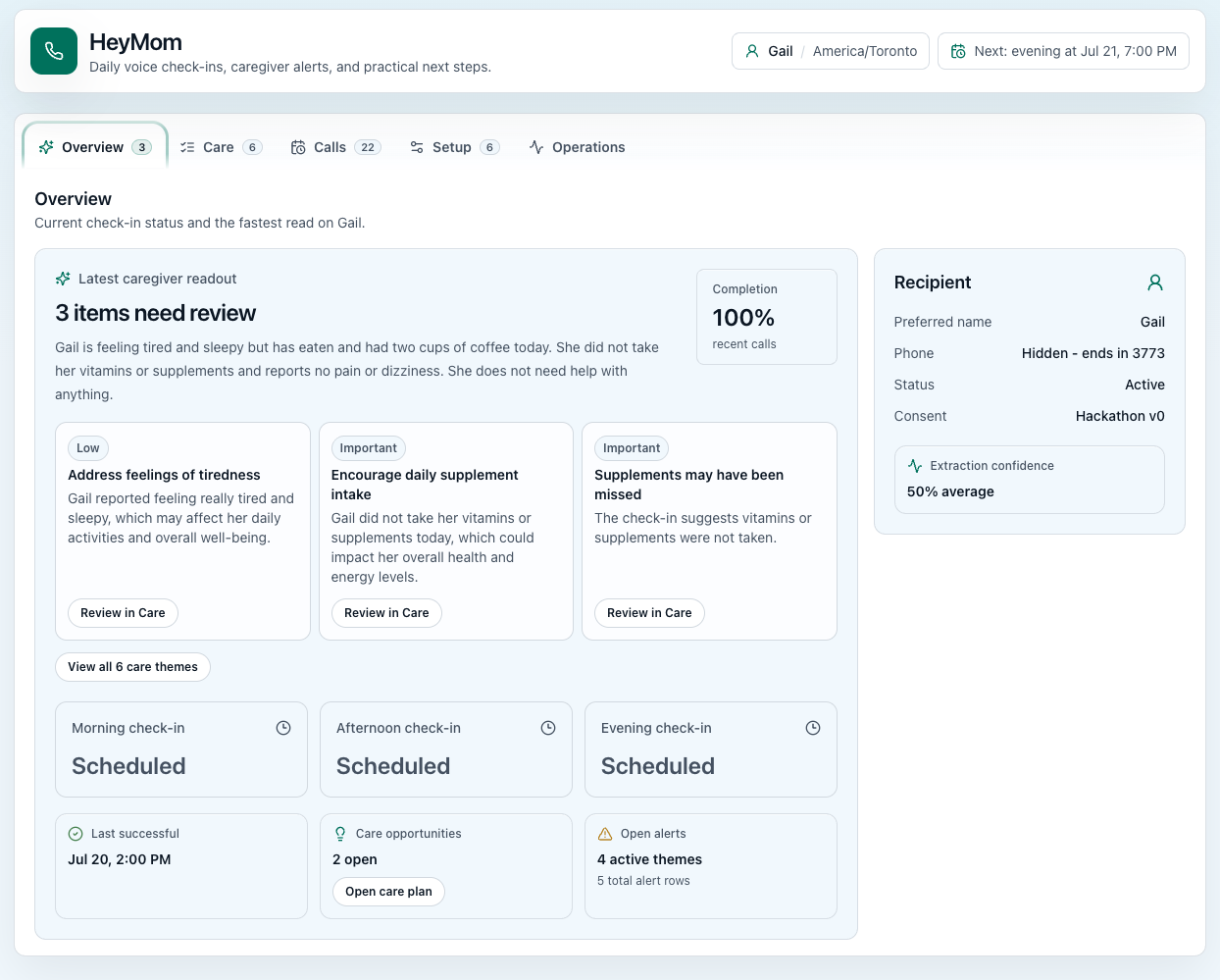
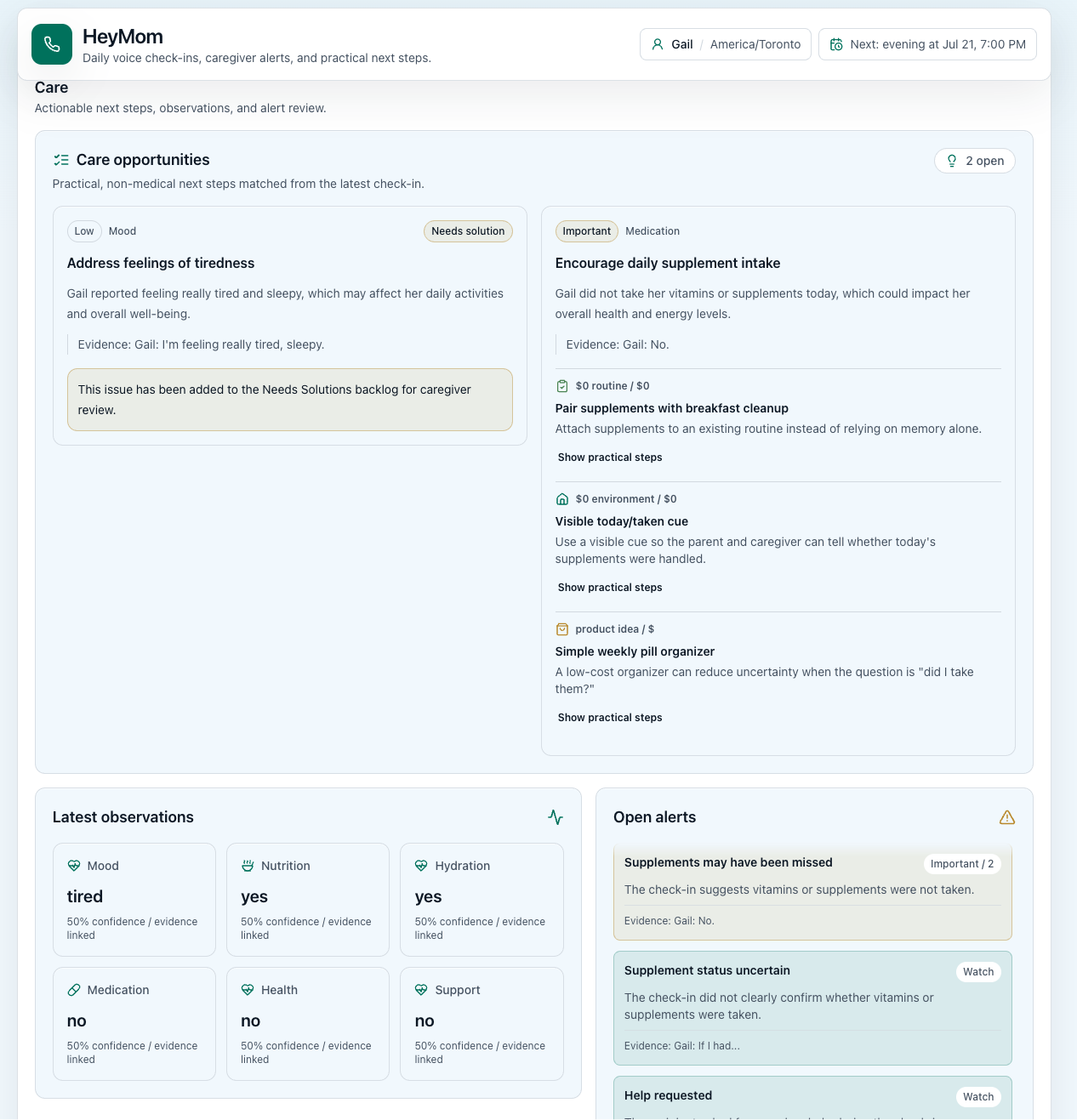
After the call, the app stores the transcript, extracts structured observations, highlights uncertainty, shows the latest status on a caregiver dashboard, and can raise alerts when something looks concerning.
How we built it
We built HeyMom as a Next.js app with a caregiver dashboard, Supabase for persistence, Twilio for outbound phone calls, and OpenAI for the voice and parsing workflow.
The live call flow uses Twilio Media Streams connected to OpenAI Realtime, so the recipient can have a natural spoken conversation instead of a rigid phone menu. After the call, a parser turns the transcript into structured wellness observations and alert candidates.
Codex helped accelerate the build by turning the product concept into implementation tasks, wiring the voice routes, migrating the call flow toward OpenAI Realtime, tightening the README/runbook, and keeping the project aligned with the hackathon requirements.
Challenges we faced
The biggest challenge was making the experience feel useful without becoming medical, clinical, or overbuilt. HeyMom is not a diagnostic tool or emergency response system. It needs to be warm, short, and practical while still producing useful caregiver visibility.
Technically, the hardest part was moving from a step-by-step speech webhook flow to a realtime voice architecture. Phone audio, WebSocket streaming, transcript capture, and post-call parsing all need to work together cleanly.
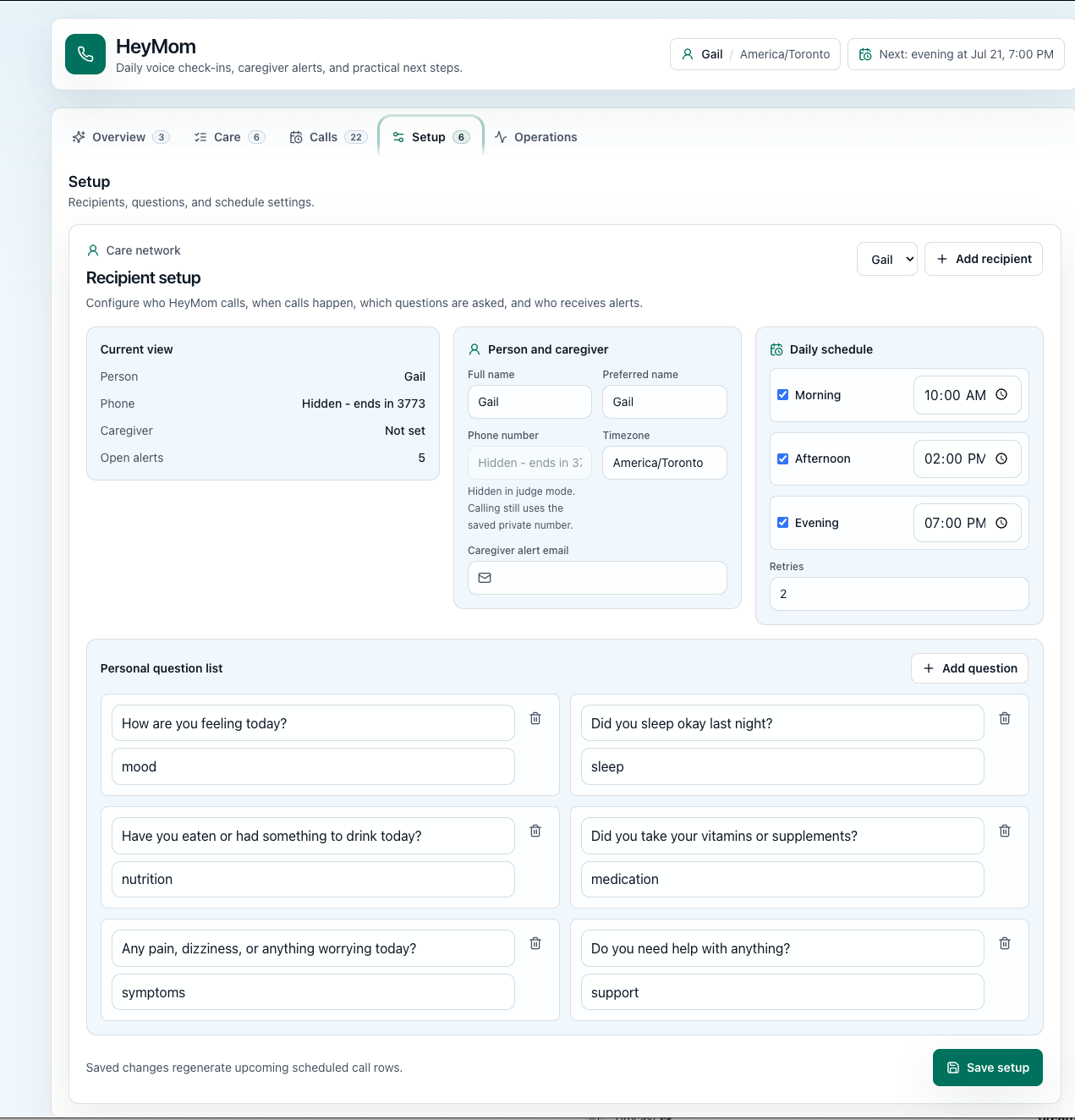
Another challenge was deciding what to leave out. For the hackathon version, we focused on a working end-to-end demo loop instead of billing, full compliance workflows, multi-recipient scheduling, or enterprise admin features.
What we learned
We learned that voice-first care tools need to treat uncertainty as a first-class state. “I think so” is not the same as “yes,” and silence or hesitation can be meaningful.
We also learned that OpenAI Realtime makes phone-based AI agents much more natural than traditional IVR-style flows, but the product still needs clear boundaries, short prompts, and a strong post-call extraction step for reliable caregiver data.
What’s next
Next steps are scheduled recurring calls, better caregiver onboarding, configurable check-in templates, stronger consent and privacy controls, SMS/email escalation rules, and pilot testing with real family caregivers.
Built With
- api
- codex
- css
- gpt-5.6
- media
- next.js
- node.js
- openai
- react
- realtime
- streams
- supabase
- tailwind
- twilio
- typescript
- vercel
- websocket


Log in or sign up for Devpost to join the conversation.