

Inspiration
heyfon.ai did not begin as a startup idea. It began as a problem I could no longer solve by hiring more people.
I owned a padel tennis court and had already hired a seven-person team to run it. Yet customer conversations, scheduling, follow-ups, and routine operational tasks continued to grow. Even with seven employees, the business still needed more people to keep everything running smoothly.
That experience made me ask:
What if a small business could build its own AI workforce instead of continuously expanding its administrative workload?
I began developing an automation system for my own court. It worked and soon, other padel clubs wanted it too. As we deployed it across more clubs, we realized this was not just a padel-industry problem. Businesses everywhere struggle to manage repetitive customer conversations across phone calls, WhatsApp, and web chat.
That internal automation project gradually became heyfon.
What it does
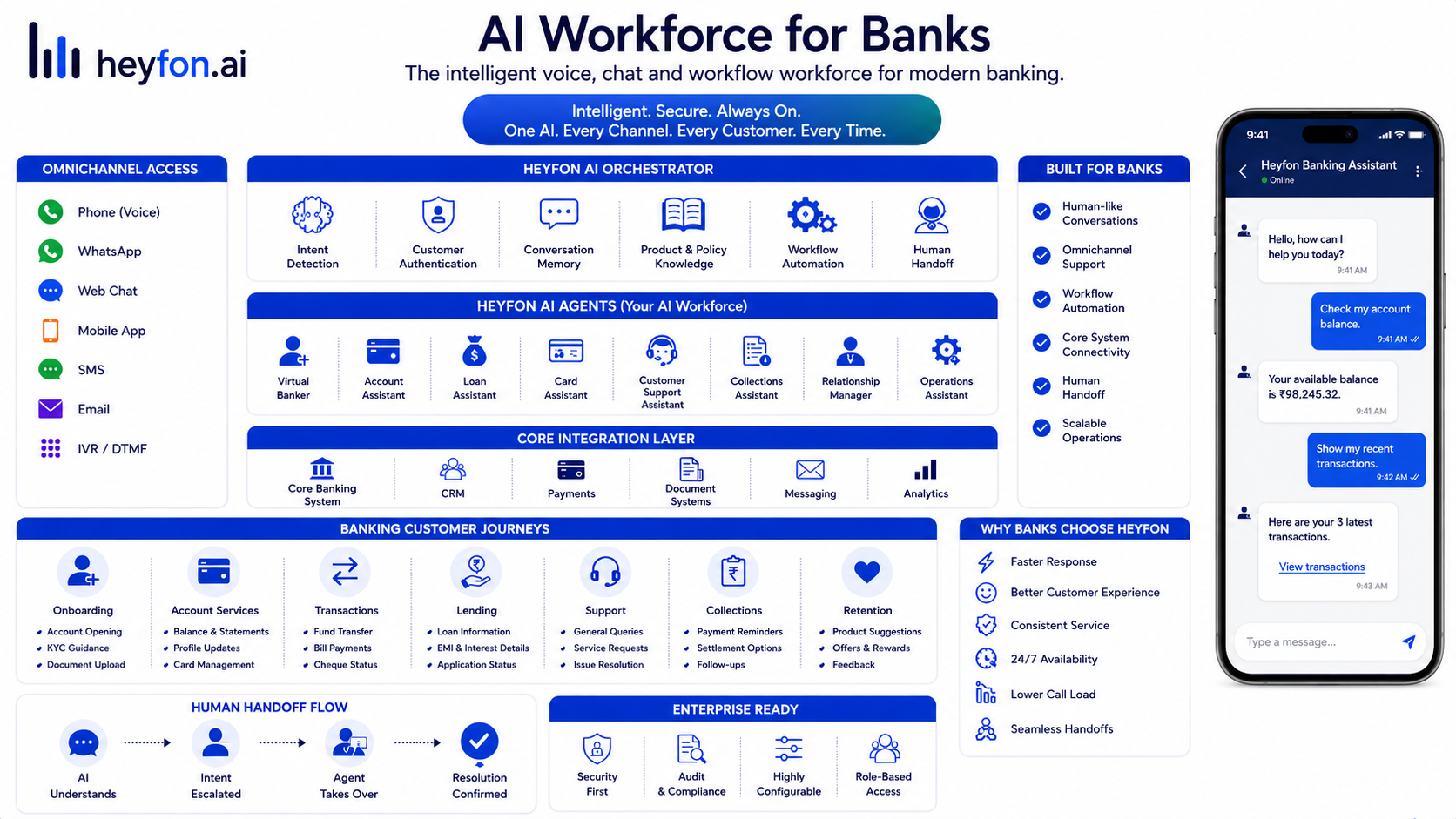
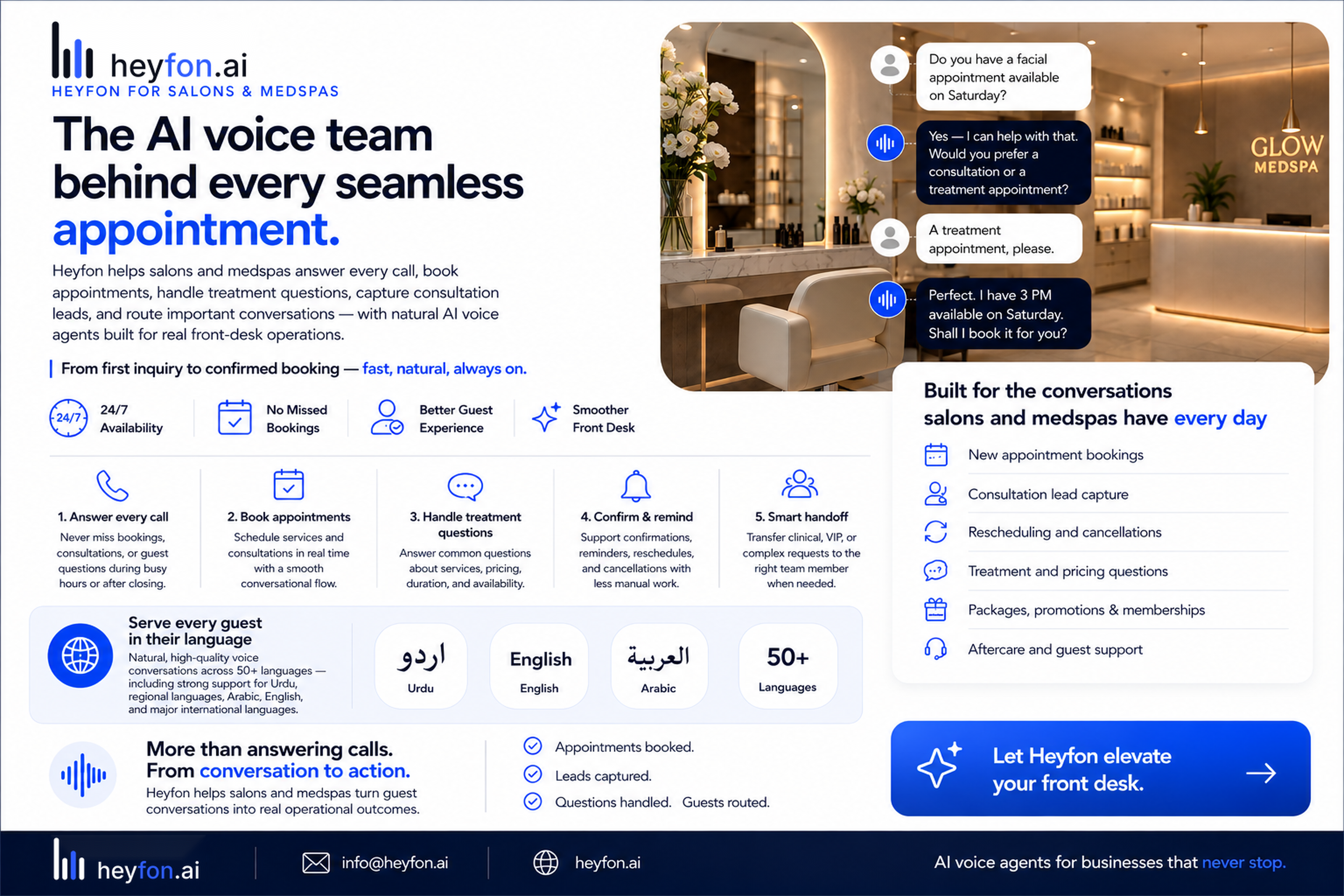
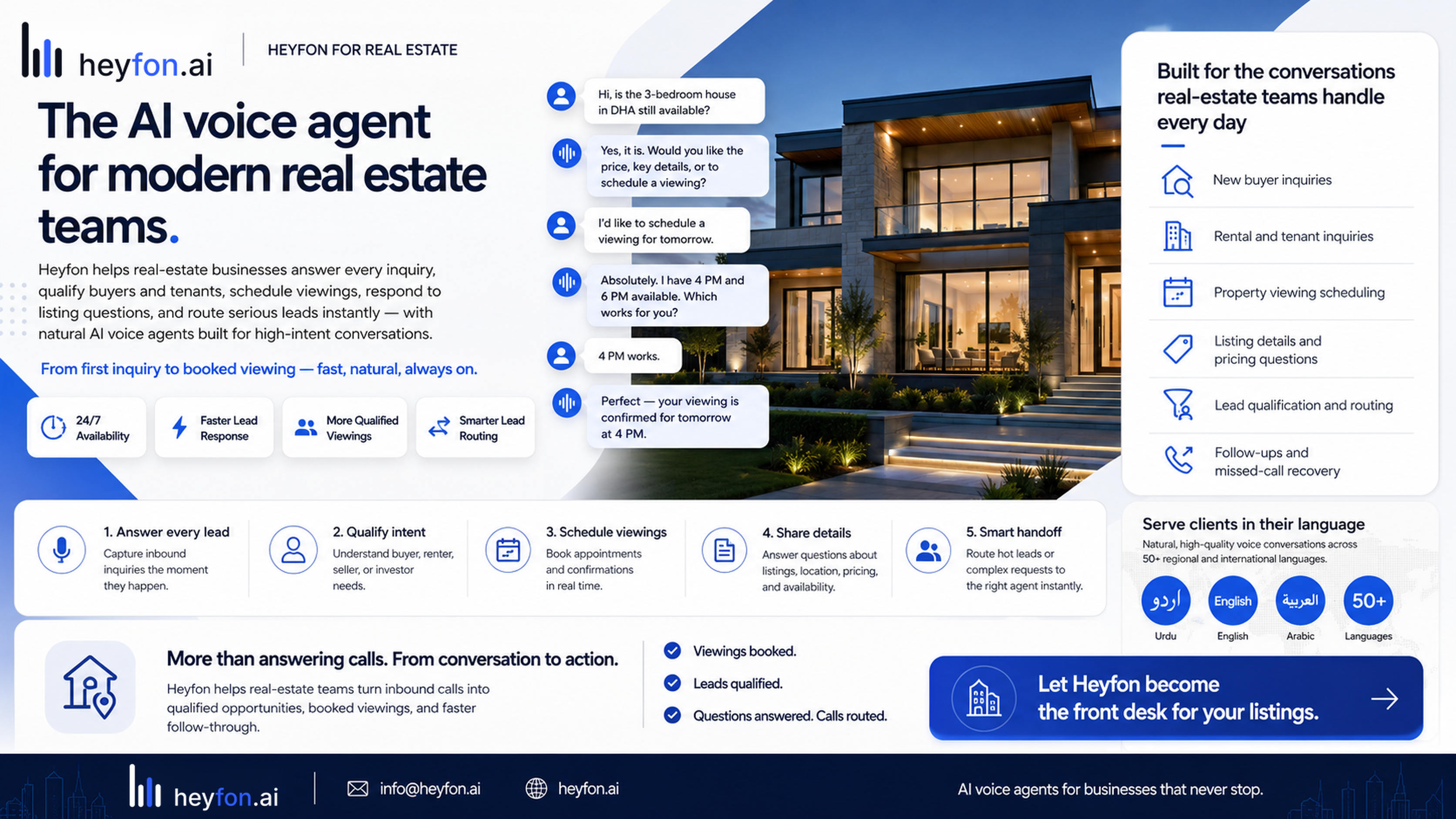
heyfon allows businesses to build and deploy their own AI workforce, starting with voice and chat, without writing code or managing complicated infrastructure.
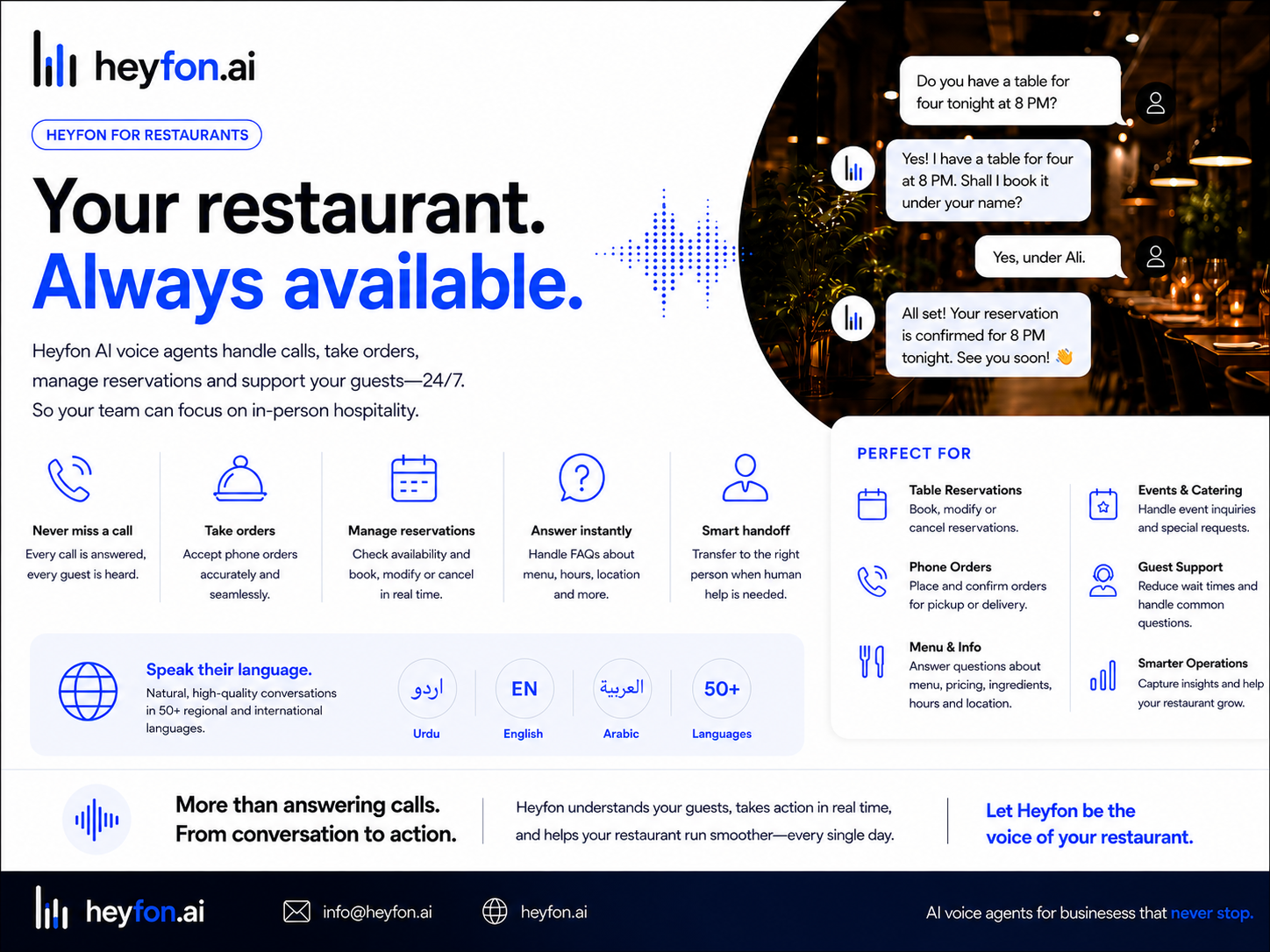
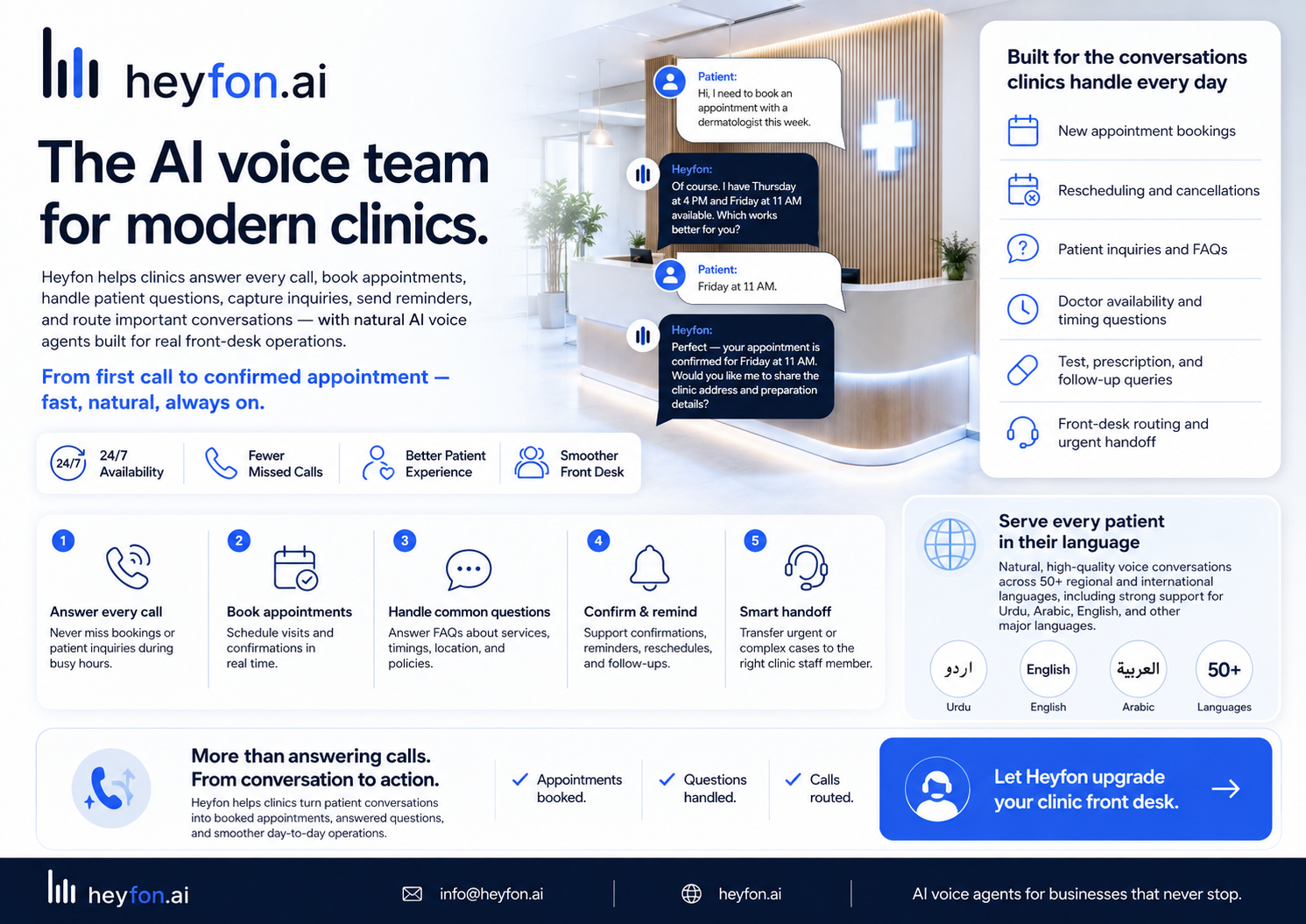
A business can create an agent, connect its tools and workflows, and go live in minutes. The same agent can communicate through phone calls, WhatsApp, and web chat; speak more than 50 languages; and connect with over 1,000 business applications.
heyfon agents are designed to do the work, not merely hold a conversation. They can understand a customer’s request, access the appropriate business tools, follow workflows, and help complete the task behind the interaction.
We are particularly focused on languages and regions that mainstream AI platforms have historically underserved. We develop our own efficient models for these languages so that businesses and customers are not excluded simply because of where they live or what language they speak.
Our goal is to make AI automation:
- Affordable for small businesses, not only large enterprises
- No-code so anyone can deploy it without an engineering team
- Available to everyone, especially underserved languages and neglected regions
How we built it
We began by automating real operational workflows inside our own padel business. This gave us a live environment in which to observe how customers communicate, where automation fails, and what businesses actually need from an AI agent.
From there, we built heyfon as an end-to-end platform rather than a simple interface around another voice product. The platform combines our voice infrastructure, efficient language models, a no-code agent builder, workflow tools, an integration layer, and omnichannel communication.
We designed the experience around three steps:
Build. Connect. Go live.
Users define what their agent should do, connect the applications their business already uses, and deploy the same agent across voice and chat channels. The technical complexity remains underneath the platform, while the business receives a simple, usable product.
Challenges we ran into
The hardest challenge was making advanced voice AI simple without making it limited.
Real customer conversations are unpredictable. People change topics, interrupt, use different accents, switch languages, provide incomplete information, and expect an immediate response. A production-ready agent must handle those situations while remaining fast, natural, and reliable.
Supporting underserved languages created another major challenge. Many languages lack the data, infrastructure, and commercial attention available to English and other widely supported languages. We had to develop efficient models and systems that could deliver useful performance without making the product unaffordable.
We also had to connect fragmented business tools, manage real-world edge cases, and ensure that an agent could complete an action;not just generate a convincing response.
Accomplishments that we're proud of
We are proud that heyfon grew from solving a problem at one padel court into a platform used beyond the business where it began.
Other padel clubs adopted the system, validating that the problem was shared and that our solution could be replicated. We then expanded the platform to support multiple industries, regions, communication channels, and business workflows.
We are especially proud of building:
- Our own efficient models for underserved languages
- Support for more than 50 languages
- Connections with over 1,000 business applications
- One agent that can work across phone calls, WhatsApp, and web chat
- A no-code experience that can take a business from an idea to a working AI agent in minutes
The achievement that matters most to us is not simply that the technology works. It is that people without AI expertise can use it to solve real business problems.
What we learned
Our biggest lesson was that powerful AI is not enough. It must also be dependable, affordable, and accessible.
Business owners do not care how sophisticated a model sounds. They care whether the phone is answered, whether the customer is understood, and whether the requested task is completed correctly.
We also learned that accessibility involves more than removing code. It means supporting the languages people actually speak, pricing the product for smaller businesses, and designing for regions that are usually treated as an afterthought.
Every lesson has reinforced the same principle:
The most powerful AI workforce will be the one every business can actually use.
What's next for heyfon.ai
Our next step is to make heyfon available to more businesses, languages, and regions.
We will continue improving our models for underserved languages, expanding the actions our agents can complete, and adding deeper integrations with the tools businesses already depend on. We also plan to make deployment even faster so that creating a capable AI worker becomes as simple as creating an email account.
Our long-term vision is to give every business—regardless of its size, location, language, or technical ability—the power to build and scale its own AI workforce.
heyfon began because one padel court could not keep solving growth by hiring more people. We are building it so millions of other businesses will have a better option.
Built With
- ai-agents
- api-integrations
- artificial-intelligence
- conversational-ai
- generative-ai
- low-resource-languages
- machine-learning
- multilingual-ai
- natural-language-processing
- no-code
- speech-recognition
- speech-to-text
- telephony
- text-to-speech
- voice-ai
- web-chat
- workflow-automation

Log in or sign up for Devpost to join the conversation.