-
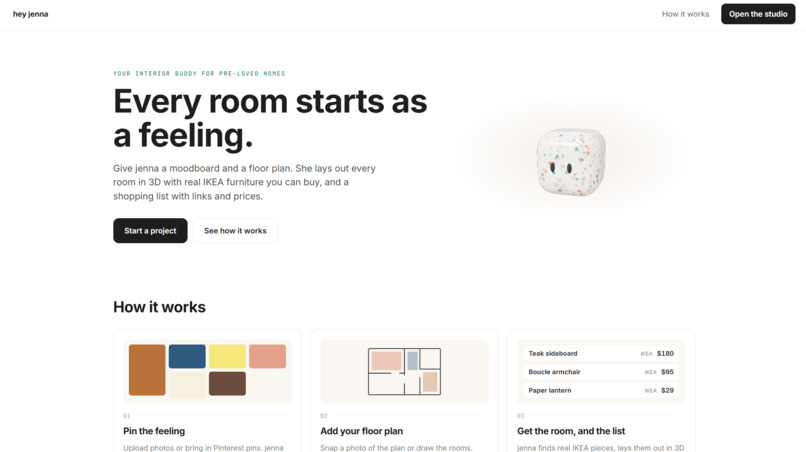
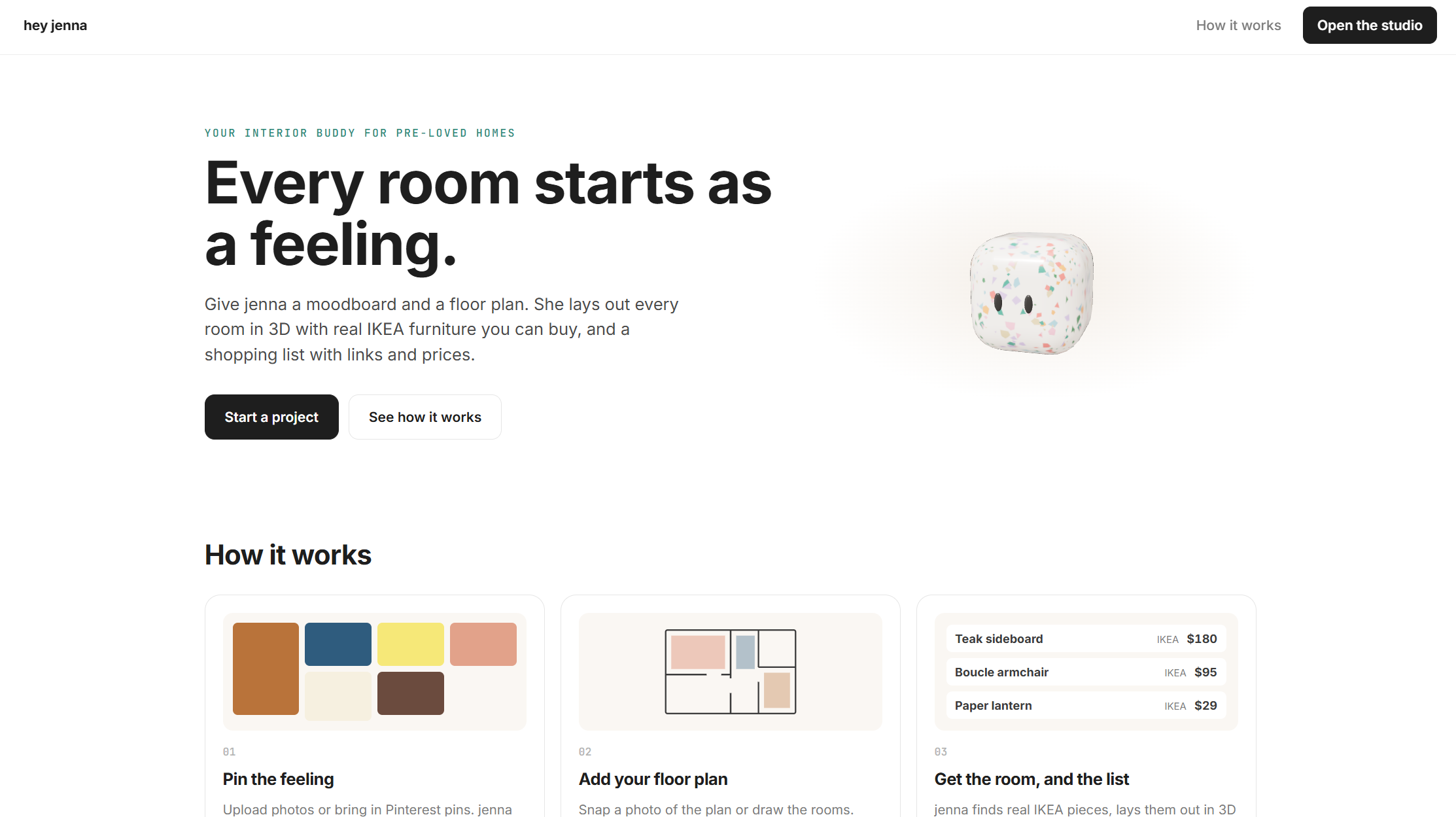
Landing Page
-
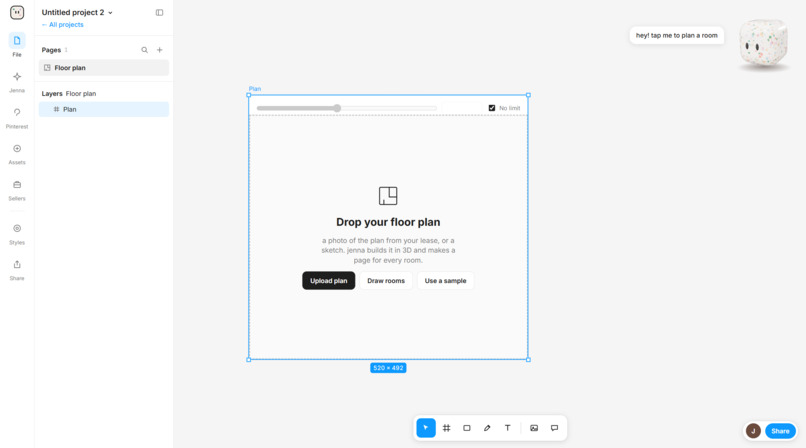
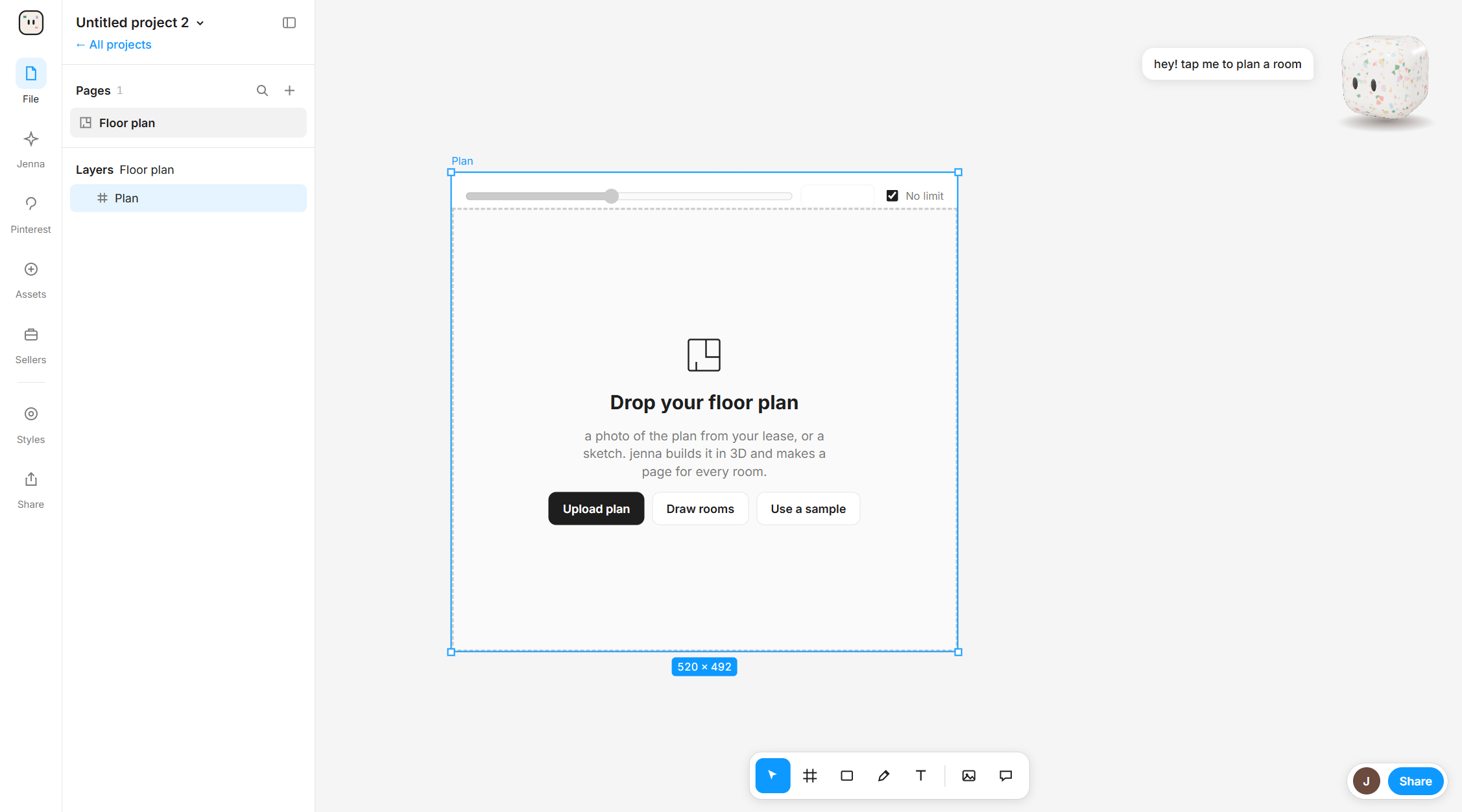
Upload Floor Plan
-
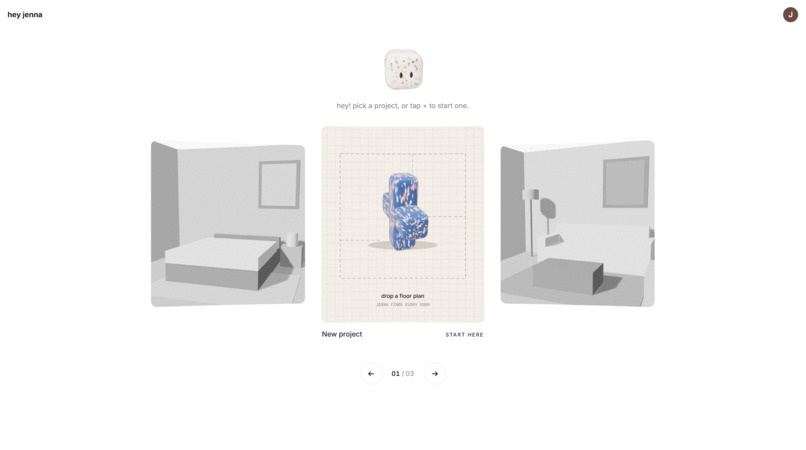
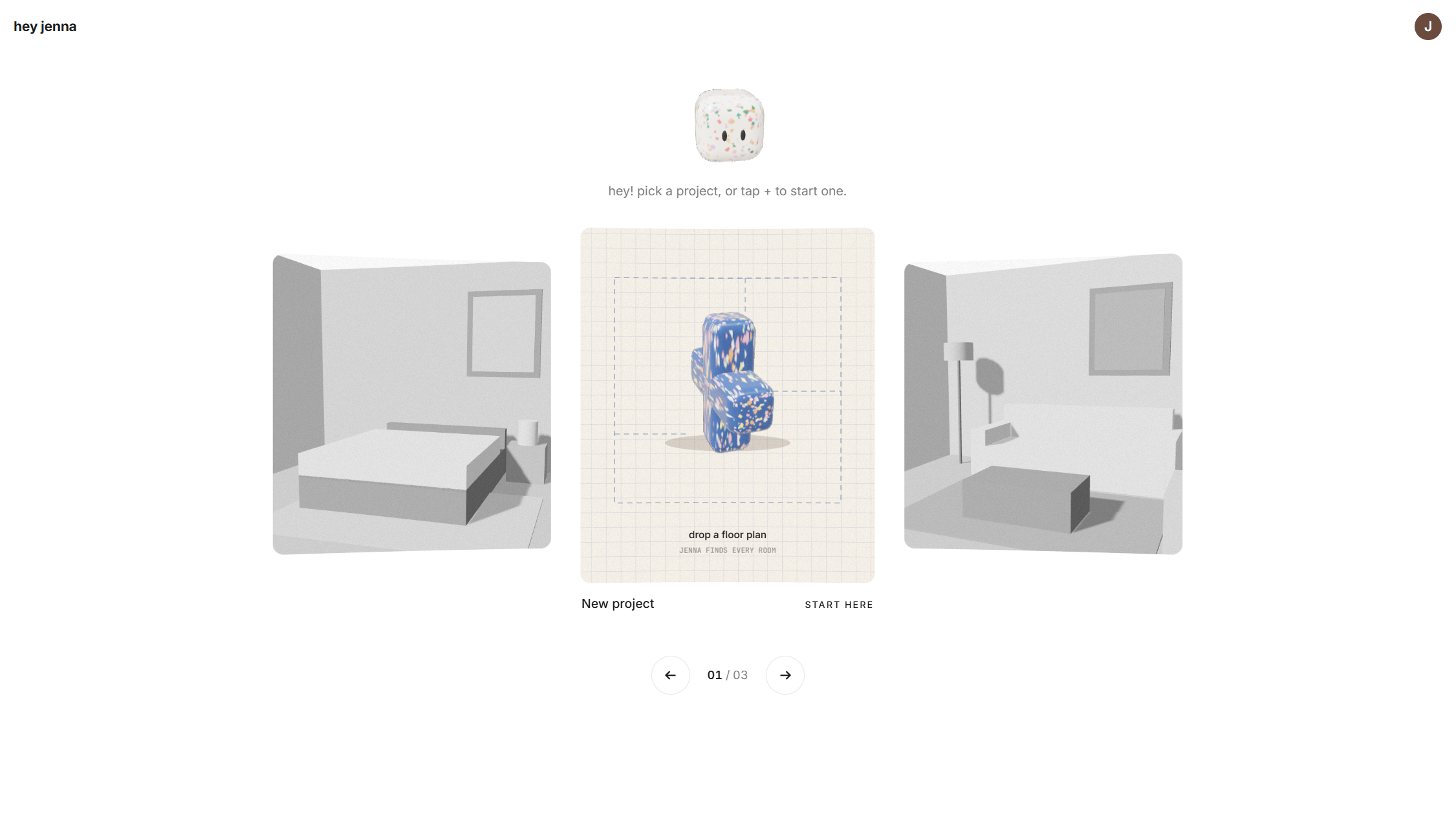
Pick Project
-
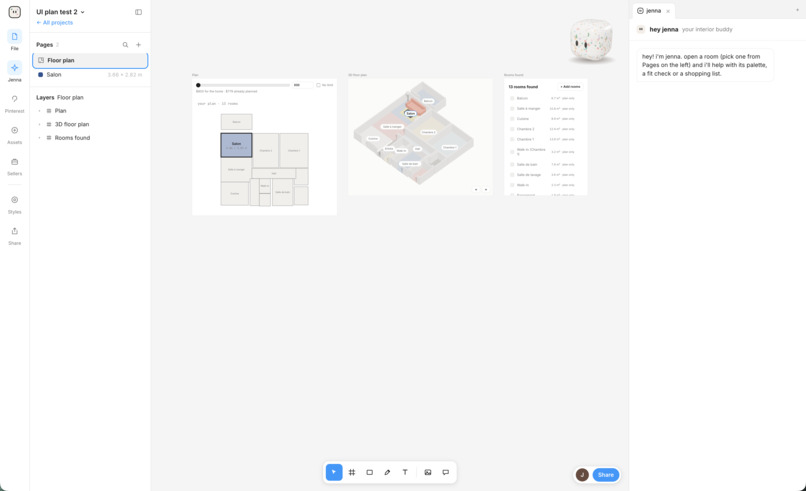
View Floor Plan
-
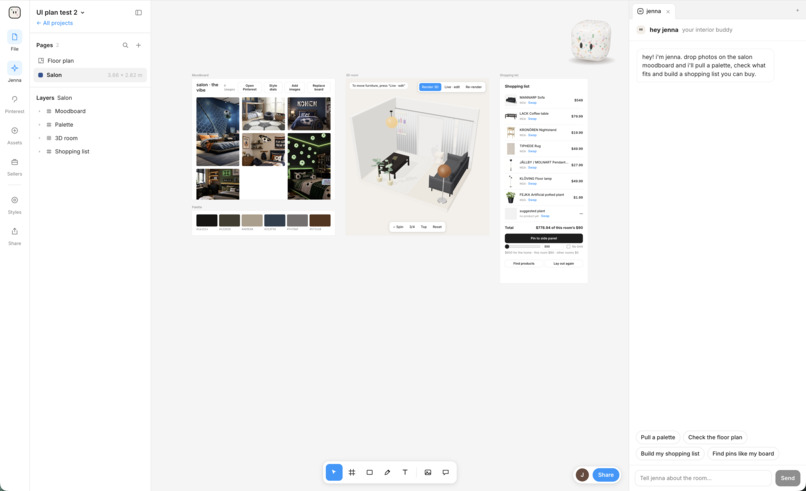
View Room
Inspiration
Getting to Concordia from the far ends of the island can take hours. A lot of us coming to Concordia might get tired of that daily commute, so naturally a solution is to start looking at apartments closer to campus, the next problem was obvious: the place is empty, and we need to fill it with a student budget.
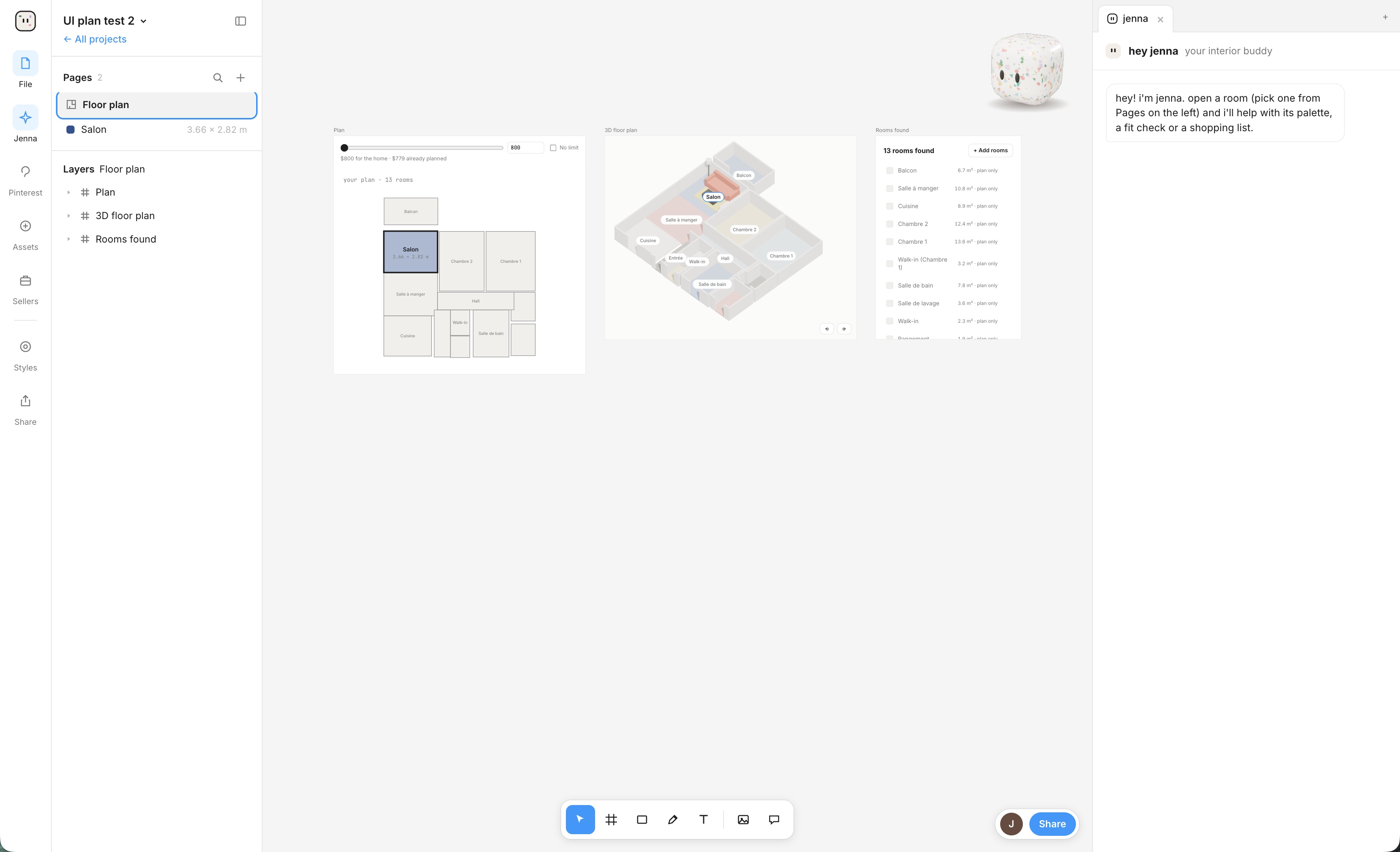
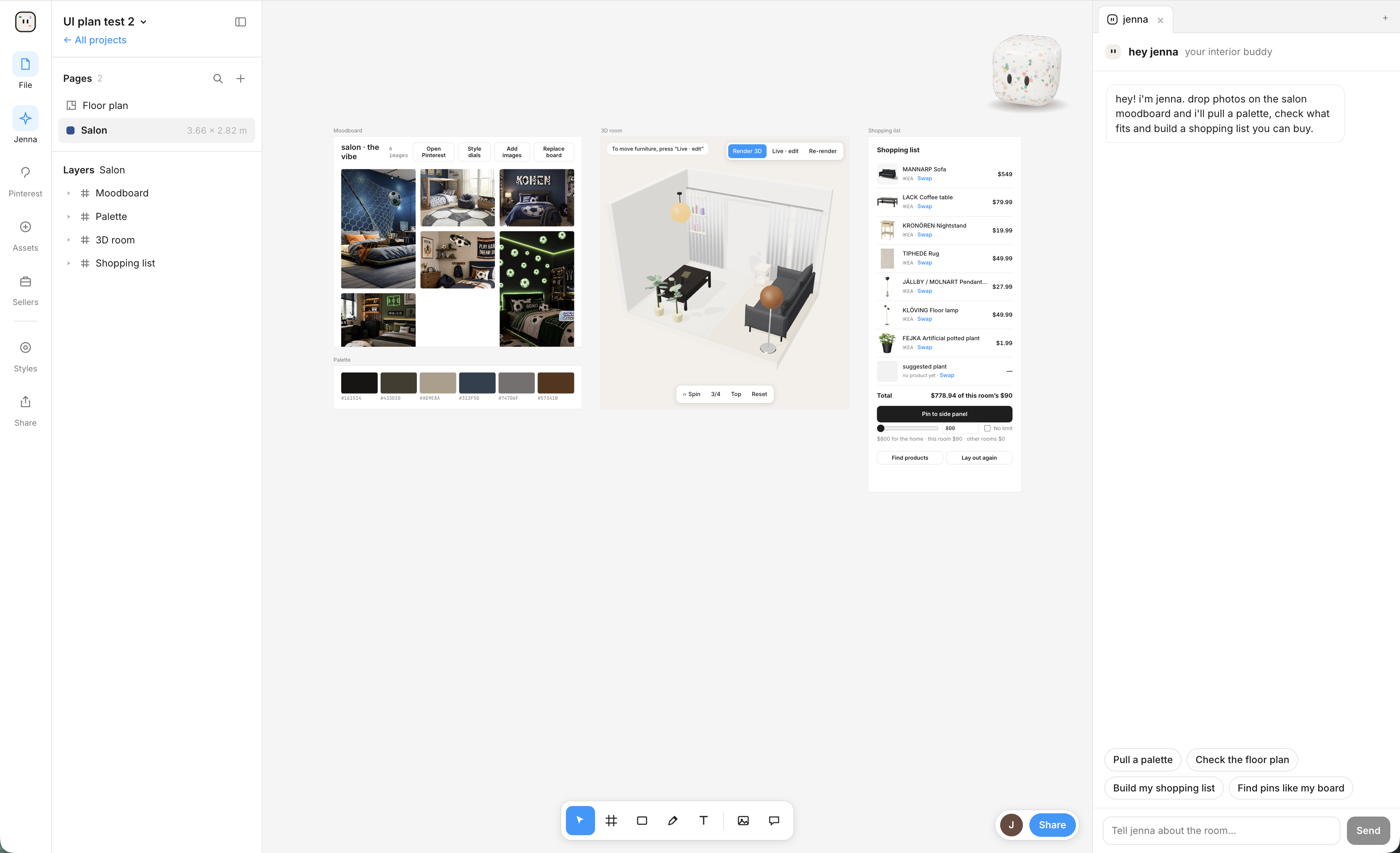
That is what inspired HeyJenna. We wanted to take a real floor plan, pin the look we actually want, and see the room furnished before spending anything, using picked furniture we can afford.
What it does
You add a floor plan and a moodboard. HeyJenna reads the style, turns the plan into a 3D room, and searches IKEA for furniture that fits the space, the look, and the budget you set. What you get is a room you can move into that you adore without going broke.
We built it for incoming Concordia students who are trading a long commute for a smaller place near school, and who still want that place to feel like theirs.
How we built it
HeyJenna combines a React studio, an Electron app with Pinterest integration, a NestJS API, and PostgreSQL storage. Two Python services handle furniture placement and Blender rendering.
Claude analyzes floor plans to identify rooms, dimensions, doors, and windows, while the API converts measurements and validates layouts. Moodboards are analyzed for colour palettes and 55 style preferences. IKEA's search API finds furniture based on colour, material, style, dimensions, and budget. Products retain their real measurements and available 3D models, while budgets are distributed across rooms and furniture pieces.
A Python layout engine tests multiple furniture arrangements against interior design rules, prioritizing spacing, functionality, and aesthetics. Users can immediately explore and edit layouts in three.js, moving, rotating, or replacing furniture. Blender then generates photorealistic room renders and complete 3D models.
Challenges we ran into
Real floor plans presented challenges like mixed measurements, bilingual labels, rotations, and open walls. So we made Claude identify rooms, while our code converts dimensions, adjusts openings, and handles missing walls to maintain usable layouts.
Another challenge was that IKEA's catalog requires filtering irrelevant products, parsing dimensions, and handling colour variants. Furniture had to fit realistically while following design principles like clear pathways, focal points, and balanced arrangements.
Accomplishments that we're proud of
We are extremely proud of our floor plan feature as it fully turns any real life floor plan into a 3d modeled room. This was an accomplishment that is the foundation of our app so seeing it actually work was amazing. Another accomplishment that we are super proud of is our furnishing feature. We are proud to have built a feature where the llm picks furniture based on a mood board and 3d models all those pieces in front of our eyes. Seeing that feature work for the first time was something incredible and defied all our expectations.
What we learned
We learned that if we come to a hackathon and build something fun with a clear brand identity and features to implement, the rest was structured and great to implement. Our features involved many out of the box solutions so we learned that our creativity is something that can guide us to make a passionate project.
What's next for Hey Jenna
We would love to incorporate furniture and pieces from second hand marketplaces such as kijiji and facebook marketplace as it furthers our vision of a budget led interior design helper
Built With
- blender
- claude
- docker
- electron
- ikea
- nestjs
- postgresql
- prisma
- python
- react
- three.js
- typescript
- vite


