-
-
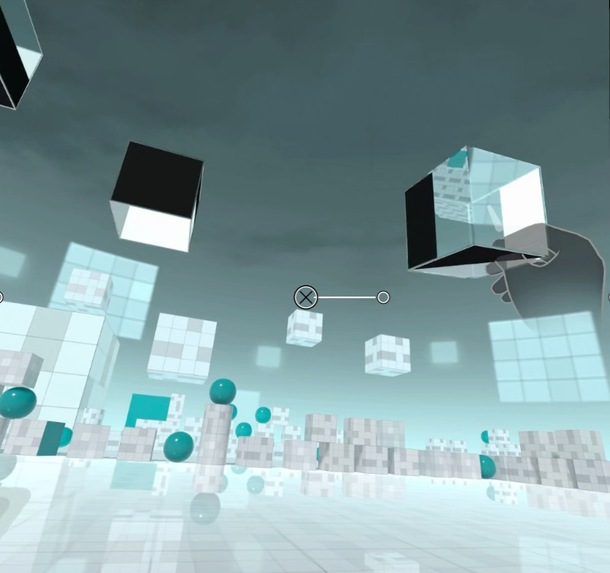
HEXZL VR
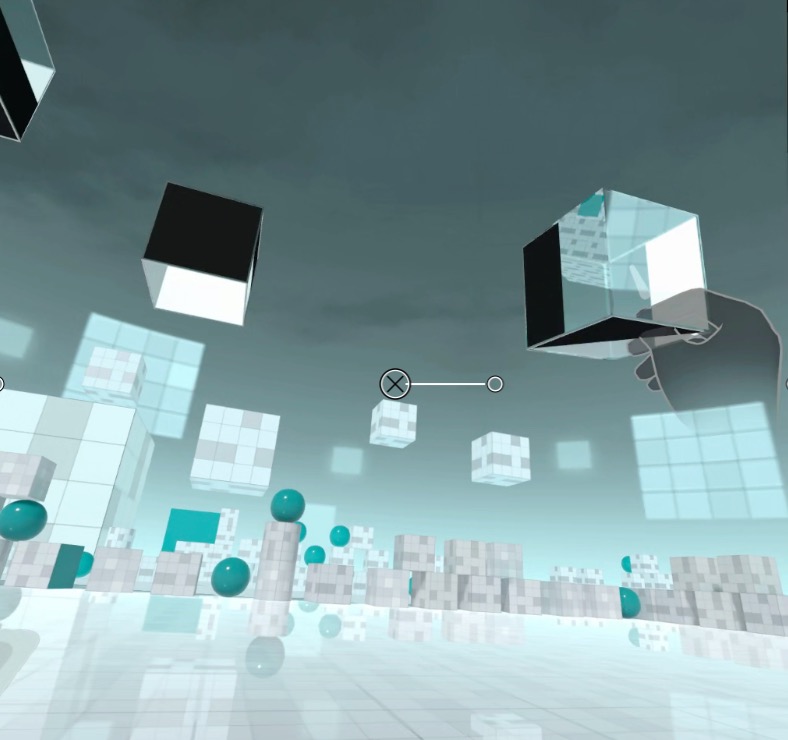
Inspiration
HEXZL (HEX, as in a 6-sided puzZLe), grew from a challenge to represent, in AR/VR, mobile, and other game platforms, my patent-pending 3D cubes puzzle.
Nearly 10 years ago I began prototyping an early physical version of the puzzle. It utilized a little known type of diametrically magnetized cylinders that enabled puzzle cubes to snap together without needing to consider magnetic polarities.
In early versions, I hadn't yet conceived of the Hexzl puzzle in its current form. At that time, each cube face was completely covered by solid image pieces, similar to a jigsaw puzzle. Though the magnetic solution seemed like magic, I almost quit working on the puzzle when I discovered that one could solve all six sides of the puzzle by solving only 2 to 3 sides.
There's a "Necessity is the mother of invention" story that led to the major breakthrough that led to the Hexzl-like puzzle involving the use of transparency. Specifically, I began designing cubes that had a unique mix of both shaded and transparent areas. This made it possible to achieve the effect of visually blending the shaded areas of cubes, whether cubes were next to each other or aligned behind one another.
This capability inspired me to re-imagine the puzzle into a 3D, Tangram-like puzzle.
What it does
Noticing that any 3D puzzle, that is constructed by snapping together a set of cubes, means that the puzzle will necessarily have 6 sides (Front, Top, Bottom, Left, Right, and Back), and thus 6 sides for the puzzler to view. At the start of each puzzle the puzzler is presented with 6 silhouettes, one for each side of the completed puzzle. The goal is to arrange, orient, and snap together the set of cubes, in such a way, that, on each side of the puzzle, the blended shapes on the cubes, as seen from that side, match their respective target silhouettes.
How we built it
Creating the Hexzl puzzle solutions required a proprietary approach. The team coded the VR development for the Hexzl puzzle was done in Unity
Challenges we ran into
Due to the unusual nature of the puzzle and the rare and limited number of real world use cases for diametrically magnetized cylinders, there really wasn't an available VR tool that was designed to enable users to attach and detach cubes and manage their relative orientations, especially when doing so with clusters of cubes. This required multiple design and development cycles, and significant trial and error.
Accomplishments that we're proud of
Figuring out how to reduce permutation calculations needed to get a lifetime of puzzles to a manageable set, saving 20 years of calculations. Figuring out new algorithms and functionality for managing attaching and detaching cubes and clusters of cubes.
What we learned
Because the team was blazing a new trail, we learned to trust the process and keep believing in the team and the product.
What's next for HEXZL 3D Puzzle
Continual improvement in performance, look and feel. Live competitions between individuals. Global ratings.


Log in or sign up for Devpost to join the conversation.