Inspiration
This project came from seeing how often people receive suspicious messages and aren’t sure whether to trust them or not. We wanted a tool that helps users pause, think, and see through manipulation before reacting.
What it does
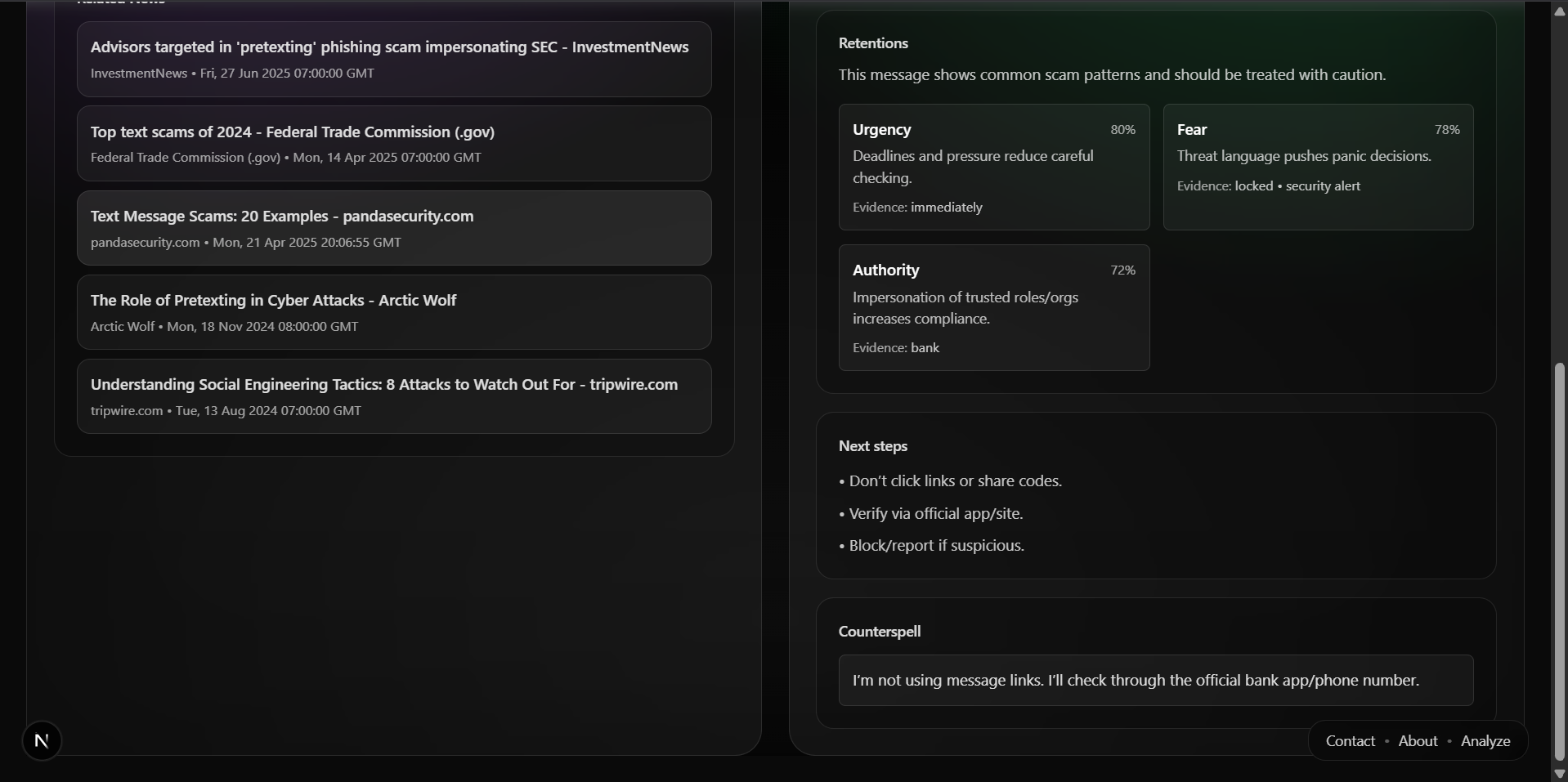
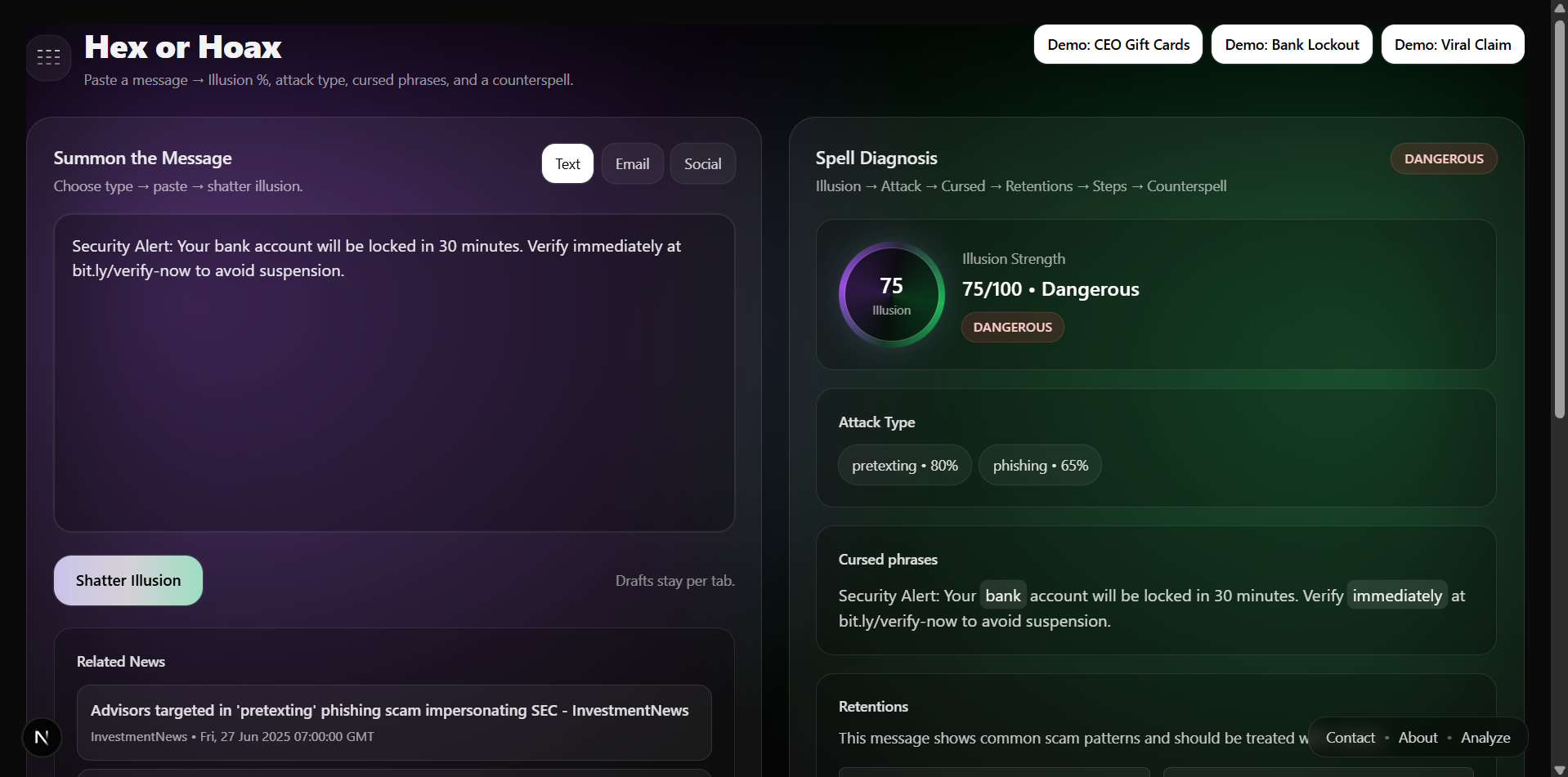
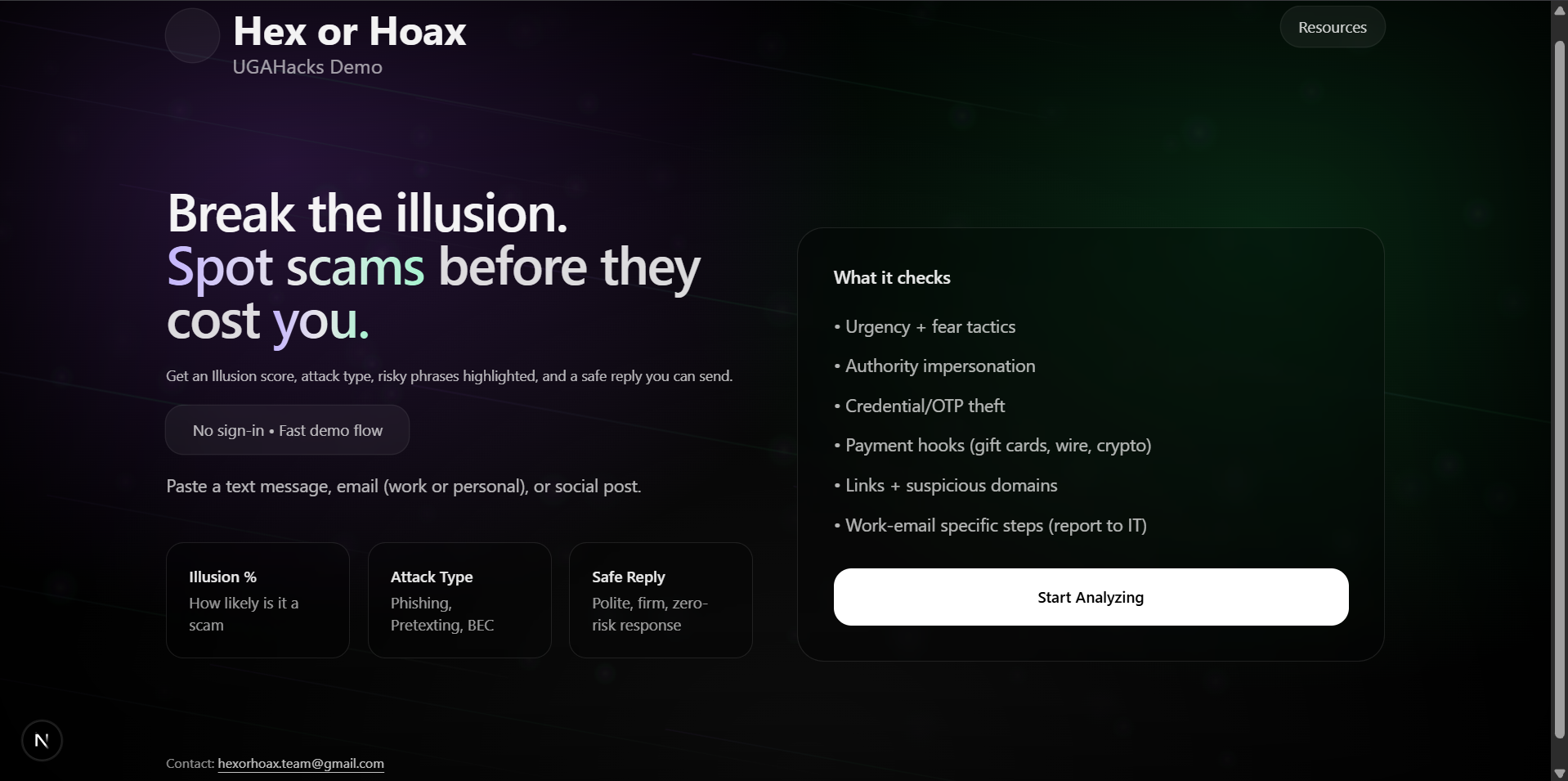
Hex-or-Hoax analyzes pasted messages, emails, or social posts to identify scam tactics and red flags. Instead of just giving a label, it explains why something is risky and what to watch out for.
How we built it
We built the project using a modern web stack with an AI-powered analysis engine behind a simple, intuitive interface and a modern web stack with an AI-powered analysis engine behind a simple, intuitive interface. The system uses a lightweight Retrieval-Augmented Generation (RAG) approach to ground AI explanations with known scam patterns and trusted references, making the results more specific and reliable, which power the Related News section and help ground the AI’s explanations in real-world examples.
Challenges we ran into
One major challenge was getting the AI to give detailed, helpful explanations built with emotional intelligence instead of vague responses. We also spent a lot of time refining the UI so the design supported clarity rather than overwhelming users.
Accomplishments that we're proud of
We’re proud of creating a tool that feels approachable while still tackling a serious problem. The project successfully combines technical functionality with thoughtful design and real-world usefulness.
What we learned
We learned how powerful social engineering techniques are and how small wording choices can influence behavior. The project also helped us improve our skills in AI integration, frontend development, and user-centered design.
What's next for hex-or-hoax
We plan to expand support for more content types like links and long-form posts. We also want to improve accuracy and personalization, so users get even clearer and more actionable insights.
Built With
- css
- javascript
- node.js
- openai
- tailwind
- typescript

Log in or sign up for Devpost to join the conversation.