-
-
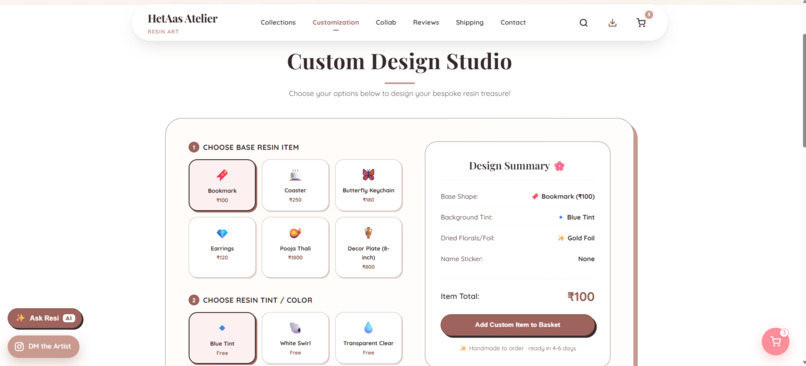
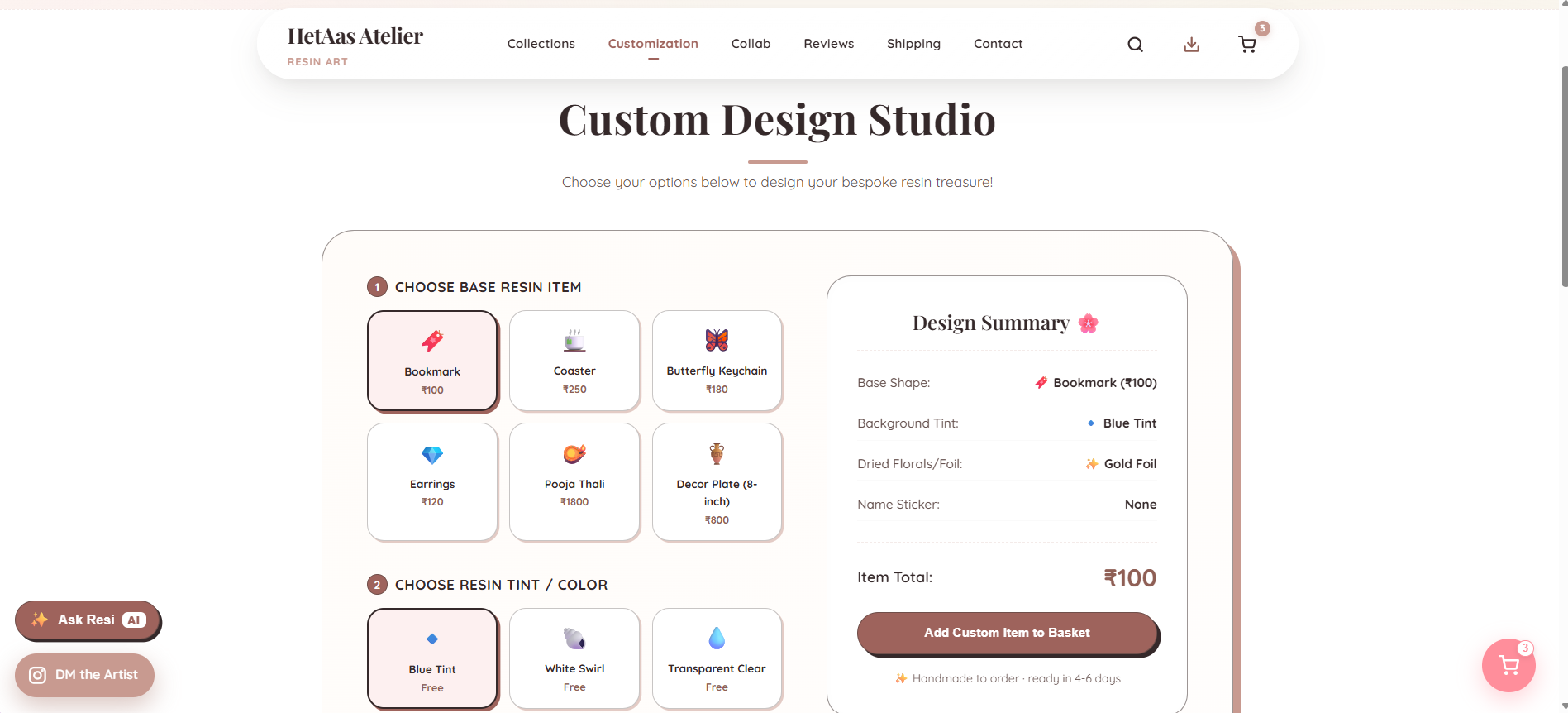
Custom Design
-
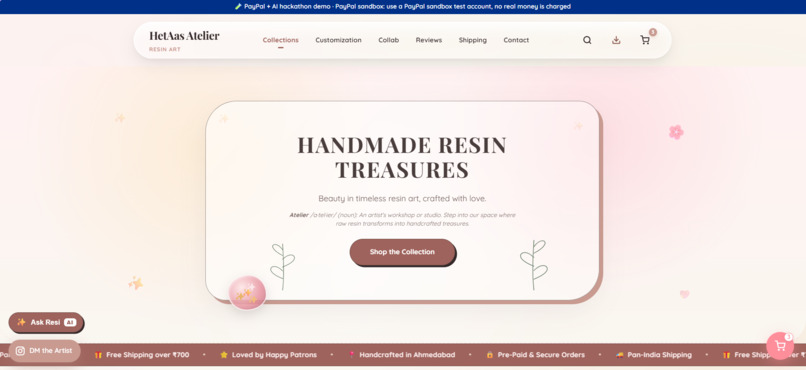
Main Page
-
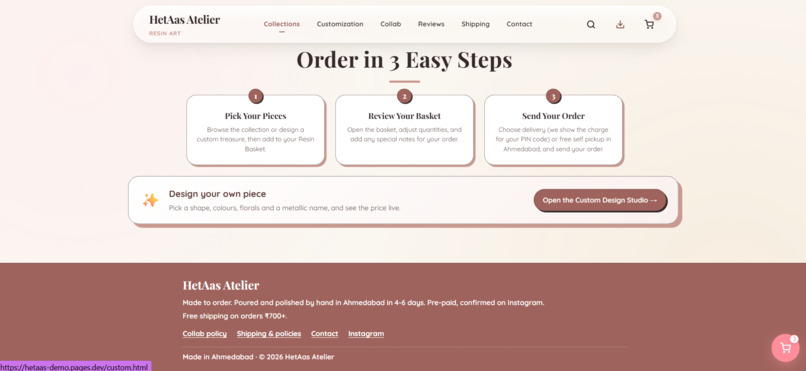
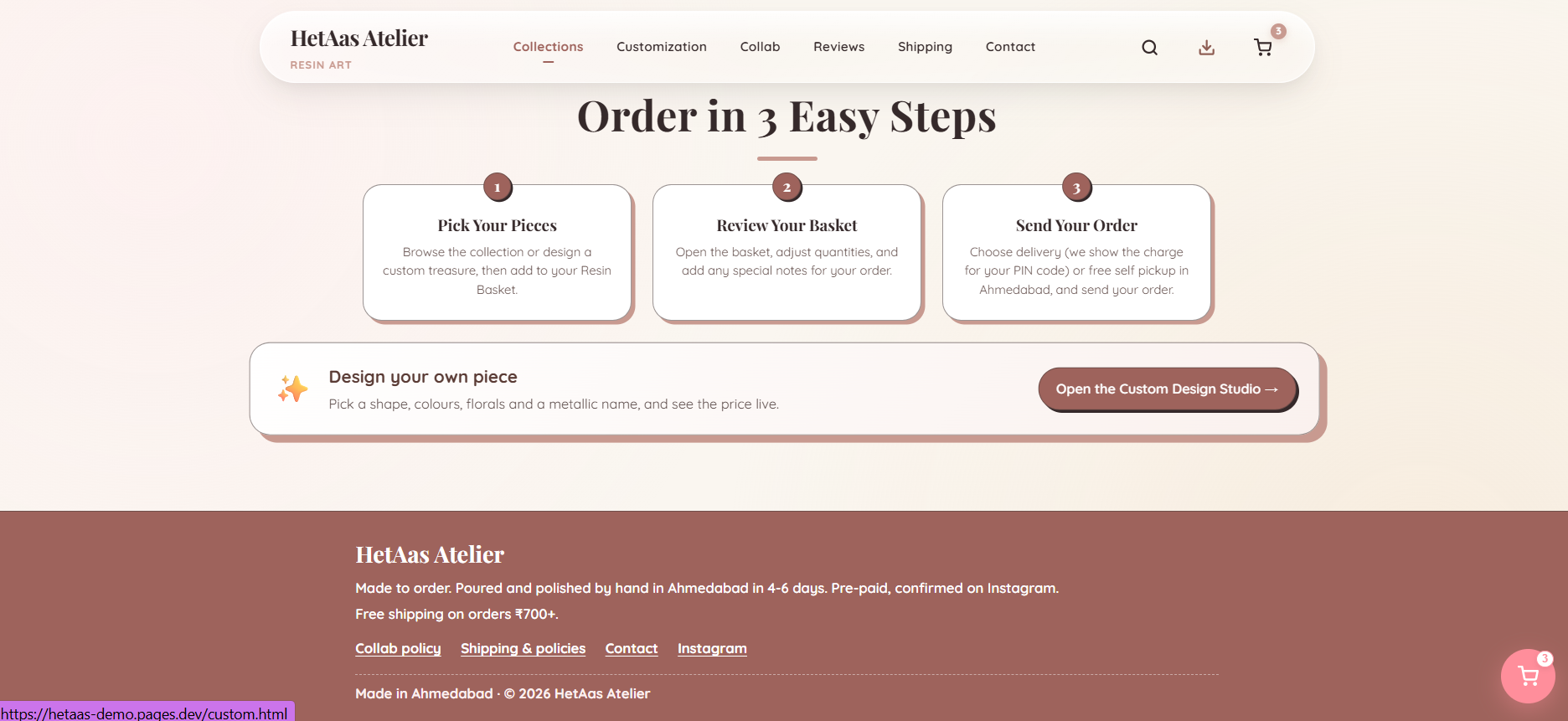
Footer
-
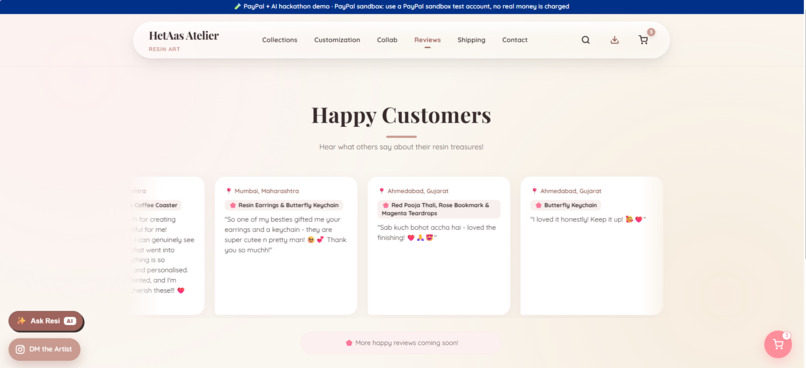
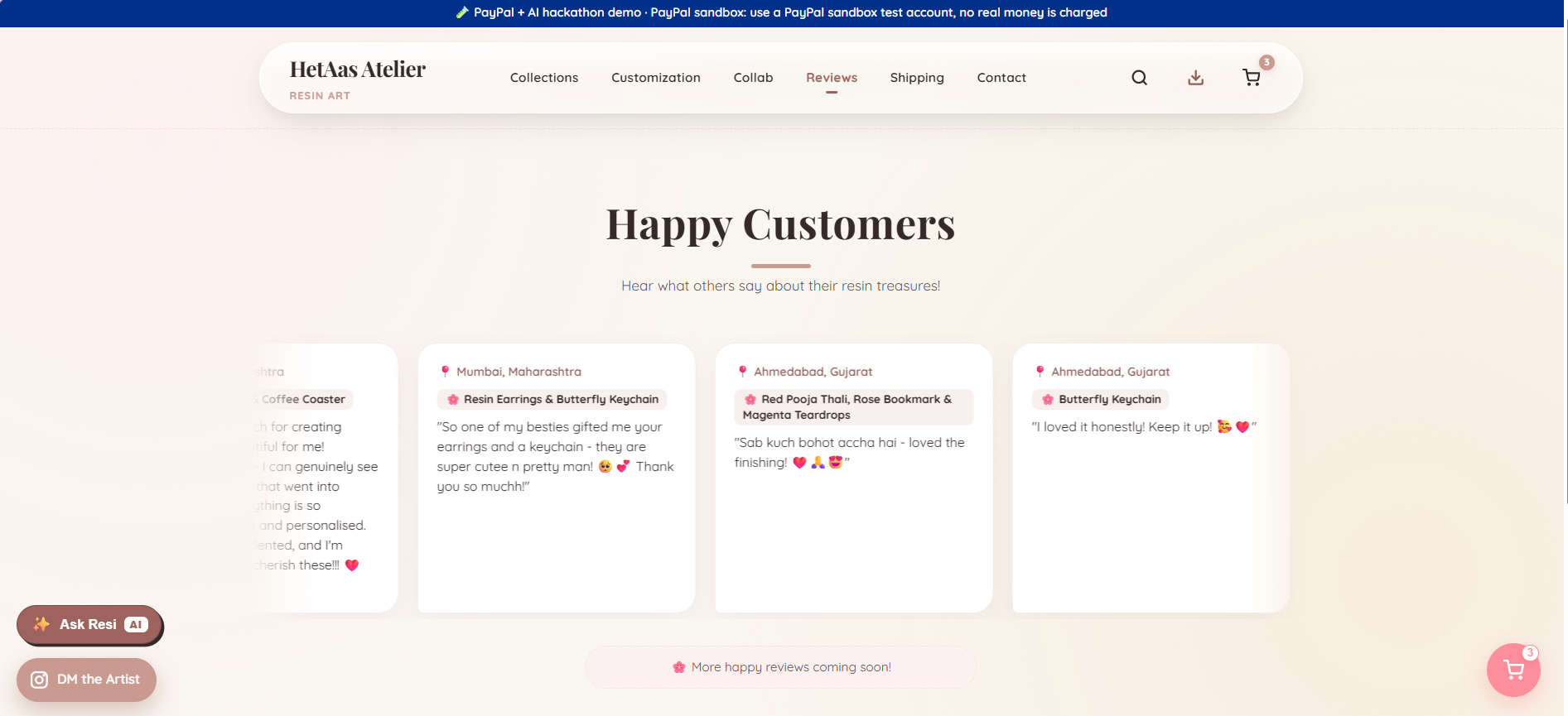
Reviews
-
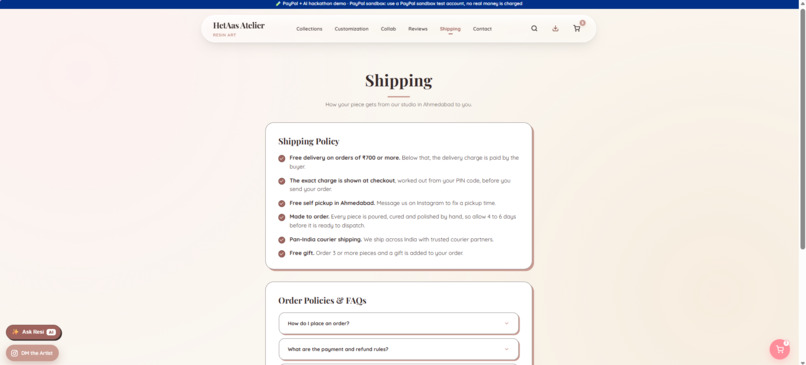
Shipping Rules
-
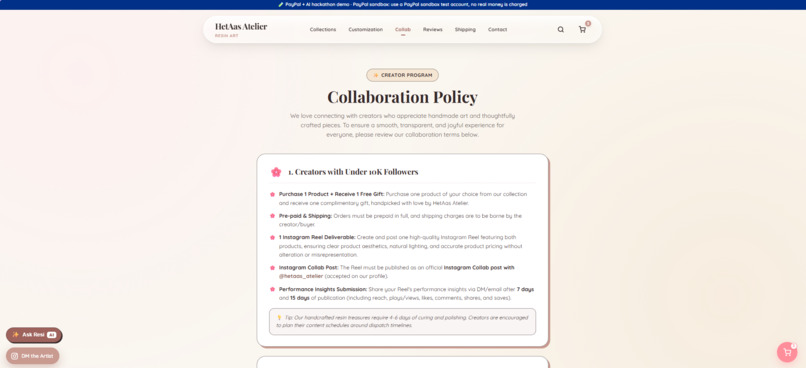
Collab Policy
-
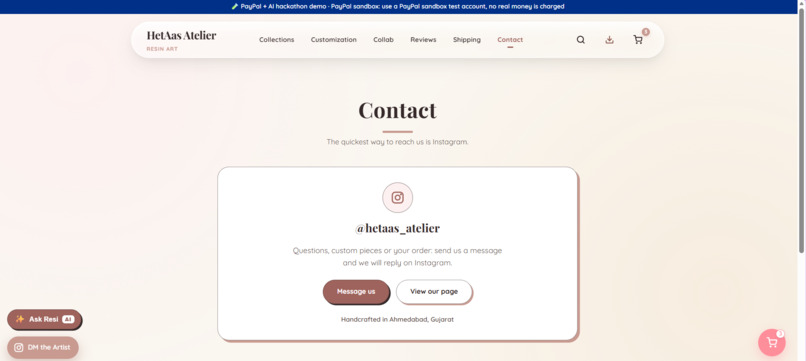
Contact Page
-
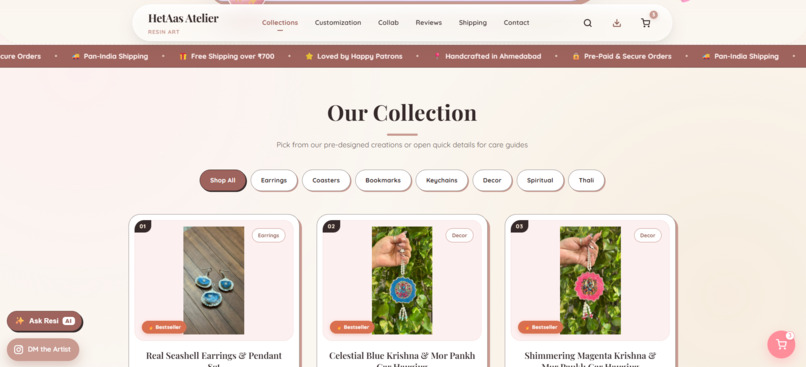
Shopping collection
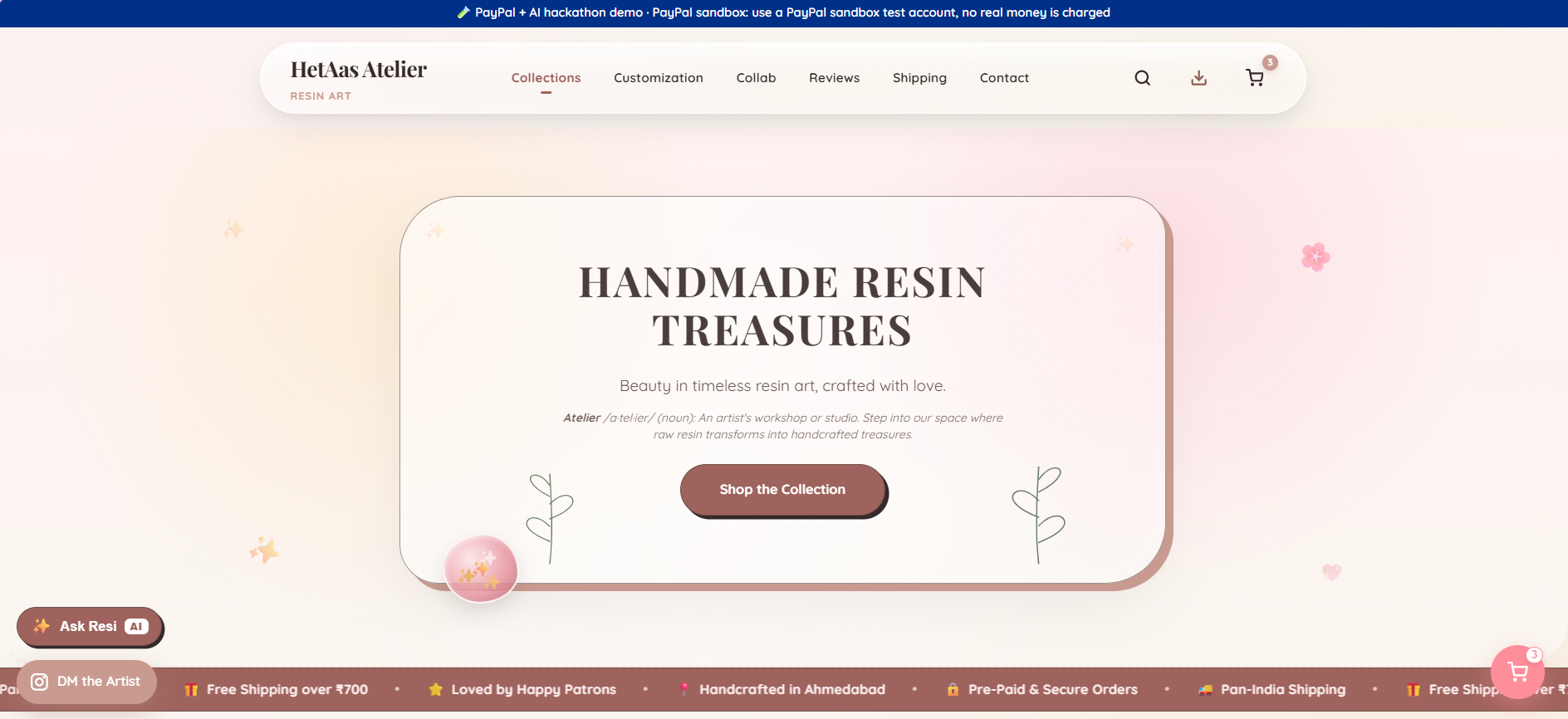
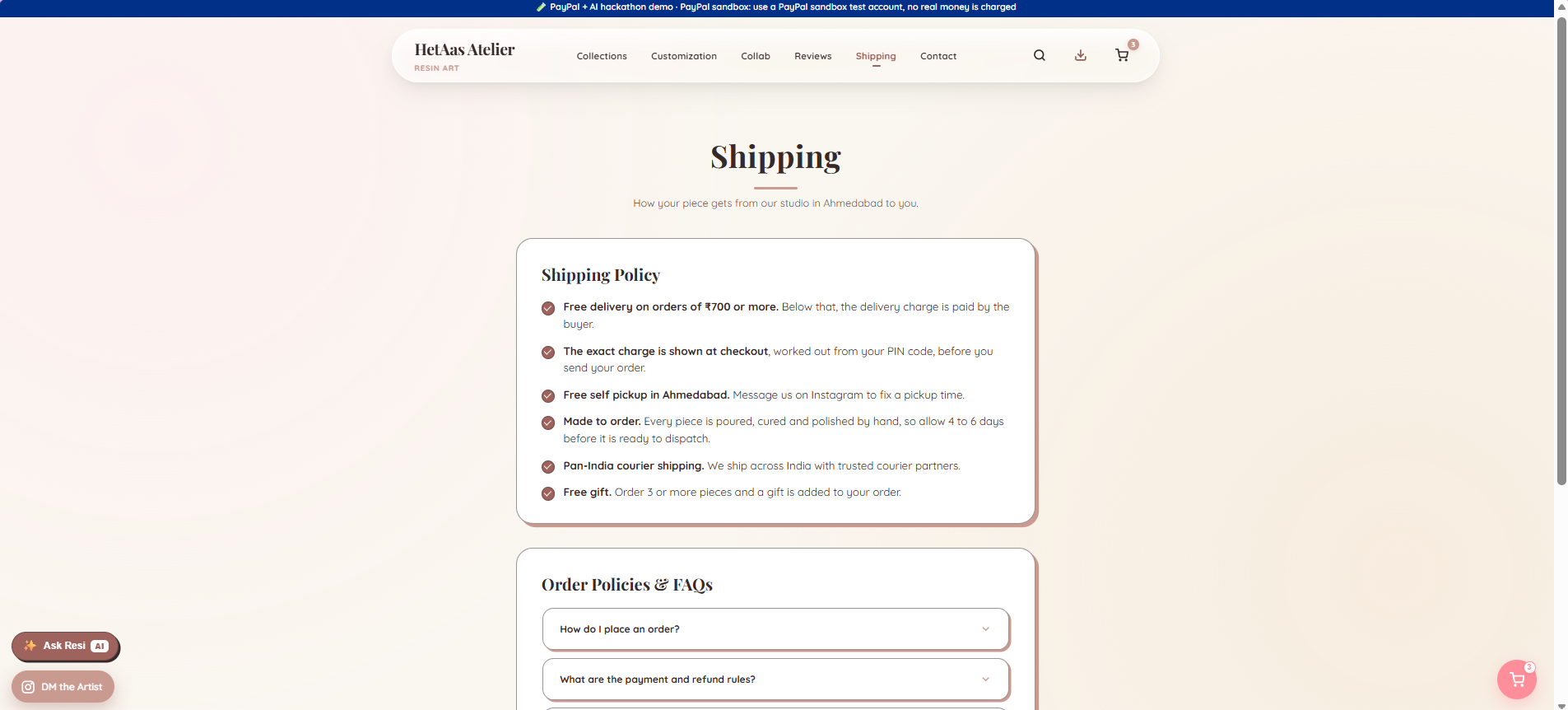
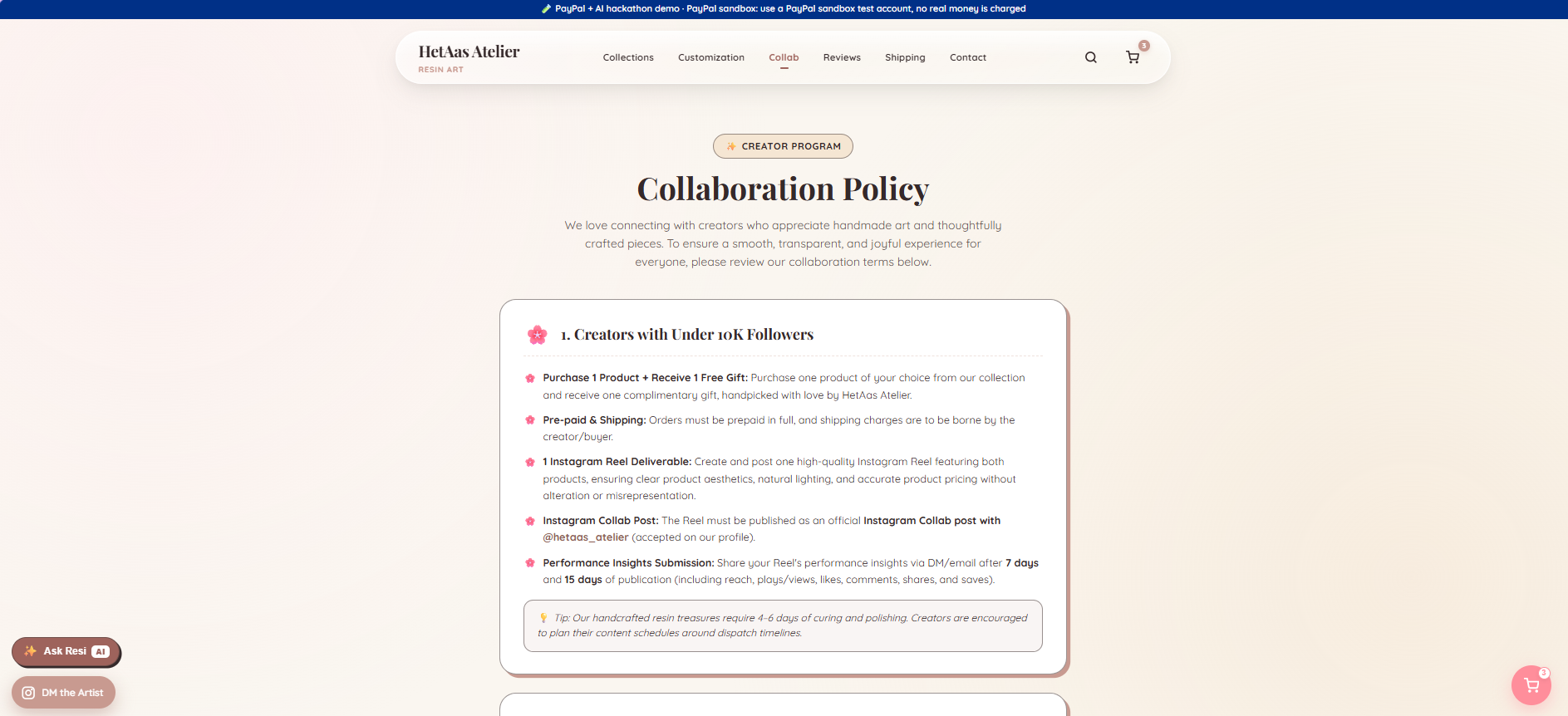
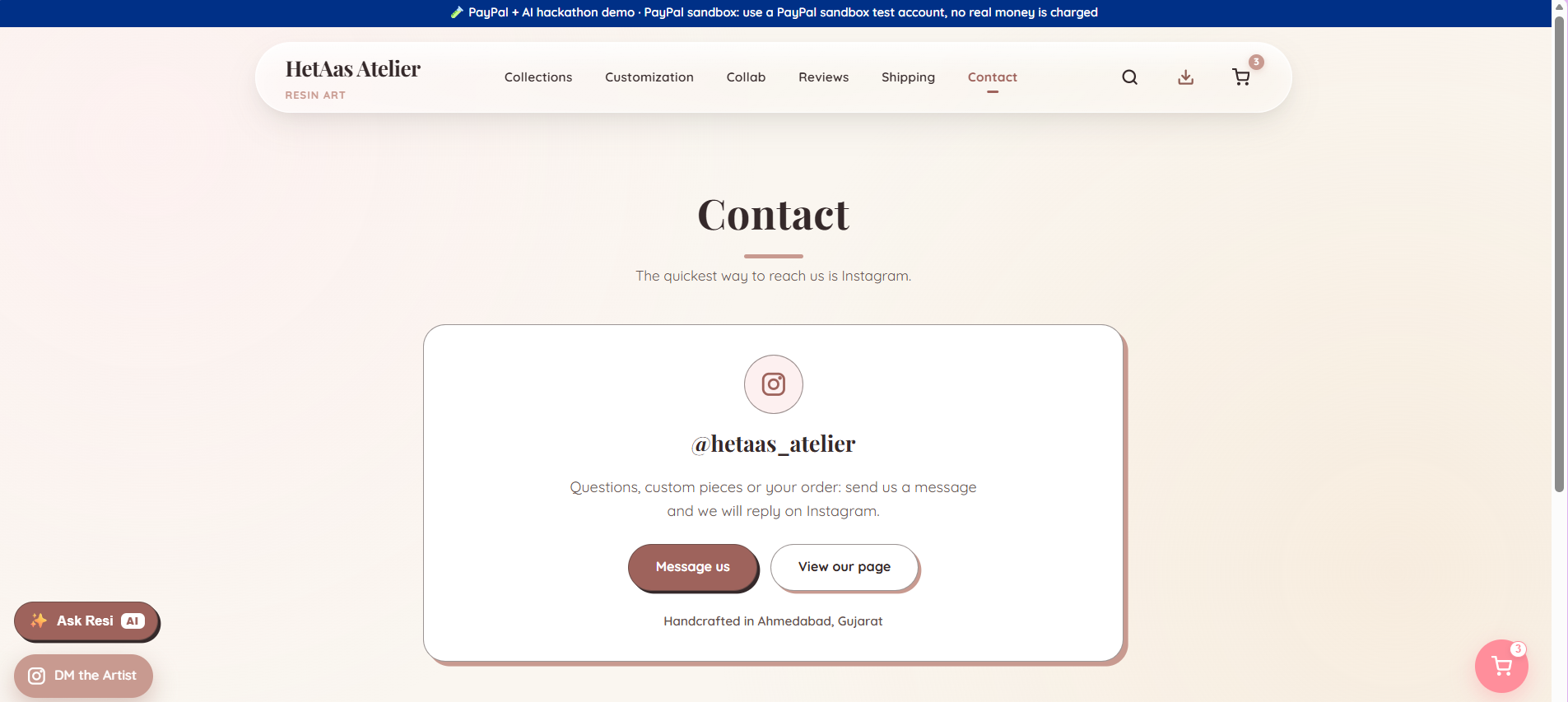
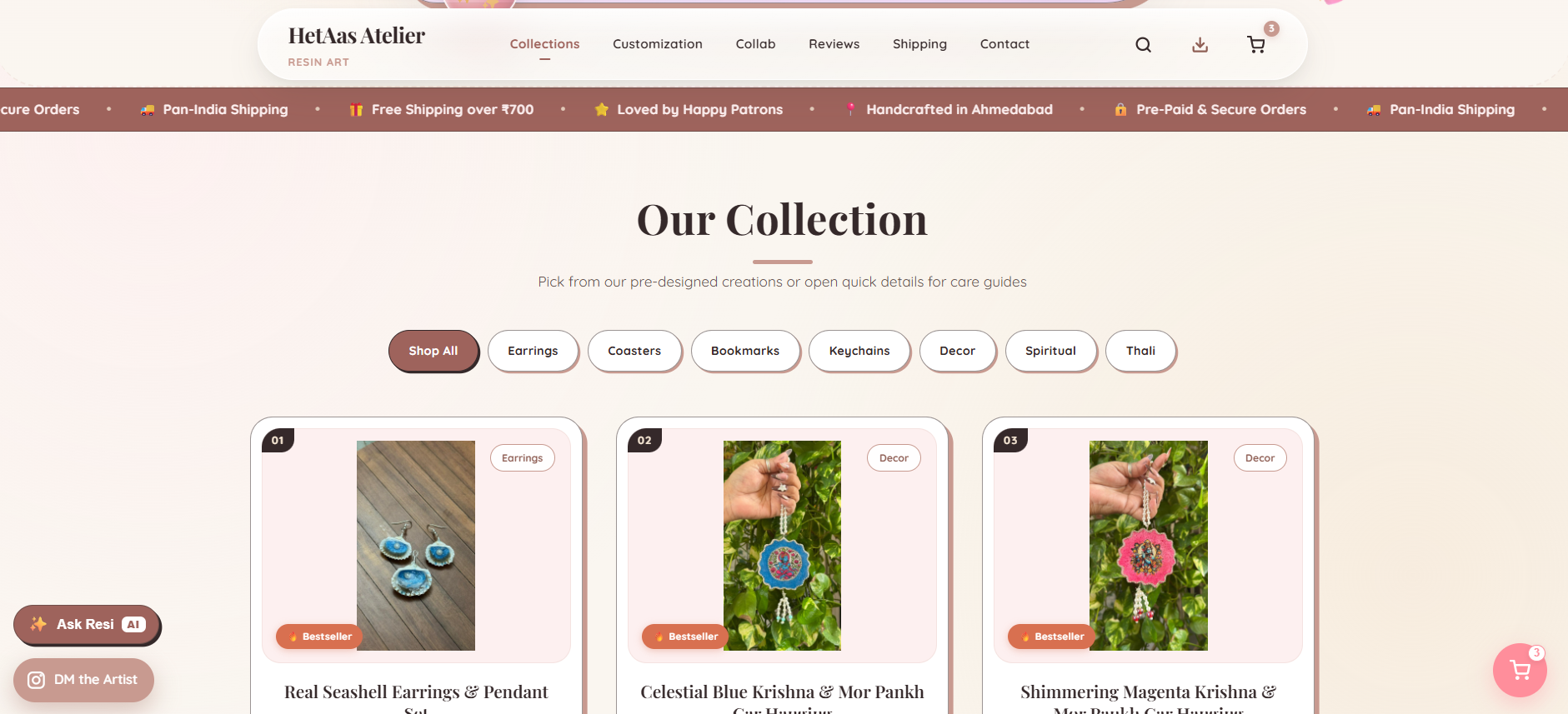
Inspiration: HetAas Atelier makes handmade resin pieces in Ahmedabad: bookmarks, earrings, keychains, coasters, pooja thalis and custom name pieces. The shop took orders over Instagram DMs, so every question, price check and delivery quote was a manual reply. Customers often don't know which piece suits their budget or occasion, and buyers who want a custom name piece need a clear way to order and pay. We wanted the shop to answer questions and take payment without losing its handmade feel.
What it does: HetAas Atelier is a commerce site where an AI concierge helps you choose and PayPal takes the payment.
For shoppers:
- Resi, the AI concierge: a chat assistant that answers questions about products, care, custom pieces and orders from the live catalogue and FAQs. It suggests gifts within a budget plus one add-on. Unrelated questions are refused before the model is called.
- Basket and custom pieces: add items, choose custom name options, and see totals.
- Live delivery charge from the PIN code: the shopper enters a PIN code and sees the courier charge from Shiprocket, shown as its own line on the PayPal bill.
- Three ways to order: pay now with PayPal and get it delivered, self pickup in Ahmedabad (free), or confirm first and pay later.
- PayPal checkout (sandbox): the buyer approves the order on PayPal and returns to the site, where a copyable receipt is shown.
For the business owner
- A receipt email for every paid PayPal order, with buyer details, delivery charge and courier.
- A webhook fallback: if the buyer never returns to the site after paying, PayPal's capture webhook still captures the order and emails the owner.
How we built it:
- Frontend: plain HTML, CSS and JavaScript with no build step. It is a mobile-first installable PWA with offline support.
- API: a Cloudflare Worker on the free tier holds every secret, so the browser never sees PayPal, AI or shipping keys.
- PayPal: Orders v2 to create and capture orders in the sandbox. Prices and totals are calculated on the server, so the browser can't change them. The webhook is signature-verified with PayPal's verify-webhook-signature API.
- AI: Gemini models are tried in order, and if all fail, Groq answers. The system prompt is built from the catalogue and FAQs, and a topic filter runs before any model call.
- Shipping: Shiprocket's serviceability API finds the cheapest courier from the pickup PIN code, and a fixed markup is added.
- Email: Resend sends owner receipts, and a key in Cloudflare KV prevents duplicates for the same PayPal order.
- Hosting: Cloudflare Pages for the demo and a weekly GitHub Action that refreshes the Shiprocket login token.
Challenges we ran into:
- PayPal sandbox doesn't accept INR. Shop prices are in rupees, so the Worker converts them to USD at a fixed rate before creating the PayPal order.
- Shiprocket blocks logins from Cloudflare's servers. A GitHub Action logs in from outside Cloudflare and stores the token in KV for the Worker.
- Free AI quotas run out. Each Gemini model has its own daily limit, so the Worker tries each in turn, then falls back to Groq.
Accomplishments we're proud of:
- A working end-to-end flow in the PayPal sandbox: chat question, basket, live delivery charge, PayPal payment and owner email.
- Prices, totals and delivery charges are all calculated on the server.
- A real small business can run on free tiers, with fallbacks for when quotas and logins fail.
What we learned
- Server-side pricing and signature-checked webhooks matter more than front-end polish when money is involved.
- Small shops need the same tools as large ones, but built with fallbacks, because quotas and logins fail in unexpected ways.
What's next:
- Move from the PayPal sandbox to live payments once the business is ready.
