-
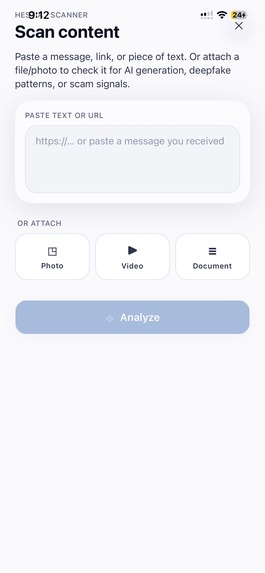
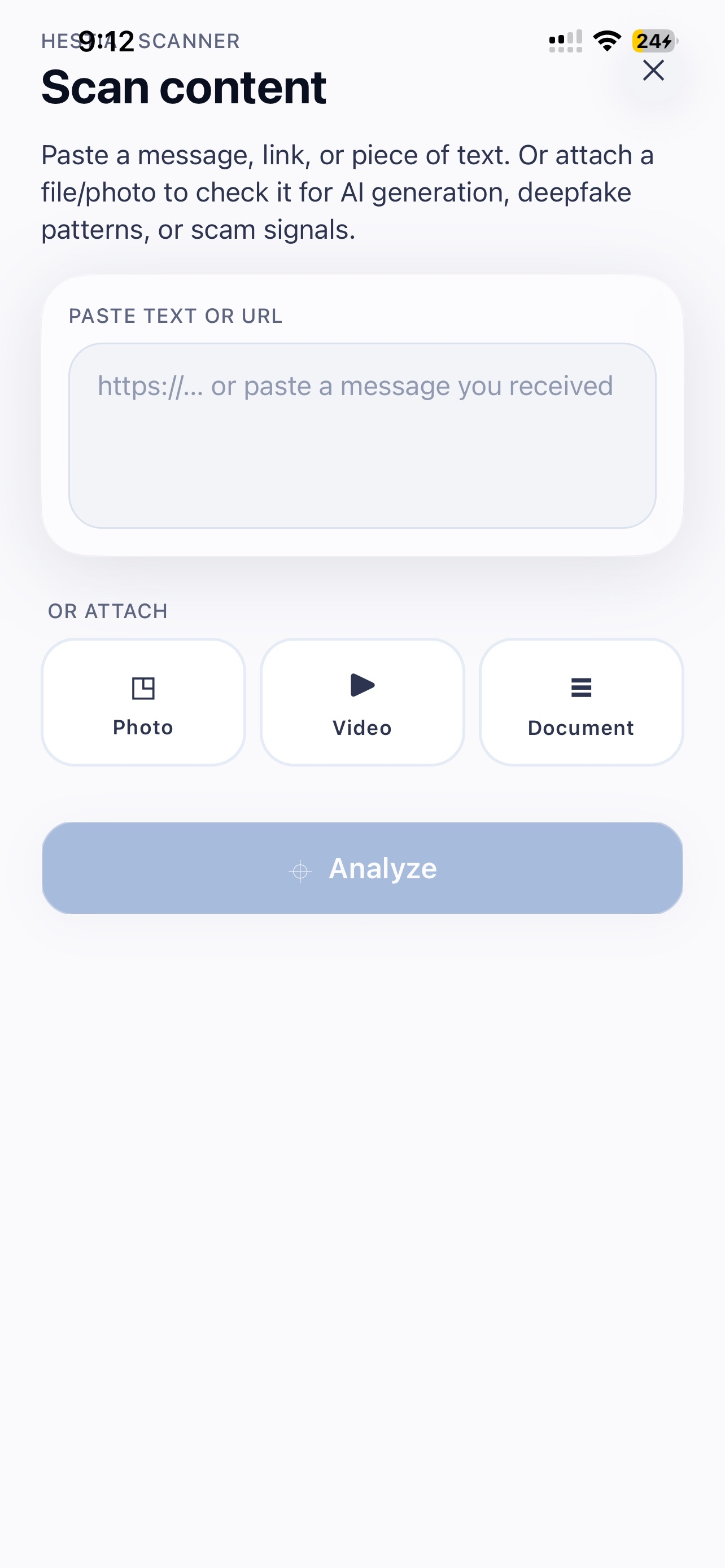
Our app allows users to scan dubious content to determine whether it's AI generated and/or malicious.
-
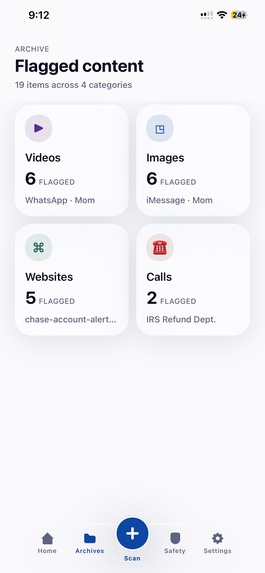
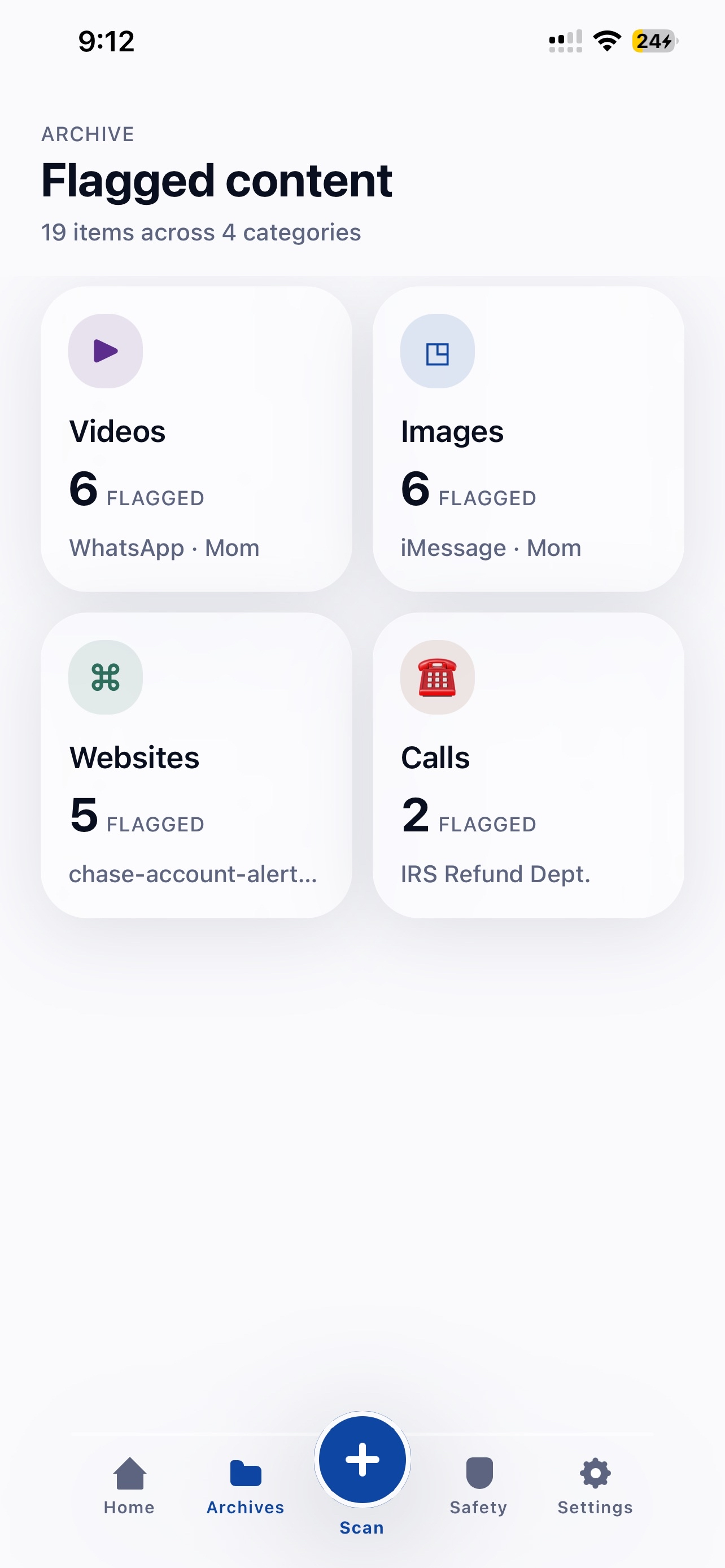
Hestia provides the user an archive of previously flagged content, such as websites, photos, videos, and calls
-
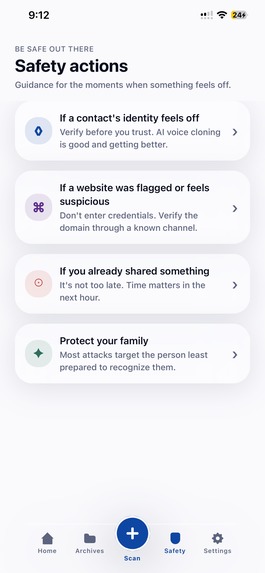
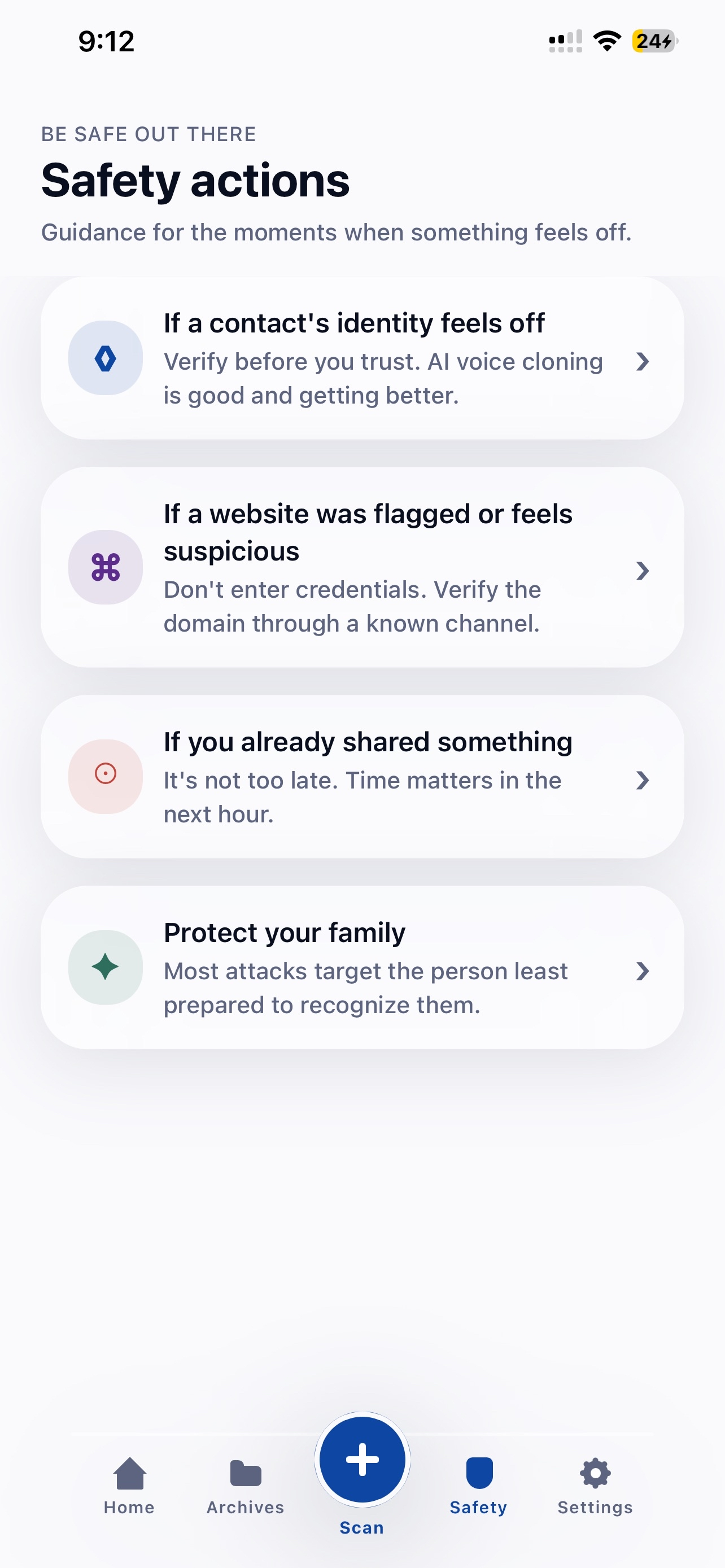
Hestia gives families recommendations on what security actions to take so they can keep everyone protected in case an attack has been made.
-
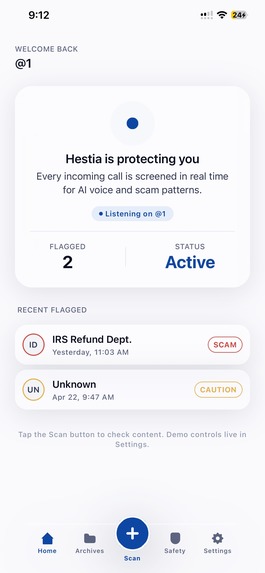
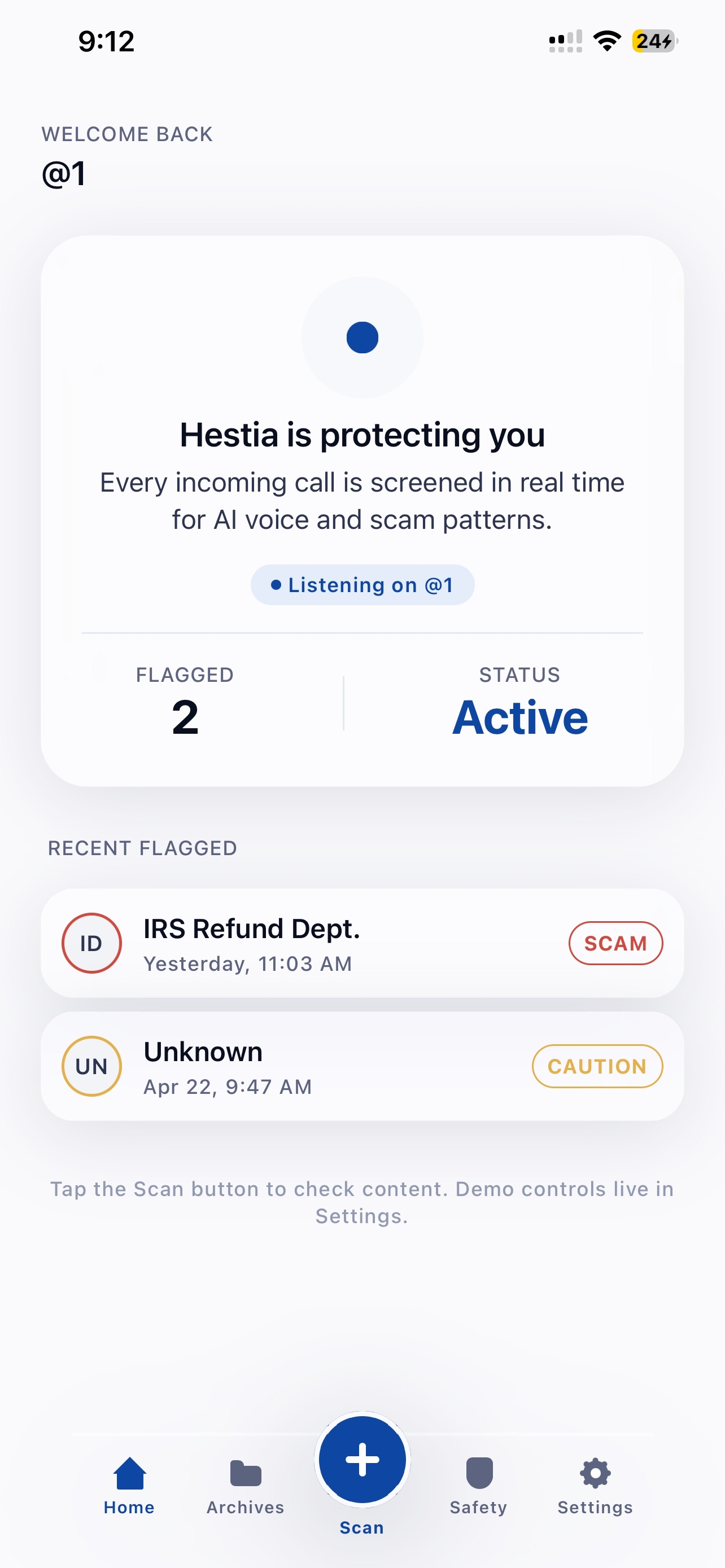
Hestia's home page gives the user a rundown of recent actions taken.
Hestia — AI Scam & Threat Detection
Inspiration
Every day, millions of scam attempts target individuals across the world, many of them increasingly powered by AI.
- A parent receives a call from someone impersonating their child
- A mother receives a FaceTime call from a deepfake version of her daughter, urging her to open the door
- Voice cloning and synthetic media are rapidly lowering the barrier for fraud
These are no longer hypothetical scenarios; they are happening now.
Hestia was built to address this emerging reality.
What It Does
Hestia acts as a background guardian on a user’s device, proactively identifying and flagging AI-driven threats before they cause harm.
Core Features:
Real-time Call Monitoring
Intercepts and analyzes calls, warning users when a conversation may involve a fraudulent or AI-generated actorAI Threat Detection Engine
Uses multiple detection algorithms to identify patterns consistent with scams, voice cloning, and synthetic mediaUser-Friendly Dashboard
Designed for accessibility, especially for users with less experience in modern technologyMedia and Link Scanning
Allows users to upload images, videos, or suspicious links from their gallery or browser for analysis
How We Built It
We brainstormed for hours a couple of days before the hackathon, building on the "Future" theme and ranking ideas by impact and by which problems we believe should not exist in the future. We landed on scam prevention, recognizing that AI voice fraud is becoming more realistic and more common. While older adults are especially vulnerable, this is a product that can protect anyone.
We arrived at the hackathon with that direction, met Kenji on-site, and formed a four-person team with clearly defined roles:
- Mason — Backend and infrastructure
- Alef — UI/UX design
- Kenji — Detection algorithms
- Dennis — Triage, testing, and business framing
From the commit and push history, development progressed in tight iterations across April 24–25, 2026:
Development Phases
Initial Setup
Project scaffolding and architecture documentationCore Infrastructure
Bot caller implementation and Supabase Realtime signalingApplication Foundation
React Native app structure and iOS native bridge wiring
Parallel Feature Development
After establishing the foundation, we split into feature branches and merged continuously:
Detection Systems (Kenji)
- ElevenLabs Layer 1 detection
- Core ML Layer 3 classifier
- ElevenLabs Layer 1 detection
Frontend (Alef)
- UI migration
- Screen design and polish
- UI migration
Backend and Reliability (Mason & Dennis)
- Call-flow hardening
- iOS build and signing fixes
- PushKit and VoIP reliability updates
- Calibration and text-risk pipeline development
- Call-flow hardening
Final Result
By the end, we achieved a working demo loop:
- Incoming VoIP call
- Real-time on-device analysis
- Cumulative risk scoring
- Local alert: “Caller may be AI” triggered once the risk threshold is exceeded
Challenges We Ran Into
- Designing detection algorithms that could run efficiently on mobile hardware
- Building a stable real-time audio processing pipeline
- Managing development across Android Studio and Metro, which required frequent reloads
- Integrating voice cloning tools such as ElevenLabs, which introduced latency and complexity
Accomplishments We’re Proud Of
- Clean and intuitive UI/UX design
- Fast and responsive AI threat flagging
- Strong role specialization, allowing parallel development
- Effective time management under hackathon constraints
What We Learned
- How to better coordinate frontend and backend development
- The importance of clear and accessible UX design
- Practical insights into voice detection and AI-driven fraud patterns
What’s Next for Hestia
- Partnering with mobile manufacturers and ISPs for native integration
- Scaling infrastructure to support a large user base
- Developing more robust proprietary video deepfake detection
Built With
- android-studio
- csx
- elevenlabs
- gemma
- gradle
- javascript
- node.js
- npx
- switft
- typescript
- xcode


Log in or sign up for Devpost to join the conversation.