Hestia
Inspiration
We felt the pain firsthand that organizing an in-person event often requires the kind of support only an ops team or community manager usually provides.
Hestia turns that work into a guided process, helping organizers plan the event, source vendors, handle outreach, create the event page, and keep the logistics moving.
What it does
Hestia is an agentic harness for event planning and community coordination.
A user describes the event they want to host, including details like:
- City
- Date
- Audience
- Budget
- Venue needs
- Food preferences
- Constraints
Hestia turns that rough intent into an executable event plan, then coordinates specialized agents to handle sourcing, outreach, logistics, and changes.
It can:
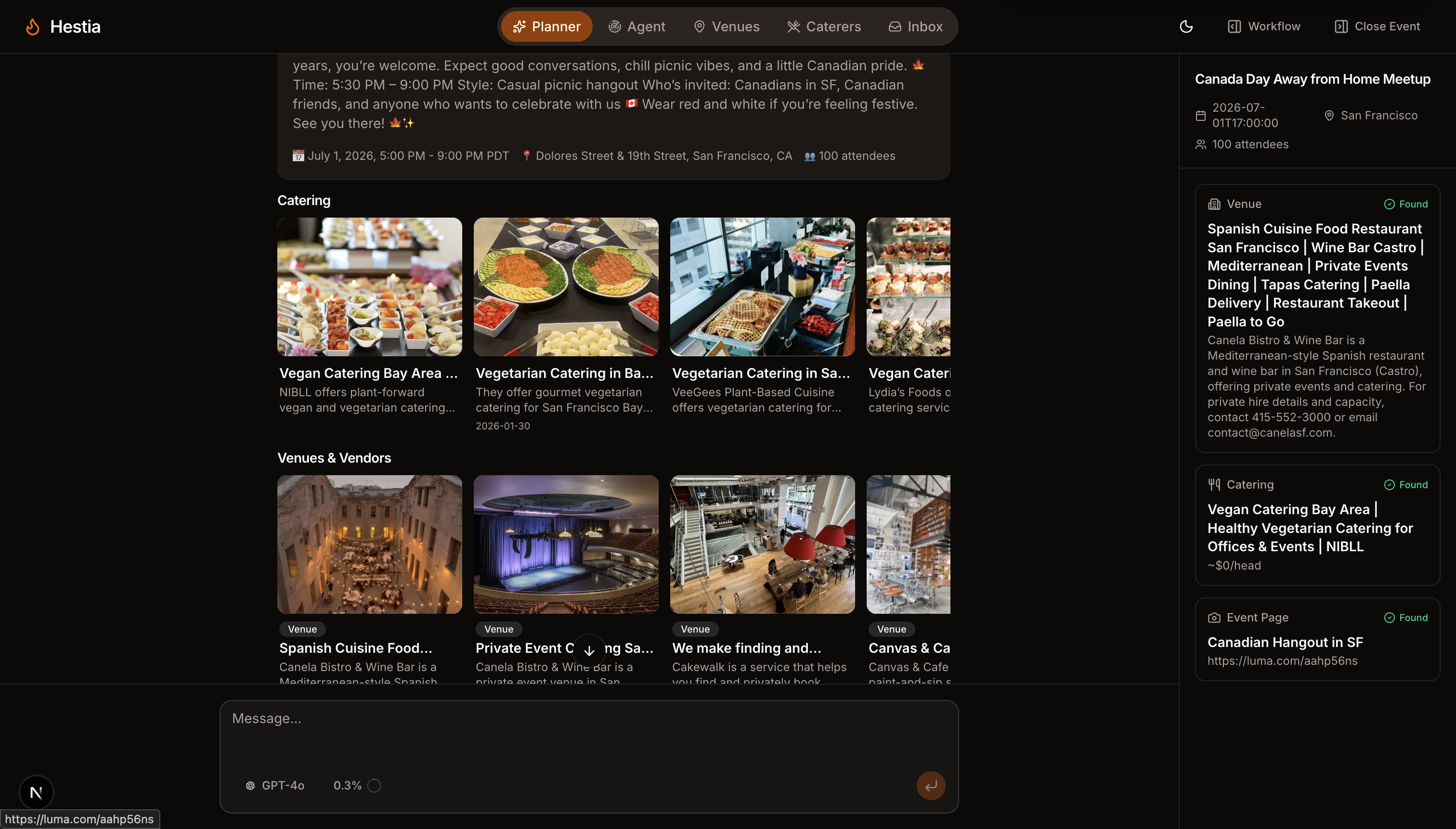
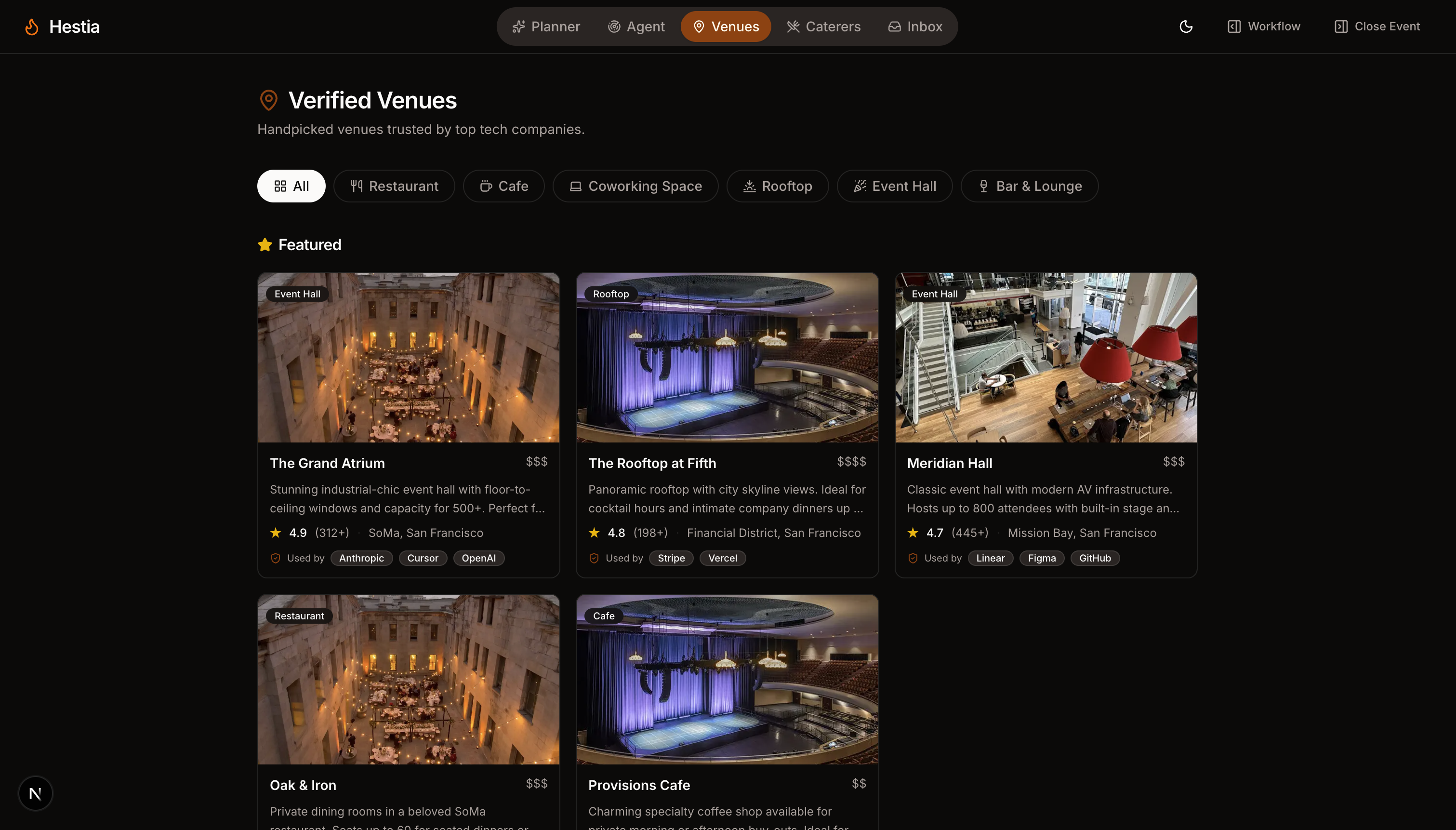
- Source venues
- Find caterers and vendors
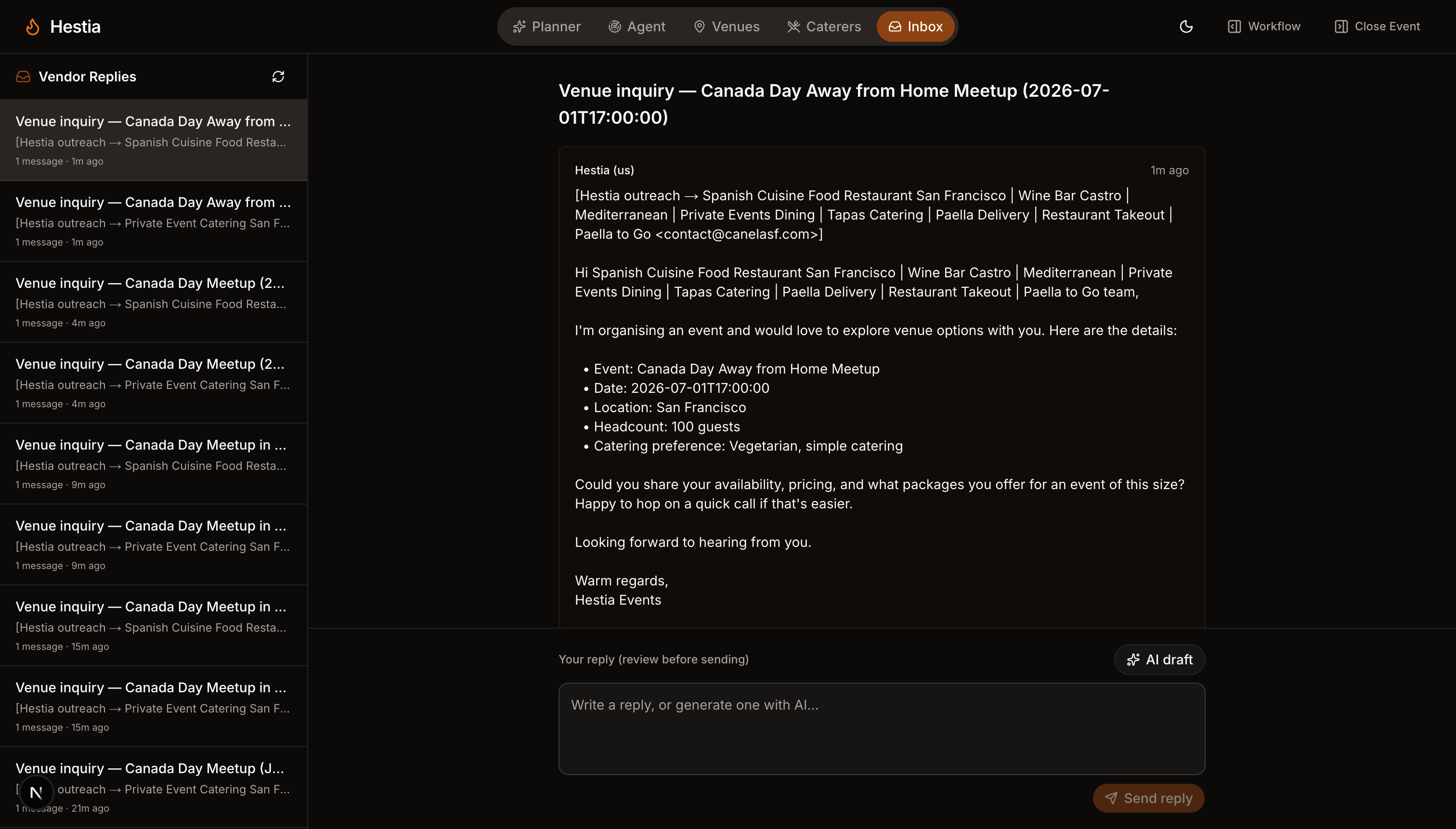
- Contact vendors through call or outreach workflows
- Compare options
- Track availability and pricing
- Create the event page
- Coordinate downstream logistics like food, equipment, setup, and guest communication
How it was built
Hestia is built around an agent orchestrator that turns a user's event request into a structured plan, then delegates the work to smaller specialized subagents.
The orchestrator gathers the core event details, pulls shared context from Notion through Airbyte, and coordinates the overall workflow.
Each subagent is responsible for its own part of the event:
- Luma Agent: Creates the public event page
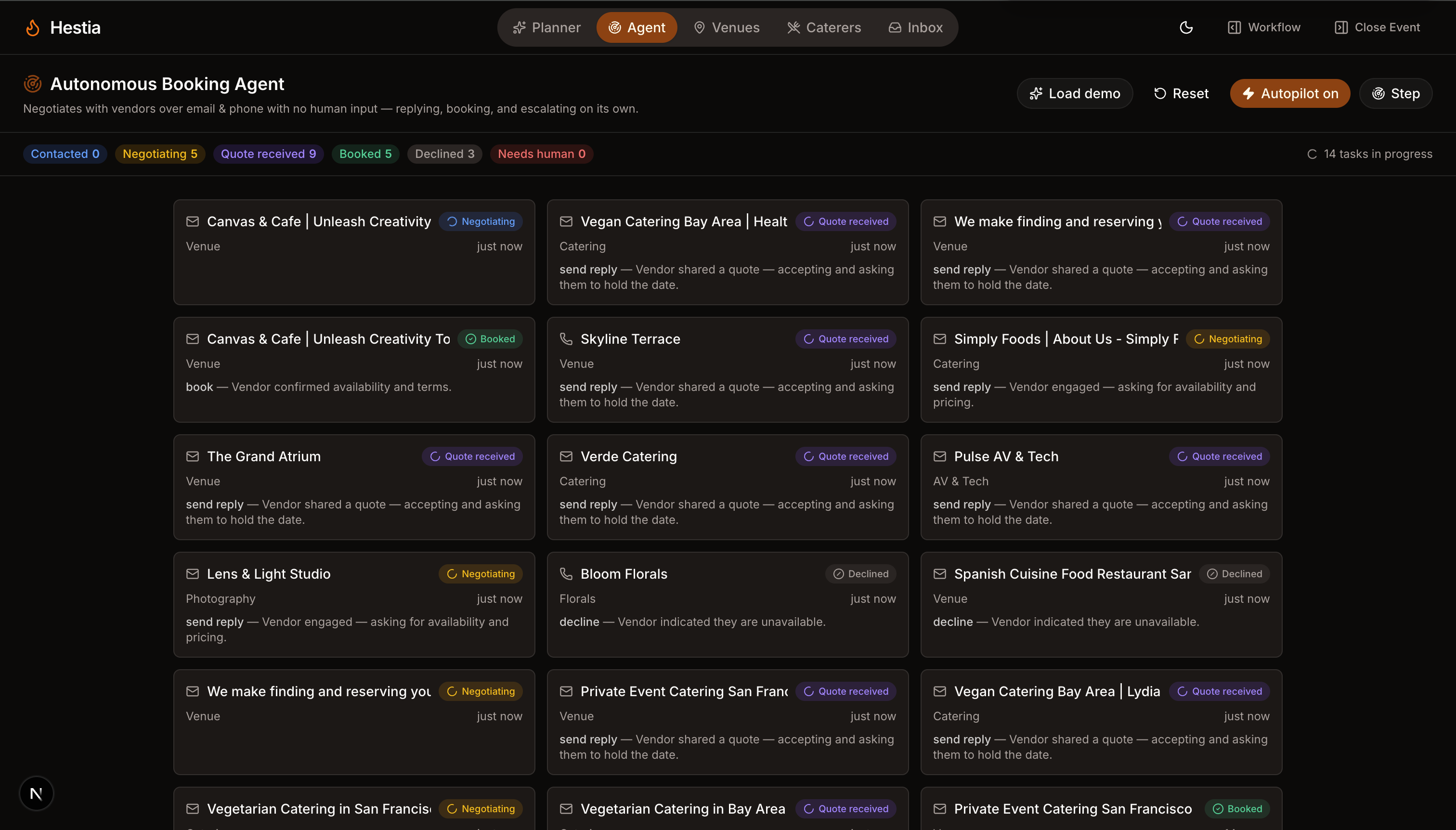
- Catering Agent: Finds caterers with Exa and emails them through AgentMail
- Vendors Agent: Finds venues with Exa and calls them through VAPI
The workflow UI shows these agents running as a live pipeline, so the organizer can see the event move from idea to sourcing, outreach, page creation, and final plan.
Challenges we faced
The biggest challenge was integrating Guild.ai with the AI SDK.
We wanted to use Guild.ai to coordinate the agent workflow more deeply, but getting it to work cleanly with our AI SDK setup took longer than expected.
Because of the hackathon time limit, we focused on shipping the working orchestrator and subagent flow first, while leaving the deeper Guild.ai integration as the next step.
What we learned
We learned that the hard part is not creating more agents, but making them coordinate around shared state.
Event planning has many dependencies, so Hestia needs one source of truth that lets each agent handle its work while keeping the overall plan in sync.
What's next
Next, we want Hestia to become the operations layer for community builders.
Hestia should help organizers:
- Discover vendors
- Check availability
- Manage bookings
- Track budgets
- Handle RSVPs
- Recover from changes
This is especially useful when hosting events in unfamiliar cities.
Why it matters
Hestia matters because it lowers the operational barrier to hosting events, helping more people turn community ideas into real-world gatherings.
Built With
- agentmail
- biome
- bun
- exa
- framer-motion
- guild.ai
- lucide-react
- luma
- model-context-protocol-sdk
- next.js-16
- openai
- openui-lang
- radix-ui
- react-19
- react-flow
- rive
- shadcn/ui
- shiki
- streamdown
- tailwind-css-v4
- tsx/jsx
- typescript
- vapi
- vercel-ai-sdk-v6

Log in or sign up for Devpost to join the conversation.