-
-
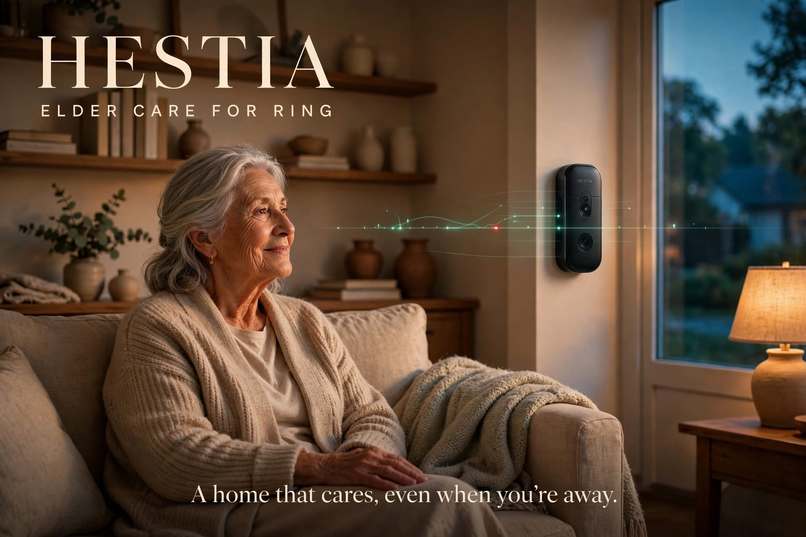
Overview
-
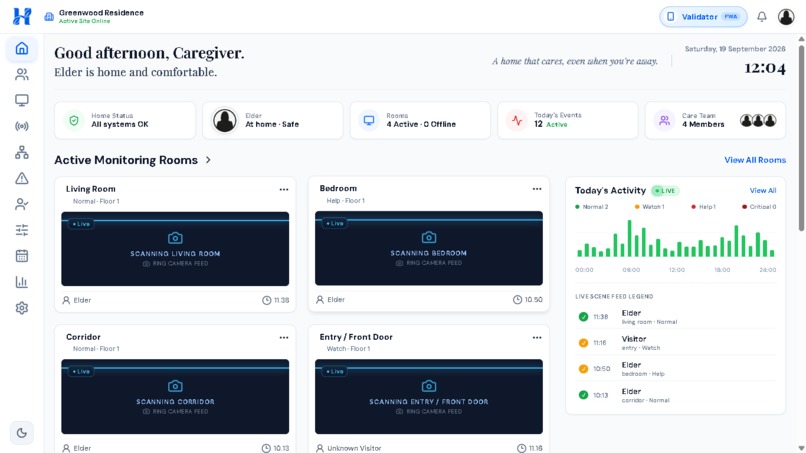
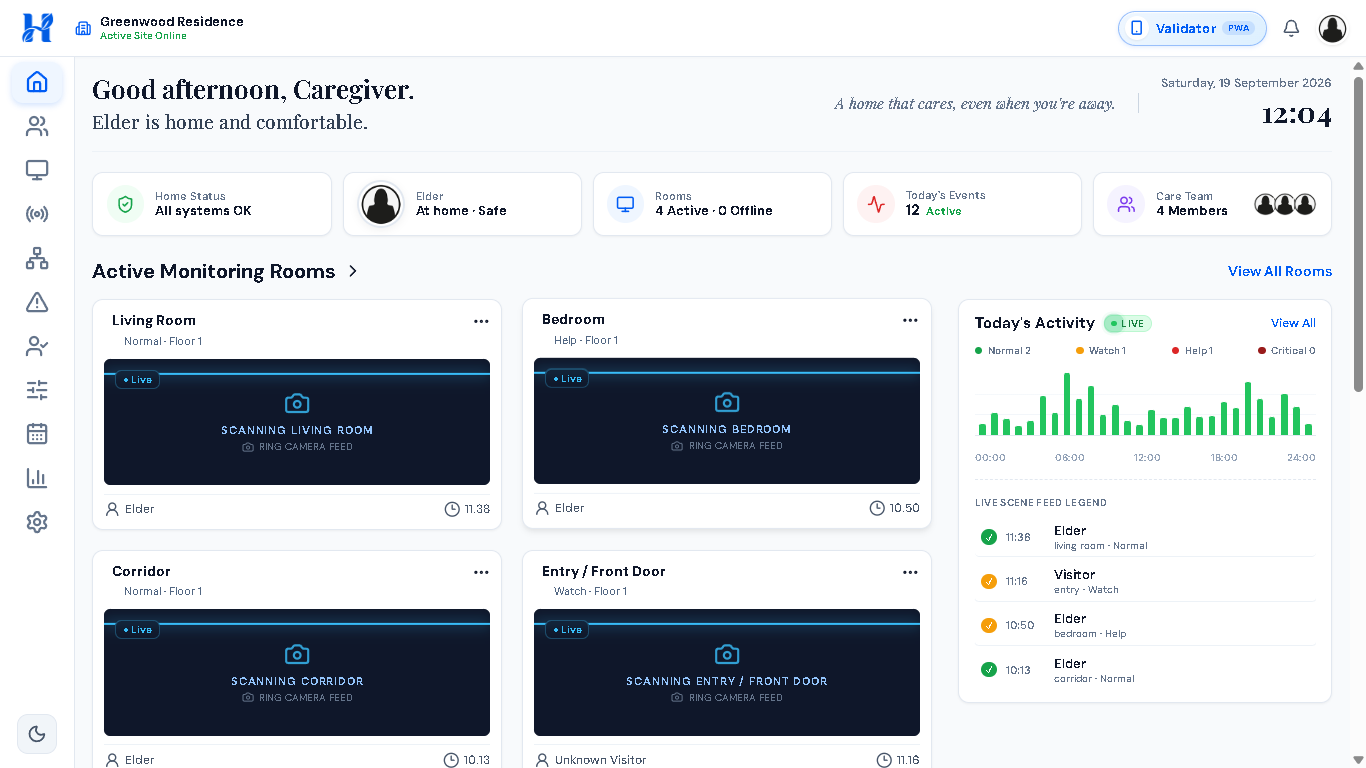
00-Dasboard-Default
-
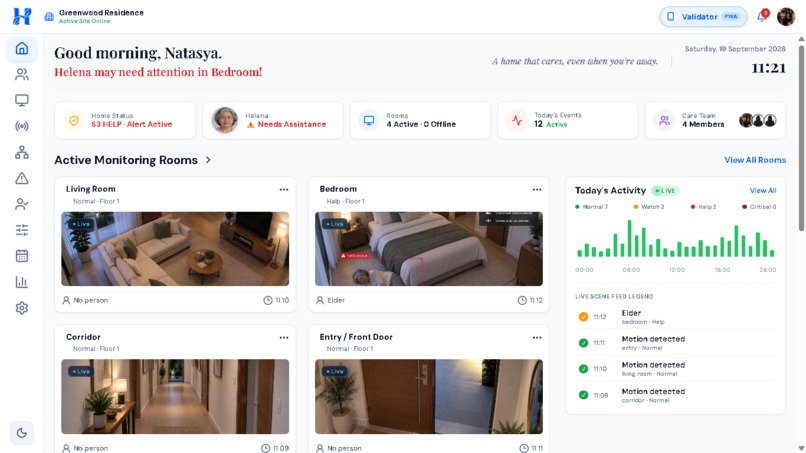
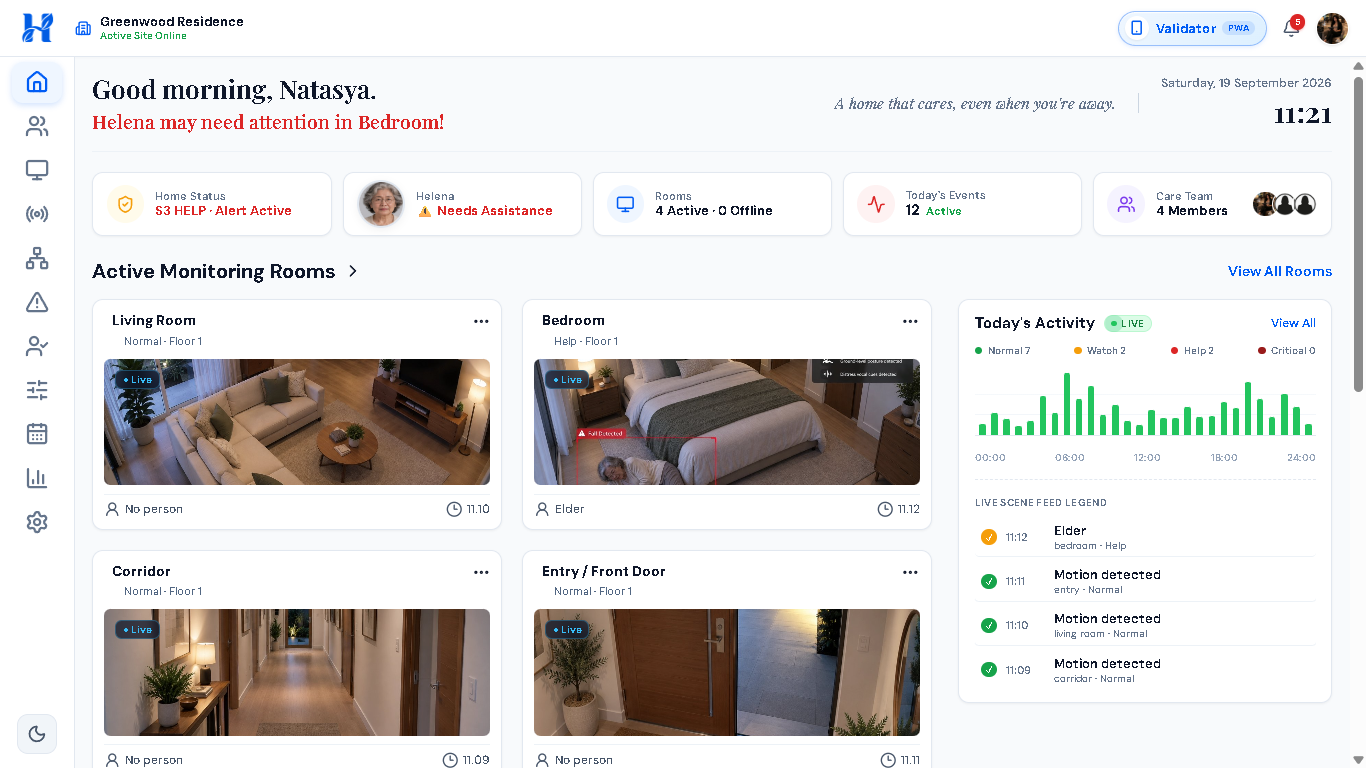
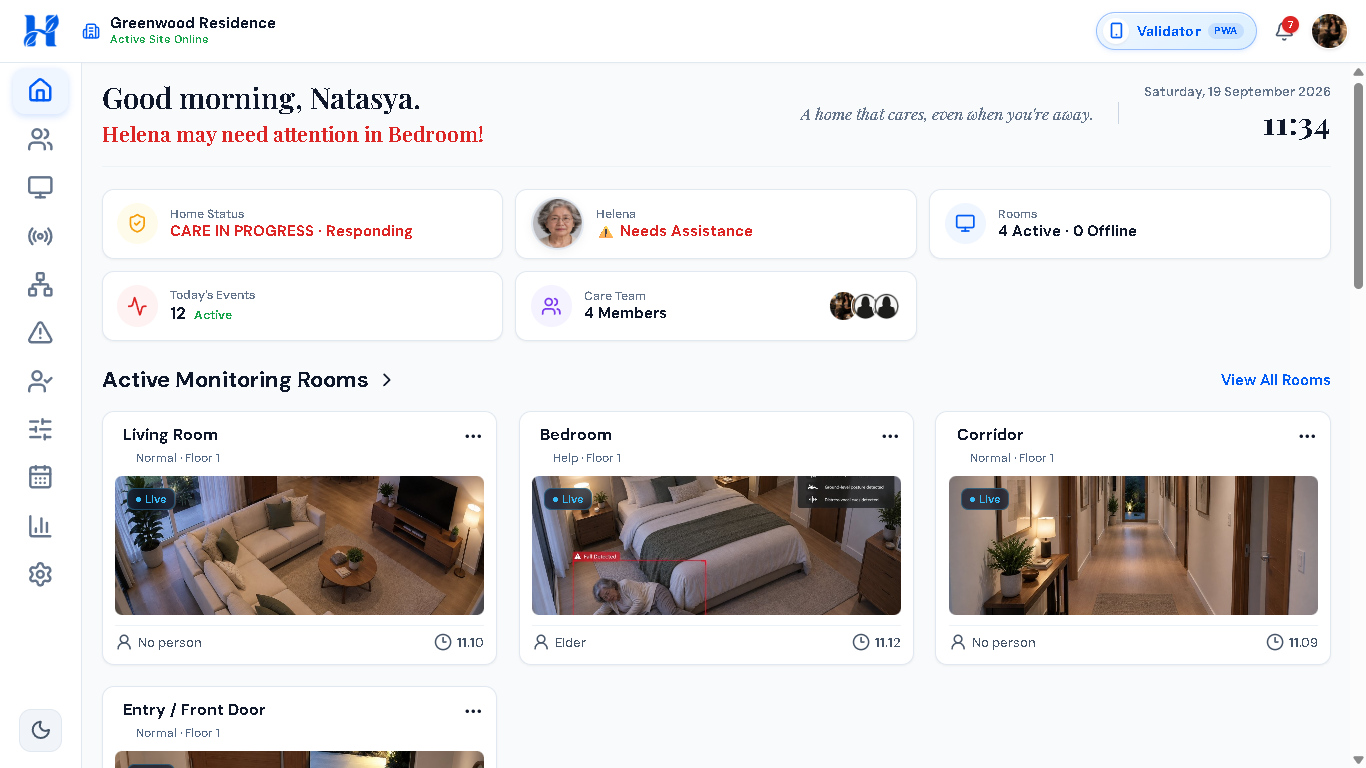
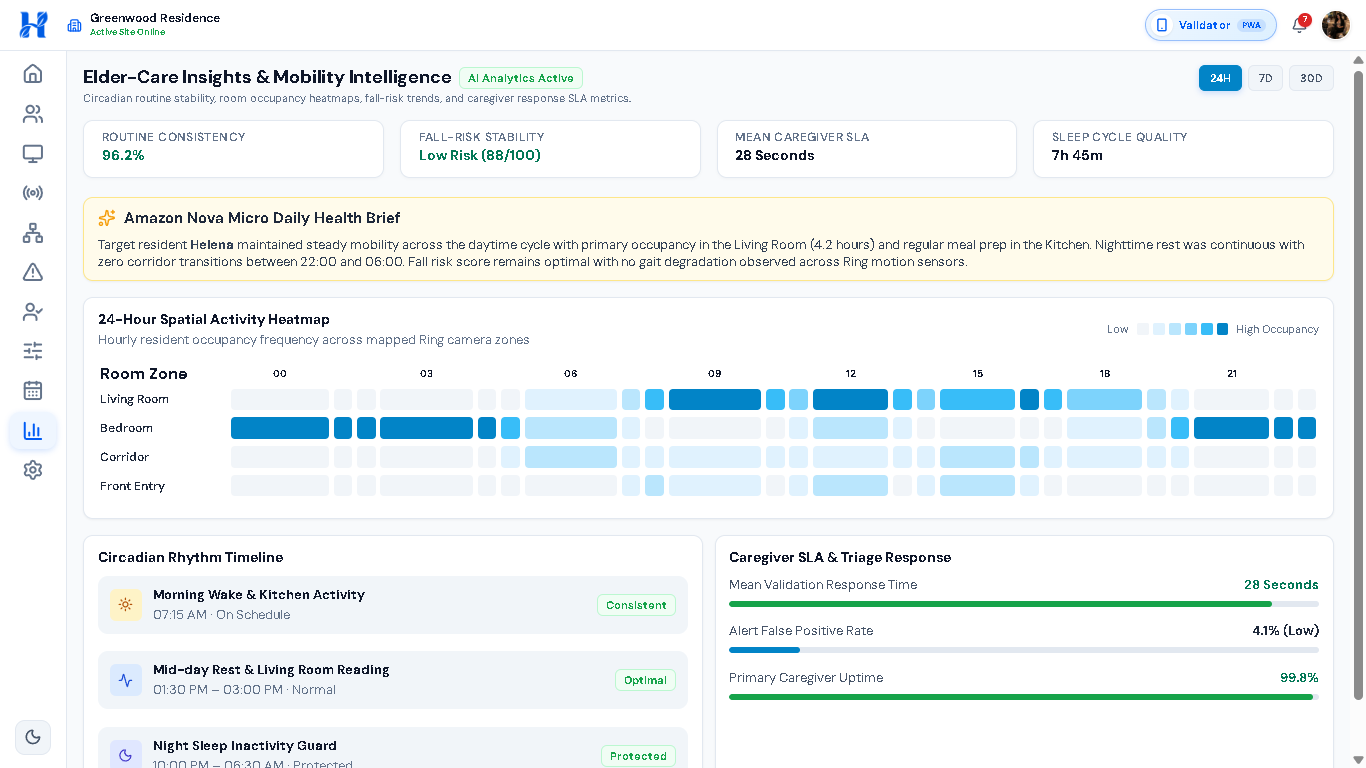
01-dashboard-overview-top-rooms
-
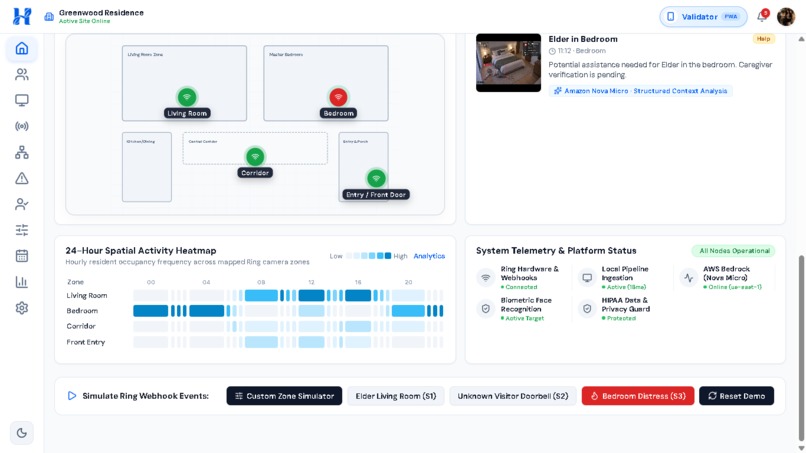
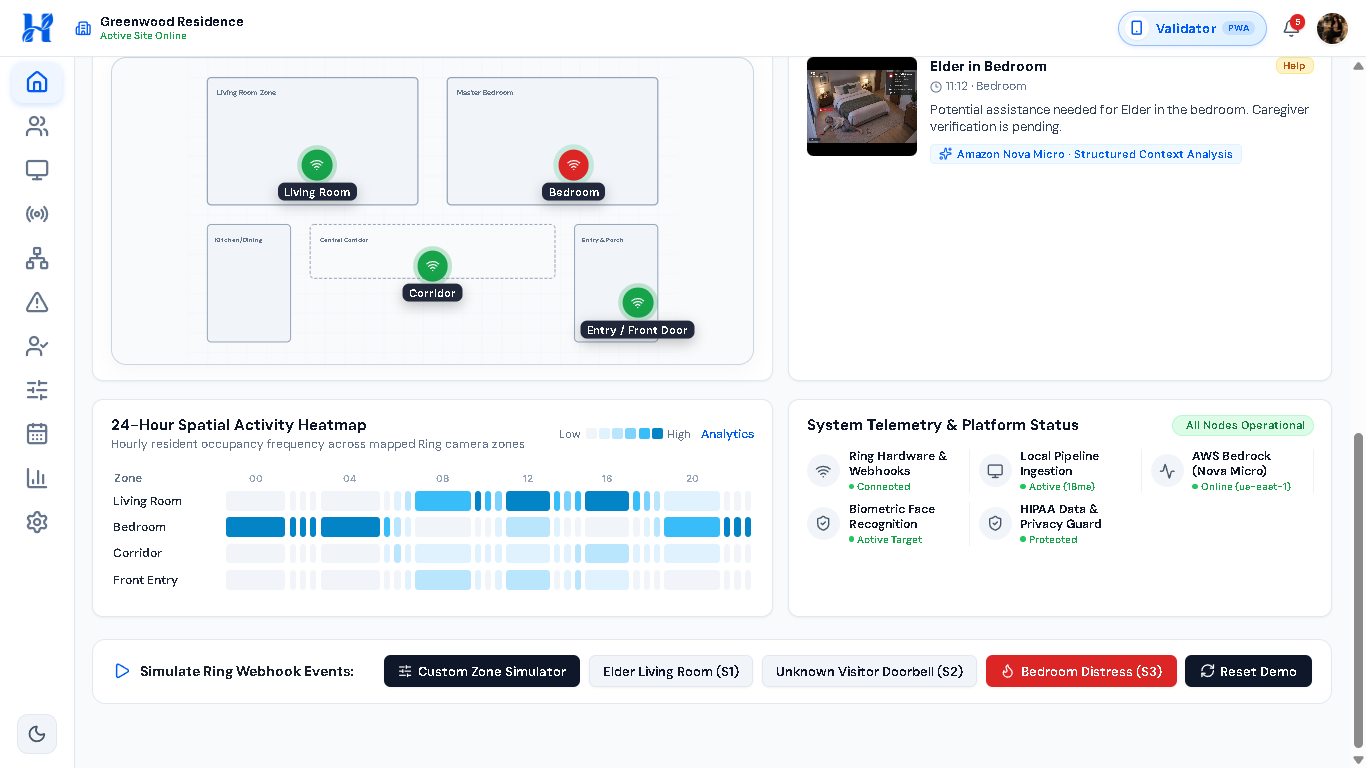
01-dashboard-overview-bottom-rooms
-
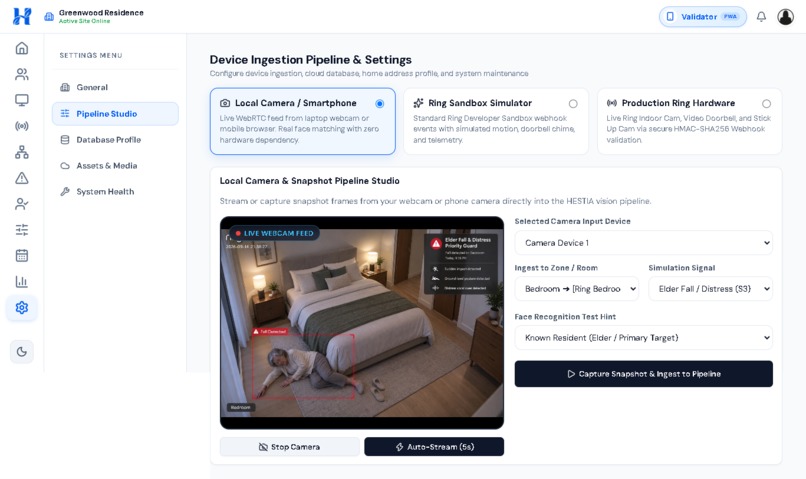
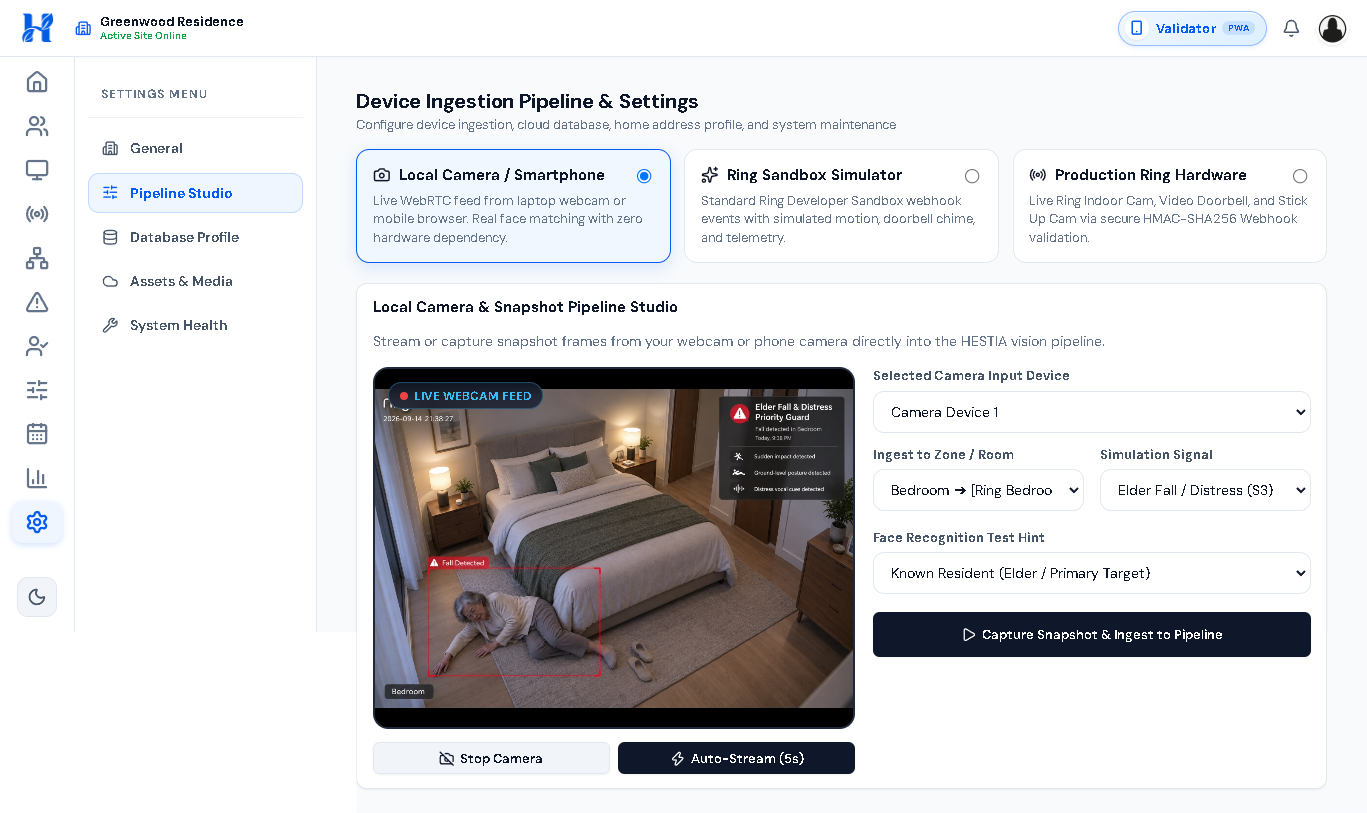
02-capture_Snapshot_Ingest
-
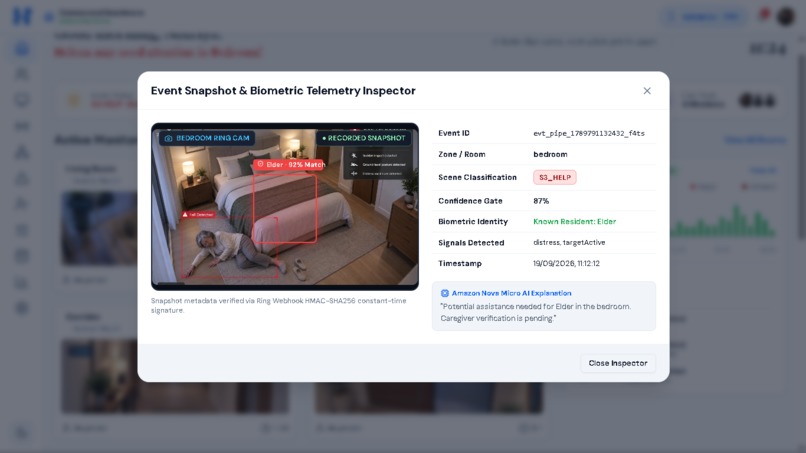
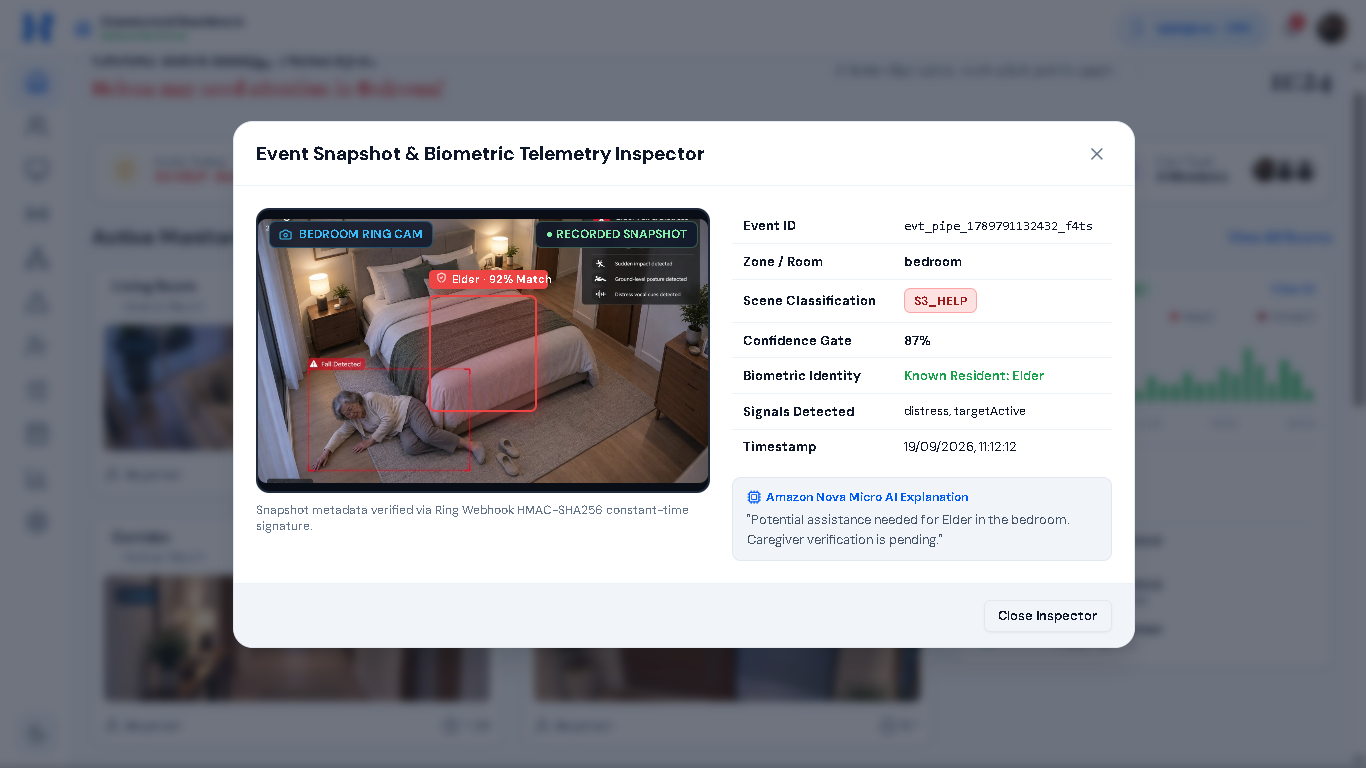
02-event-inspection-nova-context
-
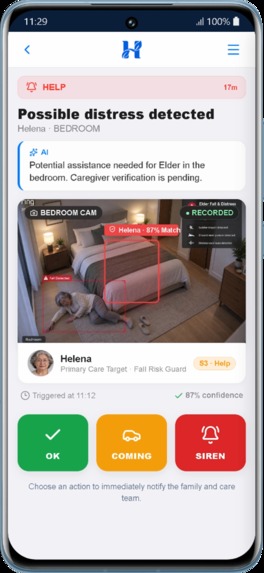
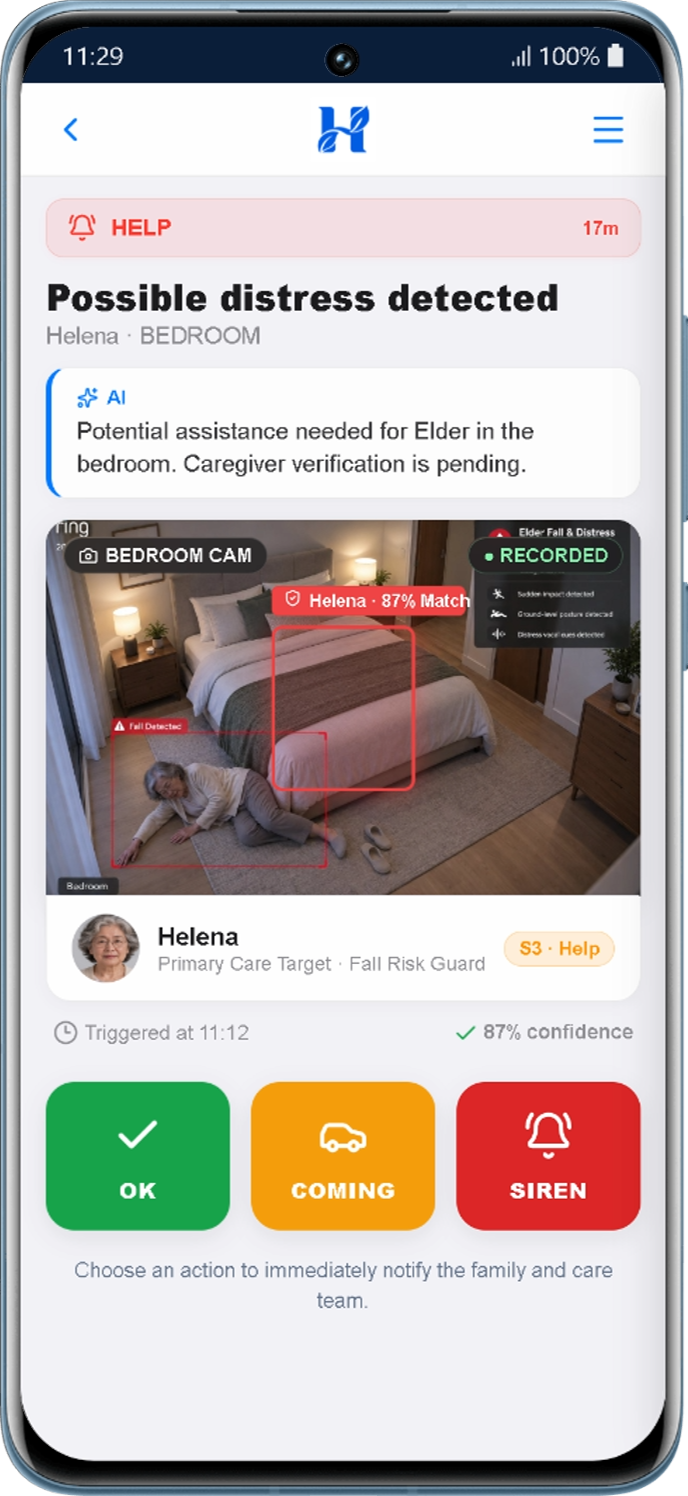
03-validator-pwa-action
-
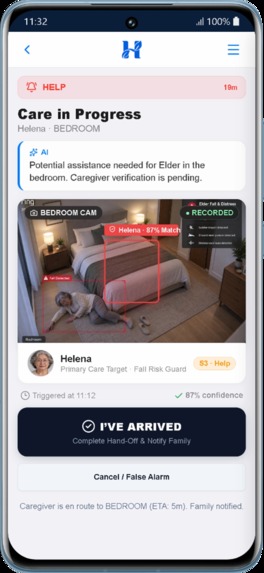
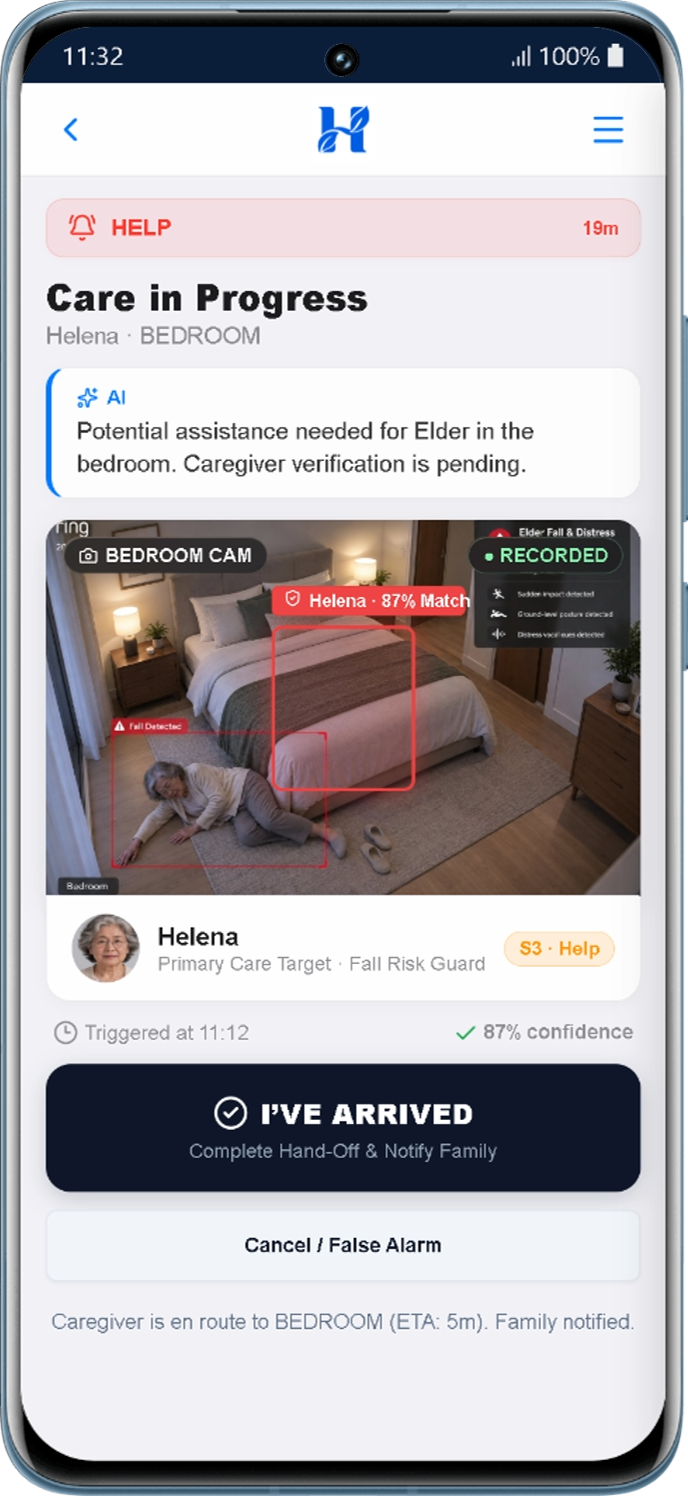
03-validator-pwa-action-confirm
-
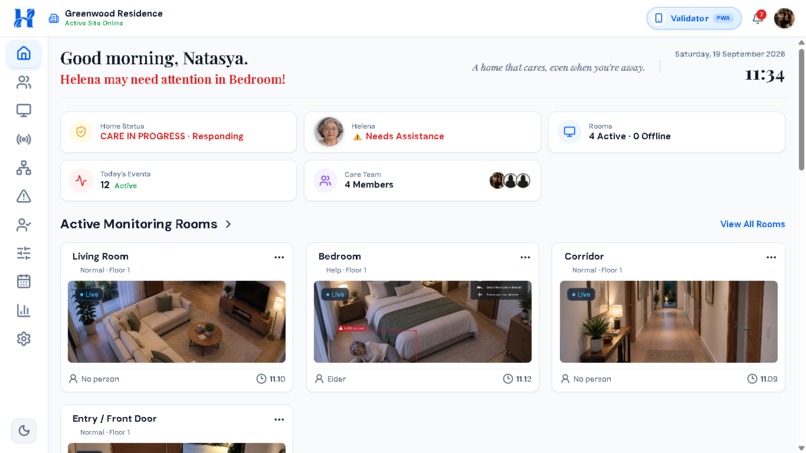
04-family-reassurance-resolved
-
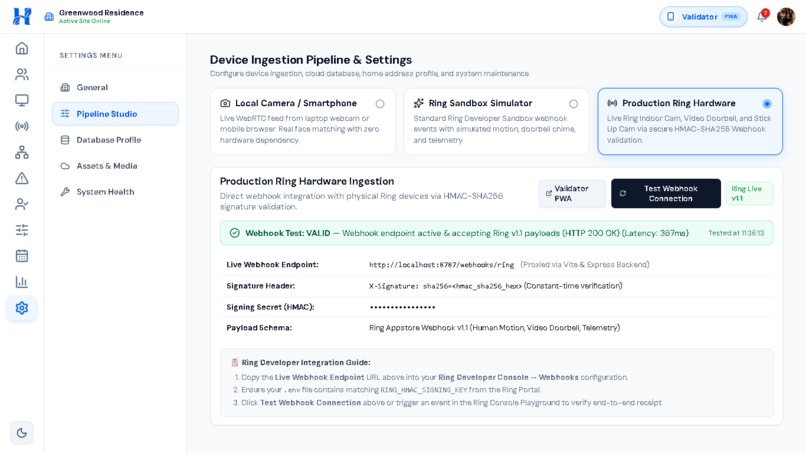
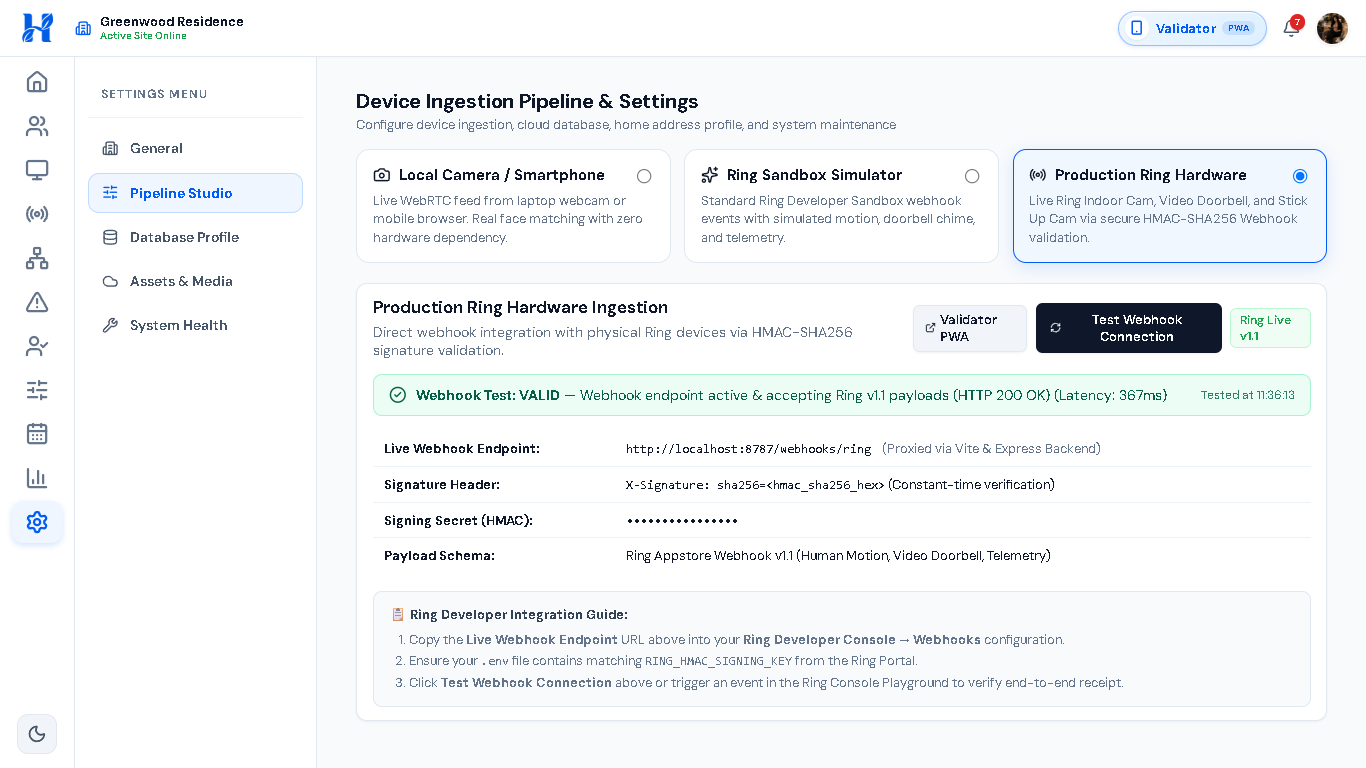
05-ring-integration
-
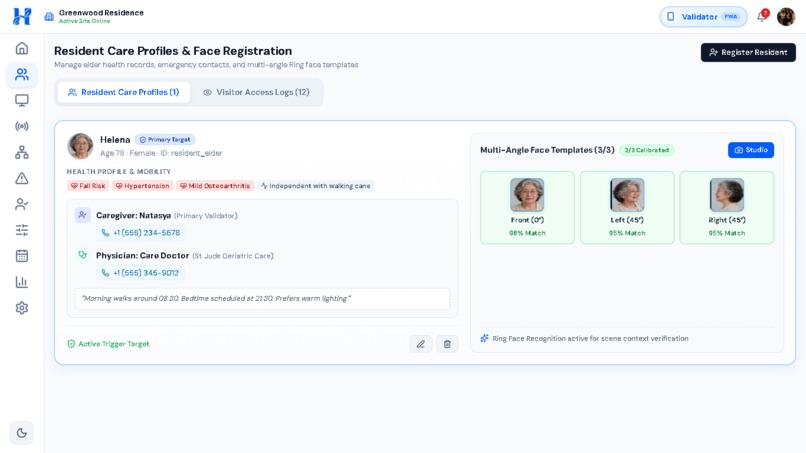
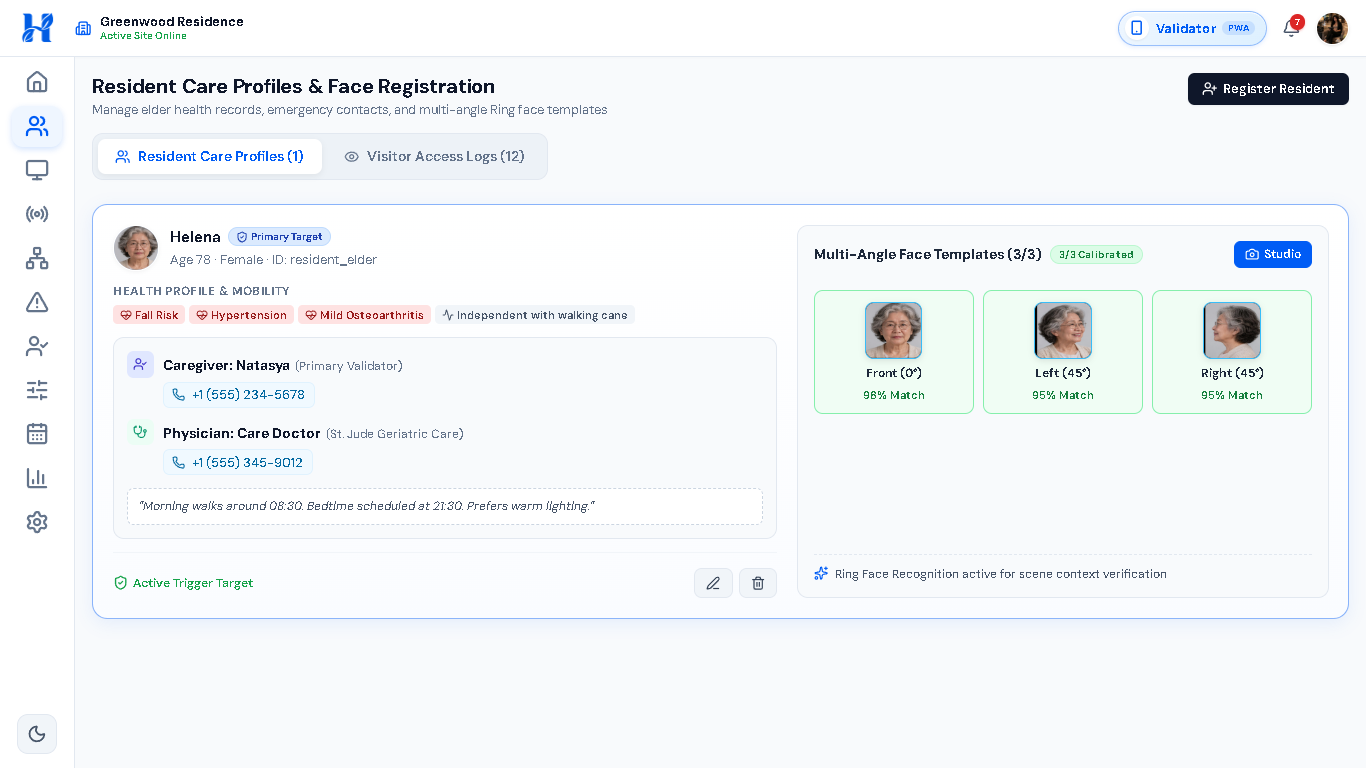
06-resident-face-studio
-
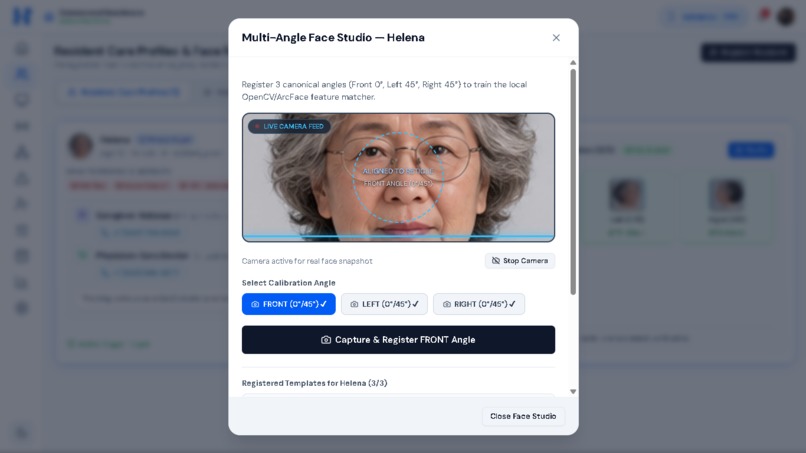
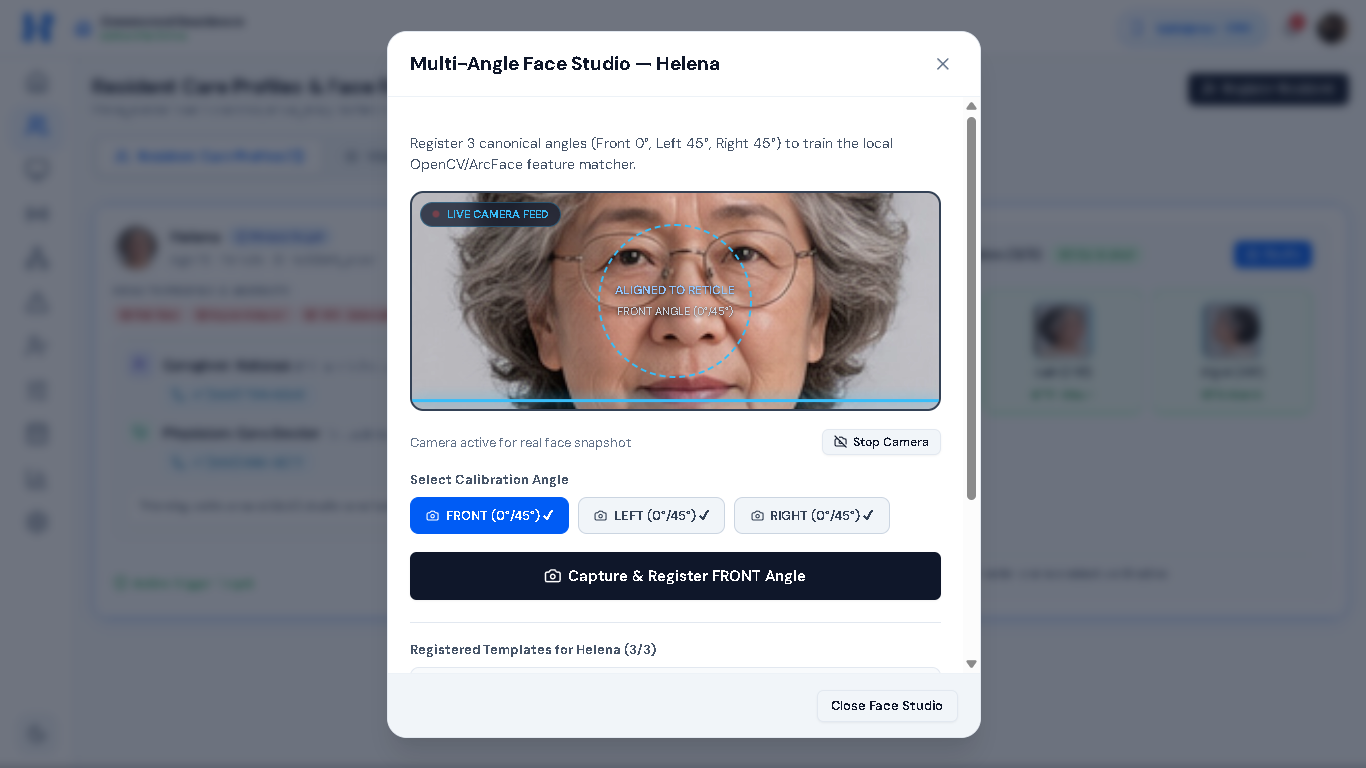
06-resident-face-studio-camera
-
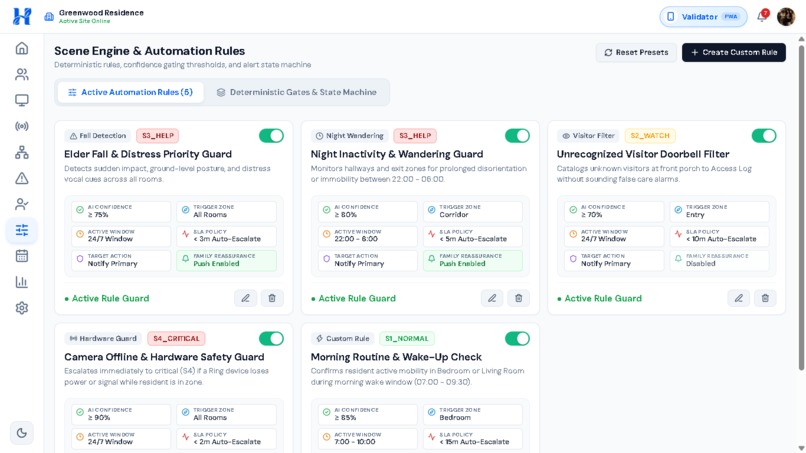
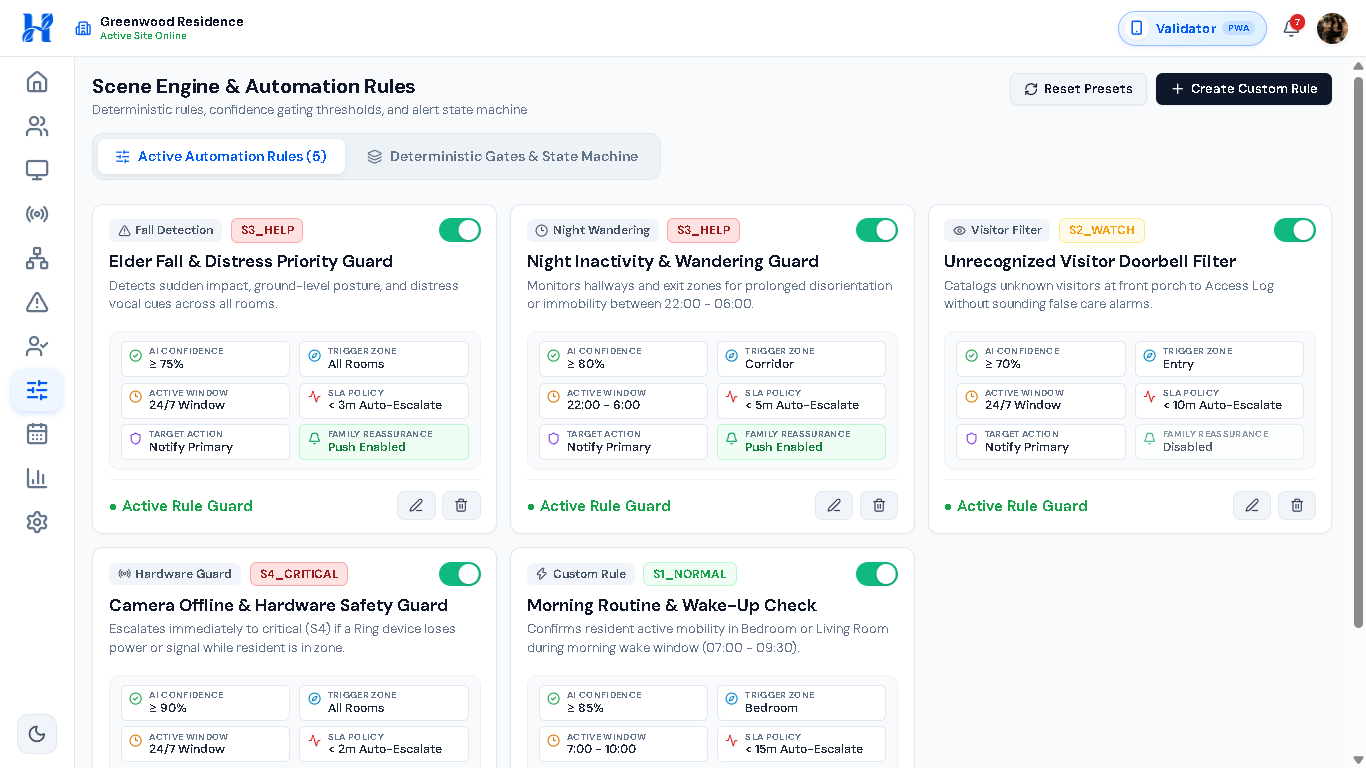
07-automation-rules
-
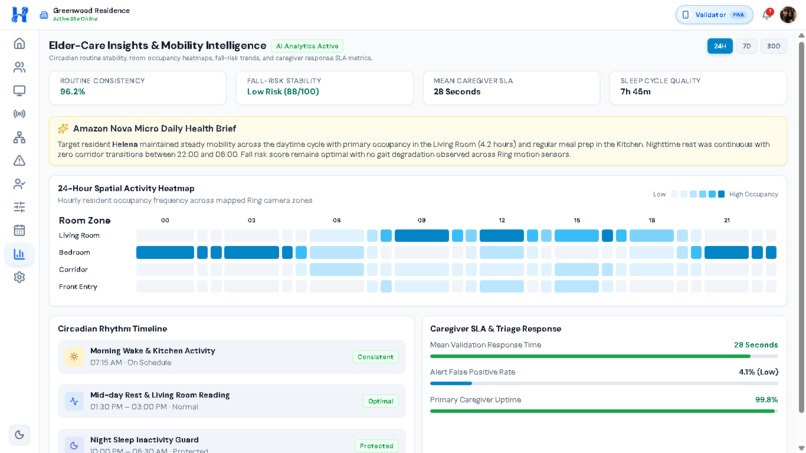
07-automation-rules-Insight
-
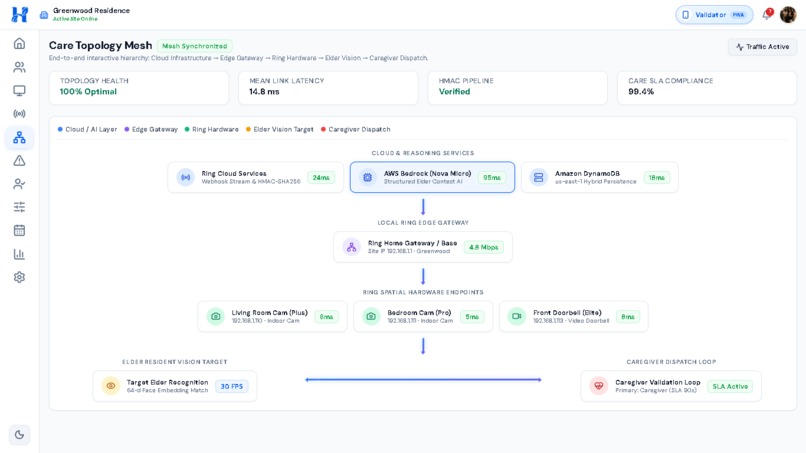
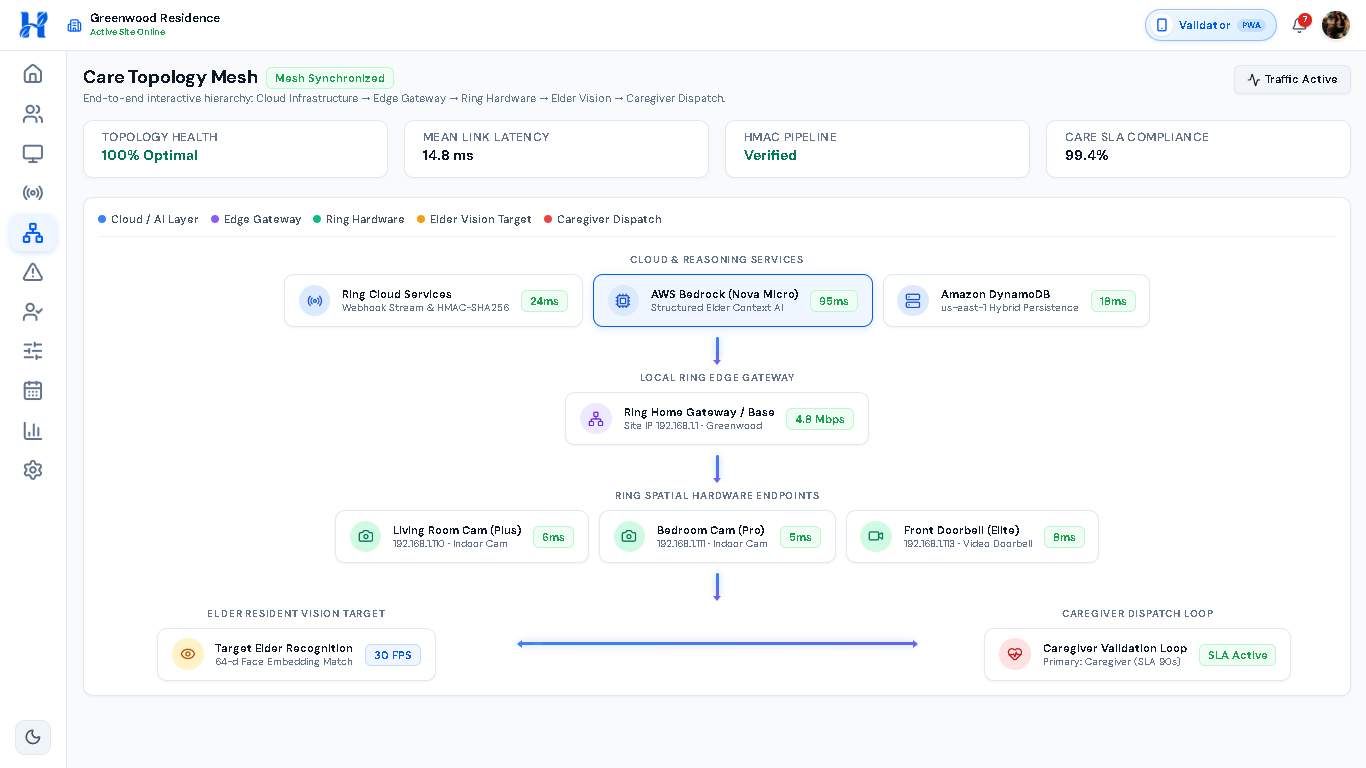
08-care-topology
Inspiration
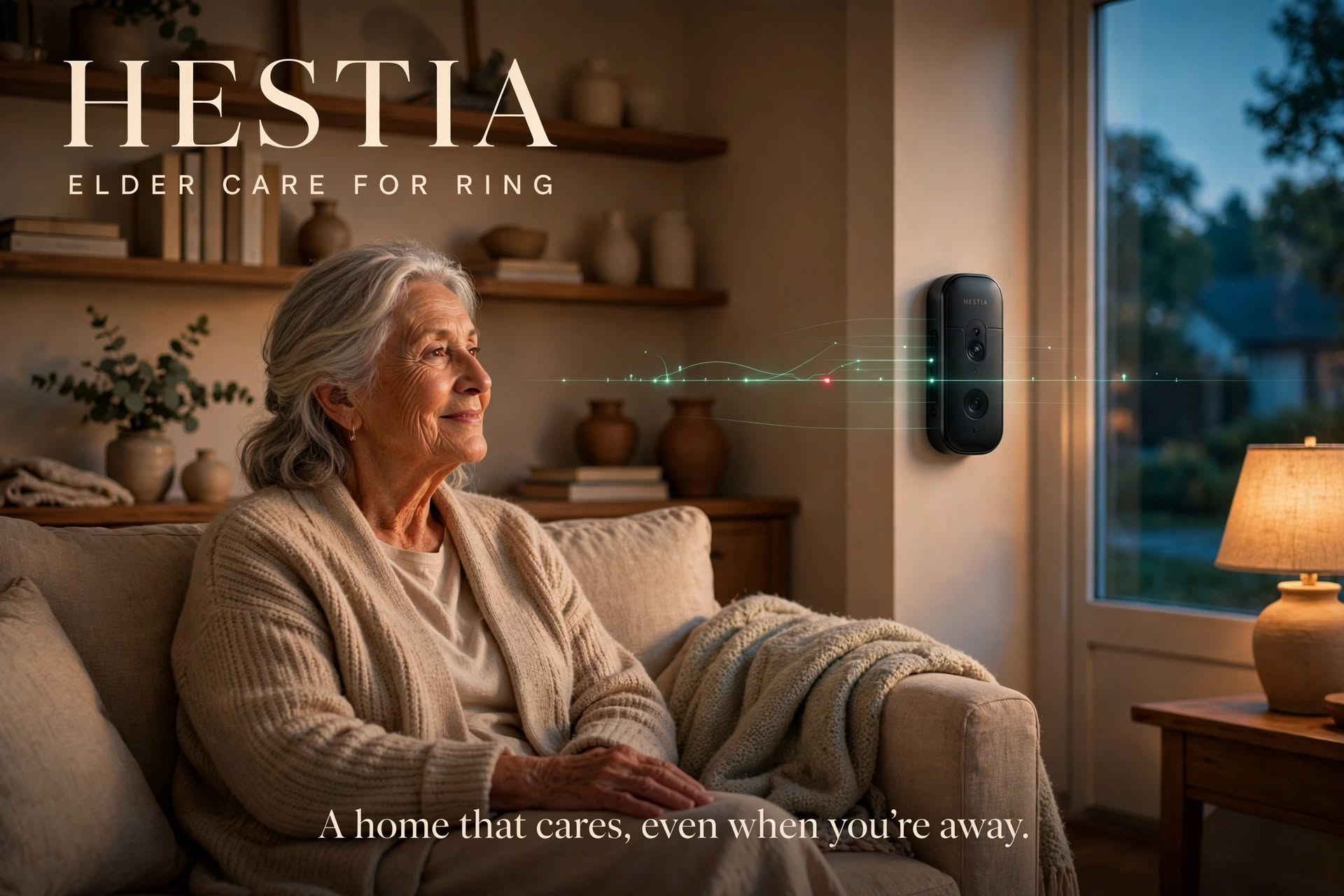
Elders left without 100% supervision can pass away unnoticed. Weak distress signals—such as a subtle wave, a faint call for help, or repeated blinking—are easily missed when family members or nurses step out even briefly. We built Hestia to ensure a home continues to care, even when you're away.
What it does
Hestia turns a single static room camera (placed 1.5–3m frontally) into a vigilant elder care monitor. It processes camera triggers using a custom scene engine and AI, translates subtle physical cues into distress alerts, and routes them through a human-in-the-loop validation process before triggering any alarm or SLA escalation.
How we built it
- Hardware Integration: Connected with Ring camera feeds as the primary trigger and vision source.
- Scene Engine: Configured scenario routing (S1–S4) based on capability profiles to evaluate subtle motion patterns.
- Human-in-the-Loop Architecture: Implemented a human validation layer ensuring AI detections are confirmed before sounding sirens or sending high-priority alerts.
- Backend & APIs: Built robust event processing pipelines with strict error handling and fail-safes.
Challenges we ran into
- Distinguishing genuine, weak distress signals from ambient room movements without causing false positives.
- Designing a low-latency pipeline to handle human validation and SLA escalations rapidly.
Accomplishments that we're proud of
- Successfully creating a safety-first architecture where AI acts as the translator while maintaining human verification to prevent false sirens.
- Delivering a reliable, production-ready prototype focused on real-world elder care scenarios.
What we learned
- The critical importance of human-in-the-loop design in health and safety consumer applications.
- Practical techniques for processing low-amplitude visual distress signals efficiently.
What's next for Hestia
- Expanding support for additional camera models and smart home ecosystems.
- Refining the capability profiles and scene engines for broader medical edge cases.
Built With
- amazon-bedrock
- amazon-web-services
- node.js
- python
- ring-api
- typescript

Log in or sign up for Devpost to join the conversation.