-
-
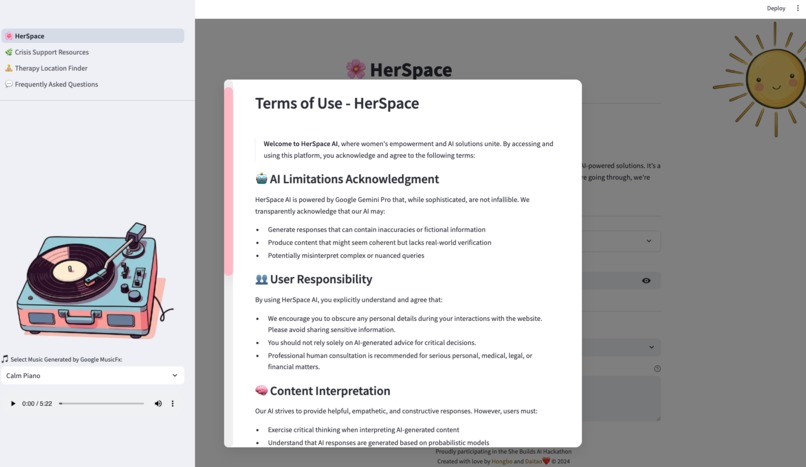
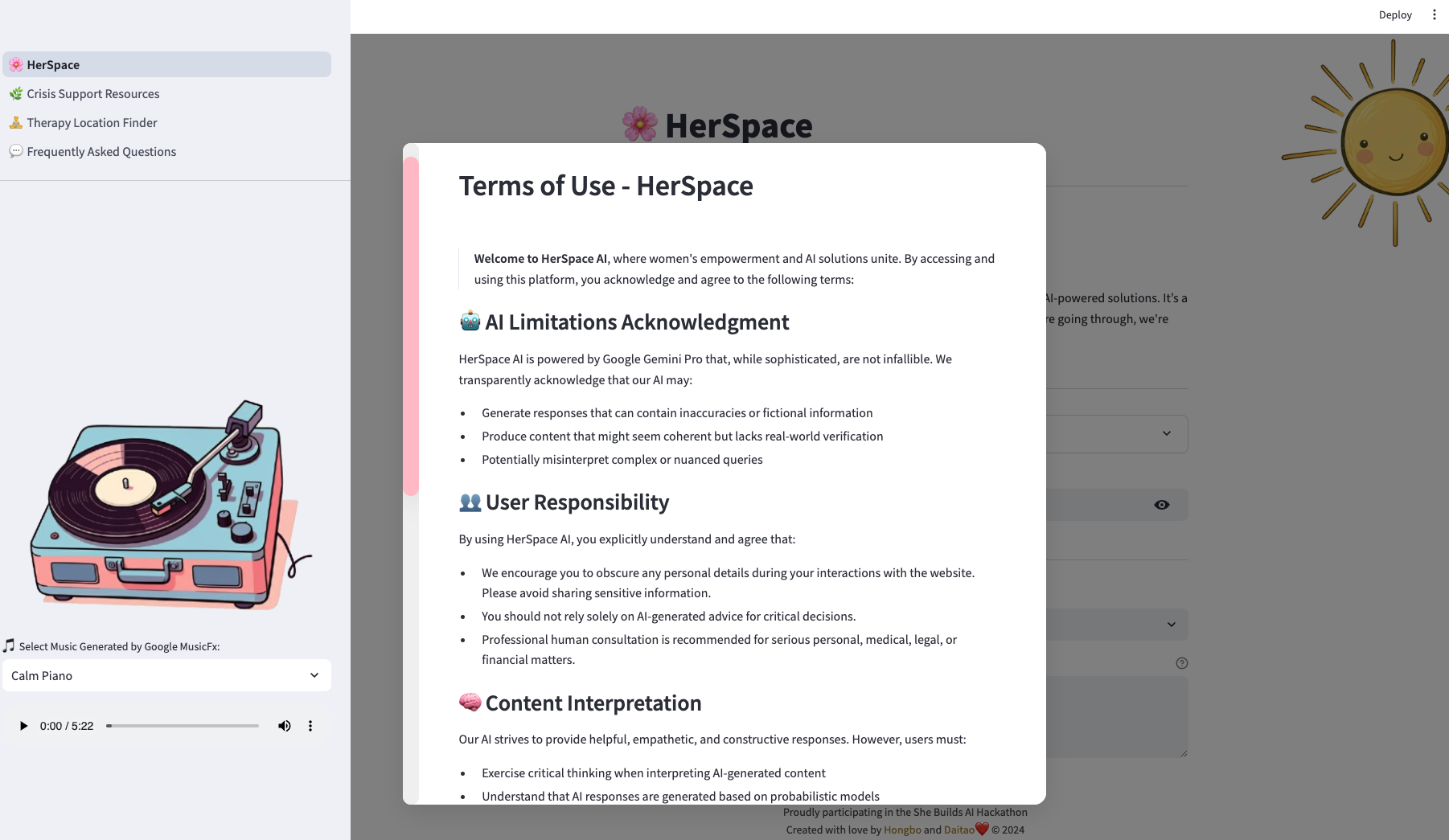
Term of Use
-
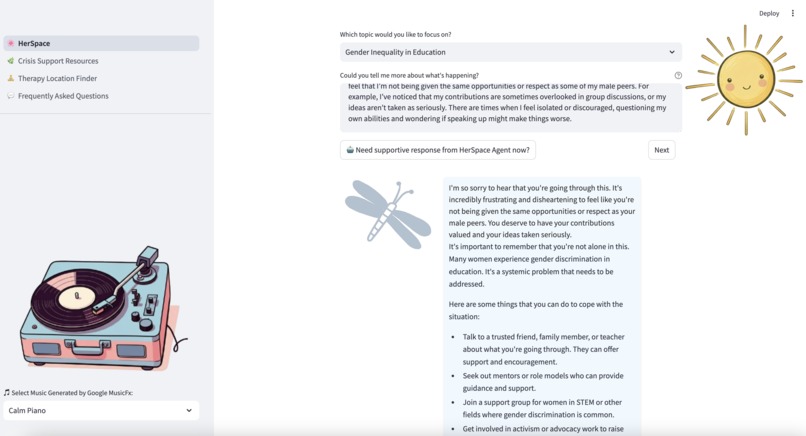
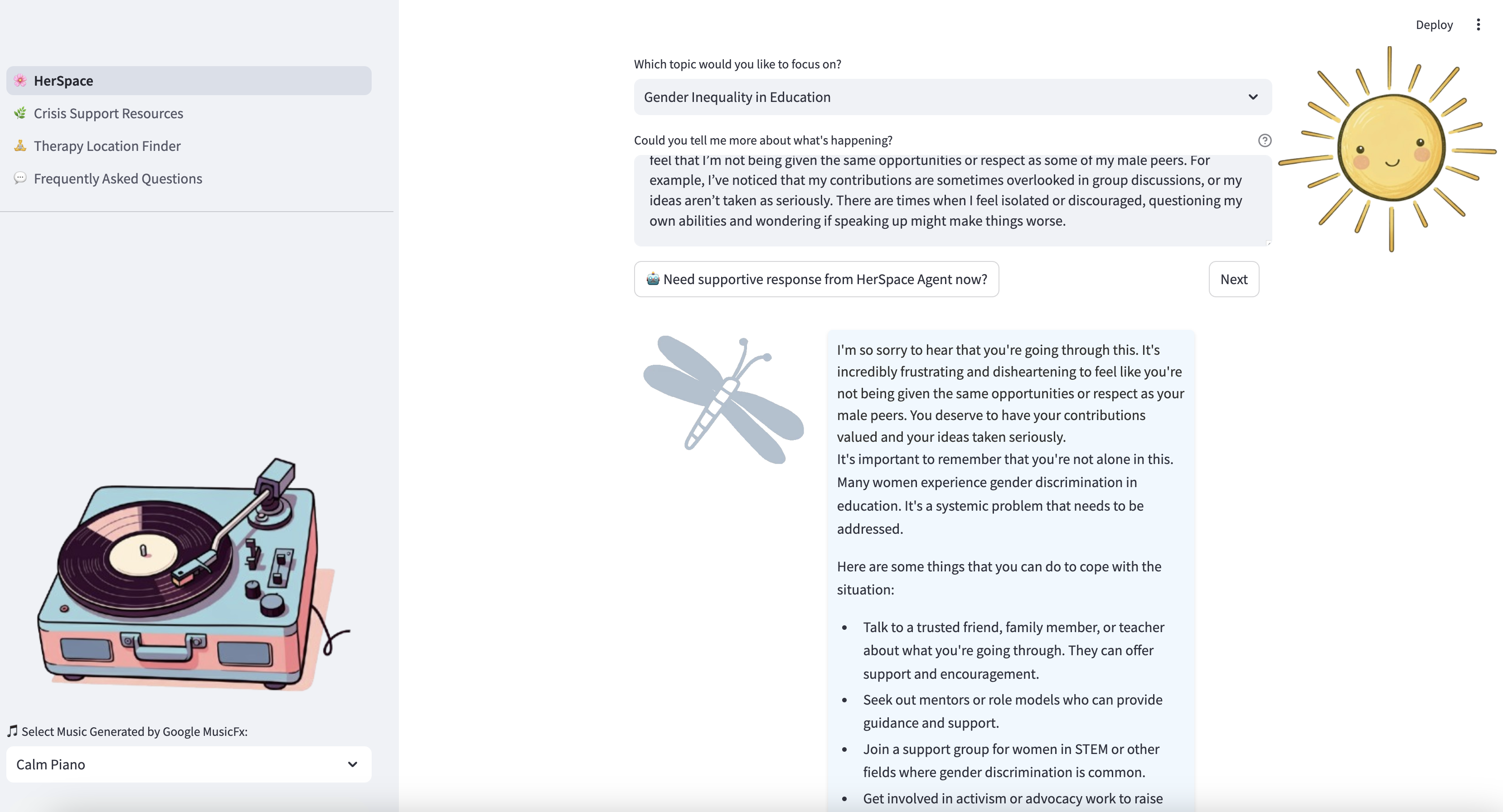
Situation description page
-
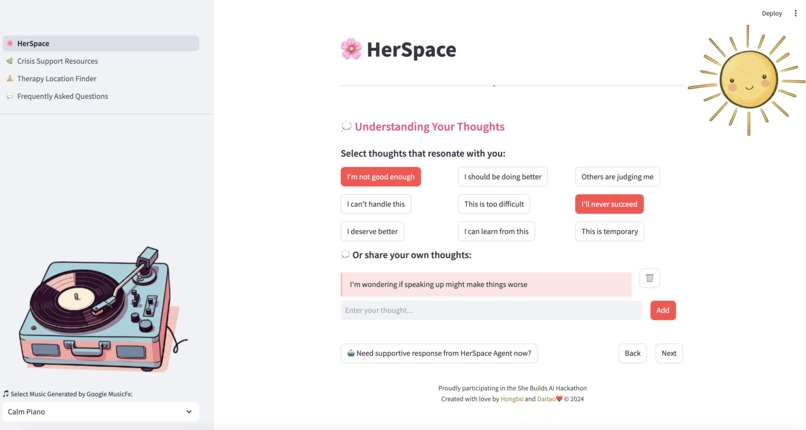
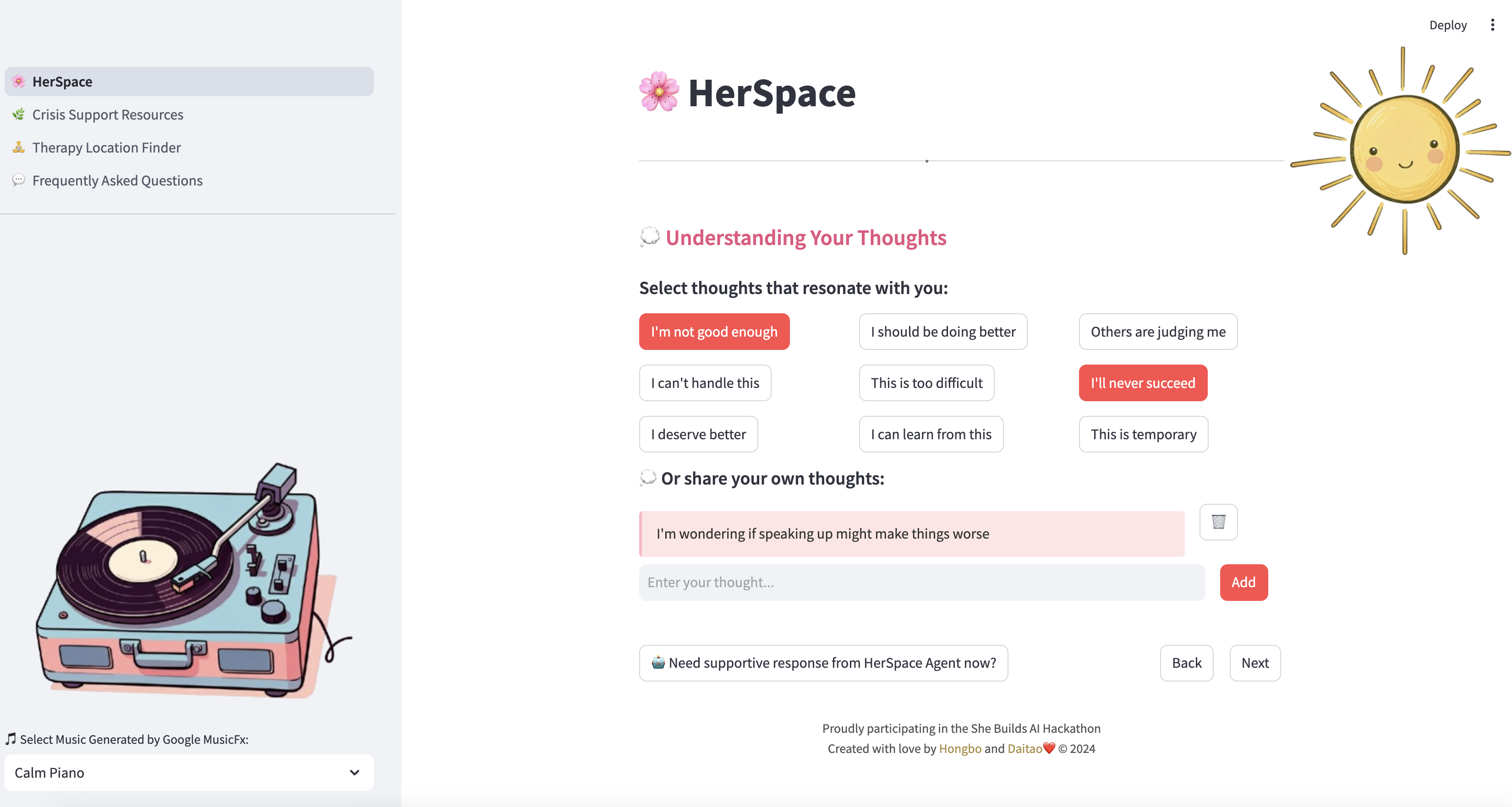
Thoughts page
-
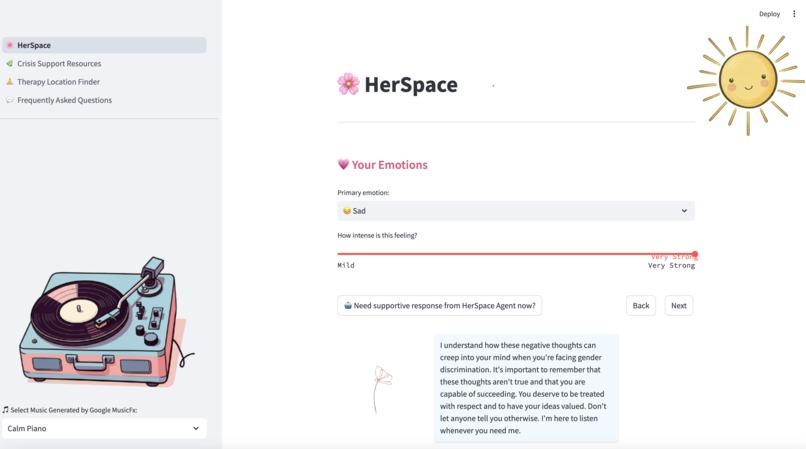
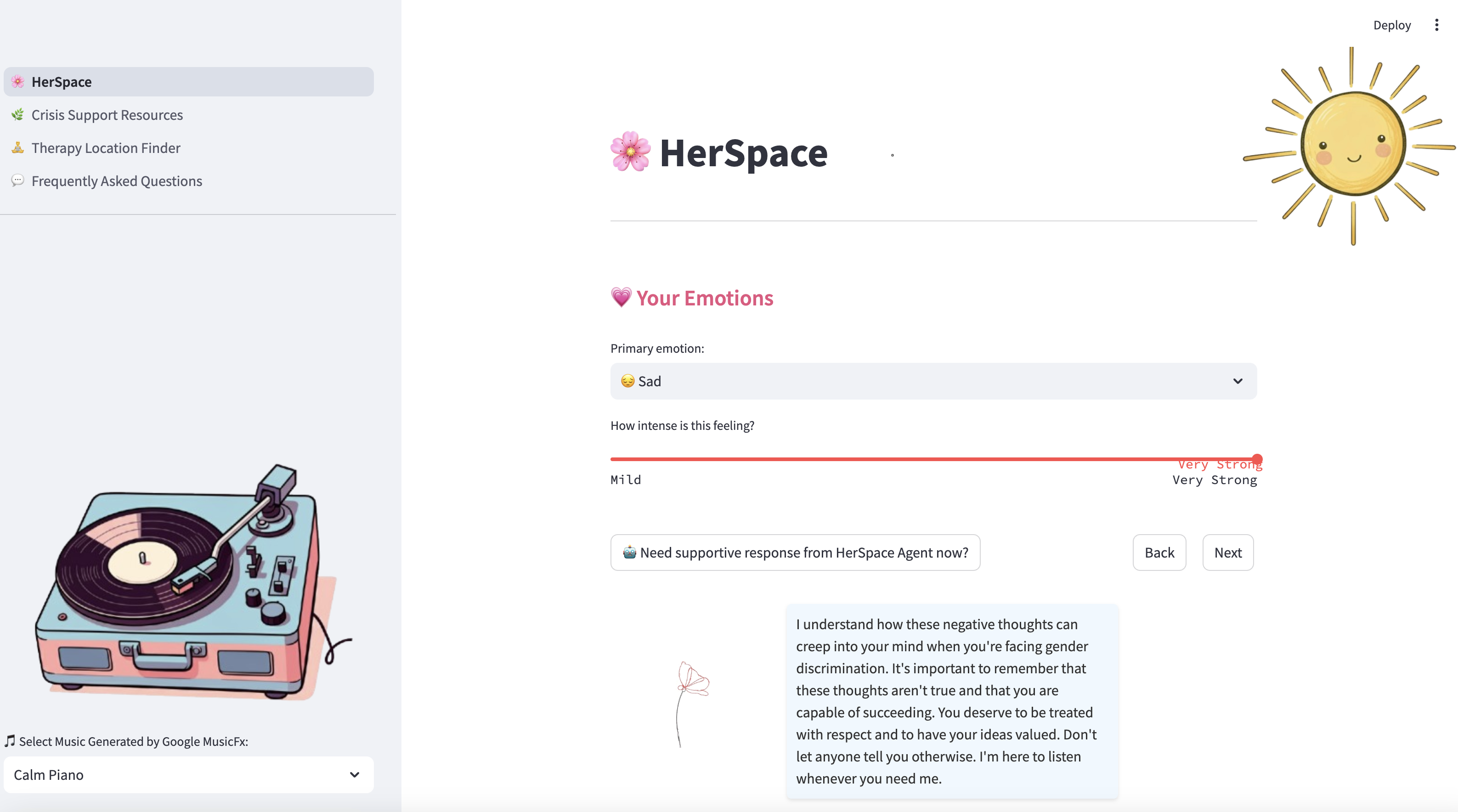
Emotions page
-
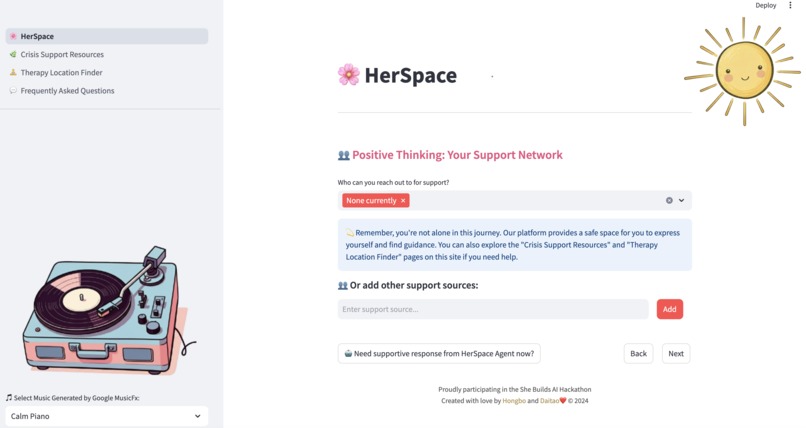
Support network page
-
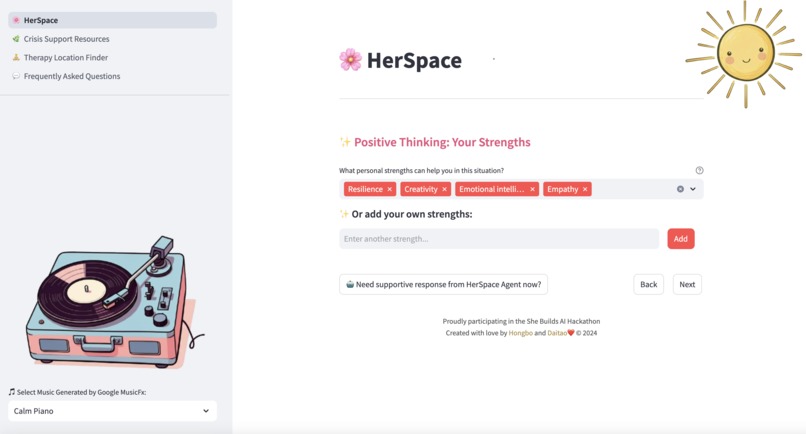
Strengths page
-
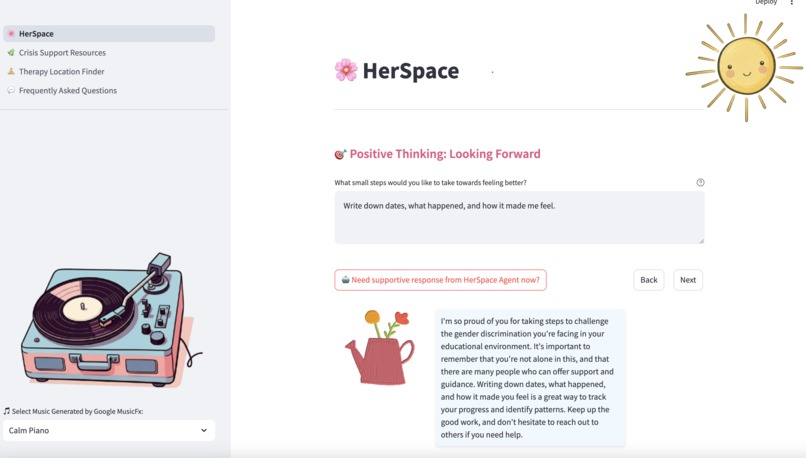
Actions page
-
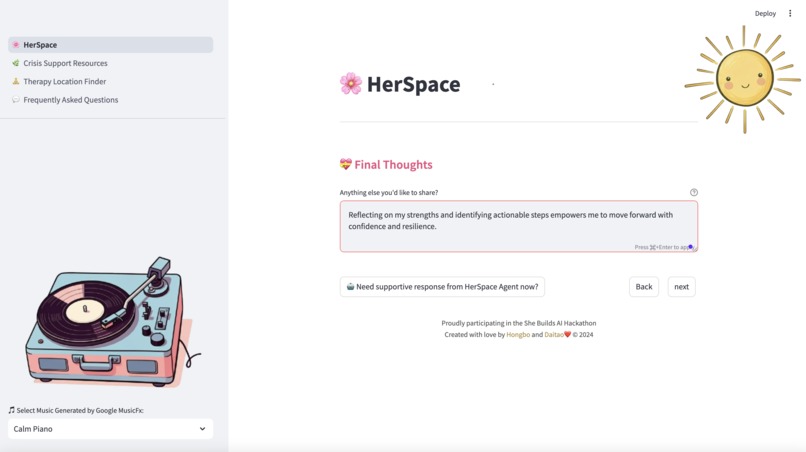
Extra notes page
-
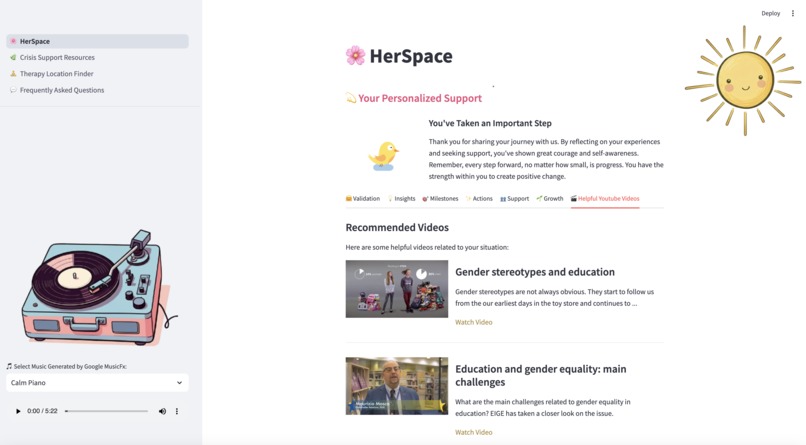
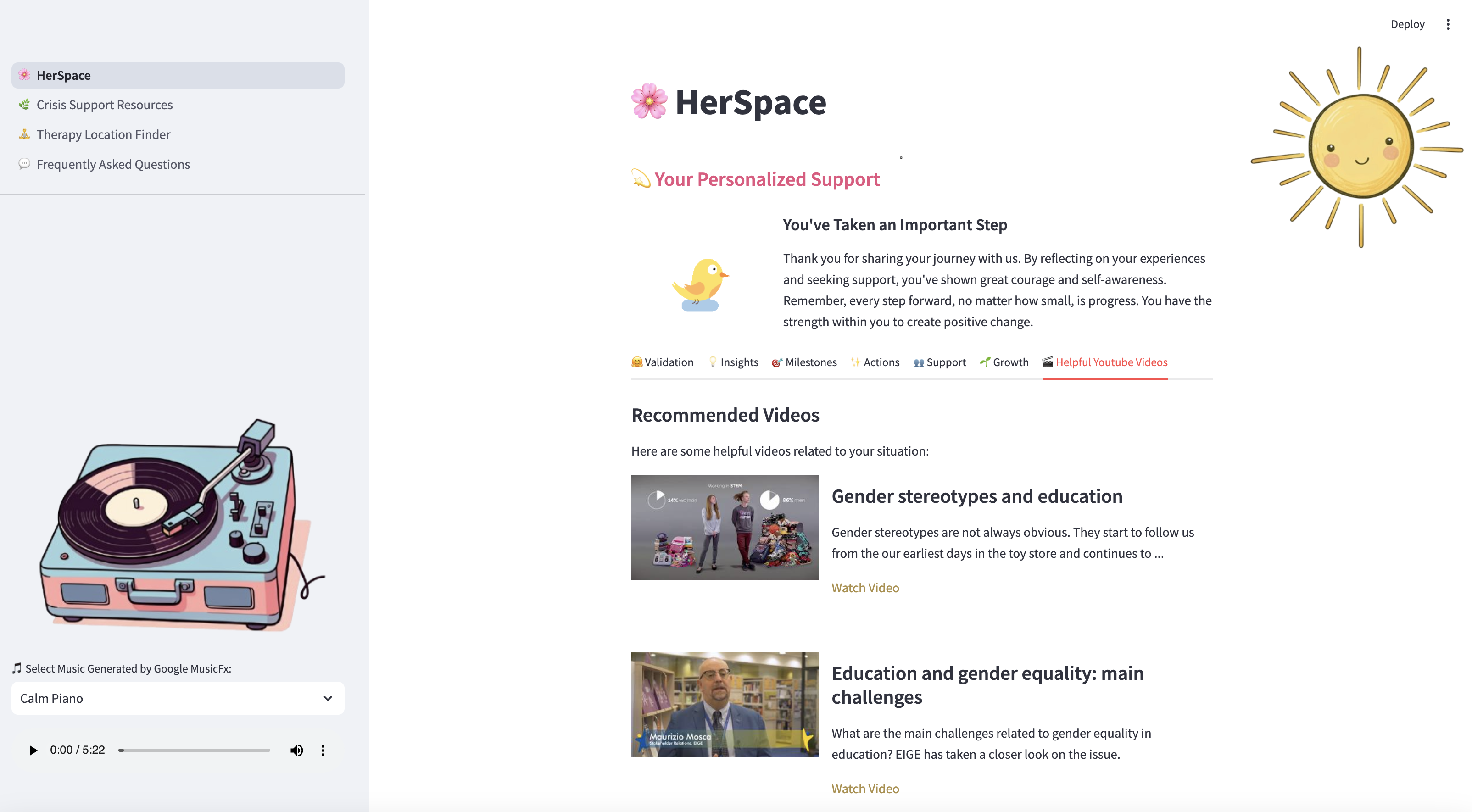
Personalized support page
-
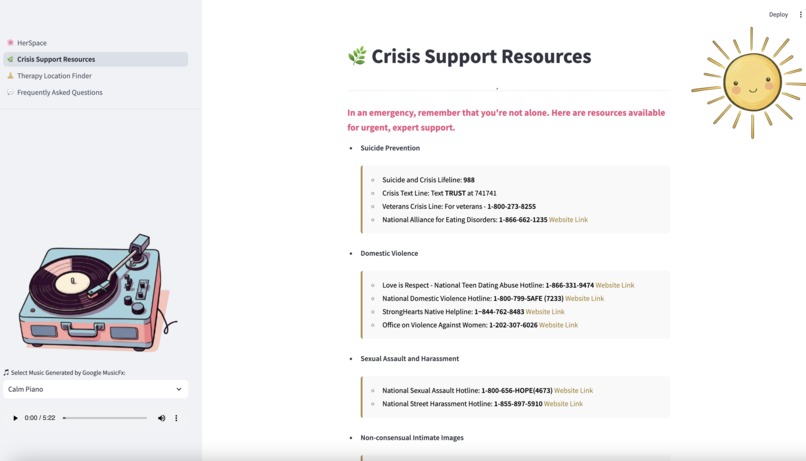
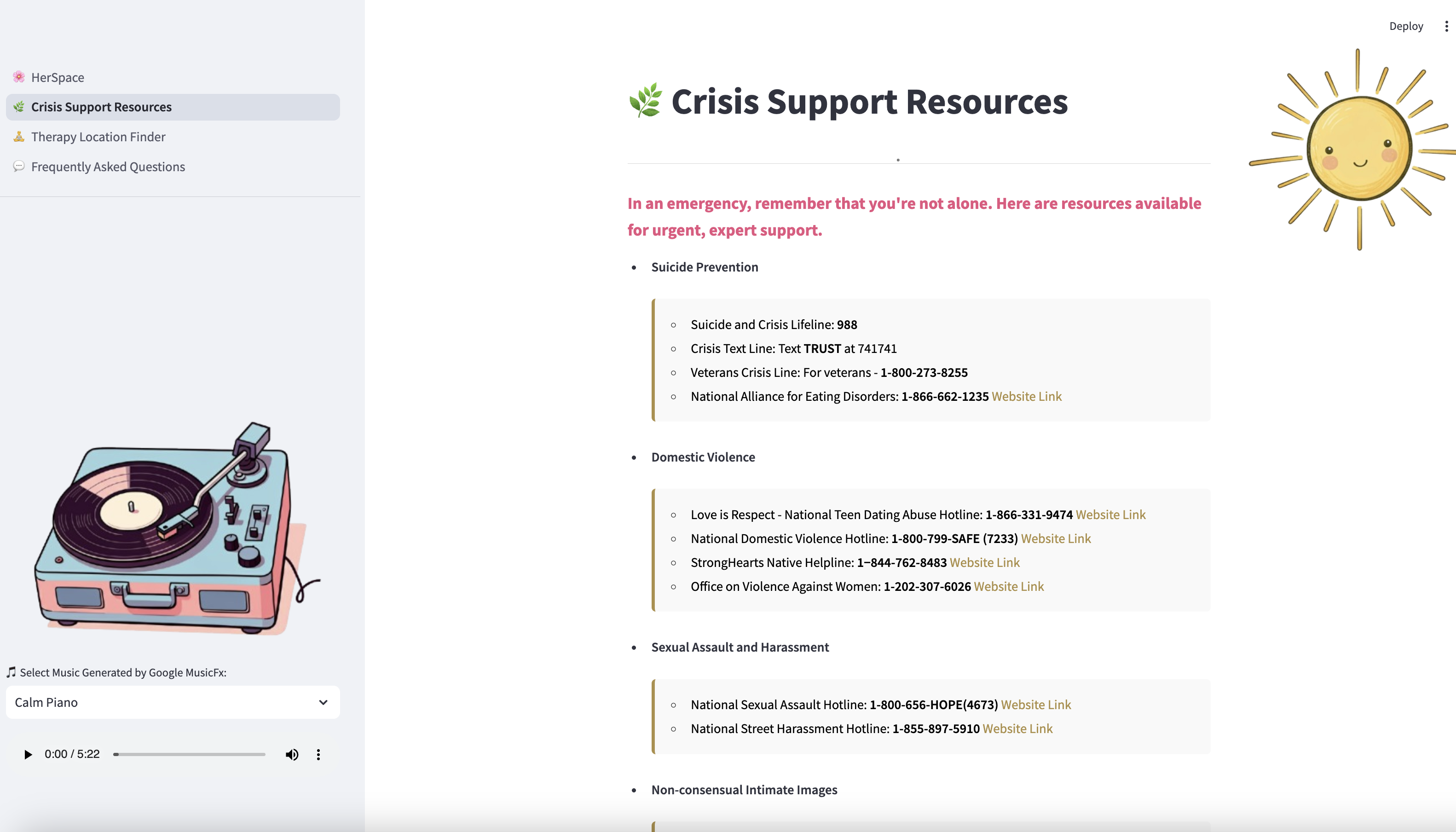
Crisis support resources page
-
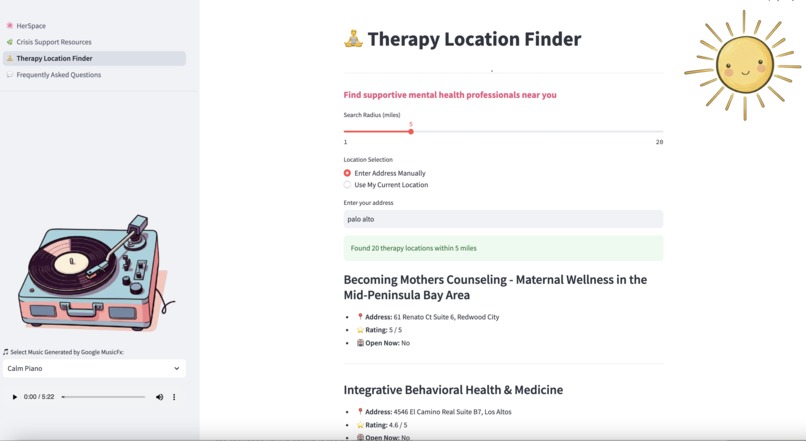
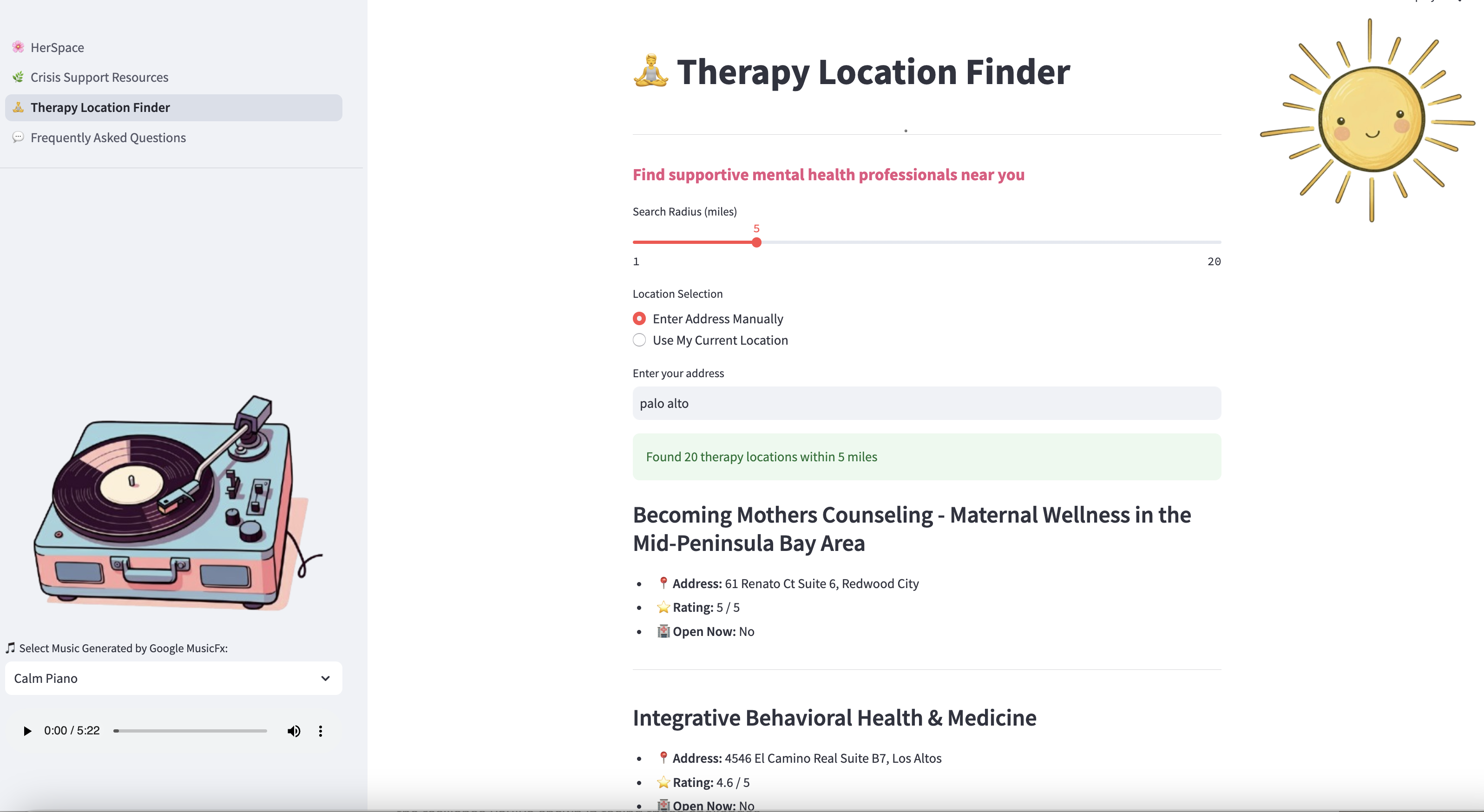
Therapy location finder page
-
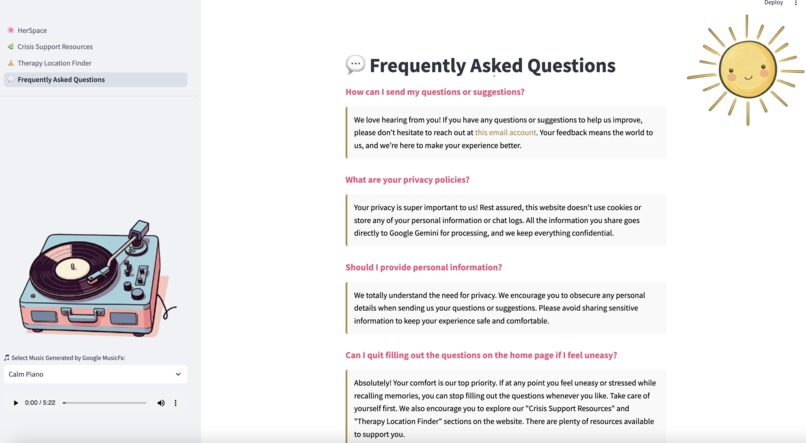
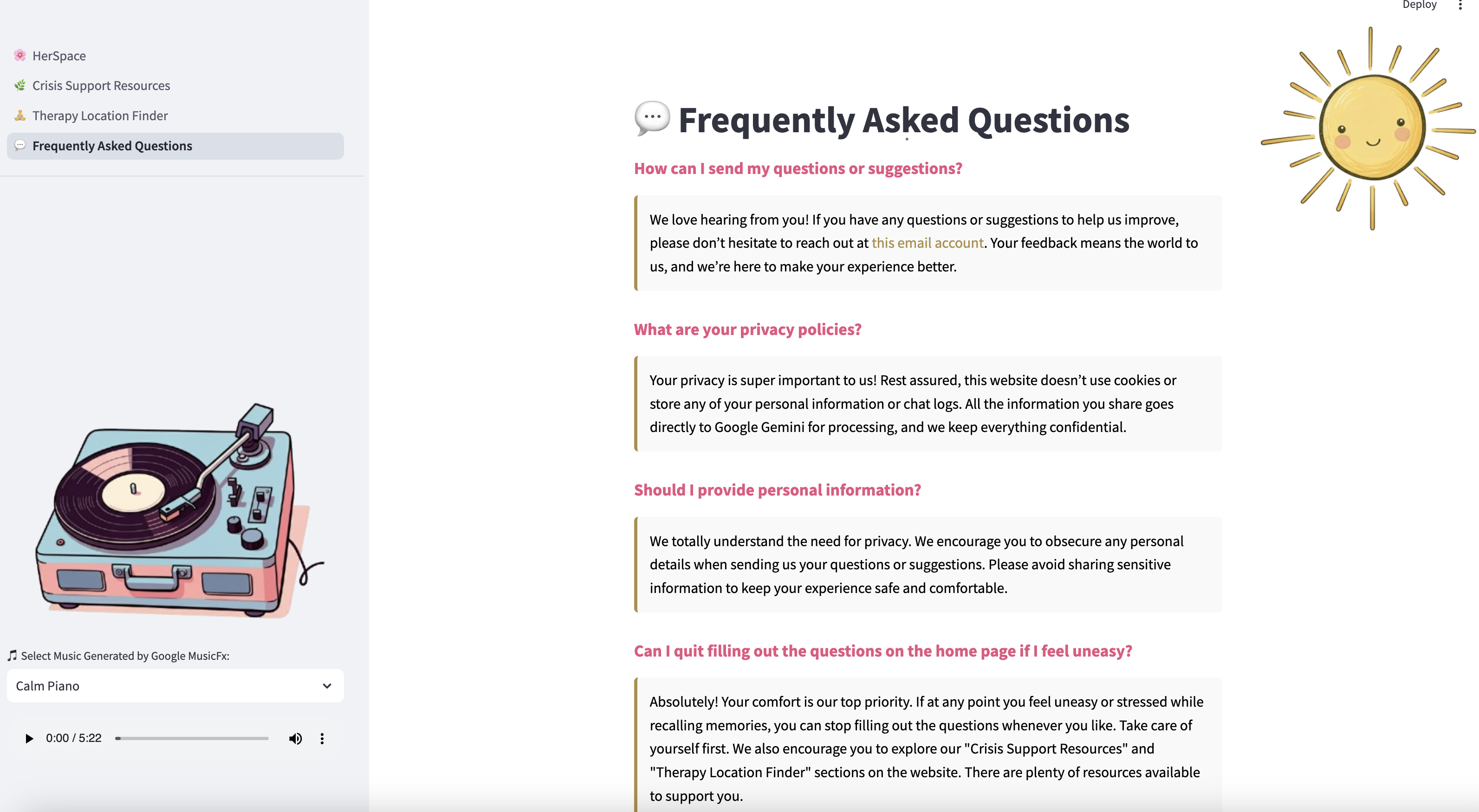
FAQ page
Inspiration
In real life, women face a range of unique challenges—from workplace barriers like the glass ceiling to the demands of pregnancy and parenting, educational inequities, and, for some, the harsh reality of domestic violence. While there are plenty of resources available online—such as videos, books, and magazines—that aim to empower women, there has been almost no app that truly understands a user’s unique background, considers her specific situation, or assesses her emotions and strengths to offer free, personalized solutions.
As a result, many women’s issues remain unspoken and unaddressed, even though early intervention and support could prevent potentially serious consequences later on. Our inspiration is to provide a proactive, supportive platform that intervenes at critical moments, helping women feel seen, understood, and equipped to navigate life’s challenges.
What It Does
This app is designed as a supportive platform that guides users through personalized, structured steps to address specific challenges and connect with resources, especially for those facing various difficulties or seeking mental health support. It offers four main pages:
🌸 Home Page
This is the central hub where users provide context for their situation and receive tailored solutions through a series of guided steps:
Welcome Step: Introduces the platform’s purpose, explains its usage, and requires an API key. Users select a concern category and describe their situation.
Emotions Step: Users identify and express their primary emotions, assess the intensity of these emotions.
Thoughts Step: Users explore their current thoughts with options to select from predefined thoughts, add custom ones, and manage their thoughts.
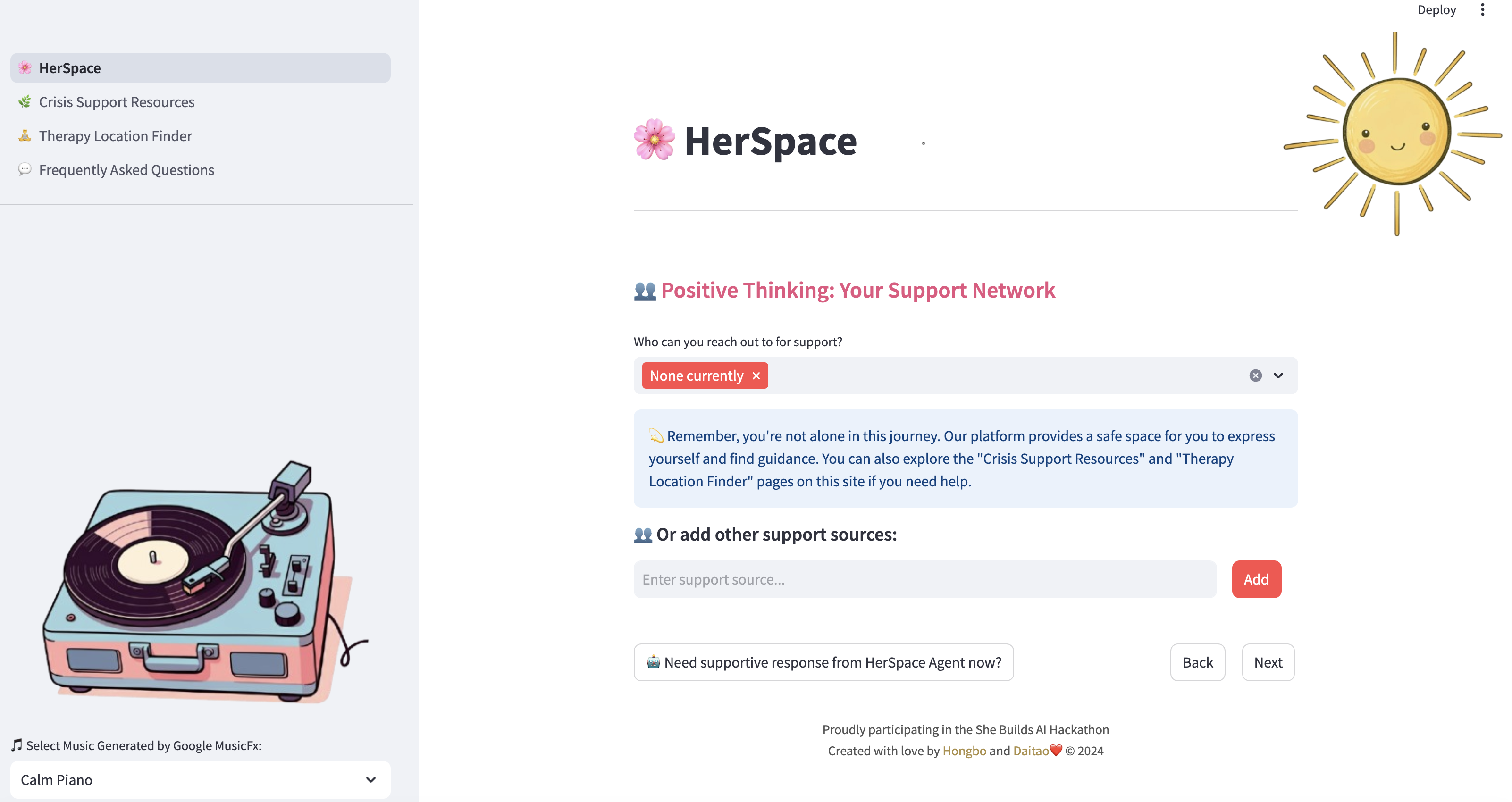
Support Step: Users identify their support network, select from predefined or custom support sources, or receive guidance if they have none.
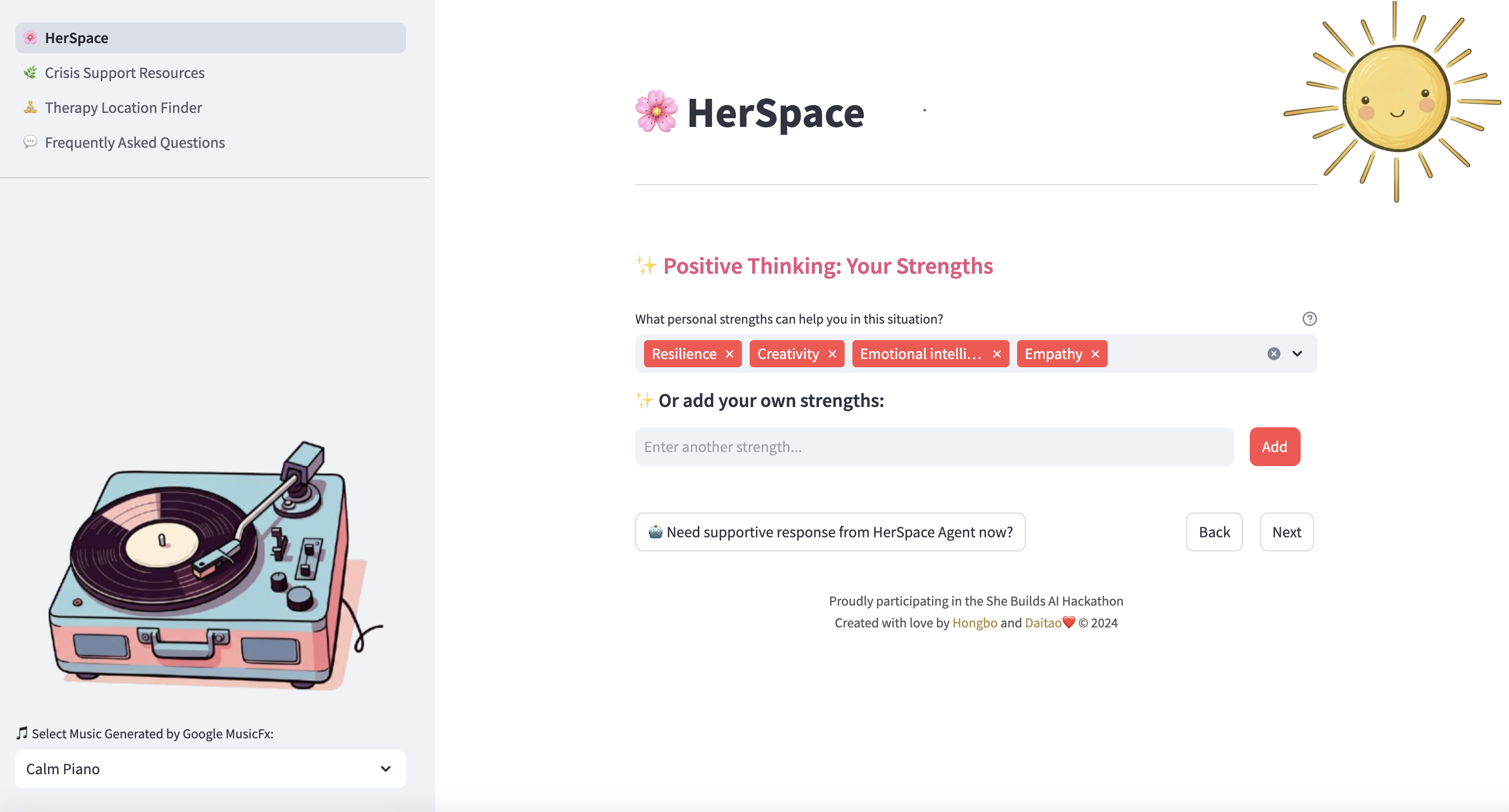
Strengths Step: This encourages users to reflect on personal strengths by selecting from predefined strengths or adding custom ones.
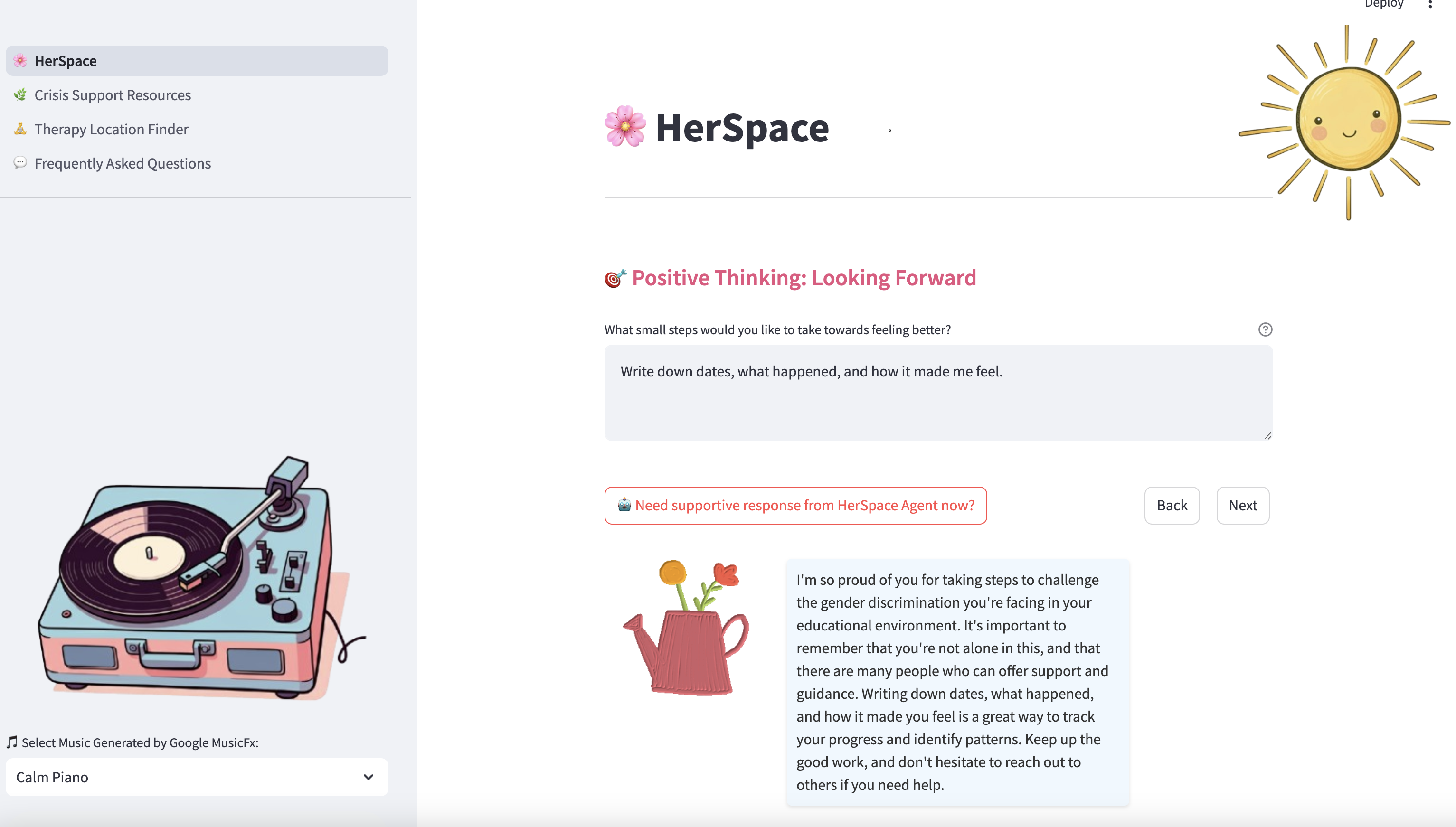
Actions Step: Here, users define personal goals, articulate desired outcomes, and plan actionable next steps.
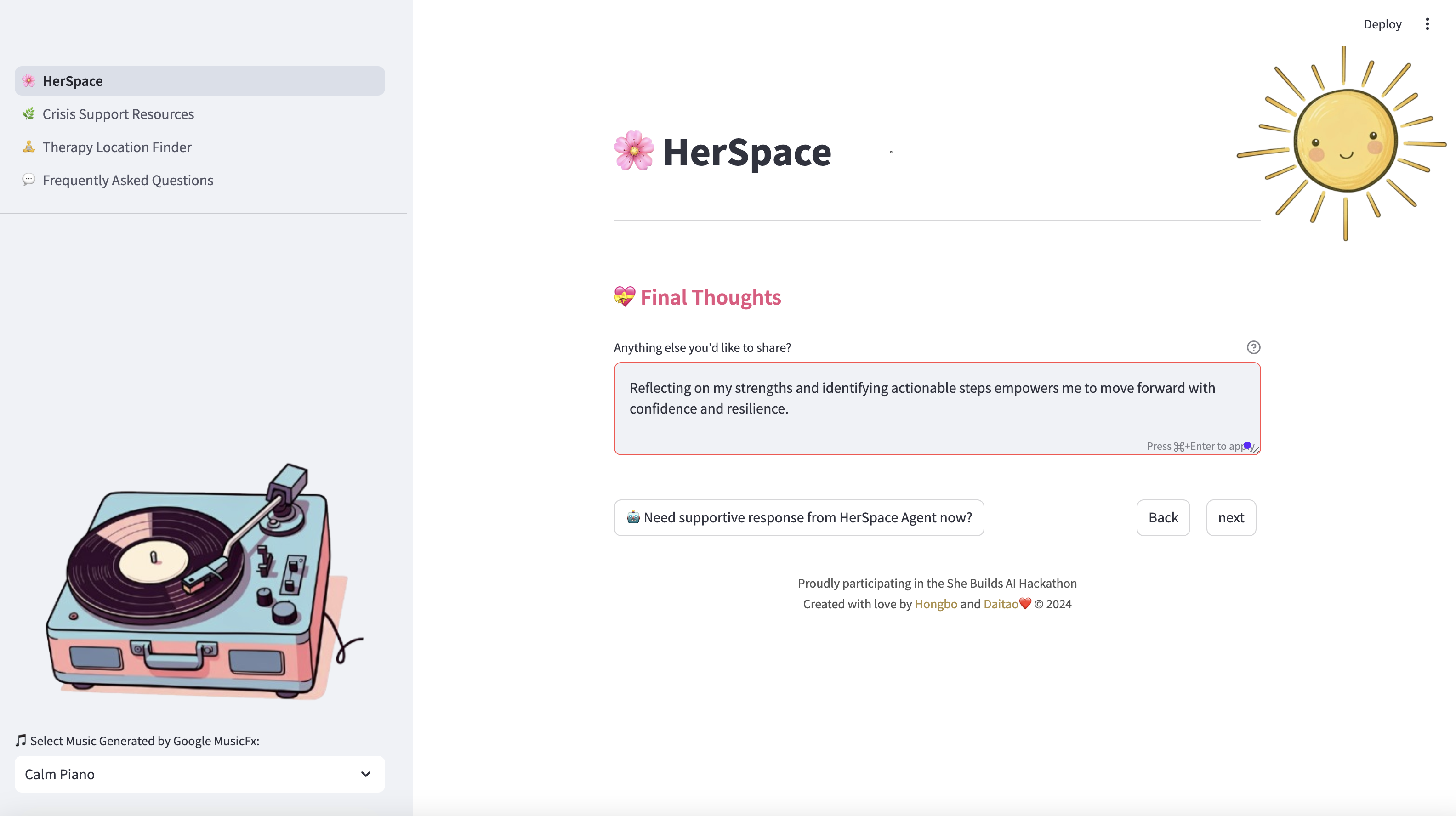
Summary Step: A comprehensive review of all input, consolidating the user’s journey to prepare for the AI-generated response.
Response Step: Provides AI-generated, personalized support. The response is divided into multi-tab insights, including validation, insights, milestones, actions, support network suggestions, growth perspective, and relevant YouTube video recommendations.
🌿 Crisis Support Resources Page
Offers immediate access to critical resources for urgent support.
🧘🏾 Therapy Location Finder
A tool that helps users locate mental health professionals nearby, making it easier to find long-term, in-person support.
💬 FAQ Page
A resource for common questions, helping users navigate the app more effectively.
This app acts as a compassionate guide and resource hub, assisting users from diverse backgrounds in exploring their situations, recognizing strengths, setting goals, and connecting with necessary support. It’s designed to empower users to navigate personal challenges independently while providing access to professional help as needed.
How We Built It
We developed this dynamic app using Streamlit, an open-source Python framework, to ensure a seamless and interactive user experience. The front-end features were implemented with HTML5 and CSS to deliver a clean and user-friendly interface.
Google Products We Used
- Google Gemini: Used as the core response generator to deliver personalized insights.
- Google MusicFx: Created relaxing soundtracks for a calming user experience.
- Google ImageFx: Generated all static images, enhancing the visual appeal of the platform.
- YouTube Data API: Provided recommended YouTube videos as additional resources.
- Google Maps API: Enabled the therapy location finder, allowing users to locate mental health professionals nearby.
Challenges We Ran Into
Choice of Language Model
Initially, we aimed to build a Retrieval-Augmented Generation (RAG) system using Google Gemini and LangChain to leverage domain-specific knowledge without the need to retrain large models. We carefully selected web content and compiled a 40-page PDF document with various solutions to issues women face. The RAG system produced highly accurate answers when the question matched content within the PDF. However, if the question varied even slightly—for example, if the user’s context was more detailed—the system struggled to respond effectively. We experimented with adjusting model parameters, such as temperature (where a temperature of 0 leads to more predictable responses and a temperature of 1 introduces greater randomness and creativity), but these adjustments did not improve the response quality. Ultimately, using Google Gemini alone provided more consistent answers. As a result, we focused on refining the prompts sent to Gemini rather than building a RAG system from scratch.
Designing the User Interaction Flow
Our first design was straightforward: users would enter their challenges, and the AI would respond. But we quickly realized that this approach led to vague, overly broad answers—too general to be truly helpful. The problem wasn’t just with the responses; users’ inputs were often too vague as well. To make the experience more meaningful, we restructured the flow, adding questions that prompt users to explore their emotions, thoughts, and strengths, as well as their support networks and actionable steps they could consider. This more guided approach helps the AI give responses that feel relevant and personalized.
We also understood that some users might share deeply unpleasant experiences that could bring up painful memories. To address this, we added a “Need Supportive Response from HerSpace Agent Now” button at every step, letting users reach out for emotional support right when they need it most.
Accomplishments that We're Proud of
Terms of Use Page: We created a Terms of Use page to help users understand the limitations of AI-generated solutions and clarify their responsibilities in using this guidance.
Supplemental Support Tabs: In addition to AI-generated solutions, we added a Recommended YouTube Videos tab, a Crisis Support Resource page, and a beautifully designed Therapy Location Finder page (which helps users locate the nearest therapy services). These features encourage users to seek professional help when needed, providing a well-rounded support system.
Thoughtfully Designed User Interaction Flow: We invested significant effort into designing an intuitive, visually appealing interface that supports users at every step. From timely encouragement to empathetic, positive framing questions, we aimed to soothe any emotional fluctuations users might experience during interactions, guiding them to reflect on their strengths, resources, and actionable steps.
Beautifully Designed Personalized Solutions Page: The final personalized solutions page is both aesthetically pleasing and thoughtfully structured, offering users a visually rewarding and impactful conclusion to their journey.
What We Learned
As engineers, we used to focus primarily on website implementation and advanced models. However, in this project, we realized that what’s even more important is designing the user interaction flow and truly standing in the shoes of users to analyze their experience throughout the interaction.
What's Next for HerSpace
- Collect more data and continue exploring the implementation of a RAG model.
- Gather user feedback to improve the website.


Log in or sign up for Devpost to join the conversation.