-
-
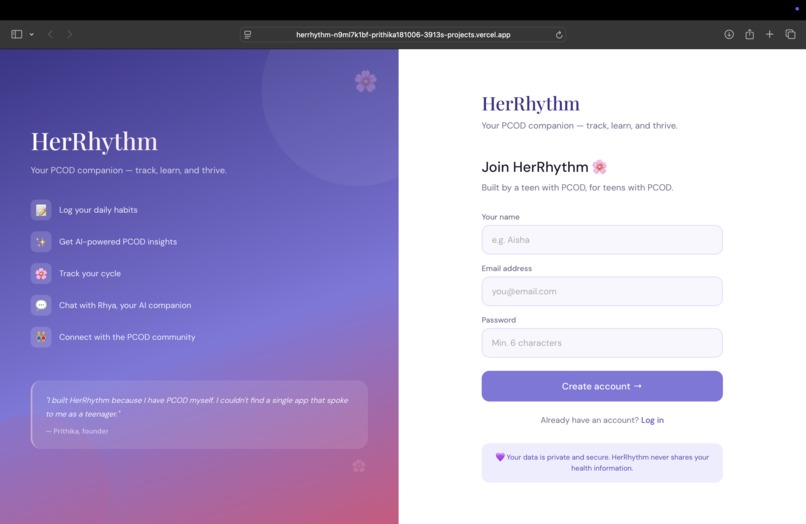
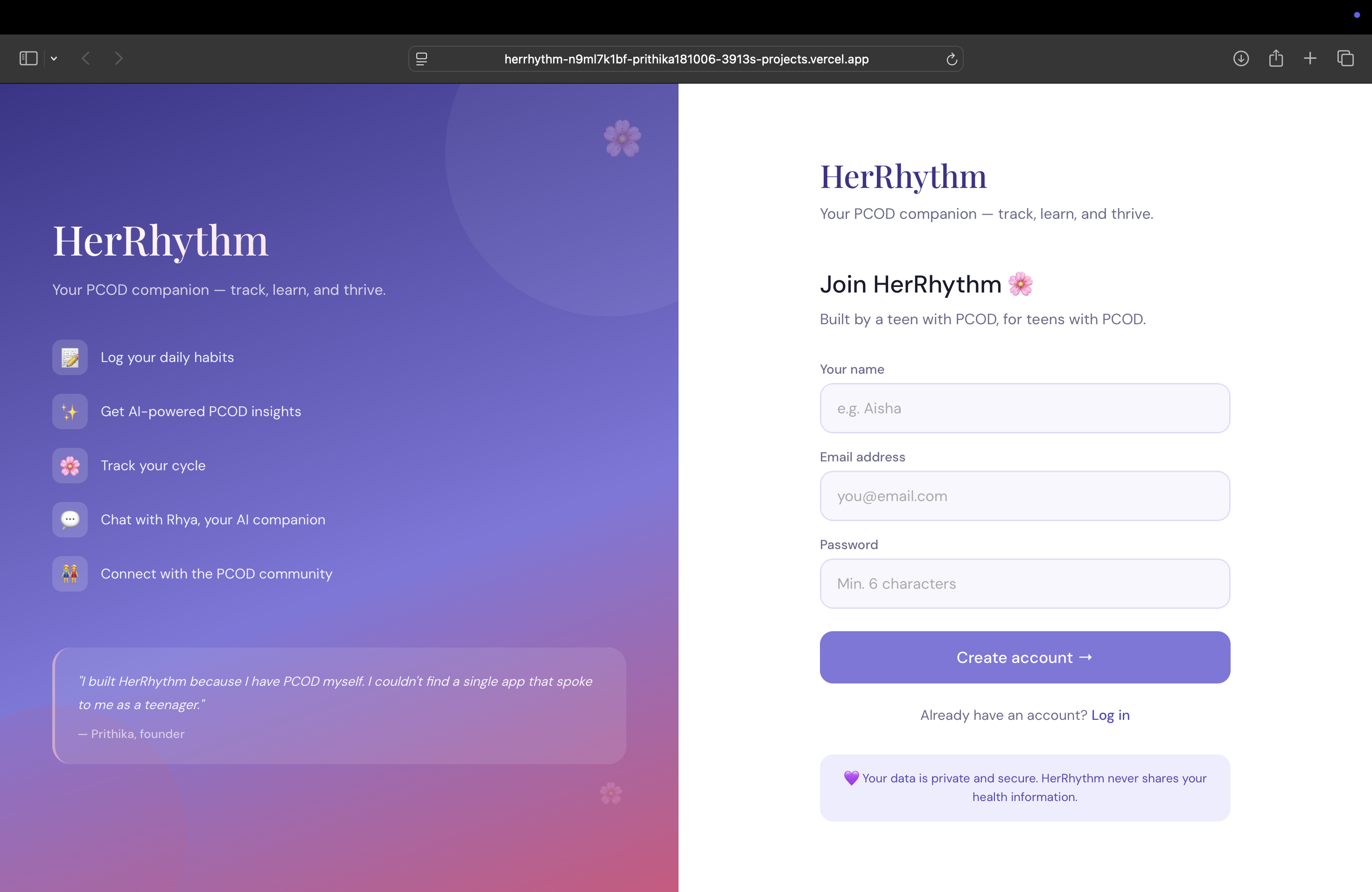
Sign Up Page
-
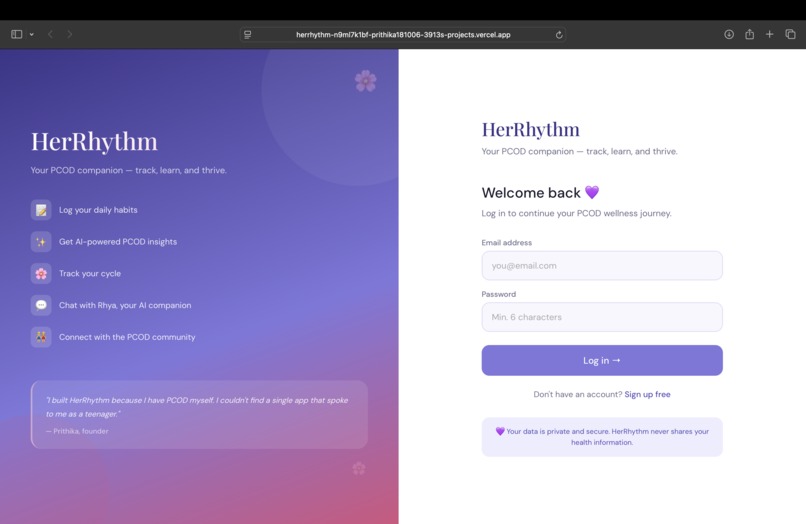
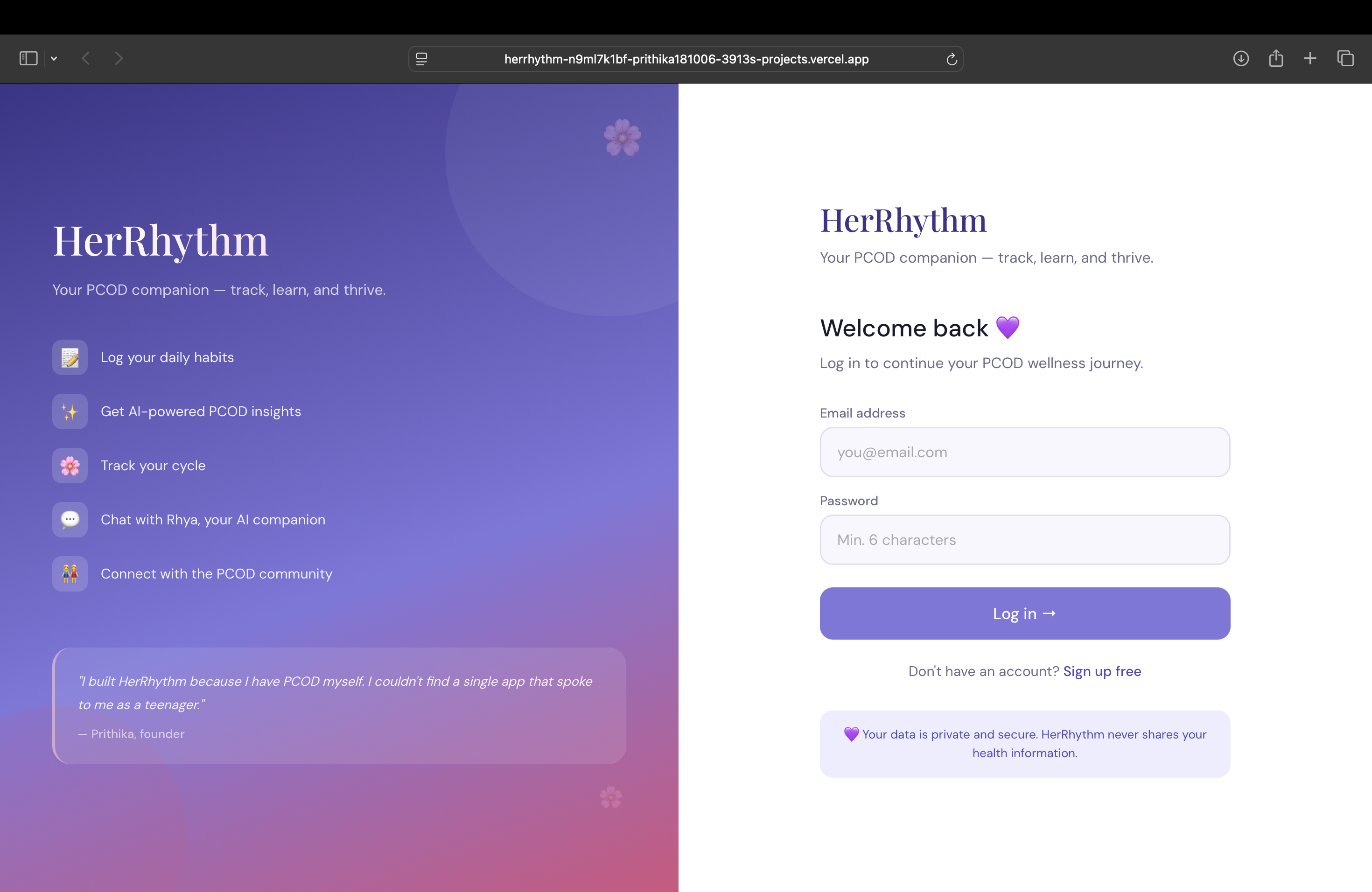
Login Page
-
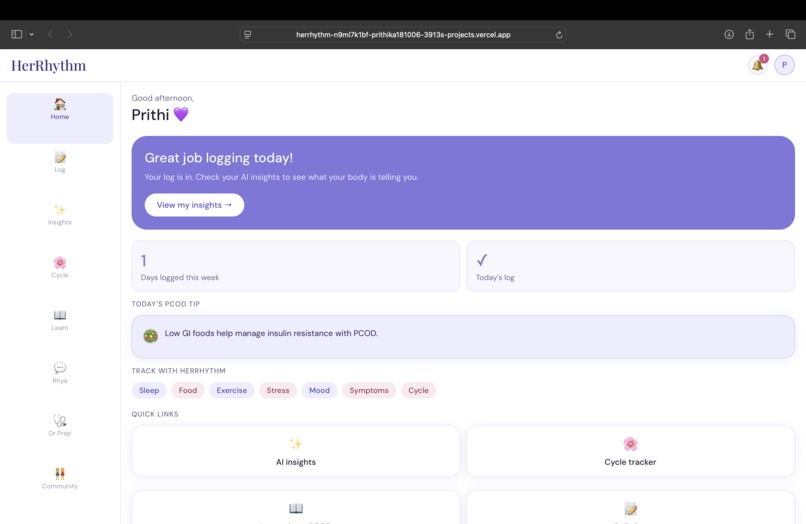
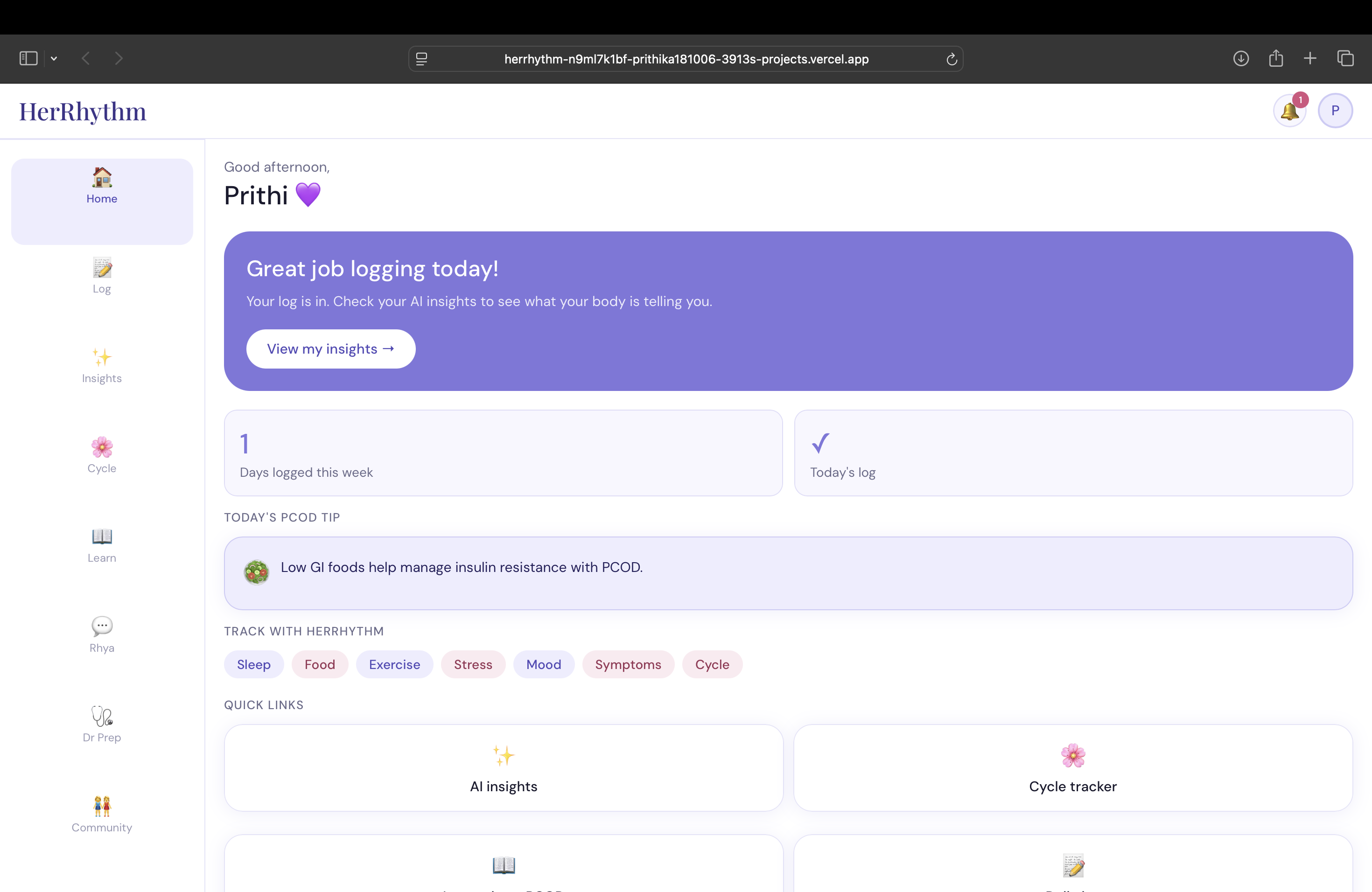
Home Page
-
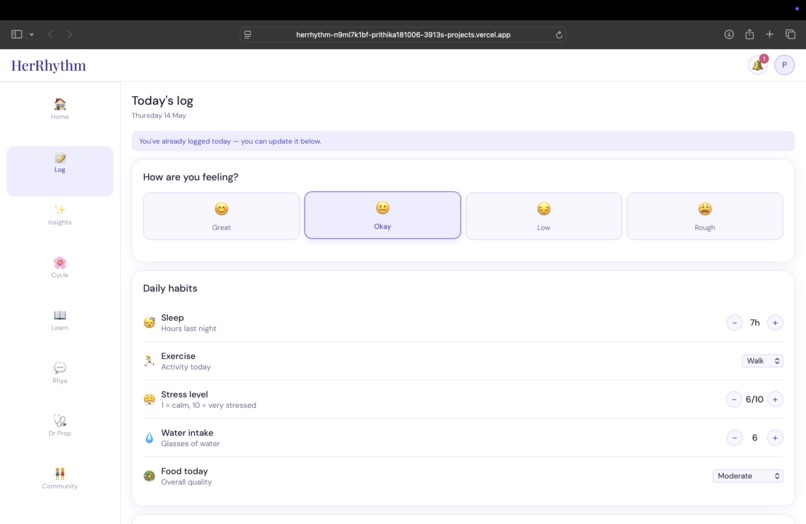
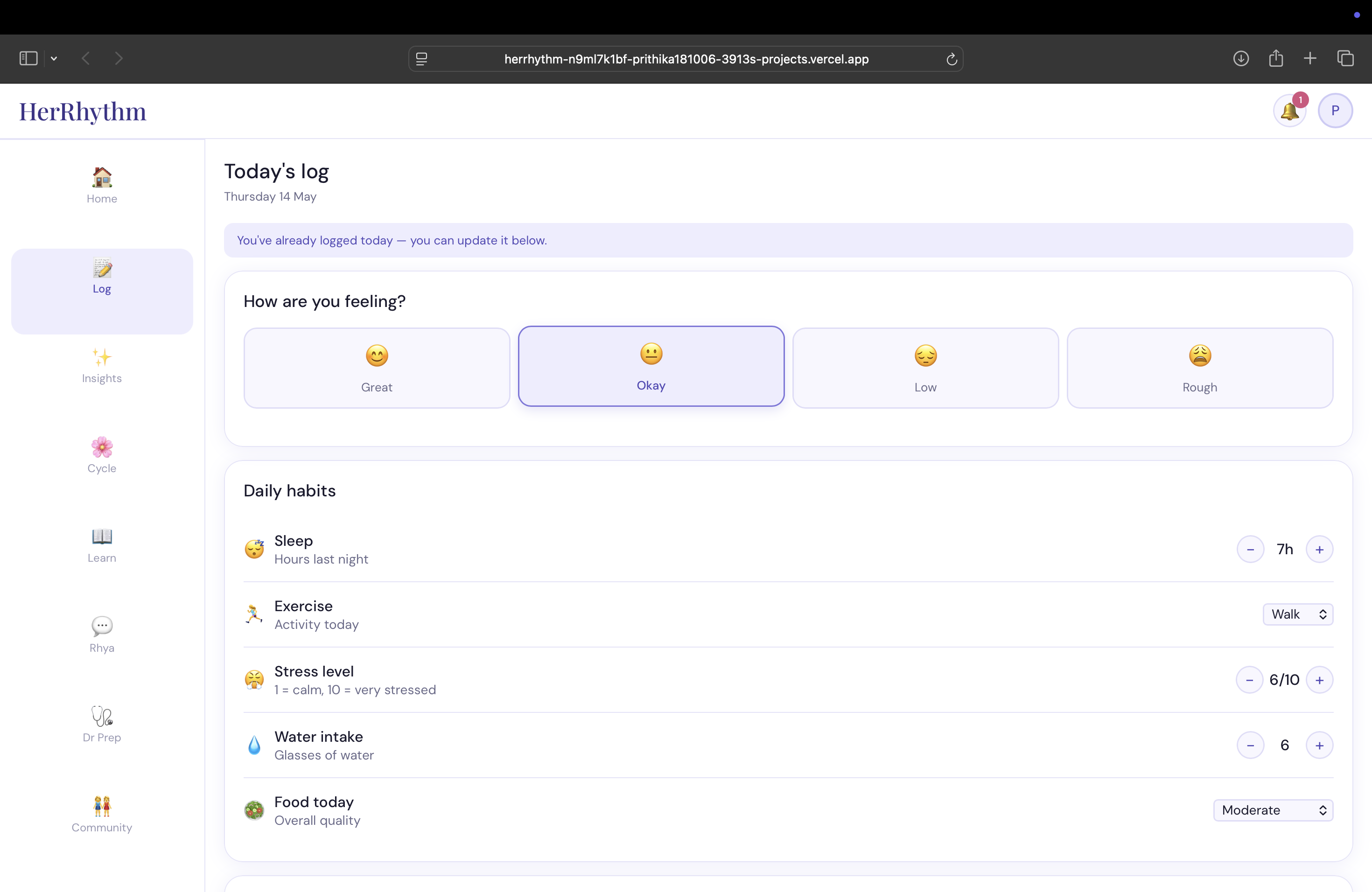
Log Page
-
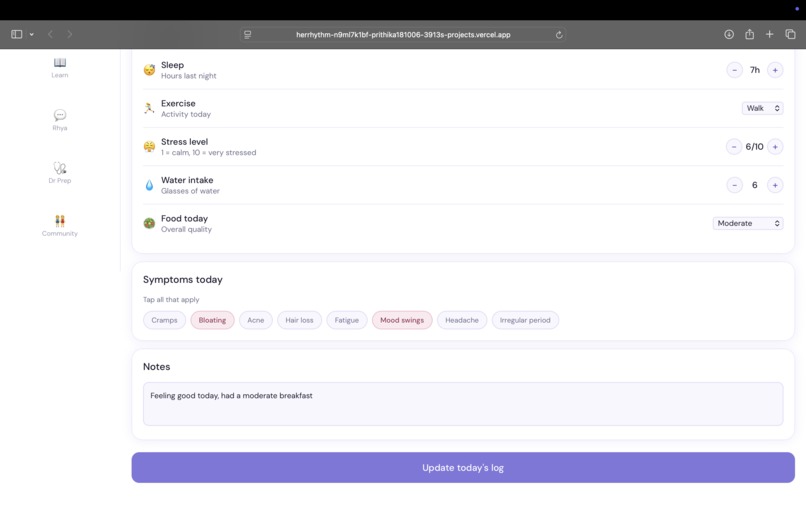
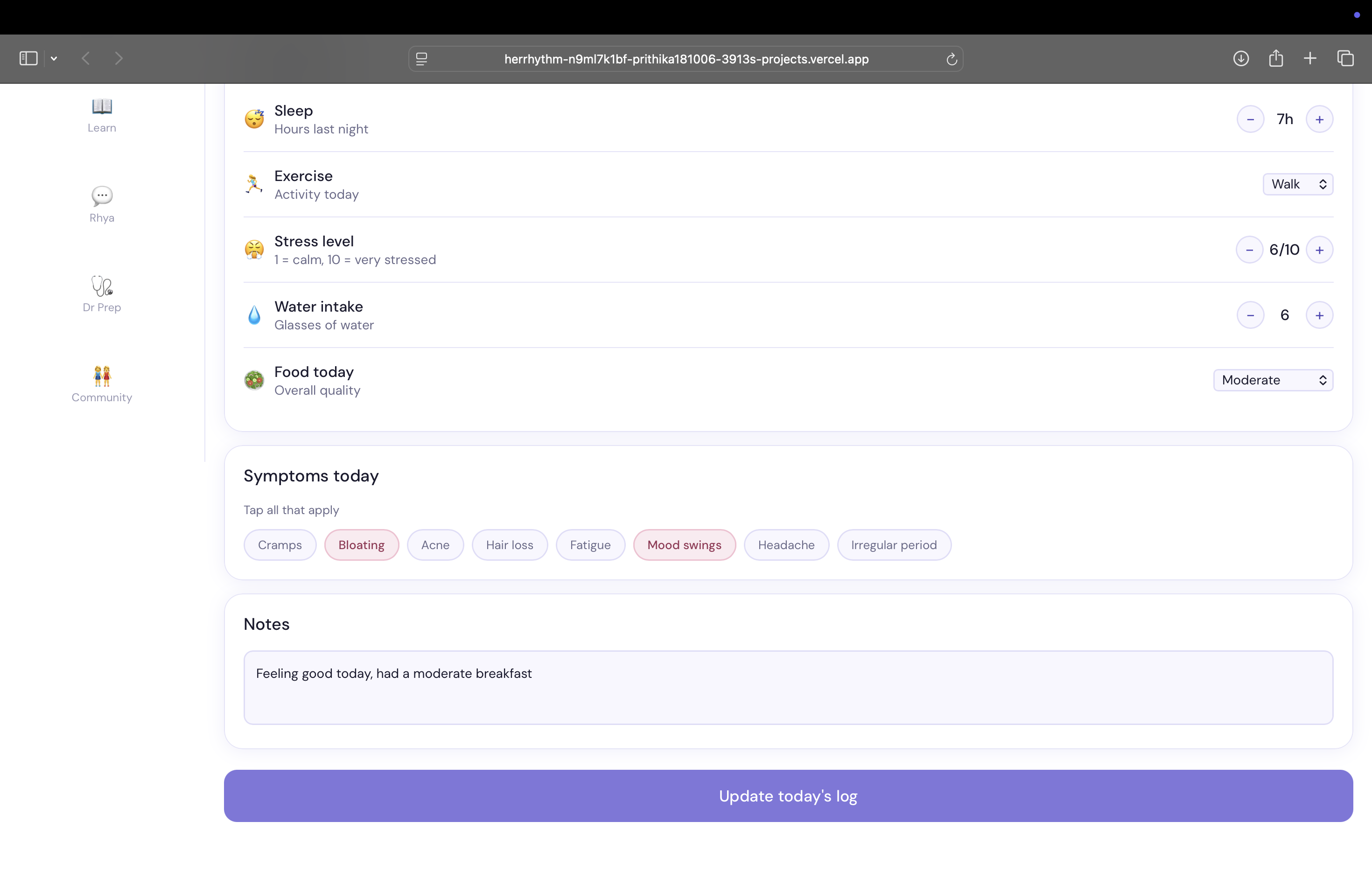
Log Page Continuous
-
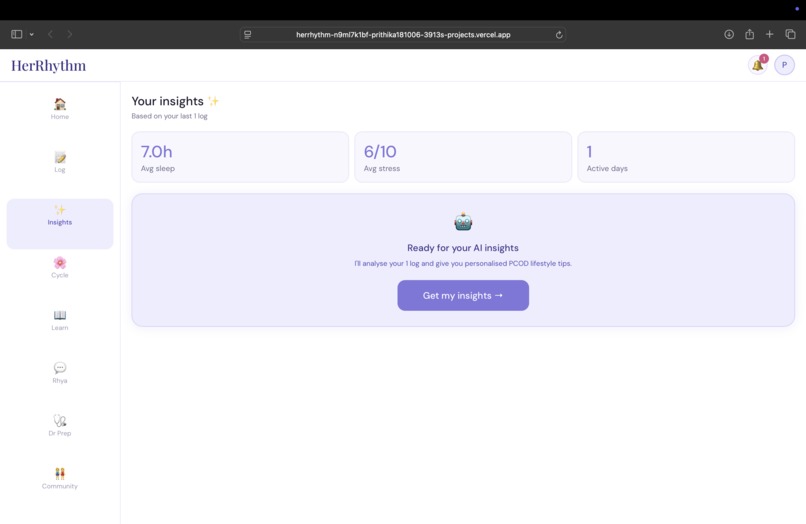
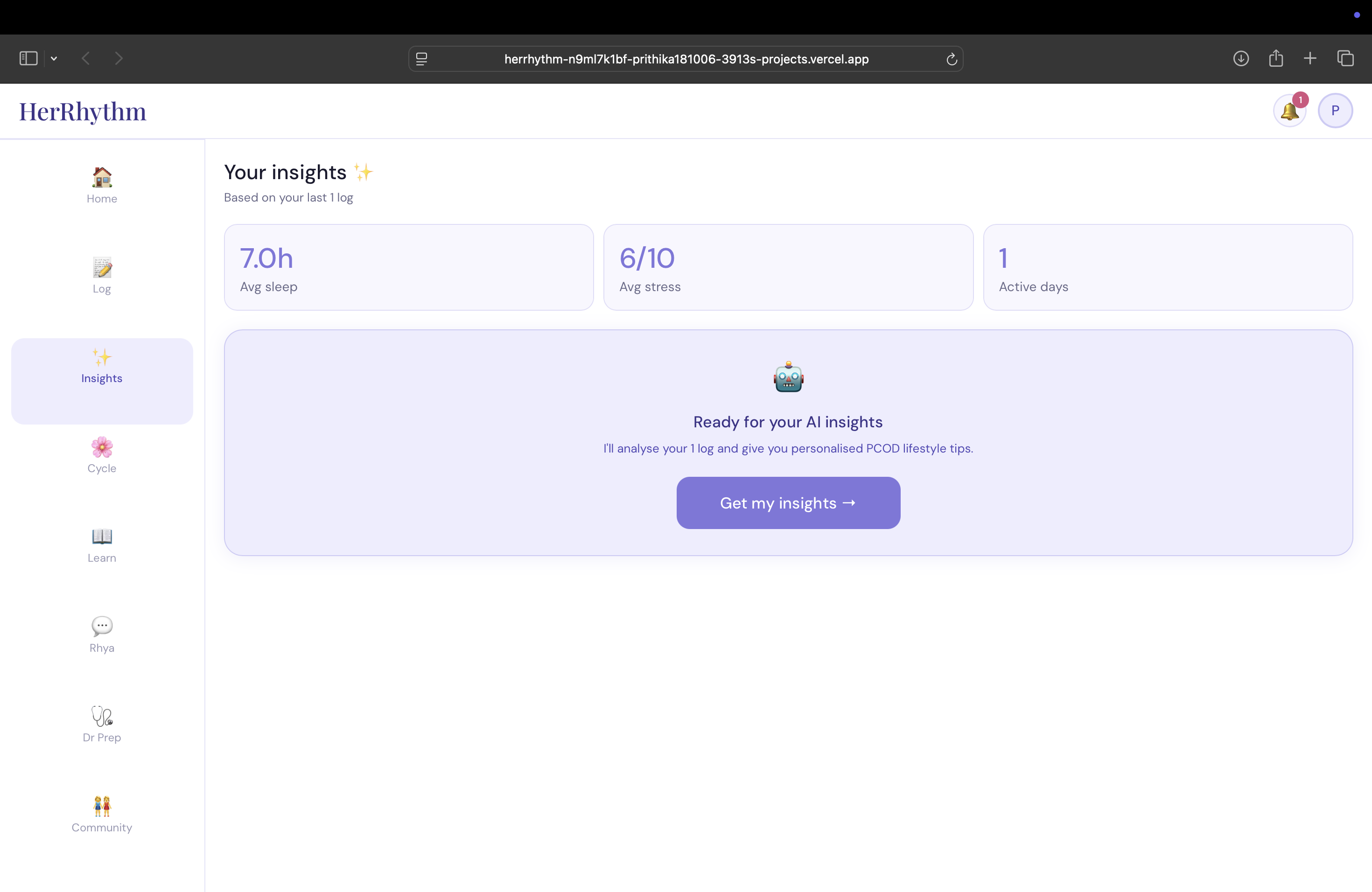
AI Insights
-
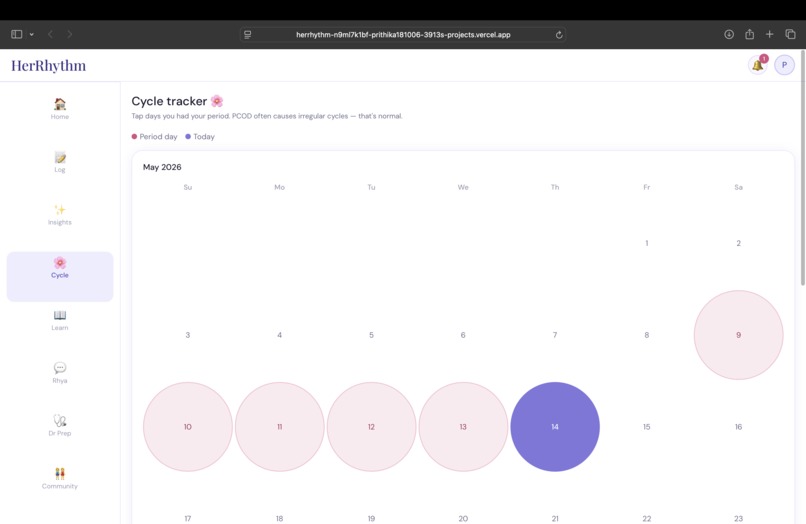
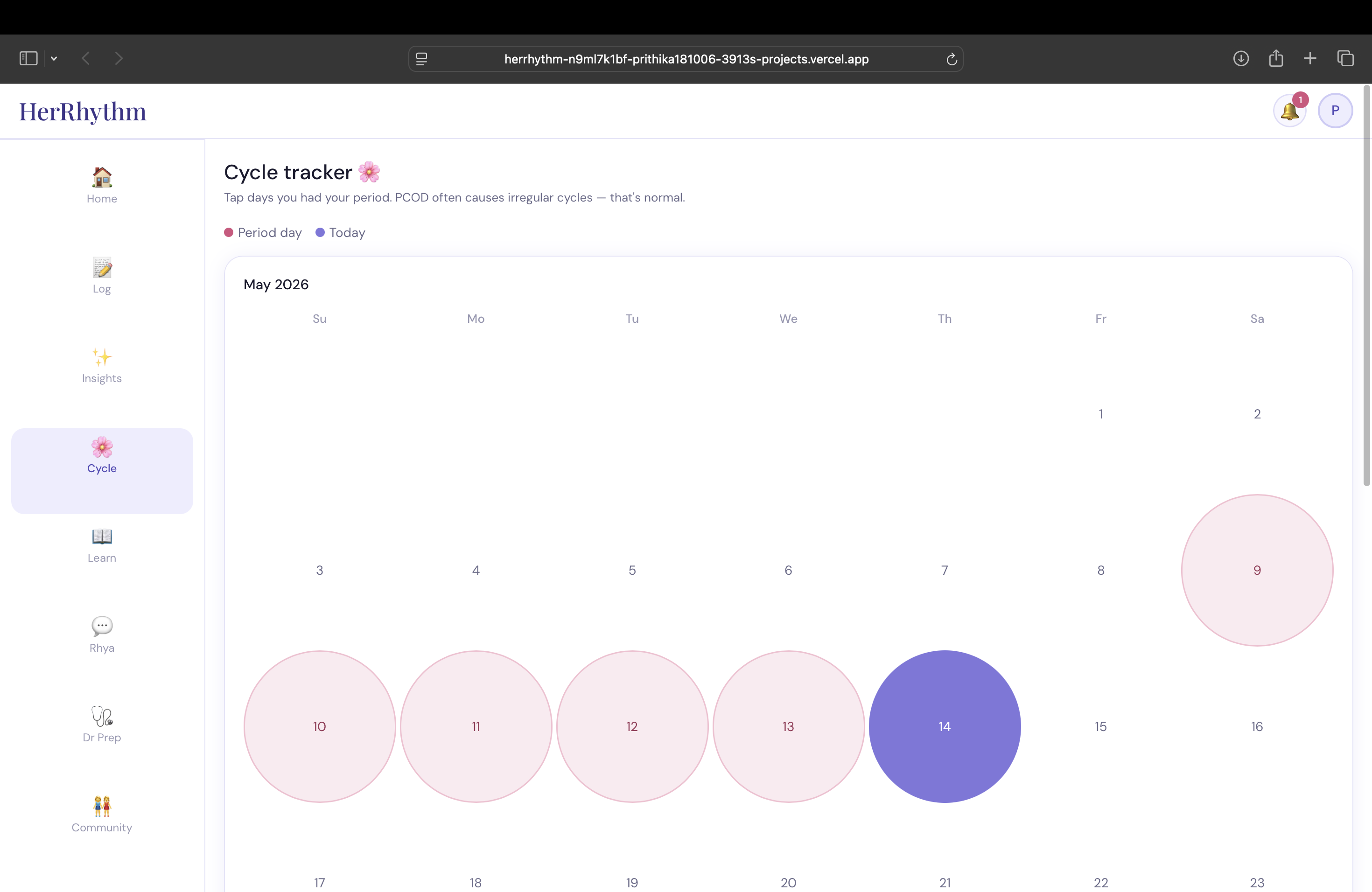
Cycle Tracker
-
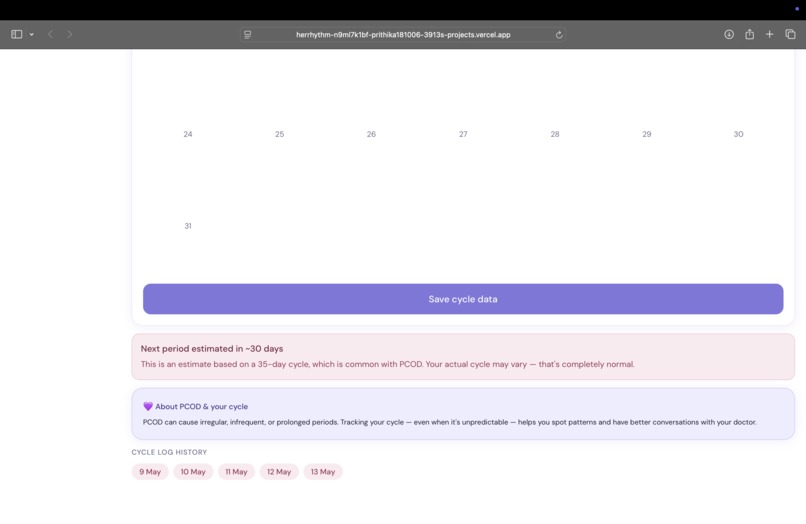
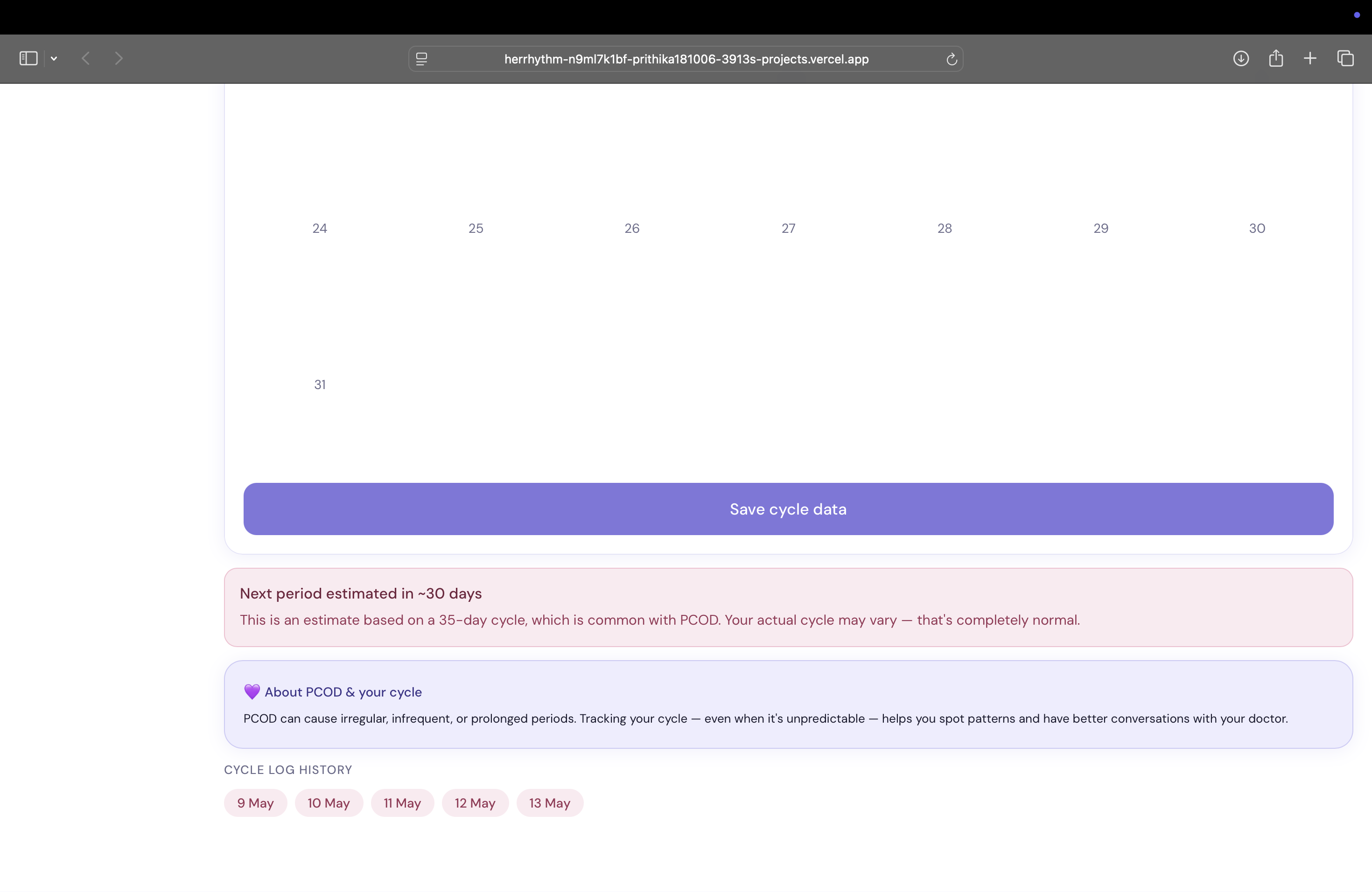
Cycle Tracker Continuous
-
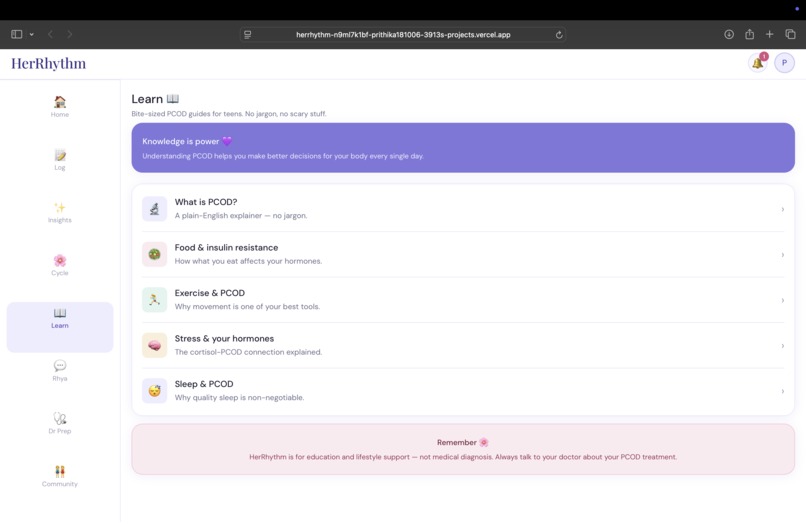
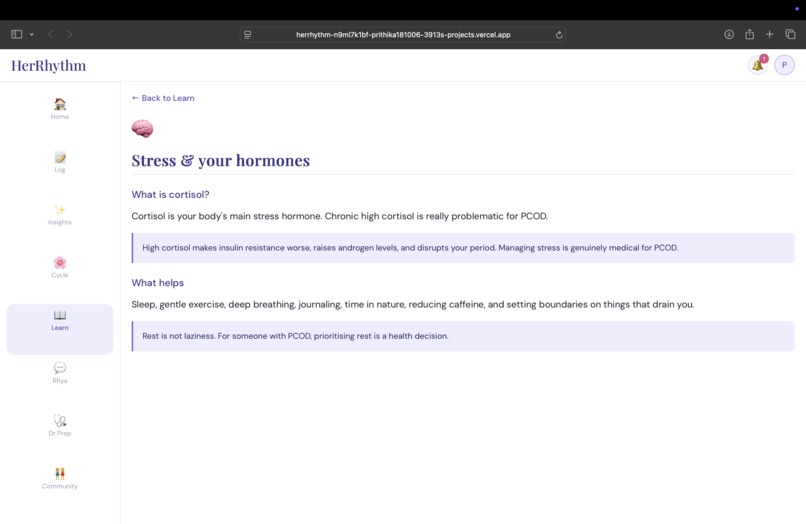
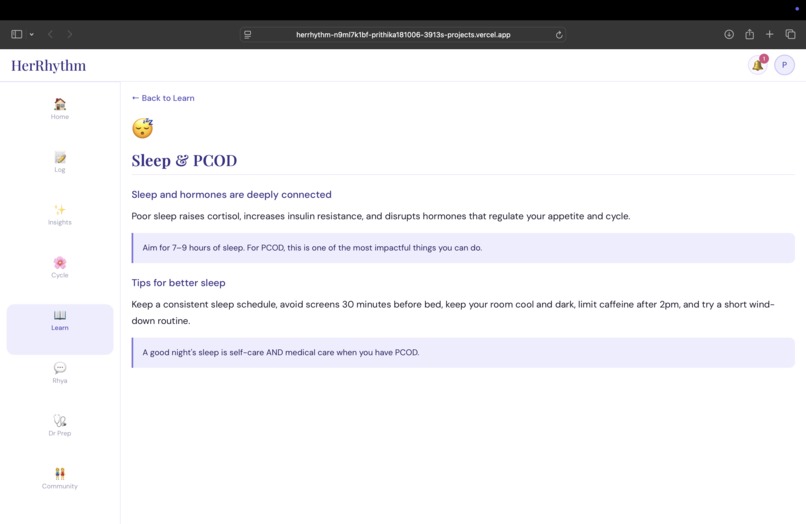
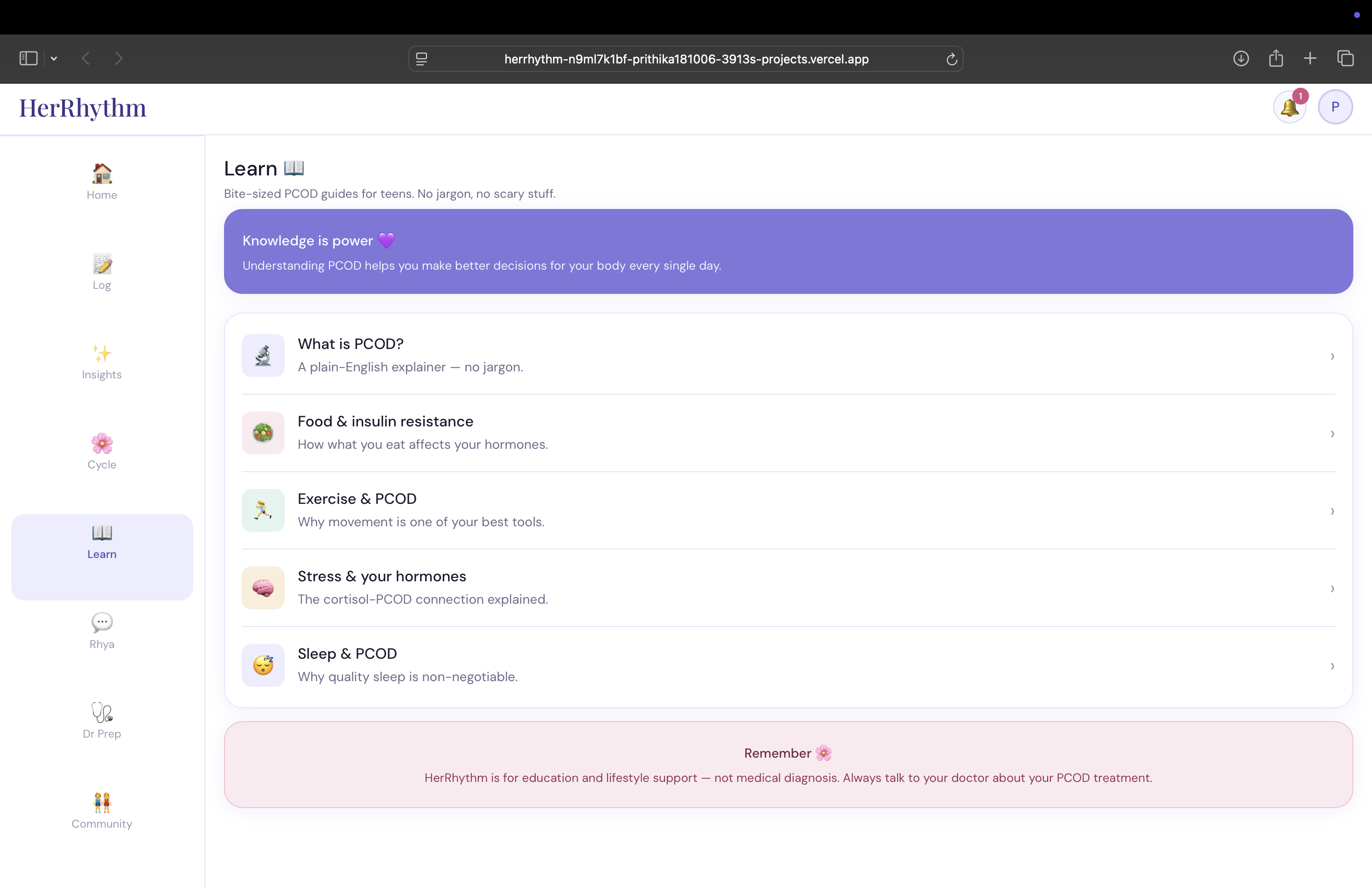
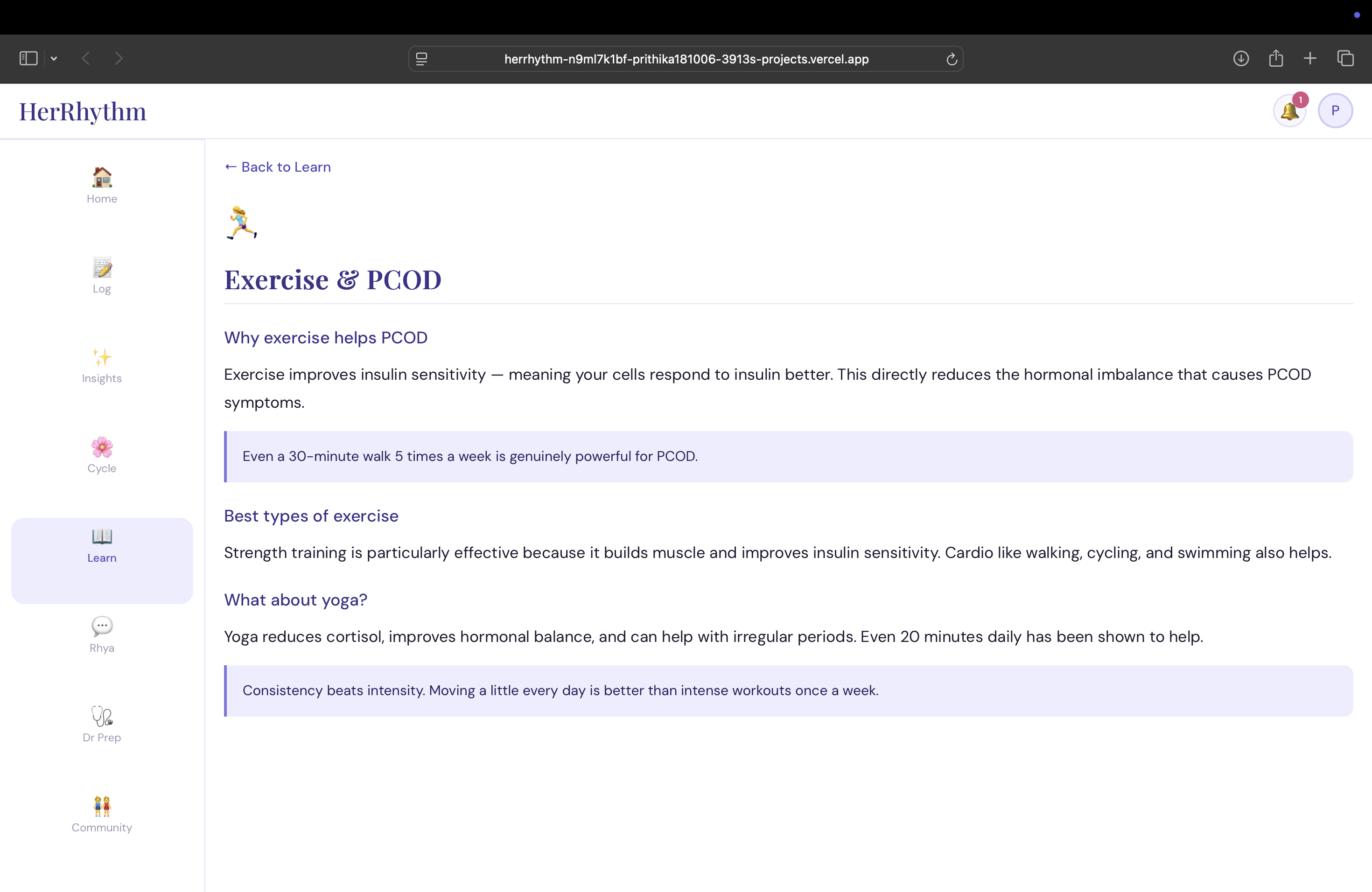
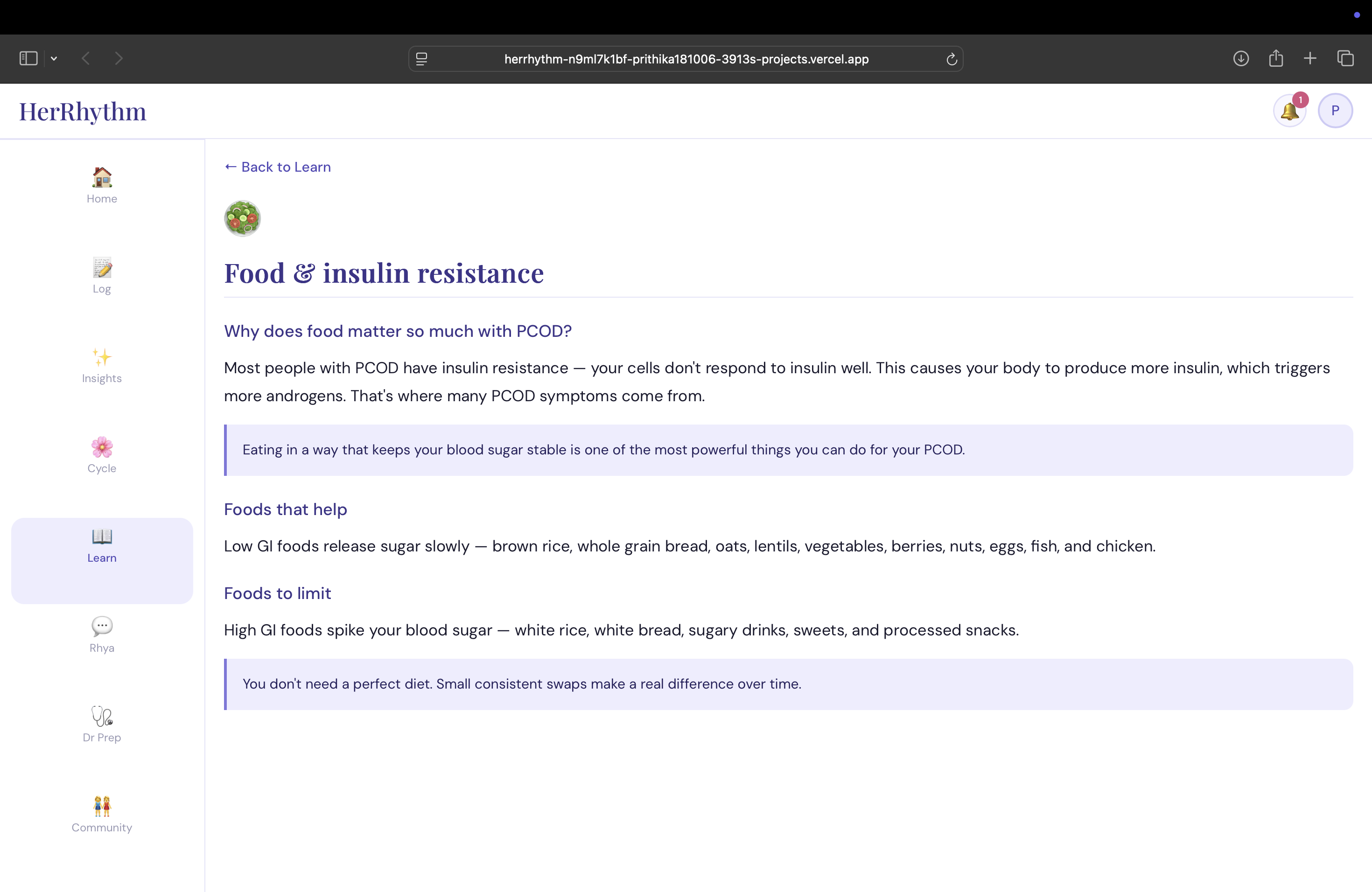
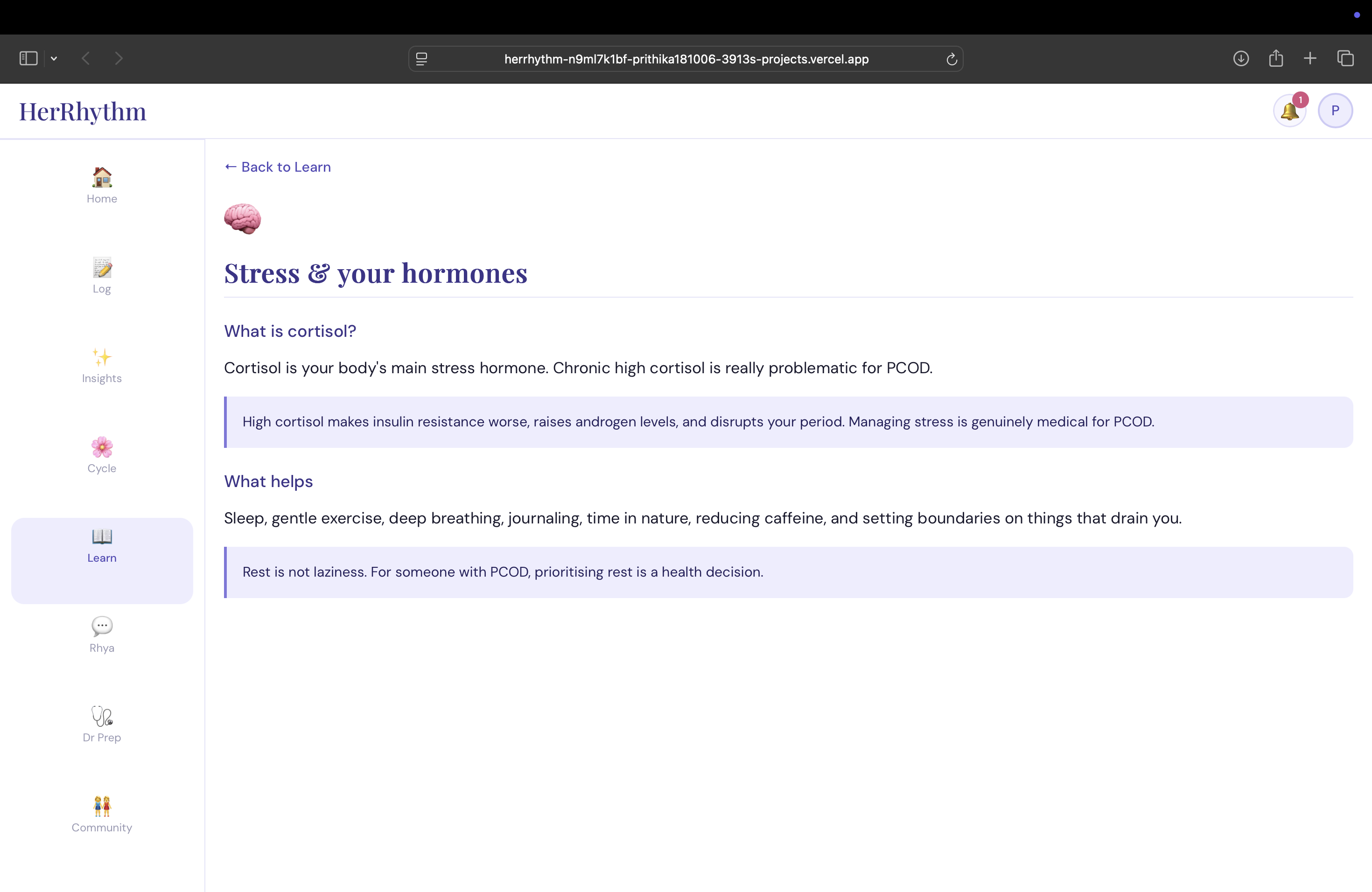
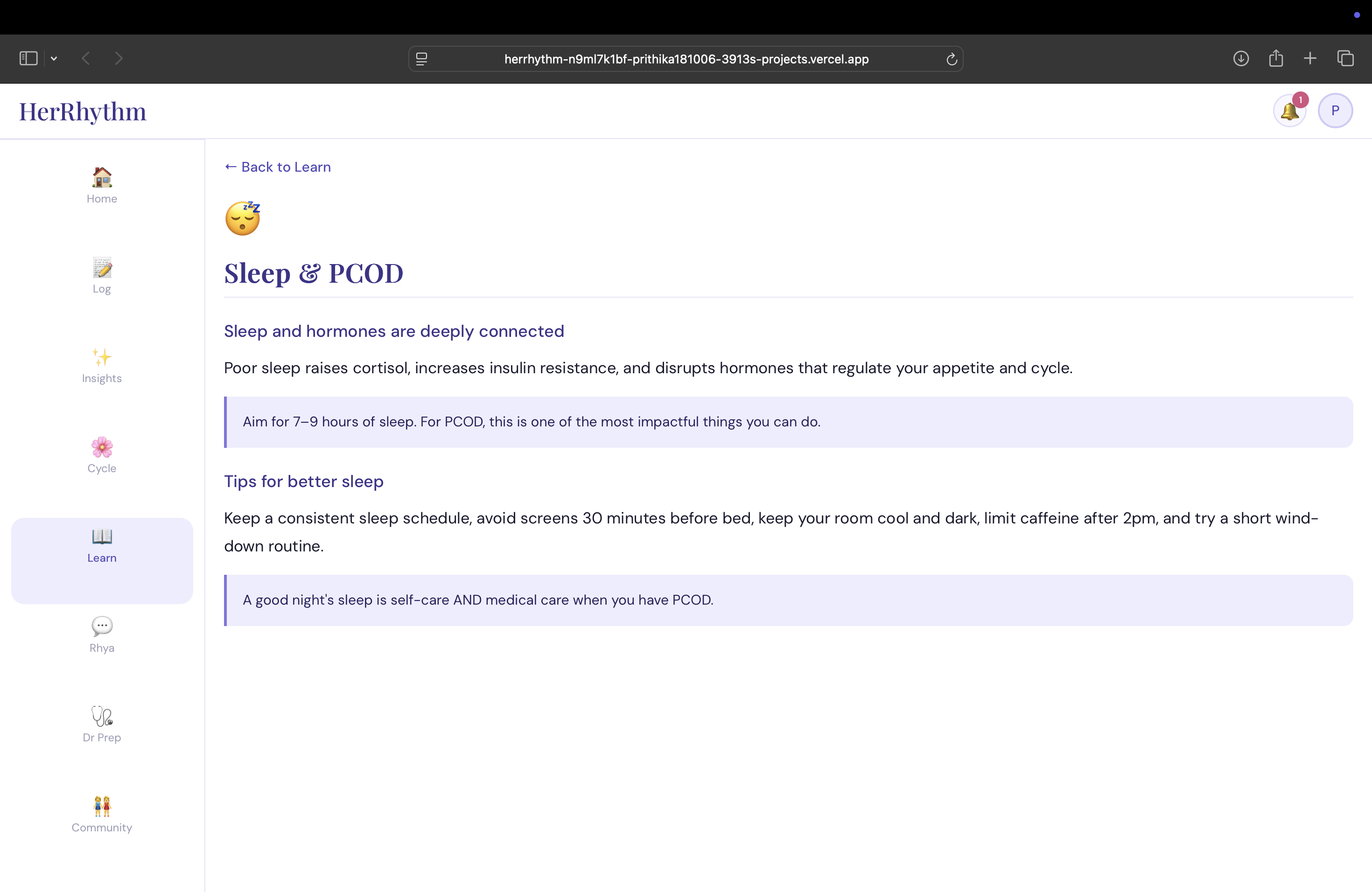
Learn Page
-
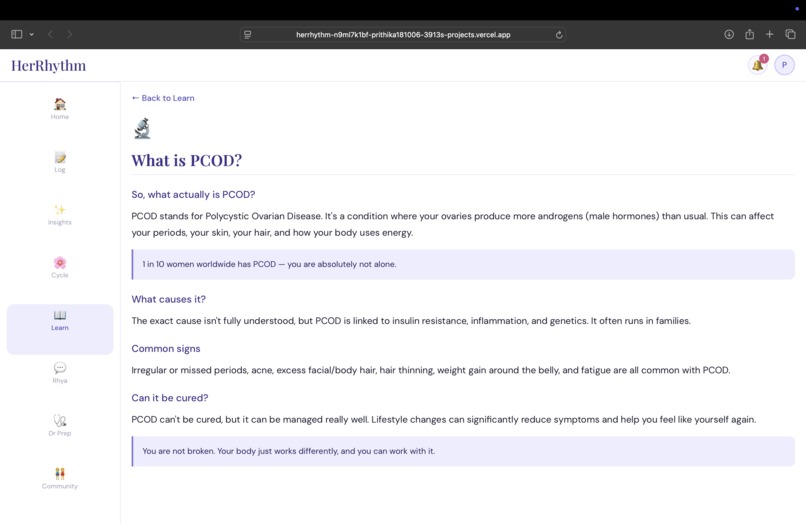
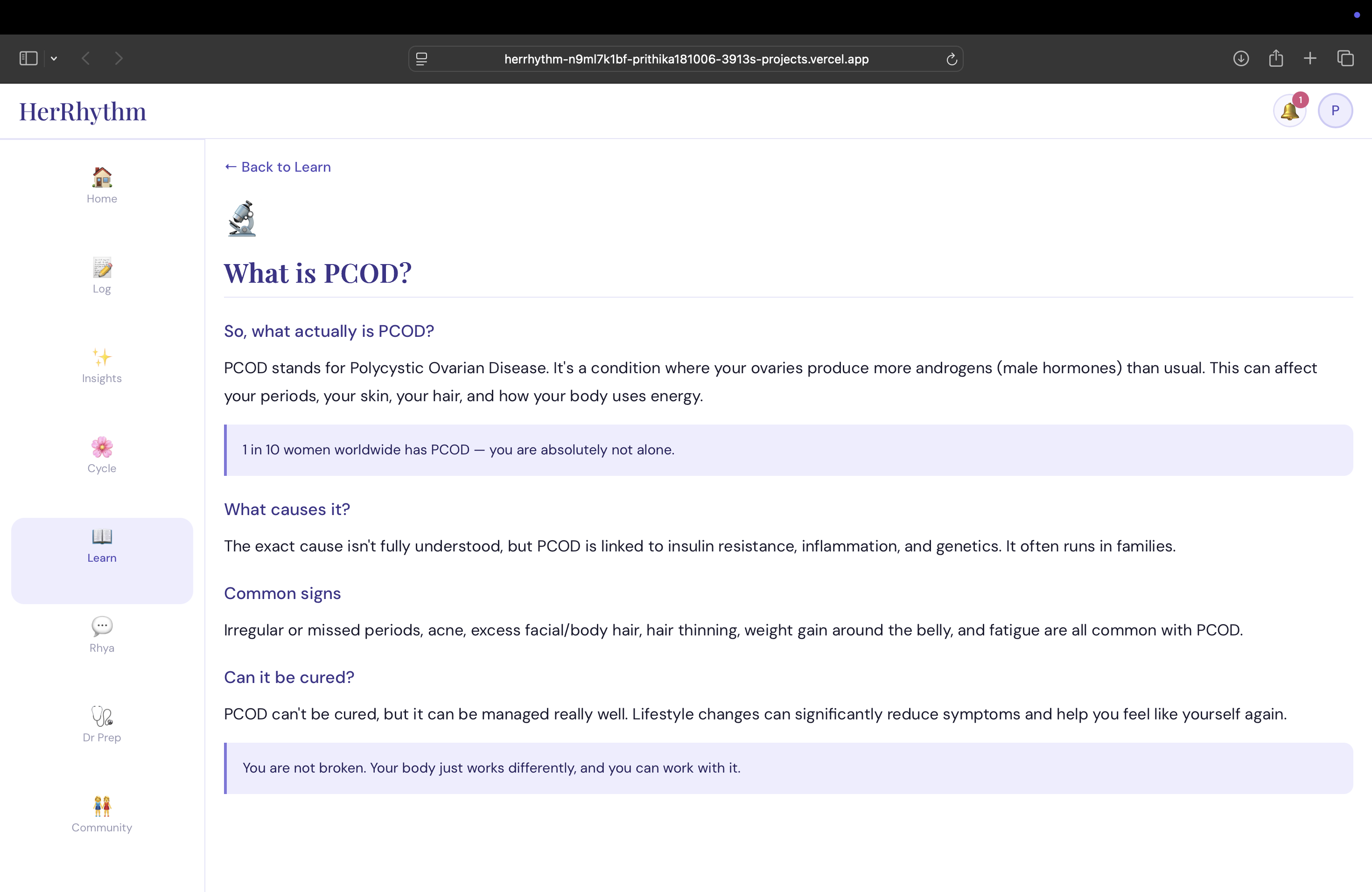
-
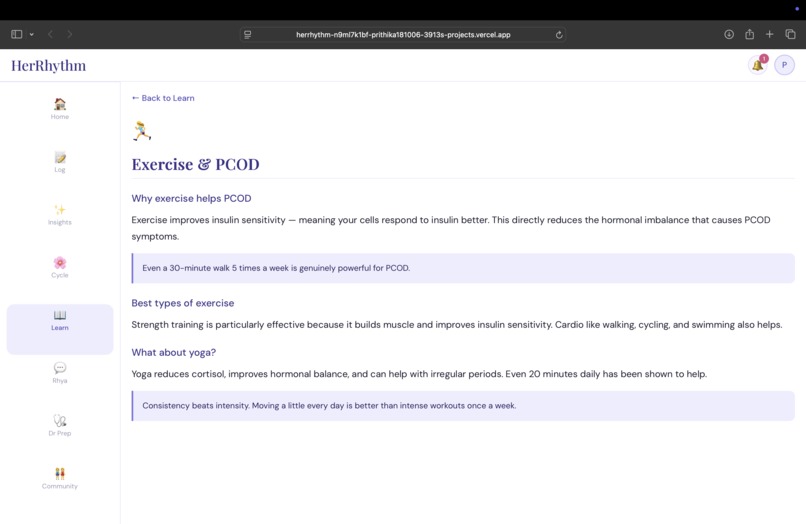
-
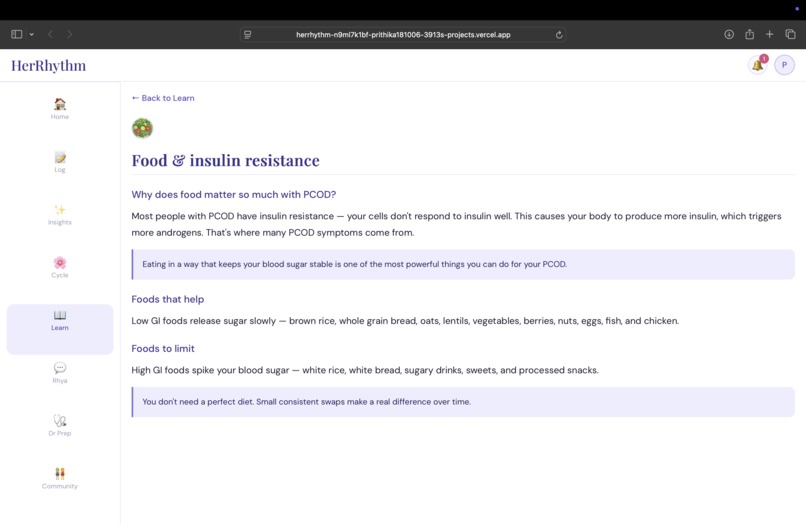
-
-
-
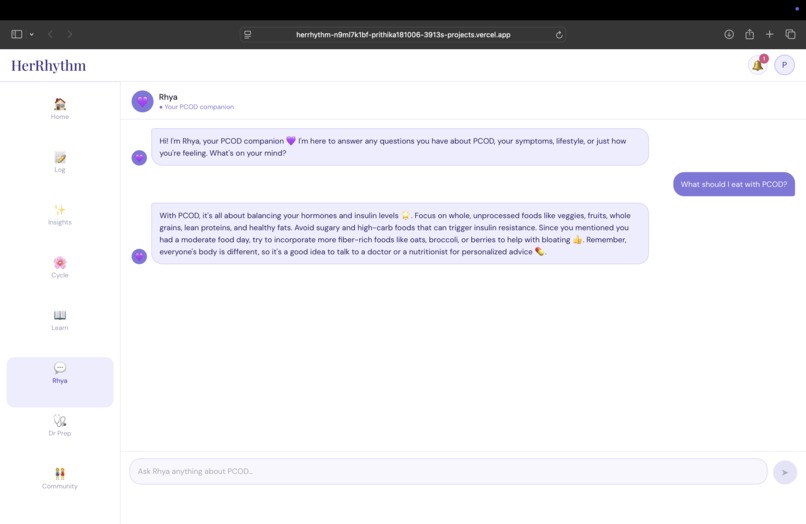
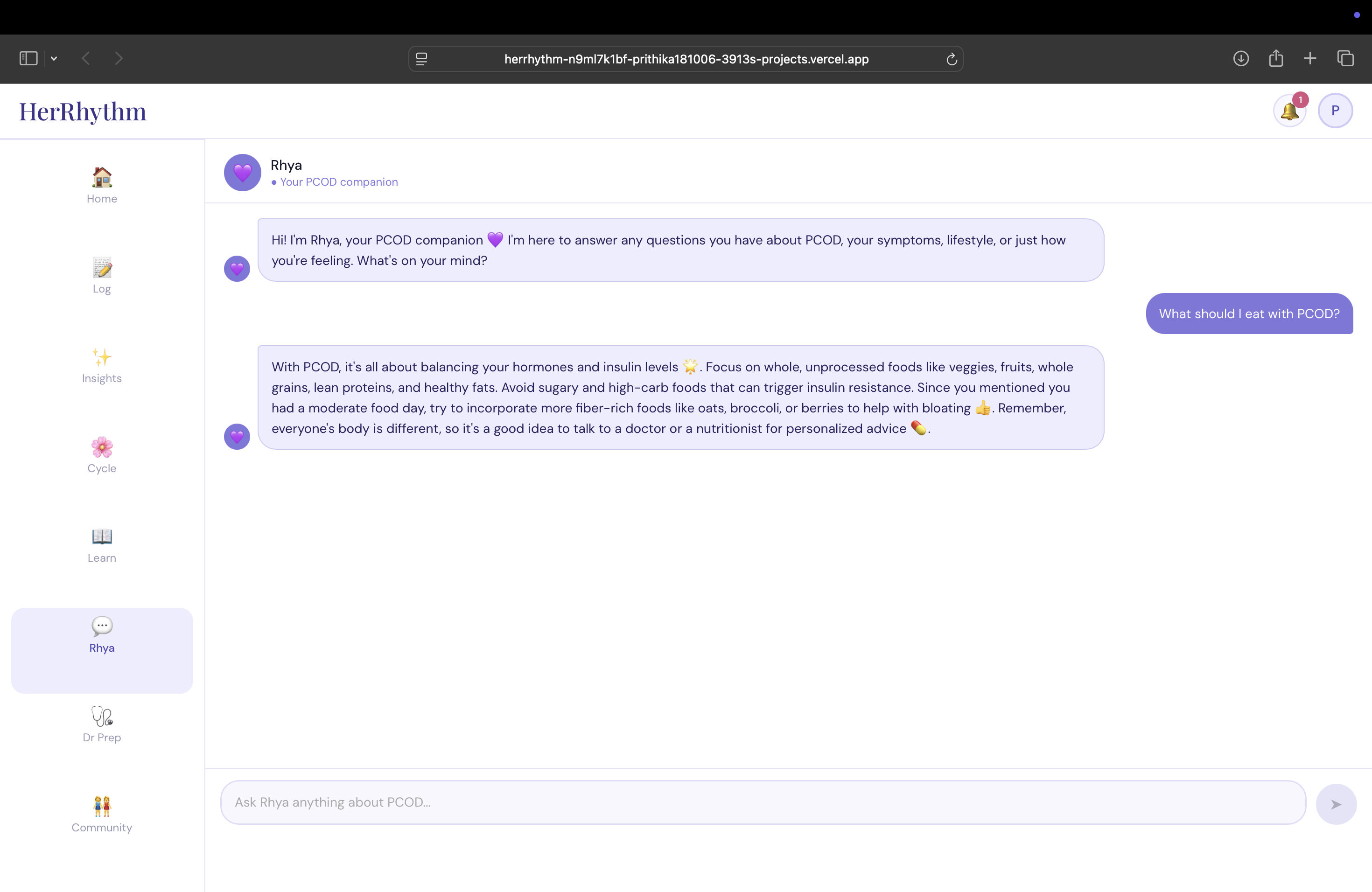
Rhya Chatbot
-
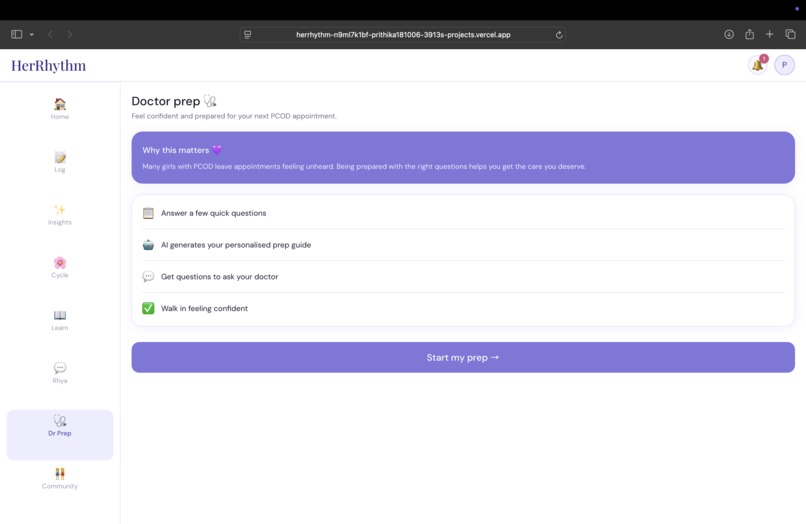
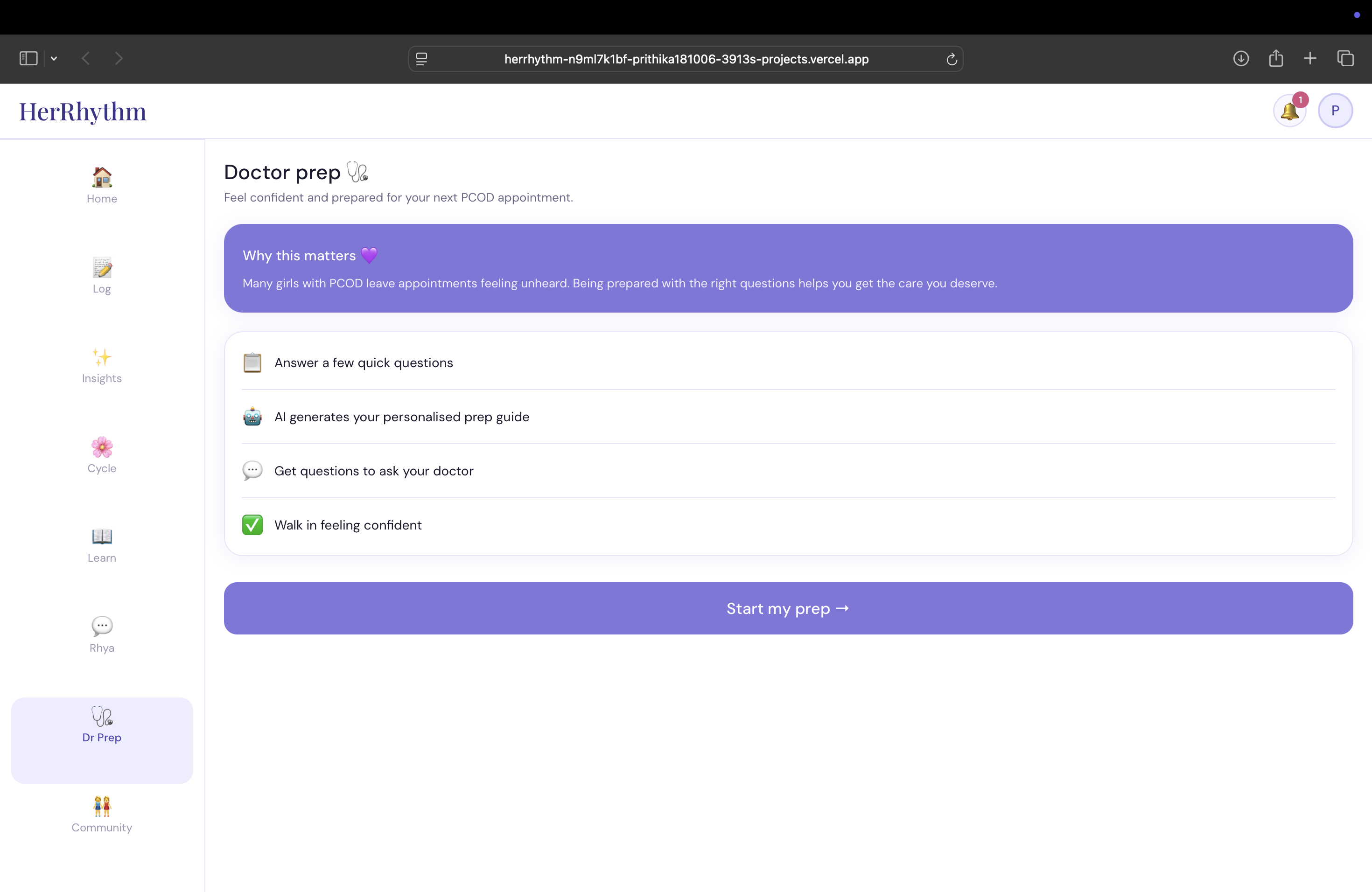
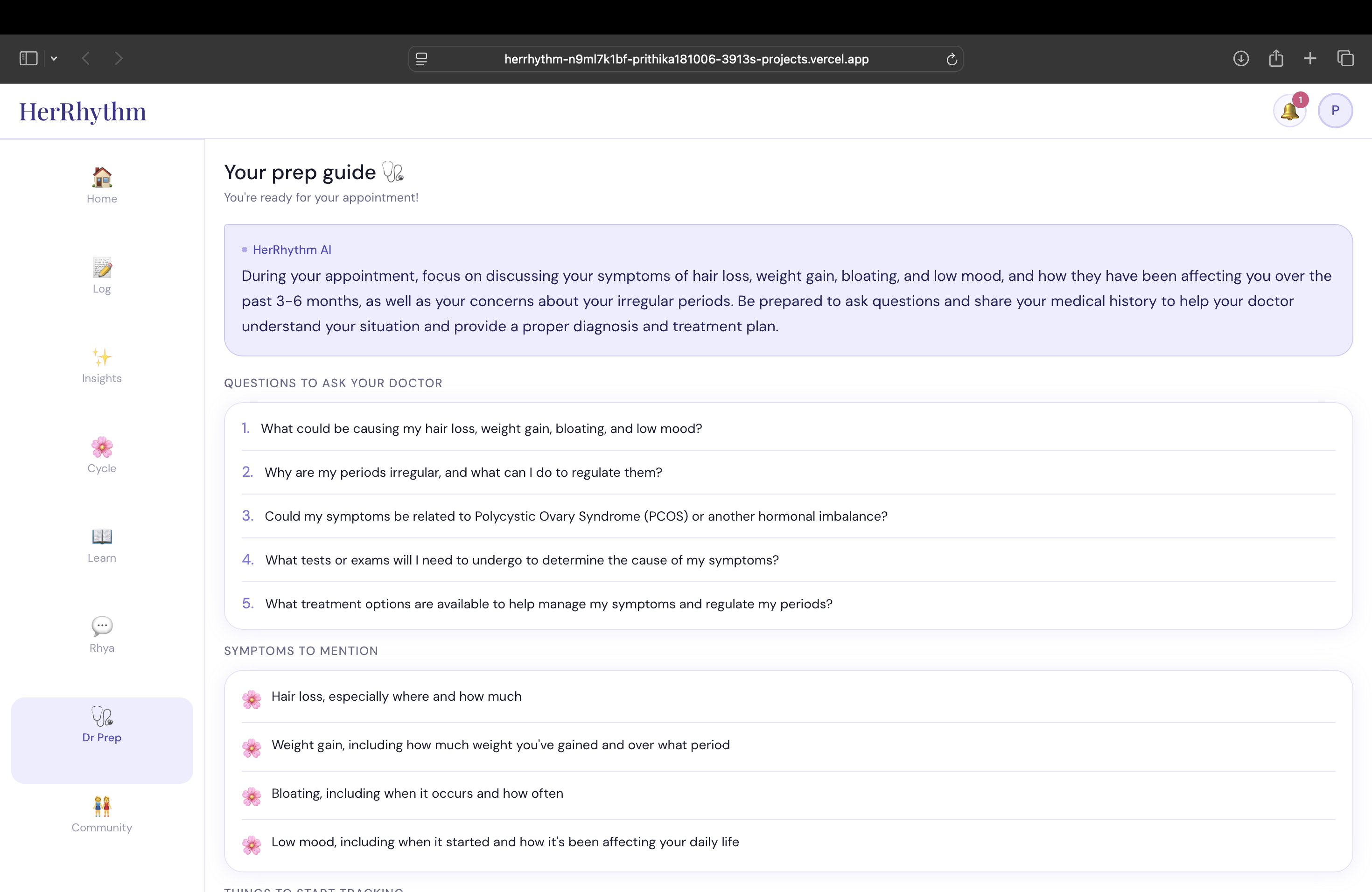
Doctor Preparation
-
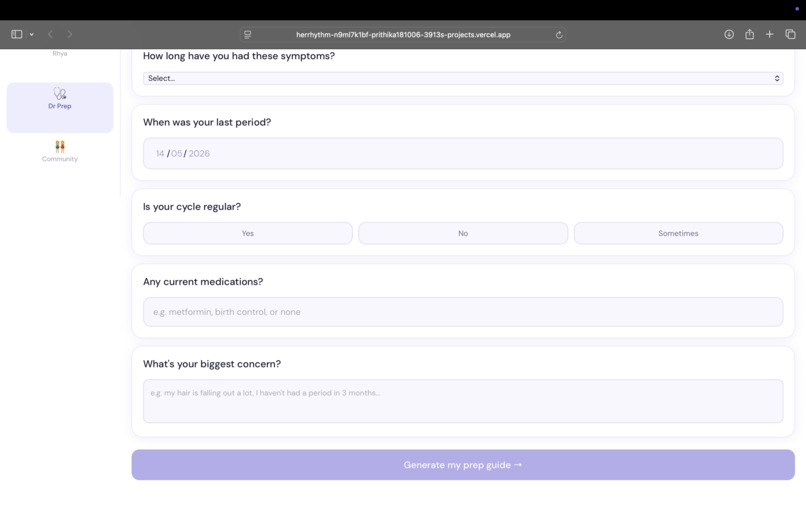
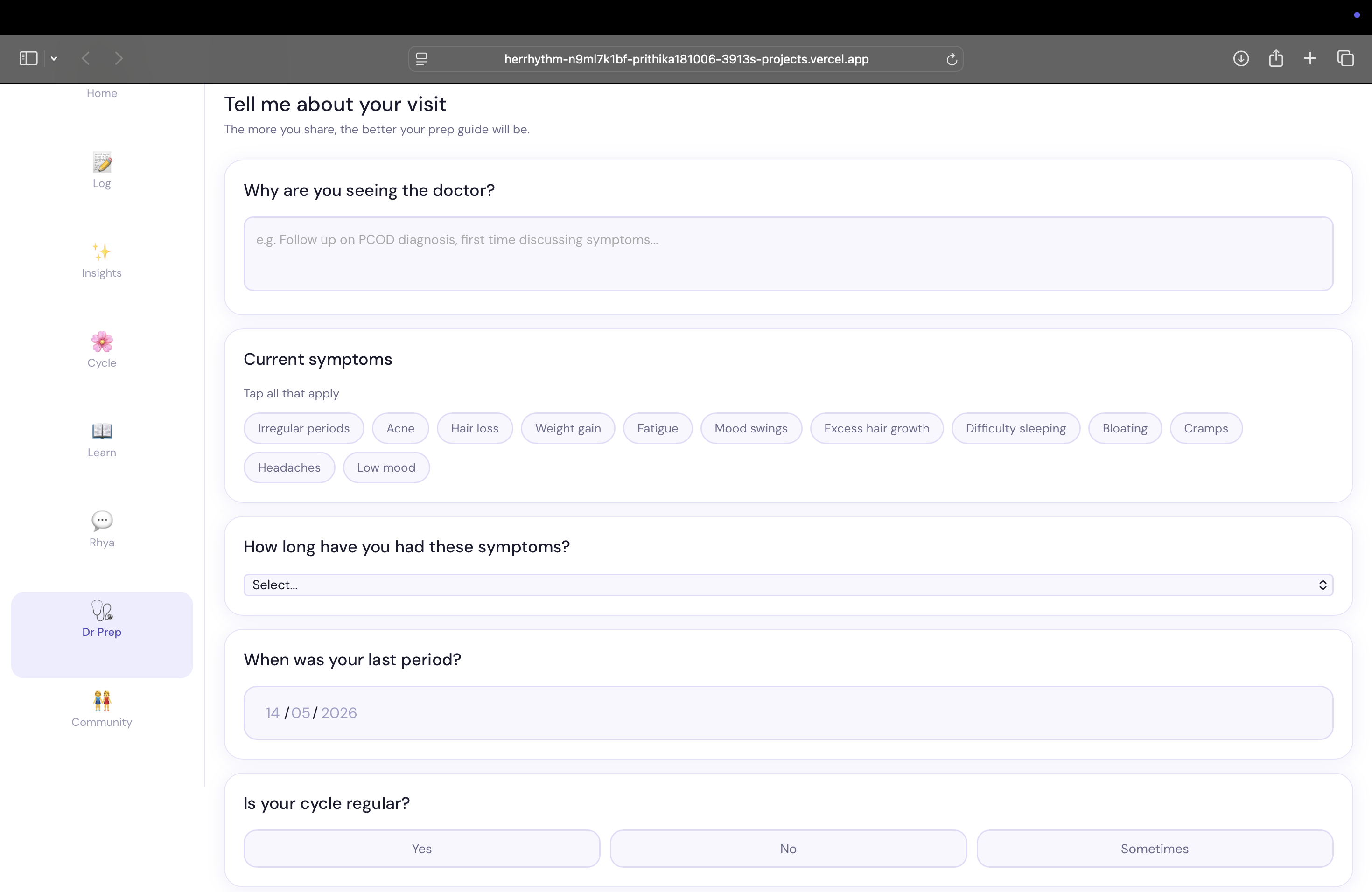
Doctor Preparation Continuous
-
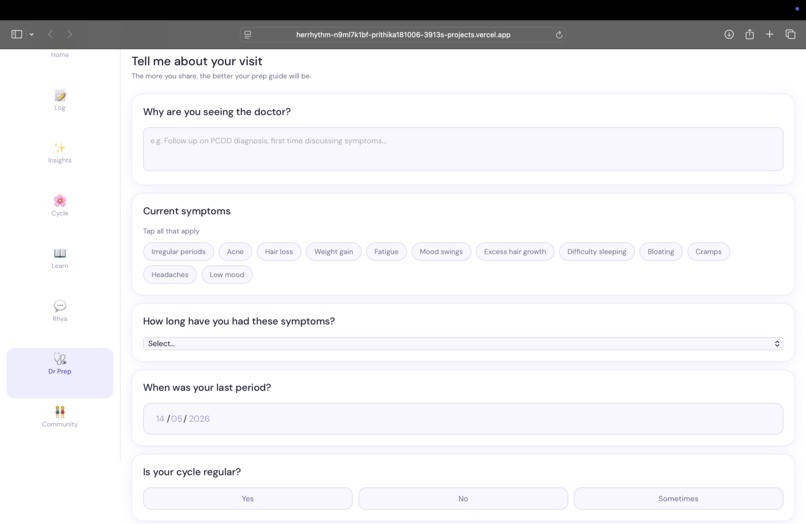
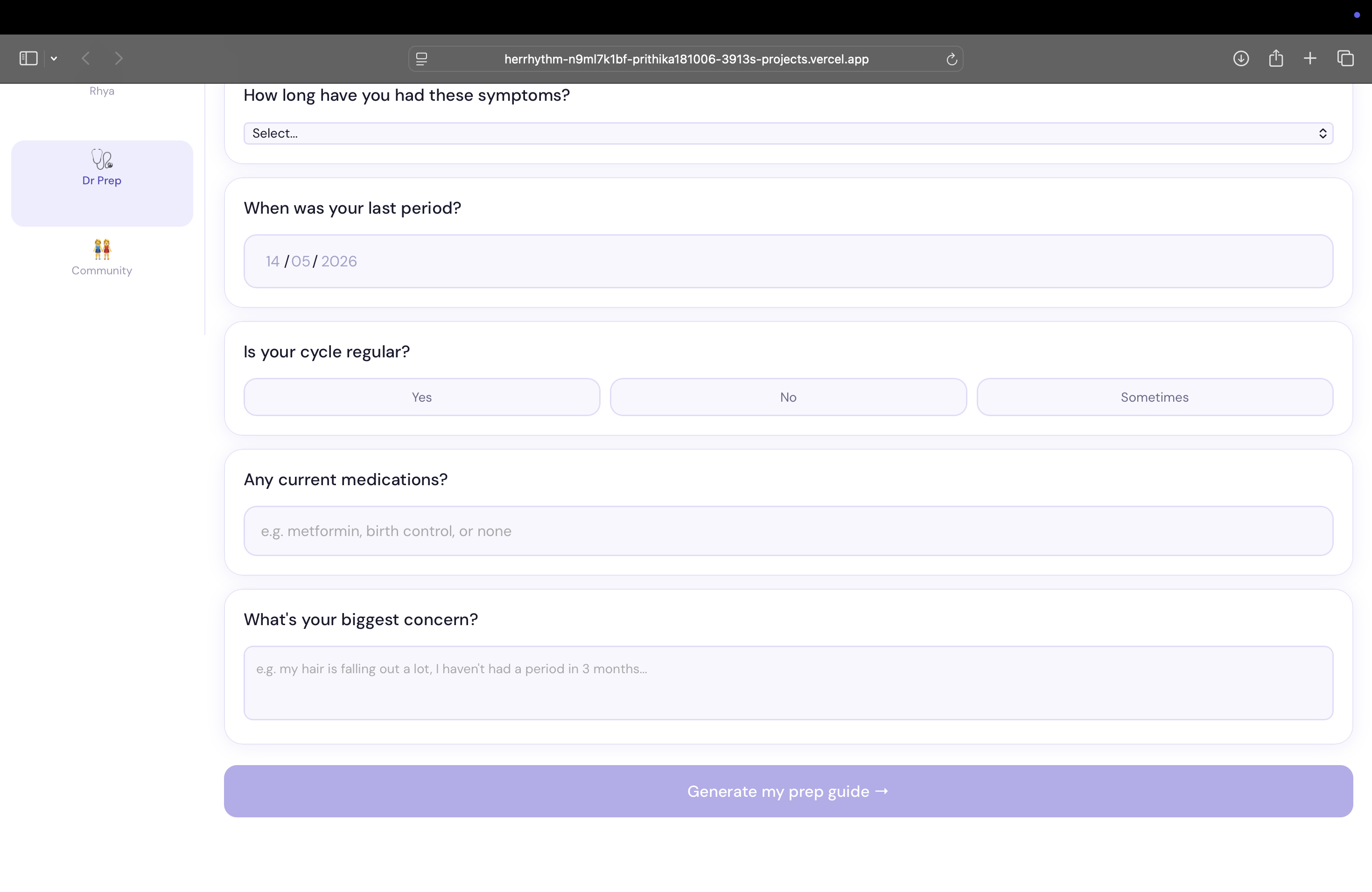
Doctor Preparation Continuous
-
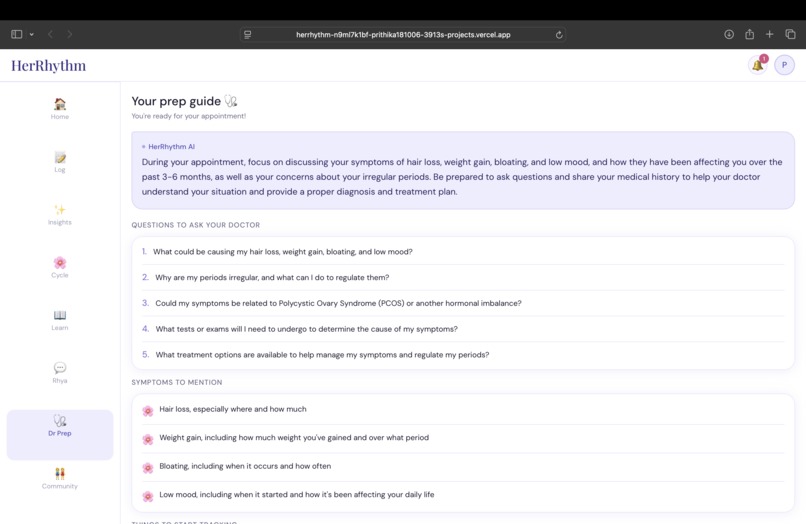
Doctor Preparation Continuous
-
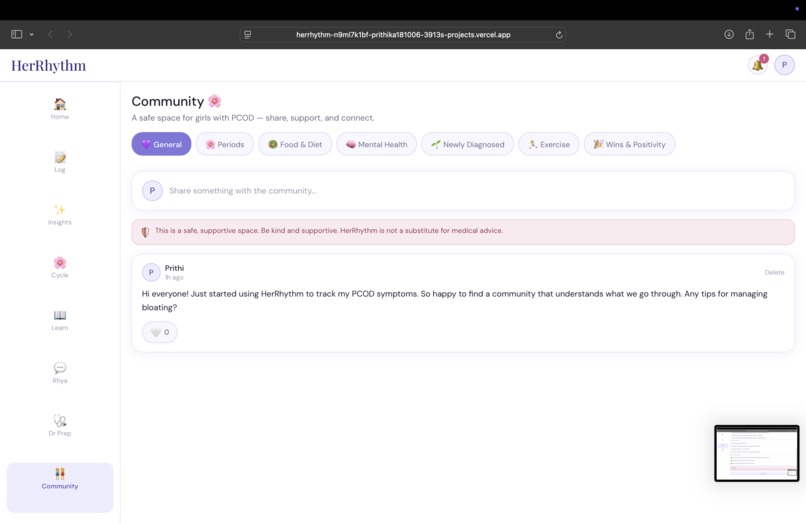
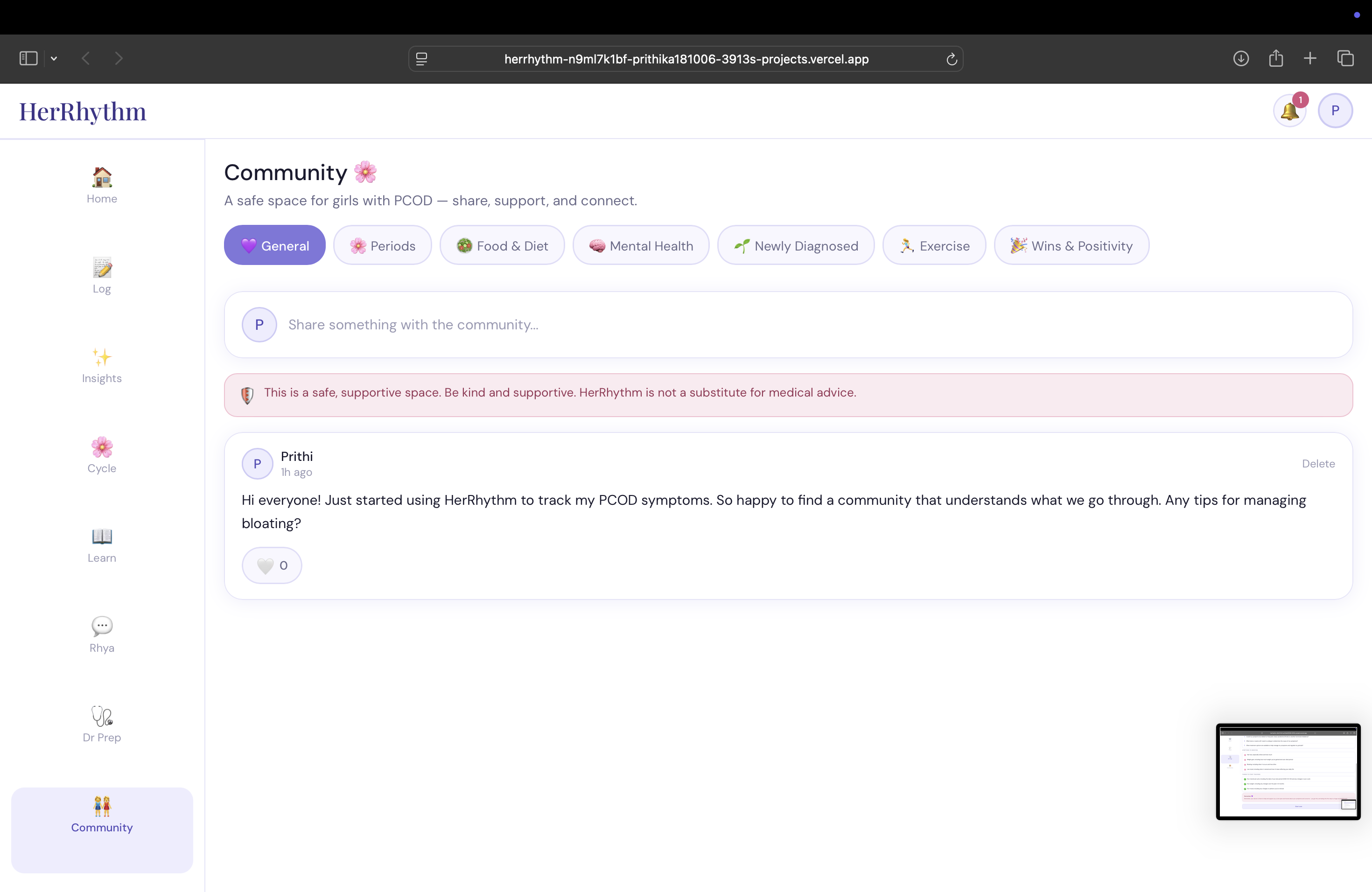
Community Page
-
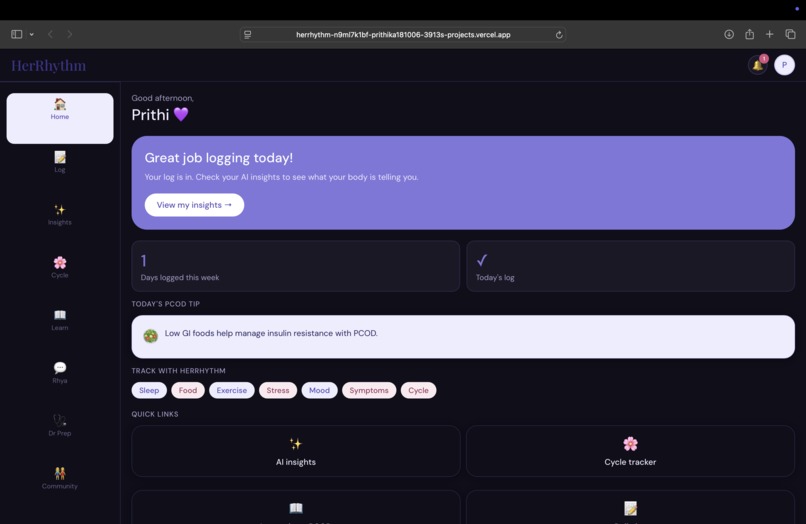
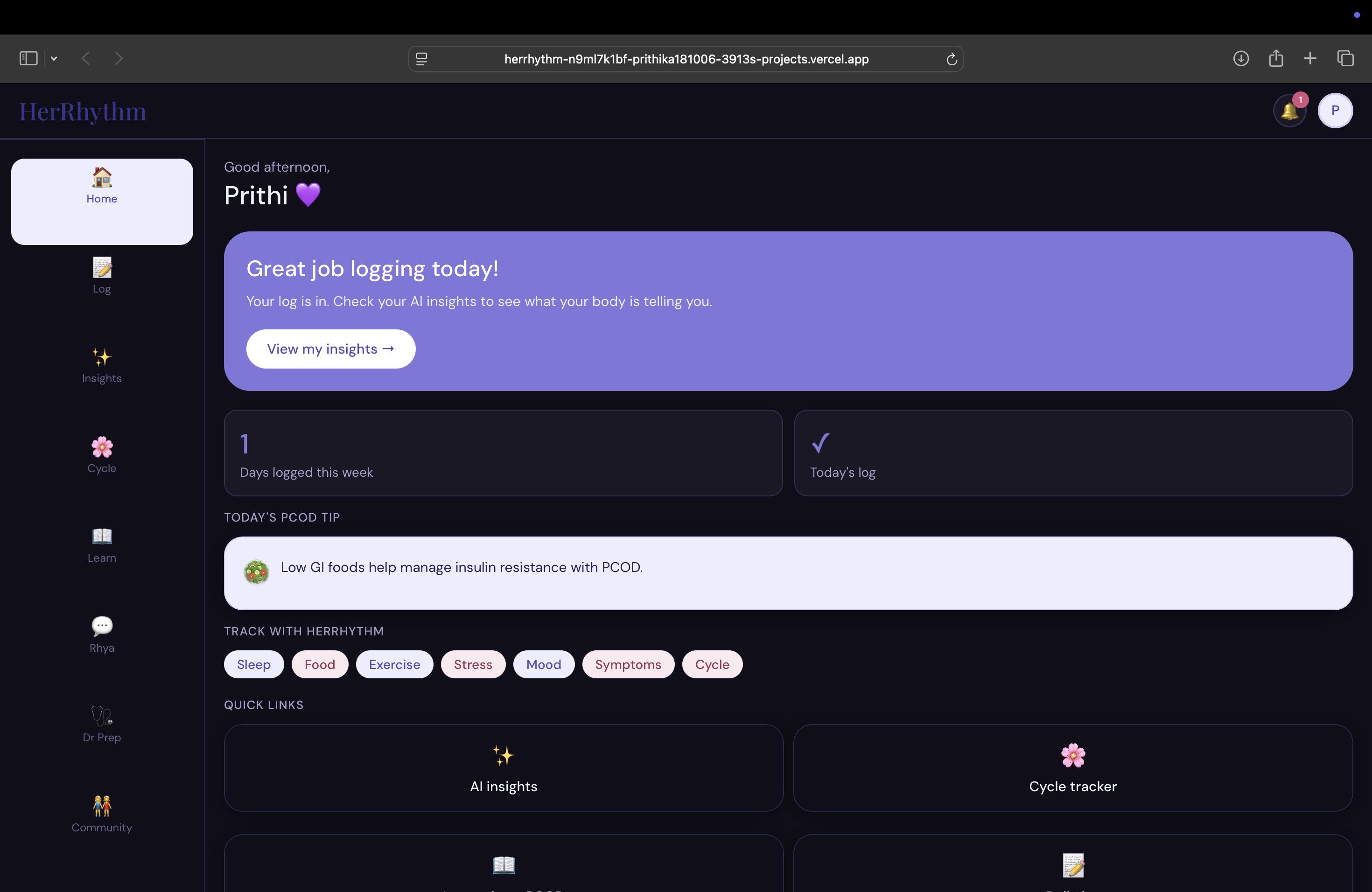
Night Theme
-
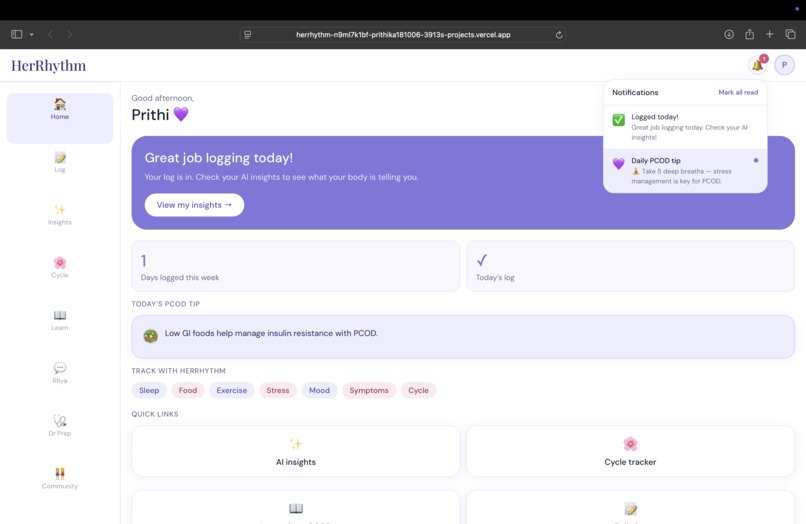
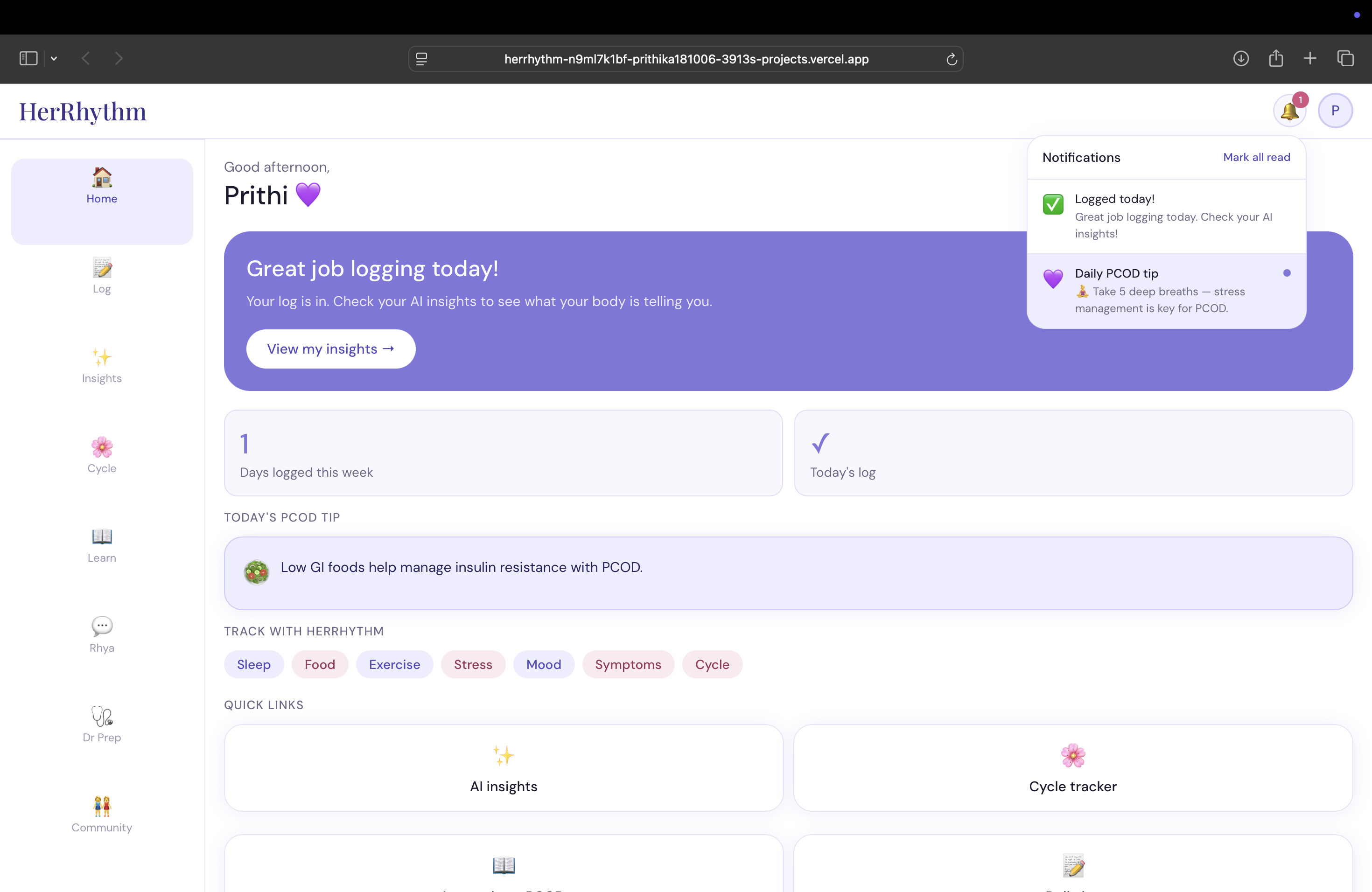
Notification Page
Inspiration
I built HerRhythm because I have PCOD myself.
When I was first diagnosed as a teenager, I felt completely lost. Nobody explained what it meant for my daily life. I searched for apps to help me manage it and everything I found was designed for adult women trying to get pregnant — not for a teenager just trying to understand her own body.
I couldn't find a single app that spoke to me as a teenager, explained things in simple language, or gave me personalised advice for my lifestyle. HerRhythm is what I wished existed.
PCOD affects up to 1 in 8 women globally yet remains one of the most under diagnosed and misunderstood conditions in teenage girls. I built this to change that — one girl at a time.
What it does
HerRhythm is an AI-powered lifestyle management web app specifically designed for teenage girls living with PCOD.
📝 Daily Log — Track sleep, food, exercise, stress, mood and symptoms every day with a beautiful, intuitive interface.
✨ AI Insights — AI analyses your real lifestyle logs and gives personalised PCOD-specific tips based on YOUR actual patterns — not generic health advice.
💬 Rhya AI Chatbot — Chat with Rhya, your personal PCOD companion. She knows your logged data and gives warm, personalised answers to anything about PCOD.
🩺 Doctor Appointment Prep — My most unique feature. Answer a few questions and get a personalised guide with questions to ask your doctor, symptoms to describe, and things to track. Built because girls with PCOD often leave appointments feeling unheard.
🌸 Cycle Tracker — A PCOD-aware period tracker that understands and normalises irregular cycles.
👭 Community — A safe space where girls with PCOD from different backgrounds share experiences, ask questions and support each other across topic channels.
📖 Learn — Bite-sized PCOD education written in teen-friendly language. No jargon, no scary stuff.
🔔 Notifications — Smart reminders to log, check insights and update cycle data.
How I built it
| Technology | Purpose |
|---|---|
| React | Frontend web app |
| Supabase | Database, authentication, real-time data |
| Groq AI — LLaMA 3 | Rhya chatbot and Doctor Prep AI guide |
| CSS Animations | Cinematic flower splash screen |
| GitHub | Version control |
| Vercel | Deployment and hosting |
The app is fully responsive, works on desktop and mobile, and includes dark mode, page transition animations, and a cinematic flower bloom splash screen.
Every feature was designed with one user in mind — a teenage girl who has just been diagnosed with PCOD and needs a companion that speaks her language.
Challenges I ran into
Making AI feel personal, not generic The biggest challenge was making Rhya and the AI insights feel genuinely personalised. I spent a lot of time crafting prompts that connect advice directly to what the user actually logged — not just standard PCOD tips.
Designing for teenagers Every word had to feel warm, non-judgmental and empowering — not clinical. Getting the tone right for a teenage audience took many iterations.
PCOD-aware cycle tracking Most period trackers assume a regular 28-day cycle. PCOD doesn't work that way. Building a tracker that genuinely acknowledges irregular cycles required careful, thoughtful design.
Building solo Every line of code, every design decision, every feature was built by me — a teenager — in a very short timeframe. Managing scope while keeping quality high was a constant challenge.
Keeping real user data private Building with real health data meant thinking carefully about security, row-level security in Supabase, and making sure users always felt safe.
Accomplishments that I'm proud of
- Built a complete full-stack app with real authentication, database and AI — solo, as a teenager
- Created the Doctor Appointment Prep feature — something no existing PCOD app has
- Built an AI chatbot that feels genuinely warm and personal, not clinical
- Designed an app that teenage girls would actually want to use — beautiful, friendly and empowering
- Created a real community feature where girls can support each other anonymously
- Built a cinematic animated splash screen that feels like a professional product
- Shipped a feature that comes from lived personal experience — something no big company can replicate
What I learned
- How to build a full-stack web app with React and Supabase from scratch
- How to integrate AI APIs to generate contextual, personalised health insights
- How to write effective AI prompts for sensitive health use cases
- How to design interfaces that feel warm and accessible for teenage users
- That the best products are built by people who deeply understand the problem — because they live it
- That building something personal makes you a far more motivated and creative builder
What's next for HerRhythm
📊 Symptom Charts — Visual graphs showing how sleep, stress and food correlate with symptoms over time.
🎯 PCOD Risk Quiz — Help girls who aren't yet diagnosed identify potential symptoms and seek help earlier.
📱 Mobile App — A native iOS and Android app for on-the-go logging and notifications.
🌍 Multi-language support — PCOD affects girls globally. HerRhythm should speak every language.
👩⚕️ Doctor integration — Let girls share their HerRhythm data directly with their doctor for better informed appointments.
🤝 Partnerships — Work with PCOD charities, gynaecologists and teen health organisations to make HerRhythm the go-to resource for newly diagnosed teenage girls worldwide.
"I built HerRhythm because I have PCOD myself. I couldn't find a single app that spoke to me as a teenager. This is what I wished existed." — Prithika, founder
Built With
- css
- github
- groq
- html
- javascript
- llama
- node.js
- postgresql
- react
- supabase
- vercel

Log in or sign up for Devpost to join the conversation.