-
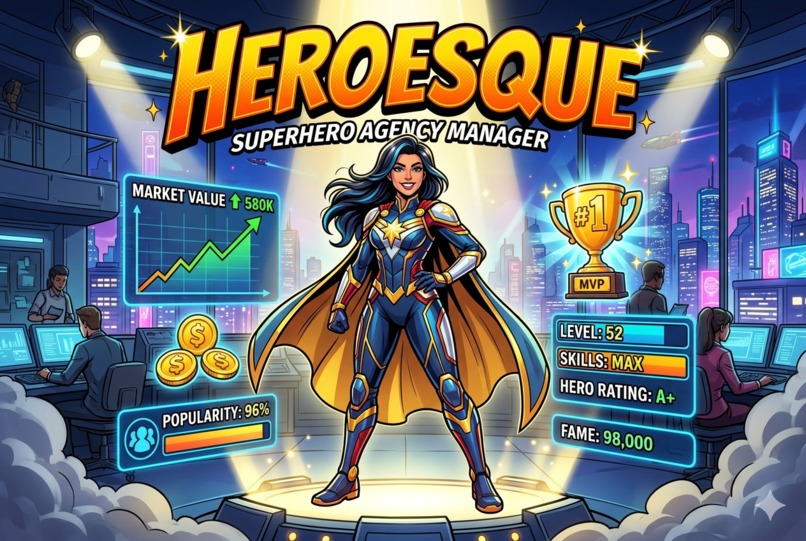
Build the hero. Bank the legend.
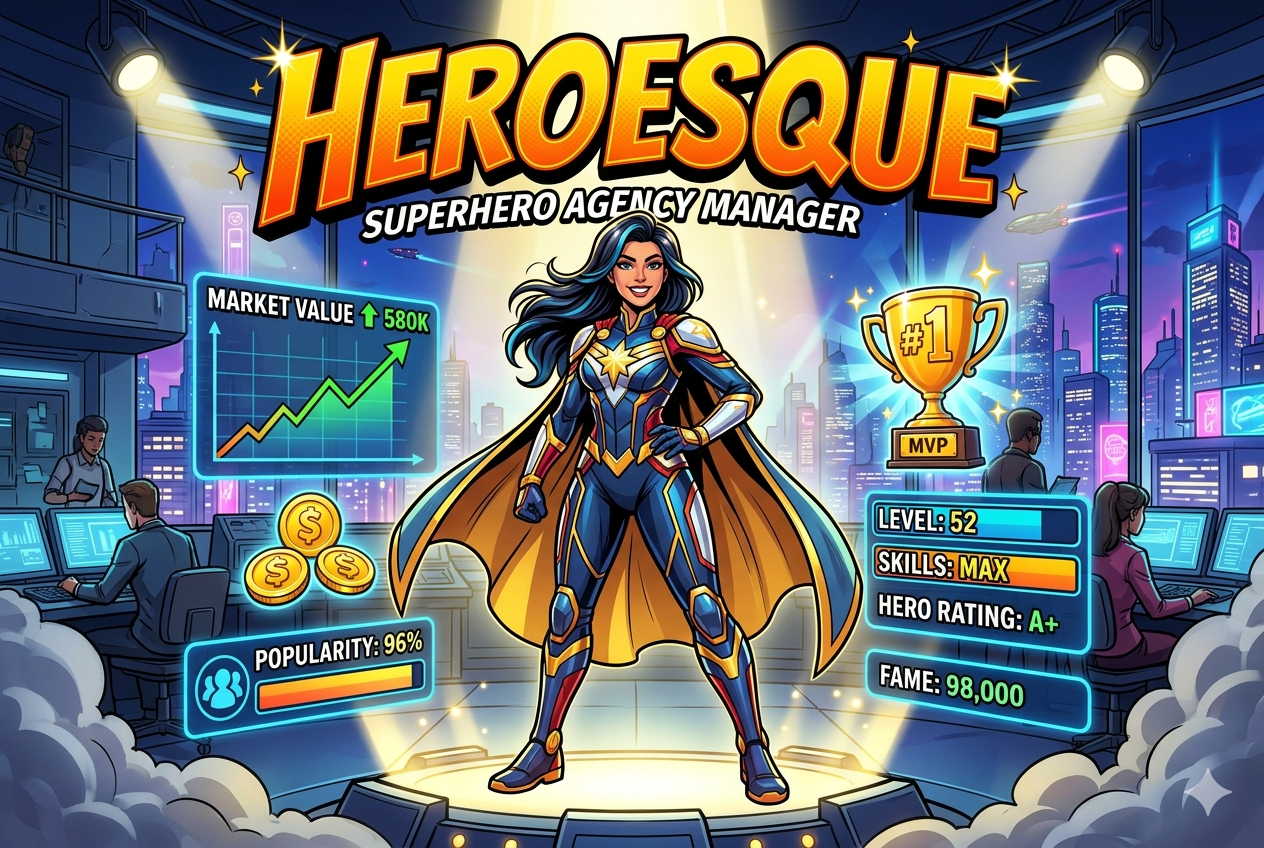
Heroesque — You never fight the villains. You build the heroes who do — and decide what they're worth.
Inspiration
Heroesque grew out of two very different obsessions.
The first is team-management sims — football-manager and esports-team games, where the real joy isn't playing the match, it's scouting raw talent, developing your roster over a season, and deciding exactly when to cash in on a player at the top of their value. I wanted that "spot the potential, grow it, sell high" loop — but in a fresh setting.
The second is The Boys — specifically its idea of superheroes as managed celebrities and corporate products, where the polished public image and the messy reality behind it rarely line up. That gap became the heart of the game: a hero's Fame can run miles ahead of what they can actually do, and keeping a star both lucrative and well-behaved is the whole balancing act.
Put those together and you get Heroesque — a team-management sim where the "players" are superheroes and the "club" is a talent agency. You're never the hero; you're the manager who makes (and sells) them — with the game's own lighter, satirical spin on the celebrity-hero premise.
What it is
Heroesque is a superhero talent-agency management sim. You discover raw recruits and develop each one across three axes — Stats (what they can actually do), Fame (their public image), and Personality (how well-behaved they stay) — then send them out on missions, film shoots, and tempting shady jobs to earn money.
Every hero is a tradable asset. As a hero's value climbs, you decide whether to keep developing them, cash in on their fame, or sell at their peak before a scandal wipes it out. The long game is building the #1 agency in the business.
How I built it
This is a design submission, so "building" meant designing the systems and proving they hold together:
- I started from a single core tension — image vs. reality — and made every system feed it. Fame can outrun Stats (risky), and chasing the best-paying shady jobs erodes Personality until a scandal erases the Fame you worked to build.
- I locked a tight three-axis model and a "missions umbrella" (rescue, film/ad, shady, charity), so the moment-to-moment loop stays simple while the decisions stay deep.
- I scoped a deliberately minimal MVP — three heroes, four stats, four mission types, one scandal type, a basic company upgrade — and sequenced the build by dependency, so each phase produces something testable.
- For the look, I landed on a vibrant comic / superhero-cartoon style on a landscape "command center" screen — roster, mission board, and the selected hero's data all on one view — and produced original mockups, a UI wireframe, a colour palette, and a mood board to anchor it.
- The four artifacts (Game Design Document, Player Journey Map, Production Plan, Visual Concept Package) were written to tell one coherent story.
Challenges I ran into
- Making a spreadsheet feel emotional. A management game lives or dies on whether numbers carry tension. The breakthrough was the "cash out or hold?" decision — selling a hero at their peak, knowing one scandal could erase the gain.
- Staying original. The superhero-management space already has entries, so I had to find a distinct angle: heroes as celebrity assets you cultivate and trade, not just units you dispatch.
- Scoping honestly. It was tempting to promise transfer markets, rival AIs, and a story campaign. The discipline was cutting all of it from the MVP and being honest about what the first build actually needs.
- Visual direction. My first mockups read like a finance app. Reworking them into a landscape command center with a comic art style — framed panels, expressive heroes — is what finally made it feel like a game.
What I learned
- A strong game starts from one tension, not a feature list — every system should pull on that same nerve.
- Coherence beats volume: a focused, consistent package communicates a vision far better than a pile of disconnected ideas.
- Constraints make the design. Forcing a 3-hero, 4-stat MVP clarified what the game actually is.
- UI is design — where information sits on screen changes how the game feels to play.
What's next
Beyond the MVP: a full transfer market with rival agencies, extra income streams (merchandise, brand deals, talk shows), deeper company progression and the full race to #1, and a story campaign with recurring villains and seasonal arcs.
Built With
- claude
- gemini


Log in or sign up for Devpost to join the conversation.