-
-
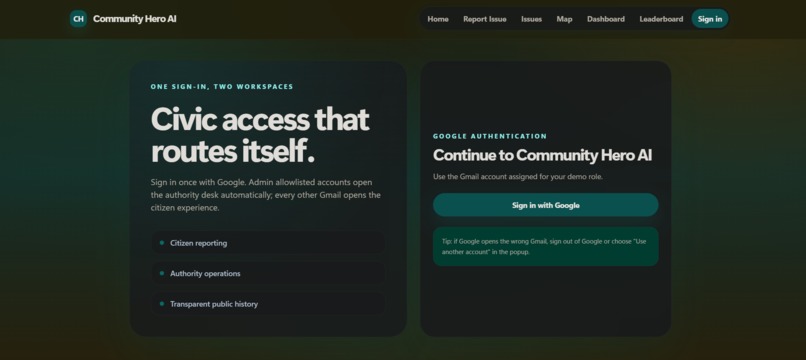
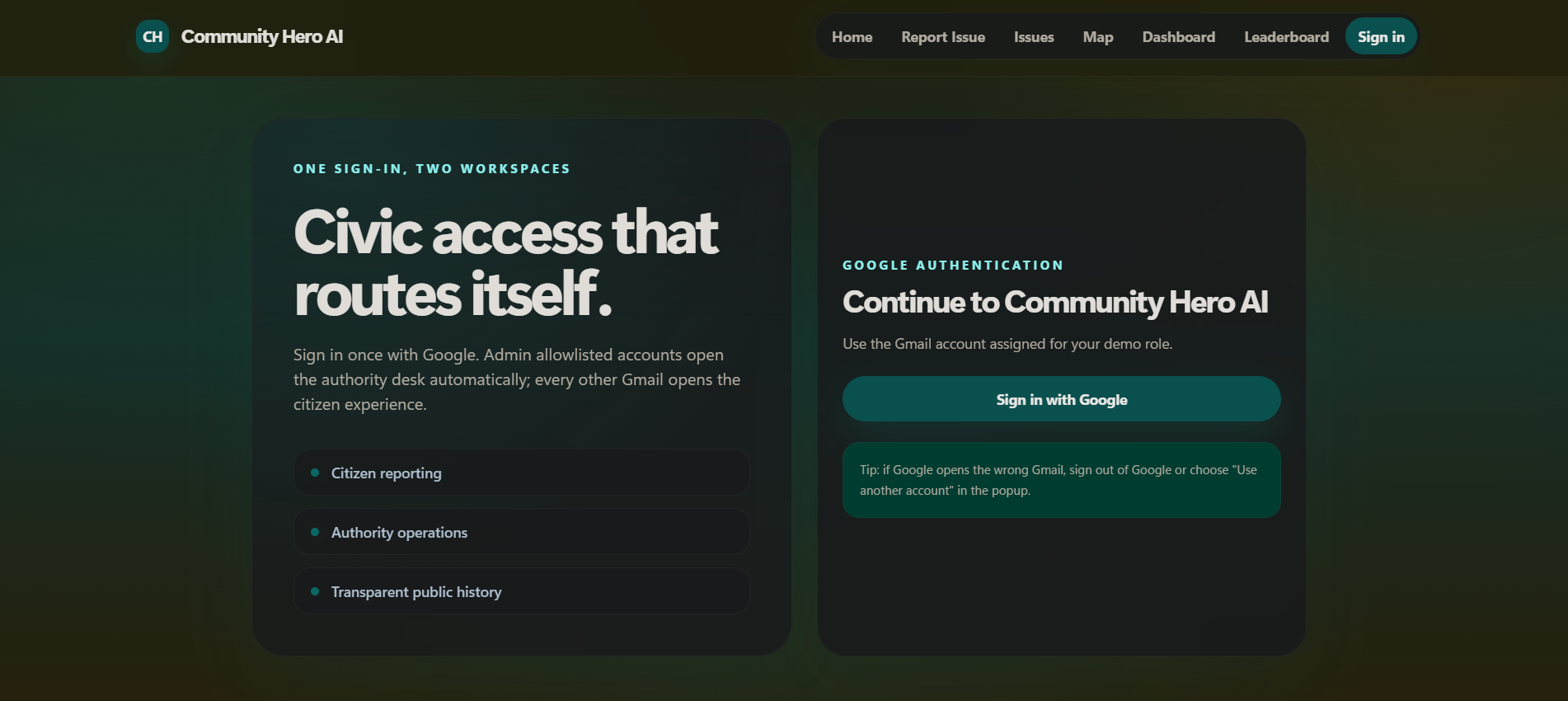
SIGN
-
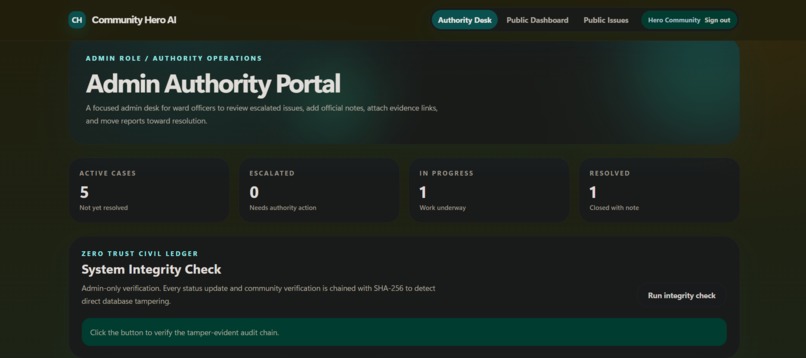
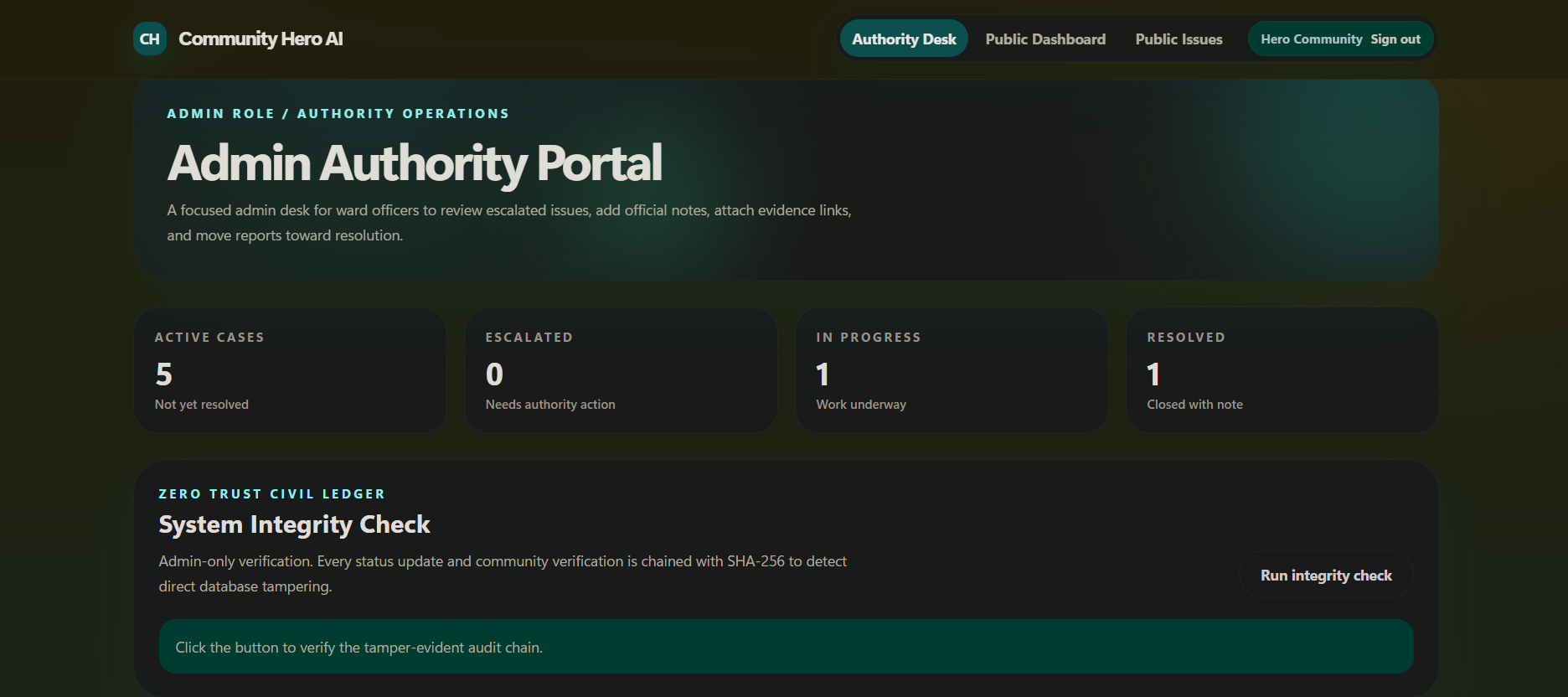
ADMIN PORTAL
-
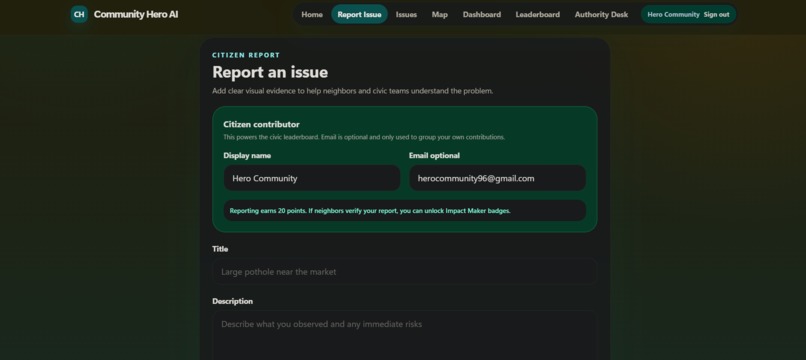
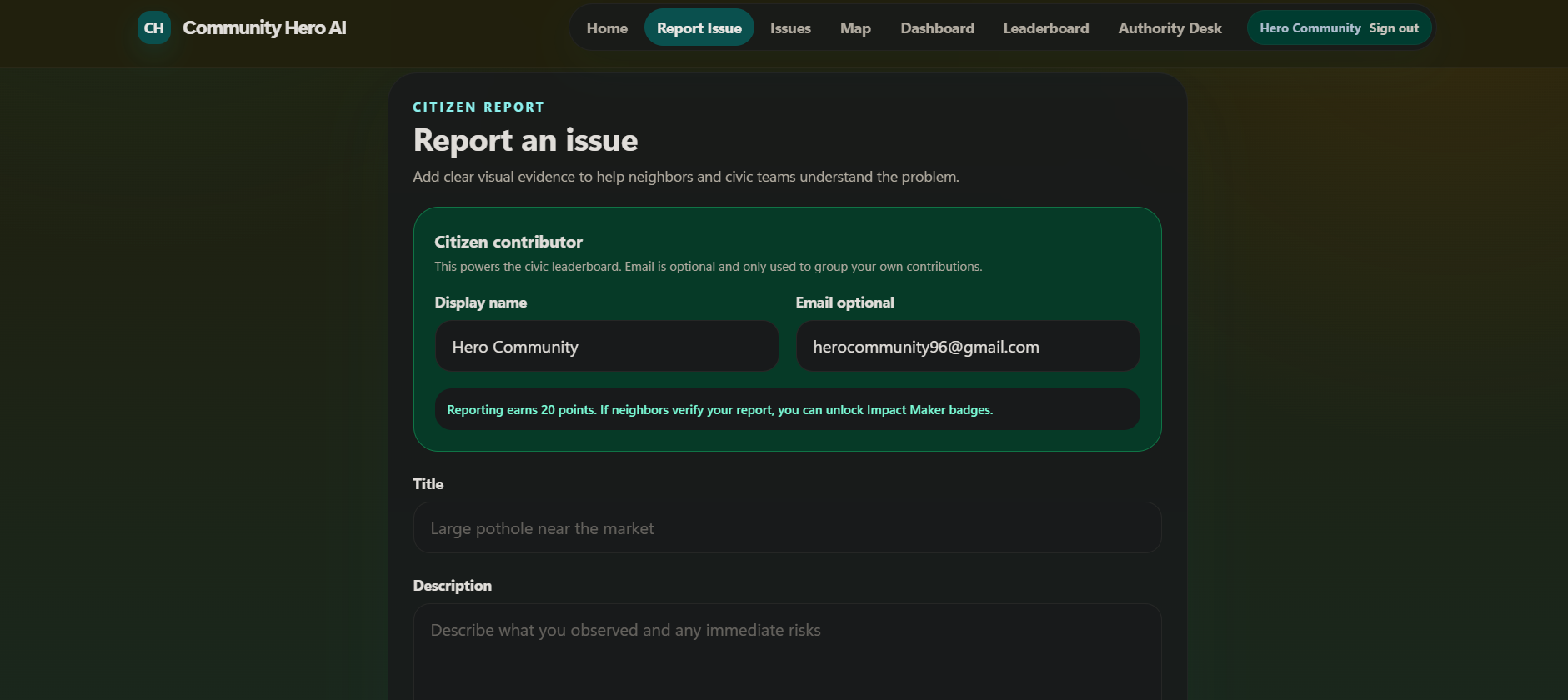
REPORT AN ISSUE
-
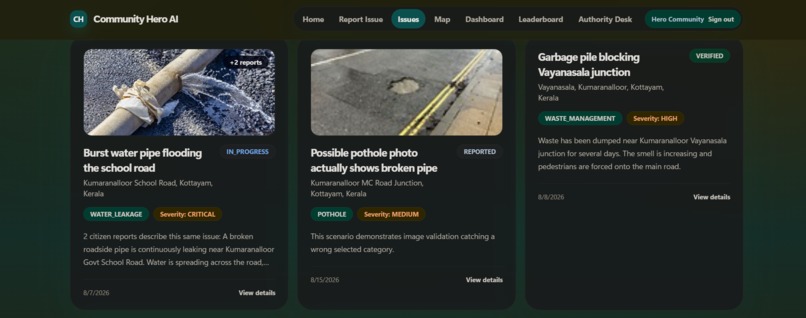
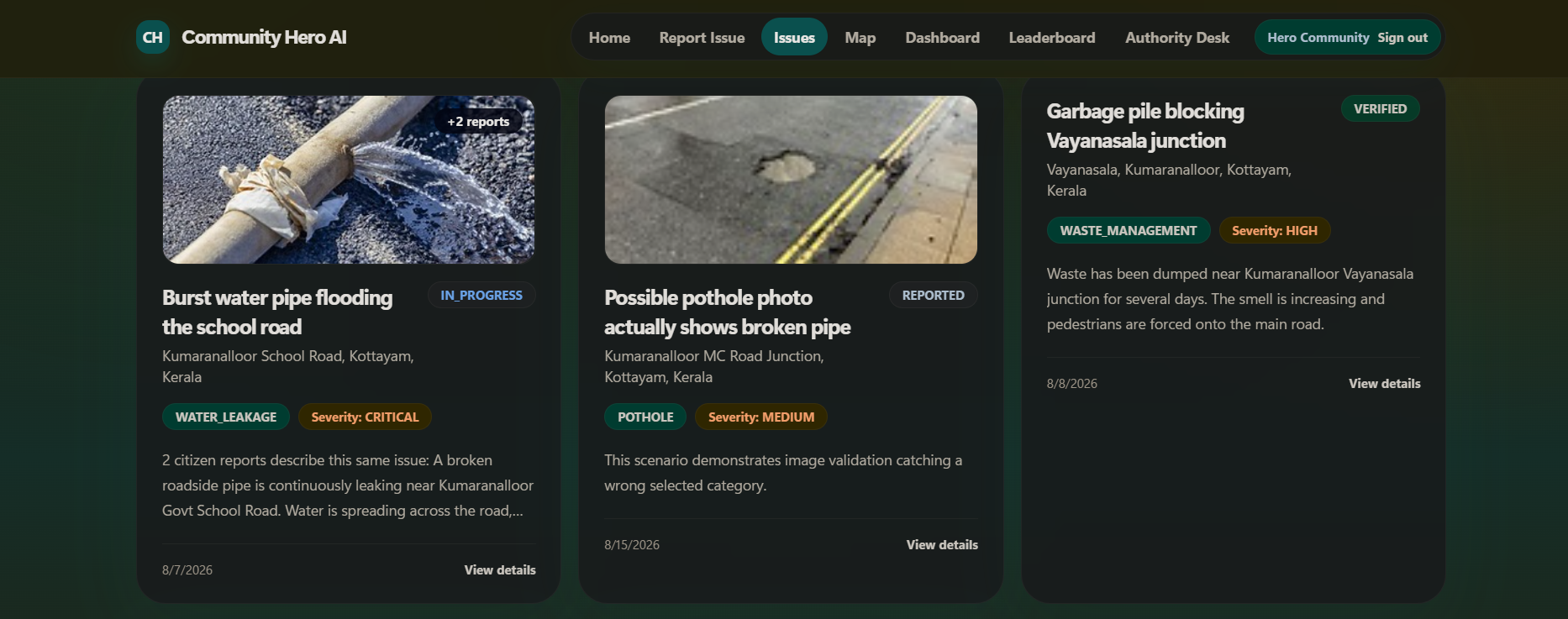
ISSUES
-
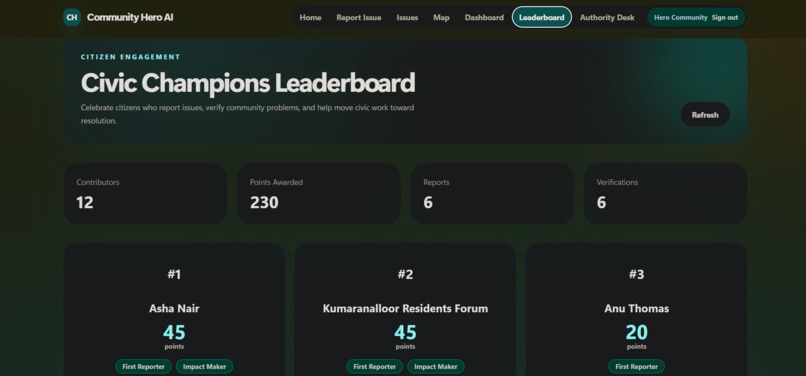
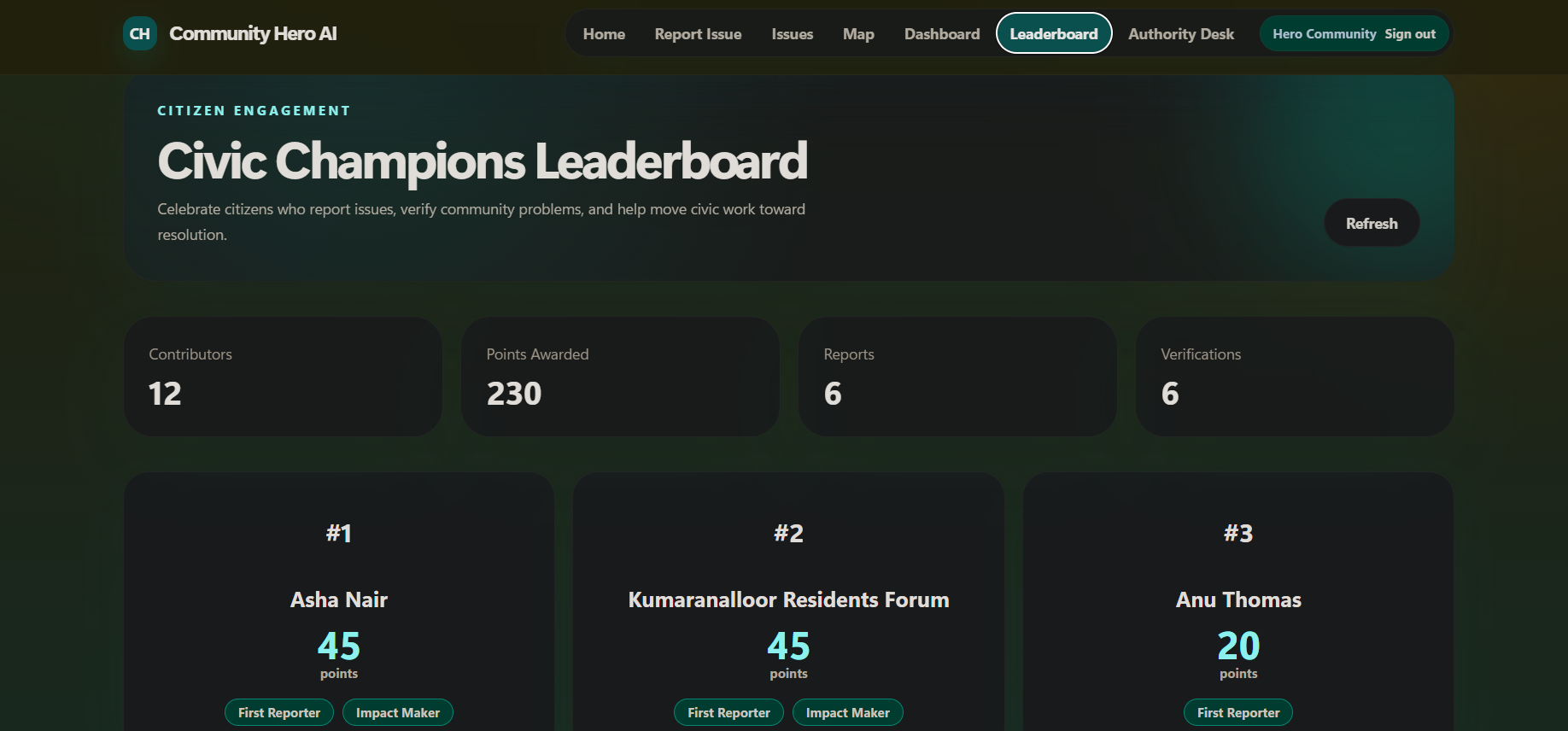
LEADERBOARD
-
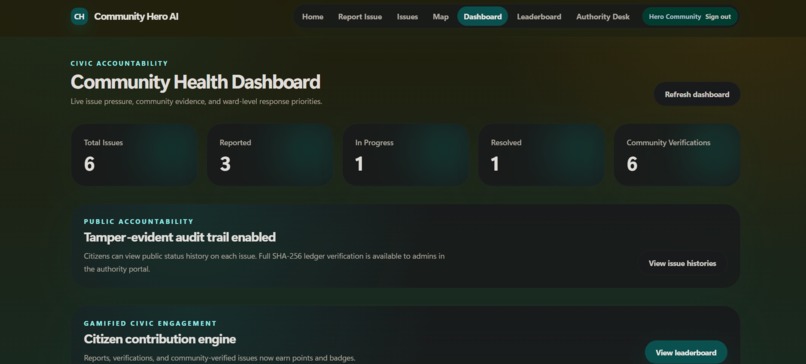
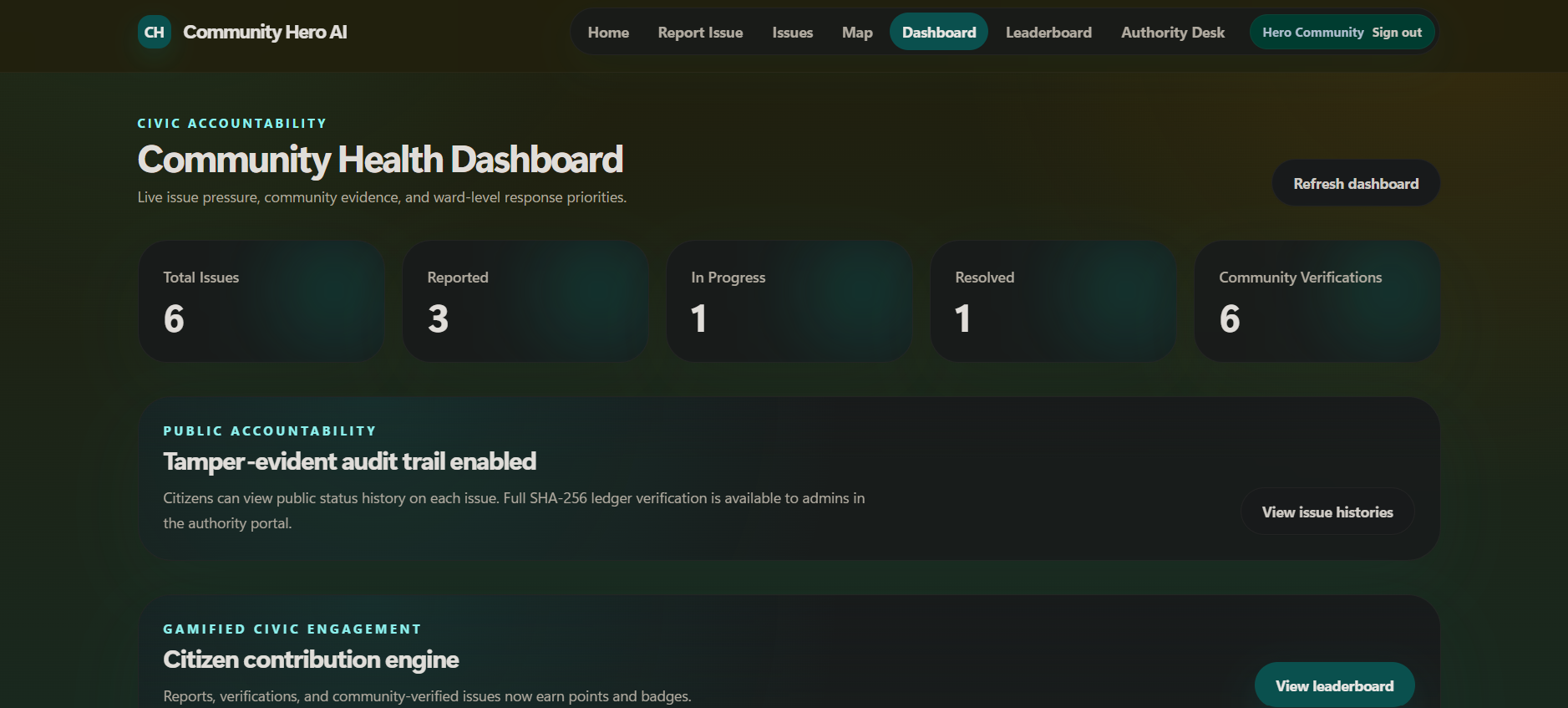
DASHBOARD
-
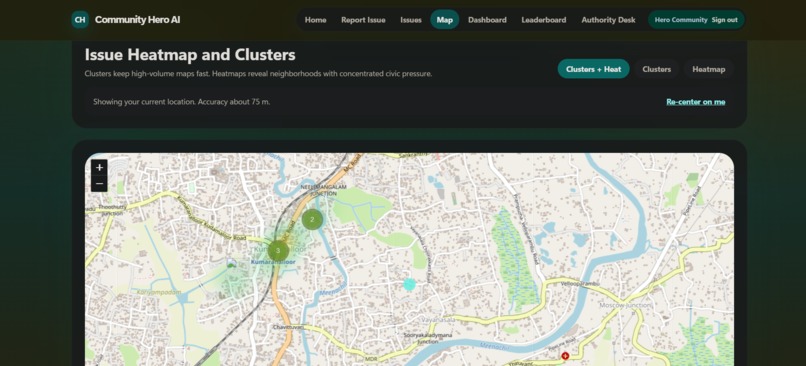
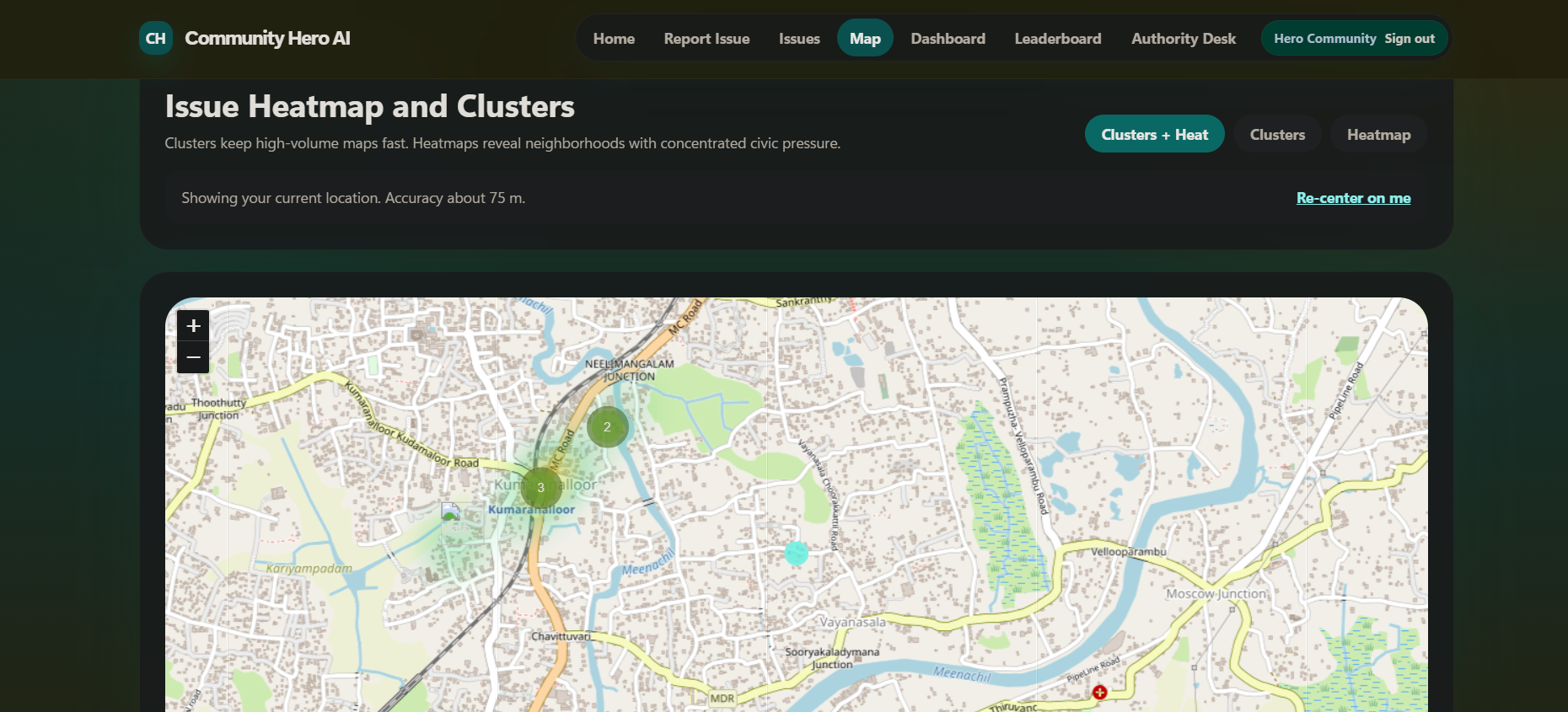
HEATMAP AND CLUSTER
Inspiration
I wanted to address the gap between reporting local problems and actually seeing them resolved. Community Hero AI makes civic reporting more transparent by validating evidence, prioritizing issues, and tracking resolution.
What it does
Citizens can report issues with photos, videos, locations, and descriptions. AI analyzes the evidence, estimates severity, detects duplicates, recommends the responsible department, and helps authorities prioritize cases. Community members can also verify reports and track their progress.
How we built it
I built it with React, TypeScript, Tailwind, Spring Boot, Firebase, Google Gemini, Google Cloud Vision, LangChain4j, and Google Cloud services. The system combines AI analysis with human approval and community verification.
Challenges we ran into
The main challenge was using AI for civic workflows without allowing it to make uncontrolled decisions. I addressed this with human-in-the-loop approvals, confidence scores, evidence validation, and case history.
Accomplishments that we're proud of
I'm proud of building a civic platform, not just an AI chatbot. It combines evidence validation, community verification, AI investigation, duplicate detection, prioritization, and transparent case tracking
What we learned
I learned that reliable AI requires more than good model outputs. Validation, human oversight, confidence scoring, secure data handling, and accountability are equally important.
What's next for Hero Community AI
I want to add multilingual and voice-based reporting, improve evidence verification, expand predictive analytics, and eventually support multiple municipalities.
Built With
- boot
- cloud
- css
- firebase
- gemini
- java
- langchain4j
- leaflet.js
- react
- run
- spring
- sql
- storage
- tailwind
- typescript
- vision
- vite

Log in or sign up for Devpost to join the conversation.