-
Hero Logo
-
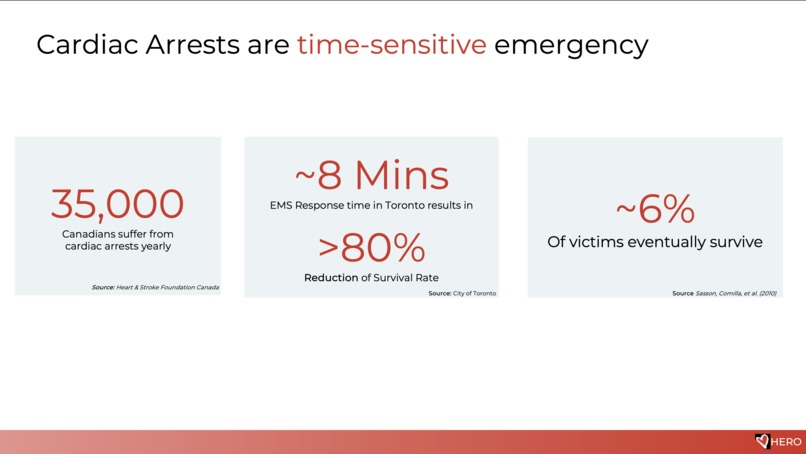
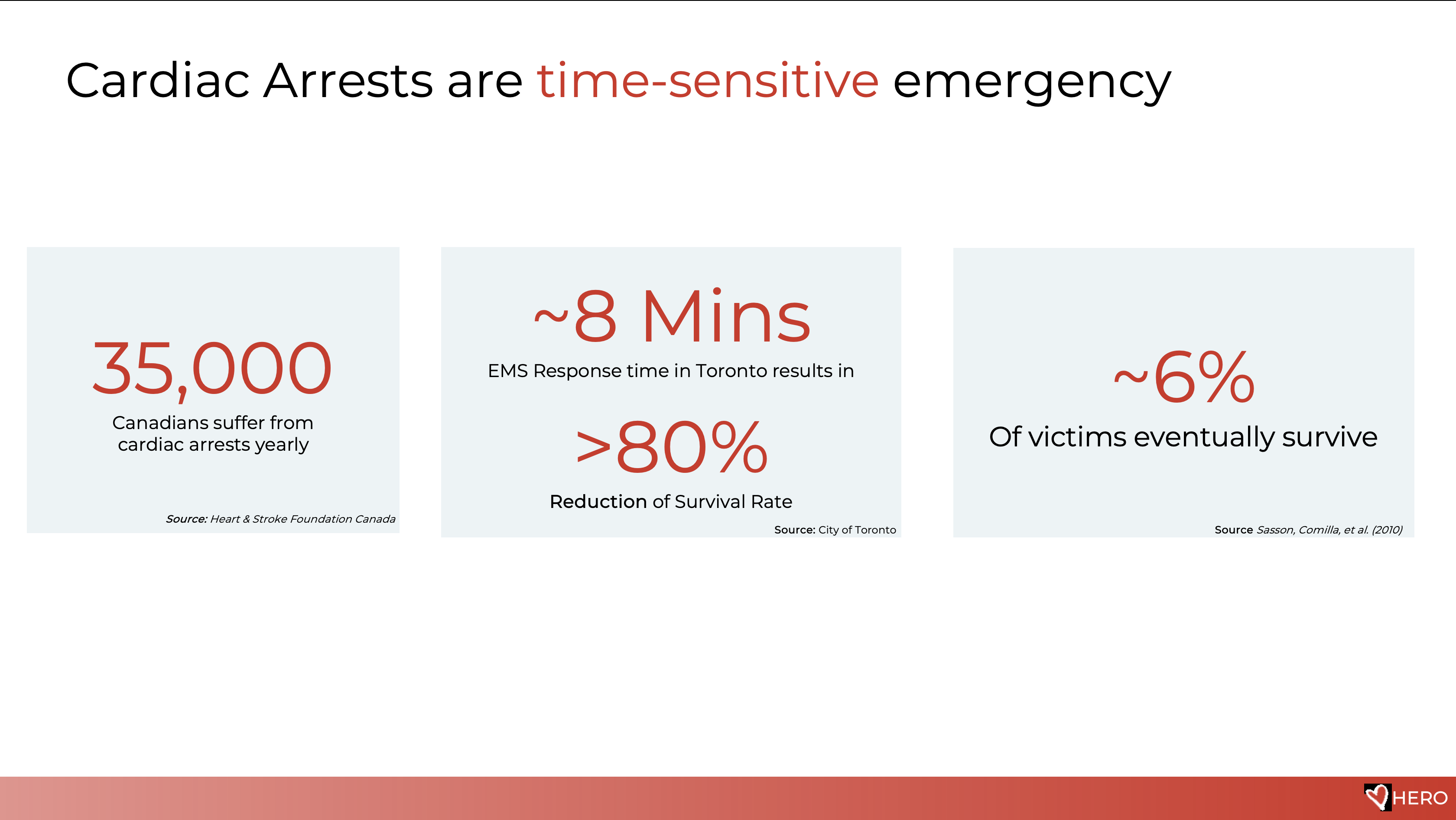
Cardiac Arrests are a huge time-sensitive problem
-
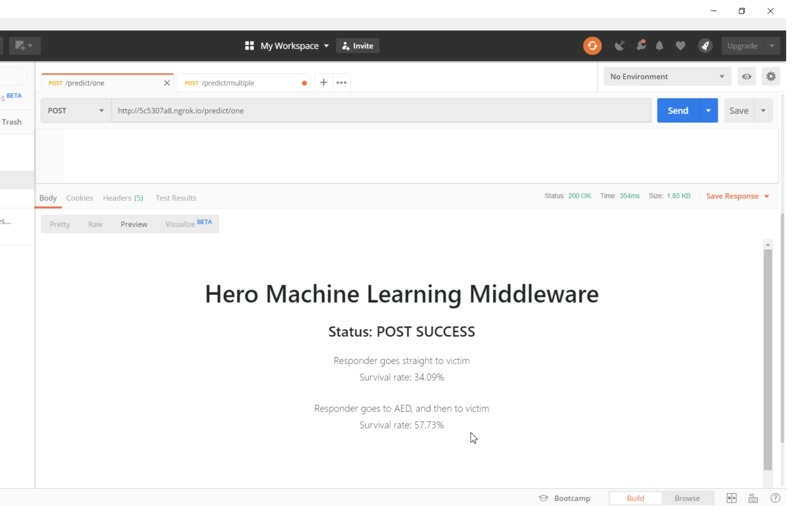
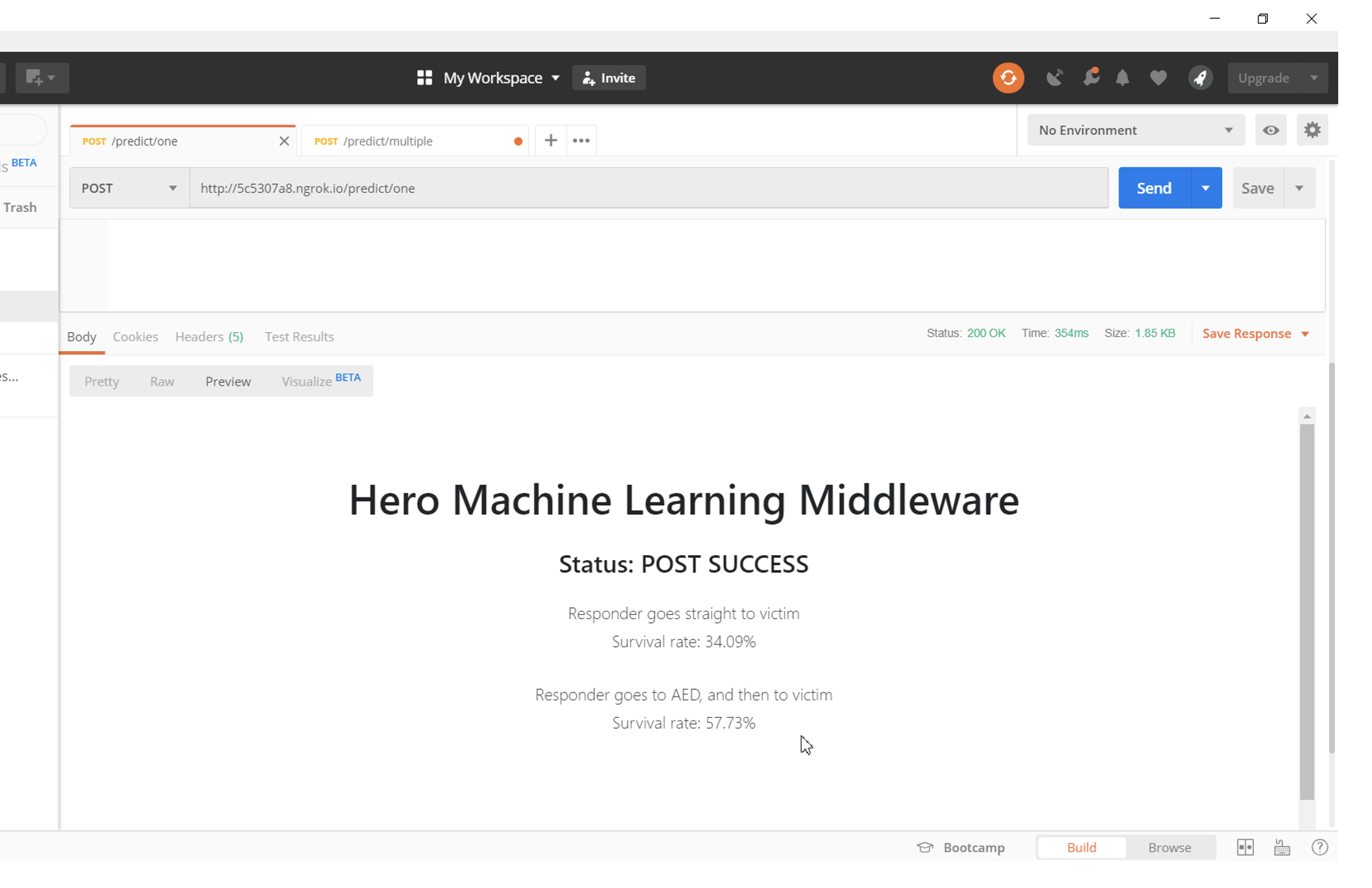
Navigation Route Machine Learning Model
-
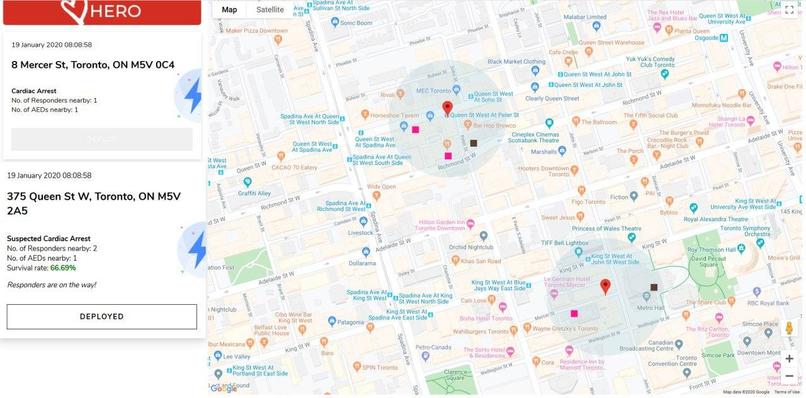
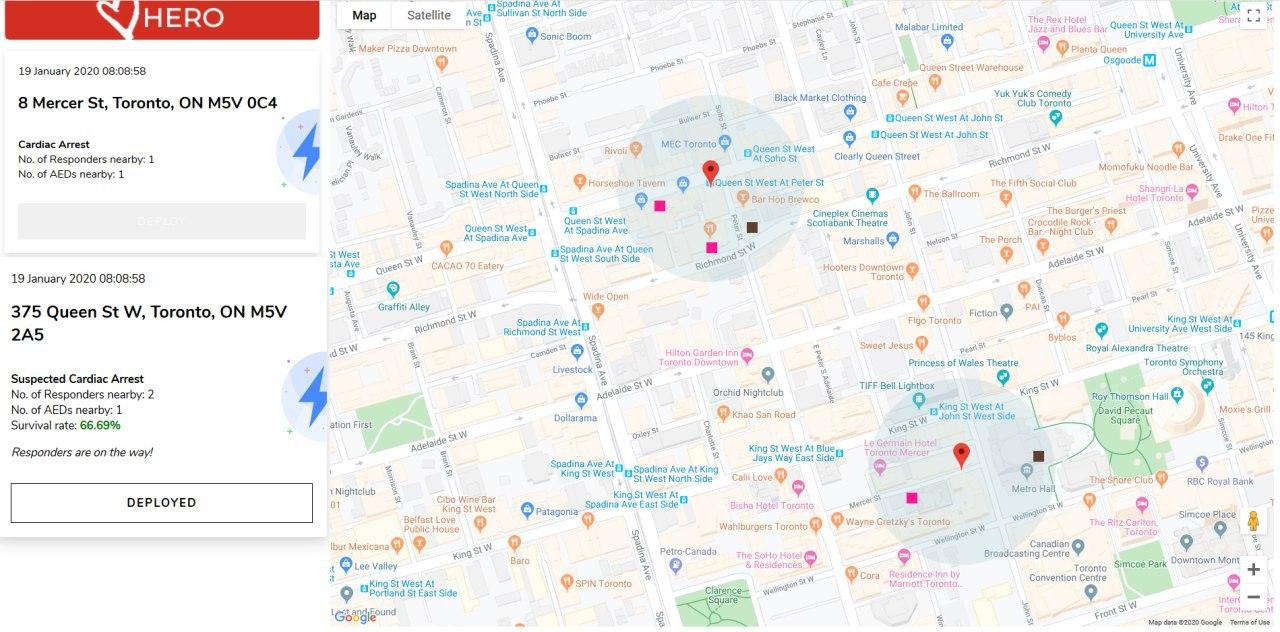
Hero Command Interface
-
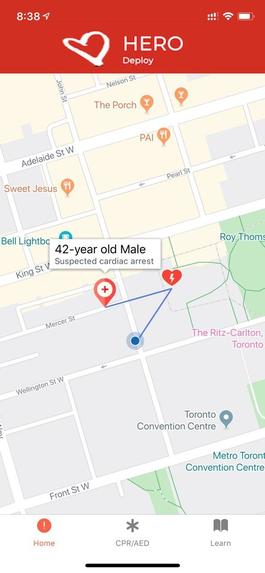
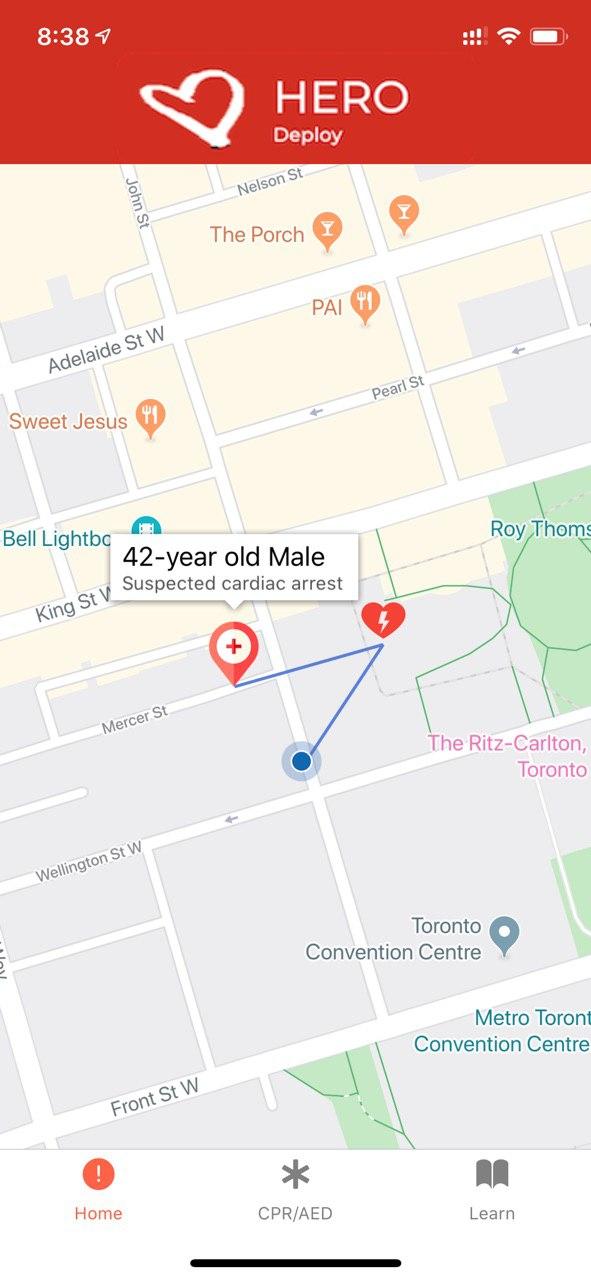
Hero Deploy
-
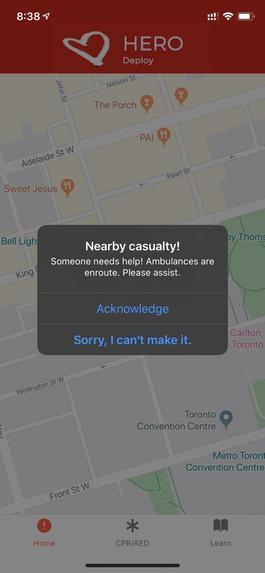
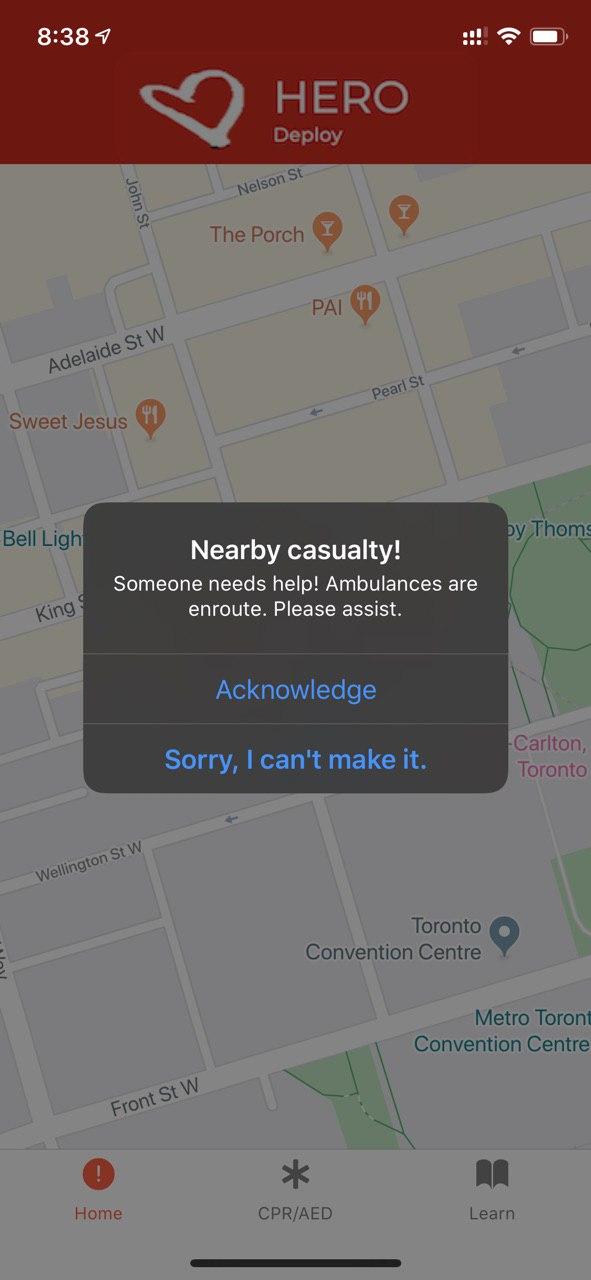
Hero Deploy
Inspiration
We were inspired by a recent article that we saw on the news, where there was a man who suffered a cardiac arrest while waiting for his plane. With the help of a bystander who was able to administer the AED and the CPR, he was able to make a full recovery.
We wanted to build a solution that is able to connect victims of cardiac arrests with bystanders who are willing to help, thereby increasing their survival rates . We truly believe in the goodness and willingness of people to help.
Problem Space
We wanted to be laser-focused in the problem that we are solving - helping victims of cardiac arrests. We did tons of research to validate that this was a problem to begin with, before diving deeper into the solution-ing space.
We also found that there are laws protecting those who try to offer help - indemnifying them of liabilities while performing CPR or AED: Good Samaritan and the Chase Mceachern Act. So why not ask everyone to help?
What it does
Hero is a web and app based platform that empowers community members to assist in time sensitive medical emergencies especially cardiac arrests, by providing them a ML optimised route that maximizes the CA victim's chances of survival.
We have 2 components - Hero Command and Hero Deploy. 1) Hero Command is the interface that the EMS uses. It allows the location of cardiac arrests to be shown on a single map, as well as the nearby first-responders and AED Equipment. We scrapped the Ontario Goverment's AED listing to provide an accurate geo-location of an AED for each area.
Hero Command has a ML Model working in the background to find out the optimal route that the first-responder should take: should they go straight to the victim and perform CPR, or should they detour and collect the AED before proceeding to the victim (of which will take some time). This is done by training our model on a sample dataset and calculating an estimated survival percentage for each of the two routes.
2) Hero Deploy is the mobile application that our community of first-responders use. It will allow them to accept/reject the request, and provide the location and navigation instructions. It will also provide hands-free CPR audio guidance so that the community members can focus on CPR. * Cue the Staying Alive music by the BeeGees *
How we built it
With so much passion, hard work and an awesome team. And honestly, youtube tutorials.
Challenges I ran into
We did not know how to create an app - all of us were either web devs or data analysts. This meant that we had to watch alot of tutorials and articles to get up to speed. We initially considered abandoning this idea because of the inability to create an app, but we are so happy that we managed to do it together.
Accomplishments that I'm proud of
Our team learnt so much things in the past few days, especially tech stacks and concepts that were super unfamiliar to us. We are glad to have created something that is viable, working, and has the potential to change how the world works and lives.
We built 3 things - ML Model, Web Interface and a Mobile Application
What I learned
Hard work takes you far. We also learnt React Native, and how to train and use supervised machine learning models (which we did not have any experience in). We also worked on the business market validation such that the project that we are building is actually solving a real problem.
What's next for Hero
Possibly introducing the idea to Government Services and getting their buy in. We may also explore other use cases that we can use Hero with


Log in or sign up for Devpost to join the conversation.