Inspiration:
Managing multi-agent systems using advanced models like GPT-5.6 at scale is an information nightmare. When your system processes billions of tokens, traditional observability tools - dashboards, terminal logs, and stack traces - completely fail. They treat AI like a standard server, not an autonomous workforce, leading to massive alert fatigue and cognitive overload for engineers. We asked a different question: What if we could literally see our system think and operate, rather than just reading its logs? Hermes OS was inspired by the need to bridge the gap between complex backend AI orchestration and human cognitive limits. We wanted to replace "debugging" with "governing"
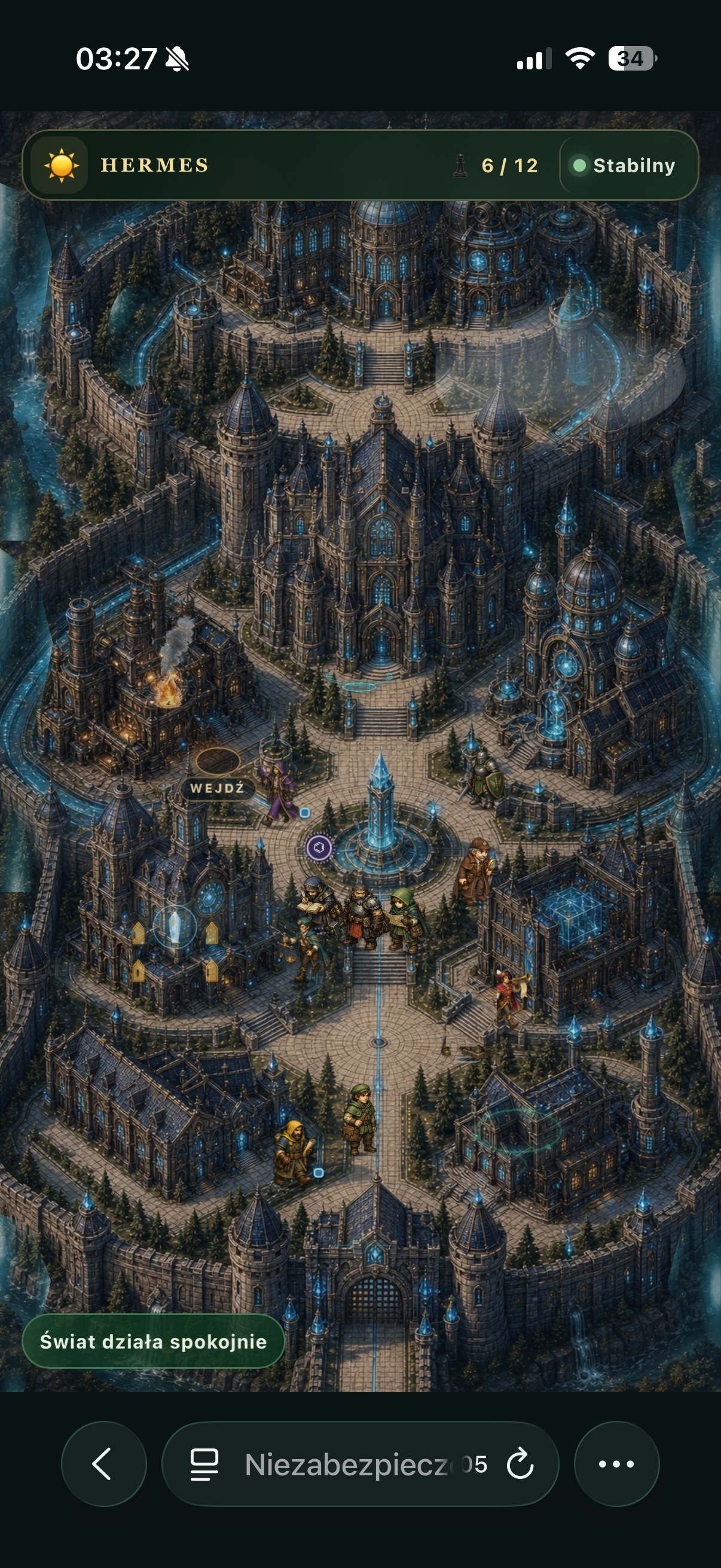
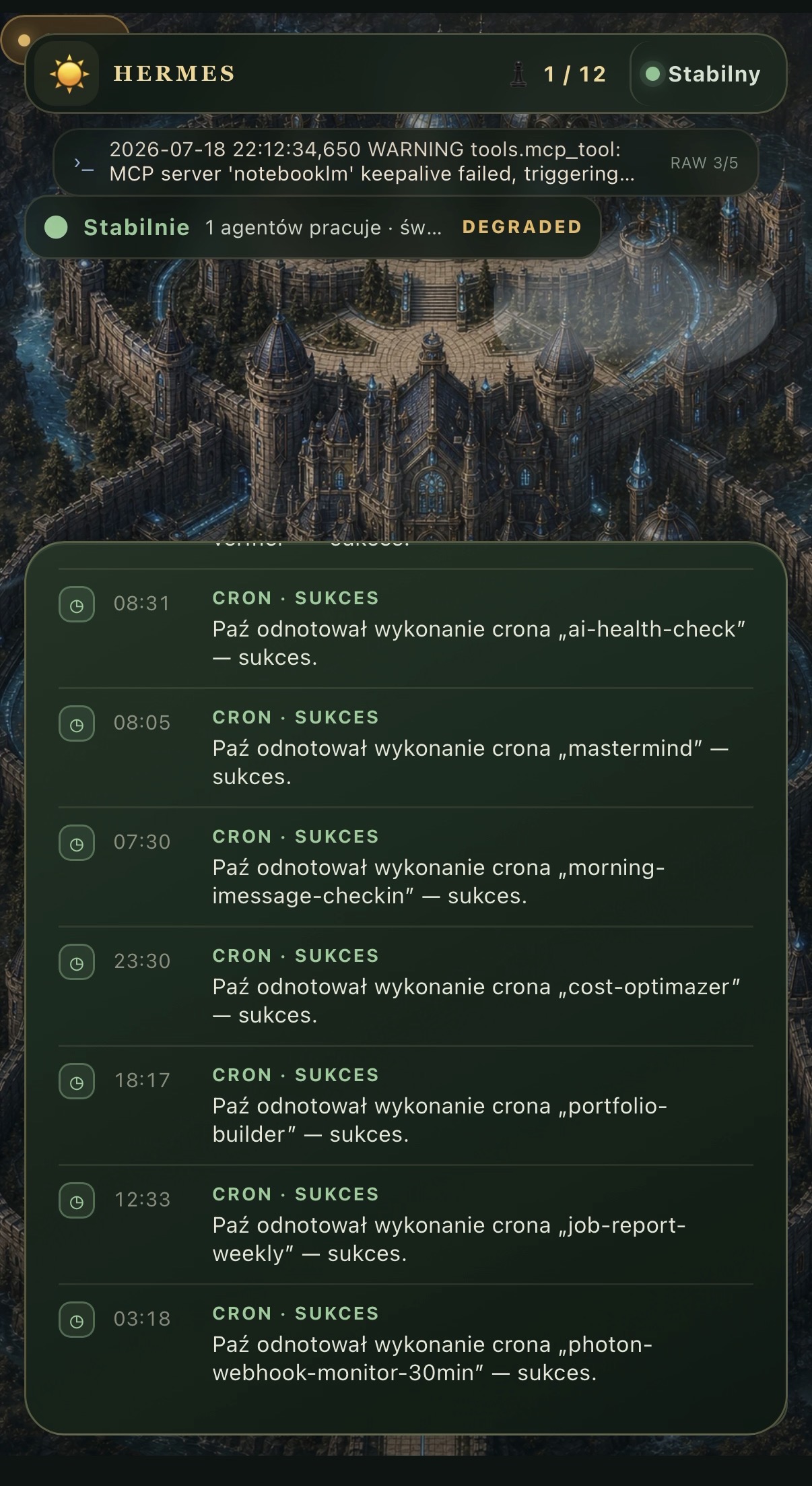
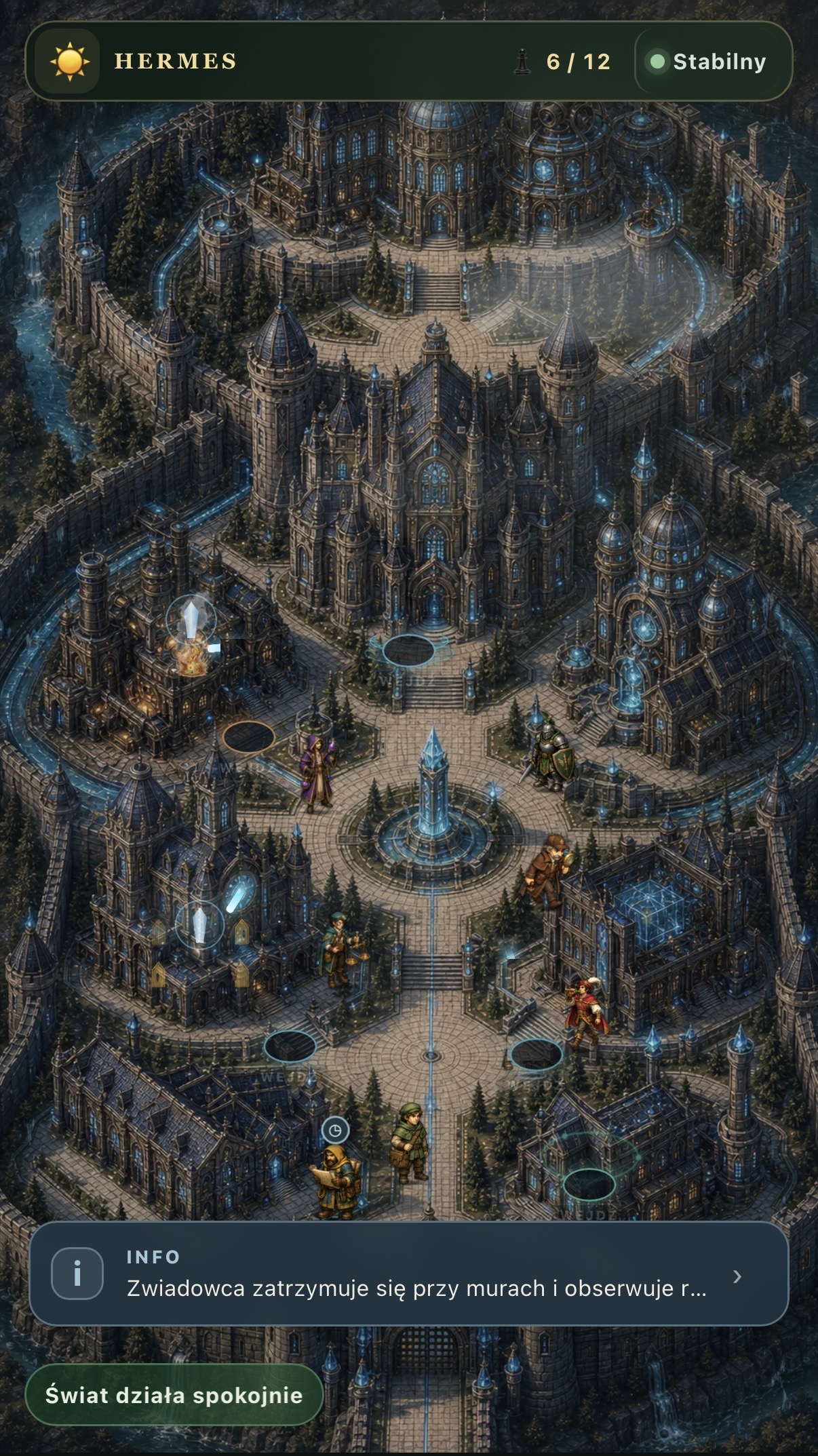
What it does? Hermes OS is the world’s first Spatial Observability Layer for multi-agent systems. It transforms dense telemetry and complex task routing into a living, breathing 2.5D isometric digital ecosystem (The Citadel). Instead of parsing a JSON log to see if a database vector search failed, you watch your "Scout" agent report an incident at the "Archives". Real-Time Spatial UI: 12 unique AI agents (workers) are visually represented in their respective districts. Their movement and status changes reflect actual backend processes and API calls. Deep Telemetry Drill-Downs: Clicking on a building (e.g., the System Forge) opens a beautifully designed modal displaying hard engineering metrics (CPU, Temperature, active processes) seamlessly blended with the digital art style.
Native Integration: It doesn't trap you in a web dashboard. You can trigger complex orchestration natively via iMessage and instantly watch the Citadel react, assign tasks, and deploy agents in real-time.
How we built it? The core intelligence is powered by GPT-5.6 (Sol and Terra), acting as the central brain orchestrating the agent swarm. The backend handles webhook ingestion, cron jobs, and task delegation. State changes are streamed with near-zero latency to the frontend using Server-Sent Events (SSE). The frontend interprets these events and maps them to spatial coordinates, triggering particle effects (smoke, flowing water) and agent animations. Codex wasn't just a tool; it was our Co-Founder. We heavily leveraged it to review architecture, harden the backend, and maintain an enterprise-scale codebase of over 23,000 lines of code during the Build Week.
Challenge we faced: The biggest challenge was achieving extreme synchronization. Bridging an asynchronous webhook from iMessage, passing it through a GPT-5.6 routing layer, and reflecting that as a fluid, sub-second visual animation on a mobile frontend without dropping events required an incredibly robust event-driven architecture. Additionally, we had to balance aesthetics with utility. The UI had to look like a premium video game but function as a strict, highly accurate engineering tool without adding visual clutter. Accomplishments that we are proud of Enterprise-Grade Stability: We didn't just build a prototype. We wrote over 3,500 lines of test code, achieving a documented regression gate of 178/178 passing tests a rarity for a hackathon project.
Massive Scale Proof: The architecture underlying Hermes OS successfully manages and visualizes a throughput of over Billion tokens per month. Solving Alert Fatigue: We successfully translated chaotic stack traces into a chronological, readable "Citadel Activity" journal. No more raw logs; just clear, human-readable operational facts.
What we learned? We learned that human-computer interaction for AI is fundamentally broken. When you abstract infrastructure into a spatial, living environment, developers instantly regain their mental model of the system. Visualizing AI as an active, physical ecosystem completely changes how we trust and monitor autonomous agents.
What's next? The next development stage includes: Multi-tenant Citadel instances for different microservice clusters. Expanded native integrations (Slack, GitHub PR agents). Cost-per-agent observability metrics visible directly in the spatial UI.
Built With
- codex
- css3
- gpt
- html5
- javascript
- node.js
- react
- vite


Log in or sign up for Devpost to join the conversation.