-
-
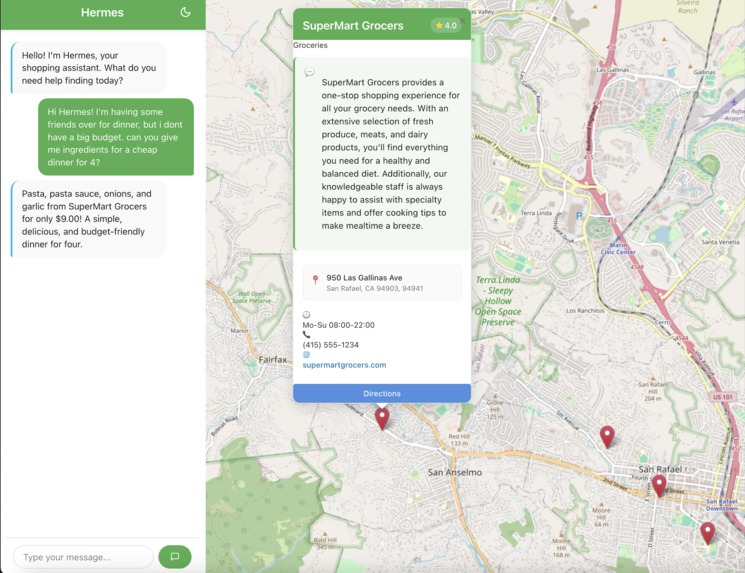
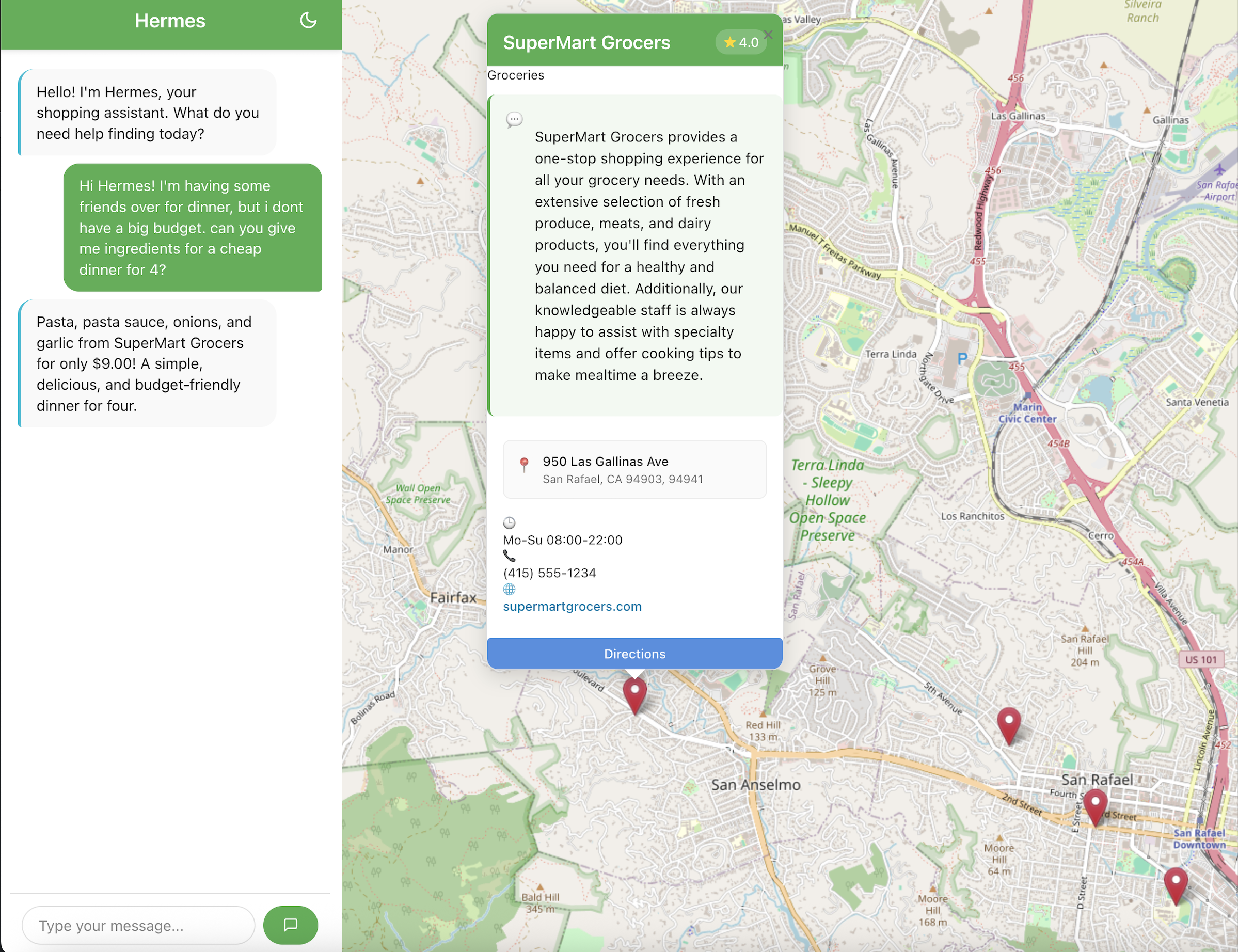
Hermes UI
-
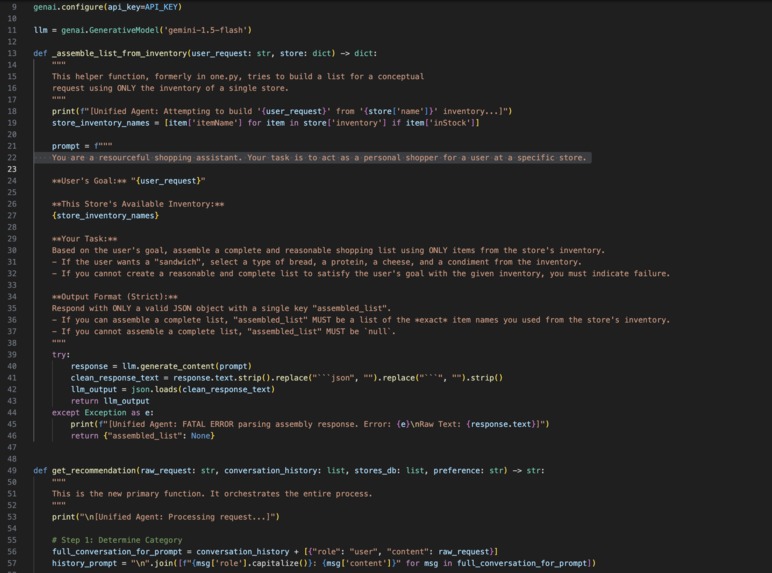
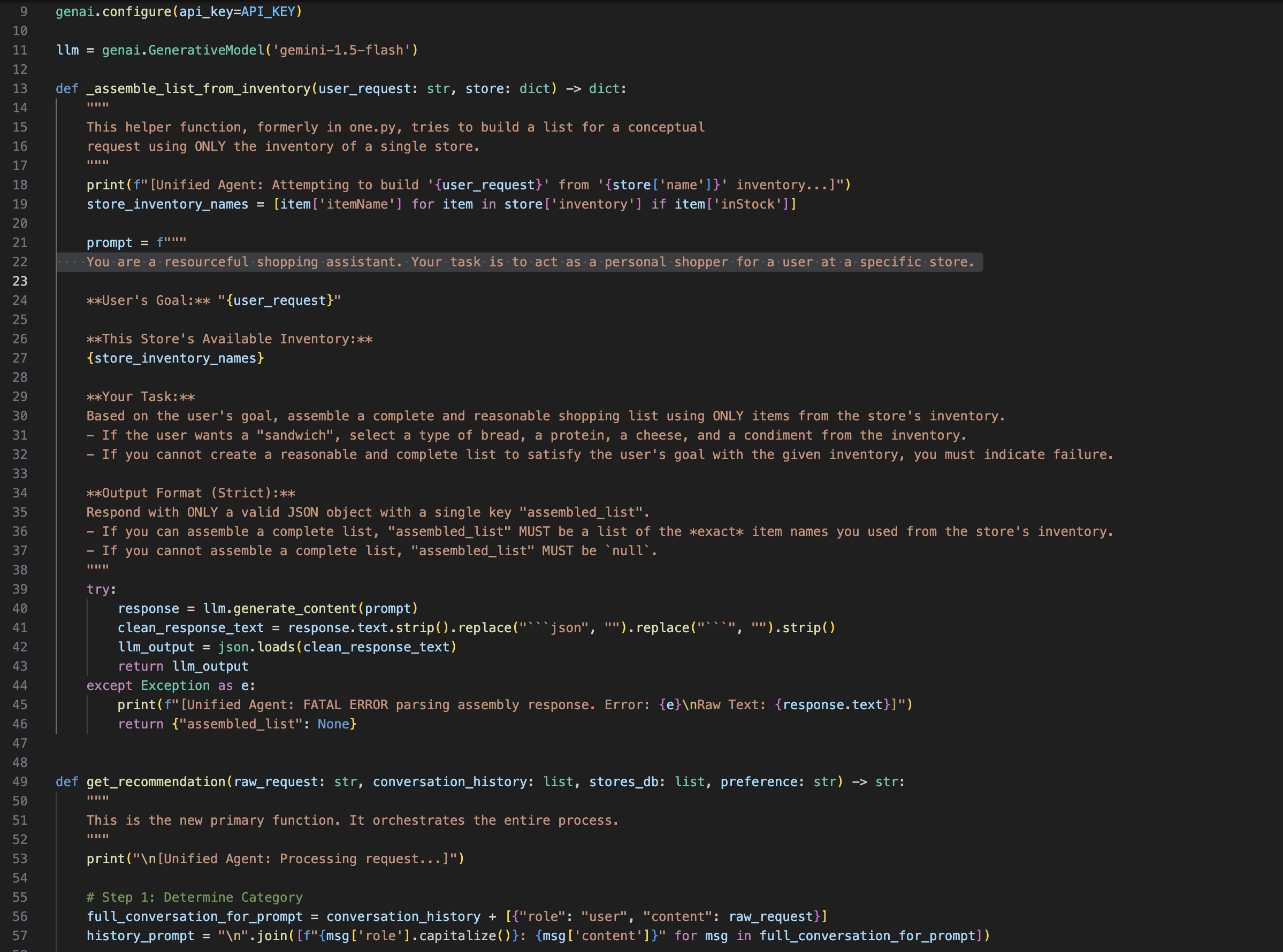
Gemini-Powered Agent
-
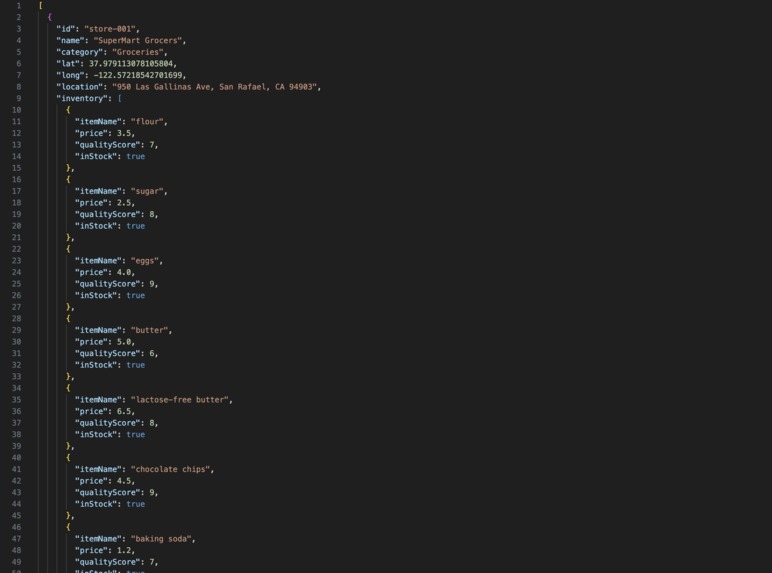
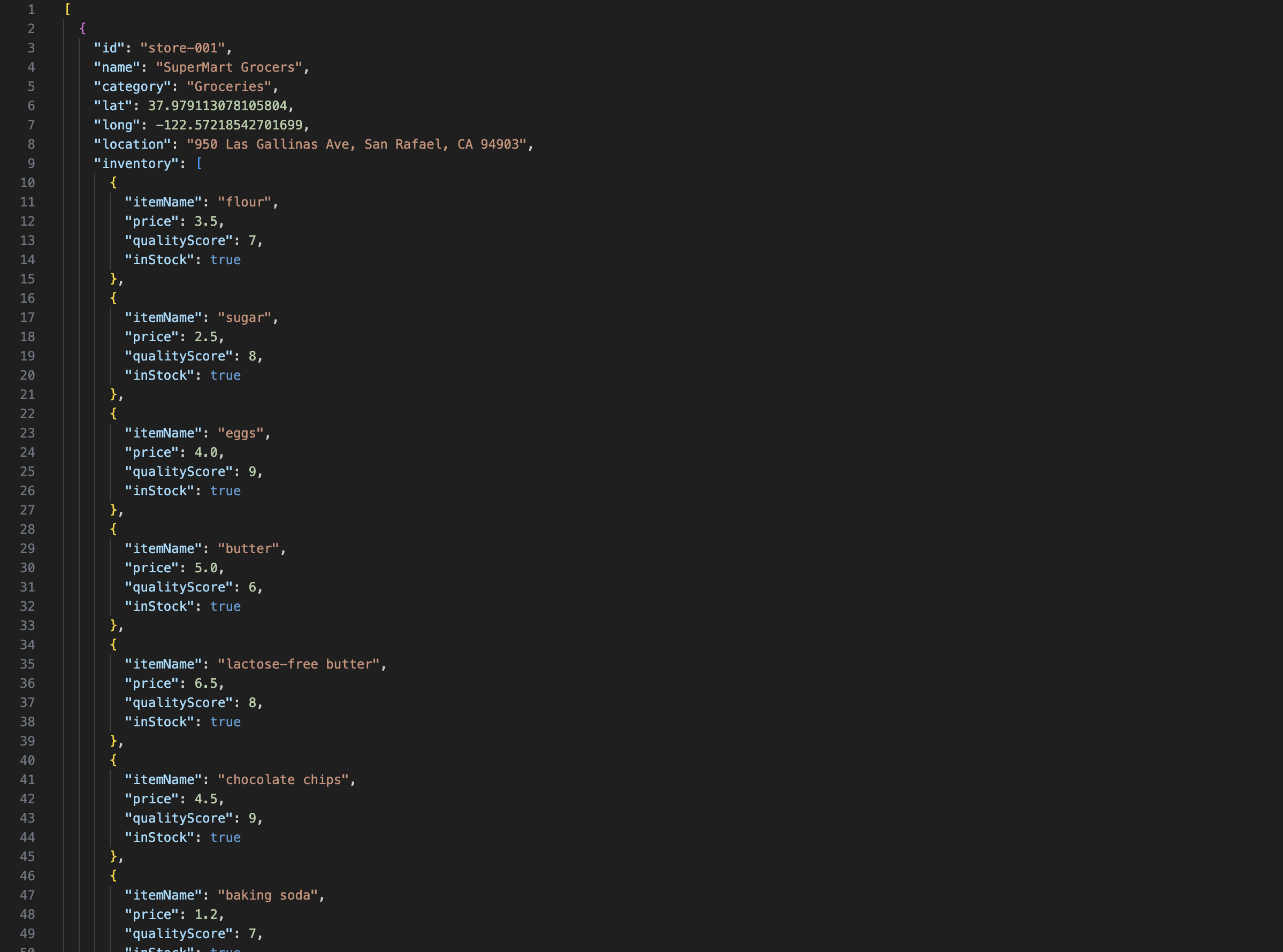
Data Storage Example
💡 Inspiration
According to NYC Small Business services, almost 8000 small businesses closed in NYC alone last year. Much of this is attributed to the rise and dominance of online commerce sites such as Temu, Ebay, and Amazon. At the same time, increased prices on goods squeeze consumers dry, making a task as simple as survival near impossible for many Americans. Hermes aims to hit both these stones with one winged boot.
🛠️ What it does
Hermes is a shopping assistant powered by Google Gemini and Groq. Hermes allows users to locate local businesses on a map, and a natural language search utility is present. The user can ask Hermes to find them anything. Want to find all the lowest cost groceries in your area? Hermes' got it. Want to build a tree house? Hermes' will find your wooden planks, tools, and safety hat. Want to build a $5000 gaming computer? Hermes will find you all the parts and set you on your way. If its near you, Hermes will show you where.
By creating such a simple discovery utility for users, local businesses can upload their stock, location, pricing, and store hours to passively boost foot traffic and sales. Everyone using Hermes will see your business.
🏗️ How we built it
Hermes is powered by Groq and Google Gemini. Hermes code is built under 3 pillars: frontend, backend, and data.
For our frontend, we use a react interface to keep our it lightweight, scalable, and versatile.
For our backend, it gets a little more interesting. Because Groq us build to be incredible efficient and quick, we used it to generate fast, real-time summaries of each business. when you view an area with Hermes, Groq will passively summarize all the businesses on your window. click on one, and a full summary of that business will be shown to the user, without them having to wait for annoying loading times. This allows to user to get to what they need fast, without waiting for loading times for each business. When a user interacts with the natural language discovery interface, they will be able to express complex needs including their budget, allergies, and store preferences to discover the products they need locally. We use Google Gemini 2.5-flash to generate powerful chatbot functionality. Hermes can lookup recipes, find ingredients, and present them at stores in your price range. Hermes can also discuss ratings with the user, ensuring the user a quality in-store shopping experience.
For our data, we obviously didn't create a global list of local partners (yet). so for this demo version, we have generated example companies based off real stores in the Marin County, CA area. This allows us to simulate real-world data, while also allowing us to build Hermes in our designated time-frame.
🚧 Challenges we ran into
Our main challenge came with the sponsor Letta. For the first 12 hours of the build, our backend was completely built and dependent on Letta's platform. However, we found that the long-term based memory system was unreliable at best, and it often misinterpreted, changed, or outright ignored out instructions. The final straw came when at 11pm, the platform failed to load altogether, setting half a days work up in flames. We had to pivot. Initially, Hermes only supposed to catalog and report on grocery stores. Instead of keeping this limited scope, we decided to take a massive risk. We moved our entire platform to Gemini, and constructed 2 AI agents to catalog, asses, and recommend stores and products of all kind, from hardware stores to gas stations. While Letta's let-down initially spelled disaster, our team was able to turn this misfortune into Hermes' greatest strength: its versatility.
✅ Accomplishments that we're proud of
Our team is most proud of our perseverance. We ran into roadblock after roadblock, and one of us even spent an hour trying to overhaul the entire backend, just to found out our problems were caused by a one word discrepancy: they had written "recommendation" instead of "response". Despite these (very annoying) hurdles, our team worked until the end (we all haven't slept in more than 24 hours, and we're all on a lot of caffeine)
🧠 What we learned
We learned the value of communication while developing in a group setting. When the project began, we were uncoordinated. There was no clear direction, and for the first hour or two, we all fumbled to get a foothold. Eventually, we found our center, and assigned each other tasks so we could work together as a group. After that? We were a well oiled machine.
🚀 What's next for Hermes - Shopping Assistant
We want Hermes to be the Amazon for in store shopping. By giving a chance for local businesses to compete with the big online names, everyone benefits. By allowing consumers to more easily compare the costs of common goods, everyone benefits. We want to make Hermes a go-to download application mobile devices, and a go-to bookmark on the web.


Log in or sign up for Devpost to join the conversation.