-
-
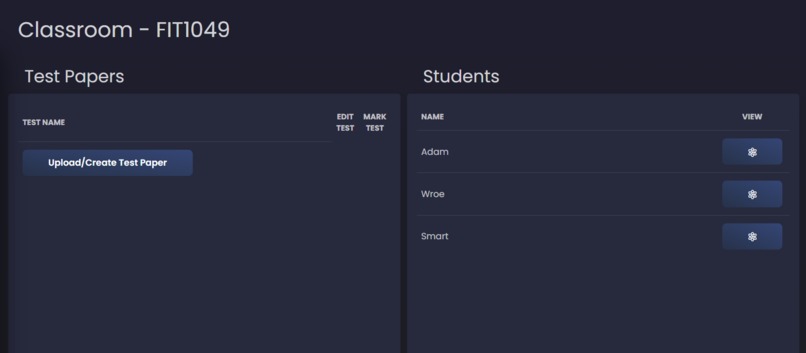
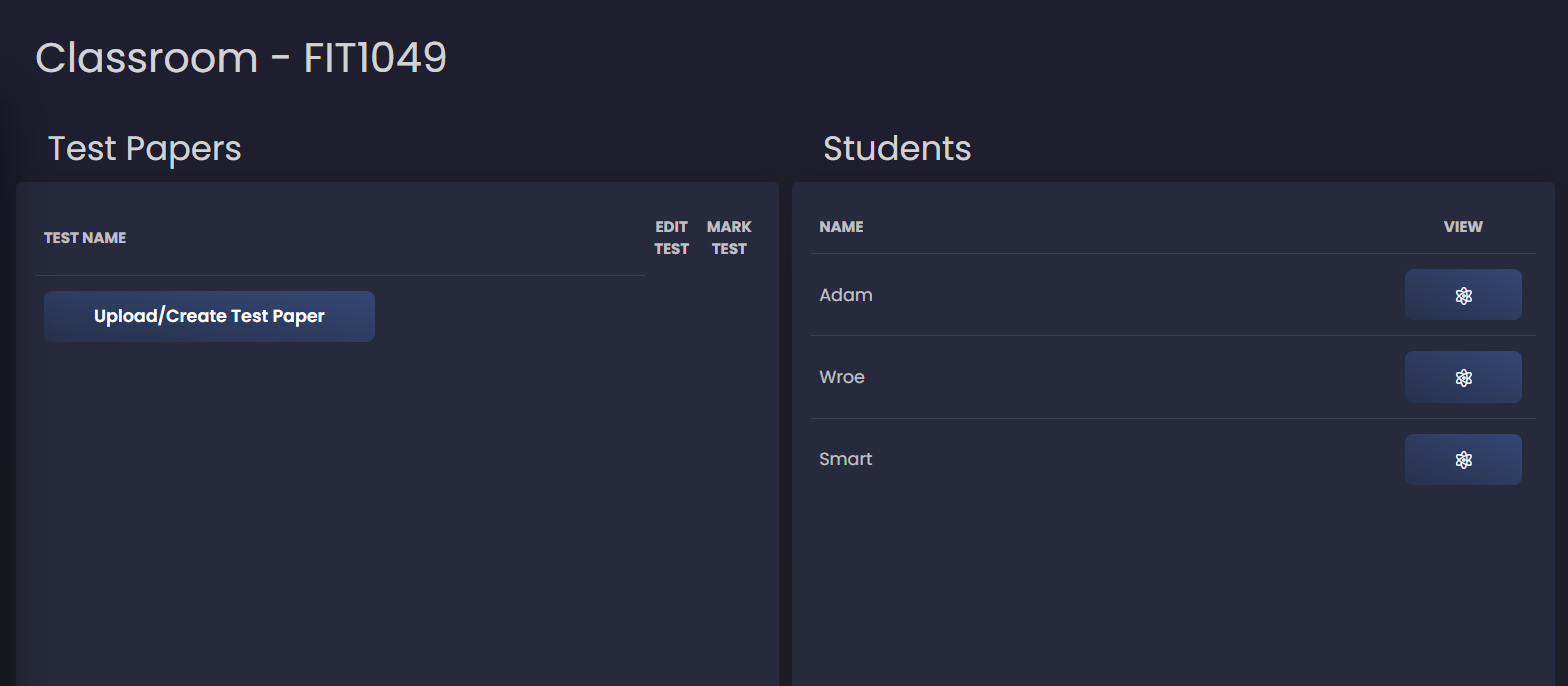
Classroom Layout
-
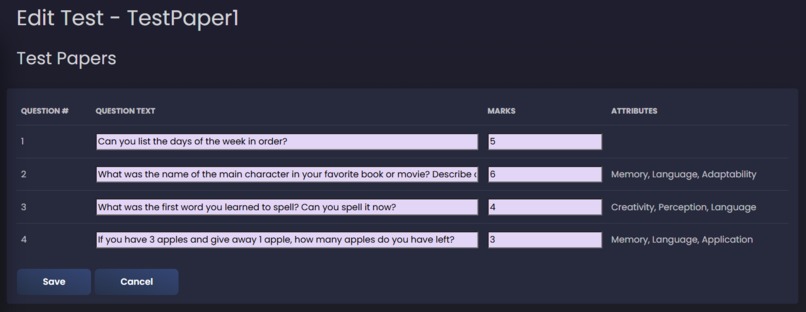
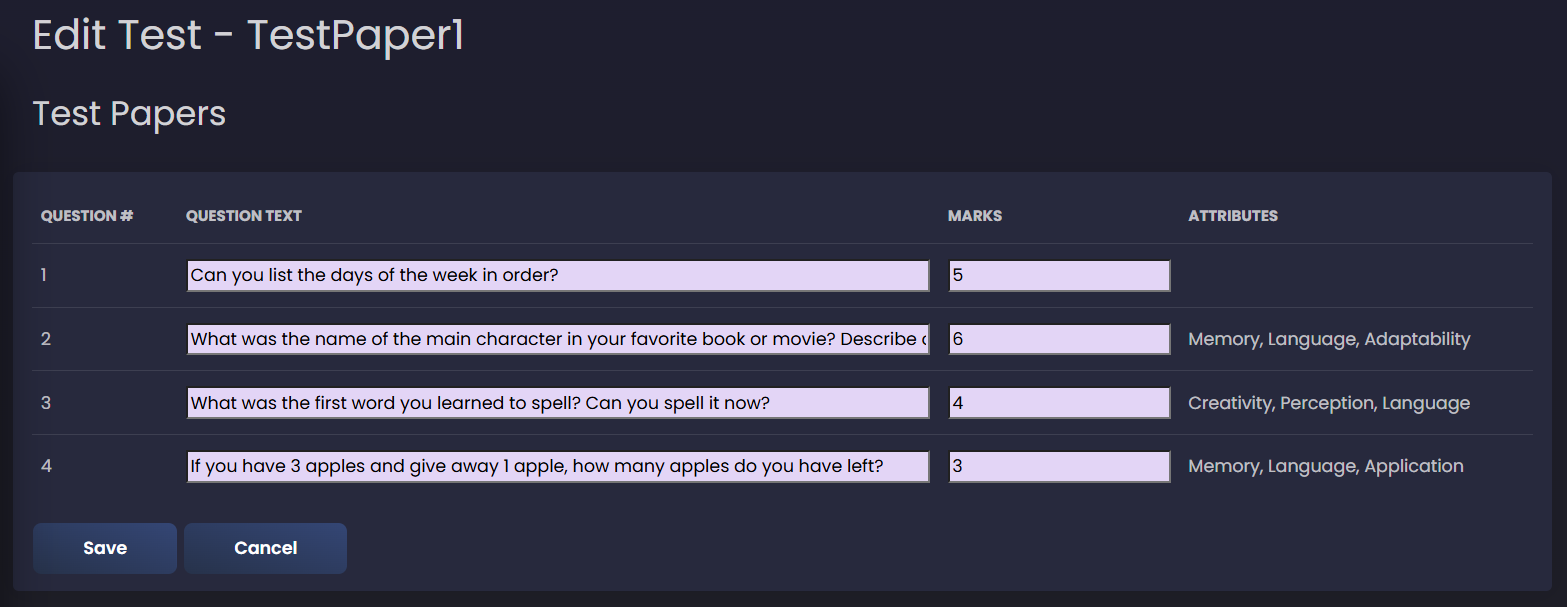
Questions are assigned tags based on cognition areas tested
-
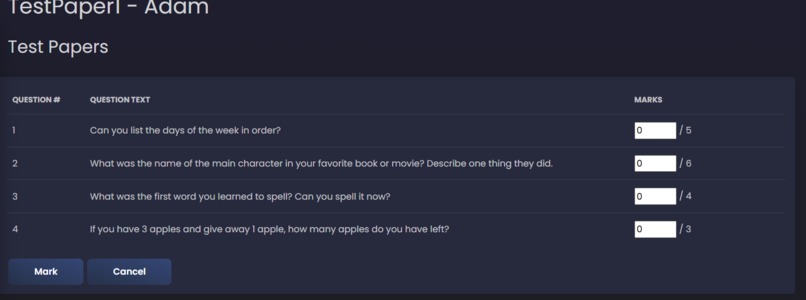
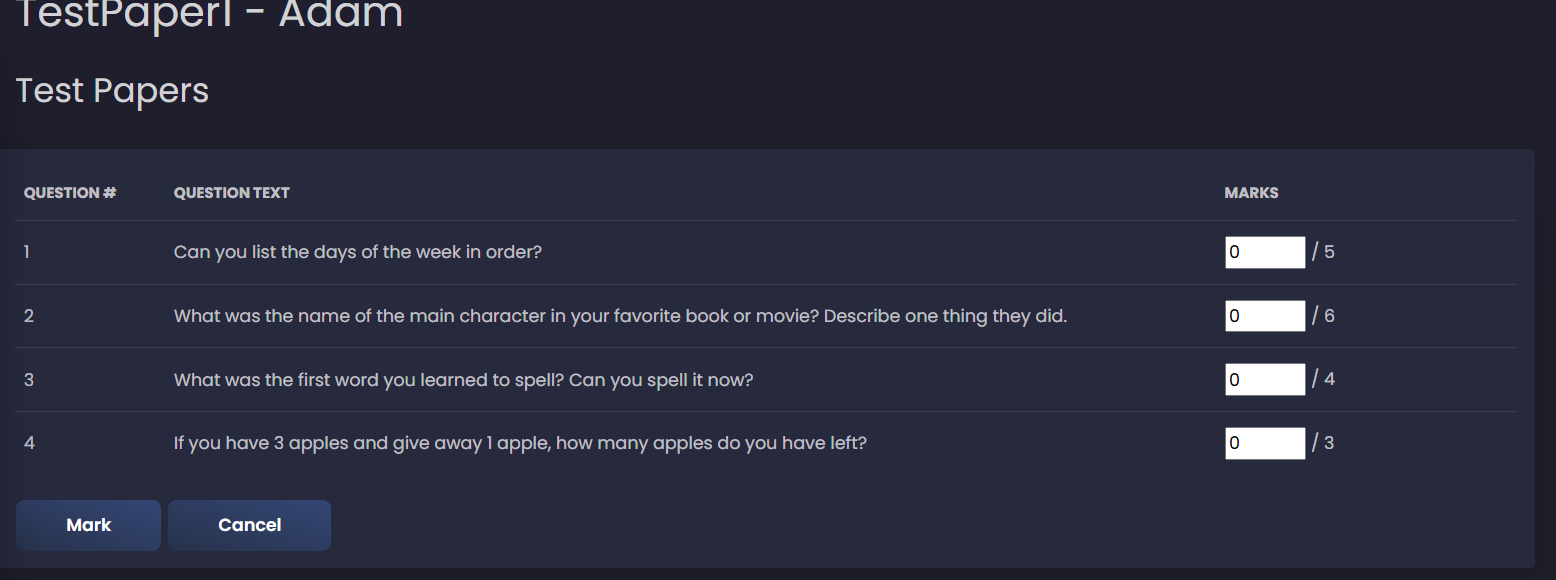
Answers can be graded from each student
-
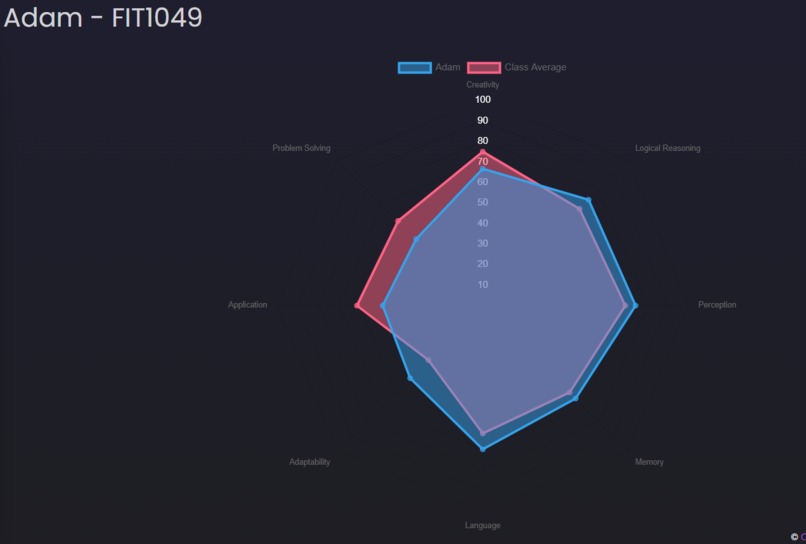
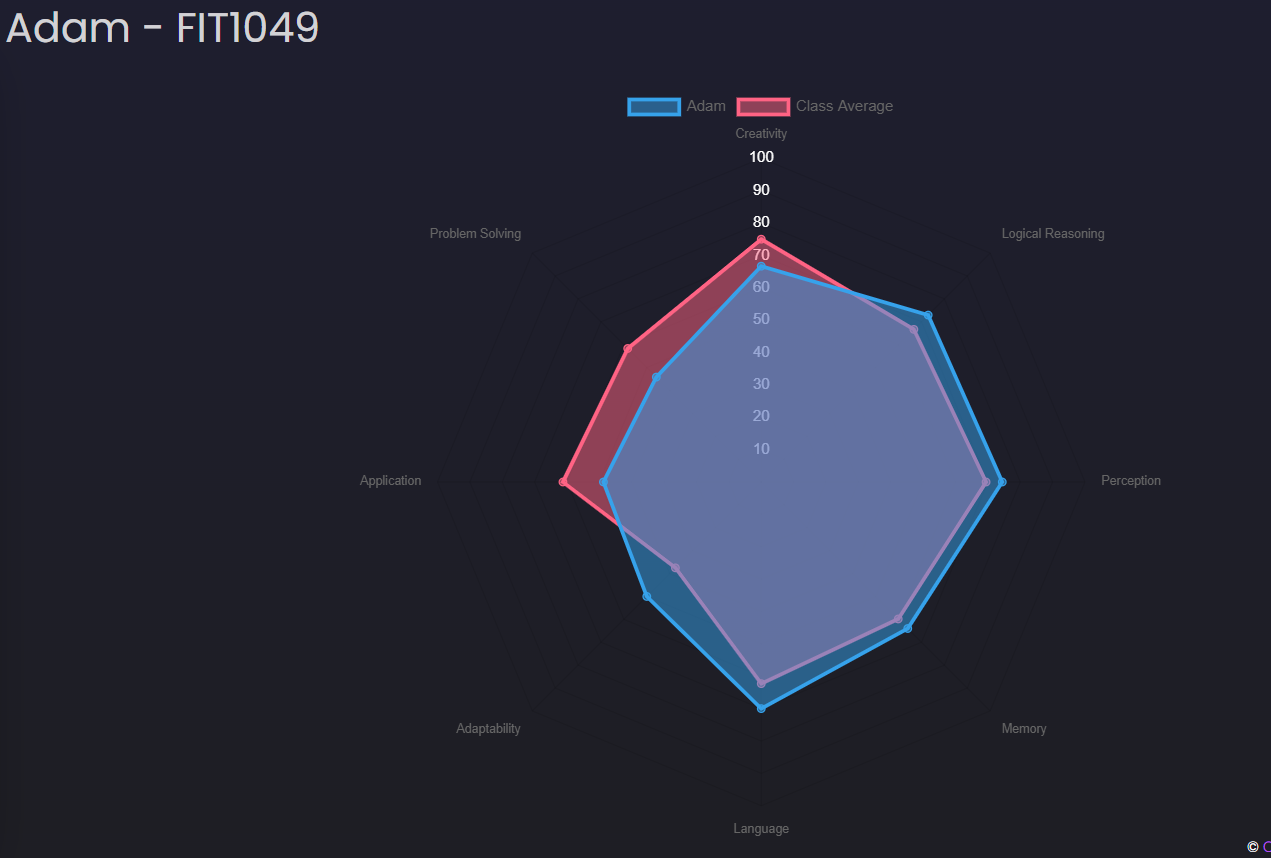
Students performance can be compared to classroom average
Inspiration
The effects of Covid-19 on teaching capabilities was a significant inspiration for this project. Seeing the extreme difficulties teachers' faced when attempting to evaluate students capabilities during this time, we came to the conclusion that there simply isn't enough time or resources available to teachers who want to provide comprehensive feedback for each of their students. Our solution aims to ease the burden on teaching resources by using machine learning, outsourcing the intensive workload needed to generate unique insights on each individual student.
What it does
Teachers can upload test papers and grade each student within the app. The application will analyze which areas of cognitive ability each question is testing, cross referencing with the students grades to identify a comprehensive overview of areas in which they are performing well, and areas where they can improve in.
How we built it
First day
The main goal on the first day was to brainstorm ideas, create basic documentation and decide the technical stack we would use. It was important to us that by Friday night, as a minimum, we would have a completed mockup of the web application, documentation regarding the basic functionality of the app, and specific tasks on Jira which would be delegated to team members . We used a Kanban to improve the visibility of progress across the team's tasks, and assigning each task to a specific person aided in improving our focus on what needed to be done. This documentation allowed our team to understand the end goal that we wanted to work towards, and how we were going to get there.
Second and Third days
Team communication was crucial throughout the project, and we communicated with each other face-to-face and through Discord calls. From prior experience, we knew that that open communication is especially important to avoiding doubling up of work, especially when multiple git branches are involved, and by talking to each other regarding our roadblocks, progress and to-dos, we were able to avoid wasted work.
We also used multiple git branches as a way to allow each person to work on their own sections without affecting the working build in the main branch, and as our team was quite small, we kept each other accountable for periodically merging their changes into the main branch. This prevented catastrophic merges from destroying our project, and improved our team's flexibility during the build phase.
Challenges we ran into
We faced some challenges with obtaining standardized Open AI outputs, this was resolved by implementing stricter prompting, which significantly improved outputs obtained. Another challenge we faced was website design and interfacing with flask.
Accomplishments that we're proud of
We're proud of developing a minimal viable product within the short time frame of two days, collaborating effectively as a team to achieve our vision. We're also proud of our use of OpenAi prompt engineering to generate our desired outputs, as there were some problems with our initial prompting.
What we learned
The time constraints significantly improved our ability to work under pressure and manage our time effectively. We also learnt that its okay (and necessary!) to take breaks, ensuring that our minds have time to refresh and lock in on the project without burning out. We found that documentation was significant for team co-ordination, ensuring that everyone is on board and understands what each person is working on - and speeding up the debugging process.
What's next for SkillScope
Some features considered out of scope that could be implemented in the future for this project include; in-app tracking of previous test results with comparison capabilities, an admin user to manage 'teacher' accounts, and the ability to separate and group students into 'classrooms' within the app.


Log in or sign up for Devpost to join the conversation.