-
-
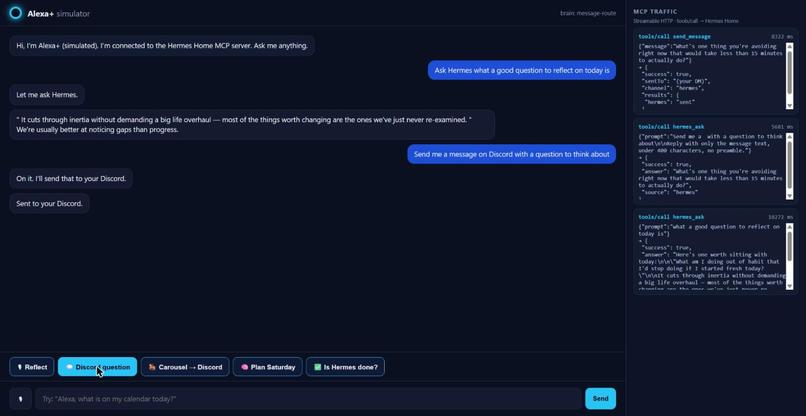
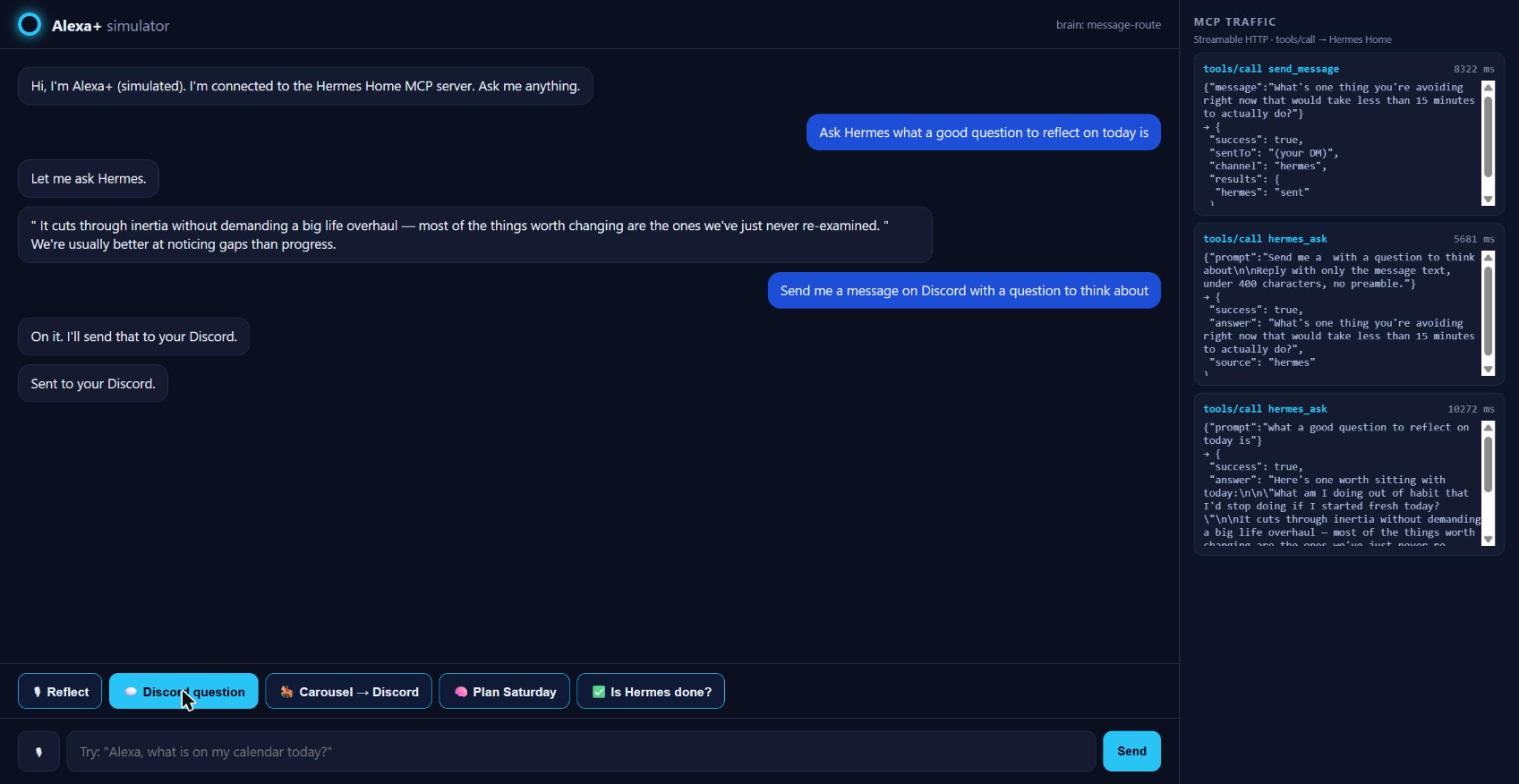
Alexa+ simulator: instant replies, then Hermes' answer, with every MCP tools/call visible in the live trace panel.
-
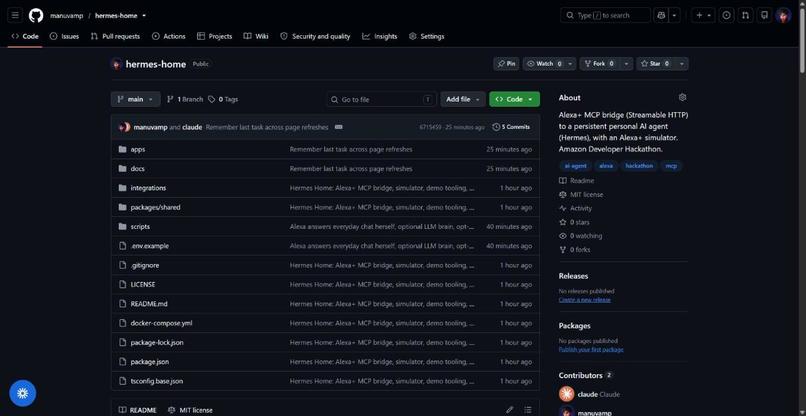
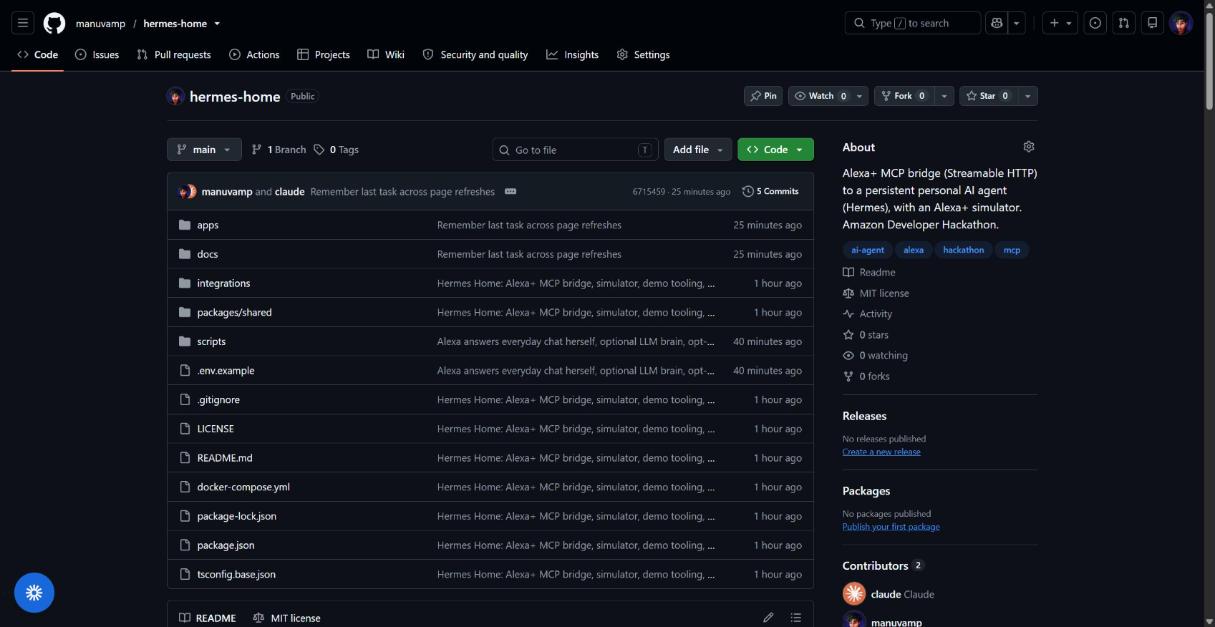
Public MIT-licensed repo: github.com/manuvamp/hermes-home, with docs, tests and a one-command demo.
-
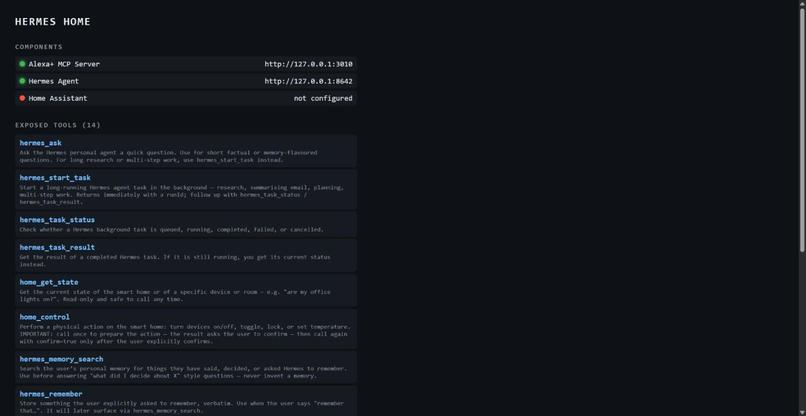
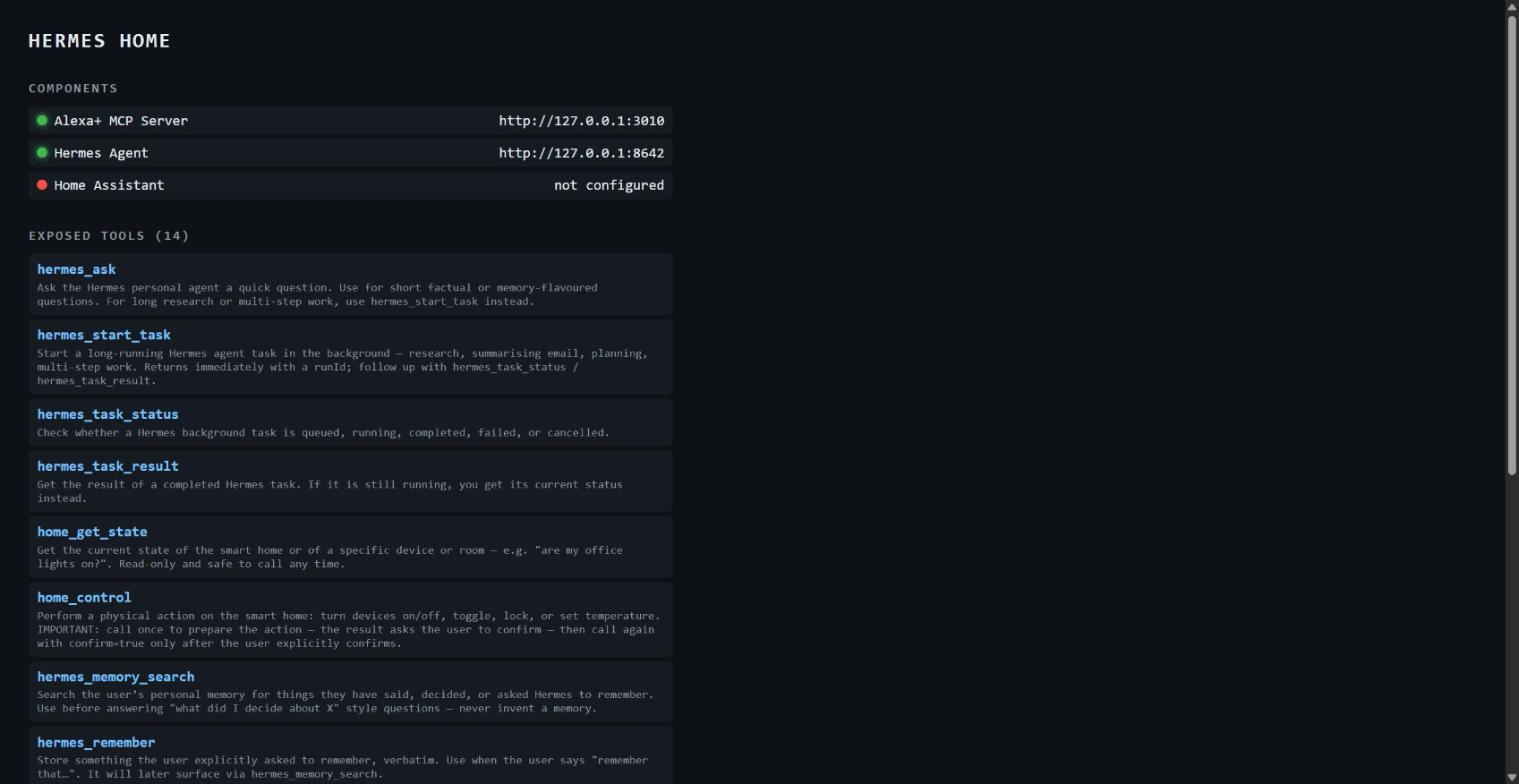
Dashboard: the 14 hand-picked tools exposed over MCP, plus live health of the MCP server, Hermes agent and Home Assistant.
-
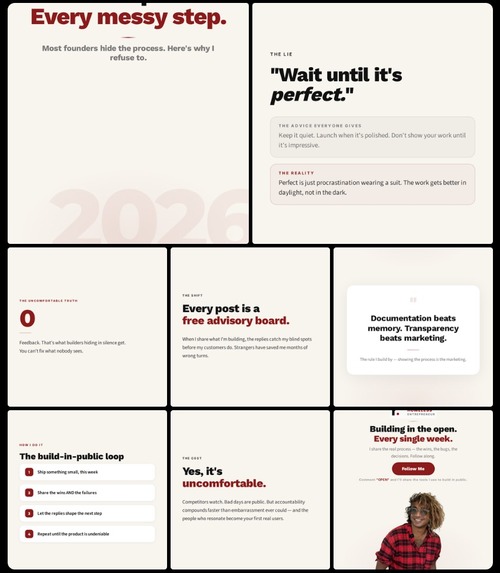
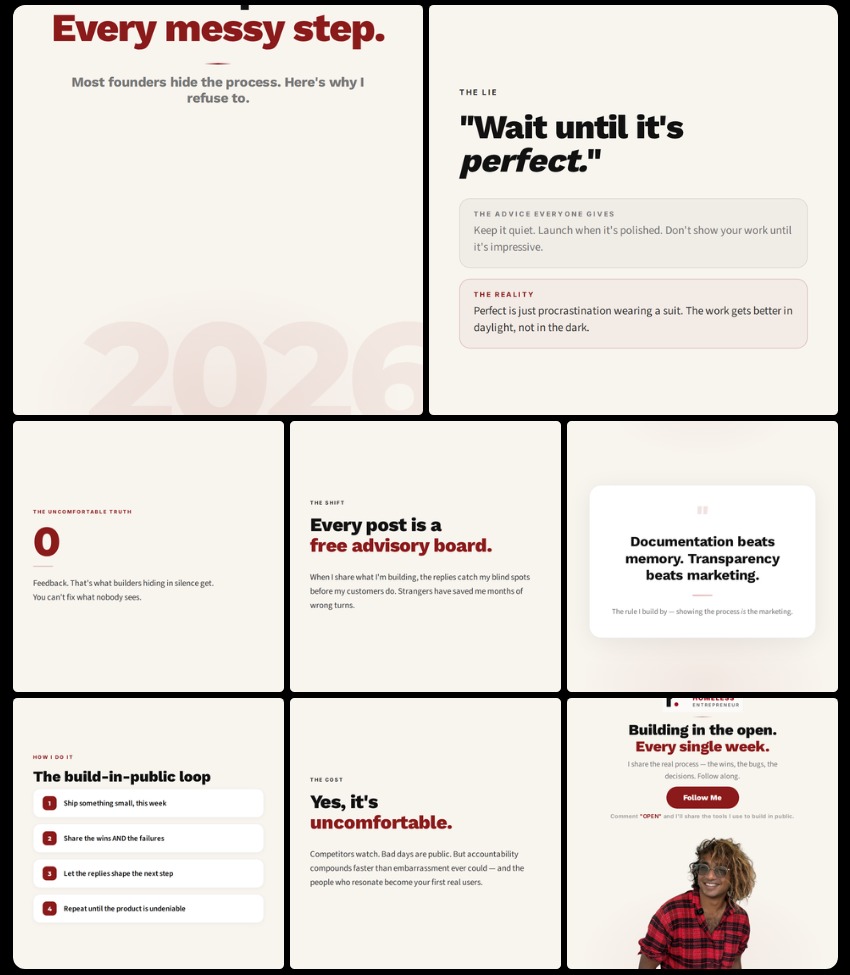
Result of one voice request: Hermes ran its carousel skill and delivered eight rendered slides to Discord.
-
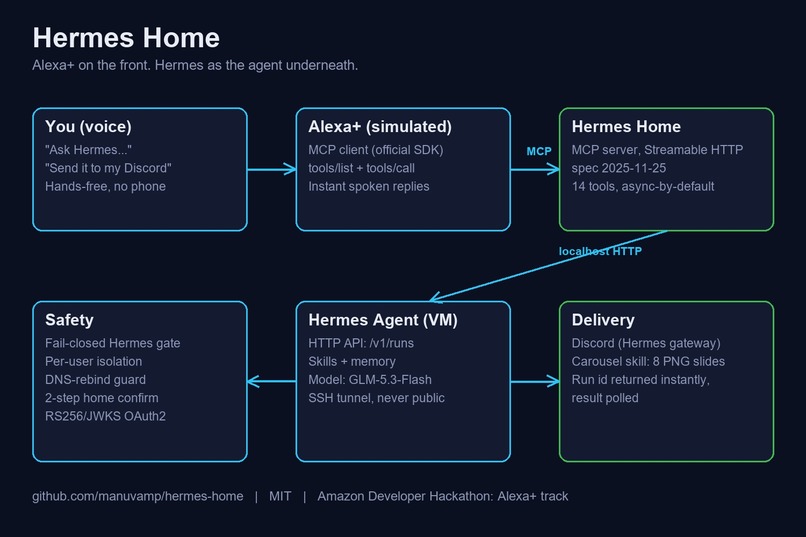
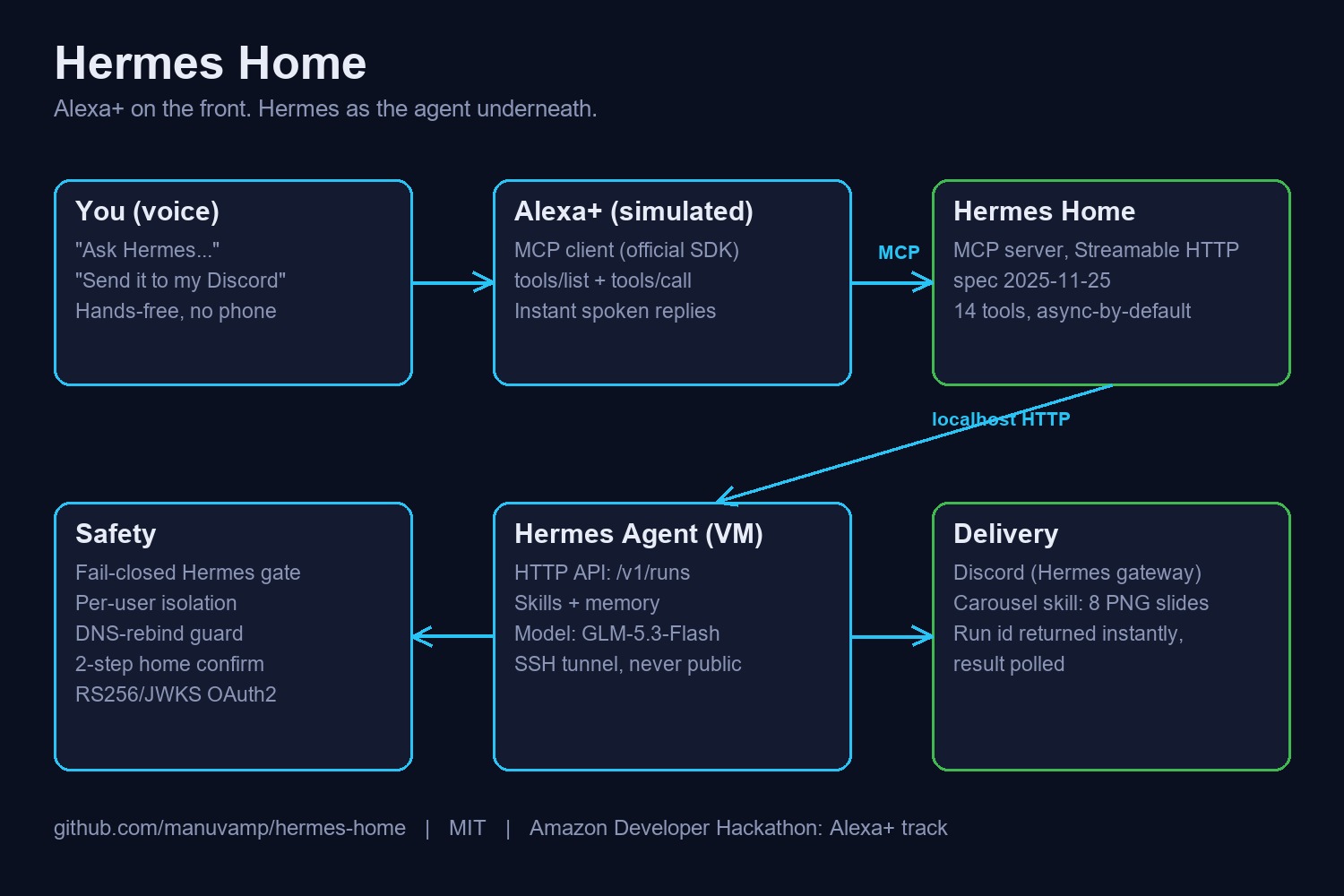
Architecture: voice client, MCP over Streamable HTTP, Hermes Home server, Hermes agent, Discord delivery, and the safety layer.
Inspiration
Every morning starts the same way: I wake up and the first thing I do is grab my phone. One notification becomes ten, and before I have brushed my teeth I am already deep in apps, messages and tasks. I wanted my mornings back. What if I could get things done while I am cooking or brushing my teeth, just by talking, and get updates and details without ever opening my phone? Even for basic stuff, I would rather just ask Alexa than open yet another app.
I already run a personal AI agent called Hermes. It has skills, memory and a Discord gateway. The missing piece was a voice front door. Alexa+ talks to remote MCP servers, but Hermes only ships a local stdio MCP server, so I built the bridge.
What it does
Hermes Home is a self-hosted MCP server (Streamable HTTP, spec 2025-11-25) that lets Alexa+ drive my Hermes agent by voice:
- Instant replies, work in the background. Alexa answers right away ("Let me ask Hermes", "On it"). Slow work runs asynchronously, so a voice assistant never waits on an agent.
- Hands-free actions. "Send me a message on Discord with a question to think about" and Hermes writes it and delivers it through its own gateway. "Make a Homeless Entrepreneur carousel and send it to my Discord" and Hermes runs its carousel skill, renders eight slides and delivers them.
- Alexa handles everyday chat herself; Hermes is only used when I say "Hermes" or ask for an action.
- 14 hand-picked tools (never the whole agent catalogue), plus optional calendar, Home Assistant and GitHub tools.
How I built it
- TypeScript, Fastify and the official MCP SDK for the Streamable HTTP server (one McpServer per session).
- Hermes Agent API (/v1/chat/completions and /v1/runs) on a cloud VM, reached over an SSH tunnel, running Z.ai GLM-5.3-Flash.
- Alexa+ simulator. Alexa+ is in Preview and I do not have access, so I built a simulated Alexa+ web app (voice and chat) that acts as the MCP client using the official SDK. It discovers tools, calls them over Streamable HTTP and shows every tools/call in a live trace panel.
- Safety by design: fail-closed Hermes gate, per-user isolation of runs and memory, DNS-rebind guard, two-step confirmation for home control, RS256/JWKS OAuth2 mode for internet exposure, and redaction of private identifiers in the simulator trace.
Challenges
- Voice needs sub-second responses, while a real agent takes 15 to 90 seconds. The async-by-default design and instant acknowledgements solve that.
- Model providers cost the most time: free tiers are too small for agent contexts, and a Z.ai Coding Plan key only works on its own endpoint.
- The MCP SDK allows one transport per server instance, so every session gets its own server.
- Hermes skills with owner allowlists correctly refuse API callers. I did not bypass that. (Full details are in the friction log.)
What I learned
Treating the agent as the brain and the voice assistant as a thin front door works well. MCP makes that clean, as long as you design for latency and keep the tool surface small.
What is next
Onboard to real Alexa+ once Preview access opens, add calendar and Home Assistant for morning briefings, and let Hermes proactively read me my day while I make breakfast.
Built With
- agent
- alexa+
- discord
- fastify
- glm
- hermes
- mcp
- node.js
- typescript

Log in or sign up for Devpost to join the conversation.